
Fort Jackson MEPS: Military Processing in Columbia, SC 2026 September
📝 Prepare for the Fort Jackson MEPS: Military Processing certification. Practice questions with answer explanations covering all exam domains.
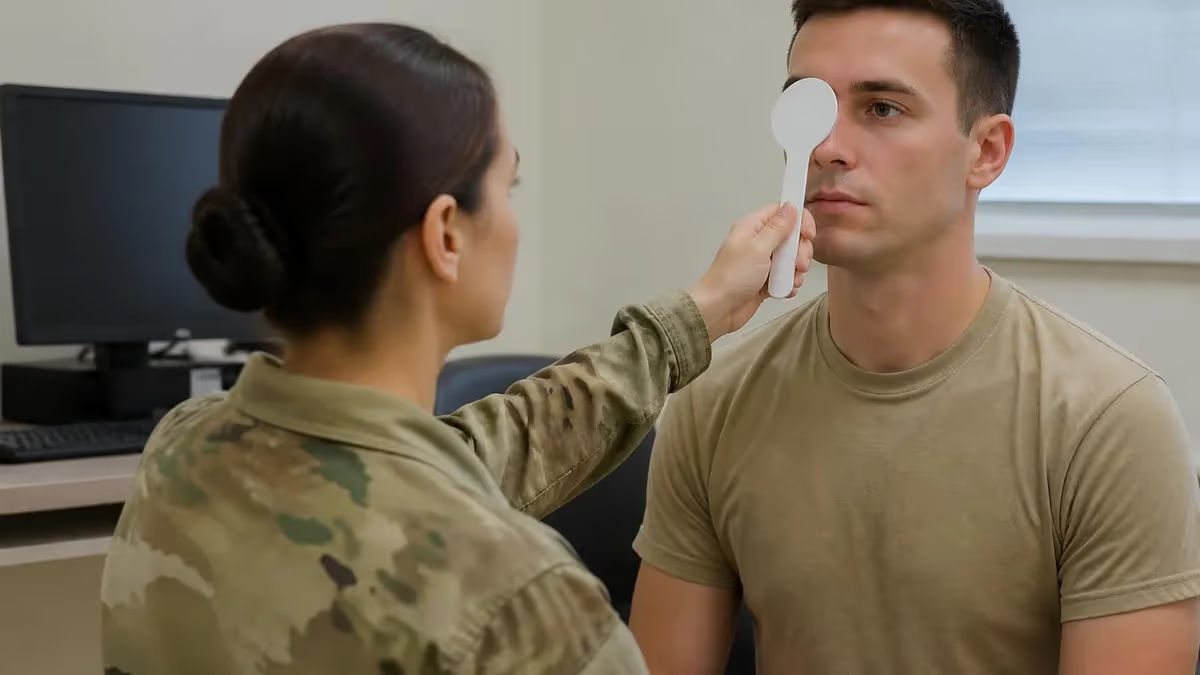
Fort Jackson MEPS is one of the busiest Military Entrance Processing Stations in the United States, located in Columbia, South Carolina. If you're enlisting from anywhere in South Carolina, this is almost certainly where you'll spend your processing day — a full evaluation of your medical fitness, cognitive readiness, and moral background before you're approved to serve in any branch of the U.S. Armed Forces.
Understanding what is MEPS before you arrive can significantly reduce your anxiety and help you perform better during medical testing. The station handles recruits from every branch — Army, Navy, Marine Corps, Air Force, Space Force, and Coast Guard — so expect a high-volume environment where efficiency and preparation matter. Most applicants spend between 8 and 12 hours at the facility across one or two days depending on their branch and processing requirements.
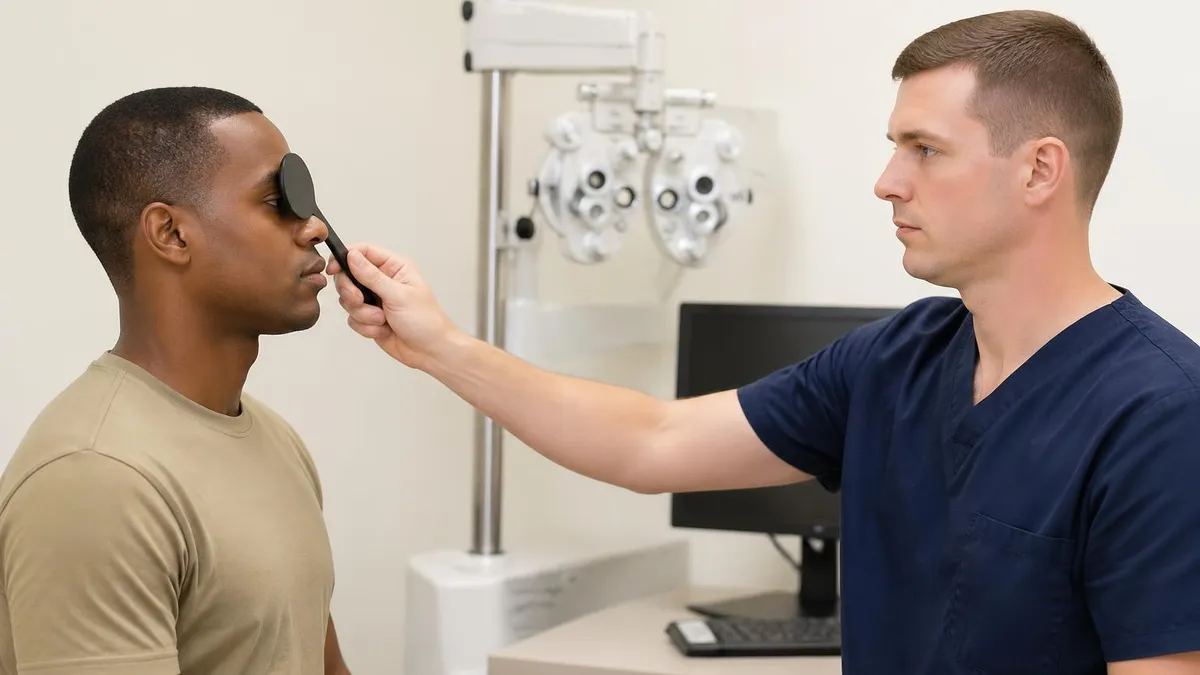
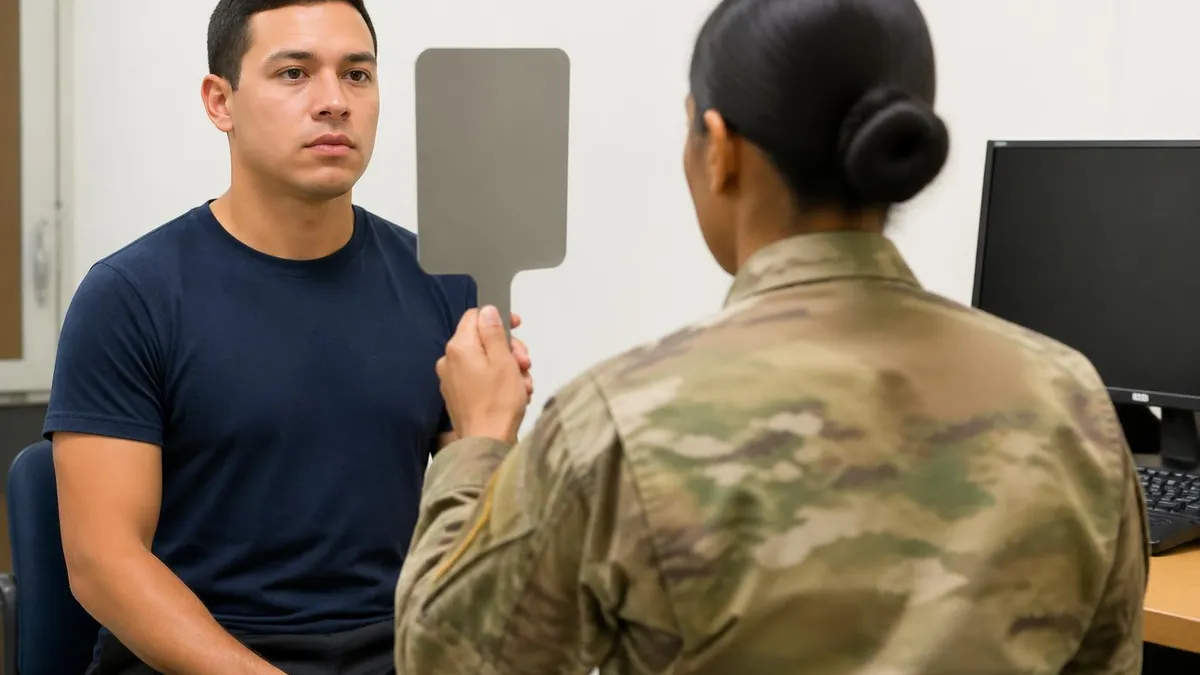
The MEPS medical exam is comprehensive and non-negotiable. Doctors will review your medical history, check your vision and hearing, assess your blood pressure and body composition, test your blood and urine, and conduct orthopedic evaluations of your joints and range of motion. Any undisclosed medical history that surfaces during testing can create serious delays or disqualifications — so honesty from day one protects you.
The processing experience at Fort Jackson MEPS differs somewhat from stations in urban areas. Because it's located on an active military installation, security protocols are stricter — you'll need to clear the gate with valid ID, and civilian vehicles must follow base access procedures. Your recruiter handles most of this in advance, but having your ID out and your paperwork ready when you approach the gate keeps things moving smoothly on what will already be a long day.
South Carolina has a proud military heritage, and Fort Jackson sits at the center of it. The installation trains more soldiers than any other Army post in the country, which means the personnel running your MEPS evaluation are experienced and accustomed to processing high volumes efficiently. You'll encounter professional, no-nonsense staff who respect your time and expect you to respect theirs. Arrive prepared, respond honestly, and follow instructions the first time — that's the culture of military processing, and adapting to it quickly makes the day easier.
For out-of-state recruits or those enlisting from remote areas of South Carolina, the drive to Columbia can be several hours. Your recruiter typically books you into a government-contracted hotel near Fort Jackson the evening before your appointment. Use that time wisely — review your documents, organize your folder, confirm your wake-up call, and rest rather than sightseeing. Many recruits who struggle at MEPS trace their problems back to a poor night's sleep or skipped breakfast rather than any underlying medical issue.
Finally, understand that Fort Jackson MEPS processes recruits for all service branches, which means the station serves a diverse population of applicants on any given day. You may be sitting next to future sailors, Marines, airmen, or guardians in the waiting areas — all going through the same evaluation you are. That shared experience creates a unique camaraderie in the waiting room. Many people find the day less intimidating once they realize everyone else is just as nervous and just as determined to succeed.

Fort Jackson MEPS serves as the gateway to military service for thousands of South Carolina recruits each year. It's housed on the grounds of Fort Jackson — the largest U.S. Army initial entry training installation in the country — which means processing happens in a fully military environment with active-duty oversight and strict protocols. Your recruiter will schedule your appointment and arrange lodging at a nearby hotel the night before if you're traveling from a significant distance.
The MEPS meaning goes beyond paperwork — it's a comprehensive qualification process that determines whether you're medically, mentally, and morally fit to serve. At Fort Jackson, you'll complete your physical exam, any required ASVAB testing (if not already done at your recruiting station), background screening, job selection, and the Oath of Enlistment if you're fully cleared. The process moves through stations quickly, but don't expect to rush — some applicants return for a second day to complete additional evaluations.
ASVAB scores determine which military occupational specialties (MOS) are available to you, so if you haven't tested yet, arrive prepared. MEPS military processing integrates your ASVAB results with your medical classification to produce your final qualification profile. A 4F medical code means you're disqualified. A 1A code means fully qualified across all services. Most recruits fall somewhere in between, with specific restrictions noted for particular jobs or duty assignments.
Bring every document your recruiter specified — typically your Social Security card, birth certificate, photo ID, immunization records, glasses or contacts if applicable, and any prescription medications in their original labeled bottles. Showing up without required documents can delay your processing by days or weeks and adds stress to an already demanding day.
One practical note that surprises many recruits: the MEPS medical screening uses a different standard than a civilian physical exam. Your family doctor clears you for sports or annual wellness — MEPS physicians are clearing you for combat deployment, extreme physical exertion, and extended time in austere environments. That's a fundamentally different standard. Conditions your doctor considers "mild" or "well-managed" may still require waiver documentation at MEPS because the military needs to verify those conditions won't create risk in a deployed environment.
Hearing loss is one area where MEPS standards catch many recruits off guard. Concert exposure, shooting sports, and industrial noise can cause measurable high-frequency loss that still falls within "normal" civilian ranges but exceeds military hearing standards for certain MOS codes. If you've been around loud environments regularly, consider getting a baseline audiogram through your doctor before MEPS so you understand where your hearing stands. Artillery, armor, and aviation jobs have strict hearing requirements — discovering a limitation at MEPS is better than discovering it after choosing a job you can't qualify for.
Color vision testing is another common surprise. Standard color blindness is common — affecting roughly 8% of males — and it disqualifies candidates from many technical and combat occupational specialties. Pilot, intelligence analyst, EOD, and certain cyber roles have color vision requirements. If you suspect any color vision deficiency, mention it to your recruiter before your appointment and discuss which MOS options remain available to you. Walking into MEPS unaware of a color vision issue and then discovering it there can limit your choices significantly during a rushed job-selection conversation.
Knowing this context makes the MEPS day feel less arbitrary and more purposeful — you're being evaluated for demanding service, and the standards reflect that reality.
The night before your processing day is critical. Fort Jackson MEPS typically schedules recruits at a government-contracted hotel in Columbia, and your recruiter will confirm the location and check-in time. Get a full night of sleep — this sounds obvious, but many recruits stay up anxious or on their phones and arrive fatigued, which affects blood pressure readings and overall energy during evaluations. Avoid alcohol for at least 24 hours beforehand, and don't take any medications not approved by your recruiter without disclosing them.
Eat a light, nutritious breakfast before arriving. You'll be active for most of the day, and hunger affects concentration during both ASVAB testing and physician interviews. Bring a water bottle — hydration helps with blood draws and urine samples. Wear comfortable, non-restrictive clothing since you'll be changing into a medical gown for portions of the physical and doing orthopedic movement tests like the duck walk, arm circles, and single-leg balance.
For recruits with prior medical history, what happens at MEPS can include additional scrutiny. If you've had surgeries, hospitalizations, mental health treatment, or prior injuries, bring all relevant medical records — operative reports, discharge summaries, therapist letters, or physician clearances. MEPS physicians want documentation that confirms you're fully recovered and fit for duty. Arriving without records for disclosed conditions almost always results in a delayed qualification.
Tattoos, piercings, and physical appearance standards are assessed as part of your MEPS visit. Each branch has its own tattoo policy — some prohibit tattoos on the hands, neck, or face entirely. Your recruiter should have briefed you on branch-specific standards, but MEPS staff will verify compliance. Visible piercings must be removed, and hair should meet military grooming standards for your branch even before you've officially enlisted.
The structure_cards above describe individual medical stations, but understanding how they connect helps you navigate the day. After check-in and briefing, you typically begin with audiometry and vision testing, then move through the blood draw and urinalysis station before your orthopedic and physical exam. The physician interview comes after lab results are available, usually mid-morning. If everything is clear, you'll transition to the administrative and job selection portion of your day after the medical determination is made.
Your branch liaison is a uniformed service member assigned to Fort Jackson MEPS specifically to manage job selection and contract processing for their branch. This person knows exactly which jobs have current openings and what contracts carry bonuses — information that changes week by week. Be prepared with a priority list of three to five occupational specialties you're interested in, but stay flexible. The liaison will tell you what's actually available at the time of your processing, and popular or high-demand jobs may not have current openings regardless of your qualifications.
Contract options vary significantly between DEP (Delayed Entry Program) and active duty paths. DEP allows you to enlist now and ship to basic training weeks or months later — useful if you need time to graduate, finish a job, or improve fitness. Active duty ship dates can be very soon after processing, sometimes within a week. Reserve and National Guard paths involve working with a unit recruiter and have different MOS availability. Whatever path you choose, confirm every detail of your contract — ship date, MOS, pay grade, enlistment bonus if applicable, and training pipeline — before signing.
If you receive a temporary medical deferral at Fort Jackson MEPS, don't panic. A deferral means the physician needs more documentation before making a final determination — it's not the same as a disqualification. Your recruiter will help you gather the required records and resubmit. Many recruits who are initially deferred come back weeks or months later with the necessary documentation and receive full qualification. Patience and thoroughness in gathering medical records are your best tools when navigating a deferral.

Fort Jackson MEPS: Branch-Specific Notes
Fort Jackson is the U.S. Army's primary basic training installation, so Army liaisons at the MEPS station have deep knowledge of available MOS options. Your ASVAB line scores (GT, CL, CO, etc.) determine which jobs are open to you. The Army often has the widest selection of open contracts, but competitive jobs like 18X (Special Forces pipeline) or 35-series intelligence require high GT scores and clean background checks.
Army recruits processing at Fort Jackson may be offered the option to ship to basic training at Fort Jackson itself, depending on their MOS. This is logistically convenient but should be weighed against other training center options your recruiter presents. Confirm your ship date and job contract in writing before leaving the MEPS station.
Medical waivers are more common than most recruits realize. A waiver doesn't automatically mean you're disqualified — it means your condition is being reviewed for service compatibility. At Fort Jackson MEPS, the physician documents the condition, and a waiver package is submitted to your branch's medical review board. Common waiverable conditions include asthma (if controlled and symptom-free for two or more years), certain orthopedic surgeries, mild mood disorders, and history of kidney stones. The timeline for waiver approval varies by branch — Army waivers can sometimes be resolved within weeks, while other branches may take months.
The Oath of Enlistment is administered in the MEPS swearing-in room at Fort Jackson. If you've made it this far in the same day — cleared medically, selected a job, and signed your contract — you'll raise your right hand and swear in before a commissioned officer. This is an emotional and meaningful moment for most recruits and their families. Photography is typically permitted in the swearing-in room, and your recruiter or a family member may be allowed to observe depending on MEPS policy that day.
Delayed Entry Program (DEP) participants swear in at MEPS but don't ship to basic training immediately — they return to their lives for weeks or months until their ship date arrives. Active duty recruits sometimes ship the same day or within a few days of processing. Either way, you'll leave Fort Jackson MEPS with a clear understanding of your job, your ship date, your pay grade, and your commitment to serve.
After the Oath of Enlistment at Fort Jackson MEPS, DEP recruits enter the "poolee" phase. This period between swearing in and shipping to basic training carries expectations — most branches require you to maintain fitness, continue studying, and check in regularly with your recruiter. The Army's Future Soldiers program, the Navy's DEP activities, and similar branch programs help keep you engaged and physically prepared during the wait. Failing to meet poolee obligations can result in contract delays or discharge from the DEP program before you ever ship.
Your recruiter remains your primary point of contact between MEPS and your ship date. If anything changes in your medical status — a new diagnosis, injury, surgery, or medication — you're legally obligated to report it. Hiding post-MEPS medical developments and shipping to basic training with an undisclosed condition creates the same legal and regulatory risk as concealing history at MEPS. It's far better to report and potentially delay your ship date than to arrive at basic training with an unresolved issue that leads to a medical discharge.
Practice tests and preparation resources on this site are designed to help you understand MEPS procedures, military terminology, and the kinds of knowledge that inform your career choices as you enter service. While the MEPS process itself doesn't have a pass/fail "test" to study for, understanding military structure, occupational specialties, and the physical standards of service helps you walk into Fort Jackson MEPS with realistic expectations and a clear strategy for the day ahead.

Fort Jackson MEPS Preparation Checklist
- ✓Confirm your appointment date and hotel information with your recruiter
- ✓Assemble all required documents in a labeled folder
- ✓Disclose ALL medical history honestly — omission is a federal offense
- ✓Stop alcohol and recreational drugs well before your processing date
- ✓Review ASVAB practice tests if you haven't taken the test yet
- ✓Get a full night's sleep and eat a nutritious breakfast
- ✓Wear comfortable clothing you can move freely in
- ✓Remove all piercings before arriving at MEPS
- ✓Bring any prescription medications in original labeled bottles
- ✓Know your Social Security number by heart — you'll use it constantly
Processing at Fort Jackson MEPS: What to Expect
- +Experienced staff — one of the highest-volume MEPS stations in the U.S.
- +Full Army liaison presence due to on-post location
- +Convenient for South Carolina recruits — no out-of-state travel required
- +On-post hotel options reduce morning commute stress
- +All branch liaisons present — job selection handled same day
- −High volume can mean longer wait times between stations
- −Early start times (5:30–6:00 AM) require overnight hotel stay for distant recruits
- −Medical waivers may require return visits, adding days to your timeline
- −Limited parking — most recruits arrive by recruiter transport or hotel shuttle
MEPS Questions and Answers


About the Author

Retired Military Officer & Armed Forces Test Preparation Specialist
United States Army War CollegeColonel Steven Harris (Ret.) served 28 years in the US Army, earning a Master of Arts in Military Science from the Army War College and a Bachelor of Science in Criminal Justice. He has coached thousands of military enlistment and officer candidate program applicants through the ASVAB, AFQT, AFCT, OAR, and officer selection assessment processes across all military branches.
Join the Discussion
Connect with other students preparing for this exam. Share tips, ask questions, and get advice from people who have been there.
View discussion (8 replies)