
What Documents Do I Need for MEPS? The Complete Military Applicant Checklist
What documents do I need for MEPS? ✅ Complete checklist of IDs, medical records, and legal docs every military applicant must bring to processing.

Understanding what documents do I need for MEPS is one of the most critical steps in your military enlistment journey. The Military Entrance Processing Station — commonly known as MEPS — is where the U.S. military evaluates your physical fitness, aptitude, and moral character before officially clearing you to serve. Arriving without the correct paperwork is one of the most common reasons applicants are delayed or sent home, sometimes costing days or weeks of lost time. This guide gives you the complete, up-to-date list of every document category you must prepare before your MEPS appointment.
MEPS processes tens of thousands of applicants every year across more than 65 locations throughout the United States. Each station follows uniform Department of Defense standards, so the document requirements are consistent regardless of which branch — Army, Navy, Air Force, Marine Corps, Coast Guard, or Space Force — you are trying to join. Your recruiter will guide you through much of the paperwork, but the responsibility for gathering original documents ultimately falls on you. Missing even one required item can push your processing date back significantly.
To understand what does meps stand for and how the full processing flow works, it helps to know that MEPS appointments typically span one to two days. Day one usually covers the Armed Services Vocational Aptitude Battery (ASVAB) if you have not already taken it, along with medical screening forms and an initial document review. Day two involves the full physical examination, vision and hearing tests, a mental health screening, and — if everything clears — the oath of enlistment. Having your documents perfectly organized before either day begins is essential.
The documentation requirements at MEPS are not arbitrary bureaucratic hurdles. Each document serves a specific verification purpose. Birth certificates confirm citizenship and age eligibility. Social Security cards verify your identity against federal databases. Medical records allow military physicians to evaluate whether pre-existing conditions might affect your ability to serve. Legal documents related to any prior arrests, civil judgments, or drug use history allow the military to make a fair moral-character assessment. Trying to hide or omit any of this information is considered fraud and can result in permanent disqualification.
Applicants are often surprised by how far back some document requests go. If you had surgery as a child, received treatment for a mental health condition in high school, or were arrested as a juvenile, those records may need to be disclosed and, in some cases, physically brought to your appointment. The military is not necessarily disqualifying you for these histories — many waivers exist — but they need the full picture in order to process your application correctly and ensure you will be fit for duty from the very first day of basic training.
Preparation timelines vary widely among applicants. Someone with a clean medical history, no legal record, and straightforward citizenship documentation might gather everything within a few days. Others with complex medical histories, prior service records, previous enlistment attempts, or legal complications may spend several weeks tracking down certified copies of documents from hospitals, courthouses, and foreign government offices. Starting this process early — ideally the moment you begin speaking seriously with a recruiter — is always the right move and will dramatically reduce your stress on processing day.
This article covers every major document category you will encounter at MEPS, explains why each is required, and offers practical tips for obtaining hard-to-find records. We also walk you through what to expect once you arrive, how to handle common document problems, and how to use your time at the station as efficiently as possible. By the end, you will have a clear, actionable plan for walking into MEPS fully prepared and ready to move forward in your military career.
MEPS by the Numbers

Core Identity Documents You Must Bring to MEPS
Certified Birth Certificate
Social Security Card (Original)
Government-Issued Photo ID
Proof of Citizenship or Legal Status
Selective Service Registration
Medical and health records represent the most complex document category for most MEPS applicants, and this is where the majority of delays occur. The military's medical screening process is thorough by design — the armed forces need to ensure that every service member can perform physically demanding duties without posing a risk to themselves, their unit, or mission readiness. To accomplish this, MEPS physicians need a complete medical history that covers everything from childhood hospitalizations to recent prescription medications and ongoing treatments.
At minimum, every applicant should bring a list of all current medications, including dosage and the prescribing physician's contact information. If you take any prescription medications, your MEPS physician will review them to determine whether the condition being treated is disqualifying, whether the medication itself is incompatible with military service, or whether a waiver process might allow you to continue. Do not stop taking prescribed medications on your own initiative before MEPS — consult your doctor and your recruiter for guidance specific to your situation.
If you have ever had surgery, you will need operative reports and discharge summaries from those procedures. Hospitals are required by law to maintain these records, but retrieval can take anywhere from a few days to several weeks depending on the facility's record management systems. Contact the medical records department of every hospital where you have had procedures as early as possible in your preparation process. For surgeries performed more than ten years ago, records may be archived off-site, making the retrieval process even slower.
Mental health records deserve special attention. If you have ever been evaluated, diagnosed, or treated for any psychological condition — including anxiety, depression, ADHD, or any other disorder — those records must be disclosed. The military does not automatically disqualify all applicants with mental health histories. What matters is the nature of the condition, whether it has been resolved or is well-controlled, and how recently treatment occurred.
Bringing complete mental health records, including any psychological evaluations, therapy notes, and medication records, gives MEPS physicians the information they need to make a fair and accurate determination. For those who applied to tampa meps locations or other high-volume stations, having all mental health documentation pre-organized can significantly speed up the evaluation phase.
Vision and hearing records, while not always required upfront, can be helpful if you wear glasses or hearing aids or have a documented history of visual or auditory impairment. Your MEPS physical will include both vision and hearing tests, but having prior prescription records and audiograms available ensures that MEPS staff have the complete clinical picture rather than relying solely on the single-day snapshot taken during your appointment. Bring your current eyeglasses or contact lenses, along with their prescriptions, and inform the MEPS physician of any color vision deficiency you are aware of.
Dental records are generally not required during the initial MEPS screening, though they may become relevant if you are flagged for follow-up dental work before you can ship to basic training. Some branches require dental clearance as part of the enlistment finalization process. Check with your recruiter about branch-specific requirements in your case. If you have significant dental issues you are aware of, address them before your MEPS appointment if possible, as outstanding dental needs can delay your ship date even after you have passed all other screening criteria.
Immunization records — specifically your vaccination history — can sometimes be requested during MEPS processing, particularly if you are applying for roles in healthcare, food service, or other fields with specific public health requirements. While the military will administer required vaccinations during basic training regardless, having a record of prior immunizations can prevent unnecessary duplicate vaccinations and may be relevant for certain overseas deployments. Bring your childhood immunization card or a copy of your vaccination history from your pediatrician or primary care physician if you can locate it.
Legal, Educational & Financial Documents Required at MEPS
Any applicant with a prior arrest, citation, conviction, or juvenile record must bring complete court documentation to MEPS. This includes police reports, arrest records, disposition paperwork showing the outcome of each charge, and any probation or parole completion certificates. Do not assume that expunged records are invisible to the military — they may still appear on federal background checks, and attempting to hide them is considered fraudulent enlistment, which carries serious legal consequences including discharge and potential criminal charges.
Traffic violations, DUIs, drug-related offenses, and domestic incidents all fall under the legal disclosure requirement. Even minor infractions that resulted only in fines must be disclosed if your recruiter or the DD Form 1966 enlistment application asks about them. The military uses a waiver system to evaluate applicants with legal histories on a case-by-case basis. Your honesty, combined with complete documentation showing the circumstances and resolution of each incident, gives you the best possible chance of receiving a favorable waiver decision from the branch you wish to join.

Bringing Extra Documents vs. Bringing Only the Bare Minimum
- +Reduces risk of being sent home due to an unexpected documentation request from MEPS staff
- +Speeds up the medical review process when physicians can see the full clinical picture immediately
- +Demonstrates organizational skills and seriousness of purpose to evaluating personnel
- +Prevents delays caused by waiver processing when supporting documents are already on hand
- +Allows MEPS physicians to make accurate determinations rather than conservative ones based on incomplete data
- +Protects against clerical errors — having originals and photocopies together means issues can be resolved on the spot
- −Carrying large volumes of documents increases the risk of losing or misplacing important originals during transit
- −Organizing an extensive document packet takes significant time and effort, especially for applicants with complex histories
- −Some medical records that are voluntarily disclosed may trigger additional review requirements or waiver processes
- −Applicants may inadvertently submit records that raise questions not relevant to their current health status
- −Tracking down obscure historical records from decades-old providers or facilities can be expensive and time-consuming
- −Over-preparation can cause anxiety if documents reveal forgotten details that then require explanation during the interview
Pros and Cons at a Glance
| Pros | Cons |
|---|---|
| Reduces risk of being sent home due to an unexpected documentation request from MEPS staff | Carrying large volumes of documents increases the risk of losing or misplacing important originals during transit |
| Speeds up the medical review process when physicians can see the full clinical picture immediately | Organizing an extensive document packet takes significant time and effort, especially for applicants with complex histories |
| Demonstrates organizational skills and seriousness of purpose to evaluating personnel | Some medical records that are voluntarily disclosed may trigger additional review requirements or waiver processes |
| Prevents delays caused by waiver processing when supporting documents are already on hand | Applicants may inadvertently submit records that raise questions not relevant to their current health status |
| Allows MEPS physicians to make accurate determinations rather than conservative ones based on incomplete data | Tracking down obscure historical records from decades-old providers or facilities can be expensive and time-consuming |
| Protects against clerical errors — having originals and photocopies together means issues can be resolved on the spot | Over-preparation can cause anxiety if documents reveal forgotten details that then require explanation during the interview |
Complete MEPS Document Checklist — 10 Must-Have Items
- ✓Bring your certified birth certificate issued by your state or country's vital records office — hospital souvenir copies are not accepted.
- ✓Pack your original Social Security card — not a photocopy or a laminated version — for identity verification against federal databases.
- ✓Carry a valid, unexpired government-issued photo ID such as a state driver's license, state ID card, or U.S. passport.
- ✓Include proof of citizenship or legal residency, such as a Permanent Resident Card (I-551) for non-citizens eligible to enlist.
- ✓Print your Selective Service registration acknowledgment letter if you are male and between the ages of 18 and 26.
- ✓Gather all medical records related to surgeries, hospitalizations, ongoing conditions, and prescription medications, including dosages.
- ✓Collect mental health records including any evaluations, diagnoses, therapy notes, and psychiatric medication histories since childhood.
- ✓Obtain certified copies of all court and legal records including arrest reports, dispositions, and probation completion certificates.
- ✓Bring your official high school diploma, GED certificate, or current enrollment verification letter from your school.
- ✓Assemble dependency and financial documents including your marriage certificate, dependent children's birth certificates, and any child support orders.
Make Three Complete Copies of Every Document
Before your MEPS appointment, photocopy every document in your packet at least three times. Give one set to your recruiter, keep one set at home, and bring one set with your originals to MEPS. If an original is misplaced or a staff member needs to keep a copy for the file, you will not be left scrambling — your processing can continue without interruption and your originals remain safely in your possession throughout the day.
Organizing your MEPS document packet efficiently can mean the difference between a smooth, single-day processing experience and a frustrating multi-day delay. The best approach is to treat your document packet the way a lawyer treats a court filing — every item is labeled, organized in a logical sequence, and easy to access under pressure. Start by obtaining a sturdy, expandable file folder with labeled tabs. Create one section for identity documents, one for medical records, one for legal documents, one for educational credentials, and one for financial and dependency records.
Within the medical records section, organize documents chronologically, with the most recent records at the front. This allows the MEPS physician to see where you are today medically before reviewing historical context. Include a one-page summary sheet at the very front of your medical section that lists every condition, surgery, medication, and treating physician in bullet-point format. This summary does not replace the original records — it is a navigation aid that helps busy MEPS physicians quickly identify what to look for and where to find it within your packet.
For legal records, organize each incident separately with a paper clip or binder clip. Place the police or arrest report first, followed by court hearing records, then the final disposition, and finally any probation completion or expungement paperwork. Attach a brief handwritten or typed summary of each incident explaining what happened, the outcome, and what you have done since then to demonstrate personal responsibility. MEPS evaluators see hundreds of applicants — making their job easier works in your favor.
Laminating your most important documents is tempting but inadvisable for MEPS purposes. Lamination can actually make documents harder to authenticate and may cause MEPS staff to question their validity. Instead, store originals in clear plastic sleeves within your folder. These sleeves protect documents from moisture and handling damage while keeping them fully visible and easy to remove for closer inspection. Never punch holes in original documents or use adhesives that could damage paper quality.
Applicants with prior military service — whether active duty, reserve, or National Guard — must also bring their DD-214 (Certificate of Release or Discharge from Active Duty) or equivalent separation documents. These records establish your prior service history, your re-enlistment code, and any characterization of service that could affect your current application. If your DD-214 is lost or damaged, you can request a replacement through the National Archives using Standard Form 180, though this process can take several weeks, so initiate it immediately if needed.
Those applying through the fort jackson meps columbia sc station or any other regional facility should also verify whether their specific MEPS location has any locally administered document requirements beyond the standard DoD baseline. While document requirements are nationally standardized, some locations have additional processing steps or preferred document formats based on regional administrative practices. Your recruiter will have this information and should communicate any local nuances to you well before your appointment date.
Digital copies of documents stored on your smartphone can serve as a helpful backup reference, but MEPS will not accept digital files in place of physical originals. Never rely on digital-only copies as your primary submission. Instead, use your phone to photograph each document as a personal backup record before you leave for MEPS. If an original is accidentally damaged during processing, you will have a legible photographic reference to show staff while a replacement copy is obtained. This simple step costs nothing and provides meaningful peace of mind throughout what can be an emotionally and logistically demanding day.

Knowingly providing false information, hiding medical conditions, or concealing legal history at MEPS constitutes fraudulent enlistment under federal law (10 U.S.C. § 904). This offense can result in immediate discharge, forfeiture of all pay and benefits, and potential criminal prosecution. If you are unsure whether something must be disclosed, always ask your recruiter — it is far better to disclose something that turns out to be non-disqualifying than to conceal something that is later discovered during a background investigation or security clearance review.
Day-of execution at MEPS is where all your preparation either pays off or falls apart. Applicants who arrive organized, rested, and mentally prepared consistently have shorter, smoother processing experiences than those who arrive rushed and uncertain. Plan to arrive at the designated time — typically very early in the morning, often between 5:00 and 6:00 a.m. — with your complete document packet already assembled, organized, and double-checked the night before. Laying out your packet the evening prior and doing a final checklist review before bed eliminates morning panic and ensures nothing is left behind.
Dress appropriately for MEPS. While there is no formal dress code, neat, clean, and modest clothing is strongly recommended. You will be changing into a medical gown for portions of the physical exam, so wear comfortable undergarments. Avoid wearing clothing with graphics, offensive language, or political messages. Piercings and excessive jewelry should be removed before arrival. First impressions matter at every stage of the military enlistment process, and MEPS is no exception — how you present yourself reflects on your seriousness as a candidate.
Eat a light but nutritious breakfast before your MEPS appointment. You will be on your feet for most of the day, moving between testing stations, medical examination rooms, and administrative processing areas. Arriving hungry can impair your performance on cognitive portions of the ASVAB or make you feel lightheaded during the physical exam. Avoid alcohol for at least 24 hours prior to your appointment. Drug testing is a standard component of MEPS processing, and any trace of prohibited substances will result in immediate disqualification. Your body, like your documents, must be in compliance on the day of processing.
When you sit down with the MEPS interviewer for your background interview — a standard part of processing — be honest, calm, and direct in your answers. The interviewer is reviewing the information you provided on your enlistment application and cross-referencing it with your documents and background check results. If there are any discrepancies between your stated information and what your records show, explain them clearly and without defensiveness.
Interviewers are experienced at detecting inconsistencies and respond far better to candid, forthcoming applicants than to evasive or nervous ones. Visit the comprehensive resource on the dallas meps dallas tx test process to understand what cognitive and aptitude assessments you will encounter during your processing day.
If a document is flagged as insufficient or missing during your MEPS visit, do not panic. Remain calm, cooperate fully with MEPS staff, and ask exactly what is needed to resolve the issue. In some cases, a recruiter can contact the relevant records office on your behalf and arrange for a fax or electronic transmission of the required document while you wait.
In other cases, you may be rescheduled for a follow-up appointment once the missing record has been obtained. This is not a disqualification — it is a procedural delay, and it happens to many applicants even when they prepare diligently.
Hydration is an underrated factor on MEPS processing day. You will be giving urine samples for drug testing, providing blood samples for medical screening, and undergoing hearing and vision tests that require you to be alert and cooperative. Drink adequate water before and throughout the day, but avoid excessive consumption immediately before the hearing test, as some applicants experience temporary tinnitus or distortion from very high water intake. If you take medications that require food, communicate this to MEPS medical staff early in the process so they can accommodate your schedule appropriately.
Finally, bring a positive and patient attitude. MEPS processes large numbers of applicants simultaneously, and waiting periods between stations are normal and expected. Use waiting time productively by reviewing the documents you have brought, mentally preparing for the ASVAB sections you know are challenging for you, or simply resting so you have full energy for each evaluation component. Complaining, showing impatience, or being rude to MEPS staff creates a negative impression in an environment where character and bearing are constantly being observed and informally assessed alongside the official screening criteria.
Special circumstances can complicate the document-gathering process for certain applicants, and it is worth addressing these situations specifically so you know how to handle them. Applicants who were born in U.S. territories such as Puerto Rico, Guam, or the U.S. Virgin Islands must obtain certified birth certificates from the vital records offices of those specific territories — not from a mainland state office. The processing time and associated fees for these records vary by territory, and some offices have limited online ordering capabilities, so plan extra time for this step if it applies to you.
Foreign-born applicants who are lawful permanent residents must bring their unexpired I-551 Permanent Resident Card (green card) to MEPS. If your green card is expired, you must renew it before your MEPS appointment — expired cards are not accepted even if a renewal application is pending. Additionally, foreign-born applicants may be asked to provide immigration history documentation, particularly if they entered the country under a visa before transitioning to permanent residency status. Work with your recruiter to confirm the complete list of immigration-related documents your specific situation requires.
Applicants with prior service in foreign militaries face a unique documentation requirement. Any individual who has previously served in the armed forces of another country must disclose that service and may be required to provide discharge papers from that foreign military, translated into English by a certified translator. This requirement exists because prior foreign military service can affect security clearance eligibility and may be relevant to certain sensitive military occupational specialties. The translation must be certified, meaning it cannot be performed informally by a bilingual friend or family member.
Emancipated minors who are 17 years old and enlisting with parental consent must bring both the emancipation court order and a parental consent form. The consent form must be signed by a parent or legal guardian in the presence of a notary public, and the signature must be recent — typically within 30 days of the MEPS appointment. If a parent is deceased, you may need to provide the death certificate along with documentation establishing legal guardianship of the remaining consenting adult. Your recruiter will provide the exact version of the consent form required by your branch of service.
Applicants with academic credentials from foreign educational institutions face additional scrutiny at MEPS. Foreign high school diplomas may not be automatically accepted as equivalent to a U.S. diploma unless accompanied by a course-by-course evaluation from a National Association of Credential Evaluation Services (NACES) member organization. This evaluation process typically takes two to four weeks and carries a fee. Without this evaluation, a foreign diploma may be treated as a GED equivalent or lower Tier education status, which can limit your enlistment options and potentially affect your initial pay grade.
Dual citizens or applicants with family ties to foreign governments should be aware that these factors can affect the timeline of their security clearance background investigation, even if they do not affect initial MEPS processing. While you may successfully complete your MEPS appointment and receive a tentative job offer, positions requiring high-level security clearances may require additional investigation steps before your enlistment can be finalized. Being transparent about dual citizenship status and foreign family connections during the MEPS background interview is essential — concealment of these facts is far more disqualifying than disclosure.
Ultimately, the most important principle governing all MEPS document preparation is completeness over convenience. Every applicant faces a unique combination of personal history, medical background, and legal circumstances. The document requirements are not designed to penalize complexity — they are designed to give military evaluators an accurate, complete picture of who you are and whether military service is the right fit for your individual situation. The applicants who navigate MEPS most successfully are those who embrace this process with full honesty, thorough preparation, and a genuine commitment to transparency from the very first document they assemble.
Sample MEPS - Military Entrance Processing Stations Practice Questions
Try these questions from our free MEPS - Military Entrance Processing Stations practice tests. The correct answer and an explanation follow each question.
During the security screening interview at MEPS, an applicant is asked about their past involvement with law enforcement. The applicant has a sealed juvenile record for a minor offense. What is the correct course of action for the applicant?
- A. Refuse to answer any questions regarding juvenile records as they are sealed.
- B. State they have no record, as juvenile records are not considered in military background checks.
- C. Disclose the offense honestly and provide all details requested by the interviewer.
- D. Only disclose the offense if it was a felony, as misdemeanors are not relevant.
Answer: C. Disclose the offense honestly and provide all details requested by the interviewer.
Military background checks are extremely thorough and can access sealed and expunged records, including juvenile records. It is critical for applicants to be completely honest and disclose all information, as withholding or falsifying information is a serious offense that will lead to disqualification and potential criminal charges.
During the MEPS medical screening, an applicant is tested for color vision. An inability to correctly identify the patterns in the pseudoisochromatic plates (PIP test) would most likely disqualify an applicant from which type of military career field?
- A. Food service specialist.
- B. Electrician or avionics technician.
- C. Infantry or ground combat roles.
- D. Administrative and clerical roles.
Answer: B. Electrician or avionics technician.
Normal color vision is a critical requirement for many technical jobs, especially those involving electrical wiring, electronics, and aircraft systems (avionics), where components are often color-coded for safety and proper function. While some combat roles also have requirements, it is a strict prerequisite for most electrical and avionics fields.
An applicant at MEPS has corrected visual acuity of 20/20 in both eyes but uncorrected vision of 20/400. Which military branch would most likely disqualify this applicant without a waiver?
- A. Army infantry
- B. Navy surface warfare
- C. Air Force pilot candidate
- D. Marine Corps combat support
Answer: C. Air Force pilot candidate
Air Force pilot candidates have stricter uncorrected visual acuity standards than most other roles, and 20/400 uncorrected may exceed limits without a waiver even with perfect corrected vision.
An applicant is found to be permanently medically disqualified (PDQ) by the MEPS Chief Medical Officer. What is the immediate next step in the process if the applicant wishes to pursue enlistment?
- A. The applicant can appeal the decision directly to the USMEPCOM Commander.
- B. The applicant's recruiter must submit a request for a medical waiver to the specific service's waiver authority.
- C. The applicant must wait one calendar year before being allowed a completely new physical examination.
- D. The applicant is automatically granted a non-combat arms military occupational specialty.
Answer: B. The applicant's recruiter must submit a request for a medical waiver to the specific service's waiver authority.
A permanent disqualification at MEPS is a prerequisite for the waiver process. MEPS determines qualification based on DoD standards. If an applicant is found PDQ, the authority to waive that disqualification rests with the individual military service, not MEPS. The recruiter is responsible for assembling and submitting the waiver request to the appropriate service medical waiver authority for review.
Take the full MEPS - Military Entrance Processing Stations practice test
MEPS Questions and Answers
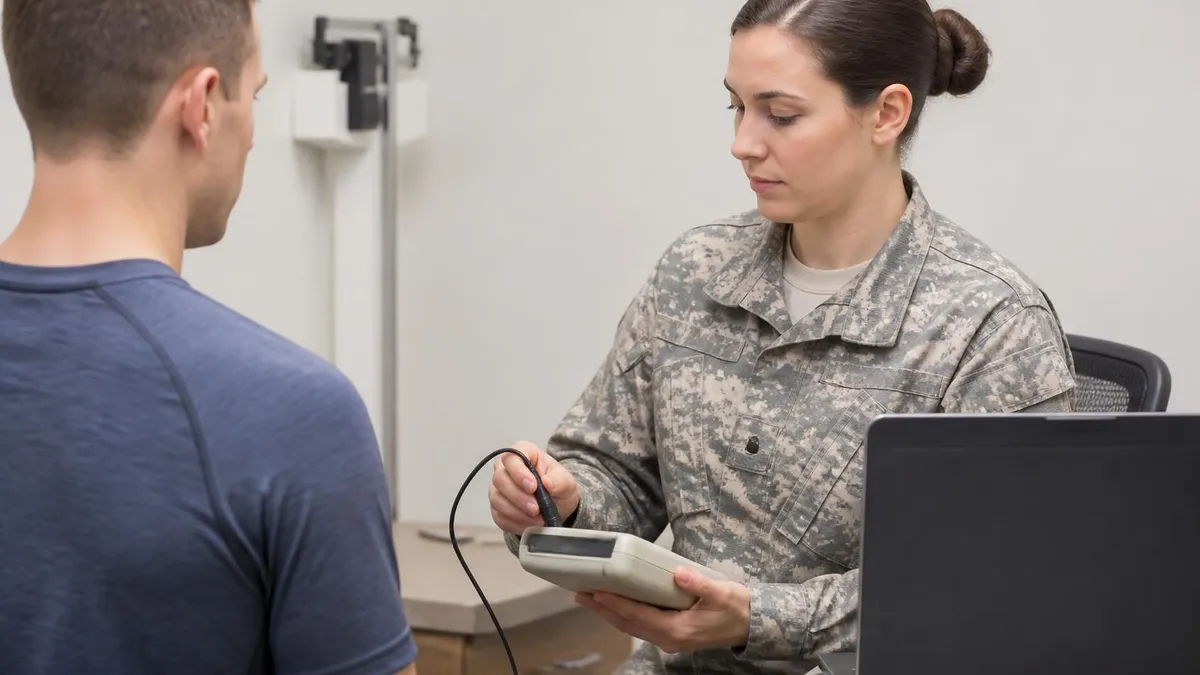
Dallas MEPS in Dallas TX: Complete Recruit Processing Guide
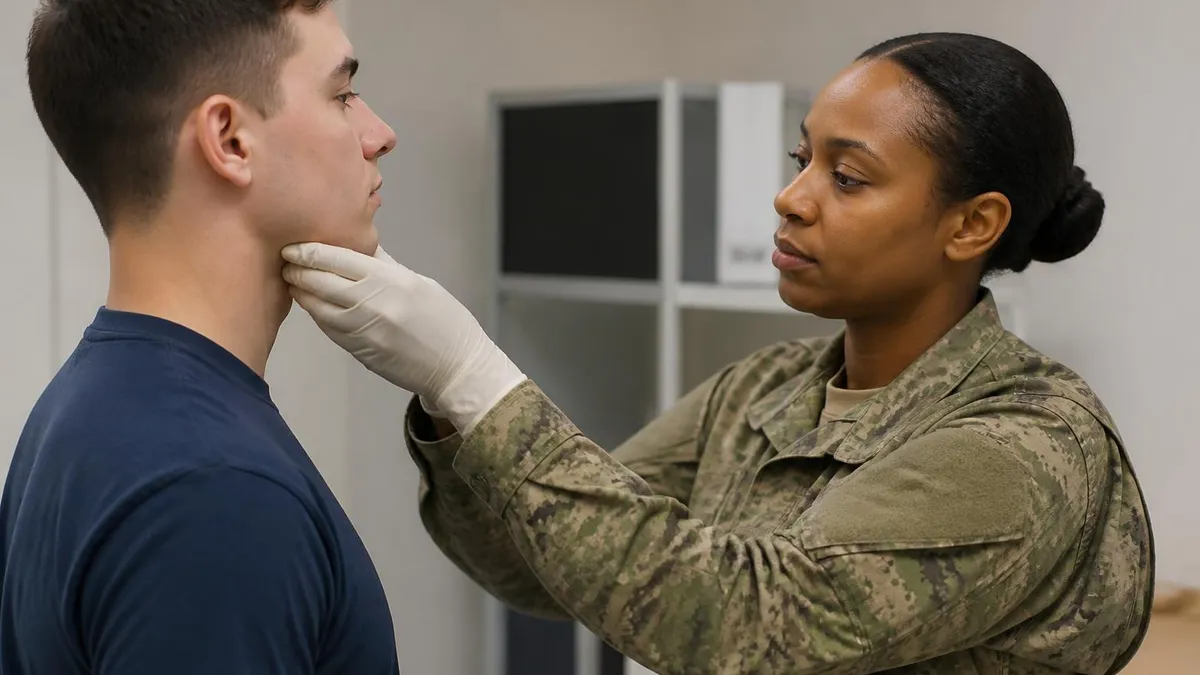
MEPS San Antonio: Your Complete Guide to Fort Sam Houston Processing

Can I Switch Branches at MEPS? Complete MEPS Process and Rules Guide
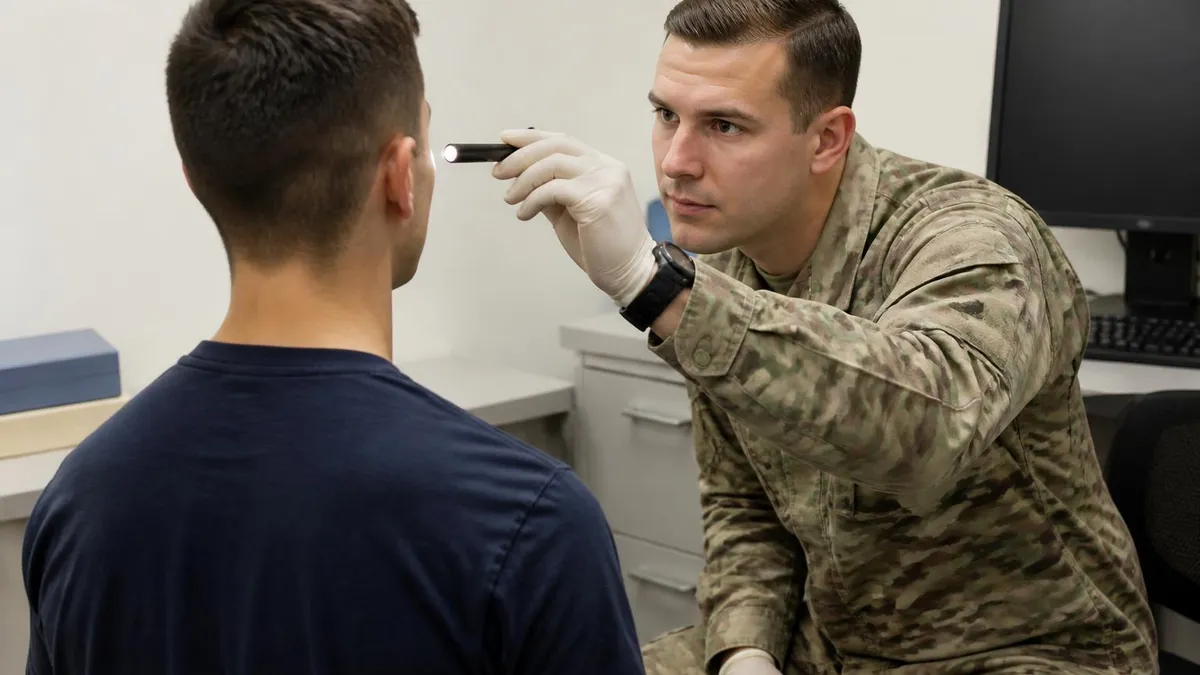
MEPS Test Guide: What to Expect at Military Entrance Processing
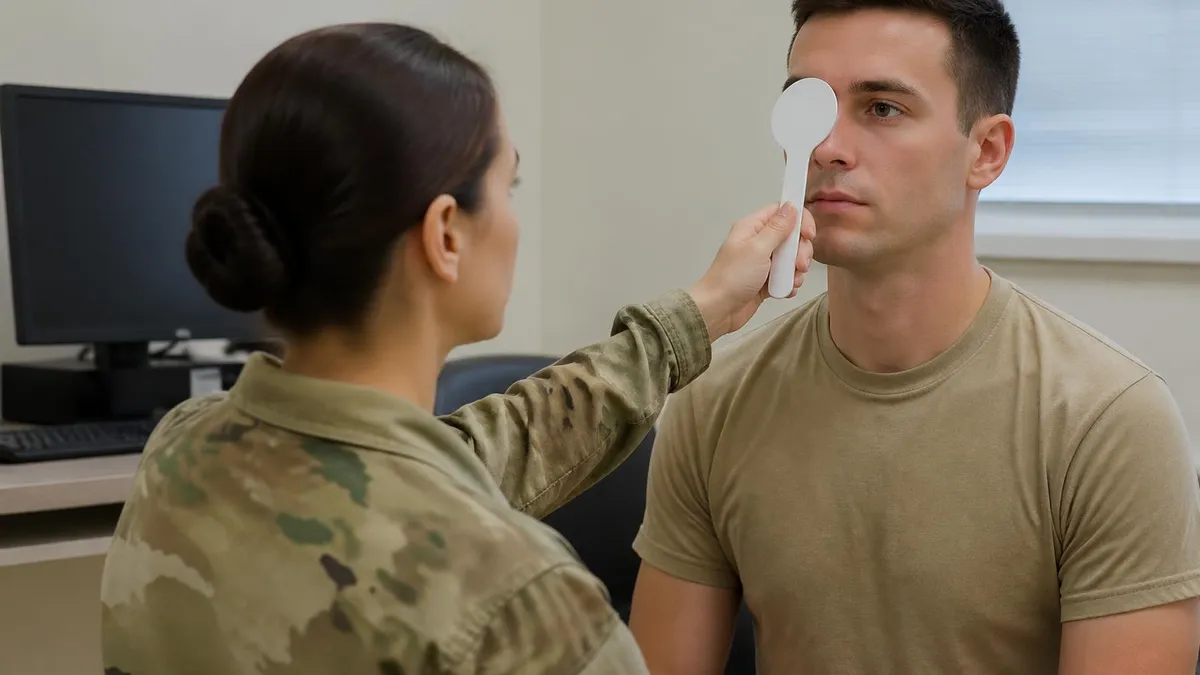
Fort Jackson MEPS: Military Processing in Columbia, SC
About the Author

Retired Military Officer & Armed Forces Test Preparation Specialist
United States Army War CollegeColonel Steven Harris (Ret.) served 28 years in the US Army, earning a Master of Arts in Military Science from the Army War College and a Bachelor of Science in Criminal Justice. He has coached thousands of military enlistment and officer candidate program applicants through the ASVAB, AFQT, AFCT, OAR, and officer selection assessment processes across all military branches.
Join the Discussion
Connect with other students preparing for this exam. Share tips, ask questions, and get advice from people who have been there.
View discussion (8 replies)