
HVAC Reddit: What the Community Really Says About Careers, Certifications, and Staying Cool on the Job
Explore what the HVAC Reddit community says about certifications, salaries, apprenticeships, and passing your exams. Real advice from working techs. 📝
If you've ever typed a question into a search bar late at night wondering whether HVAC is a good career, whether you'll pass your EPA 608 exam on the first try, or what journeyman techs really earn in your region, chances are you ended up on Reddit.
The hvac reddit community — spread across subreddits like r/HVAC, r/HVACadvice, and r/Plumbing — has become one of the most candid, experience-driven resources available to anyone entering or advancing in the heating, ventilation, and air conditioning trade. Real technicians share their stories without the polish of a marketing brochure, and that raw honesty is exactly what makes these threads so valuable.
What you'll find in those communities is strikingly consistent: experienced techs emphasize that the HVAC trade rewards those who invest in their fundamentals early. Newcomers who skip the theory — refrigerant cycles, psychrometrics, load calculations — often struggle with diagnostics for years, while those who grind through the basics in an accredited program or apprenticeship hit the ground running. Reddit threads are full of veterans telling students to learn the "why" behind every system, not just memorize the procedure. That advice translates directly to exam success and long-term career advancement.
The community also has strong opinions about certifications. EPA 608 Type I, II, III, and Universal are discussed constantly, with threads breaking down which certification matters most for residential versus commercial work. Many techs argue that getting your Universal certification as early as possible opens the most doors, even if your current shop only handles residential splits. The NATE certification also comes up frequently, with experienced technicians noting that NATE-certified techs often command higher hourly rates and are more attractive to premium service companies.
Salary discussions are some of the most active threads on HVAC Reddit. Techs in high cost-of-living metros — New York, San Francisco, Seattle — report dramatically different numbers than those in the Southeast or Midwest, and the community is refreshingly open about what to expect at each career stage. Helper wages, apprentice wages, journeyman rates, and lead tech compensation are all discussed openly, giving newcomers a realistic picture before they commit to a training program. These threads make it clear that HVAC is not a single income bracket; it's a spectrum shaped by certification level, employer type, and regional demand.
One recurring theme across HVAC Reddit is the question of independent contracting versus working for an established company. Small business ownership is romanticized by some and cautioned against by others, with detailed breakdowns of van costs, tool investments, insurance premiums, and the reality of chasing invoices. The consensus tends to be that building solid technical skills and a strong reputation while employed is the right foundation before going solo — advice that aligns with what most trade school instructors and union apprenticeship coordinators say as well.
Beyond career strategy, Reddit's HVAC communities function as a real-time troubleshooting resource. Homeowners post photos of failed capacitors, techs debate refrigerant subcooling targets, and apprentices ask whether their journeyman's wiring approach is code-compliant. The breadth of technical discussion is remarkable, covering everything from ductwork static pressure calculations to communicating thermostat wiring diagrams. For anyone studying for a certification exam, browsing these threads is an excellent supplement to formal study materials — real-world scenarios that textbooks rarely present.
Whether you're a homeowner trying to understand a repair quote, a student preparing for your first EPA exam, or a seasoned tech curious about what peers across the country are earning, the HVAC Reddit ecosystem offers something genuinely useful. This article synthesizes the most common questions, debates, and pieces of advice found across those communities, organized into a practical guide for anyone who wants to navigate the HVAC trade more confidently.
HVAC Trade — Key Numbers Discussed on Reddit
The Most-Discussed HVAC Career Paths on Reddit
The most common entry point for new techs. Redditors note strong demand year-round, especially in Sun Belt states. Involves diagnosing and repairing split systems, heat pumps, and furnaces in single-family homes.
Higher complexity work on rooftop units, chillers, and VAV systems. Reddit users consistently report higher wages and more stable hours than residential, though the learning curve is steeper and certifications matter more.
Building automation system work blends HVAC with IT. A niche many Reddit techs call a hidden gem — strong pay, indoor work, and growing demand as building intelligence expands across commercial real estate.
Customer-facing role that combines technical knowledge with consultative selling. Reddit threads note that top sales reps with real field experience can earn significantly more than bench technicians through commission structures.
Many Reddit threads romanticize and caution against going solo. The consensus: build 5–7 years of field experience first, establish a customer base, and understand overhead costs before hanging your own shingle.
Certification is one of the most passionately debated topics across HVAC Reddit threads, and for good reason: the certifications you hold directly determine which jobs you can legally perform, how much employers are willing to pay you, and how seriously customers take your estimates. The EPA Section 608 certification is non-negotiable — federal law requires it before you can purchase or handle regulated refrigerants. Most Reddit veterans recommend going straight for Universal rather than limiting yourself to a single type, even if your current employer only works on residential equipment. The cost difference is minimal and the flexibility is enormous.
NATE certification — from the North American Technician Excellence organization — comes up in almost every salary discussion on Reddit. Employers offering premium wages consistently list NATE as a preferred or required credential, and multiple Reddit users have shared specific examples of receiving raises after passing their first NATE specialty exam. The most commonly pursued specialties include Air Conditioning and Heat Pump Service, Gas Heating Service, and Air Distribution. Many techs recommend starting with whichever specialty aligns most closely with your current daily work so you're studying material you encounter regularly.
The HVAC Excellence certification is another credential that appears frequently in Reddit discussions, particularly in threads about commercial work and instructional roles. While NATE tends to dominate the residential and light commercial conversation, HVAC Excellence credentials are often valued in union environments and by larger commercial contractors. Some Reddit users hold both, noting that the redundancy rarely hurts and occasionally opens doors that would otherwise require negotiation.
State licensing requirements generate some of the most location-specific discussions on Reddit. Because licensing is regulated at the state level, what's required in Texas differs substantially from Florida, California, or Michigan. Reddit threads are a surprisingly good resource for state-specific experiences — users regularly share which states have difficult exams, which reciprocate licenses with neighboring states, and which jurisdictions are more lenient with supervision requirements for apprentices. If you're considering relocating for work, these threads can save you weeks of research navigating state contractor board websites.
Refrigerant certification is evolving rapidly, and Reddit threads have tracked the EPA's regulatory changes closely. The transition from R-22 to R-410A, and the ongoing industry shift toward A2L refrigerants like R-32 and R-454B, has generated extensive discussion about what additional training and certifications techs may need in the coming years. Forward-looking Reddit users recommend getting familiar with A2L safety protocols now, before the equipment reaches widespread deployment, to avoid being caught flat-footed when new systems become the market standard.
For those pursuing the HVAC Excellence Master Specialist designation or the Mechanical Journeyman license in states that offer it, Reddit users emphasize the value of structured study rather than relying solely on field experience. The exams test code knowledge, load calculation methodology, and system design principles that many experienced techs haven't formally studied since their training program. Multiple Reddit success stories involve techs who spent six to eight weeks working through ASHRAE fundamentals and state mechanical code before sitting for advanced exams — and passed on the first attempt as a result.
One underrated piece of advice that surfaces regularly in Reddit threads is the recommendation to document your continuing education and certifications meticulously. Keeping a portfolio of your credentials, manufacturer training certificates, and factory school completions makes you a more compelling candidate when negotiating raises or interviewing at a new company. Several Reddit users describe landing senior positions specifically because they could demonstrate a breadth of factory certifications — Carrier, Trane, Daikin, Mitsubishi — that competitors lacked.
HVAC Practice Test Questions
Prepare for the HVAC - Heating Ventilation and Air Conditioning exam with our free practice test modules. Each quiz covers key topics to help you pass on your first try.
HVAC Air Conditioning
HVAC Exam Questions covering Air Conditioning. Master HVAC Test concepts for certification prep.
HVAC Code Compliance
Free HVAC Practice Test featuring Code Compliance. Improve your HVAC Exam score with mock test prep.
HVAC Electrical Controls
HVAC Test Prep for Electrical Controls. Practice HVAC Quiz questions and boost your score.
HVAC Energy Efficiency
HVAC Questions and Answers on Energy Efficiency. Free HVAC practice for exam readiness.
HVAC Heating Systems
HVAC Mock Test covering Heating Systems. Online HVAC Test practice with instant feedback.
HVAC Load Calculations
Free HVAC Quiz on HVAC Load Calculations. HVAC Exam prep questions with detailed explanations.
HVAC Tools and Equipment
HVAC Practice Questions for HVAC Tools and Equipment. Build confidence for your HVAC certification exam.
HVAC Refrigeration
HVAC Test Online for Refrigeration. Free practice with instant results and feedback.
HVAC Safety Practices
HVAC Study Material on Safety Practices. Prepare effectively with real exam-style questions.
HVAC System Design
Free HVAC Test covering System Design. Practice and track your HVAC exam readiness.
HVAC Thermodynamics
HVAC Exam Questions covering Thermodynamics. Master HVAC Test concepts for certification prep.
Reddit's Best Study Strategies for HVAC Certification Exams
Reddit's consensus on EPA 608 prep centers on one resource above all others: the ESCO Group's EPA study guide, which mirrors the actual exam structure closely enough that many users report recognizing specific question formats. Most techs recommend reading the guide cover to cover once, then doing timed practice exams until you're consistently scoring above 85 percent. The Universal exam covers core, Type I (small appliances), Type II (high-pressure), and Type III (low-pressure) sections, so budget at least two to three weeks of dedicated study if you're tackling all four.
One frequently cited Reddit tip is to pay special attention to the regulations section, which tests knowledge of the Clean Air Act, record-keeping requirements, and refrigerant sales restrictions. Many test-takers underestimate this section and lose points on questions they could have answered correctly with one extra hour of reading. Online practice tests are widely recommended as a supplement, with several free platforms cited regularly in Reddit threads as accurate representations of real exam difficulty and question style.
Is Following HVAC Reddit Advice Worth It? Pros and Cons
- +Real, unfiltered experience from working technicians across every U.S. region and specialty
- +Salary data shared candidly, including specific employers, cities, and compensation structures
- +Rapid crowdsourced troubleshooting for unusual diagnostic scenarios not covered in textbooks
- +Up-to-date discussion of regulatory changes, new refrigerant transitions, and emerging certifications
- +Peer support and mentorship opportunities through direct messaging active community members
- +Access to recommendations for specific tools, meters, and equipment from people who use them daily
- −Advice quality varies widely — a vocal poster may have limited or region-specific experience
- −Salary figures can be cherry-picked or exaggerated, skewing expectations unrealistically upward
- −Technical troubleshooting advice from strangers carries risk if applied to live electrical systems
- −Code and regulation discussions may reflect outdated versions or state-specific rules not applicable everywhere
- −Negativity bias exists — frustrated techs post complaints more often than satisfied ones post praise
- −No accountability for wrong answers, unlike certified instructors or licensed continuing education providers
HVAC Certification Exam Prep Checklist — Reddit-Approved Steps
- ✓Obtain the official study guide for your specific exam (EPA 608, NATE, or state license) before studying anything else.
- ✓Download your exam's content blueprint and highlight every domain with more than 15 percent weighting.
- ✓Complete at least 200 practice questions before your exam date, tracking which categories you miss most.
- ✓Review refrigerant pressure-temperature charts until you can estimate saturation temperatures without looking them up.
- ✓Study the full text of EPA Section 608 regulations, not just the technical refrigeration content.
- ✓Practice reading electrical wiring diagrams until you can trace a complete circuit in under two minutes.
- ✓Take at least three timed, full-length practice exams under realistic no-phone conditions before test day.
- ✓Join the relevant Reddit community and search for recent posts about your specific exam for current tips.
- ✓Schedule your exam date before you feel fully ready — a deadline accelerates preparation significantly.
- ✓Prepare your exam-day materials the night before: ID, exam confirmation, pencils, and allowed references.
The 'Universal First' Rule
The single most repeated certification advice on HVAC Reddit is to pursue EPA 608 Universal rather than a single-type certification, even if your current job only requires Type II. The incremental study time is minimal — roughly 20 percent more material — and Universal certification permanently removes refrigerant-handling restrictions from your career. Techs who limited themselves to one type have consistently reported needing to return and test again after changing employers or taking on commercial work.
Salary discussions are among the most trafficked threads on HVAC Reddit, and the data shared there paints a picture that official Bureau of Labor Statistics figures can obscure. The median annual wage for HVAC technicians sits around $57,300 nationally, but Reddit threads make clear that this number spans an enormous range.
A helper in rural Alabama earning $16 per hour and a licensed journeyman in San Francisco billing $48 per hour are both captured in that median, which is why geographic context matters so much when evaluating compensation expectations. Reddit's regional threads are invaluable for understanding what competitive pay actually looks like in your specific market.
Commercial HVAC technicians consistently earn more than residential techs in Reddit salary discussions, and the gap widens with specialization. Techs who develop expertise in chiller work, variable refrigerant flow systems, or building automation consistently report salaries in the $75,000 to $95,000 range, with the most experienced specialists in major metros crossing six figures. These aren't outliers — they're regular contributors to Reddit threads who share W-2 figures and detailed breakdowns of their compensation packages including overtime, truck allowances, and health benefits.
Union versus non-union pay is a recurring debate in HVAC Reddit salary threads. Union members in major cities — particularly in the UA (United Association of Plumbers and Pipefitters) — report strong base wages, defined benefit pensions, and comprehensive benefits packages that non-union shops rarely match.
Critics in the same threads point to union restrictions, slower advancement timelines, and geographic limitations as drawbacks. The honest answer, which most experienced Reddit commenters arrive at, is that union membership is highly valuable in certain markets and less so in others, and the decision should be made based on your specific city and career goals.
Overtime and seasonal demand are two factors that Reddit salary discussions emphasize far more than official salary surveys do. In extreme heat or cold weather regions, HVAC techs routinely report earning 30 to 40 percent of their annual income in just eight to ten weeks during peak season.
A tech earning $24 per hour base rate who works 65-hour weeks for six weeks in July can add $15,000 to $20,000 to their annual compensation beyond their regular pay. This seasonal bonus effect makes HVAC income much more front-loaded than a simple hourly rate suggests, and Reddit techs who budget for this reality tend to feel more financially stable than those who are surprised by slower winter periods.
Employer type also shapes compensation more than many new technicians expect. National service companies like ARS, One Hour Air Conditioning and Heating, and Service Experts offer structured pay scales, benefits, and training programs but typically pay less per hour than independent regional contractors. Smaller shops often pay higher hourly rates but provide fewer benefits and less job security.
Reddit threads exploring this tradeoff are particularly rich with specific examples — techs who left national companies for independents, or vice versa, sharing exactly how their compensation and quality of life changed. The consensus is that early in your career, the training infrastructure of a larger company may be worth accepting lower hourly pay.
Tool ownership is an overlooked compensation factor that Reddit threads address with unusual candor. Most HVAC jobs require a significant personal tool investment — refrigerant manifolds, recovery machines, digital multimeters, vacuum pumps, and hand tools can represent $5,000 to $15,000 in upfront cost for a fully equipped tech.
Some employers provide tools; most don't, or provide only partial sets. Reddit users advise factoring tool costs into your effective hourly rate when comparing job offers — an employer paying $24 per hour with full tool provision may be more financially attractive than one paying $27 per hour where you're responsible for all equipment.
Continuing education pays dividends that most Reddit salary threads quantify directly. Factory certifications from manufacturers like Carrier, Trane, Lennox, and Mitsubishi are often noted as triggers for wage increases, with several Reddit users describing raises of $1 to $3 per hour after completing manufacturer training programs. Over a 40-hour work week, even a $1.50-per-hour raise compounds to more than $3,000 annually — a strong return on a week of factory training. The Reddit community consistently encourages techs to negotiate for employer-paid factory training as a condition of employment and to document every certification received.
Multiple Reddit users who failed their state contractor license exam on the first attempt report the same culprit: underestimating the mechanical code and load calculation sections. Technical diagnostic skills built on the job do not automatically translate to code knowledge tested on paper. Budget at least two to three weeks specifically for code-based study, separate from your refrigeration and electrical review.
Avoiding the mistakes that derail new HVAC technicians is a subject that experienced Reddit contributors return to repeatedly, and the consistency of their advice suggests these are genuine, widespread pitfalls rather than isolated bad luck.
The most common mistake cited across threads is neglecting the theory behind the work — a tech who learns to replace capacitors and charge refrigerant without understanding why those components fail or what proper subcooling and superheat targets actually indicate will hit a diagnostic ceiling within a few years. Systems become more complex every season, and intuition built on procedure without theory breaks down when unusual failure modes appear.
Skipping the math is a related mistake that Reddit mentors address bluntly. Load calculations, duct sizing, static pressure analysis, and electrical circuit calculations are not just exam topics — they're tools that separate competent installers from skilled system designers. A tech who can correctly size a duct system for a 2,500-square-foot home with multiple zones will consistently deliver better comfort and efficiency outcomes than one who follows rules of thumb and manufacturer defaults. Reddit threads from homeowners complaining about comfort problems often trace back to original installations done without proper load calculations, reinforcing the practical value of this technical grounding.
Poor customer communication is a career-limiting mistake that Reddit threads from both technicians and homeowners highlight. Homeowners consistently describe experiences where a tech clearly diagnosed a problem but explained it in jargon that left the customer confused and distrustful. The result: a customer who calls a different company for a second opinion and ends up having the same repair done elsewhere. Reddit techs who describe strong repeat business and referrals consistently mention their ability to explain technical problems in plain language, draw simple diagrams on their invoices, and follow up after repairs to confirm everything is working correctly.
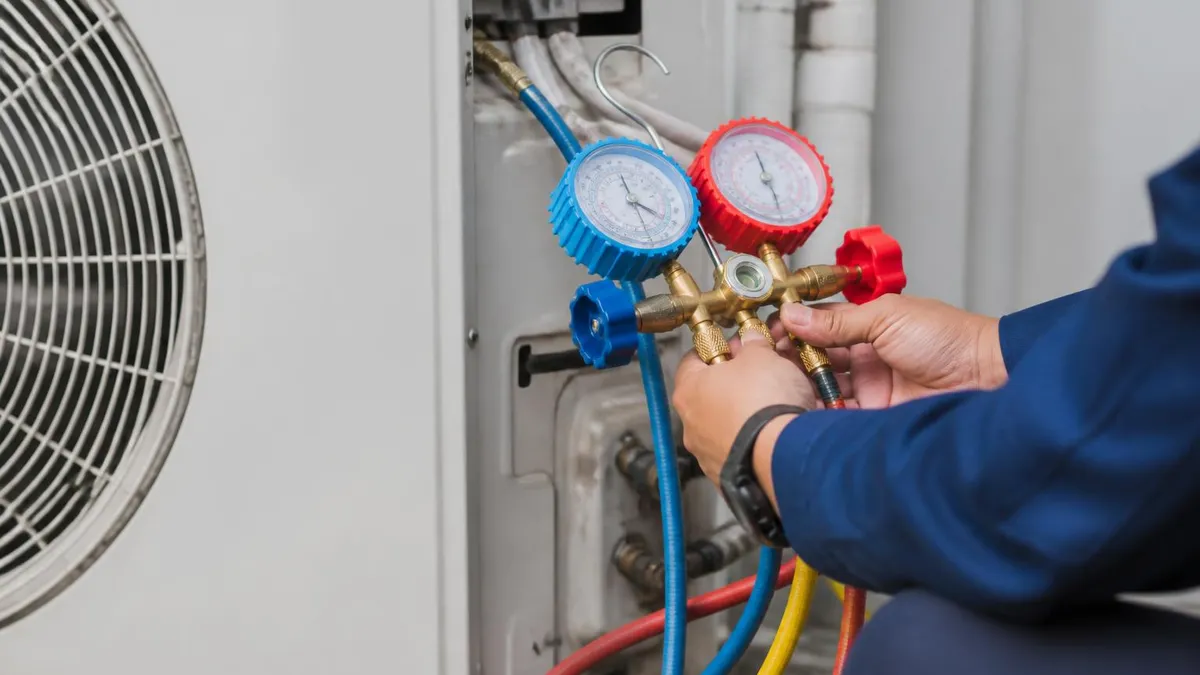
Underinvesting in test equipment is a mistake that costs techs money and credibility. A refrigerant manifold from 1998 and a multimeter from a discount bin are not adequate tools for diagnosing modern communicating systems, variable-speed equipment, or inverter-driven compressors. Reddit threads dedicated to tool recommendations are some of the most engaged on HVAC subreddits, with experienced techs regularly advocating for quality digital manifolds, clamp meters with HVAC-specific functions, and combustion analyzers for gas equipment. The return on quality tools — in accuracy, diagnostic speed, and customer confidence — consistently outweighs the upfront cost according to Reddit's experienced contributors.
Failing to build professional relationships early is a mistake that Reddit users in their fifth or tenth year of the trade repeatedly wish they'd avoided. The HVAC industry is relationship-driven — the best job opportunities, the most interesting projects, and the most reliable subcontractor networks all run through personal connections built at trade shows, continuing education classes, manufacturer training events, and, yes, online communities including Reddit itself. Techs who keep their heads down and skip industry events often find themselves isolated when they want to make career moves or need a hand on a complex job.
Ignoring safety protocols is a mistake that Reddit threads discuss with a gravity that reflects real consequences. Electrical hazards, refrigerant burns, heat stroke, and fall injuries are genuinely common in HVAC work, and the community does not treat safety shortcuts as acceptable efficiency gains. Multiple Reddit threads include accounts of serious injuries resulting from skipped lockout/tagout procedures, improper ladder use, or inadequate PPE during refrigerant recovery. The trade is physically demanding enough without compounding risk through carelessness, and experienced techs are uniformly firm about safety culture being a non-negotiable part of professional practice.
Not tracking continuing education hours can create a stressful certification renewal scramble that Reddit users regularly describe in frustrated posts. Most NATE certifications require eight hours of continuing education every two years, and several state licenses have similar requirements. Techs who ignore these requirements until renewal notices arrive often find themselves scrambling for last-minute CEU credits at premium prices. The simple fix, mentioned in dozens of Reddit threads: add your certification renewal dates to a calendar reminder system, and complete your CEU hours steadily throughout the certification period rather than in a last-minute rush.
Practical preparation advice for HVAC certification exams is one area where Reddit's community wisdom consistently aligns with what formal study guides recommend — and where the two sources complement each other well. The most fundamental piece of advice that surfaces across hundreds of Reddit threads is to start studying earlier than you think necessary.
Most techs who describe passing on the first attempt began dedicated study six to eight weeks before their exam date, not two weeks out. The confidence that comes from having extra time to revisit weak areas cannot be replicated by cramming, especially for exams that test applied reasoning rather than simple memorization.
Building a study schedule with specific daily goals is advice that appears in Reddit exam prep threads with notable frequency. Vague intentions to study are almost always displaced by work demands, family obligations, and fatigue. Techs who succeed consistently describe a structured plan: specific topics on specific days, a fixed number of practice questions per session, and weekly review of their weakest areas. Thirty to forty minutes of focused daily study consistently outperforms sporadic three-hour sessions in Reddit success stories, likely because spaced repetition processes information more effectively than massed practice.
Study groups — whether in-person with coworkers or online through Reddit and Discord — are mentioned repeatedly as a powerful accelerator. Explaining a concept to someone else forces a depth of understanding that passive reading never achieves, and a peer who can ask follow-up questions will expose gaps in your knowledge faster than a practice test.
Several Reddit users describe setting up informal study partnerships where each person was responsible for teaching one content domain to the other, turning mutual gaps into shared strengths. This approach is particularly effective for domains like psychrometrics or load calculation that are genuinely difficult to master from a textbook alone.
Managing exam-day logistics is a topic that Reddit users discuss with the kind of specificity that only comes from personal experience. Prometric and PSI testing centers — the two most common HVAC exam proctors — have strict ID requirements, prohibited items lists, and check-in procedures that can derail an unprepared candidate.
Multiple Reddit posts describe techs who drove an hour to a testing center only to be turned away for a documentation issue that a five-minute pre-review would have caught. The advice is consistent: read the testing center's candidate handbook completely, arrive thirty minutes early, and bring multiple forms of identification even if only one is listed as required.
Post-exam strategy is something Reddit users discuss less often but with meaningful insight. Techs who pass their first certification exam frequently describe a period of diminished study motivation before pursuing the next credential — the relief of passing creates a temporary plateau that can last months or years.
The Reddit users with the most impressive certification portfolios consistently describe deliberately scheduling their next exam before the current exam result is even in hand, using forward momentum to avoid that plateau. This approach treats certification as a continuous professional development process rather than a finish line, which aligns well with the career trajectories of the highest-earning techs in Reddit's salary discussions.
Using PracticeTestGeeks resources alongside Reddit community advice creates a particularly effective preparation strategy. While Reddit provides real-world context, regional salary data, and experienced technician perspectives, structured practice tests ensure you're covering the formal content domains your exam will actually test. The combination of community wisdom and systematic practice question review addresses both the practical application gaps that field-experienced techs often have and the theoretical foundations that technicians from non-traditional backgrounds sometimes need to reinforce.
The HVAC trade continues to evolve rapidly, with smart home integration, inverter-driven equipment, A2L refrigerant transitions, and building electrification reshaping what technicians need to know. Reddit communities are documenting this evolution in real time, with threads on new equipment diagnostics, emerging code requirements, and skill gaps appearing regularly. Staying engaged with these communities isn't just useful for exam prep — it's a career-long professional development strategy that keeps you informed about changes before they show up in the field, ensuring you're always one of the best-prepared technicians in your region.
HVAC Questions and Answers
HVAC Sales: The Complete Guide to Selling Heating and Cooling Systems, Building Customer Trust, and Closing More Deals
HVAC Air Duct Sealing: The Complete Homeowner and Contractor Guide to Sealing Ductwork for Efficiency, Comfort, and Indoor Air Quality
HVAC Solutions: The Complete Guide to Heating, Cooling, and Indoor Air Quality Systems for Homes and Buildings

Commercial HVAC Repair: Systems, Costs, and Service Strategies
HVAC Apprenticeship Programs: Your Complete Guide to Starting a Hands-On Career in Heating, Ventilation, and Air Conditioning
About the Author

NATE Certified HVAC Technician & Licensing Exam Trainer
Universal Technical InstituteMike Johnson is a NATE-certified HVAC technician and EPA 608 universal-certified refrigerant handler with a Bachelor of Science in HVAC/R Technology. He has 19 years of commercial and residential HVAC installation and service experience and specializes in preparing technicians for NATE certification, EPA 608, A2L refrigerant safety, and state HVAC contractor licensing examinations.