
Traveling HVAC Jobs: How to Find High-Paying Opportunities, What to Expect on the Road, and How to Build a Mobile HVAC Career
Discover traveling HVAC jobs — salaries, top employers, what the work is really like, and how to land your first road assignment. 🎯
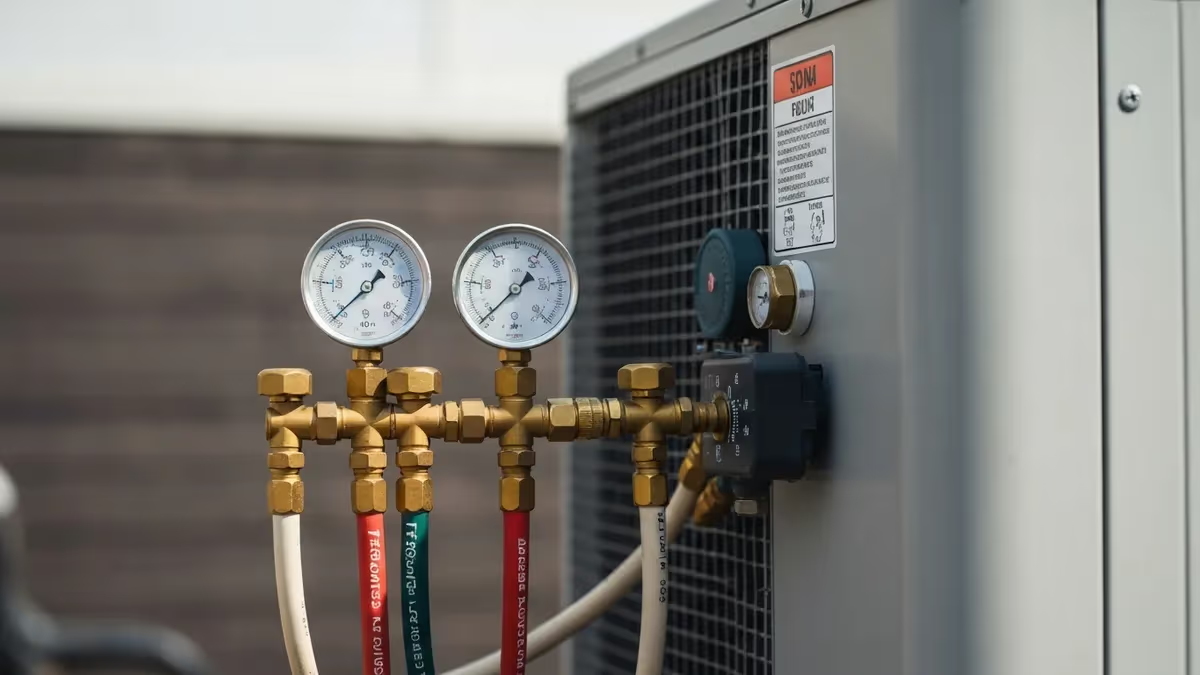
Traveling HVAC jobs represent one of the most lucrative and adventurous career paths available to skilled heating, ventilation, and air conditioning technicians in the United States today. Instead of servicing the same neighborhood week after week, traveling technicians move from city to city — or even state to state — tackling complex installations, emergency repairs, and commercial commissioning projects that local crews lack the capacity or specialized knowledge to handle. The demand for mobile HVAC talent has surged alongside rapid commercial construction and aging building infrastructure across the country.
The financial rewards of a traveling HVAC career are substantial. Most traveling technicians earn between $65,000 and $95,000 per year in base wages, with per diem allowances, housing stipends, and overtime pay pushing total compensation well above $100,000 for experienced professionals. Contractors deploying mobile teams for large-scale projects — hospitals, data centers, industrial plants — routinely offer signing bonuses and travel reimbursements that make the nomadic lifestyle even more attractive for technicians willing to leave their home zip code behind.
Understanding what sets traveling HVAC work apart from residential service calls is essential before you commit to this career path. Traveling roles typically involve commercial, industrial, or specialty systems: rooftop package units, chiller plants, variable refrigerant flow systems, and building automation controls. Technicians must be comfortable working independently, managing their own schedules across time zones, coordinating with general contractors, and troubleshooting unfamiliar equipment in unfamiliar environments — often under tight commissioning deadlines.
Licensing requirements add a layer of complexity that every aspiring traveling technician must address early. HVAC licenses are issued at the state level, and while some states have reciprocity agreements, others require full re-examination. A technician based in Texas who picks up a long-term project in California needs to understand California's contractor licensing rules before the first tool bag is packed. The EPA Section 608 refrigerant handling certification is federal and universally recognized, making it the one credential that travels with you everywhere.
Staffing agencies and national HVAC contractors have built entire business models around traveling technicians, and knowing how to navigate this ecosystem gives you a significant advantage when searching for assignments. Companies like TechForce Services, Tradesmen International, and national chains such as Johnson Controls and Carrier Enterprise deploy traveling technicians on contract terms ranging from two-week project sprints to twelve-month plant-maintenance agreements. Understanding the difference between W-2 travel positions and 1099 independent contractor roles is critical for managing your taxes and benefits correctly on the road.
If you have been exploring traveling hvac jobs and wondering whether the lifestyle suits you, this guide covers everything from salary expectations and top employers to practical packing strategies and the certifications most likely to unlock the highest-paying assignments. Whether you are a journeyman technician considering your first travel contract or an experienced commercial HVAC professional looking to maximize earnings, the roadmap ahead will help you make an informed decision and hit the ground running.
The competition for the best traveling HVAC assignments is real, but it rewards technicians who invest in their credentials, maintain clean driving records, and demonstrate reliability across multiple project types. A single successful long-term contract with a national mechanical contractor can open doors to a roster of recurring travel opportunities that keep your calendar — and your bank account — full year-round.
Traveling HVAC Jobs by the Numbers
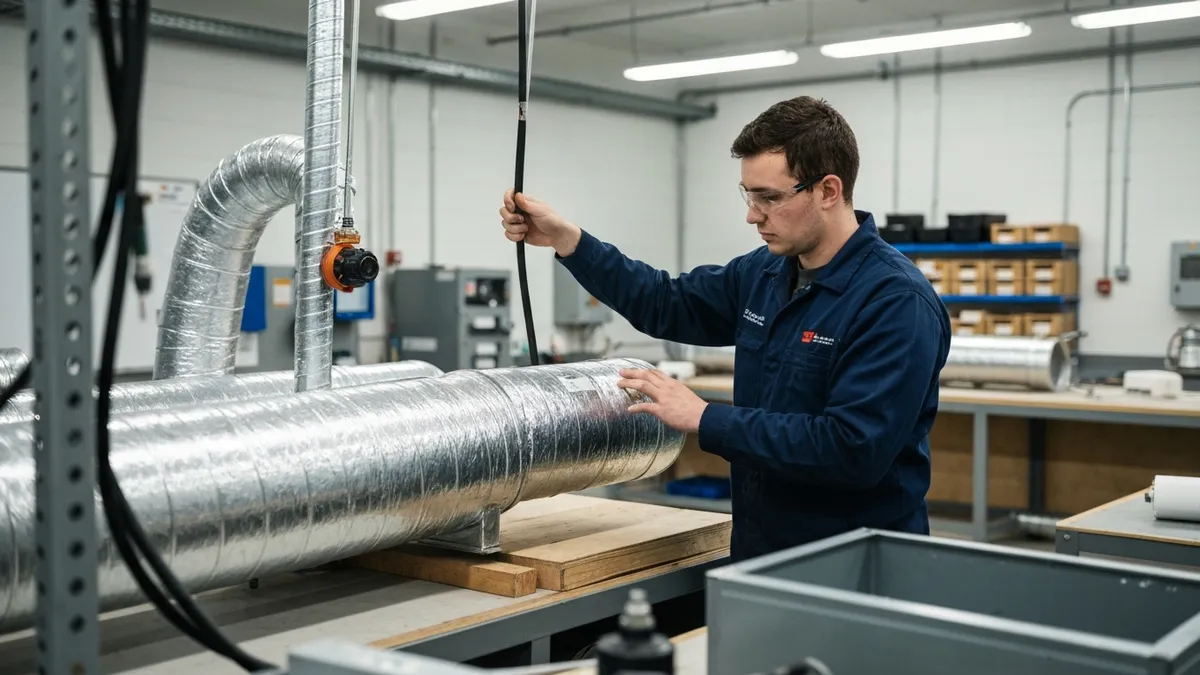
Types of Traveling HVAC Positions
Dispatched to commercial or industrial sites for emergency repairs and preventive maintenance. Typically assigned by staffing agencies or national service contractors on two- to twelve-week rotations. Requires EPA 608 certification and strong diagnostic skills across multiple equipment brands.
Works on newly installed HVAC systems at construction sites, verifying that equipment operates within design specifications before a building is handed over to the owner. High pay, fast-paced, and deadline-driven. Often requires manufacturer-specific training credentials.
A higher-level traveling role focused on complex troubleshooting, warranty support, and technical training for equipment manufacturers like Carrier, Trane, or Daikin. Requires deep systems knowledge and often a two- or four-year degree in addition to field experience.
Embedded at a single industrial or manufacturing facility for six to eighteen months, maintaining all HVAC, refrigeration, and mechanical systems on-site. Long-term stability with travel-level pay. Ideal for technicians who prefer depth over variety.
Understanding the pay structure for traveling HVAC jobs is the single most important financial exercise you can do before accepting your first road assignment. Base hourly wages for traveling technicians typically range from $28 to $48 per hour depending on your experience level, geographic market, and the complexity of the systems you will be servicing. On top of that base rate, most travel contracts layer in a per diem allowance — usually between $75 and $150 per day — that covers meals and incidentals and is generally not subject to federal income tax when properly structured under IRS guidelines.
Housing stipends represent another major component of traveling HVAC compensation. Some employers book and pay for accommodations directly, while others provide a weekly lodging allowance ranging from $700 to $1,400 that you manage yourself. Technicians who are strategic about finding cost-effective housing — corporate apartments, extended-stay hotels, or short-term rental platforms — can pocket a meaningful portion of that stipend as additional tax-free income, effectively boosting their real compensation by thousands of dollars per year without working a single extra hour.
Overtime is where traveling technicians can dramatically accelerate their annual earnings. Commercial HVAC projects routinely run six or seven days a week during critical construction phases, and federal overtime rules require employers to pay time-and-a-half for hours worked beyond forty in a workweek. A traveling technician earning $38 per hour base rate who works fifty-five hours per week earns an effective rate of $47 per overtime hour for those extra fifteen hours — and that pattern sustained over a twelve-week project adds roughly $8,400 to the total contract payout before per diem is even counted.
The distinction between W-2 employment and 1099 independent contractor status has enormous financial implications for traveling technicians. W-2 travelers receive employer-withheld taxes, workers' compensation coverage, and often employer-sponsored health insurance — conveniences that reduce administrative burden on the road. Independent contractors earn higher gross hourly rates but must self-fund their health insurance, pay both the employee and employer portions of Social Security and Medicare taxes (the self-employment tax), and maintain meticulous records of deductible business expenses including tools, vehicle mileage, and professional development costs.
Signing bonuses have become increasingly common as the skilled labor shortage in the HVAC industry deepens. National contractors competing for experienced traveling technicians often offer bonuses of $1,500 to $5,000 for accepting a contract of ninety days or longer. These bonuses are typically structured with clawback provisions — meaning if you leave the assignment before the agreed end date, you repay a prorated portion of the bonus. Reading the fine print on any signing bonus offer before accepting is absolutely non-negotiable.
Benefits packages vary dramatically across the traveling HVAC employment landscape. Some national mechanical contractors offer comprehensive benefits — medical, dental, vision, and 401(k) matching — even for traveling technicians on project-based assignments. Staffing agencies, by contrast, may offer minimal benefits or none at all beyond the legally required workers' compensation coverage. When comparing two travel offers with different compensation structures, always translate both into a total annual value that includes benefits costs so you are making an apples-to-apples comparison.
Retirement planning deserves special attention for technicians pursuing long-term traveling HVAC careers. The combination of high gross earnings, tax-advantaged per diem income, and potential 1099 status creates both an opportunity and a risk: without disciplined saving, a high-earning traveling technician can reach their late forties with minimal retirement assets despite impressive annual income. Maximizing contributions to a SEP-IRA or solo 401(k) while your earnings are at their peak is one of the smartest financial moves a traveling HVAC professional can make.
Top Employers and How to Find Traveling HVAC Work
National mechanical contractors like Johnson Controls, Carrier Enterprise, Trane Technologies, and EMCOR Group maintain large traveling workforce programs that deploy technicians across dozens of states simultaneously. These companies offer the stability of a W-2 paycheck combined with travel-level compensation, and their scale means that a technician who performs well on one regional project is often fast-tracked to the next assignment without gaps in employment. Building a relationship with a recruiter at one of these firms is often the fastest path to consistent traveling HVAC work.
To get noticed by national contractors, update your resume to highlight any multi-site or specialty system experience, and obtain manufacturer-specific certifications from Daikin, Lennox, or Mitsubishi Electric if possible. These credentials signal that you can hit the ground running on commercial and light-industrial projects without extensive ramp-up time. Many national contractors post traveling positions on their own career portals before listing them on job boards, so checking company websites weekly gives you a first-mover advantage over technicians who rely solely on job aggregators.
Pros and Cons of Traveling HVAC Jobs
- +Significantly higher total compensation than local HVAC service roles, often exceeding $90,000 annually with per diem included
- +Tax-free per diem and housing stipends effectively increase take-home pay without increasing taxable wages
- +Rapid skill development through exposure to diverse equipment brands, building types, and regional code variations
- +Opportunities to build a nationwide professional network that generates future job leads and references
- +Signing bonuses and project completion bonuses reward commitment and add lump-sum income
- +High job security driven by persistent nationwide skilled labor shortages in the HVAC trades
- −Extended time away from family, friends, and community creates real personal and relationship strain
- −State licensing reciprocity gaps can temporarily limit your ability to pull permits in new markets
- −Health insurance and retirement benefits are often reduced or self-funded compared to permanent positions
- −Unpredictable project timelines can leave gaps between assignments without guaranteed income
- −Constant travel logistics — flights, rental cars, hotel stays — create fatigue and administrative burden
- −Income variability between high-earning contract periods and slow weeks requires disciplined budgeting
Traveling HVAC Technician Preparation Checklist
- ✓Obtain or renew your EPA Section 608 Universal certification before applying to any traveling position
- ✓Research HVAC contractor license reciprocity for your three most likely target states and begin applications early
- ✓Build a resume that lists specific equipment brands, refrigerant types, and commercial system categories you have serviced
- ✓Register with at least two HVAC staffing agencies and keep your availability calendar current and accurate
- ✓Open a dedicated bank account for travel income and expenses to simplify tax filing at year-end
- ✓Consult a tax professional familiar with traveling trades workers before your first assignment to structure per diem correctly
- ✓Pack a compact, airline-checkable tool kit that meets TSA guidelines and covers your most common diagnostic tasks
- ✓Obtain a reliable vehicle or confirm employer vehicle policy before accepting assignments requiring local driving
- ✓Pursue at least one manufacturer-specific certification from a major OEM like Daikin, Trane, or Mitsubishi
- ✓Review your health insurance options — marketplace plans, COBRA, or agency-provided coverage — before your start date
Per Diem Can Add $10,000+ to Your Annual Take-Home Pay
When structured correctly under IRS Publication 463 guidelines, per diem allowances for meals, incidentals, and lodging are not counted as taxable wages. A traveling HVAC technician receiving $100 per day in per diem across 200 working days per year collects $20,000 in tax-free income — the equivalent of earning roughly $27,000 in taxable wages at a 26% effective tax rate. Understanding this benefit is one of the most powerful financial moves a traveling technician can make.
Life on the road as a traveling HVAC technician is fundamentally different from anything a residential service technician experiences, and preparing mentally and logistically for that difference before your first contract will determine whether you thrive or burn out. The most immediate adjustment is the pace: commercial and industrial HVAC projects run on contractor timelines, not customer schedules, and a commissioning deadline that slips by even two weeks can cost the general contractor significant liquidated damages. As the HVAC technician on-site, you will feel that pressure daily and must develop the ability to work effectively under it.
Accommodation quality varies enormously depending on the employer, the project location, and how proactively you manage your lodging arrangements. In major metropolitan areas, national contractors often book technicians into extended-stay hotels with kitchens, laundry, and reliable Wi-Fi — conditions that make a twelve-week assignment genuinely comfortable.
In rural industrial markets, the nearest decent motel may be a forty-minute drive from the job site, and the local food options might consist of two gas stations and a drive-through. Experienced traveling technicians scout their accommodations before arrival using satellite maps and review platforms, and many maintain a personal checklist of minimum lodging requirements they will not compromise on.
Managing your physical health on extended road assignments requires intentional effort that many technicians underestimate until it affects their job performance. HVAC work is physically demanding under normal circumstances — lifting equipment, working in confined spaces, climbing ladders, crawling through mechanical rooms — and doing it in unfamiliar environments while mildly sleep-deprived from hotel stays and time zone changes multiplies the injury risk. Establishing a portable fitness routine, prioritizing sleep even when the crew suggests late nights, and maintaining a reasonable diet despite limited kitchen access are non-negotiable health practices for sustainable traveling HVAC careers.
Communication with your home base — family, partner, friends — requires more deliberate structure than most people anticipate before their first long assignment. The combination of long working hours, time zone differences, and physical exhaustion makes spontaneous daily connection difficult.
Traveling technicians who maintain strong personal relationships typically do so by establishing predictable communication routines: a morning text before the shift starts, a video call every other evening, and a clear schedule for when they will be home between assignments. Uncertainty about return dates is one of the most common sources of relationship strain in traveling HVAC careers, so over-communicating your project timeline with the people at home pays dividends.
Financial discipline on the road is harder than it sounds when you are earning well, living out of a hotel, and surrounded by colleagues who want to decompress at restaurants and bars after long shifts. The technicians who build genuine long-term wealth from traveling HVAC careers are typically those who treat their per diem as a tool for savings rather than a license to spend freely. Setting up automatic transfers to a savings or investment account on every payday — before discretionary spending decisions are made — is the single most effective budgeting strategy for road workers.
Safety compliance in unfamiliar work environments is a responsibility that traveling technicians must take especially seriously. Every new job site has its own safety culture, permit systems, lockout-tagout procedures, and site-specific hazard protocols. Arriving at a new project and assuming that the procedures match your previous employer's standards is a dangerous mistake.
Effective traveling technicians read the site-specific safety plan before their first shift, introduce themselves to the site safety officer, and ask clarifying questions about any procedure they are uncertain about rather than improvising. Your EPA certification, OSHA 10 or 30 card, and any confined-space entry credentials should all be current and physically accessible at every job site.
Loneliness is an honest reality of the traveling HVAC lifestyle that experienced road workers acknowledge openly even when it is not a comfortable topic. Being away from your established social network for weeks or months at a time can erode mental wellbeing gradually, and the warning signs — persistent irritability, declining motivation, poor sleep — are easy to dismiss as normal work fatigue.
Building a community of fellow traveling technicians through trade forums, union halls at your project location, or professional associations like ACCA gives you a social context that understands your lifestyle and can provide both camaraderie and practical advice for navigating the unique challenges of long-term road work.

Working as an HVAC contractor in a state where you are not properly licensed can result in fines, project shutdowns, and permanent damage to your professional record. Before accepting any traveling assignment, verify the specific licensing requirements for the destination state — including whether a journeyman license, contractor license, or both are required for the scope of work you will be performing. Some states allow a grace period for out-of-state technicians working under a licensed local contractor, but this provision has strict limits that vary by jurisdiction.
Building a sustainable long-term traveling HVAC career requires a fundamentally different mindset than excelling at a single local job. The technicians who remain in high demand — and command the best compensation — across a multi-decade road career are those who continuously expand their technical skill set, cultivate a reputation for reliability, and strategically manage the transitions between assignments rather than treating downtime as dead time. Every project is both a paycheck and a portfolio entry that either opens or closes doors to future high-value contracts.
Specialty certifications are the most direct lever available for increasing your value as a traveling HVAC technician. Beyond the baseline EPA Section 608 certification, credentials in building automation systems (BAS), variable refrigerant flow (VRF) systems, chiller plant operations, and specific manufacturer platforms like Honeywell, Siemens, or Johnson Controls Metasys dramatically expand the pool of projects you qualify for. Many of these certifications can be obtained through online coursework supplemented by hands-on manufacturer training sessions that last one to three days — an investment of time and money that typically pays back within the first contract where the credential applies.
Networking within the commercial HVAC industry is not a soft skill for traveling technicians — it is a primary business development activity. The majority of the best traveling assignments are never posted publicly; they are filled through referrals from trusted contacts within mechanical contracting firms, commissioning agencies, and equipment manufacturers. Attending regional ASHRAE chapter meetings, visiting trade shows like AHR Expo, and maintaining active LinkedIn engagement with former colleagues and supervisors keeps your name visible in the professional networks where traveling work is distributed informally among known quantities.
Union membership is a practical consideration that traveling technicians should evaluate seriously rather than dismissing reflexively. The United Association (UA) of Plumbers and Pipefitters and IBEW Local chapters in HVAC-adjacent electrical work have established traveling card systems that allow union members to pick up work in any affiliated local across the country. Union traveling cards provide access to negotiated wage scales, pension contributions, and health benefits that can be significantly more favorable than what non-union traveling technicians can negotiate individually — particularly on major commercial and industrial projects where union contractors hold the predominant share of the work.
Transitioning out of full-time road work into a senior or management role is the natural progression for many traveling HVAC professionals who want to stabilize their lifestyle without sacrificing the higher compensation that travel-level experience commands. Roles such as commissioning manager, field service director, regional project manager, or technical trainer leverage the broad expertise accumulated through years of traveling work while eliminating or reducing the weeks-away-from-home component. Making this transition successfully requires building management and communication skills alongside your technical credentials throughout your road career — not scrambling to develop them when you are ready to settle down.
Maintaining your continuing education requirements is especially important for traveling HVAC professionals because license renewals in multiple states may have different credit-hour thresholds and approved provider lists. Tracking renewal deadlines across two or three active state licenses simultaneously — while managing project schedules — is the kind of administrative task that falls through the cracks under road fatigue. A simple digital calendar with license expiration reminders set ninety days in advance, combined with a habit of completing continuing education during slower project phases rather than cramming at the deadline, keeps your credentials continuously valid without last-minute scrambling.
The long-term career arc of a traveling HVAC professional is genuinely exceptional by the standards of most skilled trades. Technicians who enter the road workforce in their mid-twenties with journeyman credentials can realistically reach six-figure total compensation within three to five years, accumulate diverse technical expertise that few stationary technicians ever develop, and build a professional reputation that spans multiple states and dozens of satisfied commercial clients. The lifestyle demands sacrifice and discipline, but for technicians with the right temperament and preparation, traveling HVAC jobs offer one of the most financially and professionally rewarding paths in the modern trades.
Practical preparation for your first traveling HVAC assignment begins months before your start date, and technicians who treat that lead time seriously arrive on-site with far less friction than those who scramble at the last minute. The first and most important step is a thorough audit of your current certifications: check expiration dates on your EPA 608 card, any state-issued HVAC licenses, OSHA cards, and manufacturer certifications. Expired credentials discovered the week before a project starts create exactly the kind of chaotic scramble that earns a traveling technician a poor first impression with a new employer.
Tool organization for travel is a skill in itself. Full-size residential service vans loaded with every tool you own are not an option when you are flying between assignments or driving a rental. Experienced traveling technicians maintain a streamlined travel kit that covers their most frequent diagnostic tasks — refrigerant gauges, a quality multimeter, vacuum pump, leak detector, and a basic hand tool set — while relying on the employer or equipment distributor to supply specialty tools for project-specific tasks. Investing in a quality airline-approved case that fits within checked baggage limits saves both money and hassle on every trip.
Understanding regional code differences is one of the practical skills that separates journeyman-level traveling technicians from true specialists. California's Title 24 energy efficiency requirements, for example, impose equipment efficiency minimums and commissioning verification steps that do not exist in many other states.
Florida's hurricane strapping requirements for outdoor condensing units, New York City's Local Law compliance deadlines, and Chicago's specific refrigerant phase-out timelines are the kinds of regional code knowledge that traveling technicians need to absorb quickly when entering a new market. The ACCA maintains resources that summarize state and local code variations, and reviewing these before arriving in a new jurisdiction is a professional habit worth developing.
Vehicle and transportation planning for traveling HVAC technicians depends heavily on the nature of your assignments. Technicians who accept long-term single-site contracts — twelve weeks or more at one location — often drive their personal truck and negotiate a mileage reimbursement or vehicle allowance with their employer.
Technicians who rotate frequently between short assignments may prefer flying and renting locally to avoid vehicle wear, parking costs at airports, and the fatigue of long highway drives. Many employers provide company vehicles for site-based work, but understanding exactly what is and is not covered — fuel, tolls, personal use restrictions — before you drive off the lot prevents billing disputes at contract end.
Emergency preparedness is a mindset that traveling HVAC technicians develop through experience, but you can short-circuit the learning curve by building contingency plans before you need them. What happens if your flight is canceled the morning you are supposed to arrive on-site for a commissioning deadline? What if the employer's housing arrangement falls through on arrival?
What if a medical issue sidelines you mid-contract? Having a credit card with sufficient available credit for unexpected hotel stays, a list of emergency contacts at both your agency and the end-client, and a basic understanding of your health insurance's out-of-network coverage for urgent care transforms these potential crises into manageable inconveniences.
Mentorship — both seeking it and providing it — accelerates career development in ways that solo technical study cannot replicate. If you are new to traveling HVAC work, connecting with a more experienced road technician through union halls, trade forums like HVAC-Talk, or professional associations gives you access to practical wisdom about specific employers, geographic markets, and negotiation strategies that are not published anywhere.
As your own experience accumulates, mentoring less experienced technicians generates professional goodwill, builds leadership credibility, and is the kind of reputation-enhancing activity that distinguishes technicians who stay in perpetual contract loops from those who advance into senior and management roles.
Finally, documenting your work thoroughly on every traveling assignment is a professional practice with compounding long-term benefits. Detailed service reports, commissioning checklists, and before-and-after equipment photos create a professional portfolio that demonstrates your competence concretely to future employers. They also protect you legally if a system you serviced is later claimed to be deficient — having dated, signed documentation of the conditions you found and the work you performed is your best defense in a liability dispute. Cloud-stored copies of your service documentation, organized by project and date, are an asset that grows more valuable with every contract you complete.
HVAC Questions and Answers
FCU HVAC: The Complete Guide to Fan Coil Units, How They Work, Where They Excel, and How to Choose the Right System

Finance a New HVAC System: 2026 Loans, 0% APR, and Rebates
HVAC Duct Repair: Common Issues, Costs, and DIY vs Professional

HVAC School -- Programs, Costs, and Career Paths in 2026
HVAC Advertising: The Complete Playbook for Generating Leads, Booking Calls, and Growing Your Heating and Cooling Business
About the Author

NATE Certified HVAC Technician & Licensing Exam Trainer
Universal Technical InstituteMike Johnson is a NATE-certified HVAC technician and EPA 608 universal-certified refrigerant handler with a Bachelor of Science in HVAC/R Technology. He has 19 years of commercial and residential HVAC installation and service experience and specializes in preparing technicians for NATE certification, EPA 608, A2L refrigerant safety, and state HVAC contractor licensing examinations.