
Best HVAC Brands: A Complete Guide to Top Manufacturers for Reliability, Efficiency, and Value
✍🏼 Discover the best HVAC brands for reliability, efficiency, and value. Compare top manufacturers like Carrier, Trane, Lennox, and more to find the right system.
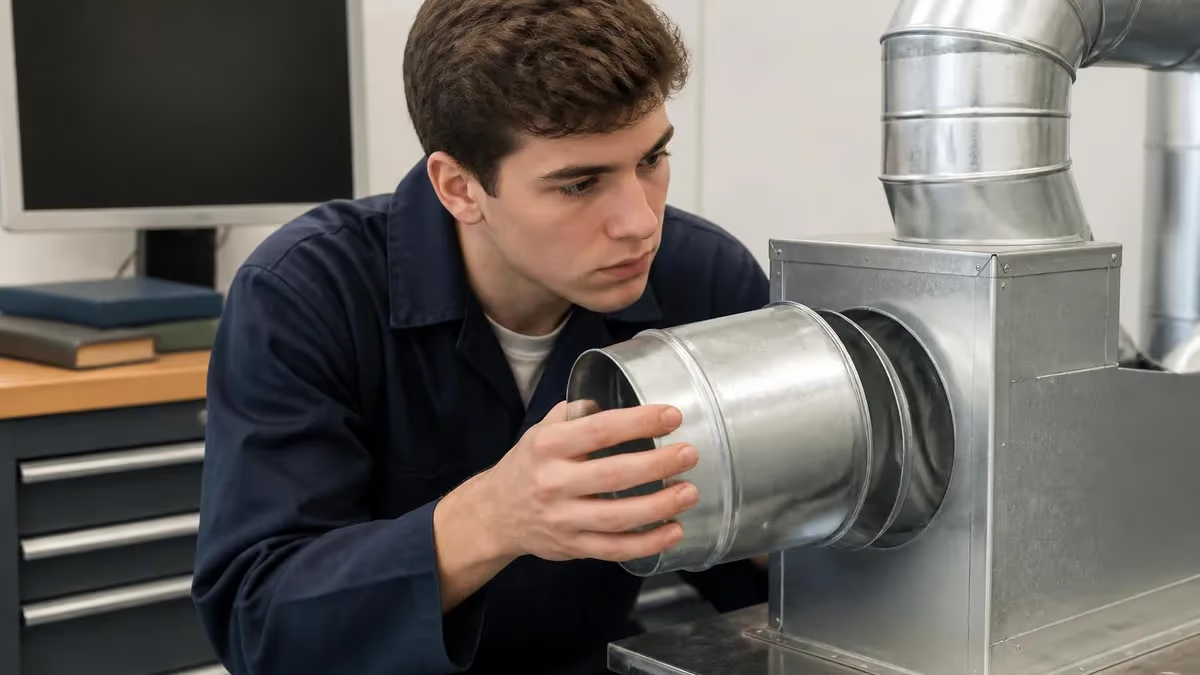
Choosing among the best HVAC brands is one of the most consequential decisions a homeowner or building manager will make. A quality heating and cooling system accounts for roughly 40 to 50 percent of a home's total energy consumption, so picking the right manufacturer directly affects monthly utility bills, indoor comfort, and long-term maintenance costs for a decade or more. With dozens of brands competing for your attention — each making bold claims about efficiency ratings, warranty coverage, and proprietary technology — it can be genuinely difficult to separate marketing language from meaningful differences in equipment performance.
The HVAC industry is dominated by a handful of parent corporations that manufacture equipment under multiple brand names. Carrier Global, for instance, owns Carrier, Bryant, and Payne. Lennox International produces Lennox, Armstrong Air, and Ducane equipment. Johnson Controls manufactures York, Coleman, and Luxaire. Understanding this corporate structure helps consumers recognize that some brands marketed at very different price points share compressor platforms, heat exchanger designs, and component sourcing. That said, real differences in quality control, dealer training, and warranty administration still distinguish premium lines from budget tiers within the same corporate family.
Reliability data from third-party research firms consistently places Trane, Carrier, and Lennox at the top of satisfaction surveys, while brands like Daikin, Mitsubishi, and Bosch have made significant inroads in the high-efficiency and ductless mini-split segments over the past five years. Consumer Reports, the Air Conditioning Contractors of America (ACCA), and independent HVAC technician surveys all provide useful data points, though each methodology has limitations worth understanding before you treat any single ranking as definitive guidance for your specific climate and home size.
For professionals sitting for licensing exams, understanding equipment fundamentals across major manufacturers is just as important as knowing brand reputations. Exam questions often reference SEER2 ratings, HSPF2 values, refrigerant handling, and load calculation principles that apply regardless of whose logo is on the unit. Reviewing best hvac brands alongside hands-on study materials gives technicians a practical framework for recommending appropriate equipment to customers while staying code-compliant on every installation.
This guide evaluates the leading HVAC manufacturers across residential and light commercial categories using criteria that matter most in real-world applications: documented reliability rates, available SEER2 efficiency tiers, warranty terms and how easy they actually are to use, dealer network density across the US, and price-to-value ratios at the entry, mid, and premium levels. We also cover manufacturer-specific features worth knowing — like Carrier's Greenspeed Intelligence variable-speed technology, Trane's Comfort-R dehumidification mode, and Lennox's SunSource solar-ready platform.
Whether you are a homeowner comparing quotes from three contractors, an HVAC technician building your product knowledge before certification exams, or a facilities manager planning a multi-unit equipment replacement cycle, the information in this guide will help you make a data-backed decision. We cover central air conditioners and heat pumps, gas and oil furnaces, ductless mini-split systems, and packaged units, so you can evaluate each brand category by category rather than accepting a one-size-fits-all recommendation that may not fit your situation.
By the time you finish reading, you will have a clear picture of which manufacturers lead each equipment segment, what trade-offs come with choosing premium versus value-tier brands, and which questions to ask your HVAC contractor to ensure the equipment spec matches your home's actual load requirements. Let's start with the numbers that define this industry and then move into brand-by-brand analysis.
HVAC Industry by the Numbers
Top HVAC Manufacturers: At a Glance
Founded in 1915 by Willis Carrier, this brand invented modern air conditioning. Known for Infinity series variable-speed systems and Greenspeed Intelligence. Broad dealer network across all 50 states, with premium and budget Bryant/Payne lines under the same parent company.
A Trane Technologies brand with a reputation for industrial-grade durability. The XV21 heat pump and XC21 air conditioner regularly top efficiency charts. Comfort-R dehumidification technology and strong 10-year registered warranty make Trane a top choice in humid climates.
Industry leader in ultra-high-efficiency equipment. The Lennox XC25 holds a 26 SEER2 rating — among the highest in the residential market. SunSource solar-ready integration is unique to Lennox. Premium pricing is offset by industry-leading energy savings over the system's lifespan.
The world's largest HVAC manufacturer by volume, headquartered in Japan with a major US manufacturing facility in Texas. Daikin leads the ductless mini-split segment and offers VRV commercial systems. Strong on refrigerant innovation, having developed R-32 as a lower-GWP alternative.
York is the flagship residential brand under Johnson Controls, which also owns Coleman and Luxaire. Competitive mid-range pricing with solid reliability data. YXV variable-capacity heat pump delivers strong cold-climate performance. Wide dealer availability in the Southeast and Midwest.
Understanding the difference between premium and budget HVAC brands requires looking beyond the sticker price to the full lifecycle cost of ownership. A premium Lennox XC25 air conditioner might cost $3,000 to $4,500 more upfront than a base-model Payne or Heil unit, but its 26 SEER2 rating versus the budget unit's 14.3 SEER2 baseline can translate to annual energy savings of $400 to $700 depending on your climate zone, utility rates, and usage patterns. Over a 15-year system lifespan, that efficiency gap can easily exceed the initial price difference.
Premium brands within the HVAC industry generally distinguish themselves through three key attributes: variable-speed compressor technology, enhanced dehumidification control, and longer or more comprehensive warranty coverage. Variable-speed compressors — found in Carrier's Infinity series, Trane's XV lineup, Lennox's XC25, and Daikin's 20 SEER2-plus systems — modulate output continuously rather than cycling on and off at full capacity. This not only saves energy but also improves humidity removal, reduces temperature swings, and extends compressor life by avoiding the mechanical stress of constant start-stop cycling.
Mid-tier brands like Rheem, Ruud, American Standard, and Goodman occupy a competitive sweet spot in the market. Rheem and Ruud share platforms under Paloma Industries and offer 18 to 20 SEER2 systems at prices that significantly undercut Carrier Infinity and Trane XV. American Standard, the residential cousin of Trane, provides very similar core equipment at a modest price discount because its dealer network operates under slightly different margin structures. Goodman, owned by Daikin, has dramatically improved quality control since the acquisition and now represents arguably the best pure value proposition in the industry for budget-conscious buyers.
Budget-tier brands — including Payne, Heil, Keeprite, and Day & Night — are engineered to meet minimum efficiency standards at the lowest possible price point. They serve rental property owners, developers building homes at scale, and buyers in temperate climates where a system runs fewer annual hours. The trade-off is real: budget equipment typically uses single-stage compressors, basic thermostats, and shorter five-year parts warranties. Repair frequency data from HVAC industry surveys consistently shows budget-tier equipment requiring service calls 20 to 35 percent more often after year five than premium alternatives.
Dealer quality matters as much as brand quality — a well-installed mid-tier system consistently outperforms a poorly installed premium system in both efficiency and longevity. The single most important variable in HVAC system performance is correct sizing, which requires a Manual J load calculation that accounts for square footage, insulation levels, window area, orientation, occupancy, and local design temperatures. A dealer who skips the Manual J and sizes by rule of thumb will likely oversize your equipment, causing short-cycling, poor humidity control, and premature wear regardless of what brand is on the label.
For HVAC technicians preparing for EPA 608, NATE, or state licensing examinations, brand familiarity is important for customer-facing competence, but the exam content itself focuses on universal principles: refrigeration cycle thermodynamics, electrical circuit analysis, airflow measurement, combustion analysis, and refrigerant handling regulations. That said, knowing that Carrier uses proprietary Greenspeed communicating controls, while Trane uses ComfortLink II, and that each system has specific service mode procedures, prepares you for the practical job tasks you will face immediately after licensing.
When comparing quotes from contractors selling different brands, insist on seeing side-by-side SEER2 ratings, HSPF2 values for heat pumps, and AFUE percentages for furnaces. These standardized metrics allow apples-to-apples efficiency comparisons across any brand. A contractor selling a 16 SEER2 unit from Brand A at $1,200 less than a 20 SEER2 unit from Brand B is offering a real trade-off worth quantifying with an energy cost calculator before you sign anything.
HVAC Practice Test Questions
Prepare for the HVAC - Heating Ventilation and Air Conditioning exam with our free practice test modules. Each quiz covers key topics to help you pass on your first try.
HVAC Air Conditioning
HVAC Exam Questions covering Air Conditioning. Master HVAC Test concepts for certification prep.
HVAC Code Compliance
Free HVAC Practice Test featuring Code Compliance. Improve your HVAC Exam score with mock test prep.
HVAC Electrical Controls
HVAC Test Prep for Electrical Controls. Practice HVAC Quiz questions and boost your score.
HVAC Energy Efficiency
HVAC Questions and Answers on Energy Efficiency. Free HVAC practice for exam readiness.
HVAC Heating Systems
HVAC Mock Test covering Heating Systems. Online HVAC Test practice with instant feedback.
HVAC Load Calculations
Free HVAC Quiz on HVAC Load Calculations. HVAC Exam prep questions with detailed explanations.
HVAC Tools and Equipment
HVAC Practice Questions for HVAC Tools and Equipment. Build confidence for your HVAC certification exam.
HVAC Refrigeration
HVAC Test Online for Refrigeration. Free practice with instant results and feedback.
HVAC Safety Practices
HVAC Study Material on Safety Practices. Prepare effectively with real exam-style questions.
HVAC System Design
Free HVAC Test covering System Design. Practice and track your HVAC exam readiness.
HVAC Thermodynamics
HVAC Exam Questions covering Thermodynamics. Master HVAC Test concepts for certification prep.
HVAC Efficiency Ratings: SEER2, HSPF2, and AFUE Explained
SEER2 (Seasonal Energy Efficiency Ratio 2) replaced the original SEER standard in January 2023 and measures cooling efficiency over a typical cooling season under a more realistic external static pressure test condition. A higher SEER2 number means lower operating costs. Federal minimums are 13.4 SEER2 in the North and 15.2 SEER2 in the South and Southwest. Premium brands like Lennox and Carrier offer systems above 20 SEER2, which can cut cooling costs by 30 to 40 percent compared to minimum-standard equipment.
To put SEER2 in dollar terms, a 3-ton system running at 14 SEER2 in a hot Southern climate might cost $700 to $900 per year to operate. The same tonnage at 20 SEER2 would cost roughly $490 to $630 — a savings of $200 to $270 annually. Over 15 years and accounting for electricity rate inflation, the efficiency premium can return $3,500 to $5,000 in cumulative savings, which typically justifies the higher upfront cost of a top-tier Lennox, Carrier Infinity, or Daikin premium unit.

Premium HVAC Brands vs. Budget HVAC Brands: Pros and Cons
- +Variable-speed compressors reduce energy use by 30–40% versus single-stage equipment
- +Better dehumidification control improves indoor comfort significantly in humid climates
- +Longer registered warranties — typically 10 years parts vs. 5 years on budget units
- +Quieter operation due to two-stage or variable-speed compressor technology
- +Higher resale value for homes equipped with recognized premium brand systems
- +Communicating system controls enable precise diagnostics and remote monitoring
- −Upfront installed cost is $1,500 to $4,000 higher than budget-tier alternatives
- −Complex variable-speed electronics require more specialized technician training to service
- −Proprietary communicating controls can limit thermostat compatibility and future flexibility
- −Energy savings payback period can exceed 8–10 years in mild climates with low utility rates
- −Premium dealer networks may be thinner in rural areas, increasing service wait times
- −Higher-end components like variable-speed boards can be costly to replace out of warranty
Pros and Cons at a Glance
| Pros | Cons |
|---|---|
| Better dehumidification control improves indoor comfort significantly in humid climates | Complex variable-speed electronics require more specialized technician training to service |
| Quieter operation due to two-stage or variable-speed compressor technology | Proprietary communicating controls can limit thermostat compatibility and future flexibility |
| Higher resale value for homes equipped with recognized premium brand systems | Premium dealer networks may be thinner in rural areas, increasing service wait times |
| Communicating system controls enable precise diagnostics and remote monitoring | Higher-end components like variable-speed boards can be costly to replace out of warranty |
How to Choose the Best HVAC Brand for Your Home
- ✓Request a Manual J load calculation from every contractor — reject any quote sized by rule of thumb.
- ✓Compare SEER2 ratings side by side, not just brand names, when evaluating cooling system quotes.
- ✓Verify the contractor is a factory-authorized dealer for the brand they are selling you.
- ✓Check warranty terms carefully — confirm whether 10-year coverage requires online registration within 90 days.
- ✓Ask for three references from installations completed in the past 12 months for the specific equipment model.
- ✓Compare HSPF2 values if replacing or adding a heat pump, especially in Northern or coastal climates.
- ✓Research local utility rebate programs — many offer $200 to $1,000 for systems above 16 SEER2.
- ✓Confirm refrigerant type: R-410A systems are being phased out; prefer R-32 or R-454B for future compliance.
- ✓Review independent reliability surveys (Consumer Reports, AHRI data) before committing to a brand.
- ✓Get at least three itemized quotes to isolate equipment cost from labor and material markups.
Installation Quality Matters More Than Brand Name
Industry studies consistently show that improper installation — including oversizing, poor duct connections, and incorrect refrigerant charge — accounts for 30 to 40 percent of HVAC system inefficiency and premature failure. A correctly installed mid-tier Rheem or Goodman system will outperform an improperly installed premium Lennox or Carrier unit in both efficiency and longevity. Always verify your contractor holds NATE certification and follows ACCA Manual J, S, and D procedures before selecting any brand.
The cost and warranty landscape across HVAC brands is more nuanced than most homeowners realize when they first start shopping. Warranty length is often used as a marketing differentiator, but the terms, conditions, and real-world claims experience behind that warranty matter far more than the headline number of years. Lennox, Carrier, and Trane all offer 10-year limited parts warranties on registered equipment, but the registration requirement typically must be completed within 60 to 90 days of installation — a detail that some contractors and homeowners overlook, resulting in a default five-year warranty instead.
Labor warranties, which cover the technician's time to diagnose and repair a failed component, are distinct from parts warranties and are typically provided by the installing contractor rather than the manufacturer. Standard labor warranties in the industry run one to two years, though some premium dealers offer five-year labor coverage as a competitive differentiator.
When comparing total warranty value, always ask for the combined parts-plus-labor coverage period, because a 10-year parts warranty with only a one-year labor warranty leaves you paying service call rates of $100 to $200 per hour after year one even when the failed component itself is covered at no charge.
Typical installed costs for a standard 3-ton central air conditioning system in the US range from $3,800 to $5,500 for a basic 14 to 16 SEER2 unit from brands like Goodman, Payne, or Heil. Mid-tier 16 to 18 SEER2 equipment from Rheem, American Standard, or York generally runs $5,000 to $7,500 installed. Premium variable-speed systems from Carrier Infinity, Trane XV, or Lennox XC21 typically range from $7,000 to $12,000 or more depending on regional labor rates, equipment tonnage, and whether duct modifications or electrical upgrades are required.
Heat pump system costs follow a similar tiering. A standard 3-ton 15 SEER2 / 8.8 HSPF2 heat pump from a mid-tier brand installs for roughly $5,500 to $8,000. A cold-climate heat pump from Mitsubishi Zuba, Bosch IDS 2.0, or Carrier Infinity 20 with variable-speed inverter technology and 10+ HSPF2 ratings can cost $9,000 to $15,000 installed, though federal tax credits under the Inflation Reduction Act can offset up to $2,000 of that cost for qualifying homeowners replacing fossil fuel heating systems.
Gas furnace pricing follows yet another cost structure. An 80 AFUE single-stage furnace from a budget brand installs for $2,500 to $4,000. Moving to a 96 AFUE two-stage furnace from a mid-tier brand like Rheem, Ruud, or American Standard adds roughly $800 to $1,500. The premium-tier 97 to 99 AFUE modulating variable-speed furnaces from Lennox, Carrier, and Trane carry installed prices of $5,500 to $9,000, justified in cold Northern climates where the furnace runs heavily for six or more months of the year and fuel cost savings accumulate quickly.
Ductless mini-split system pricing introduces a different cost equation because installation does not require existing ductwork infrastructure. A single-zone 12,000 BTU (1-ton) mini-split from Daikin, Mitsubishi, or LG installs for $2,500 to $4,500 per zone. Multi-zone systems that condition four to six rooms from a single outdoor unit can reach $12,000 to $20,000 installed. Mitsubishi and Daikin consistently receive the highest reliability ratings in the ductless segment, and their inverter-driven compressors carry efficiency ratings above 20 SEER2 while delivering heating performance at extreme cold temperatures that conventional split systems cannot match.
Financing terms are increasingly part of the brand selection conversation. Carrier, Trane, Lennox, and Rheem all maintain manufacturer-backed financing programs through their dealer networks offering 12 to 60 month promotional rates. These programs can make premium equipment accessible without requiring full payment upfront, but always compare the effective interest rate against home equity loan options, which typically carry lower rates for qualifying borrowers. For commercial replacement projects, Johnson Controls (York), Daikin Applied, and Trane Technologies offer lease-to-own and energy-as-a-service financing models that tie payments directly to verified energy savings.
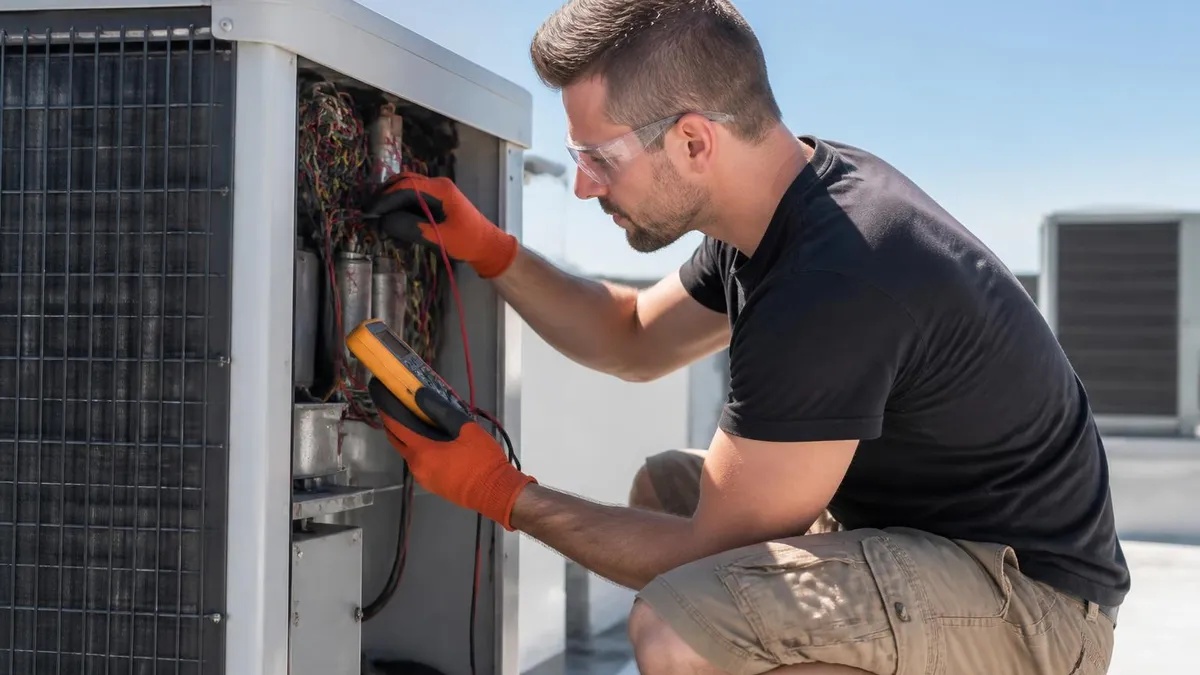
The EPA is phasing out R-410A refrigerant under updated Clean Air Act rules, with new equipment manufacturing deadlines already in effect for some system categories. If you are purchasing HVAC equipment now, confirm the system uses a next-generation refrigerant such as R-32, R-454B, or R-466A. Installing an R-410A system today may mean higher service costs and refrigerant availability issues within five to ten years as the phase-down accelerates and existing R-410A stockpiles deplete.
The ductless mini-split and variable refrigerant flow (VRF) market segments represent the fastest-growing areas of HVAC technology, and the brand dynamics in these categories differ significantly from the traditional ducted system market. Japanese manufacturers — Mitsubishi Electric, Daikin, Fujitsu, and Panasonic — hold dominant positions in the ductless segment globally and maintain substantial leadership in the US market as well. Their inverter-driven compressor technology, refined over decades of Japanese residential and commercial deployment, delivers efficiency and reliability benchmarks that North American manufacturers are still working to match at comparable price points.
Mitsubishi Electric's Hyper-Heating INVERTER (H2i) technology is the gold standard for cold-climate ductless performance, maintaining rated heating capacity at outdoor temperatures down to -13°F and producing some heat output as low as -22°F — a capability that makes these systems viable replacements for oil or propane furnaces in Vermont, Minnesota, and Montana. The Mitsubishi MSZ-FS and MUZ-FS series regularly earn the highest efficiency ratings in their class, with some models exceeding 30 SEER2 in controlled testing, though real-world performance in cold-climate applications will be lower.
Daikin's position as the world's largest HVAC manufacturer gives it significant advantages in component integration, refrigerant development, and manufacturing scale. The company's Aurora series cold-climate heat pumps, produced at its Waller, Texas facility, bring Japanese inverter technology to a system manufactured domestically, which appeals to Buy American procurement requirements in federal building projects and some state incentive programs. Daikin's acquisition of Goodman in 2012 gave it a dominant position across all US price tiers — from entry-level Goodman equipment to premium Daikin commercial VRF systems.
LG and Samsung have entered the US ductless market aggressively with competitive products that challenge Mitsubishi and Daikin on both price and efficiency. LG's LGRED° heat pump line offers heating operation down to -13°F with strong HSPF2 ratings and a significantly lower price point than comparable Mitsubishi H2i equipment. Samsung's Wind-Free technology, which diffuses conditioned air through thousands of micro-holes rather than direct airflow, addresses a common comfort complaint about ductless systems blowing drafts directly on occupants. Both brands have expanded their US dealer networks substantially since 2020.
Bosch has emerged as a compelling alternative in the North American HVAC market, particularly for heat pumps. The Bosch IDS 2.0 heat pump series delivers efficiency ratings competitive with the best systems from Carrier and Trane at installed costs that frequently come in $500 to $1,500 below comparable premium competitors. Bosch also manufactures a line of condensing gas boilers and radiant heating components that make it a one-stop brand for hydronic systems in high-performance homes — a category where most traditional HVAC brands have limited product depth.
Emerging technology trends worth tracking include heat pump water heaters integrated with space conditioning systems (Rheem ProTerra and AO Smith Voltex are market leaders), geothermal heat pumps from WaterFurnace and Climatemaster that deliver 400 to 500 percent efficiency by drawing heat from the ground rather than the outdoor air, and smart HVAC systems with AI-driven demand response integration from brands like ecobee, Honeywell Home, and Johnson Controls. These technologies are beginning to appear in exam content for advanced certifications and will increasingly affect purchasing decisions as grid-interactive buildings become code requirements in progressive jurisdictions.
For HVAC professionals and students preparing for industry certifications, staying current on product technology across all major brands is as important as mastering refrigeration fundamentals. Manufacturers like Carrier, Trane, and Lennox invest heavily in dealer training programs that qualify for continuing education credits in most states, and completing brand-specific training often qualifies technicians for enhanced warranty registration privileges that make them more competitive in the marketplace. Pairing product knowledge with strong exam preparation across all technical domains positions you for both certification success and a long, productive career in the field.
Practical tips for navigating the HVAC brand selection process begin with timing. The best deals on HVAC equipment typically appear in late fall (October to November) when heating season demand for technician time is high but air conditioning equipment is sitting in distributor warehouses, and in early spring (March to April) before cooling season demand spikes. Contractors who are scheduling installations two to three weeks out rather than two to three days out have more flexibility to negotiate on equipment upgrades, extended labor warranties, or service agreements as part of a package deal.
When you receive multiple quotes, ask each contractor to specify the exact model number — not just the brand name — of the equipment they are proposing. Two quotes both labeled as Carrier Infinity installations could differ by 4 SEER2 points and $1,500 in equipment cost depending on whether the contractor is quoting the 18-series or 24-series system. Model number specificity also allows you to look up independent reliability data, read owner reviews, and verify the efficiency rating matches what the contractor claims in their proposal.
Utility rebate programs can significantly alter the cost-benefit math for premium equipment choices. The Database of State Incentives for Renewables and Efficiency (DSIRE) catalogs available federal, state, utility, and local incentives by zip code.
Many large utilities — including Duke Energy, Pacific Gas & Electric, Eversource, and ComEd — offer tiered rebates of $200 to $1,200 for central air conditioning systems above specific SEER2 thresholds, heat pump installations, and high-AFUE furnace replacements. These rebates are typically available for a limited time and may require equipment to be installed by a registered contractor, so confirming eligibility before committing to an equipment choice is worth the 20 minutes of research.
Maintenance considerations should factor into brand selection for buyers who prefer DIY servicing. Some premium brands — particularly those with communicating system controls — require proprietary diagnostic tools and software to access advanced system data, making them more dependent on manufacturer-authorized service technicians. Brands like Rheem, Goodman, and York use more open control architectures that third-party technicians can service with standard HVAC tools and multimeters, which can reduce the cost and scheduling complexity of routine maintenance and minor repairs over the system's lifetime.
For commercial and light industrial applications, the brand landscape shifts toward Johnson Controls (York, Metasys), Trane Technologies (Trane, Nexia building automation), Daikin Applied (Rebel rooftop units, VRV commercial), and Carrier Commercial (WeatherExpert rooftop, i-Vu building controls). These brands invest heavily in building management system integration, energy monitoring, and service contract infrastructure that residential-focused brands cannot match at commercial scale. Facility managers evaluating commercial equipment should weight service response time, parts availability through commercial distributors, and building automation compatibility above residential-style brand reputation metrics.
Environmental considerations are increasingly relevant to brand selection. Brands that have committed to accelerated refrigerant transitions — Daikin with R-32, Carrier with Puron Advance (R-454B), and Lennox's adoption of R-32 in select product lines — are better positioned for long-term regulatory compliance and will face fewer service headwinds as R-410A phases out. Look for brands participating in the EPA's GreenChill Advanced Refrigeration Partnership and manufacturing equipment that meets or exceeds Energy Star Most Efficient criteria, which sets a higher bar than standard Energy Star qualification and identifies the top 25 percent of efficient products in each category.
Finally, consider the manufacturer's technical support infrastructure when comparing brands. Carrier's 24/7 technical support hotline for contractors, Trane's ComfortSite dealer portal with real-time parts lookup and warranty registration, and Lennox's Learning Management System with online training courses all represent post-sale value that influences how effectively your installer can support your equipment over time. Brands with strong technical support ecosystems reduce the likelihood of misdiagnosis, unnecessary part replacement, and extended equipment downtime — all of which affect your real-world experience of owning that brand of system over its full service life.
Related reading: best hvac brands covers the next step in more detail.
Sample HVAC Practice Questions
Try these questions from our free HVAC practice tests. The correct answer and an explanation follow each question.
What is the value of continuing education in energy efficiency for HVAC professionals?
- A. It is only needed for recertification
- B. It keeps professionals current with evolving standards and practices
- C. It is primarily a social activity
- D. It replaces workplace experience
Answer: B. It keeps professionals current with evolving standards and practices
Continuing education ensures professionals stay current with the latest developments, standards, and best practices in their field.
Why does a dirty air filter negatively impact HVAC energy efficiency?
- A. It increases static pressure drop, forcing the blower to work harder for the same airflow
- B. It raises refrigerant temperature
- C. It causes the thermostat to cycle more frequently
- D. It reduces condenser fan efficiency
Answer: A. It increases static pressure drop, forcing the blower to work harder for the same airflow
A clogged filter increases resistance in the air distribution system, increasing blower motor energy consumption and potentially reducing airflow and capacity.
Which approach best demonstrates mastery of thermodynamics in HVAC practice?
- A. Following procedures without understanding
- B. Applying principles to novel situations with sound judgment
- C. Relying entirely on technology
- D. Avoiding complex scenarios
Answer: B. Applying principles to novel situations with sound judgment
True mastery involves understanding underlying principles well enough to apply them to new and unfamiliar situations with professional judgment.
Which approach best demonstrates mastery of ductwork in HVAC practice?
- A. Following procedures without understanding
- B. Applying principles to novel situations with sound judgment
- C. Relying entirely on technology
- D. Avoiding complex scenarios
Answer: B. Applying principles to novel situations with sound judgment
True mastery involves understanding underlying principles well enough to apply them to new and unfamiliar situations with professional judgment.
HVAC Questions and Answers
HVAC Sales: The Complete Guide to Selling Heating and Cooling Systems, Building Customer Trust, and Closing More Deals
HVAC Air Duct Sealing: The Complete Homeowner and Contractor Guide to Sealing Ductwork for Efficiency, Comfort, and Indoor Air Quality
HVAC Solutions: The Complete Guide to Heating, Cooling, and Indoor Air Quality Systems for Homes and Buildings

Commercial HVAC Repair: Systems, Costs, and Service Strategies
HVAC Apprenticeship Programs: Your Complete Guide to Starting a Hands-On Career in Heating, Ventilation, and Air Conditioning
About the Author

NATE Certified HVAC Technician & Licensing Exam Trainer
Universal Technical InstituteMike Johnson is a NATE-certified HVAC technician and EPA 608 universal-certified refrigerant handler with a Bachelor of Science in HVAC/R Technology. He has 19 years of commercial and residential HVAC installation and service experience and specializes in preparing technicians for NATE certification, EPA 608, A2L refrigerant safety, and state HVAC contractor licensing examinations.