
HVAC Maintenance Cost: What Homeowners and Technicians Need to Know 2026
Understand hvac maintenance cost — average prices, what drives them, DIY vs professional service, and how to budget smarter for your system. ⏳
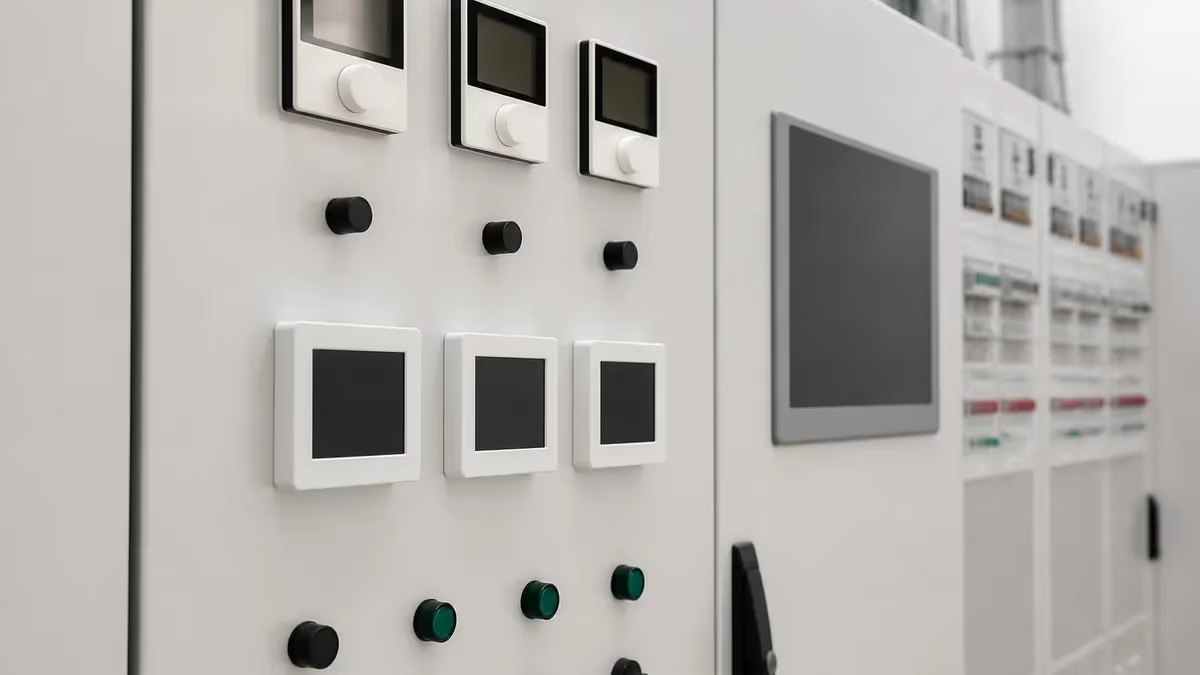
Understanding hvac maintenance cost is one of the most practical things a homeowner or aspiring HVAC technician can do. Whether you own a modest single-family home or manage a commercial property, the expense of keeping your heating, ventilation, and air conditioning system running efficiently touches your budget every single year. On average, homeowners in the United States spend between $150 and $500 annually on routine HVAC maintenance, though that figure climbs considerably when older equipment, larger homes, or premium service contracts are involved.
The cost of maintaining an HVAC system is not a fixed number — it fluctuates based on geography, system type, equipment age, and the frequency of service visits. A homeowner in Phoenix, Arizona, who runs air conditioning nearly year-round faces very different maintenance demands than someone in Minneapolis who leans heavily on a furnace for six months and air conditioning for only three. Regional labor rates, local utility pricing, and the availability of qualified technicians all play a meaningful role in determining what you ultimately pay.
For HVAC professionals studying for certification exams or building careers in the field, a strong grasp of maintenance economics helps you communicate value clearly to customers, price service agreements competitively, and diagnose problems before they escalate into costly emergency repairs. Customers who understand maintenance costs are more likely to invest in preventive service — which means better system longevity, fewer callbacks, and stronger long-term relationships with service providers.
The average annual maintenance visit for a central air conditioning system runs $75 to $200 per visit, while a furnace tune-up typically costs $80 to $150. Many HVAC companies bundle these into annual maintenance agreements ranging from $150 to $500 per year, which often include priority scheduling and discounted repair labor. These plans vary widely in what they cover, so reading the fine print is essential before signing any service contract.
Breaking down hvac maintenance cost into its component parts helps demystify the expense. Labor is typically the largest line item, followed by replacement parts such as filters, capacitors, contactors, and refrigerant. Diagnostic fees, overtime charges for emergency calls, and travel fees in rural areas can all add to the total. Understanding these categories gives both homeowners and technicians a framework for evaluating quotes and negotiating fair pricing.
This article walks through every major dimension of HVAC maintenance costs — from routine tune-up pricing and seasonal service checkpoints to the economics of DIY maintenance versus professional service. You will find real cost data, actionable tips for reducing expenses without sacrificing system performance, and guidance on when a repair is worth making versus when replacement is the smarter financial decision. Whether you are a homeowner building a maintenance budget or a technician preparing for the hvac maintenance cost conversation with clients, this guide has you covered.
By the end, you will understand not only what typical maintenance costs look like in 2026 but also the hidden factors that cause costs to spike unexpectedly, the preventive measures that deliver the best return on investment, and the professional standards that separate a quality maintenance visit from a rushed inspection that leaves problems undetected.
HVAC Maintenance Cost by the Numbers

Average HVAC Maintenance Cost by Service Type
A standard HVAC maintenance visit covers far more than just changing a filter. When a qualified technician arrives for a scheduled tune-up, they follow a systematic inspection protocol designed to catch problems early, optimize efficiency, and verify that safety controls are functioning correctly. Understanding what should be included in a professional maintenance visit helps homeowners evaluate whether they are receiving full value and helps HVAC students understand what their future job scope actually looks like in the field.
For a central air conditioning system, a thorough maintenance visit typically begins with checking and replacing air filters, inspecting and cleaning the evaporator and condenser coils, measuring refrigerant charge and checking for leaks, testing electrical connections and capacitor health, verifying thermostat calibration, clearing condensate drain lines, and inspecting the blower motor and fan blades. Each of these tasks contributes directly to system efficiency, indoor air quality, and equipment longevity — skipping any one of them can allow a minor issue to develop into a costly failure.
Heating system maintenance follows a parallel but distinct checklist. For a gas furnace, the technician should inspect and clean the heat exchanger for cracks (a critical safety check, since a cracked heat exchanger can allow carbon monoxide to enter the living space), clean and adjust burners, test ignition and flame sensors, check the flue and venting system for obstructions or deterioration, test limit switches and pressure switches, and lubricate moving parts in the blower assembly. A proper furnace tune-up takes 60 to 90 minutes and should not be rushed.
Heat pumps require both heating and cooling inspections because they perform dual duty throughout the year. Technicians working on heat pumps also check reversing valve operation, verify defrost cycle performance, and inspect auxiliary heat strips if present. Because heat pumps work in reverse-cycle mode, refrigerant charge accuracy is especially critical — an improperly charged heat pump loses efficiency in both directions of operation, driving up energy costs and accelerating compressor wear.
Many service agreements include an efficiency report that documents system performance metrics before and after the tune-up, including measurements like static pressure, airflow, supply and return air temperature differential, and electrical amperage draw. These documents help homeowners understand the real-world state of their equipment and give technicians a longitudinal data record for tracking system decline over time. Customers who receive these reports tend to have greater confidence in their service provider and are more likely to renew contracts.
One area that is frequently overlooked in maintenance visits is the ductwork system. Even a perfectly tuned air conditioning or heating unit cannot deliver efficient comfort if ducts are leaking conditioned air into unconditioned attics or crawlspaces. Studies by the Department of Energy suggest that the average home loses 20 to 30 percent of conditioned air through duct leaks. Including a basic duct integrity check in maintenance visits adds modest time but can reveal energy losses worth hundreds of dollars per year in wasted utility spending.
Technicians should also use maintenance visits to assess the overall age and condition of the system and provide honest guidance about repair-versus-replace decisions. A 15-year-old air conditioner with an aging compressor may not justify a $600 repair bill — but a 10-year-old system with only minor wear could easily last another decade with proper care. Communicating this analysis clearly and transparently is one of the most valuable services a skilled HVAC professional can provide.
HVAC Practice Test Questions
Prepare for the HVAC - Heating Ventilation and Air Conditioning exam with our free practice test modules. Each quiz covers key topics to help you pass on your first try.
HVAC Air Conditioning
HVAC Exam Questions covering Air Conditioning. Master HVAC Test concepts for certification prep.
HVAC Code Compliance
Free HVAC Practice Test featuring Code Compliance. Improve your HVAC Exam score with mock test prep.
HVAC Electrical Controls
HVAC Test Prep for Electrical Controls. Practice HVAC Quiz questions and boost your score.
HVAC Energy Efficiency
HVAC Questions and Answers on Energy Efficiency. Free HVAC practice for exam readiness.
HVAC Heating Systems
HVAC Mock Test covering Heating Systems. Online HVAC Test practice with instant feedback.
HVAC Load Calculations
Free HVAC Quiz on HVAC Load Calculations. HVAC Exam prep questions with detailed explanations.
HVAC Tools and Equipment
HVAC Practice Questions for HVAC Tools and Equipment. Build confidence for your HVAC certification exam.
HVAC Refrigeration
HVAC Test Online for Refrigeration. Free practice with instant results and feedback.
HVAC Safety Practices
HVAC Study Material on Safety Practices. Prepare effectively with real exam-style questions.
HVAC System Design
Free HVAC Test covering System Design. Practice and track your HVAC exam readiness.
HVAC Thermodynamics
HVAC Exam Questions covering Thermodynamics. Master HVAC Test concepts for certification prep.
HVAC Maintenance Cost by System Type
Central air conditioning systems are the most common residential HVAC equipment in the United States, and their maintenance costs reflect both the complexity of the refrigeration cycle and the volume of service providers competing for the work. A standard annual tune-up for a central AC unit runs $75 to $200, with the price influenced by geographic labor rates, the size of the system in tons, and whether refrigerant top-off is needed. Heat pumps run slightly higher — $100 to $250 per visit — because they require inspection in both heating and cooling modes.
Annual maintenance agreements for central air and heat pump systems typically range from $175 to $450 and include two visits per year. These agreements usually lock in discounted labor rates for any repairs discovered during the maintenance visit, which can generate meaningful savings when a contactor or capacitor needs replacement. Systems over 15 years old may face higher maintenance costs due to increased parts demand, harder-to-source refrigerant types like R-22, and greater risk of mid-season failure.
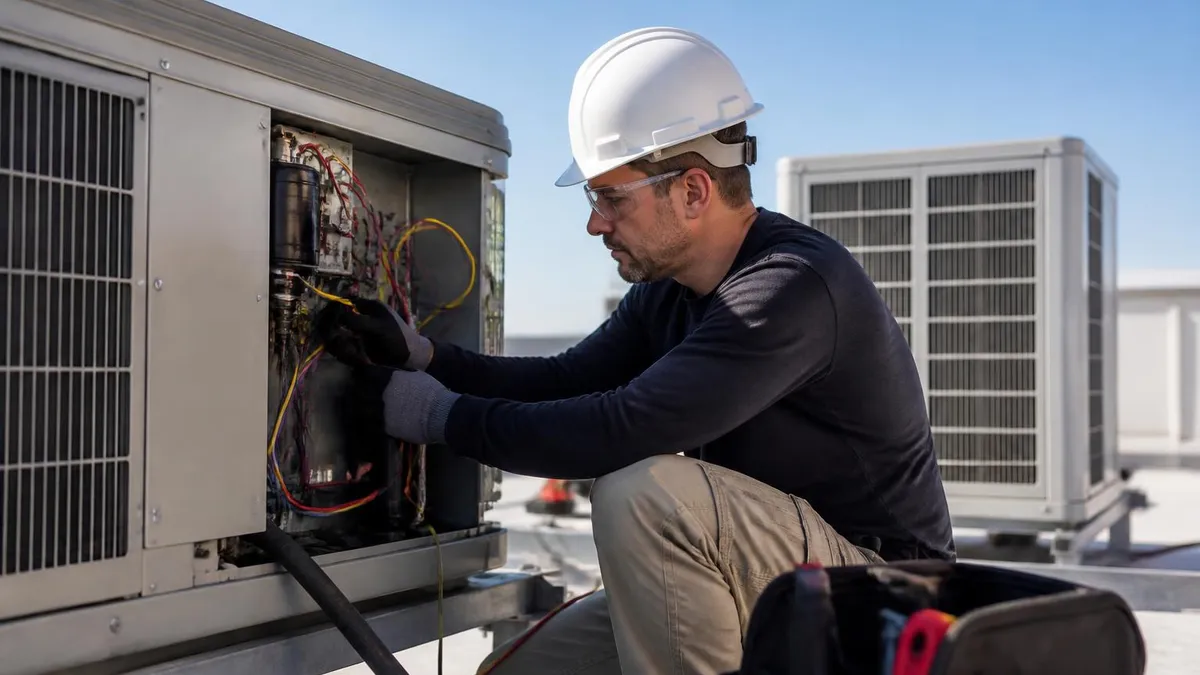
Annual HVAC Maintenance Plans: Worth It or Overpriced?
- +Locks in discounted labor rates, reducing repair costs when issues are found
- +Provides priority scheduling during peak seasons when wait times can exceed a week
- +Catches minor problems early before they escalate into major component failures
- +Keeps manufacturer warranties valid — most require documented annual maintenance
- +Improves system efficiency, lowering monthly energy bills by 5 to 15 percent
- +Provides peace of mind and a documented service history for resale purposes
- −Upfront annual cost of $150 to $500 may feel steep if no repairs are needed that year
- −Quality varies widely — some plans are comprehensive, others are superficial inspections
- −Contract cancellation terms can be restrictive and may include early-termination fees
- −Some agreements auto-renew and are difficult to cancel without advance written notice
- −New or recently installed equipment may not need two visits per year, reducing value
- −Bundled agreements may pressure technicians to upsell repairs that are not yet necessary
HVAC Maintenance Cost Reduction Checklist
- ✓Replace air filters every 1 to 3 months to prevent restricted airflow and coil freeze-up
- ✓Clear a 2-foot clearance around all outdoor condenser units to ensure adequate airflow
- ✓Clean mini-split air handler filters monthly using warm water and mild soap
- ✓Schedule spring AC tune-up in March or April before peak season demand drives up wait times
- ✓Schedule fall furnace tune-up in September or October before the first heating demand
- ✓Keep condensate drain lines clear by flushing with diluted bleach solution quarterly
- ✓Install a programmable or smart thermostat to reduce runtime and mechanical wear
- ✓Seal obvious duct leaks at accessible joints using UL-listed mastic or foil tape
- ✓Check and tighten electrical panel connections annually to reduce fire risk and energy waste
- ✓Document all maintenance visits with date, technician name, and work performed for warranty purposes
- ✓Compare at least two quotes before signing any multi-year maintenance agreement
- ✓Ask for an itemized invoice on every visit so you understand exactly what was inspected and replaced
Routine Maintenance Pays for Itself
The Department of Energy estimates that a well-maintained HVAC system consumes 5 to 15 percent less energy than a neglected one. On a typical U.S. home spending $1,200 per year on heating and cooling, that translates to $60 to $180 in annual savings — often exceeding the cost of a tune-up. Factor in the prevention of a single compressor or heat exchanger failure, and the return on investment for routine maintenance becomes compelling.
The debate between DIY HVAC maintenance and professional service is one that comes up constantly among cost-conscious homeowners. The honest answer is that some maintenance tasks are genuinely well-suited for DIY execution, while others require professional tools, certifications, and diagnostic equipment that no homeowner realistically has access to. Understanding this boundary helps you spend money where it matters most and avoid the false economy of skipping professional service entirely.
On the DIY-appropriate side of the ledger, filter replacement is the single most impactful maintenance task a homeowner can perform without any technical knowledge. A clogged filter forces the blower motor to work harder, reduces airflow across the evaporator coil, and can cause coil freeze-up or heat exchanger overheating — all of which accelerate wear and drive up repair costs. Changing a filter takes five minutes and costs $5 to $30 depending on the filter grade, making it one of the best dollar-for-dollar maintenance investments available to any homeowner.
Cleaning outdoor condenser coils with a gentle garden hose spray, clearing debris from around the outdoor unit, cleaning mini-split air handler filters, and flushing condensate drain lines with diluted bleach are all tasks that homeowners with basic mechanical aptitude can accomplish safely. These activities, performed consistently, meaningfully extend equipment life and reduce the scope of professional work needed during annual tune-ups.
The professional-only category includes anything involving refrigerant. The EPA's Section 608 regulations require that anyone handling refrigerants hold a valid certification — performing unauthorized refrigerant work can result in fines and is dangerous due to the pressures and chemical properties involved. Similarly, electrical work inside the air handler or furnace, heat exchanger inspection, combustion analysis, and ductwork pressure testing all require professional tools and training that make DIY attempts genuinely risky rather than just inadvisable.
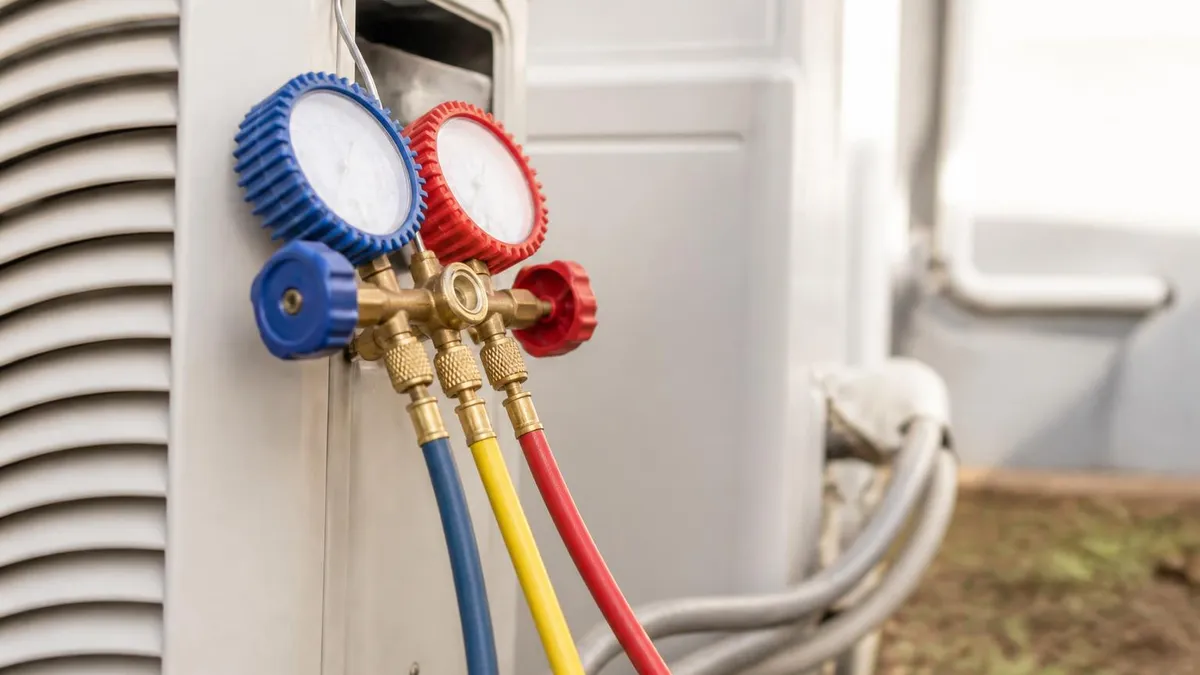
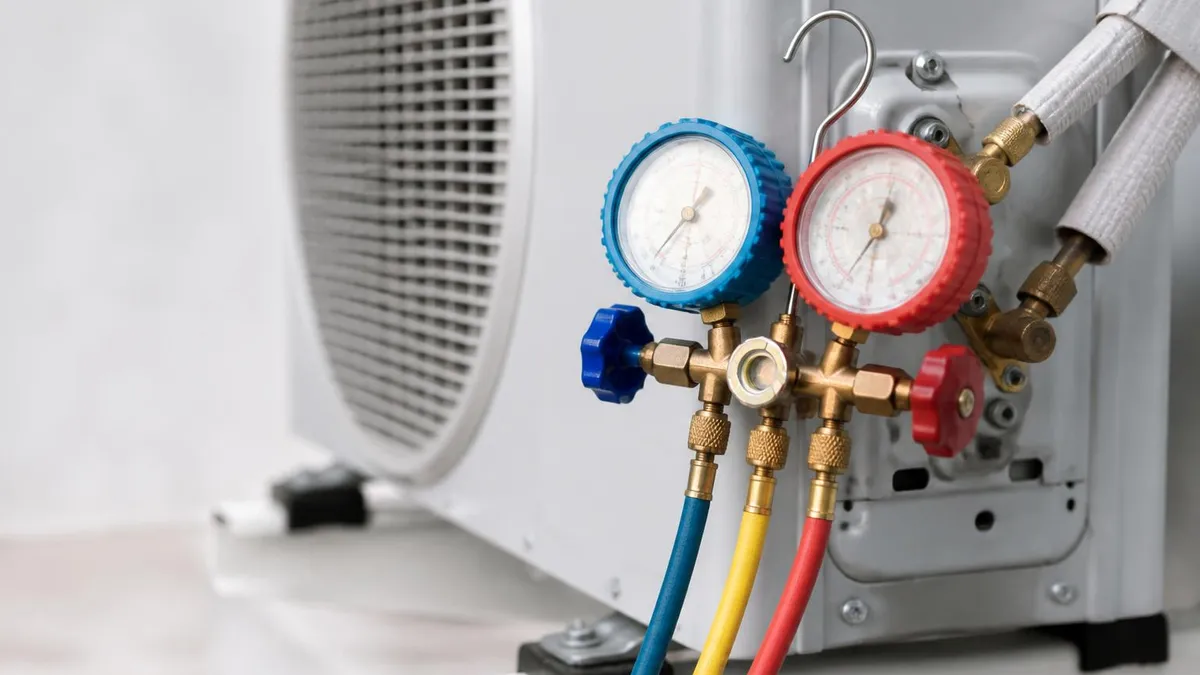
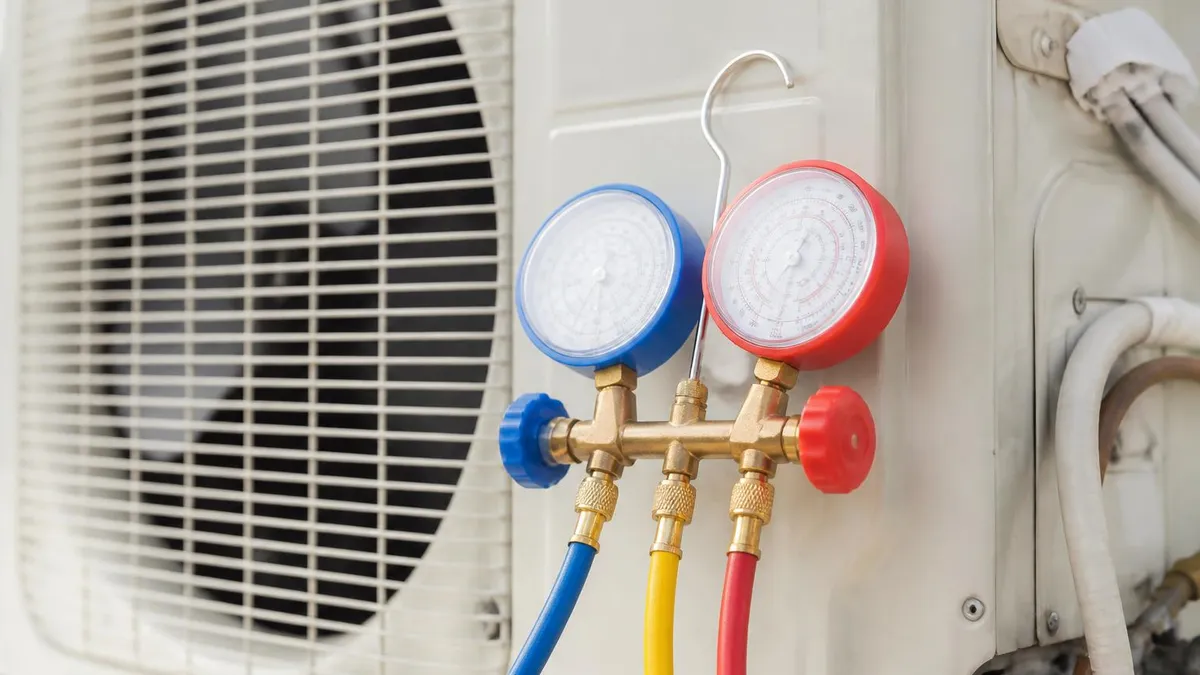
A common DIY mistake is attempting to diagnose refrigerant undercharge without proper gauges. Homeowners who notice reduced cooling performance sometimes assume the system is low on refrigerant and call for a refrigerant top-off, but undercharge is often a symptom of a leak rather than simple evaporation. Adding refrigerant without finding and fixing the leak is a temporary fix that wastes money and harms the environment. A certified technician with manifold gauges can quickly distinguish between a true refrigerant shortage and other causes of reduced cooling performance like dirty coils or low airflow.
For HVAC students and technicians, understanding the DIY versus professional boundary is also important from a business perspective. Technicians who clearly explain what they are doing during a maintenance visit — and why it requires professional tools — build customer trust and reduce the likelihood of customers attempting workarounds between service visits. Transparent communication about the value of professional service is as important as technical skill in building a successful HVAC career.
The smartest approach for most homeowners is a hybrid model: handle the basic monthly and quarterly tasks yourself (filter changes, condensate drain maintenance, outdoor unit clearance), and invest in professional service twice a year. This approach optimizes your spending, keeps the system in good condition between professional visits, and gives technicians cleaner, better-maintained equipment to inspect — which often means shorter service visits and lower labor charges.
Heat exchanger failures are among the most dangerous HVAC issues a homeowner can face, and they are most commonly discovered during fall furnace tune-ups. A cracked heat exchanger can allow carbon monoxide — an odorless, colorless gas — to enter living spaces. Carbon monoxide poisoning is responsible for approximately 400 deaths in the United States annually. Scheduling a professional furnace inspection before the first heating season is not optional maintenance — it is a life-safety measure that no cost savings can justify skipping.
Reducing your total HVAC maintenance cost over time is less about finding the cheapest service provider and more about making smart, consistent decisions that keep costs predictable and prevent expensive surprises. The strategies that deliver the most value combine proactive homeowner habits with well-timed professional service — and they are accessible to virtually any budget.
The most powerful cost-reduction strategy is simply scheduling maintenance before problems develop. Emergency HVAC repairs cost dramatically more than the same repairs performed during a scheduled visit — after-hours labor premiums alone can add $75 to $200 to any repair bill, and parts availability is often limited on nights and weekends. A system that fails during the hottest week of summer or the coldest night of winter creates urgency that eliminates your negotiating position entirely. Regular preventive maintenance keeps you out of that situation.
Investing in a high-efficiency air filter (MERV 8 to 11 for most residential systems) reduces the frequency of coil contamination, which is one of the primary causes of efficiency loss in central air conditioning systems. A dirty evaporator coil forces the compressor to work harder to achieve the same cooling effect, accelerating wear and increasing electricity consumption. However, avoid MERV ratings above 13 in standard residential systems — filters that are too restrictive can actually damage blowers and reduce airflow, creating the same problems they are meant to prevent.
Smart thermostats deserve serious attention as a maintenance cost reduction tool. By reducing runtime during unoccupied periods, smart thermostats reduce the total operating hours accumulated by mechanical components like the compressor, blower motor, and reversing valve. Fewer operating hours translate directly into slower wear rates and longer equipment life. Many utility companies offer rebates of $50 to $150 for smart thermostat installation, further reducing the payback period on this investment.
When evaluating service agreement pricing, compare the total cost of the agreement against the retail price of the two tune-up visits it covers. If a plan costs $300 and individual tune-ups cost $150 each, the agreement essentially prices in a zero margin for any repairs or discounts — making it a break-even proposition at best. The real value in a service agreement lies in the discounted labor rate for repairs discovered during the maintenance visit and in priority scheduling. Ask prospective contractors to specify the exact discount percentage and scheduling terms in writing before committing.
For homeowners with aging HVAC equipment — particularly systems between 12 and 18 years old — the calculation around maintenance investment changes. Spending $400 on a comprehensive annual maintenance plan for a 16-year-old system with a questionable compressor may not be financially rational when replacement cost for a new high-efficiency system is $4,000 to $8,000 and the expected remaining useful life of the old unit is uncertain. A candid assessment from a trusted HVAC contractor can help you determine whether continued maintenance investment makes sense or whether budgeting toward replacement is the smarter path.
Energy efficiency upgrades can also reduce the intensity of maintenance demand over time. High-efficiency systems (SEER2 ratings of 16 and above) run fewer hours to achieve the same comfort levels as older low-efficiency systems, which means slower accumulation of operating hours and proportionally less wear on mechanical components. While the upfront cost of high-efficiency equipment is higher, the combination of lower energy bills and reduced maintenance frequency often makes these systems cost-competitive on a total-cost-of-ownership basis over a 15-year horizon.
Finally, building a relationship with a single, trustworthy HVAC contractor rather than shopping for the lowest bid on every service call pays dividends over time. A contractor who knows your system's history can identify emerging trends, catch problems before they escalate, and provide honest repair-versus-replace guidance without the conflict of interest that comes from a technician who only profits from selling you new equipment. Loyalty to a quality contractor is itself a maintenance cost reduction strategy.
For a deeper look at this topic, see our guide to hvac maintenance cost.
For HVAC technicians and students, developing fluency in maintenance cost conversations is a career skill that pays dividends from the very first customer interaction. Homeowners are often anxious about HVAC service calls because they feel uninformed and fear being sold services they do not need. Technicians who proactively explain what they are checking, what they found, and what the cost implications are — without pressure tactics — build the kind of trust that generates repeat business, referral customers, and long-term service agreements.
When presenting maintenance findings to customers, organizing the information into clear categories helps. A simple three-tier framework — items that are fine and require no action, items that should be monitored over the next service cycle, and items that require immediate attention — gives customers a rational basis for decision-making. This approach is far more effective than a binary pass/fail report, because it acknowledges the nuanced reality of aging mechanical systems and gives customers agency rather than forcing them into an all-or-nothing choice.
Pricing transparency is equally important. When a technician quotes $285 for a capacitor replacement, a customer who has no frame of reference for that cost may feel suspicious. Breaking the quote into parts cost ($45 for the capacitor) and labor ($240 for one hour of labor at your standard rate) makes the pricing feel more legitimate and defensible. Customers who understand how pricing is constructed are more likely to accept reasonable quotes without pushback.
HVAC certification exams test not only technical knowledge but also the practical judgment skills that define excellence in the field. Questions about maintenance procedures, diagnostic logic, refrigerant handling regulations, and efficiency standards all connect directly to the real-world maintenance cost landscape covered in this article. Understanding why each maintenance task matters — not just what steps to perform — is the difference between a technician who passes the exam and one who becomes genuinely excellent at the job.
Continuing education in energy efficiency and emerging system technologies is also increasingly important for HVAC professionals. As heat pump technology improves and adoption accelerates across the United States, technicians who are fluent in heat pump maintenance and troubleshooting will command higher rates and face less competition than those whose skills are limited to legacy gas and refrigerant systems. The HVAC industry is evolving rapidly, and the most successful technicians are those who invest continuously in their own development.
Building a portfolio of documented maintenance work — including before-and-after efficiency measurements, photos of identified problems, and customer satisfaction records — creates credible evidence of your skill and professionalism that supports career advancement and higher hourly rates. In competitive labor markets, technicians who can demonstrate quantifiable results from their maintenance work are in a strong negotiating position with employers and customers alike.
Whether your goal is to manage HVAC maintenance costs as a homeowner or to build a successful service career, the fundamentals are the same: consistent preventive action, honest assessment, transparent communication, and a long-term perspective on system value. These principles reduce costs, extend equipment life, and create the foundation for trustworthy relationships between homeowners and the professionals who keep their systems running year after year.
HVAC Questions and Answers
HVAC Sales: The Complete Guide to Selling Heating and Cooling Systems, Building Customer Trust, and Closing More Deals
HVAC Air Duct Sealing: The Complete Homeowner and Contractor Guide to Sealing Ductwork for Efficiency, Comfort, and Indoor Air Quality
HVAC Solutions: The Complete Guide to Heating, Cooling, and Indoor Air Quality Systems for Homes and Buildings

Commercial HVAC Repair: Systems, Costs, and Service Strategies
HVAC Apprenticeship Programs: Your Complete Guide to Starting a Hands-On Career in Heating, Ventilation, and Air Conditioning
About the Author

NATE Certified HVAC Technician & Licensing Exam Trainer
Universal Technical InstituteMike Johnson is a NATE-certified HVAC technician and EPA 608 universal-certified refrigerant handler with a Bachelor of Science in HVAC/R Technology. He has 19 years of commercial and residential HVAC installation and service experience and specializes in preparing technicians for NATE certification, EPA 608, A2L refrigerant safety, and state HVAC contractor licensing examinations.