
HVAC Technician Certification: The Complete Guide to Requirements, Training, Exams, and Building a Career in Heating and Cooling
⏳ HVAC technician certification guide covering requirements, EPA 608, NATE exams, training paths, costs, and how to pass your tests and start a career.

Earning your hvac technician certification is the single most important step toward a stable, well-paid career in the heating, ventilation, air conditioning, and refrigeration trade. Across the United States, demand for skilled technicians continues to climb as aging systems get replaced, energy codes tighten, and homeowners expect faster, more reliable service. Certification proves to employers and customers that you understand refrigerant handling, electrical safety, airflow design, and modern equipment. This guide walks you through every requirement, training path, exam, and cost so you can plan a clear route into the field.
Unlike many trades where a single license covers everything, HVAC certification in the U.S. is layered. The federal EPA Section 608 certification is legally required before you can buy or handle refrigerants, while voluntary credentials like NATE and HVAC Excellence prove technical competence to employers. On top of that, most states and many cities require a contractor or journeyman license to perform work legally. Understanding how these pieces fit together early saves you wasted time, duplicate fees, and the frustration of discovering a missing credential on your first day.
Most successful technicians start with a foundation of formal training, either through a trade school, community college program, or a registered apprenticeship. These programs blend classroom theory with hands-on lab work, covering electrical fundamentals, thermodynamics, brazing, system charging, and diagnostics. A typical certificate program runs six months to two years, while an apprenticeship can last three to five years but pays you the entire time. Choosing the right entry point depends on your budget, timeline, and whether you learn better in a classroom or directly on the job.
Salary potential makes the effort worthwhile. Entry-level technicians often start between $40,000 and $50,000 annually, but experienced, fully certified technicians regularly earn $65,000 to $90,000 or more, especially in commercial refrigeration, controls, or service management. Technicians who develop strong customer skills can also move into hvac technician certification roles, design work, or running their own contracting business. Certification is the gateway that unlocks every one of these higher-earning paths and protects you during slow hiring seasons when employers cut their least-qualified workers first.
The certification landscape also rewards specialization. Once you hold your core credentials, you can pursue add-on certifications in heat pumps, ductless mini-splits, building automation, light commercial systems, or geothermal energy. Each specialization opens new job types and lets you command premium rates. Manufacturers like Carrier, Trane, and Daikin also offer brand-specific training that many dealers require. Thinking of certification as an ongoing ladder rather than a one-time test helps you stay competitive and keep raising your income throughout a long career in the trade.
This article covers the eligibility requirements, the EPA 608 and NATE exam structures, realistic costs, a study schedule, and practical tips that help first-time candidates pass. Whether you are a high school graduate exploring trades, a career changer seeking stability, or an existing helper trying to formalize your skills, you will find a step-by-step roadmap here. We also link to free practice tests throughout so you can measure your readiness on real exam topics before you ever pay a registration fee or sit for the actual test.
HVAC Certification by the Numbers
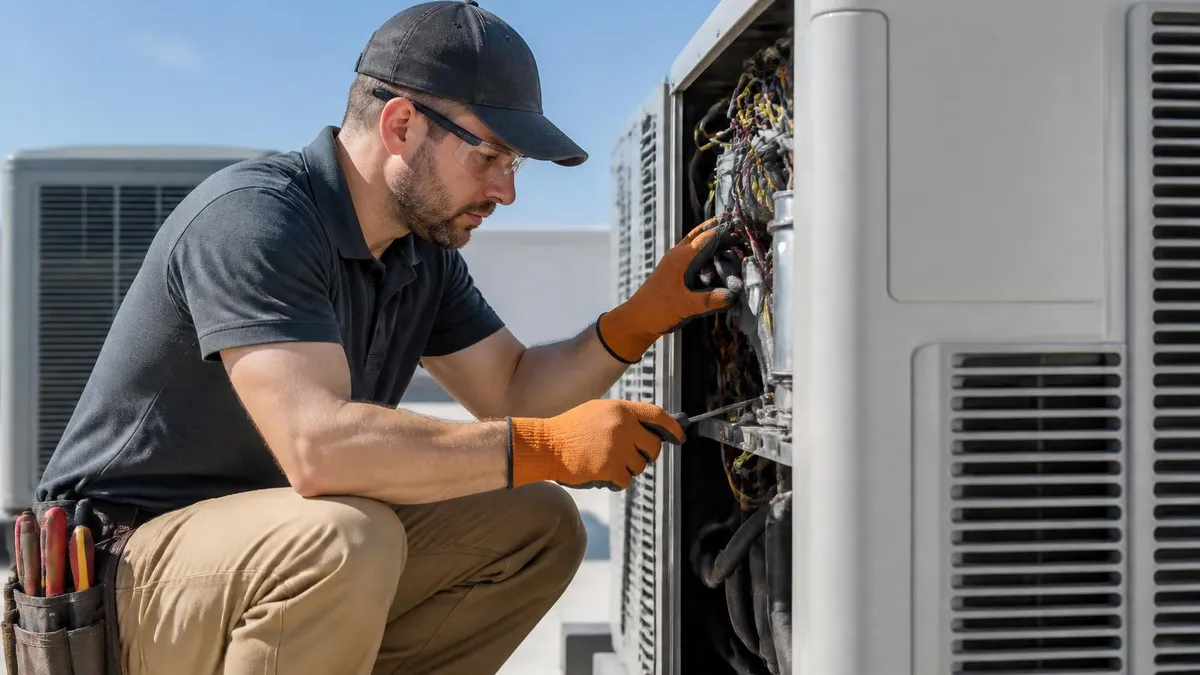
HVAC Certification Paths and Requirements
A focused six to twelve month program covering electrical, refrigeration, and diagnostics. The fastest classroom route into entry-level helper or installer roles, with hands-on labs and EPA 608 prep built into the curriculum at most schools.
A two-year community college path that adds load calculation, blueprint reading, and management coursework. It costs more but opens design, controls, and supervisory roles, and transfers toward engineering degrees if you later want to advance further.
A three to five year earn-while-you-learn track combining paid on-the-job hours with night classes. Sponsored by unions or contractors, it produces highly skilled journeymen with little or no tuition debt at completion.
The mandatory federal credential to handle refrigerants, offered in Type I, II, III, and Universal levels. No prerequisites are required, so many candidates earn it early to qualify for refrigerant-related work almost immediately.
Voluntary industry certifications that prove technical competence to employers. Passing these credentials often raises pay, improves hiring odds, and signals professionalism to customers comparing contractors in your service area.
The foundation of every HVAC career in the U.S. is the EPA Section 608 certification, mandated under the Clean Air Act. It is illegal to purchase or handle most refrigerants without it, so this is usually the first credential you pursue. The certification comes in four types: Type I for small appliances, Type II for high-pressure systems, Type III for low-pressure systems, and Universal, which combines all three. Most technicians aim straight for Universal because it removes every restriction and is exactly what employers expect to see on a resume.
The EPA 608 exam is administered by approved organizations like the ESCO Institute, Mainstream Engineering, and many trade schools. The Core section plus each type section must be passed with at least 70 percent. Type I can often be taken open-book online, but Type II, Type III, and Universal generally require proctored, closed-book testing. There is no expiration date once you earn it, which makes EPA 608 one of the best early investments any aspiring technician can make in their professional career.
Beyond the federal requirement, NATE (North American Technician Excellence) is the most recognized voluntary certification in the industry. It begins with a Core exam covering safety, tools, electrical theory, and basic refrigeration, followed by specialty exams in areas such as air conditioning, heat pumps, gas heating, or commercial refrigeration. Employers frequently pay higher wages to NATE-certified technicians because the credential reliably predicts on-the-job competence and reduces costly callbacks, warranty claims, and unhappy customers.
HVAC Excellence offers a parallel path with Employment Ready and Professional Level certifications, which are popular in school settings and among technicians who want a structured ladder. Many graduates earn HVAC Excellence credentials during training and then add NATE once they have field experience. Both are respected, and holding either signals to customers that you take your craft seriously. Strong technical skill paired with credentials is also what separates ordinary installers from those who move into hvac technician certification specialties.
State and local licensing add another layer that varies dramatically by location. Some states like Texas, Florida, and California require contractor or journeyman licenses with documented experience hours and a passing exam, while others delegate licensing to counties or have minimal requirements. Before you invest in any program, check your state's licensing board to understand the experience hours, insurance, and exams you will eventually need. Mapping this out early prevents costly surprises when you are ready to work independently or start a business.
Apprenticeships deserve special mention because they satisfy multiple requirements at once. A registered apprenticeship documents your experience hours toward state licensure, provides classroom instruction that often includes EPA 608 prep, and pays a progressive wage that rises as you gain skills. Programs sponsored by the ACCA, PHCC, or local unions are common across the country. For candidates who cannot afford trade school tuition upfront, an apprenticeship is frequently the smartest and most affordable route into a fully certified, licensed HVAC career.
HVAC Technician Certification Exam Topics Explained
Electrical theory is heavily weighted across nearly every HVAC certification exam. You must understand Ohm's law, series and parallel circuits, voltage, amperage, and resistance, plus how to read wiring diagrams and ladder logic. Expect questions on capacitors, contactors, relays, transformers, and motor types including PSC and ECM motors. Knowing how to safely measure voltage and diagnose an open circuit with a multimeter is essential, both for the test and for staying safe in the field.
Modern systems add control complexity. Thermostats, defrost boards, sequencers, and increasingly building automation controls appear on advanced exams. You should grasp 24-volt control circuits, how a call for cooling energizes components, and common failure points. Practicing electrical questions repeatedly builds the speed you need, since these problems often consume the most exam time and trip up candidates who only memorized formulas instead of understanding how circuits actually behave under load.
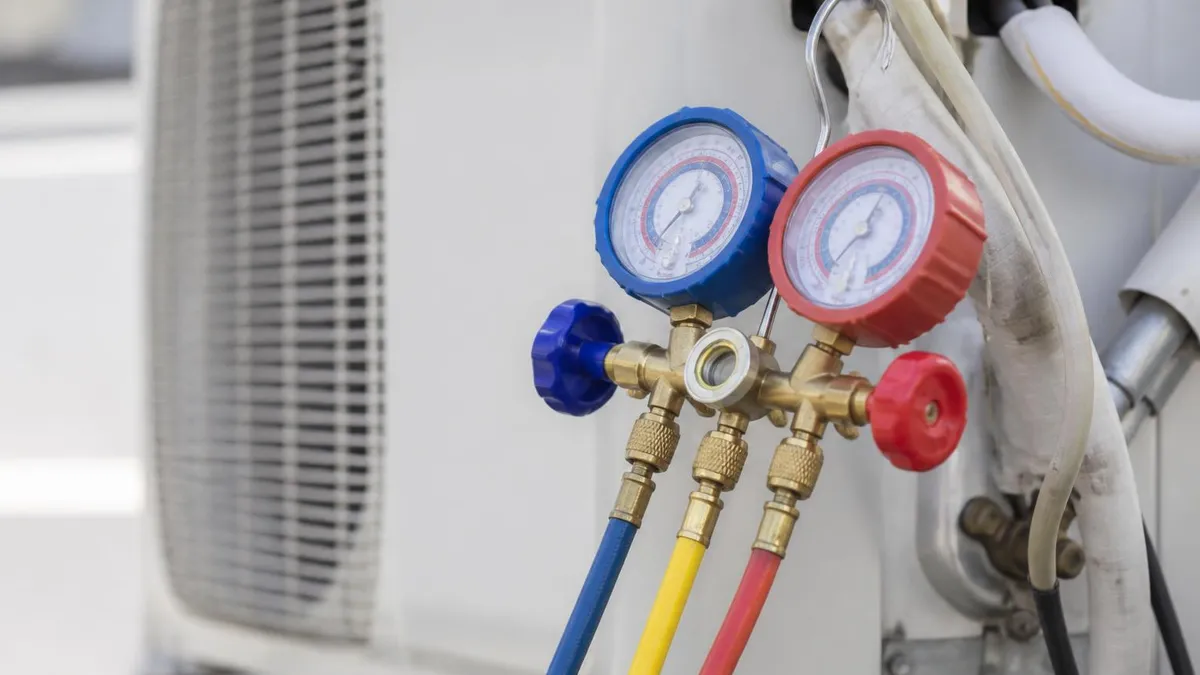
Is Pursuing HVAC Technician Certification Worth It?
- +Strong, recession-resistant demand for skilled technicians nationwide
- +Median pay above $64K with $90K+ potential in specialties
- +EPA 608 has no expiration and no prerequisites to start
- +Apprenticeships let you earn a full wage while training
- +Clear path to running your own profitable contracting business
- +Certifications transfer across states and employers easily
- +Specializations like controls and refrigeration command premium rates
- −Work can be physically demanding in attics and on rooftops
- −Seasonal peaks bring long hours during summer and winter
- −Licensing requirements vary confusingly by state and city
- −Upfront training and tool costs can reach several thousand dollars
- −Continuing education is needed to stay current on new refrigerants
- −Early career years may involve lower helper-level wages
HVAC Technician Certification Pre-Exam Readiness Checklist
- ✓Confirm which EPA 608 type or Universal level you need
- ✓Register with an EPA-approved testing organization in advance
- ✓Complete a structured study course or trade program
- ✓Take at least three full-length practice exams
- ✓Score 80 percent or higher on practice tests consistently
- ✓Memorize key pressure-temperature and superheat concepts
- ✓Review refrigerant recovery, recycling, and venting rules
- ✓Practice reading wiring diagrams and ladder logic
- ✓Gather valid photo ID and your test confirmation
- ✓Get a full night of sleep before exam day
Candidates who take 3+ practice exams pass at far higher rates
The single best predictor of passing any HVAC certification exam is consistent practice test performance. Candidates who score 80 percent or above on full-length practice exams pass the real test on their first attempt far more often than those who only read a textbook. Practice tests reveal weak topics, build time-management skills, and remove exam-day anxiety by making the format familiar before it counts.
Understanding the real costs of HVAC certification helps you budget and avoid surprises. The EPA 608 exam itself is inexpensive, often between $20 and $150 depending on the provider and whether you test online or in person. The larger expenses come from formal training. A trade school certificate program typically runs $1,200 to $15,000, while a two-year associate degree can cost $5,000 to $25,000 depending on whether you attend a community college or a private institution with substantially higher tuition rates.
Tools represent another upfront investment many newcomers underestimate. A basic starter kit with a multimeter, refrigerant gauges, hand tools, and safety gear can cost $500 to $1,500, and a quality recovery machine adds several hundred dollars more. Some employers and apprenticeships supply tools or offer payroll deduction plans, which eases the burden considerably. Budgeting for tools alongside tuition gives you a realistic picture of total entry costs before you commit to a particular training path.
NATE and HVAC Excellence exams carry their own fees, generally $50 to $200 per exam, and you may sit for several over your career. While voluntary, these credentials usually pay for themselves quickly through higher wages and better job offers. Many employers reimburse certification costs as a benefit, so always ask about education and credential support when comparing job offers. A reimbursement policy can save you hundreds of dollars annually as you steadily build your stack of certifications.
The salary payoff justifies these investments. Entry-level helpers may start around $17 to $22 per hour, but certified, experienced technicians commonly earn $30 to $45 per hour, and specialists in commercial refrigeration or controls earn even more. Technicians who master hvac technician certification across heating, cooling, and indoor air quality systems become indispensable to employers and customers alike, which translates directly into raises, bonuses, and job security during economic downturns and slow seasons.
Career growth in HVAC is genuinely open-ended. After a few years in the field, technicians often move into service management, estimating, project supervision, or sales engineering. Others specialize in profitable niches like building automation, ductless systems, or geothermal heat pumps. Each step usually involves additional certification, but the wage increases far outpace the cost. The trade rewards continuous learners, and certification is the documented proof that lets you step into each new, higher-paying role with genuine credibility.
Many experienced technicians eventually start their own contracting businesses, which is where earnings can multiply. A licensed contractor running a small crew can earn well into six figures, though this requires a contractor license, insurance, and business skills beyond technical knowledge. The path from helper to business owner is well-traveled in HVAC, and it begins with the same foundational certifications described in this guide. Every credential you earn early becomes a building block for that long-term independence and wealth.
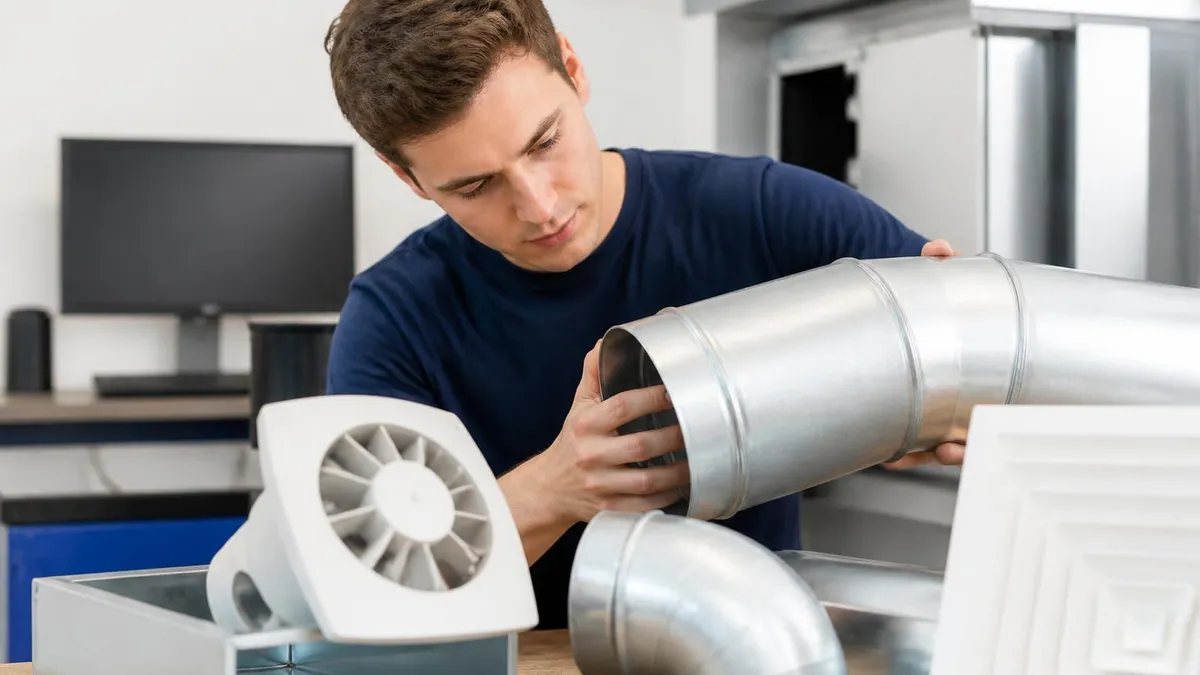
EPA 608 and NATE certifications do not replace state or local contractor licensing. Performing HVAC work without a required license can result in fines, stop-work orders, and voided insurance. Always verify your state and municipal licensing board requirements, including documented experience hours and exams, before working independently or advertising services.
Earning your certification is only the beginning; maintaining and advancing it keeps your career moving forward. While EPA 608 never expires, the refrigerant landscape changes constantly. The industry is transitioning to low-GWP refrigerants like R-32 and R-454B, which carry mild flammability classifications and require new handling procedures. Staying current through manufacturer training and short courses ensures you can safely and legally service the newest equipment, which protects both your customers and your professional reputation in a rapidly evolving field.
NATE certifications require recertification every two years, which you can satisfy through continuing education hours or by retaking exams. This keeps certified technicians sharp and signals to employers that your knowledge is current. Tracking your continuing education credits in a simple log throughout the cycle prevents a last-minute scramble. Many manufacturers, distributors, and trade associations offer free or low-cost classes that satisfy these requirements while also teaching you valuable, immediately applicable skills for your daily work.
Specialization is the most reliable way to increase your earning power after you are established. Building automation and direct digital controls are in especially high demand as commercial buildings get smarter. Ductless mini-split systems, geothermal heat pumps, and light commercial refrigeration all represent profitable niches where certified specialists are scarce. Each specialization typically requires a focused certification or manufacturer training, but the wage premium and steady demand make these credentials some of the best investments in your entire career.
Soft skills matter more than many technicians expect. Customers judge your competence partly by how clearly you explain problems and options, and your ability to build trust directly affects repeat business and referrals. Technicians who communicate well often transition into service management or sales roles, where understanding both the technical and customer sides is invaluable. Pairing strong technical certifications with professional communication is what turns a good technician into a top earner over the long run.
Manufacturer-specific certifications add another dimension worth pursuing. Brands like Carrier, Trane, Lennox, and Daikin offer factory training that many dealers require before letting technicians service their premium equipment under warranty. These programs deepen your product knowledge and often unlock access to better-paying dealer networks. Stacking manufacturer credentials on top of your NATE and EPA certifications makes you eligible for a wider range of jobs and positions you as a versatile, highly employable professional in any market.
Finally, treat your certifications as a portfolio you actively manage. Keep digital and physical copies, track renewal dates on a calendar, and update your resume each time you add a credential. Understanding how to service and explain core components like the hvac technician certification confidently in interviews demonstrates real mastery. The technicians who advance fastest are those who view certification not as a finish line but as an ongoing, deliberate strategy for building expertise, credibility, and income year after year.
With your certification path mapped out, the final piece is an exam preparation strategy that actually works. Start by building a realistic study schedule of eight to twelve weeks, dedicating consistent blocks rather than cramming at the end. Break your study into the major exam domains: electrical, refrigeration cycle, airflow, heating, and safety. Spend the most time on your weakest areas, which practice tests will quickly reveal. Spaced, repeated review of difficult topics cements knowledge far better than rereading material you already understand well.
Active learning beats passive reading every time. Instead of simply rereading a textbook, work problems, draw out the refrigeration cycle from memory, and trace electrical circuits on wiring diagrams. Explaining concepts aloud as if teaching someone else exposes gaps in your understanding immediately. Hands-on practice in a lab or on real equipment reinforces theory in a way no book can match. The more you do rather than just read, the more confident and exam-ready you will become before test day arrives.
Take full-length, timed practice exams under realistic conditions. Sit in a quiet room, set a timer, and complete the entire test without breaks or notes. This builds the stamina and pacing you need on exam day and reveals whether you can finish in the allotted time. Review every missed question carefully, understanding not just the right answer but why the others are wrong. This deep review is where the most valuable learning actually happens before the real test.
Memorize the high-yield facts that appear on nearly every exam. Pressure-temperature relationships, common refrigerant properties, electrical formulas, safe handling procedures, and EPA venting rules show up repeatedly. Create flashcards or a one-page cheat sheet of these essentials and review them daily in the final weeks. Having these facts at instant recall frees up mental energy on test day to focus on the reasoning-heavy diagnostic questions that determine whether you pass comfortably or barely scrape by.
Manage exam-day logistics to avoid unnecessary stress. Confirm your testing location, required identification, and start time at least a day ahead. Get a full night of sleep, eat a solid meal, and arrive early so you are settled and calm. During the test, answer easy questions first, flag tougher ones to revisit, and never leave a question blank since there is no penalty for guessing. Steady pacing and a calm mindset often make the difference between passing and failing.
After you pass, keep the momentum going. Apply immediately for positions or apprenticeships, add your new credential to your resume and online profiles, and begin planning your next certification. The HVAC field rewards those who keep building their skills, and each credential opens doors to higher pay and more interesting work. Use the free practice tests throughout this site to stay sharp, prepare for specialty exams, and confidently take the next step in your heating and cooling career.
HVAC Questions and Answers
HVAC Sales: The Complete Guide to Selling Heating and Cooling Systems, Building Customer Trust, and Closing More Deals

HVAC Air Duct Sealing: The Complete Homeowner and Contractor Guide to Sealing Ductwork for Efficiency, Comfort, and Indoor Air Quality
HVAC Solutions: The Complete Guide to Heating, Cooling, and Indoor Air Quality Systems for Homes and Buildings

Commercial HVAC Repair: Systems, Costs, and Service Strategies
HVAC Evaporator: Complete Guide to How It Works, Common Problems, and Maintenance
About the Author

NATE Certified HVAC Technician & Licensing Exam Trainer
Universal Technical InstituteMike Johnson is a NATE-certified HVAC technician and EPA 608 universal-certified refrigerant handler with a Bachelor of Science in HVAC/R Technology. He has 19 years of commercial and residential HVAC installation and service experience and specializes in preparing technicians for NATE certification, EPA 608, A2L refrigerant safety, and state HVAC contractor licensing examinations.