
Does Big 5 Do FSC Tests? FSC Test Locations in California 2026 September
Does Big 5 do FSC tests? Find firearm safety certificate locations near you, what to expect, and free practice tests. ✅

If you've been asking yourself does Big 5 do FSC test — you're not alone. Thousands of Californians search for convenient firearm safety certificate test locations every month, and Big 5 Sporting Goods is one of the most recognizable sporting goods chains in the state. The short answer is yes: many Big 5 locations in California are licensed firearms dealers and are therefore authorized to administer the FSC test.
However, not every Big 5 store offers this service, so calling ahead to confirm availability at your local branch is always the smart first step before making the trip. Taking a fsc practice test beforehand will also significantly improve your chances of passing on the first try.
The California Firearm Safety Certificate program was established to ensure that every person who purchases a handgun or long gun demonstrates a basic understanding of safe firearm handling, storage, and California-specific laws. The FSC test consists of 30 multiple-choice questions drawn from the California DOJ's official study guide, and you must score at least 23 out of 30 — a 77% passing score — to receive your certificate.
The test is administered by a DOJ-certified Firearm Safety Officer (FSO) at any licensed firearms dealer in the state, which is why so many retail gun shops, sporting goods stores, and pawnshops with firearms sections can offer it.
Big 5 Sporting Goods has over 60 locations throughout California and is a federally licensed firearms dealer (FFL) at most of those stores. Because FSO certification is tied to individual employees rather than the store as a whole, availability on any given day depends on whether a certified officer is on duty. Stores in larger metro areas like Los Angeles, San Diego, Sacramento, and the Bay Area tend to have more FSO-certified staff and therefore more reliable test availability. Rural or smaller-market stores may have only one or two certified employees, making scheduling essential.
Beyond Big 5, the landscape of FSC testing locations in California is broad. Gun shops, pawnshops with firearms departments, major retailers like Bass Pro Shops, Sportsman's Warehouse, and Turner's Outdoorsman, as well as thousands of independent dealers all hold FFL licenses and can administer the test. The California DOJ maintains a searchable database of licensed dealers on its website, and typing "firearm safety certificate near me" into a search engine will surface nearby options. This geographic flexibility means most Californians live within a short drive of multiple testing sites.
The cost of the FSC test is set by California law at a maximum of $25, though many dealers charge less. You pay the fee directly to the dealer at the time of the test, and payment methods vary by location — some accept only cash, while others take credit cards. The certificate itself is valid for five years from the date of issue and is required for virtually all firearm purchases in California, with a narrow set of exemptions for law enforcement, active military, and certain licensed dealers purchasing for their own inventory.
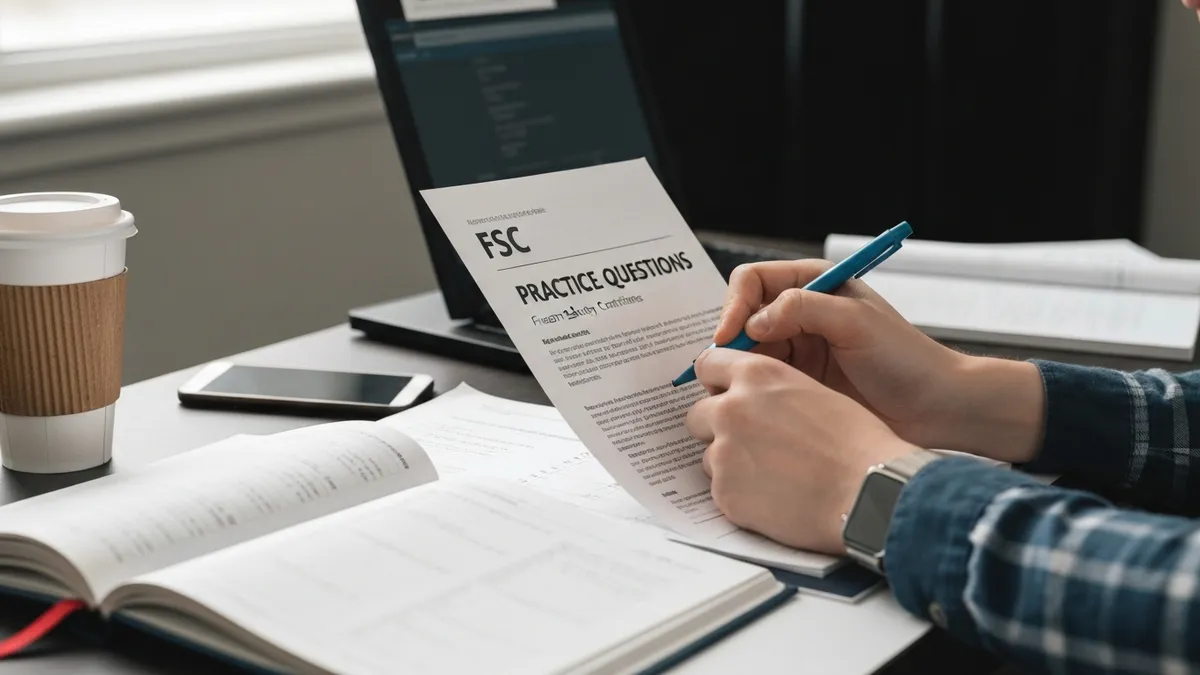
Preparing for the FSC test before you show up at Big 5 or any other location dramatically improves your odds of passing on the first attempt. The 30-question exam covers four major topic areas: safe handling of firearms, storage and locking devices, laws regarding carrying and transporting firearms in California, and preventing access by children.
Each area requires not just memorization but practical comprehension — the test is designed to assess whether you can apply the rules in real-world scenarios, not simply recite definitions. Using a firearm safety certificate study guide and taking multiple practice exams under timed conditions is the most reliable preparation method.
This article covers everything you need to know about FSC test locations in California — including how to find them, what to bring on test day, how to choose the best location for your schedule, and how to maximize your preparation so you pass with confidence the first time.
California FSC Test by the Numbers
Key Facts at a Glance
| Item | Value | Details |
|---|---|---|
| Total Questions | 30 | Multiple choice |
| Passing Score | 23/30 | 77% minimum |
| Maximum Test Fee | $25 | Set by CA law |
| Certificate Validity | 5 Years | Renewal required |
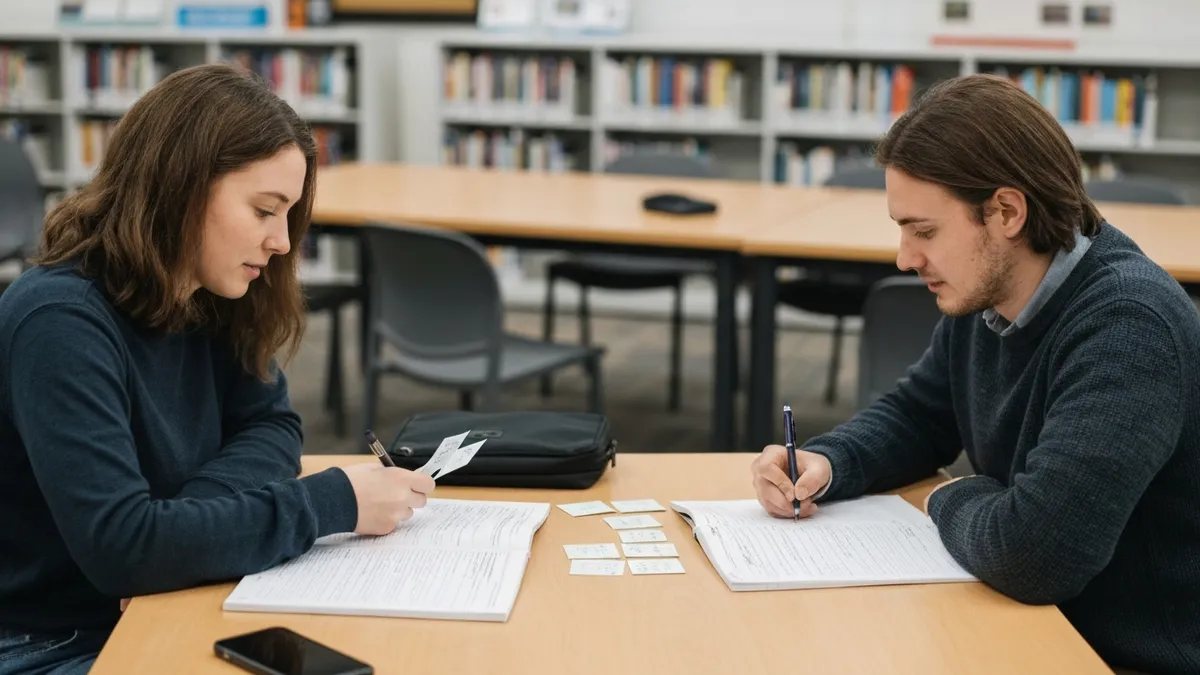
How to Find and Use an FSC Test Location Near You
Search for Licensed Dealers Near You
Call Ahead to Confirm FSO Availability
Gather Your Required Documents
Complete the Written FSC Test
Receive Your FSC Certificate
Knowing what to bring and how to register for the FSC test removes the guesswork and keeps the process smooth. Because the california firearms safety certificate test is administered at retail locations rather than government offices, there is no formal online registration system — you simply walk in or call ahead to schedule, present your documents, pay the fee, and take the test. That simplicity is one of the FSC program's biggest advantages compared to licensing regimes in other states that require weeks of paperwork and multiple government appointments.
The most important document you need is a valid government-issued photo ID that proves your identity and, for age-restricted purposes, confirms you are at least 18 years old (or 21 for handgun purchases). A California driver's license or state ID is the most commonly presented document. U.S. passports, military identification cards, and tribal identification cards issued by a federally recognized tribe are also accepted. If your ID is expired, do not assume the dealer will accept it — most licensed dealers follow strict DOJ guidelines and will turn you away rather than risk a compliance violation.
Non-U.S. citizens who are lawfully present in the country may also take the FSC test, but they should bring proof of lawful presence in addition to their photo ID. This typically means an Employment Authorization Document (EAD), a permanent resident card (green card), or a valid foreign passport with an appropriate visa. If you are uncertain about your eligibility, calling the dealer in advance and asking their document requirements will save you a wasted trip. The California DOJ also publishes exemption lists for specific visa categories on its website.
On the question of scheduling: larger gun stores and those in busy metropolitan areas often see heavy foot traffic on weekends, so arriving early in the morning or visiting on a weekday afternoon can shorten your wait. Some dealers, particularly independent shops, will allow you to call ahead and schedule a dedicated testing appointment, which virtually eliminates wait time. At a store like Big 5, testing is typically walk-in only, so be prepared for a possible wait if the FSO is assisting other customers when you arrive.
It is worth confirming the store's accepted payment methods before you arrive. The California DOJ caps the FSC test fee at $25, but individual dealers set their own prices up to that ceiling. Many charge between $15 and $25. Some smaller or independent dealers accept cash only, while larger retailers like Big 5 generally accept debit and credit cards as well. Bringing cash ensures you won't be turned away due to a card reader issue or a dealer's preference for cash transactions.
If you fail the test on your first attempt, you may retake it. California law does not impose a mandatory waiting period between attempts, though the dealer may require you to pay the test fee again. Some dealers will allow an immediate retake; others ask you to return another day. Studying more thoroughly between attempts is strongly recommended — a california fsc practice test that simulates the real exam format will help you identify the specific topic areas where you lost points so you can focus your review before the retake.
Once you have passed and received your certificate, protect it carefully. If your FSC is lost or destroyed, you can apply for a replacement through the California DOJ's FSC Replacement Certificate program for a $15 fee. The replacement process can take several weeks, and without your FSC you cannot complete a firearm purchase — so keeping a photocopy or a high-quality photo of both sides of your certificate in a secure digital location is a sensible precaution that many gun owners overlook until they actually need it.
California Firearm Safety Certificate: Exam Content Overview
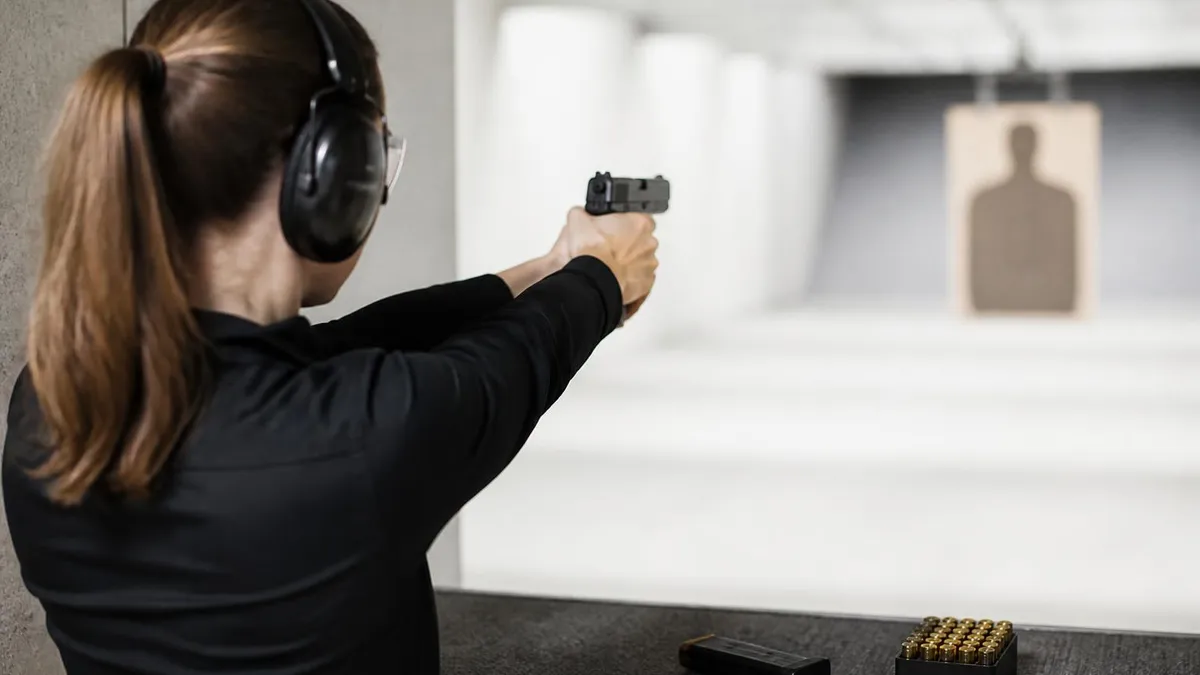
Safe handling questions make up a substantial portion of the california firearm safety certificate exam. You will be tested on the fundamental rules of firearm safety — keeping the muzzle pointed in a safe direction, treating every firearm as if it were loaded, keeping your finger off the trigger until you are ready to shoot, and knowing your target and what lies beyond it. These principles apply to all firearm types and scenarios, from home storage to range use.
The test also covers how to safely load, unload, and check the chamber status of both semi-automatic pistols and revolvers. Expect questions about what to do if a firearm fails to fire (misfires and hangfires), how to safely clear a malfunction, and why you should always wait at least 30 seconds before opening the action on a misfired round. Hands-on familiarity with these procedures — even in a dry-fire context — will help these answers feel intuitive rather than memorized.
Big 5 vs. Independent Gun Shops for Your FSC Test
- +Convenient locations — over 60 Big 5 stores across California in malls and shopping centers
- +Familiar retail environment that feels less intimidating for first-time buyers
- +Extended retail hours including evenings and weekends for flexible scheduling
- +Established chain with trained staff who follow standardized DOJ compliance procedures
- +Opportunity to browse and compare firearms, accessories, and ammunition in the same visit
- +Accepts multiple payment methods including debit and credit cards at most locations
- −Not all Big 5 locations have a DOJ-certified Firearm Safety Officer on every shift
- −Walk-in only at most Big 5 stores — no way to guarantee FSO availability in advance
- −Smaller firearms inventory compared to dedicated gun shops, limiting post-test purchase options
- −Staff expertise on specific firearms models may be lower than at specialty dealers
- −High foot traffic on weekends can mean longer waits before the FSO is available for testing
- −Some locations may have discontinued FSC testing if their FSO staff turned over
FSC Test Preparation Checklist: What to Do Before Test Day
- ✓Download and read the official California DOJ FSC Study Guide from the DOJ website at least once.
- ✓Take at least three full 30-question firearm safety certificate practice tests under timed conditions.
- ✓Review all questions you answered incorrectly and re-read the corresponding study guide sections.
- ✓Memorize California's specific storage laws, including the Child Access Prevention requirements.
- ✓Learn the legal definitions of assault weapons and the rules around magazine capacity in California.
- ✓Practice identifying the parts and operation of both revolvers and semi-automatic pistols.
- ✓Call your chosen test location — Big 5 or another dealer — to confirm FSO availability on your visit date.
- ✓Prepare your government-issued photo ID and confirm it is not expired before heading to the store.
- ✓Bring cash plus a card as backup to cover the FSC test fee of up to $25.
- ✓Plan to arrive during off-peak hours (weekday mornings or early afternoons) to minimize wait time.
Practice Tests Predict Real Test Performance
Test-takers who complete five or more full-length FSC practice exams before their real test consistently report higher first-attempt pass rates. The FSC exam draws from a predictable pool of questions, and repeated exposure to practice questions in the same multiple-choice format trains your brain to recognize correct answers quickly, even when questions are phrased differently than you expected. Aim for consistent practice scores of 27 or higher (90%) before scheduling your real test.
Effective studying for the california fsc practice test requires more than a single read-through of the DOJ study guide. The most successful test-takers treat FSC preparation the same way they would prepare for a professional licensing exam: systematic review, active recall practice, and targeted remediation of weak areas. Given that the test covers four distinct content domains — safe handling, storage, California laws, and child access prevention — a structured approach that dedicates time to each domain ensures comprehensive coverage rather than inadvertently ignoring an entire category that could cost you the passing score.
The California DOJ's official Firearm Safety Certificate Study Guide is your primary resource and should be your starting point. It is available as a free PDF download from the California DOJ website in both English and Spanish. The guide is approximately 50 pages and covers all material that can appear on the test. Read it completely at least once before you take any practice tests, so that your practice sessions are reinforcing correct information rather than guessing and building incorrect mental models that need to be corrected later.
After your initial read-through, shift to active recall practice. Rather than re-reading the guide passively, use practice questions to test yourself. When you get a question wrong, go back to the relevant section of the study guide rather than simply noting the correct answer. Understanding why the correct answer is right — and why the distractors are wrong — builds the kind of deep comprehension that holds up under the pressure of the real exam environment, where slightly different phrasing can trip up students who only memorized surface-level answers.
Pay particular attention to California-specific laws that differ from what you might assume based on federal law or the laws of other states. The 10-day waiting period, the Unsafe Handgun Act's approved handgun roster, magazine capacity limits (10 rounds maximum for magazines purchased after January 2000 under current enforcement), and the specific definition of what constitutes an assault weapon under California Penal Code section 30510 are all areas where California diverges sharply from most other states. Test-takers who have firearm experience from other states often fail FSC questions in these areas because they apply out-of-state knowledge.
For the storage and child access prevention domain, California's laws are among the most detailed in the country. You need to know not just that firearms must be stored securely, but the specific circumstances under which different storage methods are legally required versus merely advisable. For example, if no minor is present in the home and no prohibited persons have access, the storage requirements are less stringent than when a child lives in or regularly visits the residence. The FSC exam tests these distinctions with scenario-based questions that require you to apply the law to a specific set of facts.
Simulate the real test environment when you take practice exams. Sit at a desk or table rather than on a couch, put your phone away, set a self-imposed time limit of 30 minutes, and complete all 30 questions before checking your answers. This conditions your mind to perform under mild time pressure and prevents the habit of second-guessing and over-revising answers that can actually lower scores. After each practice session, record your score and note which question categories you missed, then use that data to guide what you review before your next session.
One often-overlooked preparation strategy is reading real-world news stories about California firearms laws. Because the FSC exam tests practical application rather than abstract legal theory, understanding how the laws work in real situations deepens your comprehension. Stories about local law enforcement enforcing storage laws, cases involving CAP violations, or news about regulatory changes to California's approved handgun roster all provide concrete context that makes the study guide material more memorable. This approach also keeps you current on any recent legal changes that might not yet be reflected in an older version of the study guide you may have downloaded.
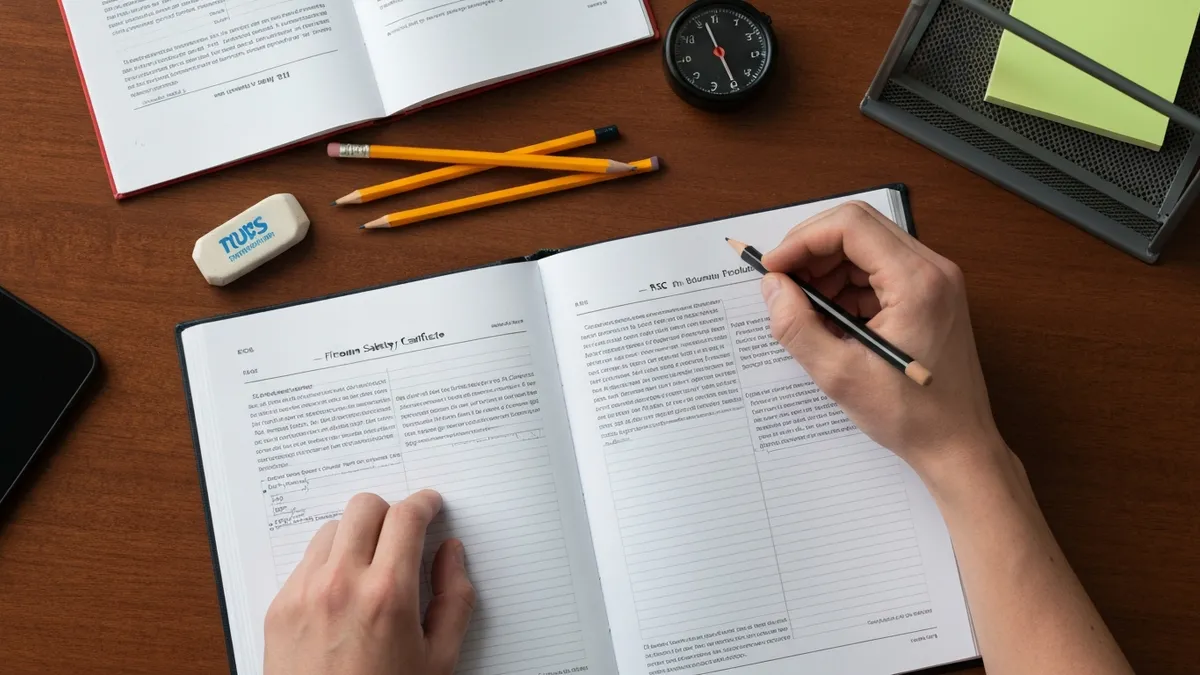
The FSC test has a documented failure rate — many first-time test-takers are surprised by how specifically California-focused the questions are. If you fail, you pay the fee again for each retake, and some dealers require you to return on a different day. Taking at least two or three full fsc test practice exams before showing up at Big 5 or any other testing location will save you time, money, and frustration. Never walk in cold assuming common sense will be enough.
Once you have passed your FSC test, understanding what comes next in the California firearm purchase process ensures there are no unpleasant surprises when you try to complete your transaction. The FSC certificate is just one of several requirements that must be satisfied before you can take possession of a firearm purchased from a licensed dealer in California. Knowing the complete sequence of steps in advance makes the experience far smoother — and helps you avoid the frustration of discovering a missing document or unfulfilled requirement after you have already decided on the firearm you want to buy.
The California 10-day waiting period is perhaps the most significant post-FSC step for first-time buyers. Regardless of whether you have already passed a background check or previously purchased firearms, California law requires all firearm purchases from licensed dealers to include a 10-day waiting period between the date of purchase and the date of delivery.
This period is mandatory and cannot be waived by the dealer, even if your background check clears in hours. Use this time to purchase any additional accessories you'll need — a gun safe, a quality lock box for vehicle storage, cleaning supplies, and appropriate ammunition for your intended use.
The background check itself is conducted through the California Bureau of Firearms (BOF), which operates a state-level system called AFS (Automated Firearm System) in addition to the federal NICS check. California runs its own independent check, which means even individuals who have passed federal background checks for purchases in other states may face different outcomes under California's more expansive list of prohibiting offenses. If your background check is delayed or denied, you have the right to appeal through the California DOJ's appeal process — a process that can take several weeks to resolve.
For handgun purchases specifically, the firearm must appear on California's Unsafe Handgun Act roster — a list of approved handguns maintained by the DOJ. Not all handguns sold legally in other states are on this roster, and this surprises many buyers who have researched a specific model only to discover it cannot be purchased new from a California dealer. There are limited exemptions, particularly for single-shot pistols and certain handguns purchased by law enforcement, but the roster requirement applies to the vast majority of handgun purchases. Your dealer will be able to confirm roster status before you select a firearm.
After you take possession of your new firearm, California law requires that you register it through the dealer's completion of the DROS (Dealer Record of Sale) form, which is submitted electronically to the DOJ at the time of purchase.
As of 2014, California also requires registration of firearms brought into the state from out of state within 60 days of acquisition or within 60 days of establishing California residency. Failure to register can result in fines and complications if the firearm is ever traced in a law enforcement investigation, so compliance is strongly in your interest even when enforcement is inconsistent.
If you want to find the best fsc test near me resources or additional study materials, PracticeTestGeeks offers a full suite of FSC practice quizzes organized by topic area. These quizzes mirror the format and difficulty level of the real exam and are updated regularly to reflect current California law. Using them in conjunction with the official DOJ study guide gives you the most comprehensive preparation available outside of a formal firearms safety course, which is optional but always a beneficial supplement for new gun owners.
Remember that your FSC certificate is valid for five years. If you purchase multiple firearms over that period, you present the same certificate each time — you do not need to retake the test for each purchase. When your certificate approaches its expiration date, you can retake the test at any authorized dealer to renew it, and your score from the renewal test will be checked the same way as your original test. Staying current on any California law changes in the years between your tests will help ensure a smooth renewal experience.
Practical test-day tips can make the difference between a confident pass and an avoidable failure. One of the most important strategies is to read every question and all four answer choices completely before selecting your answer. The FSC test is written by legal professionals who are skilled at crafting plausible-sounding distractors — incorrect answers that feel right on a quick skim but fall apart under careful reading. Questions that use words like "always," "never," "only," and "except" deserve particular attention because these absolute qualifiers are often the key to distinguishing the correct answer from a close-but-wrong option.
When you encounter a question you are unsure about, use the process of elimination rather than guessing blindly. Start by ruling out any answer choices that you know are wrong based on your study. Even if you can eliminate just one or two options, your odds of guessing correctly improve dramatically. In a 30-question test where each question has four choices, eliminating two wrong answers on a question you are uncertain about gives you a 50-50 shot rather than a 25% chance — and across several uncertain questions, that difference can be the margin between passing and failing.
Scenario-based questions — the ones that present a specific situation and ask what you should do — are the area where practice is most valuable. The FSC exam includes a meaningful number of scenario questions designed to test applied knowledge rather than rote memorization. For example, a question might describe a situation where a friend asks to hold your firearm for a few weeks, and you must identify which response is legally correct under California law. These questions reward test-takers who have thought through real-life situations during their study sessions, not just those who memorized rules in the abstract.
Manage your time calmly during the test. There is no formal time limit, but the FSO has other duties and you should aim to complete the test within 30 to 45 minutes. If you finish early, take two or three minutes to review your answers on the questions you marked as uncertain — but resist the urge to second-guess questions where you felt confident. Research on multiple-choice test performance consistently shows that first instincts are more often correct than revised answers, particularly when the revision is driven by anxiety rather than a specific new insight about the question.
After receiving your certificate, take a few minutes at the store to verify that all the printed information is correct — your name, the issue date, and the expiration date. Errors on DOJ-issued documents can sometimes occur and are much easier to correct on the spot than weeks or months later when you are trying to complete a purchase and the certificate information does not match your ID. The FSO who administered the test can contact the DOJ to correct errors in the certificate system if caught immediately.
One final practical tip: if you are purchasing a firearm on the same visit as your FSC test, have the firearms you are interested in identified in advance so you can transition efficiently from the test to the purchase process. Many dealers will walk you through the DROS paperwork immediately after you pass the FSC test.
Having your ID ready, knowing exactly which firearm you want, and having payment arranged in advance (including any required sales tax) allows you to complete the DROS in under 15 minutes and start the 10-day waiting period clock as soon as possible. For a complete overview of the full fsc test practice resources available on this site, visit our dedicated FSC practice test page where you can access all topic categories in one place.
The Firearm Safety Certificate program, while sometimes viewed as just another bureaucratic hurdle, genuinely serves a purpose: it ensures that every firearm purchaser in California has been exposed to the basic safety principles and legal framework that govern responsible gun ownership in the state. Whether you test at Big 5, a local gun shop, or any other authorized dealer, arriving prepared is the best investment you can make in both your test outcome and your long-term safety as a firearm owner.
FSC Questions and Answers
About the Author

Educational Psychologist & Academic Test Preparation Expert
Columbia University Teachers CollegeDr. Lisa Patel holds a Doctorate in Education from Columbia University Teachers College and has spent 17 years researching standardized test design and academic assessment. She has developed preparation programs for SAT, ACT, GRE, LSAT, UCAT, and numerous professional licensing exams, helping students of all backgrounds achieve their target scores.
Join the Discussion
Connect with other students preparing for this exam. Share tips, ask questions, and get advice from people who have been there.
View discussion (7 replies)