
FSC Certification: California Firearm Safety Certificate Guide 2026 September
Get ready for your FSC Certification: 📚 California Firearm certification. Practice questions with step-by-step answer explanations and instant scoring.
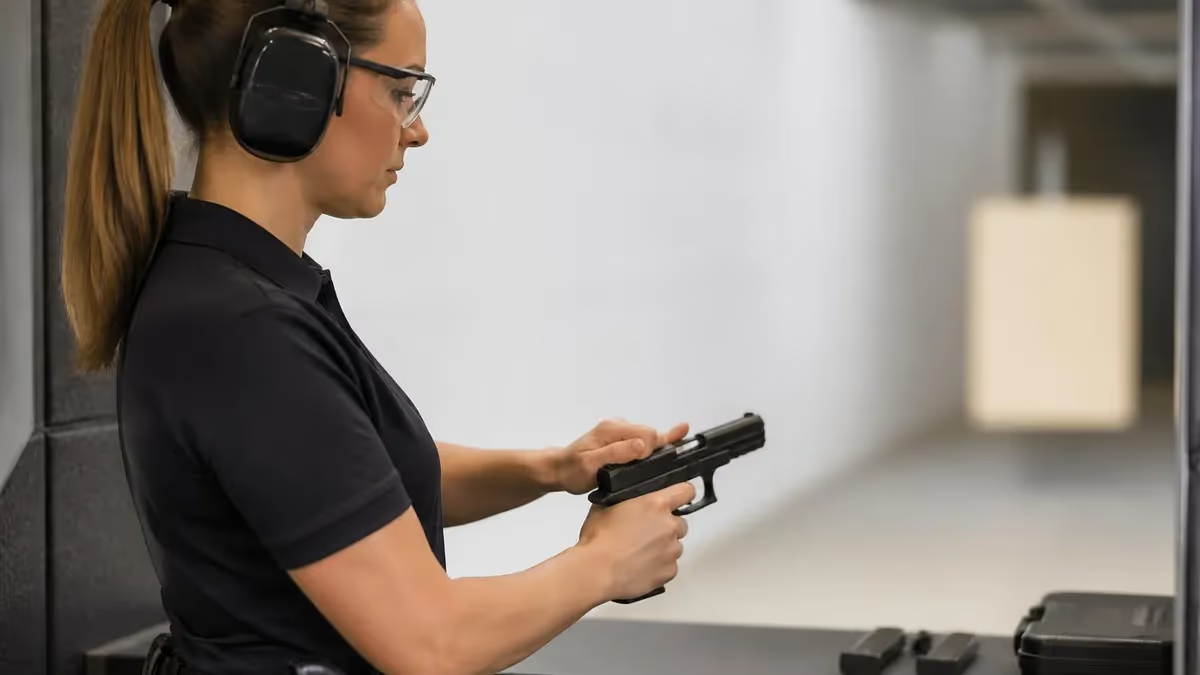
FSC Certification: What It Is and Why California Requires It
The FSC (Firearm Safety Certificate) is a foundational firearm safety credential required in California before purchasing a handgun or long gun from a licensed dealer. California law mandates that all firearm purchasers hold a valid FSC -- it's not optional and can't be waived. The FSC requirement replaced the earlier Handgun Safety Certificate (HSC) system in 2015 when California expanded the mandatory safety testing requirement to cover long guns in addition to handguns. The FSC is issued through the California Department of Justice, but the actual test is administered by licensed firearms dealers (Federal Firearms Licensees) throughout the state. You don't need to visit a government office -- any licensed dealer in California can administer the FSC test.
The test consists of 30 multiple-choice questions drawn from the California DOJ's FSC study guide, which covers safe handling, safe storage, firearm mechanics, and California-specific laws governing firearm ownership and transfer. You need to answer at least 23 questions correctly (76.7%) to pass. The maximum fee a dealer can charge is $25, and you receive your FSC card on the same day you pass. The certificate is valid for five years, after which you'll need to retake the test. The good news is that the test content is consistent and manageable -- with proper preparation, most people pass on the first attempt. A comprehensive firearm safety certificate study guide covers all major topics tested on the FSC exam with explanations of the underlying safety principles.
What many first-time firearm purchasers don't realize is that the FSC is only one step in California's firearm purchase process. After obtaining the FSC, firearm transfers in California require a background check through the California Firearm Information Gateway, a 10-day waiting period, and in many cases a Dealer Record of Sale (DROS) submission. The FSC certifies that you understand basic firearm safety -- it doesn't authorize purchase on its own. Understanding the full California purchase process before you walk into a dealer saves confusion and delays. The FSC test itself can typically be taken the same day you decide to buy a firearm, though dealers vary in their procedures. Some allow walk-ins for testing; others prefer appointments. Calling ahead is always a good idea.
What the FSC Test Covers
The California FSC test draws questions from five core content areas defined by the DOJ study guide. Safe handling rules cover the fundamental principles all safe firearm handlers follow: treat every firearm as if it's loaded, never point a firearm at anything you're not willing to destroy, keep your finger off the trigger until ready to shoot, and know your target and what's beyond it. These aren't just test topics -- they're the foundational safety habits that prevent accidents. The test reinforces these principles with scenario-based questions that apply the rules to realistic situations. Safe storage covers lock boxes, gun safes, trigger locks, and California requirements for storing firearms where children could access them. California's Child Access Prevention law creates legal liability for unsafe storage when minors gain access to firearms, so the storage questions have real legal weight. Practicing with FSC gun and safety rules questions and answers builds the knowledge of both universal safety rules and California-specific requirements tested on the exam. Questions about FSC firearms and children questions and answers covers the storage requirements, Child Access Prevention law concepts, and safe handling around minors that appear on the FSC test.

- ✓Confirm your exam appointment and location
- ✓Bring required identification documents
- ✓Arrive 30 minutes early to check in
- ✓Read each question carefully before answering
- ✓Flag difficult questions and return to them later
- ✓Manage your time — don't spend too long on one question
- ✓Review flagged questions before submitting

FSC Overview
- Safe handling rules: The four fundamental safety rules, loading/unloading procedures, safe direction, trigger discipline, and muzzle awareness -- core test content weighted heavily
- Safe storage: Lock box and gun safe requirements, trigger locks, storage of loaded vs. unloaded firearms, California Child Access Prevention law obligations
- Firearm mechanics: Basic action types (semi-automatic, revolver, bolt action, lever action), parts identification, how to determine if a firearm is loaded, clearing malfunctions safely
- California firearm laws: Prohibited persons, assault weapon restrictions, magazine capacity laws, transport requirements, reporting lost or stolen firearms, private party transfer requirements
- Cleaning and maintenance: Safe unloading before cleaning, ventilation, cleaning equipment, proper storage of cleaning solvents
Passing the FSC Test: Key Knowledge Areas
California firearm law questions are where many test-takers lose points. The state has some of the most specific firearm regulations in the country, and the FSC test covers the legal obligations that come with firearm ownership in California specifically. Transport rules require that firearms be unloaded and stored in a locked container (not just the trunk unless the vehicle has no trunk) when transported in a vehicle -- open carry of loaded firearms is prohibited except in specific rural jurisdictions. Magazine capacity restrictions currently prohibit standard-capacity magazines above 10 rounds for most firearms. Knowing these specifics, and being able to answer questions about them accurately, requires studying California law rather than assuming federal law or other states' rules apply.
Storage requirements deserve particular attention because they generate some of the most scenario-specific test questions. California requires that firearms be stored safely to prevent access by prohibited persons -- including children under 18. If you leave a loaded firearm where a child can access it and the child harms themselves or others, you face criminal liability under California Penal Code 25100 (Child Access Prevention). The FSC test presents scenarios where you need to identify whether a storage situation meets California's safety requirements. Questions might describe a situation and ask whether the firearm is properly secured, or describe a type of storage device and ask whether it satisfies California law. The FSC general questions and answers quiz covers a broad range of these topics in the question format used on the actual exam. Knowing both the rule and the reasoning behind it -- why storage requirements exist, what specific risks they address -- helps you answer scenario questions correctly even when the phrasing differs from how you studied the material.
One category of FSC questions that surprises many test-takers involves unloading and clearing procedures. The test expects you to know how to determine whether common firearm types are loaded: checking the chamber, dropping the magazine, inspecting the cylinder on a revolver. These questions aren't asking you to be a gunsmith -- they're verifying that you know how to verify a firearm is clear before handling it safely. The principle is that you should never assume a firearm is unloaded based on appearance alone; you must physically verify it. If you're not familiar with firearm mechanics, reviewing the basic action types and their loading/unloading procedures in the DOJ study guide before your test appointment is worthwhile. The scenarios are straightforward if you've reviewed the material, and these questions represent reliably correct answers for anyone who has studied the guide thoroughly.
California also requires that firearm owners report lost or stolen firearms to law enforcement within specific timeframes. The FSC test touches on these reporting obligations, which serve the public safety goal of preventing straw purchases and illegal transfers. Understanding that California treats firearm ownership as coming with ongoing legal obligations -- not just requirements at the point of purchase -- is the right mindset for answering the legal compliance questions correctly. The FSC isn't just a technical knowledge test; it's a demonstration that you understand both the safety practices and the legal responsibilities of firearm ownership in California.
Preparing for the FSC test doesn't require a formal course or extensive training. The California DOJ study guide is publicly available and covers everything the test draws from. Most candidates who read the guide carefully and take a few practice tests find the exam manageable. The questions aren't designed to trick you -- they're designed to verify that you understand the safety principles and legal requirements that California considers essential for responsible firearm ownership. Approaching the test with genuine engagement rather than just rote memorization produces better results, because the scenario-based questions test your ability to apply the principles rather than recite definitions. Spending 2-3 hours with the study guide and practice tests is typically sufficient preparation for candidates without prior firearm knowledge, and even less for those with existing familiarity with safe handling principles.
FSC Pros and Cons
- +Low barrier to pass -- 75% passing threshold with straightforward study material means most prepared candidates pass on the first attempt
- +Same-day certification -- no waiting for mailed certificates; you receive your FSC card from the dealer immediately upon passing the test
- +Broad dealer network -- any licensed California FFL dealer can administer the test, so there's no need to travel to a government office or testing center
- +Study guide is free -- the California DOJ publishes the complete FSC study guide at no cost, making preparation accessible without expensive courses or materials
- +5-year validity -- the FSC remains valid for five years, so you won't need to retake the test for every subsequent firearm purchase within that period
- −California-only -- the FSC is a California state requirement with no equivalent in other states; if you move, your FSC has no value outside California
- −No exemption for experience -- experienced shooters, military veterans, and law enforcement (non-active) must obtain the FSC like any first-time buyer
- −Dealer variability -- some dealers are more organized about testing than others; calling ahead to confirm test availability and appointment requirements saves time
- −Content is broad -- the DOJ study guide is comprehensive, and candidates who approach the test without studying often score below 75% despite general firearm familiarity
- −5-year renewal requirement -- the FSC expires, requiring retesting every five years even if your knowledge and safe handling habits haven't changed
FSC Questions and Answers
About the Author

Educational Psychologist & Academic Test Preparation Expert
Columbia University Teachers CollegeDr. Lisa Patel holds a Doctorate in Education from Columbia University Teachers College and has spent 17 years researching standardized test design and academic assessment. She has developed preparation programs for SAT, ACT, GRE, LSAT, UCAT, and numerous professional licensing exams, helping students of all backgrounds achieve their target scores.
Join the Discussion
Connect with other students preparing for this exam. Share tips, ask questions, and get advice from people who have been there.
View discussion (7 replies)