
FSC Test: California Practice Test & Study Guide 2026 September
Free FSC practice test with questions and answer explanations. Prepare for the 2026 September exam with instant scoring. 🟢
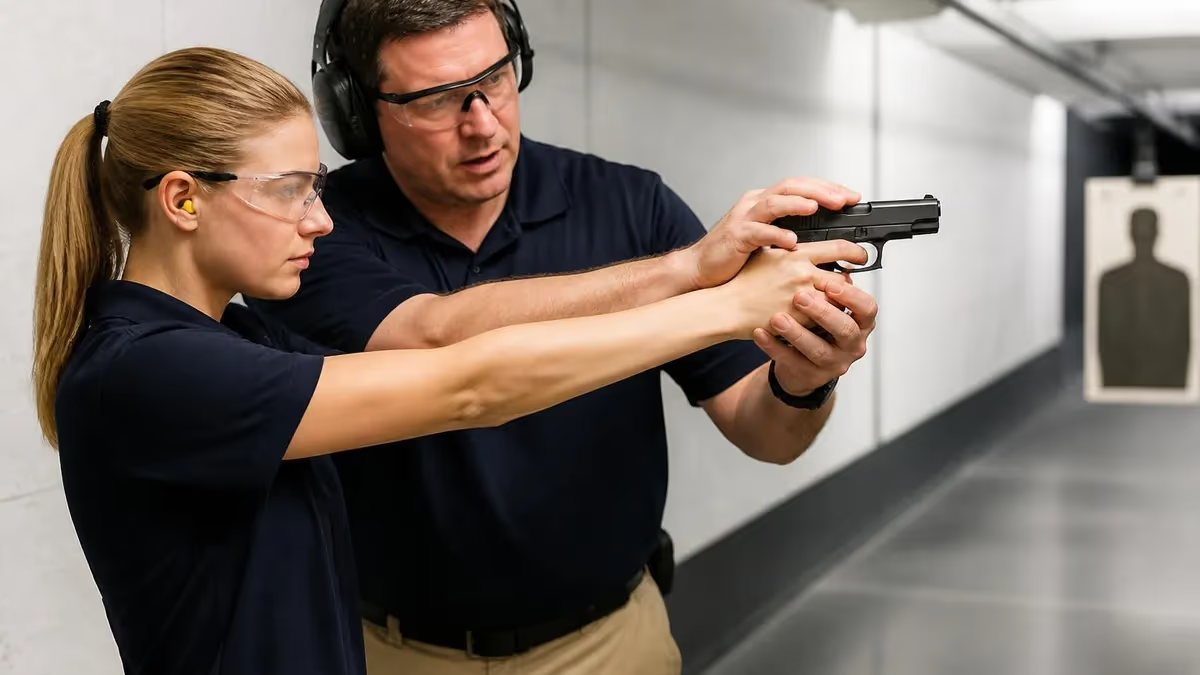
FSC Test: California Practice Test & Study Guide
What Is the FSC Test?
The FSC test — short for Firearm Safety Certificate test — is a mandatory written exam every prospective firearm buyer in California must pass before purchasing any gun. It doesn't matter if you're buying a pistol, rifle, or shotgun. You can't walk out of a licensed dealer with a new firearm until you've got that certificate in hand. That's the law.
The exam itself is 30 multiple-choice questions, and you've got 30 minutes to finish it. To pass, you need to get at least 23 out of 30 correct — that's a 75% passing score. Miss more than seven questions and you'll need to try again. The good news? Most people who actually prepare for it pass on their first attempt. The bad news? A lot of people don't prepare at all, and they're the ones who end up paying the $25 fee twice.
So who issues the test? Only DOJ-certified instructors can administer the FSC exam. You'll find these instructors at licensed gun dealers and shooting ranges across California. They collect the fee, run you through the test, and issue your certificate on the spot if you pass. The whole process usually takes under an hour — the test itself is just 30 minutes, but factor in the paperwork and waiting.
Your Firearm Safety Certificate is valid for five years from the date it's issued. After that, you'll need to test again if you want to purchase another firearm. Keep the certificate somewhere safe — you'll need to show it at the time of purchase. A lot of people treat it like a driver's license and stick it in their wallet.
Why does California require this? The FSC program exists to ensure that every new gun owner in the state understands the basics of safe handling, storage, and California-specific firearm laws. It's not designed to be a gotcha — the questions are fair, the content is practical, and the information genuinely matters. Knowing how to safely store a firearm away from children, for example, isn't just a test question. It's the kind of thing that prevents tragedies.
If you're wondering how to study for fsc, you're already doing the right thing by looking for resources before you walk in. The test covers four main topic areas: safe handling of firearms, safe storage, children and firearms, and California gun laws. We'll break each of these down in detail below — along with the exact question distribution, study strategies, and what to bring on test day.
The firearm safety certificate fsc isn't something you can cram for in ten minutes, but it's absolutely manageable if you spend even a couple of hours reviewing the material. Think of this guide as your starting point. Work through it, take some practice tests, and you'll be ready.
What's on the FSC Test?
The FSC exam covers four topic areas, and the California DOJ publishes the general breakdown publicly. None of the material is obscure or trick-heavy — it's all grounded in real-world firearm safety concepts. That said, the exact wording of questions can catch people off guard if they haven't done any reading beforehand.
Safe Handling of Firearms
This is the largest section of the exam. You'll be tested on the basic rules of firearm handling: always treat a firearm as if it's loaded, never point it at anything you're not willing to destroy, keep your finger off the trigger until you're ready to shoot, and always be aware of what's beyond your target.
Beyond those fundamentals, the safe handling section gets into specifics. How do you safely load and unload different types of firearms? What do you do before handing a firearm to another person? What's the correct way to transport a firearm in a vehicle in California? These aren't hypothetical scenarios — they're everyday situations that any gun owner will encounter.
You'll also see questions about mechanical safety devices. Know that a safety is a mechanical device that can fail — it's not a substitute for safe handling. The test doesn't go deep into technical gunsmithing, but it does expect you to know how to verify a firearm is unloaded before handling it.
Safe Storage
California takes firearm storage seriously. You'll be tested on the different types of storage options — locked containers, trigger locks, gun safes — and when each is appropriate. The core principle: firearms should be stored so they're inaccessible to unauthorized users, including children.
One concept that trips people up: unloaded doesn't mean safe. A firearm should be stored unloaded AND in a locked container or with a trigger lock. Both conditions matter. Questions in this section often involve scenarios — study them carefully, because the test presents a situation and asks you to identify the safest course of action among four options.
Children and Firearms
This section is worth taking seriously. The FSC exam tests your knowledge of how to prevent children from accessing firearms — both the legal requirements in California and the practical steps every gun owner should take.
California's Child Access Prevention law is worth understanding. Under certain circumstances, leaving a firearm where a child can access it is a criminal offense. The test will probe your knowledge of these situations. You'll also see questions about how to talk to children about firearm safety — the core message: if a child finds a firearm, they should not touch it, leave the area, and tell an adult.
If you want to find firearm safety certificate fsc near me testing locations, this is one of the sections where targeted practice questions make the biggest difference. The scenarios feel real because they are real — these situations happen.
California Gun Laws
The law section covers California-specific regulations you need to know as a firearm owner. This includes handgun roster rules, assault weapon definitions under California law, waiting periods for firearm purchases (10 days in California), magazine capacity restrictions, and rules about transporting firearms in vehicles.
Understanding what is fsc certification in the broader context of California's layered firearm laws will help you see how the FSC fits into the larger regulatory picture. It's one piece of a system that also includes background checks, safe handling demonstrations, and waiting periods.
Pay particular attention to transportation laws. Firearms must be transported unloaded and in a locked container other than the glove box or utility box. Loaded magazines kept separate from the firearm? That's a nuance that appears in questions.
Stopping an Attacker / Use of Force
A smaller portion of the exam touches on defensive use of a firearm and California's rules around use of force. Deadly force is only legally justified when you reasonably believe you face an imminent threat of death or great bodily injury. Castle doctrine concepts may appear. Know the basics, and don't overthink it — the questions are straightforward in this area.
How to Pass the FSC Test
Passing the FSC test isn't hard — but failing it is embarrassing and costs you another $25. The people who fail are almost always the ones who walked in thinking they already knew everything. Don't be that person. Here's how to actually prepare.
Start with the Official Study Guide
The California DOJ publishes a Firearm Safety Certificate study guide. It's free, it's thorough, and the test is drawn directly from it. Read it once, all the way through, before you do anything else. You don't need to memorize every word, but you need to understand the material well enough to apply it in scenario-based questions.
After reading the study guide, knowing how long does fsc certification last and other administrative details becomes second nature. You're not just memorizing facts — you're building a mental model of firearm ownership in California that makes the questions feel intuitive rather than arbitrary.
Take Practice Tests
This is the single most effective thing you can do. Practice tests expose the specific question formats the FSC exam uses, help you identify which topic areas need more work, and build the kind of confidence that comes from having already answered similar questions correctly. Take at least two or three full practice tests before your exam date.
Pay attention to questions you get wrong — not just the correct answer, but why it's correct. Understanding the reasoning matters more than memorizing an answer. The FSC exam uses different wording from question to question, so if you understand the underlying principle, you'll get the right answer even when the question is phrased in a way you haven't seen before.
FSC Practice Test Questions
Prepare for the FSC - Firearm Safety Certificate exam with our free practice test modules. Each quiz covers key topics to help you pass on your first try.
FSC Firearm Safety Certificate (FSC) Firea...
FSC Exam Questions covering Firearm Safety Certificate (FSC) Firearms and Children. Master FSC Test concepts for certification prep.
FSC Firearm Safety Certificate (FSC) Gun a...
Free FSC Practice Test featuring Firearm Safety Certificate (FSC) Gun and Safety Rules. Improve your FSC Exam score with mock test prep.
FSC Firearm Safety Certificate (FSC) Quest...
FSC Mock Exam on Firearm Safety Certificate (FSC) Questions and Answers Part. FSC Study Guide questions to pass on your first try.
FSC Fire Prevention and Safety
FSC Test Prep for Fire Prevention and Safety. Practice FSC Quiz questions and boost your score.
FSC Firearm Safety Certificate (FSC) General
FSC Questions and Answers on Firearm Safety Certificate (FSC) General. Free FSC practice for exam readiness.
FSC Firearm Safety Certificate (FSC) Gener...
FSC Mock Test covering Firearm Safety Certificate (FSC) General Questions and Answers. Online FSC Test practice with instant feedback.
FSC - Firearm Safety Certificate Ammunitio...
Free FSC Quiz on - Firearm Safety Certificate Ammunition and Malfunctions. FSC Exam prep questions with detailed explanations.
FSC - Firearm Safety Certificate Ammunitio...
FSC Practice Questions for - Firearm Safety Certificate Ammunition and Malfunctions Questions and Answers. Build confidence for your FSC certification exam.
FSC - Firearm Safety Certificate Californi...
FSC Test Online for - Firearm Safety Certificate California Sales and Transfers. Free practice with instant results and feedback.
FSC - Firearm Safety Certificate Californi...
FSC Study Material on - Firearm Safety Certificate California Sales and Transfers Questions and Answers. Prepare effectively with real exam-style questions.
FSC - Firearm Safety Certificate Firearm H...
Free FSC Test covering - Firearm Safety Certificate Firearm Handling and Operation. Practice and track your FSC exam readiness.
FSC - Firearm Safety Certificate Firearm H...
FSC Exam Questions covering - Firearm Safety Certificate Firearm Handling and Operation Questions and Answers. Master FSC Test concepts for certification prep.
FSC - Firearm Safety Certificate Fundament...
Free FSC Practice Test featuring - Firearm Safety Certificate Fundamental Firearm Safety Rules. Improve your FSC Exam score with mock test prep.
FSC - Firearm Safety Certificate Fundament...
FSC Mock Exam on - Firearm Safety Certificate Fundamental Firearm Safety Rules Questions and Answers. FSC Study Guide questions to pass on your first try.
FSC - Firearm Safety Certificate Safe Stor...
FSC Test Prep for - Firearm Safety Certificate Safe Storage and Childproofing. Practice FSC Quiz questions and boost your score.
FSC - Firearm Safety Certificate Safe Stor...
FSC Questions and Answers on - Firearm Safety Certificate Safe Storage and Childproofing Questions and Answers. Free FSC practice for exam readiness.
FSC - Firearm Safety Certificate Californi...
FSC Mock Test covering FSC - Firearm Safety Certificate California Firearm Laws and Regulations. Online FSC Test practice with instant feedback.
FSC - Firearm Safety Certificate Californi...
Free FSC Quiz on FSC - Firearm Safety Certificate California Firearm Laws and Regulations Questions and Answers. FSC Exam prep questions with detailed explanations.
FSC - Firearm Safety Certificate Firearm T...
FSC Practice Questions for FSC - Firearm Safety Certificate Firearm Transportation and Carrying Laws. Build confidence for your FSC certification exam.
FSC - Firearm Safety Certificate Firearm T...
FSC Test Online for FSC - Firearm Safety Certificate Firearm Transportation and Carrying Laws Questions and Answers. Free practice with instant results and feedback.
FSC - Firearm Safety Certificate Legal Res...
FSC Study Material on FSC - Firearm Safety Certificate Legal Responsibilities and Use of Force. Prepare effectively with real exam-style questions.
FSC - Firearm Safety Certificate Legal Res...
Free FSC Test covering FSC - Firearm Safety Certificate Legal Responsibilities and Use of Force Questions and Answers. Practice and track your FSC exam readiness.
Where to Take the FSC Test in California
One of the most common questions people ask is where, exactly, they can take the FSC test. The answer: at any location in California with a DOJ-certified instructor on staff. That covers a lot of ground.
Licensed Gun Dealers
The most common place to take the FSC test is at a licensed firearm dealer — an FFL (Federal Firearms Licensee). Most gun stores in California have at least one DOJ-certified instructor on staff, and many offer walk-in testing. If you're planning to buy a firearm at a specific store, it usually makes sense to take the FSC test there at the same time. You'll show your certificate immediately, start the background check and 10-day waiting period, then pick up your firearm when the waiting period is over.
Call ahead before you go. While many dealers offer walk-in FSC testing, some require an appointment — especially on weekends when they get busy. Confirm their hours, whether they accept walk-ins, and what forms of payment they take for the $25 fee.
Shooting Ranges
Many shooting ranges in California also offer FSC testing, sometimes as a standalone service separate from range time. This can be convenient if you want to do some range practice as part of your test preparation. Some ranges even offer combined packages — a review session followed immediately by the official exam. Check with ranges in your area to see what they offer.
A few practical notes about statewide availability:
- Urban areas (Los Angeles, San Francisco Bay Area, San Diego, Sacramento) have dozens of testing locations — in major cities, you'll rarely need to travel more than a few miles.
- Rural counties have fewer options, but most county seats have at least one or two testing locations.
- Some areas near state borders have limited options, so plan accordingly if you're in a remote location.
The California DOJ maintains a searchable database of FSC-certified instructors on its website — search by county, city, or ZIP code to find the closest location. The database is updated regularly, making it the most reliable way to find a current testing site.
What Happens at the Test Location
When you arrive, the instructor will check your ID, collect the $25 fee, and explain the testing procedure. The exam is typically administered on paper — 30 questions, bubble sheet answer form. You'll have 30 minutes. Most people finish well before time is up; the exam isn't designed to be a time pressure situation for prepared test-takers.
After you turn in your exam, the instructor grades it on the spot. If you pass (23 or more correct), they issue your FSC certificate immediately. If you don't pass, you can try again — but you'll pay the $25 fee again each attempt. There's no waiting period between attempts. Understanding what is a fsc certificate before you walk in helps set realistic expectations for how the testing process works.
FSC Test Preparation Options
The most flexible option. Read the official California DOJ Firearm Safety Certificate study guide (free online), take practice tests on sites like PracticeTestGeeks, and review areas where you're making mistakes. Most self-studiers are ready in 2–4 hours of focused preparation. This approach works well if you're a strong reader who retains information from text.
- Free California DOJ study guide
- Online practice tests (multiple sessions)
- Focus on scenario-based questions
- Review your wrong answers thoroughly
FSC Test Day Checklist
- ✓Valid California driver's license or state ID (no exceptions)
- ✓$25 cash or accepted payment for the test fee
- ✓Confirm walk-in availability — call your location first
- ✓Arrive 5–10 minutes early to complete paperwork
- ✓Bring a pen (paper-based test at most locations)
- ✓Review the four FSC topic areas the night before
- ✓Take at least one full practice test before test day
- ✓Know the DOJ-certified instructor's address in advance
- ✓Read each question twice — watch for qualifier words like 'always' and 'never'
- ✓Use process of elimination on questions you're unsure about
- ✓Trust your preparation — avoid second-guessing your first instinct
FSC Test Day: Tips for Success
You've studied, you've taken practice tests, and now it's the day of your exam. Here's how to make sure it goes smoothly.
Get a good night's sleep. A 30-question exam with a 30-minute time limit is not cognitively demanding if you're rested and prepared. Fatigue causes careless mistakes on questions you actually know the answer to. Eat before you go — don't skip breakfast and then try to concentrate on firearm safety scenarios.
Read each question carefully — twice if needed. FSC questions often hinge on a specific word: "always," "never," "except," "unless." Missing a qualifier can flip the correct answer. Take the full 30 minutes if you need it. There's no prize for finishing first, and rushing causes avoidable errors.
Eliminate obviously wrong answers first. If you're stuck on a question, work through process of elimination. FSC questions typically have one clearly wrong answer, one plausible-but-not-best answer, and one correct answer. Narrowing it down to two choices makes educated guessing much more accurate.
Don't second-guess yourself excessively. Your first instinct on a firearms safety question is usually right if you've done your preparation. Changing answers at the last minute based on anxiety — not logic — leads to errors.
After you're done, the instructor grades your exam right there. If you pass, you walk out with your FSC certificate — a small card, but one that represents your authorization to purchase firearms in California. Keep it safe. Take a photo of it and store it somewhere secure too, just in case. When you're wondering about how long does fsc certification last, remember: five years from issue date, then you'll need to retest.
The FSC test isn't a barrier designed to be difficult. It's a baseline check that every new firearm buyer in California must clear — and it genuinely matters. Prepare for it with some focus and a few hours of actual study, and you'll be fine.
FSC Pros and Cons
- +FSC practice tests reveal knowledge gaps that content review alone can't identify
- +Timed practice builds the pace needed for the real exam
- +Reviewing wrong answers is the highest-ROI study activity
- +Multiple free sources available
- +Score tracking shows measurable readiness
- −Third-party tests vary in quality and exam alignment
- −Taking tests before content review produces misleading scores
- −Memorizing answers without understanding concepts doesn't transfer
- −Authentic official practice material is limited
- −Practice scores don't perfectly predict actual exam performance
Pros and Cons at a Glance
| Pros | Cons |
|---|---|
| FSC practice tests reveal knowledge gaps that content review alone can't identify | Third-party tests vary in quality and exam alignment |
| Timed practice builds the pace needed for the real exam | Taking tests before content review produces misleading scores |
| Reviewing wrong answers is the highest-ROI study activity | Memorizing answers without understanding concepts doesn't transfer |
| Multiple free sources available | Authentic official practice material is limited |
| Score tracking shows measurable readiness | Practice scores don't perfectly predict actual exam performance |
FSC Test Questions and Answers
About the Author

Educational Psychologist & Academic Test Preparation Expert
Columbia University Teachers CollegeDr. Lisa Patel holds a Doctorate in Education from Columbia University Teachers College and has spent 17 years researching standardized test design and academic assessment. She has developed preparation programs for SAT, ACT, GRE, LSAT, UCAT, and numerous professional licensing exams, helping students of all backgrounds achieve their target scores.
Join the Discussion
Connect with other students preparing for this exam. Share tips, ask questions, and get advice from people who have been there.
View discussion (7 replies)