
FSC Practice Test: California Firearm Safety Certificate Exam Prep
Prepare for the FSC certification. 🎓 Practice questions with answer explanations covering all exam domains.
FSC Practice Test: How to Prepare for the California Firearm Safety Certificate
If you're buying a handgun in California, you need a Firearm Safety Certificate — no exceptions. The FSC is a California Department of Justice requirement for all handgun purchasers and for purchasers of centerfire semi-automatic rifles. You take a 30-question written test administered by a DOJ-certified instructor (almost always at a licensed gun dealer), pass with a score of at least 23 out of 30, and then complete a safe handling demonstration with an unloaded firearm. The certificate you receive is valid for five years and covers any number of handgun purchases during that period — you don't retake the test for each purchase. The test isn't designed to trick or fail people. Its purpose is to ensure that every person purchasing a firearm in California has demonstrated baseline knowledge of safe handling, storage, and California firearms laws. That said, candidates who walk in without reviewing the material do fail — usually because they made assumptions about what the questions would ask rather than reviewing the actual DOJ-published study content.
The FSC test covers four main content areas. Safe handling covers the fundamental rules of firearm safety — treating every firearm as if it's loaded, keeping your finger off the trigger until you're ready to shoot, never pointing a firearm at anything you aren't willing to destroy, and being aware of your target and what's beyond it. These four rules form the foundation of everything else on the test. Safe storage covers how to store firearms to prevent unauthorized access — particularly by children — and the California laws around storage requirements when a minor lives in or has access to the home. Loading and unloading covers how to safely load and unload common firearm types (particularly semi-automatic pistols), how to verify a chamber is clear, and how to handle malfunctions safely. California firearms laws covers the specific legal requirements around storage, transportation, reporting requirements, and what you can and cannot legally do with a firearm in California. Reviewing fsc general questions and answers gives you direct practice with the question format and content areas the actual FSC test uses. Working through a fsc firearms and children questions and answers quiz targets the safe storage and child safety content that accounts for a substantial portion of the FSC exam — it's one of the most heavily tested areas.
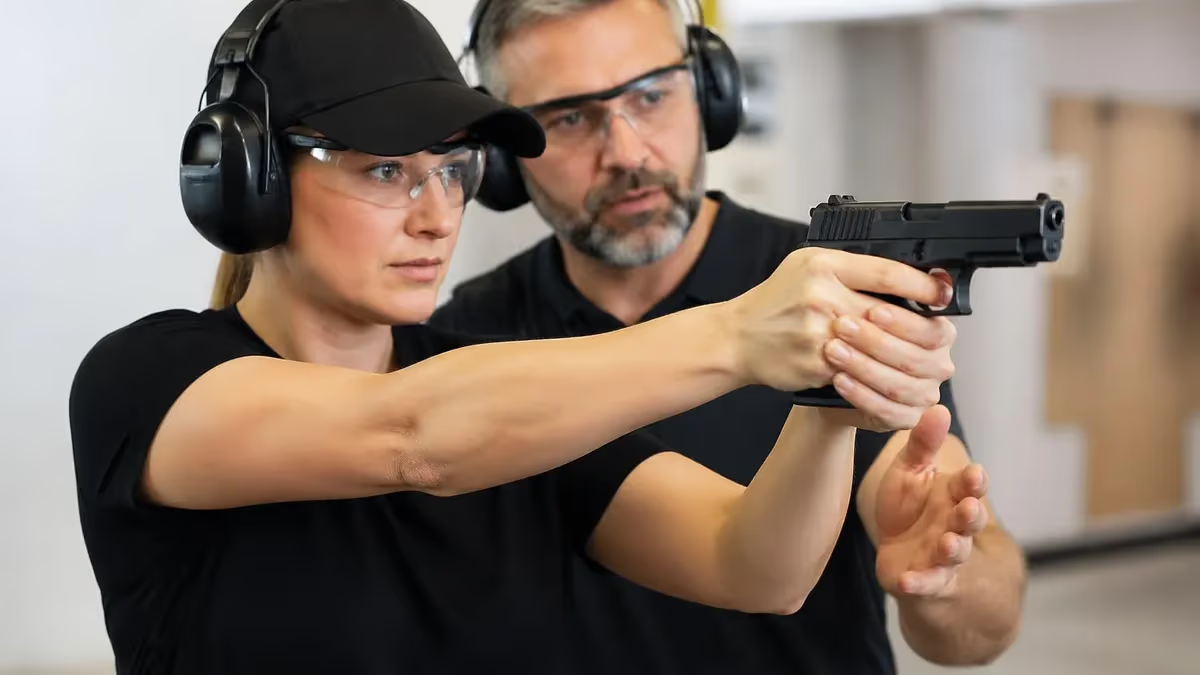
The safe handling demonstration that follows the written test is often less discussed but equally required. After passing the written test, the DOJ-certified instructor conducts a practical demonstration using an unloaded firearm provided by the dealer. You're asked to demonstrate: how to safely point the firearm in a safe direction, how to verify the chamber and magazine are empty, how to engage and disengage the safety (if applicable), and how to safely grip and handle the firearm. This practical component tests whether you can physically apply the knowledge from the written test — not just answer questions about it. Most people pass the practical component without difficulty, particularly if they've handled similar firearms before. If you haven't, asking the instructor to walk through the demonstration procedure before you're formally evaluated is entirely reasonable and instructors expect it. The firearm safety certificate fsc study guide covers the complete content areas included in both the written and practical portions of the FSC exam in depth.
California's safe storage laws are particularly important to understand for the FSC test. California Penal Code 25100 makes it a crime to leave a loaded firearm where a child under 18 can reasonably access it — even if you don't know a child will be present. The law applies to homes where children live or regularly visit. Approved storage includes using a DOJ-approved firearm safety device (trigger lock, cable lock) or storing the firearm in a locked container. A firearm left unsecured in a drawer, nightstand, or under a mattress in a home accessible to minors is a criminal violation under California law. The test specifically asks about these storage requirements in multiple questions — knowing the exact legal standard (reasonable access by a minor under 18) and the approved storage methods is essential for passing the exam.
It's worth noting that the FSC test was updated in 2015 when California expanded the requirement beyond just handguns to include centerfire semi-automatic rifles. The test itself doesn't separate into handgun-specific and rifle-specific sections — the safety principles, storage laws, and transportation requirements covered apply to all firearms covered by the FSC requirement. If you're purchasing both a handgun and a centerfire semi-automatic rifle, a single FSC certificate covers both. One certificate, one test, one $25 fee — regardless of how many covered firearms you intend to purchase during the five-year validity period.

- ✓Confirm your exam appointment and location
- ✓Bring required identification documents
- ✓Arrive 30 minutes early to check in
- ✓Read each question carefully before answering
- ✓Flag difficult questions and return to them later
- ✓Manage your time — don't spend too long on one question
- ✓Review flagged questions before submitting
FSC Overview
- Treat every firearm as loaded: Even after verifying the chamber is empty, maintain safe handling — the test will ask about this exact phrasing
- Never point at anything you're not willing to destroy: Muzzle discipline is the most fundamental firearm safety rule and appears throughout the exam
- Finger off trigger until ready to fire: Trigger finger remains straight and outside the trigger guard until the target is acquired and you're ready to fire
- Know your target and beyond: Bullets penetrate — you're responsible for what happens behind your target
- These four rules are tested multiple times: Different questions will test the same rules in different phrasing — know the principles, not just the exact wording
FSC Test Preparation: Strategy for a High Score
Most candidates approach the FSC test without any preparation and pass on their first attempt — the test isn't designed to be a major hurdle for people who've taken basic firearms safety seriously. But "most candidates pass" isn't the same as "everyone passes without preparation." The candidates who fail are typically those who assumed the test would only ask common-sense questions and didn't review the California-specific legal content. Common sense tells you to store firearms safely. California law specifies exactly what "safely" means under Penal Code 25100, what the penalties are, and under exactly what circumstances the law applies. That gap between general knowledge and California-specific knowledge is where people lose points. Practicing with a fsc gun safety rules practice test reinforces the safety rules content through repeated question exposure — recognizing the correct answer in multiple different phrasings is more reliable than memorizing a list. The firearm safety certificate fsc study guide covers the legal content in the format most aligned with how it appears on the actual FSC exam.
An important note about the safe handling demonstration: you don't need to own or regularly handle firearms to pass it. The instructor will guide you through the demonstration using an unloaded firearm provided by the dealer. What you need to demonstrate is following the safety rules while handling the firearm — keeping the muzzle pointed in a safe direction, keeping your finger off the trigger, and handling the action safely when told to do so. Nervousness is expected and the instructor isn't trying to fail you; they're verifying you understand and can apply the fundamental safety rules under real handling conditions. People who review the four fundamental safety rules and know what "safe direction" and "trigger discipline" mean in practice pass this component without difficulty even if they've never touched a firearm before.
California's FSC requirement reflects a broader state policy of requiring demonstrated safety knowledge as a condition of firearm acquisition. Whether or not you agree with the policy, the test is a requirement that can't be skipped. The good news: it's a genuinely learnable test with published official study materials, a clear content outline, and a passing threshold that most prepared candidates clear comfortably. Twenty to thirty minutes reviewing the DOJ study guide plus a few practice tests is enough preparation for the vast majority of test-takers. The candidates who struggle are those who show up completely cold and discover that California's specific storage and transportation laws differ from their general assumptions — preparation eliminates that surprise and turns a potential retake situation into a comfortable first-attempt pass.
FSC Pros and Cons
- +Accessible preparation materials — the California DOJ publishes an official FSC study guide that covers exactly what the test draws from, available free online
- +No time limit pressure — unlike standardized academic tests, the FSC has no strict time limit; you can read and consider each question carefully
- +Retakes are allowed — if you don't pass, you can retake the test the same day or reschedule; it's not a one-shot opportunity
- +Practical and directly applicable — the knowledge tested on the FSC is genuinely useful for anyone who owns or handles firearms, not just test trivia
- +Certificate covers 5 years of purchases — one passing score covers all your handgun purchases over the next five years, not just a single transaction
- −California-specific laws must be memorized — general firearms knowledge isn't sufficient; the test requires knowing California Penal Code provisions specifically
- −Must be taken in person at a certified instructor location — no online testing option; you need to go to a gun dealer or other DOJ-certified instructor
- −The safe handling demonstration adds a practical component that textbook study alone doesn't prepare you for — physical familiarity with firearm handling matters
- −A fee of $25 applies each time you take the test — including retakes
- −The 5-year expiration means experienced firearm owners who let their certificate lapse must retest — the certificate doesn't account for prior experience
FSC Questions and Answers
About the Author

Educational Psychologist & Academic Test Preparation Expert
Columbia University Teachers CollegeDr. Lisa Patel holds a Doctorate in Education from Columbia University Teachers College and has spent 17 years researching standardized test design and academic assessment. She has developed preparation programs for SAT, ACT, GRE, LSAT, UCAT, and numerous professional licensing exams, helping students of all backgrounds achieve their target scores.
Join the Discussion
Connect with other students preparing for this exam. Share tips, ask questions, and get advice from people who have been there.
View discussion (7 replies)