
Firearm Safety Certificate Near Me: Where to Test, Study & Pass in 2026 October
Find a firearm safety certificate near me: locations, costs, online study options, quiz prep, and step-by-step guidance to pass the California FSC test. 📚
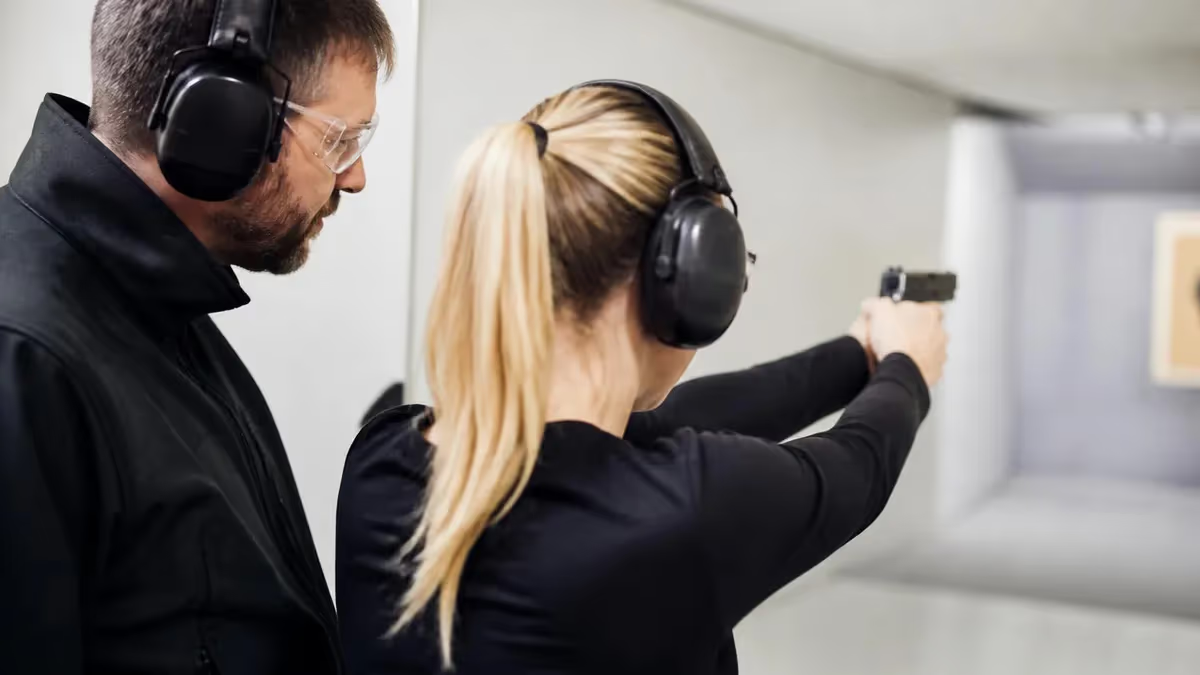
Searching for a firearm safety certificate near me is one of the first practical steps any prospective California gun owner takes before walking into a licensed dealer to complete a purchase. The Firearm Safety Certificate, commonly abbreviated as FSC, is a mandatory state-issued credential proving you understand California's firearm laws, safe handling rules, and storage requirements. Without it, no California dealer can legally transfer a handgun or long gun to you. Knowing where to test, how to prepare, and what to expect saves time and money.
The FSC test itself is a 30-question multiple-choice exam administered only by Department of Justice Certified Instructors. You must answer at least 23 questions correctly, which equals 75 percent, to pass. The certificate fee is capped at twenty-five dollars statewide, and the credential remains valid for five years from the date of issuance. Most test takers complete the entire process inside a single appointment lasting under one hour at a participating firearms dealer.
What surprises many first-time buyers is how widely available testing actually is. Nearly every brick-and-mortar firearms dealer in California employs at least one DOJ Certified Instructor authorized to administer the FSC exam on demand. That means your nearest gun shop, sporting goods retailer carrying firearms, or pistol range with retail operations almost certainly offers the test. You do not need to travel to a special government office, schedule weeks in advance, or pay separate registration fees beyond the standard twenty-five dollar charge.
This guide walks you through finding nearby test centers, comparing in-person versus online study paths, understanding what is covered on the exam, and locking in your pass on the first try. We also cover the legitimate online study tools available, why no fully online test option exists in California, and the specific topics that trip up unprepared candidates. By the end, you will have a clear action plan tailored to your zip code and schedule.
One of the most common questions we hear is whether the FSC can be earned entirely online. The short answer is no — California requires the actual exam to be proctored in person by a Certified Instructor. However, every study resource, including the official thirty-page handbook, practice quizzes, and video walkthroughs of each chapter, is freely available online. Smart candidates use the digital prep materials to master the content before booking a single in-person appointment for the proctored test.
Before you head out, take a moment to review the official california firearms safety certificate practice material, because it mirrors the exam structure almost question for question. The handbook covers six chapters: laws, safety rules, ownership responsibility, operation, ammunition, and children. The exam draws proportionally from each. Familiarity with the chapter breakdown lets you predict the question distribution and budget your study time accordingly.
Throughout this article we cite real numbers, real costs, and real procedures verified against the California Department of Justice Bureau of Firearms guidance. Whether you live in San Diego, Sacramento, Fresno, or a rural northern county, the testing process is identical, and the certificate you earn carries the same weight at every dealer statewide. Let us walk through exactly how to find, schedule, prepare, and pass without wasting time or money.
FSC Testing by the Numbers
Where to Find FSC Testing Locations Near You
Nearly every California FFL holder employs at least one DOJ Certified Instructor. Walk-in availability is common at independent gun shops, and most large retailers schedule same-day appointments during normal business hours.
Big-box chains with firearm counters, including those in suburban shopping centers, routinely administer the FSC. Expect slightly longer wait times on weekends when foot traffic peaks and instructors juggle multiple buyers.
Many shooting ranges with attached pro shops hold FFL credentials and offer FSC testing alongside rentals and lessons. This is convenient if you plan to practice the same day after passing the test.
Licensed pawn brokers handling firearm transfers often provide FSC testing. Fees remain capped at twenty-five dollars regardless of the venue type, and the exam itself is standardized across every administrator statewide.
Independent instructors operate by appointment, sometimes traveling to private locations. Search the California DOJ Bureau of Firearms public roster for verified instructors in your county and confirm credentials before booking.
Understanding how the FSC exam is structured will sharpen your search for a nearby testing site. The test consists of thirty multiple-choice questions drawn from the official DOJ-published study handbook. Each question presents three answer choices, and only one is correct. You will need to score at least seventy-five percent — twenty-three correct answers — to receive your certificate. If you fall short, California law requires a twenty-four-hour waiting period before you can retake the test, and you will pay the full fee again at most locations.
The exam is administered exclusively in person by a Department of Justice Certified Instructor. There is no remote, video-proctored, or fully online version of the official FSC test. While this surprises some out-of-state buyers who are used to online hunter education credentials, the in-person requirement exists because California treats firearm certification as a security-sensitive transaction that benefits from physical identity verification at the point of testing.
The good news is that scheduling is rarely an obstacle. Most dealers can fit you in the same day you walk in to begin a purchase, especially mid-week. The instructor will check your identification, collect the twenty-five-dollar fee, hand you a printed exam booklet, and sit you at a quiet desk or counter area. You will mark your answers on a paper scoresheet, and the instructor grades it on the spot — typically within five minutes of finishing.
If you pass, the instructor immediately prints your certificate, which lists your name, date of birth, certificate number, and the date of issuance. Take a photo of it before leaving — losing the original creates a hassle even though the issuing dealer keeps a digital record. Pair the certificate with a thorough firearm safety certificate study guide review and you are set for the actual transfer paperwork that follows.
Test content is weighted to mirror the handbook's six chapters. Expect roughly five questions from each major section: California firearm laws, basic safety rules, responsibilities of gun ownership, firearm operation, ammunition fundamentals, and children plus firearms. The proportional weighting means no single topic can be skipped during study without significant risk of missing the threshold. Each chapter rewards focused review of the handbook's bold terms and bullet lists.
One detail many candidates miss: the questions are not trick questions, but they reward careful reading. Several answer choices include qualifiers like "always," "never," or "only in California," and ignoring those qualifiers leads to avoidable mistakes. Slow down, eliminate clearly wrong choices first, and circle back to anything you flagged. The full exam runs without a strict time limit at most locations, though instructors typically expect completion within thirty to forty-five minutes.
Reschedules and retakes are straightforward but cost money. If you fail, simply wait the required twenty-four hours and book a new appointment, ideally with the same instructor who can identify your weakest chapters. Most candidates who failed once and studied the handbook between attempts pass easily the second time. Treating the FSC as a serious legal credential rather than a formality is the mindset that produces consistent first-try success.

FSC Practice Test Questions
Prepare for the FSC - Firearm Safety Certificate exam with our free practice test modules. Each quiz covers key topics to help you pass on your first try.
FSC Firearm Safety Certificate (FSC) Firea...
FSC Exam Questions covering Firearm Safety Certificate (FSC) Firearms and Children. Master FSC Test concepts for certification prep.
FSC Firearm Safety Certificate (FSC) Gun a...
Free FSC Practice Test featuring Firearm Safety Certificate (FSC) Gun and Safety Rules. Improve your FSC Exam score with mock test prep.
FSC Firearm Safety Certificate (FSC) Quest...
FSC Mock Exam on Firearm Safety Certificate (FSC) Questions and Answers Part. FSC Study Guide questions to pass on your first try.
FSC Fire Prevention and Safety
FSC Test Prep for Fire Prevention and Safety. Practice FSC Quiz questions and boost your score.
FSC Firearm Safety Certificate (FSC) General
FSC Questions and Answers on Firearm Safety Certificate (FSC) General. Free FSC practice for exam readiness.
FSC Firearm Safety Certificate (FSC) Gener...
FSC Mock Test covering Firearm Safety Certificate (FSC) General Questions and Answers. Online FSC Test practice with instant feedback.
FSC - Firearm Safety Certificate Ammunitio...
Free FSC Quiz on - Firearm Safety Certificate Ammunition and Malfunctions. FSC Exam prep questions with detailed explanations.
FSC - Firearm Safety Certificate Ammunitio...
FSC Practice Questions for - Firearm Safety Certificate Ammunition and Malfunctions Questions and Answers. Build confidence for your FSC certification exam.
FSC - Firearm Safety Certificate Californi...
FSC Test Online for - Firearm Safety Certificate California Sales and Transfers. Free practice with instant results and feedback.
FSC - Firearm Safety Certificate Californi...
FSC Study Material on - Firearm Safety Certificate California Sales and Transfers Questions and Answers. Prepare effectively with real exam-style questions.
FSC - Firearm Safety Certificate Firearm H...
Free FSC Test covering - Firearm Safety Certificate Firearm Handling and Operation. Practice and track your FSC exam readiness.
FSC - Firearm Safety Certificate Firearm H...
FSC Exam Questions covering - Firearm Safety Certificate Firearm Handling and Operation Questions and Answers. Master FSC Test concepts for certification prep.
FSC - Firearm Safety Certificate Fundament...
Free FSC Practice Test featuring - Firearm Safety Certificate Fundamental Firearm Safety Rules. Improve your FSC Exam score with mock test prep.
FSC - Firearm Safety Certificate Fundament...
FSC Mock Exam on - Firearm Safety Certificate Fundamental Firearm Safety Rules Questions and Answers. FSC Study Guide questions to pass on your first try.
FSC - Firearm Safety Certificate Safe Stor...
FSC Test Prep for - Firearm Safety Certificate Safe Storage and Childproofing. Practice FSC Quiz questions and boost your score.
FSC - Firearm Safety Certificate Safe Stor...
FSC Questions and Answers on - Firearm Safety Certificate Safe Storage and Childproofing Questions and Answers. Free FSC practice for exam readiness.
FSC - Firearm Safety Certificate Californi...
FSC Mock Test covering FSC - Firearm Safety Certificate California Firearm Laws and Regulations. Online FSC Test practice with instant feedback.
FSC - Firearm Safety Certificate Californi...
Free FSC Quiz on FSC - Firearm Safety Certificate California Firearm Laws and Regulations Questions and Answers. FSC Exam prep questions with detailed explanations.
FSC - Firearm Safety Certificate Firearm T...
FSC Practice Questions for FSC - Firearm Safety Certificate Firearm Transportation and Carrying Laws. Build confidence for your FSC certification exam.
FSC - Firearm Safety Certificate Firearm T...
FSC Test Online for FSC - Firearm Safety Certificate Firearm Transportation and Carrying Laws Questions and Answers. Free practice with instant results and feedback.
FSC - Firearm Safety Certificate Legal Res...
FSC Study Material on FSC - Firearm Safety Certificate Legal Responsibilities and Use of Force. Prepare effectively with real exam-style questions.
FSC - Firearm Safety Certificate Legal Res...
Free FSC Test covering FSC - Firearm Safety Certificate Legal Responsibilities and Use of Force Questions and Answers. Practice and track your FSC exam readiness.
Where to Take Firearm Safety Certificate Online vs In-Person
Online study is the smart way to prepare for the FSC without burning gas or vacation hours. The official thirty-page handbook is available as a free PDF from the California DOJ, and dozens of practice quiz sites mirror the actual question style. Expect to spend roughly three to five focused hours reading and another two hours hammering practice questions before you feel exam-ready.
However, the actual certification test is never administered online. Any website claiming to issue a valid California FSC remotely is misleading you. Use online resources strictly for study, video walkthroughs, and practice quizzes. When you feel confident scoring above eighty-five percent on practice tests consistently, book your in-person proctored exam at a licensed dealer.
Should You Take the FSC at a Dealer or with an Independent Instructor?
- +Dealers offer walk-in availability with little advance scheduling
- +Same-day certificate printing immediately after passing the test
- +Combine the test with a firearm purchase in one trip and one fee structure
- +Standardized twenty-five-dollar fee with no hidden charges
- +Familiar retail setting reduces test anxiety for first-time buyers
- +Most dealers stock the official handbook for last-minute review
- −Weekend wait times can exceed an hour at busy retail locations
- −Some dealers prioritize active buyers over study-only test takers
- −Limited privacy in open retail floor testing environments
- −Independent instructors may charge higher fees for private appointments
- −Rural areas may have fewer than three certified instructors within twenty miles
- −Failed attempts require returning twenty-four hours later and paying again
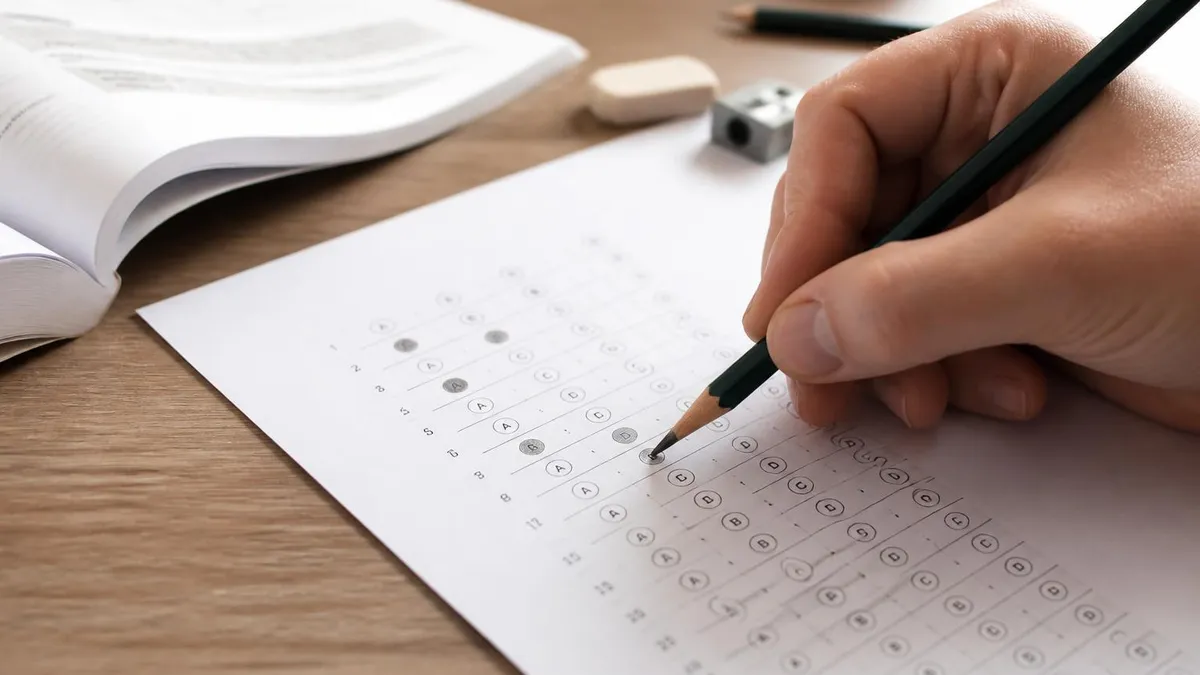
Pre-Test Checklist for Your Firearm Safety Certificate Quiz
- ✓Read the full thirty-page DOJ Firearm Safety Certificate handbook at least once
- ✓Score above eighty-five percent on three different practice tests
- ✓Memorize the four universal firearm safety rules verbatim
- ✓Review California's ten-day waiting period and one-handgun-per-thirty-days rules
- ✓Understand approved storage methods including locked containers and trigger locks
- ✓Bring a valid California driver's license or state ID to the testing location
- ✓Bring twenty-five dollars in your dealer's accepted payment form
- ✓Confirm the testing location and instructor availability by phone before driving
- ✓Eat a light meal and arrive at least ten minutes before your appointment
- ✓Bring a printed appointment confirmation if booked online
Pass on the first try by studying the handbook chapter on Children and Firearms last
The Children and Firearms chapter consistently produces the most missed questions on the FSC. Reviewing it immediately before your exam keeps the storage requirements, criminal liability thresholds, and parental responsibilities fresh in working memory. Even strong test takers benefit from this targeted last-minute review.
The FSC exam tests substantive knowledge, not test-taking tricks. Each of the six handbook chapters maps to roughly five exam questions, so understanding the breadth and depth of every chapter is essential. The first chapter covers California firearm laws including the ten-day waiting period, the one-handgun-per-thirty-day limit, prohibited persons, and assault weapon definitions. These are factual questions with clear correct answers, and the handbook spells out each rule explicitly with bolded keywords and bulleted lists.
Chapter two covers basic safety rules: the four universal rules every shooter must memorize, plus situational awareness, eye and ear protection, and the importance of treating every firearm as if it were loaded. Expect questions asking you to identify which safety rule applies to a given scenario. Chapter three addresses the responsibilities of ownership — secure storage, transportation laws, reporting lost or stolen firearms, and the legal consequences of negligent handling. The terminology in this chapter matters; pay attention to how California defines "secured" storage.
Chapter four explains how firearms actually operate. You will need to recognize the basic parts of revolvers, semiautomatic pistols, rifles, and shotguns. The exam may ask you to identify which firearm type uses a cylinder versus a magazine, or how to safely clear a malfunction. Chapter five covers ammunition fundamentals — caliber matching, identifying different cartridge types, and storage safety. Mismatched ammunition is a recurring exam theme because it ties directly to user safety in real-world scenarios.
Chapter six, Children and Firearms, is statistically the most-failed section. It covers California's Child Access Prevention laws, criminal liability when a minor accesses an unsecured firearm, and the affirmative defenses available to parents who used approved storage. The chapter also explains how to talk to children about firearms in age-appropriate ways and what to do when your child encounters a firearm outside the home. Memorize the storage standards and the age thresholds — both appear on nearly every exam.
Beyond chapter content, the exam tests your ability to apply rules to fact patterns. Sample questions describe a scenario — a parent leaves a loaded handgun in a nightstand, a teenager accesses it — and ask which California statute applies and what penalties result. Reading the handbook only once leaves you weak on application; reading it twice with notes prepares you to handle scenarios confidently. The handbook is short enough that two complete read-throughs take under three hours total.
Practice quizzes accelerate retention enormously. A solid firearm safety certificate quiz bank exposes you to the exact phrasing patterns DOJ uses on the real test, including the qualifying language that catches careless readers. Aim to complete at least one full thirty-question practice exam without notes, then identify your two weakest chapters and reread those handbook sections before retesting yourself.
Finally, do not neglect the visual content. The handbook includes diagrams of firearm parts, ammunition cross-sections, and storage configurations. Some exam questions reference these visuals indirectly by asking you to identify a component by function. Spending twenty minutes with the diagrams pays off disproportionately on test day. Visual learners often find the diagram-based questions among the easiest if they reviewed the illustrations, and among the hardest if they only read the text.
Any website offering a complete California Firearm Safety Certificate with no in-person component is misleading or fraudulent. California law requires proctored, in-person testing by a DOJ Certified Instructor. Verify the certificate number through the DOJ before relying on it for a firearm transfer.
Finding the right testing location near you starts with the California DOJ Bureau of Firearms' online instructor lookup, but most candidates skip that step and simply call their two or three closest licensed firearms dealers. A quick phone call confirms whether a Certified Instructor is on duty that day, what time slots remain available, and which payment methods the dealer accepts. Most independent gun shops are happy to answer scheduling questions even when you have not yet decided to purchase a firearm.
Geographic density of testing centers varies dramatically by region. Major metropolitan areas — Los Angeles, the Bay Area, San Diego, Sacramento — typically have dozens of FSC-administering dealers within a twenty-mile radius. Central Valley and inland counties usually have five to fifteen options within the same range. Remote northern and eastern California counties may have only one or two FFL holders within thirty miles, so calling ahead is essential to avoid wasted trips. Plan your route accordingly.
Hours of operation matter more than many candidates realize. Independent gun shops tend to open later than retail chains, often at ten or eleven in the morning, and many close on Sundays or Mondays. Big-box sporting goods stores with firearm counters operate longer hours but require you to find a manager qualified to proctor the exam, which can mean a wait. Calling thirty minutes before you arrive guarantees the instructor is on the floor and ready.
If you live near a county line, consider crossing it. The FSC is a statewide credential, so an instructor in a neighboring county issues an identical certificate. Sometimes a dealer twenty minutes farther offers shorter wait times, better customer service, or a quieter testing environment than the closest option. The certificate works at any California dealer regardless of where it was issued. Useful inventory of nearby firearm safety certificate near me options often appears in dealer review sites.
Veterans, active duty service members, and law enforcement officers should ask about FSC exemptions before paying for the test. California recognizes certain military and law enforcement credentials as substitutes for the standard FSC, though documentation requirements vary. Bring your DD-214, military ID, or peace officer credentials to your nearest licensed dealer and ask the staff to verify whether you qualify for an exemption. The verification process takes only a few minutes when documentation is in order.
Out-of-state residents purchasing long guns from California dealers also need the FSC, and the testing process is identical regardless of state of residence. Bring your home-state photo identification plus any required additional documentation your dealer specifies for the transfer. The certificate you earn is California-issued and recognized only within California. If you later move out of state, the credential has no portability and will not satisfy any other state's requirements.
Finally, schedule the test for a low-stress time of day. Early afternoon midweek slots tend to be the quietest at most dealers, with minimal foot traffic and full instructor attention. Avoid Saturday afternoons unless you genuinely have no other option, because retail firearm counters get crowded and instructor focus is divided. A calm testing environment correlates strongly with first-try pass rates among candidates who studied adequately beforehand.
With your testing location chosen and study materials reviewed, your final preparation focuses on test-day tactics. Eat a light meal an hour before your appointment — heavy food causes mental sluggishness, and skipping food entirely produces shaky concentration. Hydrate moderately, but do not arrive needing a bathroom break mid-exam. Wear comfortable clothing; some retail testing areas are colder or warmer than expected, and physical discomfort distracts from careful question reading.
Arrive at least ten minutes before your scheduled time. Use that buffer to flip through your last-minute notes — specifically the chapter on Children and Firearms, plus the California-specific laws like the ten-day waiting period and one-handgun-per-thirty-days rule. These topics produce a disproportionate share of missed questions, so refreshing them in working memory immediately before the test pays off measurably. Avoid cramming new material; instead, review what you already know.
When you receive the exam booklet, take thirty seconds to glance through all thirty questions before answering any of them. This preview reveals roughly how many easy versus hard questions you face, lets you mentally allocate time, and primes your brain for topics you will encounter. Then answer the easy questions first, flag the harder ones, and circle back. This approach almost always produces higher scores than working strictly top-to-bottom through the booklet.
Read every question twice before selecting an answer. The FSC exam favors qualifying words like "always," "never," "only," "except," and "unless." Missing one qualifier flips the correct answer entirely. If two answer choices look nearly identical, the difference is almost always a qualifier or a number. Slow down on these — they are designed to separate careful readers from skimmers. Speed costs points, and there is no bonus for finishing early.
For scenario-based questions, identify the rule the question is testing before evaluating answer choices. If the scenario involves a child accessing a firearm, the rule is California's Child Access Prevention statute. If it involves transporting a handgun, the rule covers locked container requirements. Naming the underlying rule first narrows your options and prevents the panic of staring at three plausible-looking choices without a framework for choosing among them.
If you genuinely do not know an answer, eliminate the obviously wrong choices first. Most FSC questions have one or two clearly incorrect options and one or two plausible ones. Eliminating the bad answers boosts your odds from one-in-three to one-in-two, and educated guessing across five uncertain questions typically yields two or three correct answers. Never leave a question blank — there is no penalty for guessing, only for blank responses, so every question deserves your best attempt.
Once you finish, review every flagged question one final time before handing in your booklet. Most candidates who fail by one or two questions report changing a correct answer to a wrong one during review. Only change an answer if you can articulate the specific rule that makes your new choice correct. Trust your first instinct unless you have a clear reason to override it. When you are confident, hand in the booklet and wait the five minutes for the instructor to grade. Then collect your printed certificate and head home prepared for your firearm transfer paperwork.
FSC Questions and Answers
About the Author

Educational Psychologist & Academic Test Preparation Expert
Columbia University Teachers CollegeDr. Lisa Patel holds a Doctorate in Education from Columbia University Teachers College and has spent 17 years researching standardized test design and academic assessment. She has developed preparation programs for SAT, ACT, GRE, LSAT, UCAT, and numerous professional licensing exams, helping students of all backgrounds achieve their target scores.
Join the Discussion
Connect with other students preparing for this exam. Share tips, ask questions, and get advice from people who have been there.
View discussion (7 replies)