
How Do I Renew My Firearm Safety Certificate? Complete California FSC Renewal Guide
Learn how to renew your firearm safety certificate in California. Step-by-step FSC renewal process, costs, study tips & practice tests. ✅

If you're wondering how do I renew my firearm safety certificate, you're not alone — tens of thousands of California residents face this exact question every five years. The California Firearm Safety Certificate (FSC) expires five years from the date it was issued, and you must hold a valid, unexpired certificate to legally purchase most firearms in the state. The good news is that the renewal process mirrors the original certification process and can be completed in a single visit to a licensed firearms dealer who is authorized to administer the written test.
The FSC was introduced to ensure that every prospective firearm purchaser in California understands safe storage, handling, and the foundational laws governing firearm use. When your certificate approaches its expiration date, you should begin preparing for the renewal exam at least two to four weeks in advance. The written test covers the same core subject areas as the original exam: safe handling, storage, the basic rules of firearm safety, and California-specific regulations that apply to owners, purchasers, and anyone who lives in a household with firearms.
To initiate your renewal, locate a California Department of Justice (DOJ) approved FSC instructor — these individuals are licensed firearms dealers or their designated employees who have been certified to administer the exam. You can search for a firearm safety certificate near me using the DOJ's online dealer locator, which allows you to filter by county and find testing locations within a convenient distance from your home or workplace. Most dealers offer walk-in testing during business hours, though some locations encourage appointments.
On the day of your exam, bring a valid government-issued photo identification such as a California driver's license, a California identification card, a U.S. passport, or a military ID. The FSC instructor will verify your identity before administering the 30-question written exam. The test is delivered in English, though translations are available in several other languages including Spanish, Chinese, Korean, Vietnamese, Tagalog, and Persian upon request — ask the dealer in advance to ensure they have the translation available.
The written FSC exam consists of 30 multiple-choice questions drawn from the California DOJ's official FSC study guide. You must answer at least 23 of those 30 questions correctly — a passing score of 75 percent or higher — to earn your renewed certificate. Most test-takers who have prepared with a quality fsc practice test and reviewed the official study materials find the exam straightforward. Those who walk in without studying, however, often encounter questions about specific California laws that are easy to miss without targeted preparation.
The fee for the FSC test is set by California law at $25, payable to the licensed dealer who administers the exam. This fee covers both the test administration and the issuance of your new certificate upon passing. If you do not pass on your first attempt, you may retake the exam, though each attempt requires paying the $25 fee again. There is no mandatory waiting period between attempts, so you could theoretically retest the same day at the same location or try a different licensed dealer.
Once you pass the exam, the dealer will issue your new California Firearm Safety Certificate on the spot. The certificate is a wallet-sized card that includes your name, date of birth, the issue date, and the expiration date five years from the test date. Keep this card in a safe location — you will need to present it every time you purchase a firearm in California, and a lost certificate cannot be used as grounds for bypassing the requirement at the point of sale.
California FSC Renewal by the Numbers
Key Facts at a Glance
| Item | Value | Details |
|---|---|---|
| FSC Certificate Validity | 5 Years | Must renew before expiration to purchase firearms |
| Renewal Test Fee | $25 | Set by California law, paid to the licensed dealer |
| Questions on the FSC Exam | 30 | Must answer 23+ correctly to pass (75%) |
| Minimum Passing Score | 75% | 23 of 30 questions answered correctly |
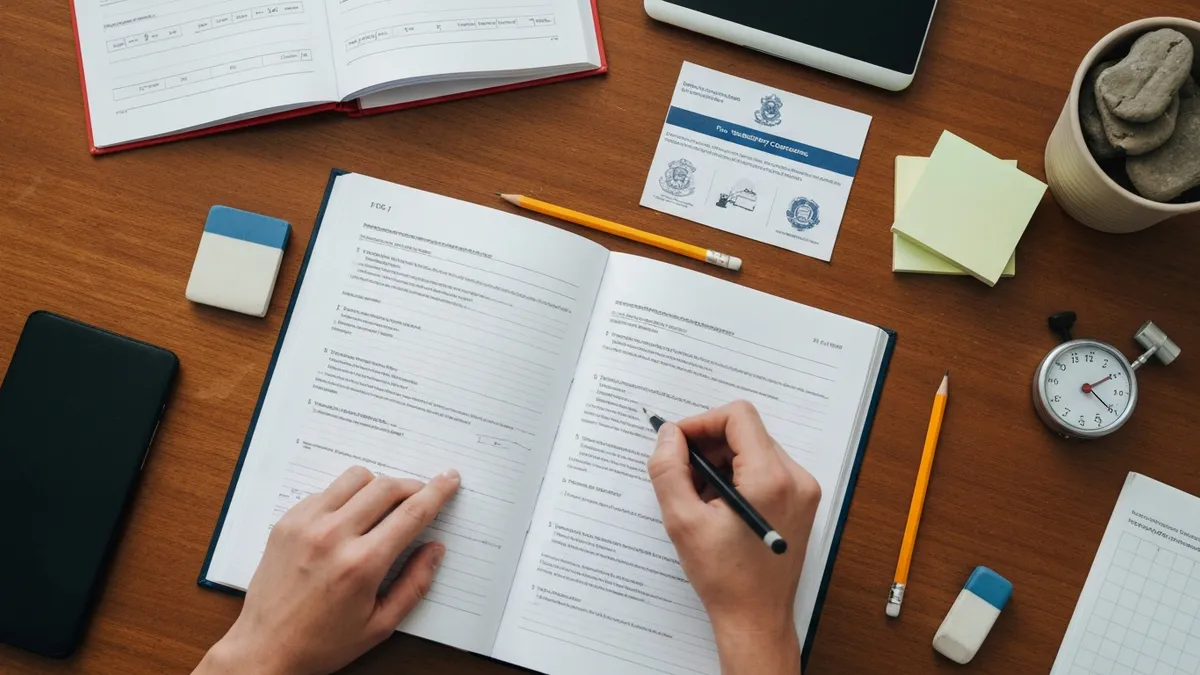
FSC Renewal Timeline: Step-by-Step Process
Check Your Certificate Expiration Date
Study the Official DOJ FSC Study Guide
Locate a Licensed FSC Testing Site
Bring Your ID and Payment to the Exam
Score 75% or Higher to Pass
Receive Your New FSC Card and Keep It Safe
Preparing effectively for the FSC renewal exam means understanding exactly what the California DOJ expects you to know and focusing your study time on the most frequently tested topics. The official FSC study guide is your primary resource — it is available for free on the California DOJ website and covers every concept that appears on the 30-question exam. Many candidates underestimate the test because it is labeled as a basic safety exam, but the questions frequently include nuanced scenarios about California law that require more than just common sense to answer correctly.
One of the most important topics on the FSC exam is safe storage, particularly the regulations surrounding access by minors. California law imposes strict requirements on firearm owners to store weapons in a way that prevents unauthorized access, especially by children under 18.
You should be able to define what constitutes a safe storage device under California law, understand when a trigger lock is and is not sufficient, and know the penalties that apply when a minor gains access to an improperly stored firearm. These questions about the california firearms safety certificate coverage areas appear on nearly every version of the exam.
The four fundamental rules of firearm safety — treating every firearm as if it is loaded, never pointing a firearm at anything you are not willing to destroy, keeping your finger off the trigger until ready to shoot, and knowing your target and what lies beyond it — form the backbone of the basic gun safety questions.
The exam tests these rules both directly and through scenario-based questions where you must identify which rule is being violated or correctly applied. Memorizing the rules by rote is not enough; you need to apply them to specific real-world situations described in question prompts.
California-specific regulations covered on the FSC exam include the state's safe handling demonstration requirement, the waiting period for firearm purchases, the role of the Dealer Record of Sale (DROS) background check process, and restrictions on certain types of firearms and accessories under California law. While the FSC exam does not require deep legal expertise, it does expect you to understand the general framework of how firearms are regulated in the state and what obligations fall on both the buyer and the seller during a legal transaction.
Taking a high-quality firearm safety certificate study guide approach means supplementing your reading with active recall practice. Passive reading of the study guide is the least effective preparation method — you are far better served by reading a section and then immediately testing yourself on what you just read. Use a firearm safety certificate quiz tool or flashcard system to convert the study guide content into testable questions. Research consistently shows that active retrieval practice produces significantly better retention than re-reading the same material multiple times.
When practicing with a california fsc practice test, pay close attention to the specific wording of each question and answer choice. The FSC exam frequently uses answer choices that are very similar to each other, with the distinction lying in a single word like "always," "never," "sometimes," or a specific number such as an age threshold or storage requirement dimension. Careful reading is essential — rushing through questions because the material seems familiar is one of the most common reasons otherwise well-prepared candidates miss questions they should have answered correctly.
In the weeks leading up to your renewal exam, aim to take at least three to five full-length practice tests under realistic conditions: no reference materials, a quiet environment, and a time limit of about 20 minutes. Review every question you answered incorrectly and identify the underlying concept being tested rather than just memorizing the specific answer. This approach ensures that when the exam presents the same concept in a slightly different scenario, you are equipped to reason your way to the correct answer rather than relying on pattern recognition alone.
California Firearm Safety Certificate: Key Test Topics
California law requires that firearms be stored in a locked container or disabled with a DOJ-approved safety device when not in use, particularly in households with minors. The FSC exam covers several storage scenarios, including what qualifies as an approved locking device, when a gun safe is required versus a trigger lock, and the specific penalties — including criminal liability — that apply when a child under 18 gains access to an improperly stored loaded firearm.
Test-takers frequently miss questions about the exact age thresholds and whether the law applies to both handguns and long guns. California's Child Access Prevention law applies broadly and does not distinguish between firearm types in most storage scenarios. Understanding the distinction between "loaded" and "unloaded" storage requirements, and when each standard applies, is critical for scoring well on this section of the fsc test.

Renewing Early vs. Waiting Until Expiration: What's the Better Approach?
- +Renewing early eliminates any risk of a gap in certification that could delay a planned firearm purchase
- +More time to study means a higher chance of passing on the first attempt without rushed preparation
- +Early renewal gives you flexibility to reschedule if your first testing appointment falls through
- +Avoids the stress of scrambling to find an open testing slot close to the expiration deadline
- +Dealers are typically less busy midweek and outside of peak season, meaning shorter wait times for walk-in testing
- +Passing early resets your five-year clock from the new test date, potentially extending your overall coverage window
- −The new five-year certificate clock starts on the date of the renewal test, not the original expiration date, so very early renewal may slightly shorten total coverage
- −Paying the $25 fee weeks or months before your current certificate expires means spending money sooner than strictly necessary
- −Some test-takers feel less motivated to study carefully when there is no immediate urgency driving their preparation
- −Study materials and California laws may be updated between your early renewal and the next cycle, requiring fresh review regardless of how well you studied this time
- −Walking into an early renewal without sufficient motivation to study can lead to a failed first attempt and an additional $25 retesting fee
- −Scheduling conflicts may arise if you plan to renew early but dealer testing slots are limited in your area during your chosen timeframe
FSC Renewal Checklist: Everything You Need Before Test Day
- ✓Confirm your current FSC expiration date and begin preparing at least 30 days in advance
- ✓Download the current California DOJ Firearm Safety Certificate Study Guide from the official DOJ website
- ✓Complete at least three full-length FSC practice tests under timed, no-reference conditions
- ✓Review every incorrectly answered practice question and identify the underlying concept, not just the right answer
- ✓Locate a DOJ-authorized FSC testing site near you and confirm walk-in hours or book an appointment
- ✓Prepare a valid government-issued photo ID (California DL, CA ID card, U.S. passport, or military ID)
- ✓Have the $25 exam fee ready in an accepted payment form (cash is universally accepted; confirm if card is accepted)
- ✓If you need the exam in a language other than English, call ahead and request the appropriate translated version
- ✓Review California-specific laws including the 10-day waiting period, DROS process, and prohibited persons rules
- ✓Study safe storage requirements with particular focus on child access prevention laws and approved locking devices
Your New Certificate Starts From the Test Date — Not the Expiration Date
Many California firearm owners assume their renewed FSC will be backdated to match their original certificate's expiration date, but that is not how the system works. Your new five-year certificate begins on the calendar date you pass the renewal exam. If your current certificate expires on August 15 and you test on July 1, your new certificate runs from July 1 — not August 15. This means testing significantly early can slightly shorten your total coverage window, so plan your renewal timing thoughtfully.
Many candidates who fail the FSC exam on their first renewal attempt report being surprised by the level of California-specific legal detail tested on the exam. Unlike the general firearms safety content — which tends to be intuitive for experienced gun owners — the California law questions require precise knowledge of specific statutes, age thresholds, storage requirements, and transactional rules that vary significantly from what is required in other states.
If you have recently moved to California from another state and are renewing an FSC for the first time, expect the California law section to require the most dedicated study time.
One area that consistently trips up renewal candidates is the distinction between different types of firearms and how California law treats them differently. For example, the FSC covers handguns, long guns, and certain categories of regulated firearms, and the rules governing storage, transfer, and purchase can vary between these categories.
The exam may ask about safe handling practices specific to revolvers versus semi-automatic pistols, or about the different regulatory frameworks that apply to rifle purchases versus handgun purchases under California law. Understanding these distinctions at a conceptual level — even without memorizing every statute number — is sufficient for passing the exam.
The FSC exam also tests knowledge of what to do in emergency situations involving a firearm, including how to safely transport an unloaded firearm in a vehicle, the rules governing carrying a concealed firearm with and without a valid CCW permit, and what constitutes unlawful brandishing or threatening use of a firearm under California Penal Code. These scenario-based questions are designed to assess whether the test-taker would make responsible, law-abiding decisions in realistic situations rather than theoretical ones. Practice tests that include these scenario-based question formats are particularly valuable for building the kind of applied thinking these questions require.
If you are renewing your california firearm safety certificate and you are also planning to purchase a new firearm soon after your renewal, be aware that the FSC must be valid at the time of purchase — it cannot be presented retroactively after expiration. If your certificate expires before you complete a firearm purchase transaction, you will need to obtain a new FSC before the sale can proceed.
This is particularly relevant for individuals in the middle of a DROS background check process whose FSC expires during the 10-day waiting period — the FSC must be valid both at the point of initiating the purchase and at the time of delivery.
For active duty military personnel, law enforcement officers, and other individuals who may qualify for exemptions from the FSC requirement under California law, it is important to verify current exemption status before assuming your exemption remains valid for a new purchase. California law has been updated several times since the FSC program was first introduced, and some exemptions that applied under earlier versions of the law may no longer apply under current statutes. When in doubt, consult with a licensed California firearms dealer or a California attorney familiar with firearm laws before proceeding with a purchase without an FSC.
The California Department of Justice maintains an online portal where consumers can verify the status of a licensed dealer's authorization to administer the FSC exam. Before traveling to a testing location, it is worth spending two minutes confirming on the DOJ website that the dealer you plan to visit is still actively authorized. While it is uncommon for a dealer to lose their FSC instructor authorization, it does occasionally happen as a result of regulatory action or business changes, and discovering this at the counter is a frustrating and avoidable surprise.
Finally, if you have taken the FSC exam multiple times and continue to struggle with specific topic areas, consider seeking out a formal firearm safety course in addition to self-study. Many California firearms instructors offer half-day or full-day courses that cover the FSC material in depth, often including a practice exam at the end of the course. These courses are particularly valuable for individuals who are new to firearms, returning to ownership after a long absence, or who simply learn better in an instructor-led environment than through independent reading and online practice tests.

If your Firearm Safety Certificate expires before you renew it, you cannot legally purchase a firearm in California until you obtain a new valid certificate. There is no grace period after the expiration date — an expired FSC is treated the same as no FSC at all. If you are in the middle of a pending firearm purchase when your certificate expires, contact your dealer immediately to understand how this affects your transaction before your expiration date arrives.
After you pass your FSC renewal exam and receive your new certificate, there are several practical steps worth taking to protect your investment of time and money and ensure you remain in full compliance with California law throughout the five-year validity period.
The most immediate priority is making a high-quality photocopy or digital scan of your new FSC card and storing it in a separate secure location from the physical card. While a copy cannot be used as a substitute for the original at the point of sale, having a legible copy makes it significantly easier to gather the information needed to report a lost card and verify your certification history if any questions arise.
California law does not currently provide a formal process for replacing a lost or stolen FSC — if you lose your certificate, you will generally need to retake and pass the FSC exam to obtain a new card. Some licensed dealers may be able to look up recent test records, but there is no centralized state database that allows consumers to retrieve a replacement card without going through the full testing process again. This makes safeguarding your physical card a higher priority than many certificate holders initially realize when they receive it.
If you are a household with multiple adults who each purchase or own firearms, each person must hold their own individual valid FSC — the certificate is non-transferable and issued specifically to the individual who passed the exam. Couples or family members who both purchase firearms should each track their individual expiration dates independently and plan their renewal schedules so that both certificates remain valid simultaneously. This is especially important if you share responsibility for a firearm purchase for home defense or sporting purposes.
The five years between FSC renewals is also an excellent window to deepen your overall firearms safety knowledge beyond what the exam requires. Completing a formal firearm safety course, taking a range safety officer class, or pursuing advanced training with a certified instructor are all ways to build practical competence that complements the theoretical knowledge tested on the FSC exam. California has a strong network of certified firearms instructors, shooting ranges, and safety programs through organizations like the NRA, USCCA, and local shooting sports clubs that offer structured training at a wide range of skill levels and budgets.
When your next renewal cycle approaches in five years, the preparation process will likely feel more familiar and less stressful — particularly if you stay engaged with firearm safety concepts throughout the intervening years. Many experienced gun owners find that the FSC renewal exam becomes progressively easier with each cycle because their accumulated real-world knowledge reinforces the material covered in the official study guide. Taking a firearm safety certificate quiz in the weeks before your renewal keeps the specific California law details fresh and reduces the risk of overconfidence leading to a careless mistake on a question you should know.
It is also worth staying informed about any changes to California firearm laws between your renewal cycles. California's Legislature and the DOJ periodically update firearms regulations, and the FSC study guide is revised to reflect current law.
What was accurate on the version of the exam you took five years ago may have changed — particularly in areas like ammunition regulations, magazine capacity rules, assault weapon classifications, and safe storage requirements, all of which have been subject to legislative changes in recent years. Always study from the most current version of the DOJ FSC study guide available at the time of your renewal preparation.
Community resources can also support your renewal preparation in ways that self-study alone cannot. Online forums, local gun owner associations, and shooting range communities often share tips about which topics have been showing up frequently on recent FSC exams in their area, which testing locations have the most convenient hours, and which study materials their members have found most effective. While no unofficial source should replace the official DOJ study guide as your primary resource, these community insights can help you prioritize your preparation time and feel more connected to the broader community of responsible California firearm owners.
Practical preparation strategies separate candidates who pass the FSC renewal exam on their first attempt from those who need multiple tries. The single most impactful thing you can do in the two weeks before your exam is to move from passive reading to active testing.
Close the study guide, open a practice exam, and simulate the real testing experience as closely as possible. Note every question you get wrong, return to the relevant section of the study guide, read it carefully, and then test yourself again 24 hours later to confirm the information has moved into long-term memory rather than short-term recall.
Time management during the exam itself is rarely a significant challenge for most candidates — the FSC test has no strict time limit in practice, and most test-takers finish well within 20 to 30 minutes. However, some candidates create difficulty for themselves by rushing through familiar-seeming questions without reading the full question and all answer choices carefully.
A question that begins with familiar language may end with a specific condition or qualifier that changes the correct answer entirely. Committing to read every word of every question — even on questions that feel obvious — is a simple habit that eliminates a surprising number of avoidable errors.
On exam day, arrive at the testing location a few minutes early to give yourself time to complete any required intake paperwork and settle in before the test begins. Bring your ID and payment ready, and let the dealer know whether you need the exam in a specific language before they print or retrieve the test materials.
Once you sit down with the exam, work through the questions in order, mark any that give you genuine uncertainty, and return to those after completing the rest of the exam. This strategy ensures you bank all the questions you are confident about before spending extra time on the ones that require more careful consideration.
If you encounter a question about a California law or regulation that you do not immediately recognize, apply a process of elimination approach rather than guessing blindly. FSC exam answer choices are carefully written to include plausible-sounding wrong answers alongside the correct one, but most wrong answers contain at least one element that is clearly incorrect, too extreme, or inconsistent with the general principles you have studied.
By eliminating the two or three most obviously incorrect choices, you usually narrow your remaining options to one or two, significantly improving your probability of selecting the correct answer even when you are not entirely certain.
After you receive your score, take a few minutes to review the questions you answered incorrectly with the dealer if they permit it — many FSC instructors will briefly discuss missed questions to help candidates understand the material better for future reference. Even if you passed, understanding where you made errors is valuable information for maintaining your knowledge base over the five-year period until your next renewal. If you did not pass, this review is especially important for identifying the specific topic areas to focus on before retesting.
Candidates who combine official study guide review with structured practice testing consistently report feeling significantly more confident walking into the FSC exam. Confidence matters not just psychologically but practically — when you know the material well, you move through questions at a comfortable pace, avoid second-guessing correct initial answers, and maintain the mental clarity needed to reason carefully through the scenario-based questions that require applied thinking rather than simple recall. This preparation approach is as relevant for renewal candidates as it is for first-time test-takers.
The ultimate goal of the FSC program — and the reason California requires renewal every five years — is to ensure that everyone who legally purchases firearms in the state maintains current knowledge of safe handling practices and California law.
Approaching your renewal not as a bureaucratic hurdle but as a genuine opportunity to confirm and refresh your safety knowledge reflects the kind of responsible ownership mindset that the program is designed to cultivate. With the right preparation, the FSC renewal exam is a manageable and even informative experience that reinforces your commitment to being a safe and law-abiding firearm owner in California.
Sample Firearm Safety Certificate (FSC) Practice Questions
Try these questions from our free Firearm Safety Certificate (FSC) practice tests. The correct answer and an explanation follow each question.
A firearm owner leaves a loaded handgun in their bedside table. Their 16-year-old nephew, who is visiting, finds the firearm and takes it to a public park. Under California law, what is the potential legal consequence for the firearm owner?
- A. A civil infraction with a mandatory warning.
- B. No legal consequences, as the nephew is over 14.
- C. Potential misdemeanor or felony charges for criminal storage of a firearm.
- D. A small fine, but only if the firearm was discharged.
Answer: C. Potential misdemeanor or felony charges for criminal storage of a firearm.
California Penal Code § 25100 states that a person may be guilty of a misdemeanor or a felony if they keep a loaded firearm where a child under 18 is likely to gain access, and the child obtains it and carries it to a public place. [2, 3, 4, 5]
Which of the following types of firearms requires a California Firearm Safety Certificate (FSC) to purchase?
- A. Rifles only
- B. Shotguns only
- C. Handguns — and as of January 1, 2015, all firearms (handguns, rifles, and shotguns)
- D. Only semi-automatic firearms
Answer: C. Handguns — and as of January 1, 2015, all firearms (handguns, rifles, and shotguns)
Originally the FSC was required only for handgun purchases. Starting January 1, 2015, California law extended the FSC requirement to all firearms, including rifles and shotguns. Any purchaser of a firearm must now possess a valid FSC.
Which California agency administers the Firearm Safety Certificate program?
- A. California Highway Patrol (CHP)
- B. California Department of Justice (CA DOJ)
- C. Bureau of Alcohol, Tobacco, Firearms and Explosives (ATF)
- D. California Department of Consumer Affairs
Answer: B. California Department of Justice (CA DOJ)
The California Firearm Safety Certificate program is administered by the California Department of Justice. DOJ-certified instructors at licensed firearms dealers administer the FSC test and issue certificates to qualifying purchasers.
How long is a California Firearm Safety Certificate (FSC) valid after it is issued?
- A. 1 year
- B. 3 years
- C. 5 years
- D. 10 years
Answer: C. 5 years
A California FSC is valid for five years from the date it is issued. After that period, the holder must pass the test again to obtain a new certificate before purchasing another firearm.
Take the full Firearm Safety Certificate (FSC) practice test
FSC Questions and Answers
About the Author

Educational Psychologist & Academic Test Preparation Expert
Columbia University Teachers CollegeDr. Lisa Patel holds a Doctorate in Education from Columbia University Teachers College and has spent 17 years researching standardized test design and academic assessment. She has developed preparation programs for SAT, ACT, GRE, LSAT, UCAT, and numerous professional licensing exams, helping students of all backgrounds achieve their target scores.
Join the Discussion
Connect with other students preparing for this exam. Share tips, ask questions, and get advice from people who have been there.
View discussion (7 replies)