
What Does FSC Stand For? FSC Meaning in Firearms 2026 September
Pass the What Does FSC Stand For? FSC Meaning in exam with confidence. Practice questions with detailed explanations and instant feedback on every answer. ✅
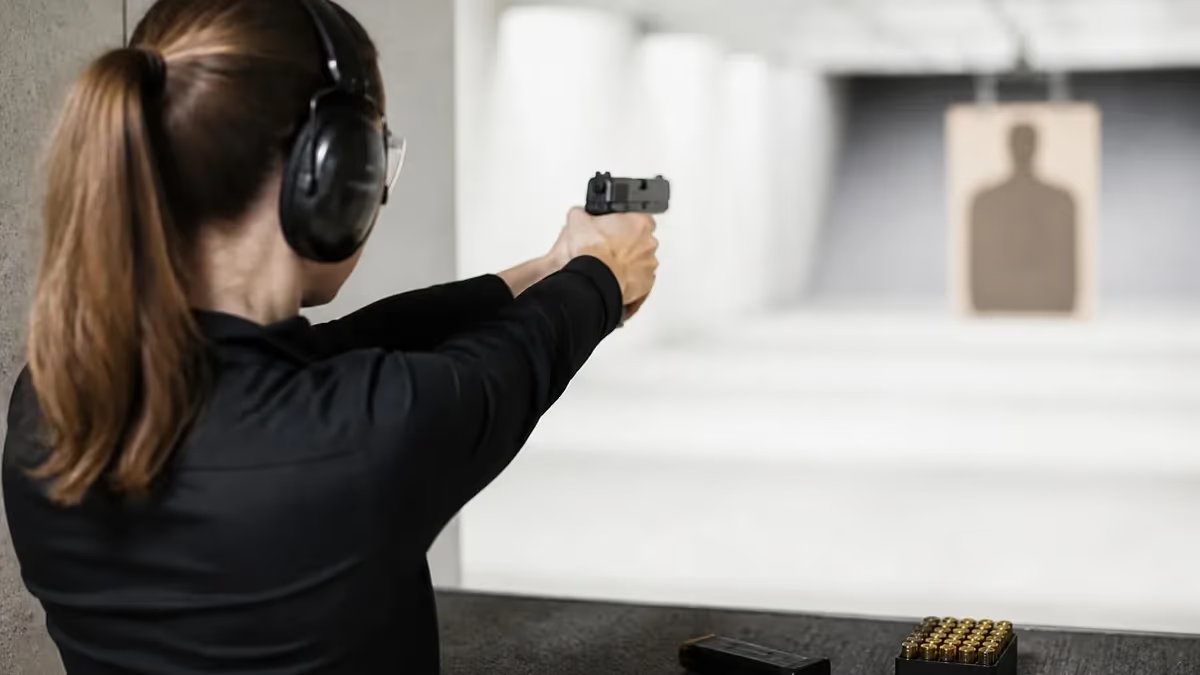
The term FSC has multiple meanings depending on context. In the firearms world — particularly in California — FSC exclusively refers to the Firearm Safety Certificate. In forestry and environmental contexts, FSC refers to the Forest Stewardship Council, an international nonprofit that certifies sustainably managed wood products. In shipping and logistics, FSC stands for Fuel Surcharge. This guide focuses specifically on the FSC as it relates to California's firearm safety and purchasing requirements.
California enacted the Firearm Safety Certificate requirement to ensure that anyone purchasing a firearm in the state has demonstrated a basic understanding of safe gun handling, storage principles, and the state's firearm laws. Before the FSC was introduced, California had a different program called the Handgun Safety Certificate (HSC) that applied only to handgun purchases. The current FSC program expanded the requirement to cover all firearms — handguns, semi-automatic centerfire rifles, and shotguns — making California one of the most comprehensive state-level firearm safety education systems in the country.
The FSC requirement applies to the buyer, not the type of firearm. If you want to purchase any firearm at a licensed California dealer, you must present a valid FSC. The test costs $25 and is administered at licensed firearm dealers by DOJ-certified instructors. After passing, you receive a physical certificate that you keep for the five-year validity period. When the certificate expires, you must retake the test to obtain a new FSC before making another purchase.
Understanding what FSC stands for and what it requires is the first step for any California resident who is planning to purchase a firearm for the first time or who needs to renew an expired certificate. This guide explains the FSC's purpose, what the test covers, who is required to have one, and what exemptions apply.
When you visit a licensed California firearm dealer to begin the process of buying a handgun or long gun, the first thing the staff will ask about is your FSC. The certificate must be current — not expired — and you must have it in hand at the time of purchase. California dealers are legally required to verify the FSC before completing any transfer, and they cannot move forward with the sale without it.
This means that even if you pass your background check and satisfy every other legal requirement, an expired or missing FSC will stop the transaction entirely. Planning ahead and obtaining or renewing your FSC before you need it is essential, particularly since the test must be scheduled at a licensed dealer and cannot be done online or remotely.
The FSC requirement reflects California's broader philosophy that firearm ownership comes with responsibilities — including the responsibility to understand both safe handling and the legal framework that governs firearms in the state. Unlike some other states that focus exclusively on criminal history checks, California adds a layer of demonstrated knowledge as a prerequisite for purchase. Supporters of the program argue that requiring buyers to study and pass a written test reduces accidents caused by ignorance of basic safety rules and ensures that new gun owners understand their legal obligations from day one.
Critics sometimes note that the FSC requirement creates an additional hurdle for law-abiding buyers, but the requirement has been consistently upheld as a constitutional exercise of the state's authority to regulate firearm purchases. Understanding the purpose and mechanics of the FSC is important whether you agree with California's approach or simply need to comply with it to make your purchase.
For California residents who are new to firearm ownership, the FSC process is often their first encounter with the state's firearm regulatory system. Getting familiar with the FSC — what it is, how to obtain it, and what it does and does not authorize — provides a foundation for understanding the broader set of rules that govern legal gun ownership in California. The sections below cover the FSC in detail, including the test content, who is required to have one, exemptions, and answers to the questions that first-time buyers most commonly ask.
The FSC written test consists of 30 questions drawn from a standardized question pool provided by the California DOJ. You must answer at least 23 questions correctly (a score of 75% or above) to pass. The test is administered on paper at the licensed firearm dealer, and you may use the official California DOJ study guide during preparation. You have 30 minutes to complete the test, though most applicants finish well within that time.
The test covers four main subject areas: safe storage and transport of firearms, basic safe handling principles, California firearm laws and regulations, and recognition of unsafe situations. Safe storage questions cover the use of gun safes, trigger locks, and safe storage laws — particularly California's requirements for households with children. Transport questions address the legal requirements for transporting firearms in a vehicle, including whether the firearm must be unloaded and in a locked container.
Safe handling questions test knowledge of the fundamental rules of firearm safety — treating every firearm as if it is loaded, keeping the finger off the trigger until ready to shoot, never pointing the muzzle at anything you are not willing to destroy, and being certain of your target and what is beyond it. These principles apply regardless of whether you are handling a handgun, rifle, or shotgun.
California law questions cover who may legally possess or purchase a firearm in California, prohibitions (criminal history, domestic violence restraining orders, mental health holds), waiting period requirements, one-handgun-per-month restrictions, and specific California laws that differ from federal requirements. These questions reflect the fact that California has some of the most specific and detailed state firearm laws in the country, and the FSC test ensures that purchasers are aware of their legal obligations.
Unsafe situation questions present scenarios — for example, finding an unsecured firearm in a vehicle, being handed a firearm by a friend who says it is unloaded, or discovering ammunition in an unusual place — and ask the test-taker to identify the safest response. These scenario-based questions reinforce practical judgment skills rather than just legal knowledge.

The California Department of Justice provides a free FSC study guide that covers all content tested on the written exam. Download it from the DOJ website or ask your licensed dealer for a copy before scheduling your test date.
One frequently overlooked aspect of the FSC test is the emphasis on California-specific nuances that differ significantly from federal law or the laws of other states. For example, the test covers California's safe storage law, which imposes specific requirements on gun owners who share a home with anyone prohibited from possessing firearms — including children under 18.
It also covers California's definition of a "firearm" which includes items that other states may not regulate in the same way, and the state's unique provisions around assault weapons, large-capacity magazines, and handgun roster requirements. These questions help ensure that anyone making a purchase in California has a foundational awareness of what is and is not legal under state law, even if they have prior experience with firearms in other jurisdictions.
Preparation for the FSC test is straightforward because the California DOJ publishes an official study guide that covers exactly the material tested. The guide is available for free on the DOJ website and at most licensed dealers. It is organized around the same four subject areas covered on the test — safe storage, safe handling, California law, and unsafe situation recognition — and the test questions are drawn directly from the content in the guide.
Most applicants who spend a few hours reviewing the guide find the test manageable, even those with no prior firearm experience. The 30-minute time limit is generous relative to the number of questions, and the 75% passing threshold — 23 correct out of 30 — is designed to ensure competence without being punishingly difficult. If you are a California resident preparing for your first firearm purchase, the FSC study guide is the single most important resource to review before visiting the dealer.
After passing the test, the certified instructor records your information and issues the physical FSC certificate immediately. You do not need to wait for it to be mailed or processed by a state agency — the dealer handles the entire process on site. The certificate includes your name, the issue date, and the expiration date, which is five years from the date of issuance. Keep the certificate in a safe place, as you will need to present the original when making a purchase — dealers cannot accept a photocopy or a phone photo as a substitute for the physical certificate.

In California, virtually everyone who wants to purchase a firearm from a licensed dealer must present a valid FSC. The requirement applies to California residents and non-residents purchasing firearms in California. It applies to first-time buyers and experienced gun owners who are making an additional purchase. Age requirements mean you must be 18 to purchase a long gun and 21 to purchase a handgun, and you must have your FSC before the purchase transaction is completed — dealers will not complete a transfer without verifying a valid certificate.
There are several exemptions to the FSC requirement. Active duty military personnel and their spouses are exempt. Law enforcement officers employed by law enforcement agencies are exempt. Licensed firearm dealers and manufacturers are exempt for business purposes. Certain antique firearm transactions may also be exempt depending on the type of firearm. Olympic athletes in shooting sports may receive an exemption under specific circumstances. If you believe you may qualify for an exemption, consult the California DOJ's FSC exemption guidelines or ask the licensed dealer, as the categories are specific and narrowly defined.
Private party transfers of firearms in California still require the FSC. If you are receiving a firearm as a gift from a family member, inheriting a firearm, or purchasing from a private seller, the transaction must still be conducted through a licensed California dealer under the private party transfer (PPT) process, and the receiving party must present a valid FSC. The FSC requirement cannot be bypassed by conducting a transfer outside of a licensed dealer — private party sales must go through the dealer transfer process in California.
If your FSC expires before you make a purchase, you must retake the test and obtain a new certificate. You cannot renew an existing FSC — you simply take the test again and receive a new certificate upon passing. The $25 fee applies to each test attempt. Dealers will not accept an expired FSC as valid documentation for a purchase transaction, so tracking your certificate's expiration date and renewing proactively is important if you expect to make a purchase in the future.
If you believe you qualify for an FSC exemption (active duty military, law enforcement, licensed dealer), bring documentation to the licensed dealer. Exemption categories are narrowly defined and dealers verify eligibility before waiving the requirement.
One practical consideration for FSC holders is tracking the expiration date of the certificate. Since the FSC is valid for five years, many gun owners who obtained one when they first purchased a firearm may not think about it again until they want to make another purchase — at which point they may discover that it expired years ago. There is no renewal process for the FSC — you simply take the test again and receive a new certificate.
The $25 fee applies to each test attempt regardless of whether you have held an FSC before. If you are an existing gun owner who may want to purchase additional firearms in the next several years, it is worth checking your certificate's expiration date proactively and scheduling a retake well before you need it, rather than discovering the problem at the dealer counter.
The interaction between the FSC requirement and California's other firearm purchase regulations is worth understanding. The FSC does not replace the background check — it is required in addition to it. When you purchase a firearm in California, the dealer runs a Department of Justice background check, and a mandatory waiting period of ten days applies before the firearm can be transferred to you.
The FSC must be valid at the time the purchase begins, and it must still be valid at the end of the waiting period when you pick up the firearm. If your FSC expires during the waiting period — an uncommon but possible scenario if your certificate was close to its five-year mark — the dealer may not be able to complete the transfer. This interplay of requirements means that having an FSC with at least several months remaining is preferable to cutting it close when you initiate a purchase transaction.
It is also worth noting that the FSC is not transferable between individuals and cannot be lent or shared. Your FSC is issued in your name and is only valid for your own purchases. If you and a spouse or family member are both planning to purchase firearms, each person must hold their own valid FSC.
The test must be taken individually by each buyer, and the certificate identifies the specific holder by name. When you present the FSC at the dealer counter, the dealer verifies that the certificate belongs to you based on your identification, so having a certificate in another person's name will not satisfy the requirement.
Keeping your FSC current is the simplest way to avoid delays when you are ready to make a firearm purchase in California. Retaking the test proactively — well before your current certificate expires — takes roughly an hour including study time, costs $25, and ensures you will not face any procedural obstacles when you return to the dealer.
FSC Application Steps
- ✓Download the official California DOJ FSC study guide and review it thoroughly
- ✓Locate a California DOJ-certified FSC instructor at a licensed firearm dealer near you
- ✓Bring valid government-issued photo ID and the $25 test fee to the dealer
- ✓Pass the 30-question written test with a score of 23 or higher
- ✓Receive your physical Firearm Safety Certificate upon passing
- ✓Present the FSC at the time of your firearm purchase along with required ID
- ✓Note your certificate expiration date (5 years from issue) for future reference

FSC: Pros and Cons
- +firearm safety certificate — fSC credential is recognized by employers and industry professionals
- +Higher earning potential compared to non-credentialed peers
- +Expanded career opportunities and professional advancement
- +Structured learning path builds comprehensive knowledge
- +Professional development that stays current with industry standards
- −Preparation requires significant time and study commitment
- −Associated costs for exams, materials, and renewal fees
- −Continuing education needed to maintain credentials
- −Competition for advanced positions can be challenging
- −Requirements and standards may vary by state or region
FSC Questions and Answers
About the Author

Educational Psychologist & Academic Test Preparation Expert
Columbia University Teachers CollegeDr. Lisa Patel holds a Doctorate in Education from Columbia University Teachers College and has spent 17 years researching standardized test design and academic assessment. She has developed preparation programs for SAT, ACT, GRE, LSAT, UCAT, and numerous professional licensing exams, helping students of all backgrounds achieve their target scores.
Join the Discussion
Connect with other students preparing for this exam. Share tips, ask questions, and get advice from people who have been there.
View discussion (7 replies)