
FSC Practice Test & Basic Firearms Safety Certificate: Complete Study Guide
Pass your FSC test first try! 🎯 Free FSC practice test, firearm safety certificate study guide, exam tips, and what to expect on test day.

If you are preparing to obtain a firearm safety certificate in California, understanding what the FSC test covers — and how to study for it — is the single most important step you can take before walking into a licensed dealer. While many states have their own requirements, California's FSC program is among the most structured in the nation, requiring every handgun and long-gun purchaser to pass a 30-question written exam before completing a firearm transfer. Knowing what material to study and how the test is formatted will dramatically increase your chances of passing on the first attempt.
The California FSC practice test is the most effective tool available to prospective gun owners who want to simulate the actual exam experience before test day. Practice tests mirror the question style, content areas, and time constraints of the real exam, allowing you to identify weak areas in your knowledge and focus your study sessions where they matter most. Research consistently shows that active recall through practice testing leads to significantly better retention than passive reading alone, making practice questions an essential component of any FSC study plan.
Many first-time test-takers underestimate the breadth of material covered on the firearm safety certificate exam. The test is not simply about knowing how to load and unload a firearm — it covers California-specific safe storage laws, child access prevention requirements, the four fundamental rules of firearm safety, and proper handling techniques for both handguns and long guns. A comprehensive california firearms safety certificate study approach addresses all of these content domains systematically.
One question that comes up frequently among new gun owners is whether their state's requirement resembles something like a massachusetts basic firearms safety course certificate. While Massachusetts and California both require safety certification before firearm purchases, the programs differ in structure, content depth, and administration. California's FSC is administered by DOJ-certified instructors at licensed firearm dealers, while Massachusetts uses a separate course-based model. Understanding these differences helps buyers relocating between states know exactly what they need to comply with local law.
The fsc test consists of 30 multiple-choice questions drawn from the California DOJ's official FSC study guide. Test-takers have 30 minutes to complete the exam and must score at least 23 out of 30 — approximately 75% — to pass. The test is administered on a computer or paper at your chosen licensed dealer, and you pay a $25 fee regardless of whether you pass or fail on that attempt. If you fail, you may retake the test after a 24-hour waiting period, and the fee applies each time.
Earning your california firearms safety certificate is a legal prerequisite for purchasing any firearm in California, with limited exceptions for peace officers, certain transfers between immediate family members, and inherited firearms. The FSC is valid for five years from the date of issuance, after which it must be renewed. Renewal requires passing the test again — there is no abbreviated renewal process — so maintaining your knowledge of firearm safety laws and handling procedures is an ongoing responsibility for California gun owners.
This guide covers everything you need to know to prepare for and pass the FSC exam: the exam format, the most commonly tested content areas, proven study strategies, what to bring on test day, and where to find a testing location near you. Whether you are a first-time buyer or renewing an expired certificate, the information and practice resources here will give you the confidence and knowledge to succeed on your fsc test.
California FSC by the Numbers
Key Facts at a Glance
| Item | Value | Details |
|---|---|---|
| Total Questions | 30 | Multiple choice format |
| Passing Score | 75% | 23 of 30 correct |
| Time Allowed | 30 min | Roughly 1 min per question |
| Test Fee | $25 | Per attempt, non-refundable |
| Certificate Valid | 5 Years | Must renew to stay current |

FSC Exam Format & Structure
| Section | Questions | Time | Weight | Notes |
|---|---|---|---|---|
| Safe Handling & Operation | 10 | ~10 min | 33% | Loading, unloading, parts identification |
| Safety Rules & Storage | 10 | ~10 min | 33% | Four safety rules, safe storage laws |
| Legal Requirements & Children | 10 | ~10 min | 33% | CA law, child access prevention |
| Total | 30 | 30 minutes | 100% |
The firearm safety certificate exam draws questions from three broad content domains, and understanding how those domains are weighted helps you allocate your study time wisely. The California DOJ publishes an official FSC study guide — available as a free PDF — that defines exactly which topics are testable. Every question on the actual exam comes from material covered in that study guide, which means reading it thoroughly is non-negotiable. However, reading alone is rarely sufficient; pairing the study guide with a quality firearm safety certificate quiz resource transforms passive reading into active knowledge-building.
The first major content area is safe handling and operation. This section tests your knowledge of the fundamental rules of firearm safety — treating every firearm as if it is loaded, never pointing a firearm at anything you are not willing to destroy, keeping your finger off the trigger until you are ready to shoot, and knowing your target and what is beyond it. Questions in this area also cover proper techniques for loading and unloading both semi-automatic pistols and revolvers, identifying the basic mechanical components of each firearm type, and understanding how different action types function.
The second content domain addresses safe storage and legal requirements. California has some of the most detailed safe storage laws in the United States. You will be tested on the definition of a DOJ-approved firearm safety device, when firearms must be stored in a locked container, what constitutes criminal storage of a firearm, and how storage requirements change depending on whether children are present in the home. Understanding Penal Code Section 25135 — which governs criminal storage — is particularly important because it is a frequent source of exam questions that trip up underprepared test-takers.
The third content domain covers firearms and children, which overlaps with safe storage but extends into child access prevention scenarios and legal obligations. The exam presents realistic situations — a child visiting the home, a teenager who has been taught to shoot, a locked vehicle with a firearm inside — and asks you to identify the legally correct course of action in each scenario.
These situational questions require you to apply your knowledge rather than simply recall definitions, making them the most challenging portion of the test for many candidates. Using a dedicated firearm safety certificate study guide that includes scenario-based practice questions is the best preparation for this section.
Beyond the three primary content domains, the FSC exam includes questions about California's dealer record of sale process, background check requirements, the 10-day waiting period, and rules governing the purchase of ammunition alongside a firearm. While these administrative and legal topics typically account for a smaller proportion of questions than the safety and storage content, they are tested regularly enough that you should review them before exam day. Many candidates focus exclusively on handling and storage and are surprised by questions about the transfer process.
The format of each question on the fsc practice test is a four-option multiple-choice item. Unlike some professional exams, the FSC does not use complex multi-part questions or case studies. Each question is self-contained, typically presenting a scenario or a direct knowledge check, followed by four answer choices. Distractors — incorrect answer choices — are usually plausible enough that careful reading is required. A common mistake is choosing the first answer that seems correct without reading all four options, particularly on questions about storage thresholds and legal age requirements where specific numbers matter.
Time management on the FSC is generally not a significant problem for well-prepared candidates. With 30 minutes for 30 questions, you have an average of one minute per question — more than enough time if you have studied. The greater risk is overconfidence.
Candidates who have some prior firearms experience sometimes assume their practical knowledge will carry them through without focused study of California-specific laws, and they are often surprised by questions that have no obvious answer based on general firearms familiarity. California law has unique requirements that differ from federal law and from the laws of other states, and those distinctions are exactly what the FSC tests.
FSC Study Strategies by Topic
Mastering safe handling questions starts with memorizing the four fundamental safety rules and being able to apply them to novel scenarios. The FSC does not just ask you to recite the rules — it presents situations where one rule is being violated and asks you to identify the problem. Create flashcards for each rule and quiz yourself with invented scenarios: a friend pointing a pistol at the ceiling while showing it to you, a shooter whose finger is inside the trigger guard while walking to the firing line, or a hunter who does not check what is behind the target. Scenario-based drilling makes abstract rules concrete and memorable.
For the mechanical knowledge portion, the DOJ study guide includes labeled diagrams of a semi-automatic pistol and a revolver. Study these diagrams until you can identify every labeled component from memory. Pay particular attention to the parts whose names are counterintuitive — the slide, the ejector rod, the cylinder release — because the exam frequently tests component identification using the exact terminology from the study guide diagrams. If you have access to an unloaded firearm, physically handling it while naming components aloud is one of the most effective study methods available.
Is the FSC Exam Difficult? Honest Assessment
- +Only 30 questions with a 75% passing threshold — achievable with focused study
- +All testable material is published in the free official DOJ study guide
- +Questions are straightforward multiple choice with no trick formats
- +30 minutes is ample time for prepared candidates — rarely a time pressure issue
- +Practice tests closely mirror actual exam questions, making preparation highly targeted
- +Certificate is valid for 5 years, giving you a long runway before renewal is required
- −California-specific laws differ significantly from other states — prior knowledge can mislead
- −$25 non-refundable fee per attempt adds up quickly if you retake multiple times
- −Storage law questions involve specific legal thresholds that require precise memorization
- −Scenario-based questions on children and firearms require applied reasoning, not just recall
- −No partial credit — you must pass the full exam in a single 30-minute sitting
- −Limited testing locations in some rural areas can make finding a convenient site difficult
FSC Test Day Checklist
- ✓Bring a valid, unexpired government-issued photo ID (driver's license, passport, or state ID).
- ✓Confirm the testing dealer's hours and whether appointments are required before you arrive.
- ✓Bring $25 in cash or confirm the dealer accepts card payments for the test fee.
- ✓Review the four fundamental safety rules one final time the morning of your test.
- ✓Re-read the safe storage and criminal storage sections of the DOJ study guide.
- ✓Double-check age requirements and the 10-day waiting period figures — common exam traps.
- ✓Review the diagrams of handgun and revolver components and practice naming each part.
- ✓Complete at least one full 30-question practice test the day before to gauge readiness.
- ✓Get a full night of sleep — fatigue is the most common cause of avoidable careless errors.
- ✓Arrive at the dealer with enough time to complete paperwork before beginning the exam.

75% Pass Rate Is Achievable — But California Law Details Are the Trap
The majority of FSC failures are not caused by a lack of general firearms knowledge — they result from candidates assuming California law mirrors federal law or the law of their home state. California's 21-minimum purchase age, 10-day waiting period, and specific criminal storage definitions are unique to the state and consistently appear on the exam. Study these California-specific details with extra attention, and you will be well above the passing threshold.
Finding a firearm safety certificate near me test location is straightforward in California's major metropolitan areas but can require more planning in rural counties. The exam is administered exclusively at California-licensed firearm dealers who have been certified by the DOJ to administer the FSC.
There are thousands of such dealers across the state, and the California DOJ maintains a searchable online database where you can locate certified dealers by ZIP code. When searching for an fsc test near me, always call ahead to confirm the dealer is currently administering the FSC, as some smaller dealers temporarily suspend the program during inventory or staffing changes.
Not all certified dealers offer the same testing experience. Some larger dealers have dedicated testing stations with computers and quiet environments, while smaller dealers may administer the exam on paper at a counter. Both formats are equally valid, and your score will be the same regardless of administration format — but knowing what to expect helps reduce test-day anxiety. Ask when you call whether the test is paper or computer-based, and confirm whether walk-ins are accepted or whether you need to schedule an appointment in advance.
When you arrive for your FSC test, the dealer will verify your identity using your government-issued photo ID and collect the $25 test fee. You will then be given the exam materials. On computer-administered tests, questions are displayed one at a time and you can typically flag questions to review before submitting. On paper tests, you work through the question booklet and mark your answers on a separate answer sheet. In either format, the dealer will score your exam immediately and issue your FSC card on the spot if you pass — there is no waiting period for results.
If you do not pass on your first attempt, the dealer will inform you of your score and how many questions you missed. While they are generally not required to tell you which specific questions you answered incorrectly, your score breakdown by topic area can help you focus your review. The mandatory 24-hour waiting period before a retake is short enough that a focused single evening of additional study — concentrating on whichever content area cost you the most points — is typically sufficient to push a marginal score over the passing threshold on the second attempt.
For candidates who prefer to study with a comprehensive dedicated resource before searching for a firearm safety certificate near me location, investing time in a structured review of all three content domains is well worth the extra preparation time. The $25 test fee is modest, but the inconvenience of scheduling a retake, traveling to the dealer again, and paying a second fee is an avoidable frustration. Most candidates who spend three to five hours with the official study guide and a practice test resource pass comfortably on their first attempt.
Candidates who already hold a Handgun Safety Certificate (HSC) — the predecessor to the current FSC program — should be aware that the HSC is no longer accepted for firearm purchases. California replaced the HSC with the FSC in January 2015 to extend the certificate's scope to all firearms, not just handguns.
If your HSC was issued before that transition and has since expired, you will need to take the full FSC exam. If you obtained an FSC after 2015 and it has not yet expired, you are current and do not need to test again until your five-year certificate expires.
The california fsc practice test resources available on this site are designed to closely match the difficulty level and question style of the actual DOJ exam. Each practice quiz is organized by topic area, allowing you to drill specifically on safe handling, storage laws, or legal requirements depending on where you feel least confident. Completing all six available practice quizzes in order — gradually increasing difficulty — is the most efficient path to exam readiness for the majority of candidates, regardless of their prior firearms experience level.
Your California Firearm Safety Certificate expires exactly five years from the date of issuance. If your FSC has expired, you cannot legally purchase a firearm in California until you pass the exam again and obtain a new certificate — there is no grace period and no expedited renewal process. Check your expiration date before initiating any firearm purchase to avoid a failed transfer and the cost of an emergency same-day test.
Once you have passed your fsc test and received your certificate, the next step in the California firearm purchase process is initiating a Dealer Record of Sale (DROS) transaction at the licensed dealer. The DROS is a comprehensive background check administered by the California DOJ — not the federal NICS system — that verifies you are not a prohibited person under California or federal law. The DROS fee is currently $31.19 on top of any dealer transfer fees, and the mandatory 10-day waiting period begins the moment the DROS is submitted, not when the background check clears.
During the 10-day waiting period, you may not take possession of the firearm even if the background check clears in a matter of hours. This waiting period is absolute under California law, and there is no mechanism to waive or shorten it regardless of your circumstances. Use this time productively — if you have not already secured safe storage for the new firearm, the 10 days between purchase and pickup is the ideal window to acquire a DOJ-approved locked container or firearm safety device before the firearm enters your home.
California law requires that when you take delivery of a handgun, you must demonstrate safe handling of that specific firearm type in front of the dealer. This is called the Firearm Safety Device (FSD) requirement or the handgun safety demonstration. You will be asked to show that you can load and unload the firearm safely using the correct technique for its action type.
This brief demonstration is distinct from the written FSC exam and takes place at the time of pickup rather than at the time of purchase. If you are unfamiliar with the specific firearm you are purchasing, ask the dealer for a brief orientation before the demonstration.
For those purchasing firearms from private parties — a category of transfer that became subject to California's background check requirements in 2019 — the process must go through a licensed dealer. Private party transfers cannot be completed directly between individuals in California; instead, both parties must appear at a licensed dealer, who helps the DROS process and the 10-day waiting period. Your FSC is still required for private party transfers unless a specific statutory exemption applies. Understanding how to navigate a california firearm safety certificate transfer correctly from the outset prevents delays and compliance issues.
After completing your first California firearm purchase, maintaining your knowledge of state firearm laws is an ongoing responsibility. California's legislature regularly amends its firearms statutes — assault weapon definitions, magazine capacity limits, ammunition purchase requirements, and other rules have all changed in recent years. While many of these changes do not affect the FSC exam directly, staying informed about the current state of California firearm law helps you remain a law-abiding gun owner and ensures you are prepared when your FSC comes up for renewal five years from now.
The responsibility of firearm ownership extends beyond legal compliance into the practical domain of safe storage in the home. Even after earning your FSC, periodically reviewing your storage arrangements as your household composition changes — children move in or out, roommates change, visitors with children begin staying at your home — is a best practice that reflects the spirit of the safe storage laws you studied for the exam.
California's criminal storage laws are not merely test content; they represent a genuine public safety framework that reduces firearm accidents involving children, and internalizing their logic makes you a more conscientious gun owner over the long term.
Candidates who complete the full suite of practice quizzes on this site consistently report feeling well-prepared and confident on exam day. The combination of the official DOJ study guide, scenario-based practice questions, and a final timed 30-question mock exam taken under realistic conditions is the preparation formula that delivers the best results. Give yourself at least three days of focused study before your scheduled test, use the practice quizzes to identify any remaining knowledge gaps on day two, and do a final light review on the morning of exam day to keep key facts fresh in your memory.
Effective preparation for the firearm safety certificate quiz portion of your study plan goes beyond simply reading the DOJ study guide once. The most successful candidates treat FSC preparation as a structured multi-day process with specific goals for each study session.
On the first day, read the complete official study guide from start to finish without taking notes — the goal is to build a mental map of the content and identify which sections feel unfamiliar. On the second day, return to those unfamiliar sections and study them in depth, creating flashcards for specific laws, numerical thresholds, and component names that you need to memorize precisely.
On the third day of your study plan, shift from passive reading to active testing. Take a full 30-question practice quiz under timed conditions — set a 30-minute timer and work through all questions without interruptions, exactly as you would in the actual exam.
When you review your results, pay careful attention not just to the questions you got wrong but also to the questions you got right by guessing. If you answered a question correctly but were not confident in your reasoning, that question represents a vulnerability that a slightly different phrasing on the actual exam could exploit. Mark those questions for additional review.
One of the most common mistakes candidates make in FSC preparation is focusing exclusively on the content they find interesting while glossing over topics that feel tedious. For many candidates with prior firearms experience, the safe handling section feels obvious and the storage and legal sections feel like bureaucratic detail.
This instinct leads to under-preparation in exactly the areas that generate the most missed questions. Force yourself to spend equal time on each of the three content domains even if you feel confident in one area — the exam will not let you compensate for weakness in one section with strength in another.
Flashcard-based memorization is particularly effective for the legal requirements content. Create cards for the following: the minimum purchase age for handguns in California (21), the minimum purchase age for long guns in California (21), the mandatory waiting period (10 days), the FSC passing score (23 of 30), the FSC validity period (5 years), the FSC test fee ($25), the DROS fee ($31.19), and the key Penal Code sections governing safe storage (25100 through 25135). These specific numbers are tested directly on the exam, and having them memorized confidently prevents the hesitation that leads to second-guessing correct answers under time pressure.
Group study can be surprisingly effective for FSC preparation, particularly for the scenario-based questions in the children and firearms content area. Working through practice scenarios with a study partner allows you to verbalize your reasoning, which often reveals gaps in your understanding that silent reading does not expose. One partner reads the scenario aloud, the other answers without looking at the options, and both then evaluate whether the answer aligns with the applicable California law. This technique is especially useful for storage scenarios where the correct legal answer differs from the intuitive common-sense answer.
The week before your test, shift your study focus toward consolidation rather than new learning. Avoid trying to cram new information in the final 24 hours — at that point, what you know is largely what you will bring to the exam.
Instead, use the final day to review your flashcards quickly, take one last timed practice quiz to confirm your score is comfortably above the passing threshold, and get a full night of sleep. Fatigue impairs reading comprehension and attention to detail, both of which matter on an exam where the correct answer often hinges on a specific word in the question stem.
After passing, keep your FSC card in a safe place separate from your firearms. You will need to present it each time you purchase a firearm in California, and replacing a lost FSC requires contacting the DOJ — a process that takes time and may delay a planned purchase. Consider photographing your FSC card and storing the image in a secure digital location so you always have a reference copy available if the physical card is lost or damaged. Your FSC represents hours of study and a $25 investment — treat it as the important legal document it is.
Sample Firearm Safety Certificate (FSC) Practice Questions
Try these questions from our free Firearm Safety Certificate (FSC) practice tests. The correct answer and an explanation follow each question.
According to basic firearm safety rules, you should never point a firearm at anything you are not willing to:
- A. Inspect or clean
- B. Shoot or destroy
- C. Lock or secure
- D. Transport or store
Answer: B. Shoot or destroy
The rule "Never point a firearm at anything you are not willing to shoot or destroy" reinforces muzzle discipline. Because firearms can discharge unintentionally, the muzzle should only ever be pointed at an intended target or a safe direction. This rule prevents accidental injury to people and property.
What is a firearm safety rule regarding handling firearms with others present?
- A. Keep the firearm pointed at others for safety
- B. Ensure the firearm is unloaded and pointed in a safe direction before handing it to someone else
- C. Allow others to load the firearm without supervision
- D. Check the firearm's condition only when alone
Answer: B. Ensure the firearm is unloaded and pointed in a safe direction before handing it to someone else
When handing a firearm to another person, it is essential to first ensure it is unloaded and then present it with the muzzle pointed in a safe direction. This practice allows the recipient to immediately verify the firearm's safe condition and reinforces responsible handling. It's a critical step in preventing accidents when firearms change hands.
Which state requires firearms sold to be accompanied by a safety device?
- A. Florida
- B. California
- C. New York
- D. Texas
Answer: B. California
California has stringent firearm safety laws, including a requirement that all firearms sold in the state must be accompanied by an approved safety device, such as a trigger lock or cable lock. This regulation aims to prevent unauthorized access and accidental discharge, promoting responsible gun ownership. It is a key component of California's comprehensive approach to firearm safety.
What is the first basic gun safety rule?
- A. Treat all guns as if they are loaded.
- B. Store your gun safely and securely to prevent unauthorized use.
- C. Know your target, its surroundings, and beyond.
Answer: A. Treat all guns as if they are loaded.
The first and most fundamental rule of gun safety is to treat all guns as if they are loaded. By always assuming a gun is loaded, even if you believe it's empty, you maintain a heightened sense of caution and adhere to all other safety rules. This mindset significantly reduces the risk of accidental discharge and promotes responsible handling.
Take the full Firearm Safety Certificate (FSC) practice test
FSC Questions and Answers

FSC Firearm Safety Certificate — Complete Guide 2026
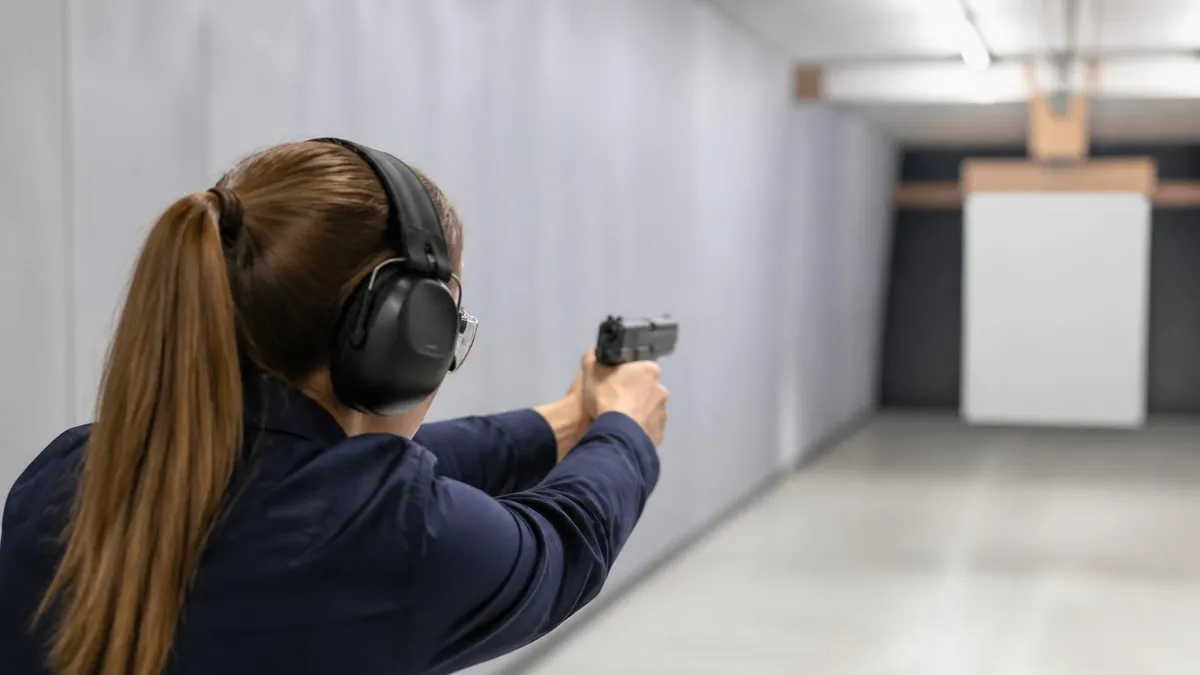
California Firearm Safety Certificate: Requirements, Test, and How to Get Your FSC
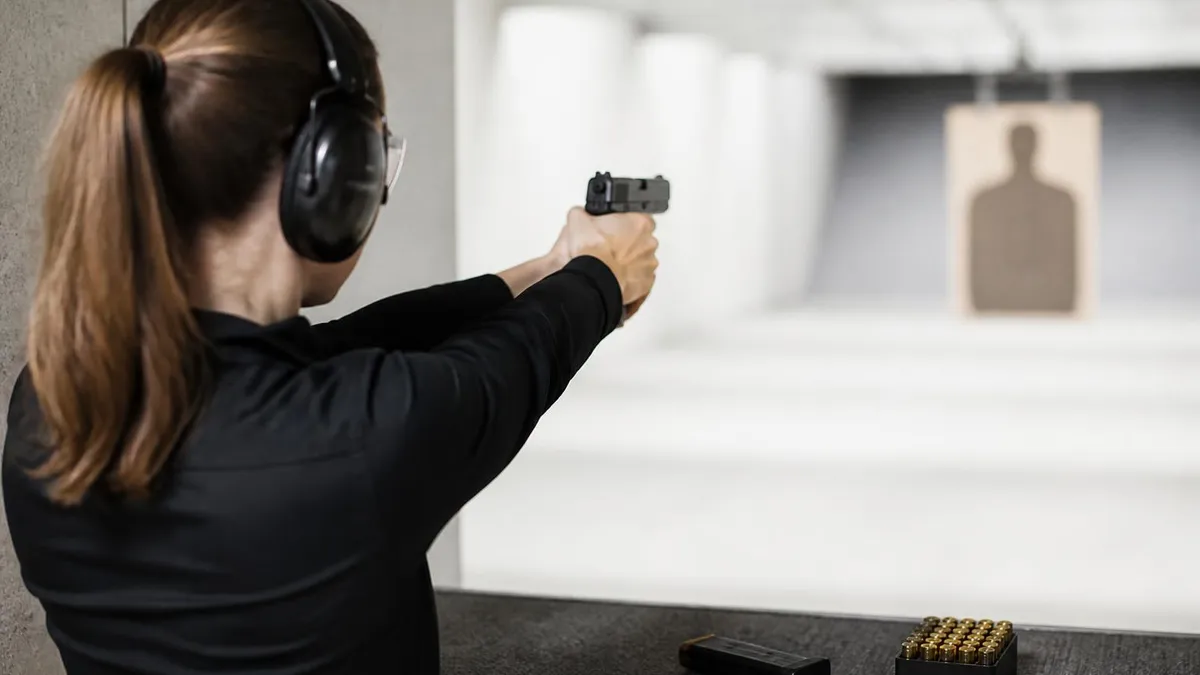
What Does FSC Stand For? FSC Meaning in Firearms
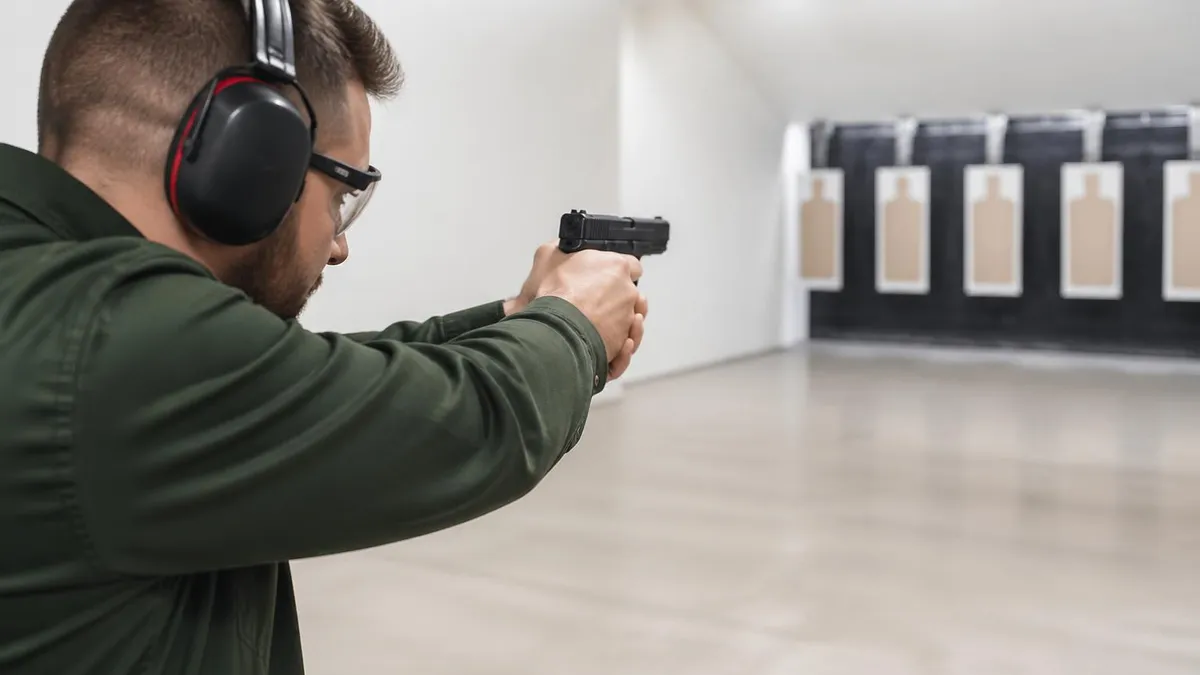
FSC Study Guide: California Firearm Safety Certificate Complete Prep
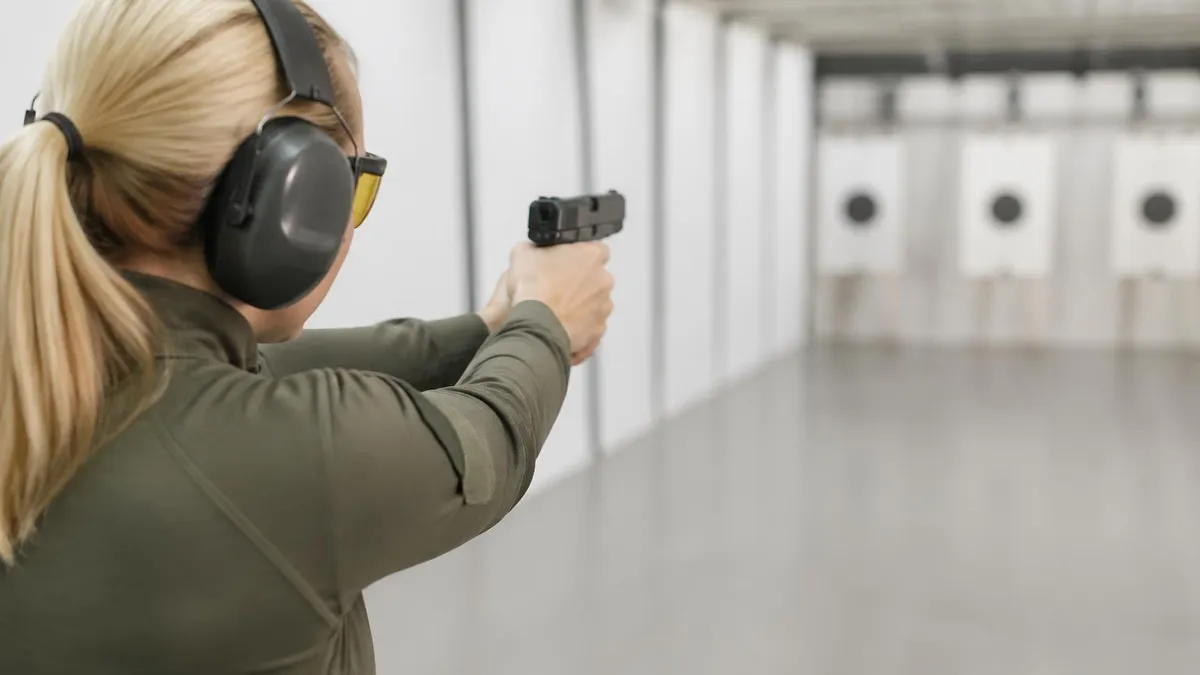
California FSC Practice Test: Free Questions and Complete Prep Guide
About the Author

Educational Psychologist & Academic Test Preparation Expert
Columbia University Teachers CollegeDr. Lisa Patel holds a Doctorate in Education from Columbia University Teachers College and has spent 17 years researching standardized test design and academic assessment. She has developed preparation programs for SAT, ACT, GRE, LSAT, UCAT, and numerous professional licensing exams, helping students of all backgrounds achieve their target scores.
Join the Discussion
Connect with other students preparing for this exam. Share tips, ask questions, and get advice from people who have been there.
View discussion (7 replies)