
Forklift Training Online — Complete Guide (2026 October)
⏳ Forklift training online explained: what OSHA actually allows, top courses (CertifyMe, Forklift Academy, Alison) and the practical step you can't skip.
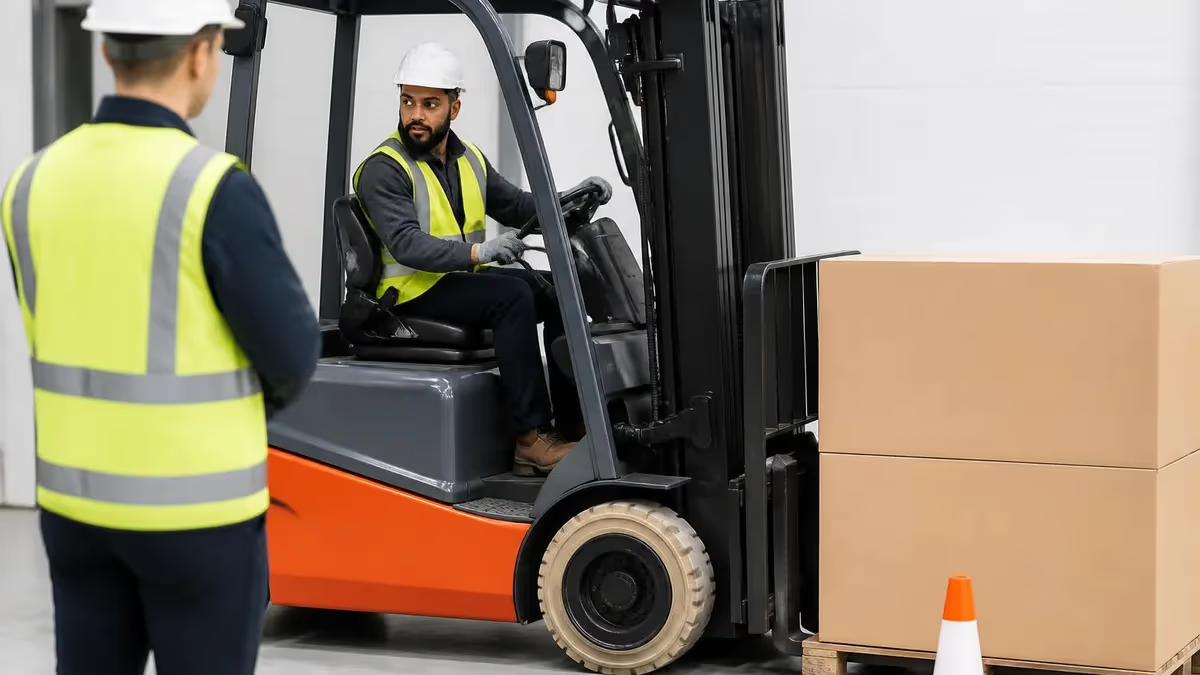
Forklift Training Online — Complete Guide (2026)
Here's the thing about forklift training online: you can finish the classroom part in an afternoon, but you can't legally drive a lift truck on day one. OSHA's rule — 29 CFR 1910.178(l) — splits operator training into three pieces. Formal instruction (the part that goes online). Practical hands-on training (you behind the wheel, on the actual truck you'll use at work). And a workplace evaluation done by your employer. Skip any one of them and you're not certified. Period.
That trips up a lot of new operators. You'll see ads for "$59 OSHA-approved certification, 100% online." That money buys you the lecture portion and a printable card — not a real license. The card is only valid once your employer signs off after watching you operate. No employer signature, no certification. That's the rule.
Most reputable platforms are upfront about this. ForkliftAcademy.com charges around $50 for online theory and tells you straight: complete the practical with your supervisor before the card is active. CertifyMe.net sits at about $60 and includes employer paperwork in the kit. For the full certification path beyond the online module, our how to get forklift certified guide walks through every step. Alison offers a free OSHA-aligned course but no card. The good ones don't pretend to be the whole package.
So who is online training really for? Two groups. New hires who need theory done before stepping onto a warehouse floor. And experienced operators recertifying every three years (OSHA requires it). For both, a 60-to-90-minute online module followed by an in-person evaluation is the standard path. This guide walks through what online covers, what it doesn't, which platforms are worth the money, and how to spot the scams charging $200 for a worthless PDF.
Quick note on terminology. "Online certification" and "online training" mean different things even though sellers use the terms interchangeably. Online training is the formal instruction module — legal, legitimate, OSHA-compliant. Online certification is marketing shorthand for "the card we'll mail you" — which on its own does not satisfy OSHA without the employer's practical and evaluation. Watch for that distinction in any course description before you pay.

Online-Only Certification Is Not Legal
No online course — paid or free, accredited or not — can fully certify you under OSHA 29 CFR 1910.178(l). Federal law requires hands-on practical training on the specific truck type you'll operate, plus an employer-conducted workplace evaluation. Any vendor claiming "100% online OSHA certification" with no employer step is misleading you. The wallet card means nothing until your employer signs the evaluation form.
OSHA 29 CFR 1910.178(l) — The Three Required Parts
- Format: Lecture, video, written material, online module
- Topics: Truck types, controls, stability, hazards, load handling
- Time: 60–120 minutes typical
- Cost: Free to $99 per operator
- Format: Hands-on operation of actual truck
- Who delivers: Qualified trainer at your worksite
- Topics: Pre-shift inspection, driving, lifting, parking
- Time: 1–4 hours depending on experience
- Format: Supervised observation during real work
- Who signs: Employer or designated competent person
- Frequency: Every 3 years minimum, or after incident
- Documentation: Written record with date, trainer, truck type
What an Online Forklift Course Actually Covers
The theory portion is real training, not filler. A solid online course runs through OSHA powered industrial truck standards, the seven forklift classes, stability triangles and load center math, pre-operation inspection checklists, refueling and charging hazards, pedestrian safety, and the difference between gradual and sudden tip-overs. That's the curriculum OSHA expects formal instruction to cover. Online delivery handles it well because the content is fact-based and visual.
Where online struggles: anything muscle-memory. You can watch a hundred videos about smooth braking and gradual tilt, and still snap a mast on your first real lift. That's why the practical exists. The video gives you the why. The hands-on builds the how.
Truck classes you'll see covered
Most online curricula cover all seven OSHA classes but focus heavily on Class I, IV, and V — the ones used in 80% of warehouses. Counterbalance sit-down electrics and propane lifts dominate distribution centers. Reach trucks handle narrow-aisle pallet racking. Order pickers lift the operator up to pick cases.
Rough-terrain equipment (Class VII) gets its own module because outdoor lifts on uneven ground require different stability awareness. Pallet jacks — yes, even the walkie kind — also need certification under OSHA. For a full breakdown of every class, see our types of forklifts guide and the broader forklift types reference. Operators who'll handle multiple classes need a separate evaluation for each. The certificate doesn't transfer automatically between a sit-down counterbalance and a stand-up reach truck. Different controls. Different stability behavior. Different evaluation.
What gets tested online
End-of-course exams typically run 20 to 50 multiple-choice questions. Pass marks usually sit at 80%. Most platforms let you retake the test free until you pass. Topics: hazard recognition (which scenario has the highest tip-over risk?), inspection sequence (what do you check before starting?), capacity plates (read this label — what's the max load at 24 inches?), and basic OSHA rule recall. Some tests include video scenarios — you watch a 30-second clip and identify what the operator did wrong. Others use static images of warehouse situations. The format depends on the vendor.
What's missing from every online course
Your specific workplace. Online can't know the layout of your aisles, the slope of your loading dock, the height of your racking, or the model of the truck you'll be assigned. Those are the workplace-specific topics OSHA expects the practical training to cover. A good employer customizes the hands-on portion to match real conditions — same truck make and model, same load types, same traffic patterns.
Generic practical training on a borrowed truck at an offsite facility technically counts but misses the point. The whole reason OSHA splits the requirement is that knowing how forklifts work is different from knowing how YOUR forklift works in YOUR warehouse.
For a deeper look at this topic, see our guide to forklift training online.
Curriculum Topics Every Legitimate Course Must Cover
- Required by: OSHA 1910.178(l)(3)(i)
- Includes: Operating instructions, controls, differences from automobiles
- Also covers: Steering, visibility, fork attachments, capacity, stability
- Required by: OSHA 1910.178(l)(3)(ii)
- Includes: Surface conditions, load composition, stacking and unstacking
- Also covers: Aisles, restricted areas, ramps, hazardous classified locations
- Required by: OSHA 1910.178(l)(4)
- When: After accident, near-miss, unsafe operation, new truck type
- Frequency: Plus mandatory 3-year evaluation regardless
Best Online Forklift Training Platforms in 2026
Four platforms dominate the legitimate side of online forklift training. They're not equal — pricing, employer paperwork quality, and curriculum depth vary. Here's how they stack up. forklift training options change pricing every year, so check current rates before paying. The longer-form forklift certification training programs aimed at trainers are a separate product category. We're talking operator-level here.
CertifyMe.net (~$60 per operator)
The most popular paid option. Around 60 minutes of video instruction, 50-question exam, immediate printable card upon passing. Includes an employer evaluation form template and a written training certificate for your records. Strong on OSHA compliance documentation — auditors recognize the certificate format. Discount tiers for fleets of 5+ operators bring per-head cost under $40. Customer service answers questions about employer paperwork, which matters when your safety manager is unfamiliar with the process.
ForkliftAcademy.com (~$50 per operator)
Similar price and structure, slightly shorter course (45 minutes). Cleaner mobile interface. Includes evaluation checklists for sit-down counterbalance, stand-up reach, and pallet jacks. Group pricing kicks in at 3 operators. Their certificate explicitly states the practical and evaluation requirements — useful when your employer asks what to do next. They also offer recertification at a discount, which adds up over a 9-year operator career.
Alison (Free)
Free OSHA-aligned forklift safety course. No card, no certificate of completion that satisfies OSHA documentation, but the curriculum is solid. Good for refreshing knowledge between recerts, training warehouse pedestrians on hazard awareness, or pre-study before paying for a credentialed program. Don't rely on it as your only training record. Many job-seekers use Alison to learn the basics before paying for a credentialed course — that's a smart use of free material.
Before purchasing any online course, ask the vendor three questions: (1) Does the curriculum cover OSHA 1910.178(l)(3)(i) truck-related topics AND (l)(3)(ii) workplace-related topics? (2) Do you provide a downloadable employer evaluation form? (3) Will my certificate clearly state that the practical and workplace evaluation must be completed by my employer? Vendors that refuse to answer or give vague replies are not worth your money.
OSHA Education Center and Avoiding Cheap Sites
OSHA Education Center ($79+)
Authorized OSHA training provider with longer-format courses (2–4 hours). Best for safety managers and trainers who need deeper compliance knowledge, not just operators. Includes downloadable trainer materials so you can run in-house sessions. Overkill for a single new hire. Worth the cost if you're the person who'll be doing the practical evaluations for everyone else at your facility.
What about the $20 sites?
Avoid them. Sites charging $15–25 typically run a 10-minute slideshow and issue a generic card. The curriculum skips required OSHA topics. The card looks identical to a $60 card on paper but won't hold up if an inspector asks for training records. The risk isn't price — it's documentation. A real auditor will compare your course curriculum against 1910.178(l)(3) and flag anything missing. The $40 you save on the front end becomes a multi-thousand-dollar citation on the back end.

Online Forklift Training Cost Comparison
Online Forklift Training — Pros and Cons
- +Cheapest path through the formal instruction requirement
- +Self-paced — finish in one sitting or stretch across a week
- +Mobile-friendly: study on the bus, finish on a laptop at home
- +Instant printable card and certificate when you pass
- +Easy to repeat every 3 years for recertification
- +Same OSHA-required curriculum as classroom training
- −Cannot fulfill the practical hands-on portion (federal law)
- −Cannot satisfy the employer workplace evaluation
- −No instructor present to answer site-specific questions
- −Some platforms misrepresent the card as full certification
- −Quality varies wildly — $20 sites often skip required OSHA topics
- −Doesn't cover your specific truck model or workplace layout
Common Forklift Types You'll Train On
Class I (Electric) and Class IV/V (IC engine) — the sit-down truck with forks at the front and a counterweight in the back. Most common type in distribution centers.
Training focus: load center, stability triangle, smooth tilt and lift, capacity plate reading. The truck most online courses default to in their videos.
How to Complete Certification After Online Training
Finish the online module. You'll have a certificate and printable card. Now what? The card isn't valid yet. Three things need to happen at your worksite before you can legally operate.
Step 1 — Schedule the practical with your employer
Hand the online certificate to your supervisor or safety manager. They'll schedule the practical training. The trainer must be "qualified by knowledge, training, and experience" per OSHA — that means someone who knows your trucks, not just anyone with a clipboard. Many warehouses use a senior operator or the warehouse manager. Some hire a third-party trainer who comes onsite.
Step 2 — Hands-on training on your actual truck
The practical covers what online couldn't: pre-shift inspection of this specific truck, controls layout (forklift controls are not standardized across brands), reverse driving with mirrors, load engagement at varied heights, navigating your aisles and dock plates, and battery or propane changing procedures. Expect one to four hours depending on your experience and the trainer's pace. New operators get more. Experienced recerts move faster.
Step 3 — Workplace evaluation
The evaluation isn't a test you study for. Your supervisor watches you perform normal work tasks for a set period — usually a shift or two — and signs off that you operate safely. They document it on a form: date, your name, evaluator's name, truck type, locations operated. That signed form is what makes you certified. Keep a copy. Most employers retain the original for OSHA inspection purposes. Some safety managers keep a digital scan in HR systems, which makes recertification paperwork easier three years later when you can't find your own copy.
Recertification Every 3 Years
OSHA requires re-evaluation at least every three years. Most companies use online refreshers for the formal portion plus a short in-person evaluation. Earlier triggers exist: an accident or near-miss, observation of unsafe operation, assignment to a new truck type, or workplace changes that affect safe operation. osha forklift certification rules apply equally to all operators — temp workers, contractors, full-time employees. No exceptions.
Any vendor promising full OSHA certification in 15 minutes or claiming "no employer evaluation needed" is misrepresenting federal law. These cards do not hold up under inspection and may expose you and your employer to liability. The legitimate online portion takes 45+ minutes, costs $40–80, and clearly states the practical and evaluation must be employer-conducted. When in doubt, ask the safety manager at your workplace which provider they recognize.
How to Spot Online Forklift Training Scams
The forklift training space attracts scams because demand is high and verification is weak. A wallet card looks official to most employers. Here's what separates legitimate platforms from cash grabs.
Red flags — walk away
Sites promising "OSHA certification in 15 minutes." Real curricula run 45+ minutes minimum. "No employer evaluation required" — that's literally illegal under OSHA. Prices above $150 for individual training (the legit market caps around $80). Vague language like "OSHA approved" — OSHA doesn't approve or certify any third-party training provider. No physical address, no phone number, no refund policy. Stock photo testimonials that show up on multiple unrelated training sites.
Green flags — likely legitimate
Clear statement that employer evaluation is required to complete certification. Curriculum index that names OSHA standards by section number (1910.178(l)(3)(i) for topics, etc.). Sample certificate available before purchase. Real customer service phone number. Fleet pricing options. A name you've heard from your safety manager or industry associations. how to get forklift certified guides from OSHA-affiliated sources will name the same handful of reputable providers.
How employers verify your training is real
Bigger employers don't just take your card at face value. They verify. The check usually involves three steps. First, they look up the issuing platform's website and confirm it's a real training company, not a one-page checkout. Second, they compare the curriculum on the certificate against OSHA's required topics. Third, they re-quiz you informally — a few questions about stability, capacity, or inspection sequence. If you genuinely sat through a real course, you'll answer them easily. If you bought a $20 card from a scam site, you'll fumble.
What happens during an OSHA inspection
If OSHA shows up at your workplace, an inspector will ask for written training records for every operator on shift. The records must show: operator name, date of formal training, name of person who provided training, name of person who conducted the evaluation, and the truck types covered. Missing any one of those elements triggers a citation. Operating without certification is one of OSHA's most frequently cited violations under 1910.178 — penalties run from $4,000 for serious violations to $156,000 for willful or repeat offenses. The cost of compliance is trivial next to the cost of a citation.

Forklift Training Online — By the Numbers
Key Facts at a Glance
| Item | Value | Details |
|---|---|---|
| Typical online course cost | $50–60 | |
| Required recertification interval | Every 3 years | |
| Typical exam pass mark | 80%+ |
Pre-Purchase Checklist for Online Forklift Training
- ✓Course states OSHA 29 CFR 1910.178(l) compliance by section number
- ✓Curriculum covers all 7 forklift classes, not just sit-down counterbalance
- ✓Total runtime is at least 45 minutes of actual instruction
- ✓Includes downloadable employer evaluation form template
- ✓Provides a certificate of formal training, not just a wallet card
- ✓Card explicitly states practical and evaluation must be completed by employer
- ✓Free retakes if you fail the end-of-course exam
- ✓Refund policy clearly stated before payment
- ✓Real customer service phone number on the site
- ✓Price between $40 and $80 for single-operator licensing
Your Path From Online Course to Active Certification
Day 1 — Pay and complete online module
Day 1 — Print certificate and card
Day 2–7 — Schedule practical with employer
Practical training day
Workplace evaluation
Certification active
Year 3 — Recertification triggers
OSHA puts the burden on the employer, not the operator. Your employer must: (1) provide training before you operate any forklift, (2) pay for the training (you should not be charged), (3) conduct the practical evaluation, (4) document training with your name, date, trainer name, and truck type, (5) re-evaluate every 3 years, and (6) retrain after accidents or unsafe behavior. If your employer asks you to pay for your own online course before starting work, that's a wage-and-hour issue in most states.
What an Online Course Won't Get You — Be Realistic
An online certificate alone won't get you hired as a forklift driver. Employers post job ads asking for "forklift certified" candidates, but what they actually want is someone who can pass their workplace evaluation on day one. A printed online card without operational hands-on experience often gets you to the interview and then fails at the practical test.
Hiring managers ask: how many hours have you operated? What truck classes? What load types? Honest answers beat a polished card every time. The card opens the door. Real driving keeps you in the room. Treat the card as a foot in, not a finish line.
The realistic path to your first warehouse job
If you're breaking into warehouse work without prior forklift experience, the realistic path is: complete the online formal training to show you understand the rules, then apply for a "forklift trainee" or "warehouse associate" role where the employer will provide the practical and evaluation as part of onboarding. Some staffing agencies bundle online training plus onsite practical for a flat fee — that's the closest thing to one-stop certification, but the agency must still observe you operating in a real workplace to sign the evaluation form. Read our forklift license guide for state-specific rules.
Cost of operating without proper certification
Some operators try to skip the practical and use the online card alone. The risk runs three ways. Personal injury liability if you crash — workers' comp may push back on a claim involving an unlicensed operator. Termination if your employer discovers the gap during an audit. And criminal liability in rare cases where uncertified operation contributes to a fatality.
None of these are theoretical — OSHA tracks them every year. The full pipeline (online + practical + evaluation) costs $60 and a few hours of supervised driving. There's no good reason to cut corners. Get the formal training, complete the practical, sign the evaluation form. Drive safely. Renew every three years. That's the whole job.
Sample Forklift certification Practice Questions
Try these questions from our free Forklift certification practice tests. The correct answer and an explanation follow each question.
What three components must be included in a complete forklift operator training program?
- A. Written test, speed trial, and physical fitness evaluation
- B. Formal instruction, practical training, and a performance evaluation
- C. Online video, supervisor observation, and salary review
- D. Safety briefing, maintenance class, and route planning
Answer: B. Formal instruction, practical training, and a performance evaluation
OSHA requires formal instruction (lecture or video), hands-on practical training, and a performance evaluation in the actual work environment.
Refresher training for a forklift operator is required after which event?
- A. An accident or near-miss involving the operator
- B. Every completed shift
- C. A change in weather
- D. A pay raise
Answer: A. An accident or near-miss involving the operator
An accident or near-miss is one of the conditions that requires the employer to provide refresher training.
Can an employer allow an untrained employee to operate a forklift under direct supervision for training purposes?
- A. Yes, only during supervised training where it does not endanger the trainee or others
- B. No, never under any circumstance
- C. Yes, unsupervised if brief
- D. Yes, if the employee signs a waiver
Answer: A. Yes, only during supervised training where it does not endanger the trainee or others
Trainees may operate a truck only under direct supervision and where operation does not endanger anyone.
What must an employer's training certification record include?
- A. Operator name, training date, and evaluator identity
- B. Only the operator's signature
- C. The forklift serial number only
- D. A copy of the OSHA standard
Answer: A. Operator name, training date, and evaluator identity
The certification must record the operator's name, the date of training/evaluation, and who performed the evaluation.
Forklift Questions and Answers
Related Forklift Guides
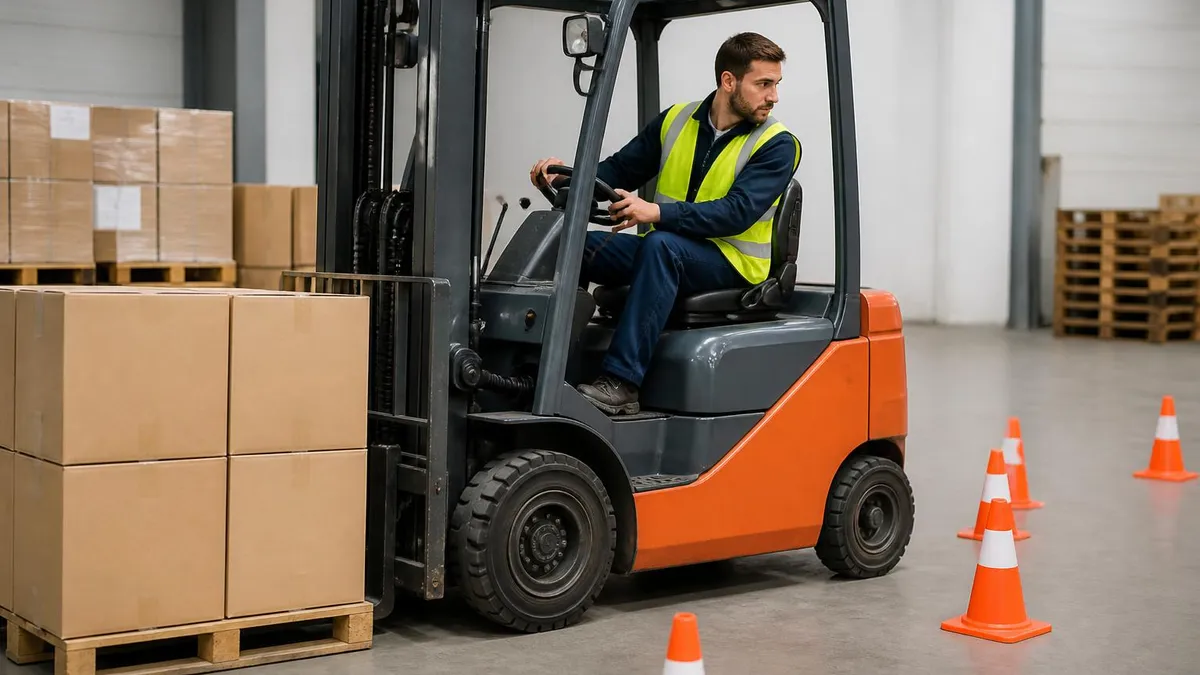
OSHA Forklift Certification: 29 CFR 1910.178 Training, Evaluation & Recertification Guide
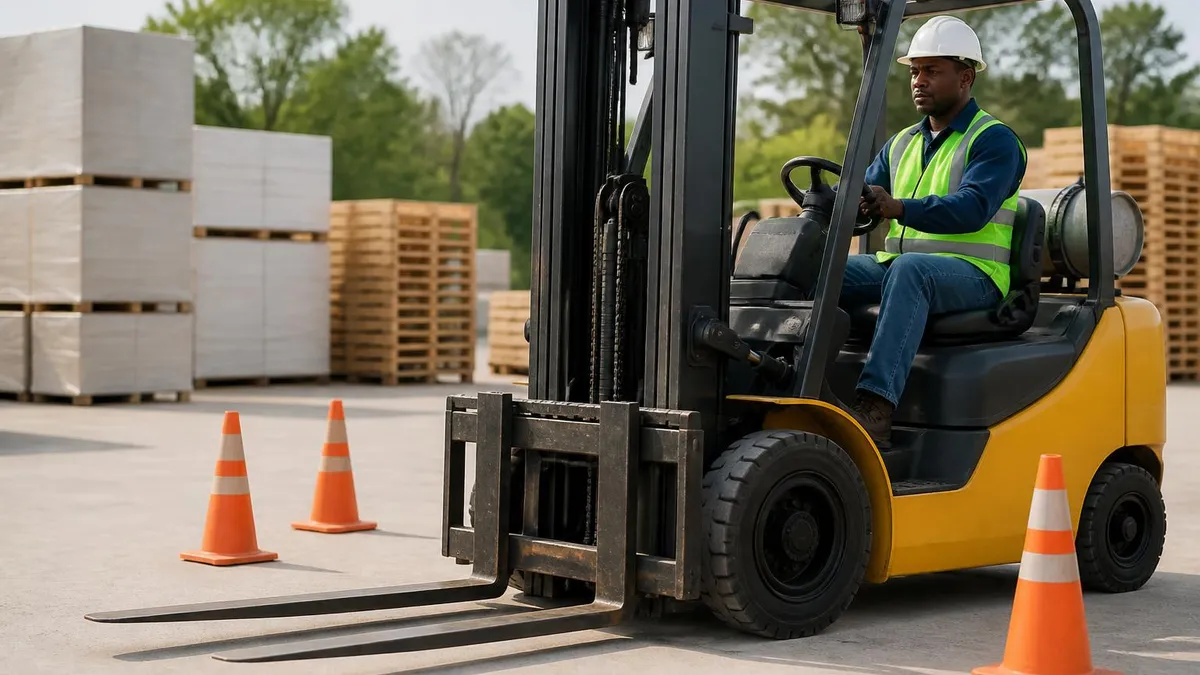
Forklift Certification Training: OSHA Requirements, Cost, Length & Top Providers (2026)
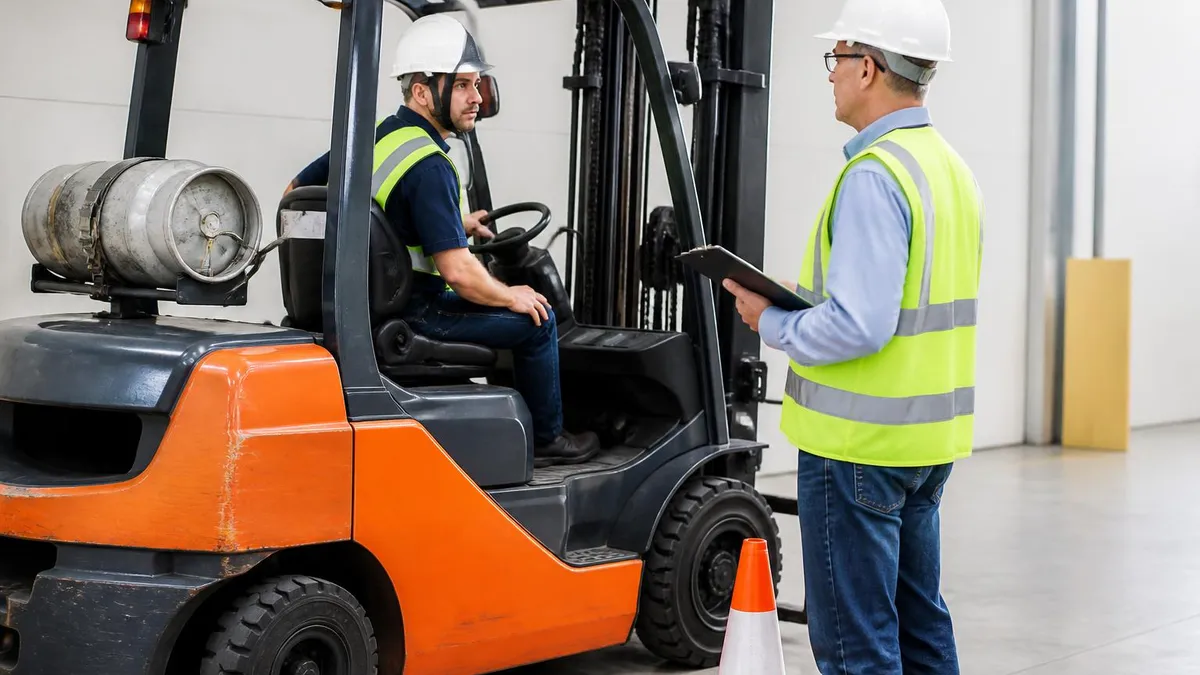
How to Get Forklift Certified: Complete Step-by-Step Guide
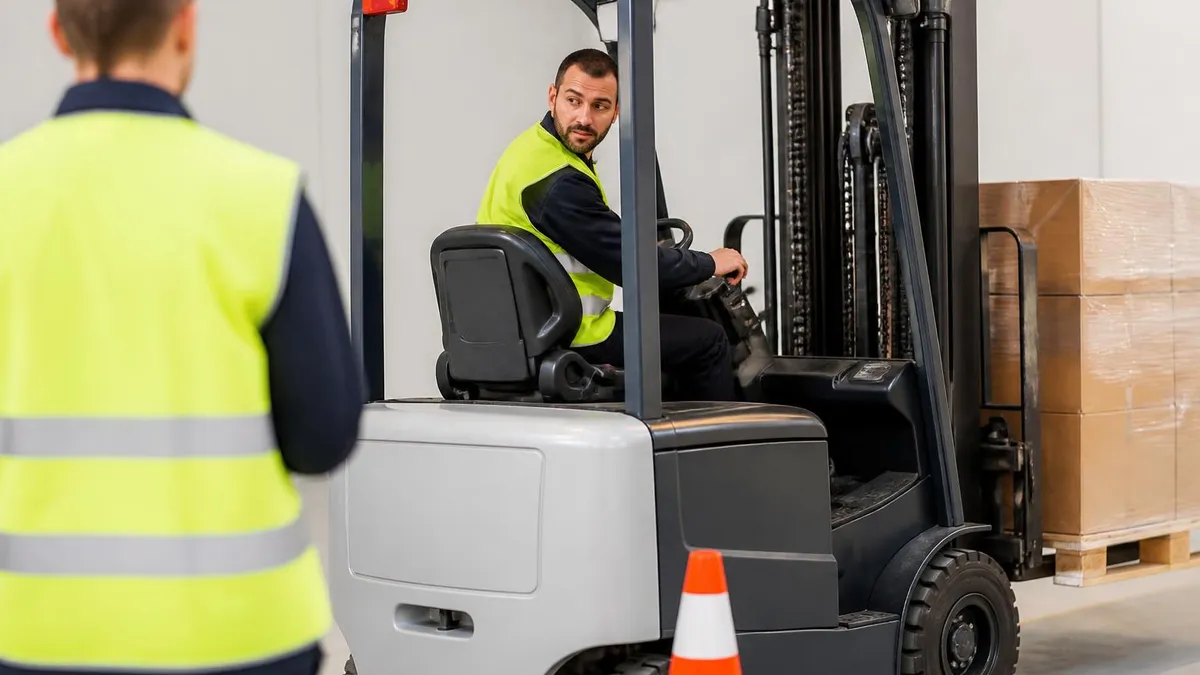
Forklift License vs Certification: OSHA Requirements, Cost, and Training
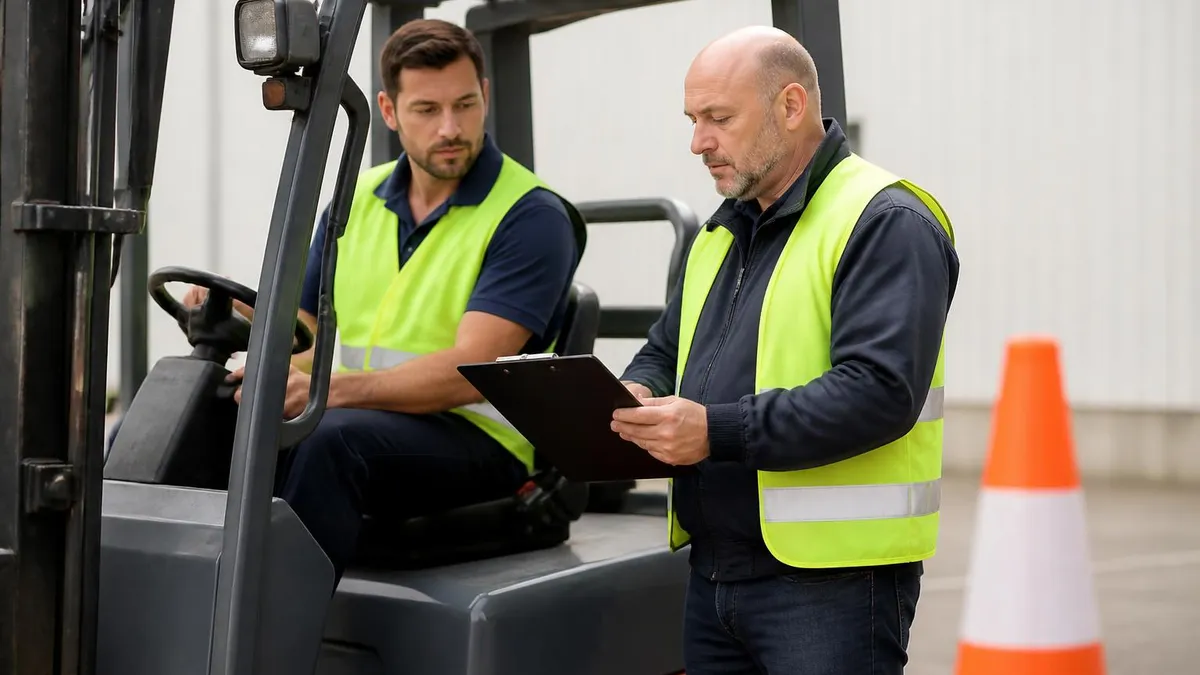
Forklift Safety: The Complete Guide to OSHA-Compliant Operation, Training, and Workplace Protection
About the Author
Certified Crane Operator & Skilled Trades Exam Specialist
Ferris State UniversityRobert Martinez is a Journeyman Ironworker, NCCCO-certified crane operator, and forklift trainer with a Bachelor of Science in Construction Technology from Ferris State University. He has 21 years of ironworking, rigging, and heavy equipment operation experience across high-rise and industrial construction sites. Robert prepares candidates for crane operator, rigger, forklift, and skilled trades certification examinations.