
Forklift Daily Checklist: Complete Pre-Shift Inspection Guide with Printable Form for 2026 September
Free forklift daily checklist form with OSHA pre-shift inspection points, 🧠 printable PDF, and step-by-step guide for operators and supervisors.
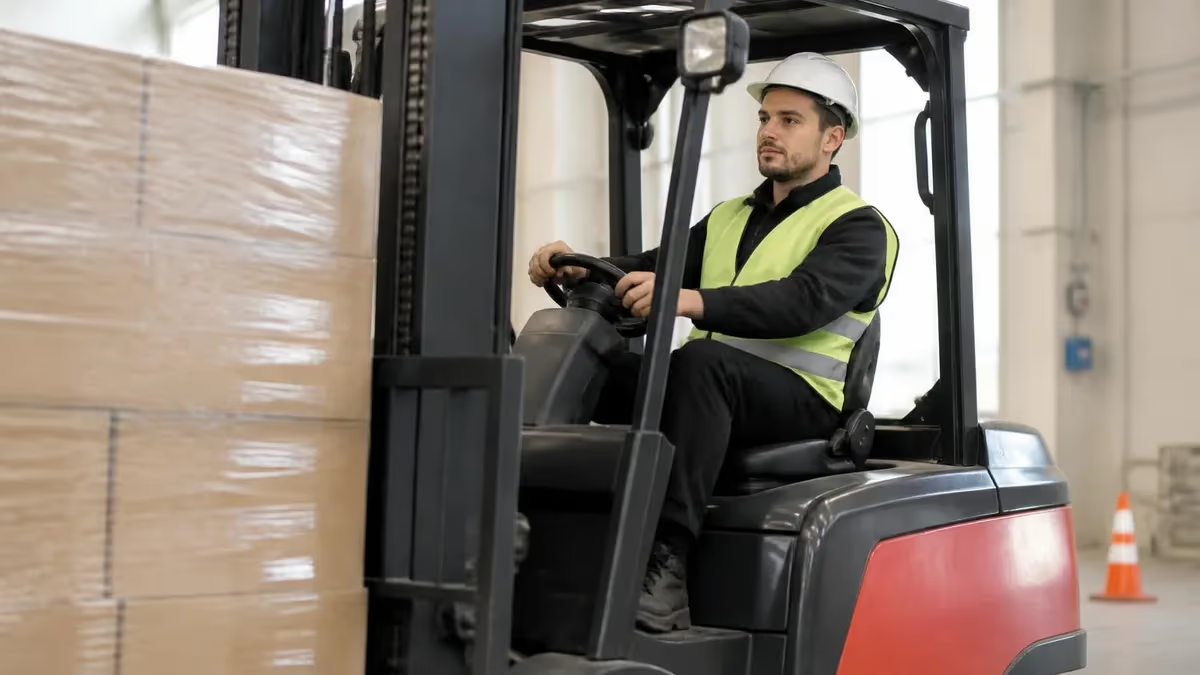
A complete forklift daily checklist form is the single most important safety document in any warehouse, distribution center, or construction yard that operates powered industrial trucks. Whether you manage a fleet of brand new electric forklift units, lease equipment through a forklift rental contract, or own a mixed fleet of LPG and diesel machines, OSHA standard 29 CFR 1910.178(q)(7) requires that each truck be examined at least daily before being placed in service. Skipping that inspection is the fastest way to invite citations, injuries, and downtime.
The pre-shift inspection is more than a paperwork exercise. A trained forklift operator who walks around the machine for seven to ten minutes catches hydraulic leaks, cracked forks, low tire pressure, faulty horns, and weak brakes before they become incidents. The Bureau of Labor Statistics attributes roughly 70 forklift fatalities and 7,000 nonfatal injuries every year to causes that a daily checklist would have flagged. That makes the checklist your cheapest insurance policy.
This guide walks you through every line item on a standard forklift daily checklist, explains what each check actually means in plain English, and gives you a printable template you can adapt to your site. We cover sit-down counterbalance trucks, stand up forklift models used in narrow aisles, electric pallet jacks, and rough-terrain machines. We also explain how the inspection differs for a unit you just picked up from a forklift rental near me search versus one you have owned for ten years.
If you are new to the role, the checklist may feel intimidating. Do not worry. After the first week of supervised inspections during your forklift training, the routine becomes second nature. Most experienced operators finish a complete pre-shift in under eight minutes and treat it as a quiet warm-up to the day. The trick is to follow the same order every time so nothing gets skipped, and to never sign the form until every box is honestly checked.
Employers also have skin in the game. Under OSHA, the company that owns or controls the forklift, not just the operator, can be cited for failing to take a defective truck out of service. That is why most warehouses now require a supervisor signature on every daily checklist, and why digital checklist apps that timestamp each answer have exploded in popularity since 2022. Whether you use paper or an app, the legal record matters during an audit.
Throughout this article we will reference how the checklist ties into broader safety programs, certification of forklift operators, and ongoing maintenance schedules. By the time you finish reading you will have a complete framework, a printable form, real-world examples of catches, and the knowledge to defend your inspection program if an OSHA compliance officer ever walks through your door. Let us start with the numbers that explain why daily inspections matter.
Forklift Daily Inspection by the Numbers

OSHA Pre-Shift Inspection Workflow
Approach and Visual Survey
Key-Off Inspection
Key-On Static Test
Operational Road Test
Document and Tag
Now let us walk through a complete daily checklist line by line so you understand the why behind every box. We will start with the key-off portion, which always happens first. Forks are inspected for cracks at the heel, bent tips, or excessive wear that thins the blade by more than 10 percent of original thickness. Heel cracks are the most dangerous because they can fail under load without warning. If you see one, the truck goes out of service immediately, regardless of how busy the shift is.
Chains and mast assembly come next. Lift chains stretch over time, and a chain that has elongated more than three percent past its original pitch must be replaced. Look for rust, kinked links, or uneven tension between the two chains. The mast rails should be free of cracks and the rollers should turn smoothly. A quick squirt of chain lubricant once a week extends chain life significantly and is far cheaper than the alternative.
Tires deserve careful attention because they are the contact patch between forklifts and the floor. Cushion tires on indoor electric units should have at least the manufacturer wear line visible above the rim, and chunking or flat spots mean replacement. Pneumatic tires need correct pressure measured cold, plus inspection for cuts, embedded nails, and sidewall damage. Polyurethane drive tires on stand up forklift units typically last 2,500 to 4,000 hours but should be swapped at the first sign of debonding from the hub.
Under the hood or service cover, check engine oil, coolant, hydraulic fluid, and transmission fluid on internal combustion models. On an electric forklift the equivalent checks are battery electrolyte level, terminal corrosion, cable insulation, and connector cleanliness. Lithium-ion units skip the electrolyte step but still need a visual on the battery management system display and cooling fans. Top off distilled water on lead-acid batteries after charging, never before.
The overhead guard, load backrest extension, and seat belt are next. The overhead guard must have no welds cracked or bolts missing. Even a small crack at a weld joint can propagate under impact. The load backrest extension keeps tall loads from tipping toward the operator and must be securely attached. Seat belts are required on every sit-down counterbalance forklift built after 1992, and operators must wear them. A frayed belt or non-locking retractor fails the inspection.
Move into the operator compartment last for the key-off portion. Verify the data plate is legible because OSHA requires capacity information be available to the operator at all times. Check that controls are labeled, the steering wheel has no excessive play, and the parking brake holds firmly. Make sure the fire extinguisher, if required by your facility, is present, charged, and within its inspection date. Then you are ready to insert the key.

Forklift certification Practice Test Questions
Prepare for the Forklift certification Certification exam with our free practice test modules. Each quiz covers key topics to help you pass on your first try.
Forklift certification Certification Forkl...
Forklift certification Exam Questions covering Certification Forklift certification Maintenance and Repairs. Master Forklift certification Test concepts for certification prep.
Forklift certification Certification Forkl...
Free Forklift certification Practice Test featuring Certification Forklift certification Maintenance and Repairs Questions and Answers. Improve your Forklift certification Exam score with mock test prep.
Forklift certification Certification Forkl...
Forklift certification Mock Exam on Certification Forklift certification Operator Training and Certification Requirements. Forklift certification Study Guide questions to pass on your first try.
Forklift certification Certification Forkl...
Forklift certification Test Prep for Certification Forklift certification Operator Training and Certification Requirements Questions and Answers. Practice Forklift certification Quiz questions and boost your score.
Forklift certification Load Handling and S...
Forklift certification Questions and Answers on Load Handling and Stability. Free Forklift certification practice for exam readiness.
Forklift certification OSHA Regulations an...
Forklift certification Mock Test covering OSHA Regulations and Compliance. Online Forklift certification Test practice with instant feedback.
Forklift certification Pre-Operation Inspe...
Free Forklift certification Quiz on Pre-Operation Inspections. Forklift certification Exam prep questions with detailed explanations.
Forklift certification Refueling and Recha...
Forklift certification Practice Questions for Refueling and Recharging Procedures. Build confidence for your Forklift certification certification exam.
Forklift certification Safe Driving and Ma...
Forklift certification Test Online for Safe Driving and Maneuvering. Free practice with instant results and feedback.
Forklift certification Workplace Hazard Id...
Forklift certification Study Material on Workplace Hazard Identification. Prepare effectively with real exam-style questions.
Forklift certification Forklift Instructions
Free Forklift certification Test covering Forklift Instructions. Practice and track your Forklift certification exam readiness.
Forklift certification Forklift MCQ
Forklift certification Exam Questions covering Forklift MCQ. Master Forklift certification Test concepts for certification prep.
Forklift certification Forklift Employer R...
Free Forklift certification Practice Test featuring Forklift Employer Responsibilities. Improve your Forklift certification Exam score with mock test prep.
Forklift certification Forklift Penalties ...
Forklift certification Mock Exam on Forklift Penalties for Non-Compliance. Forklift certification Study Guide questions to pass on your first try.
Daily Checklist by Forklift Power Type
An electric forklift requires a daily check of battery state of charge, electrolyte level on flooded lead-acid models, terminal cleanliness, cable insulation, and the battery restraint that prevents the pack from shifting during operation. The connector should be free of burn marks or melted plastic, which signal a high-resistance connection that can fail dramatically.
Lithium-ion units add a check of the battery management system display for fault codes, plus a quick listen for cooling fan operation. Because electric trucks have no engine, your hydraulic and transmission fluid checks become hydraulic fluid only. Indoor air quality is excellent, but the floor must still be free of debris that could damage cushion tires or smaller solid drive wheels found on narrow-aisle models.
Paper Checklist vs Digital Checklist App
- +Digital apps timestamp every answer, creating tamper-evident audit trails
- +Photos of defects upload instantly to maintenance teams
- +Trend reports flag recurring issues across the fleet
- +No lost paperwork or illegible handwriting
- +Supervisor approval can happen remotely in real time
- +Automatic lockout when critical items fail
- +Integration with telematics shows hour meter automatically
- −Requires tablets or rugged phones for each truck or operator
- −Monthly software subscriptions add fleet operating cost
- −Wi-Fi dead zones in steel buildings cause sync delays
- −Training time for older operators uncomfortable with apps
- −Battery failures on devices can stall the inspection
- −Initial setup of templates and approval workflows takes weeks
- −Paper backup still needed during outages or audits

32-Point Forklift Daily Checklist Form Items
- ✓Walk-around for fluid leaks, damaged parts, and obstructions before approaching
- ✓Inspect forks for cracks at the heel, bent tips, and 10% wear limit
- ✓Check lift chains for stretch, rust, kinks, and even tension
- ✓Verify mast rails, rollers, and hoses for damage or leaks
- ✓Test tire condition, pressure, and wear line visibility
- ✓Confirm overhead guard is intact with no cracked welds or missing bolts
- ✓Inspect load backrest extension for secure attachment
- ✓Check seat belt for fraying and proper retractor operation
- ✓Read data plate for legible capacity and attachment information
- ✓Verify hydraulic, engine, coolant, and transmission fluid levels
- ✓Test horn, headlights, taillights, strobe, and back-up alarm
- ✓Confirm gauges, hour meter, and warning lights function on key-on
- ✓Cycle lift, tilt, side-shift through full range and listen for noises
- ✓Test service brake, parking brake, and steering response
- ✓Validate deadman pedal and operator presence sensor on stand up models
Sign every form, every shift, every time
When OSHA arrives after an incident, the first document they request is the daily inspection log. Facilities that produce 90 days of signed, dated checklists with supervisor countersignatures resolve investigations far faster than those handing over partial or missing records. Treat the form as legal evidence, not paperwork.
When a defect is found, the response must be immediate and unambiguous. OSHA 1910.178(q)(1) requires that any forklift in unsafe operating condition be removed from service until restored to safe operating condition. That means the operator does not finish one more load, does not move the truck to a charging station, and does not park it in the corner with a sticky note. The truck stops where it is, gets a red lockout tag, and the key goes to the supervisor.
The lockout tag should identify the specific defect, the date and time discovered, and the operator who found it. A complete tag protects you legally and gives the maintenance technician a clear starting point. Vague entries like brakes feel weak waste valuable diagnostic time. Better entries describe symptoms precisely, such as service brake pedal travels full distance before engaging, requires two pumps to stop from 3 mph. Specificity speeds repairs.
Critical defects that always require immediate lockout include any brake failure, steering looseness beyond manufacturer spec, hydraulic leaks under the cylinder seals, cracked forks or chains, missing overhead guard hardware, fuel or LPG leaks, inoperative horn or seat belt, and any electrical issue producing smoke or burning smells. These items can cause catastrophic incidents within minutes of continued operation, so there is no judgment call to make. Tag it out.
Non-critical defects can sometimes allow continued use until end of shift with supervisor approval. Examples include a burned-out headlight if the truck operates only in well-lit indoor areas during daylight hours, a torn seat cushion, or a non-essential gauge that has stopped working. Document the temporary work-around in writing and ensure the repair happens before the next shift starts. Letting non-critical issues accumulate is how fleets degrade into chronic non-compliance.
After repairs are completed, the technician signs the work order, the forklift operator performs a fresh pre-shift inspection, and the supervisor releases the truck back into service. Some facilities require a brief retraining moment if the repair involved a control change or new operating procedure. This closed-loop process is what auditors look for, and it is also what keeps real people from getting hurt. A fast repair-and-release cycle improves fleet uptime and operator confidence at the same time.
Recordkeeping requirements are simpler than most managers realize. OSHA does not specify exactly how long you must retain daily inspection forms, but most legal counsel recommends three years to align with the statute of limitations for workers compensation claims in most states. Store the records in a way that lets you produce any single day on demand. A digital system with searchable date and asset filters does this in seconds, while a paper system requires disciplined filing and a clearly labeled cabinet.
If a supervisor knowingly allows a forklift with a documented defect to remain in service, OSHA can classify the citation as willful with fines up to $156,259 per violation in 2026. Repeated willful violations have led to criminal referrals. Never override a red tag for production pressure.
Building a compliant daily checklist program goes beyond printing forms. Start by selecting a checklist template that matches your fleet. A facility with five sit-down counterbalance units needs a different form than one with a mix of reach trucks, order pickers, and rough-terrain machines. Most manufacturer dealers will provide model-specific templates at no cost, and OSHA itself publishes a generic version in the eTools section of osha.gov that you can adapt to your operation.
Next, integrate the checklist into your forklift safety training curriculum. Every operator certification class should include hands-on practice with the actual form your facility uses, not just a generic example. Operators should be able to explain the why behind each line item, not just check boxes. This deeper understanding shows up during external audits when an inspector asks an operator to demonstrate a pre-shift, and it shows up in the defect catch rate during normal operations.
Assign clear ownership. The forklift operator owns the inspection, the supervisor owns the review and approval, and the maintenance department owns the repair response. When responsibilities are blurry, defects fall through the cracks. Some facilities add a fleet manager role that reviews trends weekly, looks for recurring defects on specific trucks, and decides when a chronically broken machine should be replaced through a forklift for sale listing or a fresh forklift rental contract.
Build in accountability without becoming punitive. Operators who find defects should be thanked, not blamed. The worst possible culture is one where workers hide problems to avoid blame, because hidden defects become incidents. Celebrate good catches publicly, track operator-by-operator inspection completion rates, and use coaching conversations rather than discipline when an operator forgets a step. People respond to fairness, and safety programs thrive in fair cultures.
Audit yourself quarterly. Pick a random week, pull every daily checklist for every truck, and look for completeness, honest defect reporting, and timely repairs. Compare the forms against your maintenance work orders to confirm that flagged defects actually got fixed. Look for patterns such as one truck generating disproportionate defects or one operator never finding any issues. Both patterns suggest a problem that needs attention before OSHA finds it for you.
Finally, keep the program fresh. Review your checklist template annually against the latest ANSI B56.1 standard and any OSHA Letters of Interpretation that have been published. Update training materials when you add new equipment types or change attachments. A well-maintained checklist program reduces incidents, lowers workers compensation premiums, extends fleet life, and keeps your facility off the OSHA inspection priority list. The return on investment for a few minutes per truck per shift is enormous.
Practical tips from veteran forklift operators can transform your daily checklist from a chore into a genuinely useful safety tool. Tip one is to inspect the same way every single time. Veterans walk the truck counterclockwise starting at the left front fork, around the back, up the right side, then into the cab. This consistent pattern eliminates the chance of skipping an item because your eye knows where to look next. Random inspections always miss things.
Tip two is to inspect with all senses. Look for visual defects, listen for unusual sounds during the operational test, smell for fuel or electrical burning odors, and feel for unusual vibration in the steering wheel or seat. Many catastrophic failures announce themselves through subtle sensory cues days before they actually fail. A trained operator who notices a new clicking sound during a turn can prevent a wheel bearing seizure that would otherwise strand the truck and possibly cause an accident.
Tip three is to keep the form within arms reach. Tablets in dash mounts, clipboards on the overhead guard, or shared inspection stations near each charging area all work. The harder it is to access the form, the more likely operators will fill it out from memory at the end of the shift, which defeats the purpose. Make the right behavior the easy behavior and compliance follows naturally.
Tip four is to inspect after lunch and shift changes. OSHA only requires once per shift, but anything that changes operators should trigger a fresh check. The incoming operator does not know what happened during the previous shift and should never assume the truck is still in the condition it was at 7 AM. A 60-second visual on tires, forks, and brakes after a shift change has prevented many incidents and takes almost no time.
Tip five is to use the checklist as a maintenance planning tool. If the same defect appears on the same truck three weeks in a row, that is not a coincidence and it is not a one-time repair. It is a systemic issue requiring root cause analysis. Maybe the operating environment is too harsh for the tire compound, maybe an attachment is overloading the hydraulics, or maybe the truck has reached end of useful life and should be replaced. Trend data turns symptoms into solutions.
Tip six is to build relationships with your maintenance team. Forklift operators who treat technicians as partners get faster repairs, better explanations of root causes, and earlier warnings about parts wearing out. Drop by the shop occasionally, ask questions, and learn the language. Operators who can describe defects in technical terms cut diagnostic time dramatically and earn respect that pays dividends when production pressure pushes back against safety stand-downs.
Forklift Questions and Answers
Forklift Tires: Complete Guide to Types, Sizing, Wear Patterns, and Replacement Costs
Forklift Operator Duties: Complete Guide to Daily Responsibilities, Safety Tasks, and Career Path for 2026
Forklift License Renewal: Complete Guide to Forklift License Expiry, OSHA Recertification, and Operator Requirements for 2026
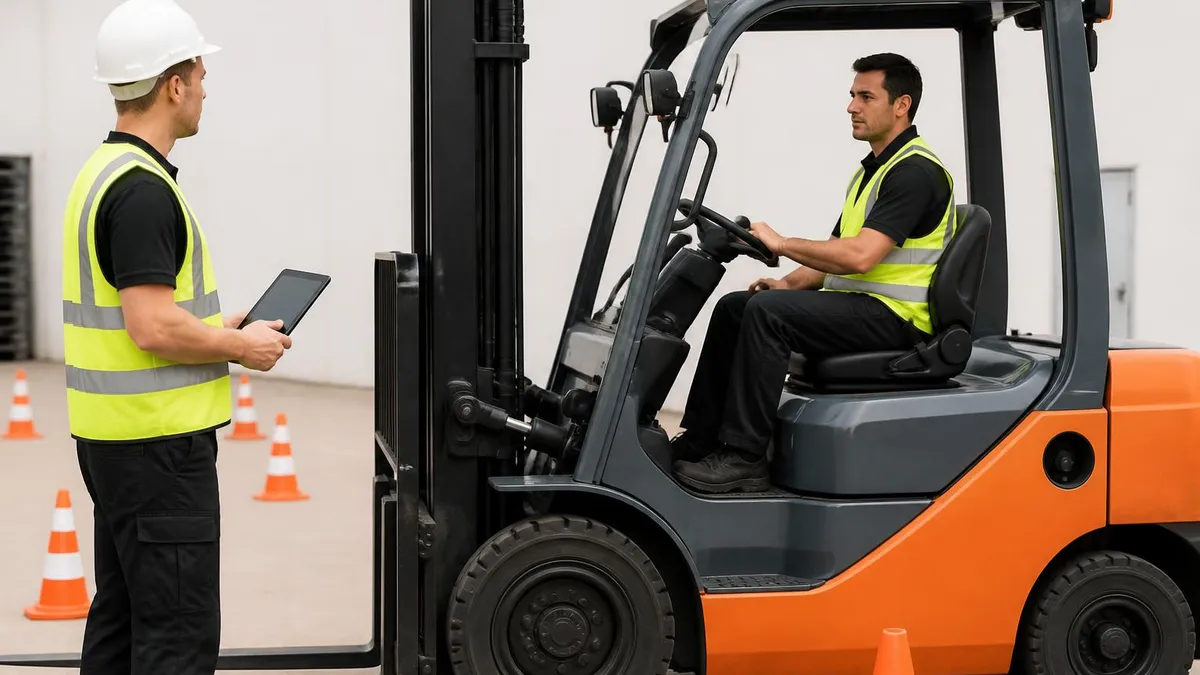
Forklift Safety Training: Complete OSHA Compliance Guide for Operators and Employers
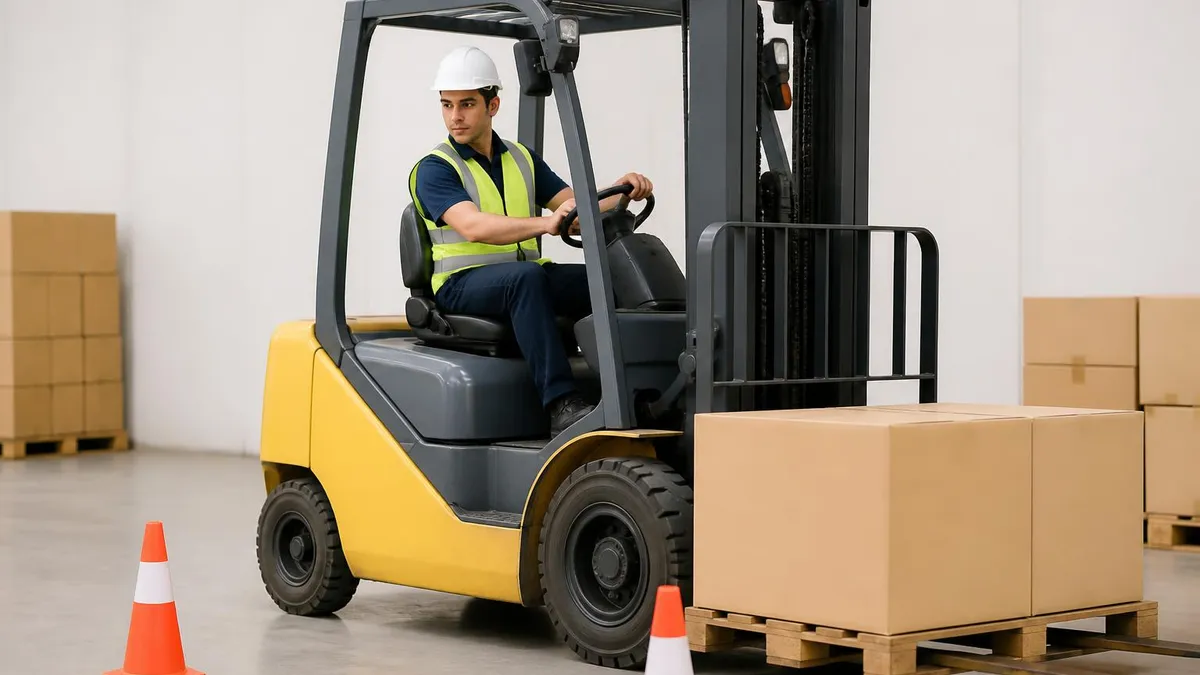
Forklift Repair Service: Complete Guide to Costs, Common Repairs, and Choosing the Right Technician
About the Author

Certified Crane Operator & Skilled Trades Exam Specialist
Ferris State UniversityRobert Martinez is a Journeyman Ironworker, NCCCO-certified crane operator, and forklift trainer with a Bachelor of Science in Construction Technology from Ferris State University. He has 21 years of ironworking, rigging, and heavy equipment operation experience across high-rise and industrial construction sites. Robert prepares candidates for crane operator, rigger, forklift, and skilled trades certification examinations.