
FDNY Fire Stations: A Complete Guide to New York City's Firehouses
Explore FDNY fire stations across New York City — history, structure, borough coverage, and what happens inside every firehouse. 📝

The network of FDNY fire stations spread across New York City's five boroughs represents one of the most sophisticated municipal fire suppression systems in the world. With more than 250 firehouses housing engine companies, ladder companies, rescue units, and specialized squads, the Fire Department of New York maintains a round-the-clock presence in virtually every neighborhood from the Rockaways to the Bronx. Understanding how these stations are organized, staffed, and deployed gives aspiring firefighters and curious New Yorkers alike a deeper appreciation for the immense logistical undertaking that keeps the city safe every day.
Each FDNY firehouse is far more than a garage where trucks are parked. These buildings serve as the operational home base for firefighters who eat, sleep, train, and respond to emergencies during shifts that can last 24 hours at a stretch.
The physical layout of each station is designed for rapid mobilization — apparatus floors allow engines and ladder trucks to roll out within 60 seconds of an alarm, while watch desks monitor incoming calls and radio traffic around the clock. Learning about how a firehouse functions is essential preparation for anyone studying for the FDNY exam, since questions about operations and station protocols appear frequently.
New York City's firehouses are distributed according to population density, geographic risk factors, and travel time benchmarks set by the department. In Manhattan, stations may be spaced only a few blocks apart in high-rise districts, while outer borough stations may cover broader geographic footprints. The goal in every case is to achieve response times that give firefighters the best chance of preventing a fire from growing beyond its initial stage — a concept known as the "critical first minutes" doctrine that has shaped FDNY deployment strategy for more than a century.
The history of FDNY fire stations dates back to the earliest days of organized firefighting in New York, when volunteer companies occupied modest engine houses in lower Manhattan. As the city grew and professional firefighting replaced volunteer service after the Civil War, the department began constructing purpose-built firehouses that reflected both functional necessity and civic pride. Many of the ornate Victorian-era firehouses still in use today are recognized landmarks, their arched apparatus bays and decorative brickwork standing as a testament to an era when municipal buildings were built to impress as well as to serve.
For candidates preparing for the firefighter exam, understanding the geographic and organizational structure of fdny fire stations provides valuable context for questions about deployment, resource allocation, and intercompany coordination. The exam tests not only physical fitness and cognitive ability but also a candidate's grasp of how the department actually operates on a day-to-day basis. Knowing the difference between an engine company and a ladder company, understanding what a rescue company does, and recognizing how battalions group individual firehouses into manageable command units are all topics that appear throughout the written examination.
Beyond the exam context, FDNY fire stations play a central role in community life across New York City. Firefighters stationed in a particular neighborhood often become familiar faces at local schools, block associations, and community events. The department's fire prevention and public education efforts are largely coordinated through individual firehouses, with companies conducting building inspections, hosting open houses, and visiting schools to teach fire safety. This community engagement dimension of firehouse life reflects the FDNY's broader mission, which extends well beyond emergency response to encompass prevention, education, and public trust.
This guide walks through everything you need to know about FDNY fire stations — from their physical structure and daily operations to their history, borough distribution, and the specialized units that occupy them. Whether you are a firefighter candidate brushing up on departmental knowledge, a history enthusiast curious about New York's built environment, or simply someone who wants to understand what goes on behind those iconic red apparatus bay doors, you will find detailed, accurate information in the sections that follow.
FDNY Fire Stations by the Numbers

Inside a Firehouse: Key Functional Areas
The ground-level bay where engines, ladder trucks, and rescue units are positioned for immediate deployment. Firefighters maintain all equipment here, conducting daily checks of hoses, tools, SCBA units, and hydraulic systems to ensure everything is mission-ready at a moment's notice.
A staffed monitoring station near the apparatus floor where a firefighter on house watch duty tracks incoming alarms, maintains the company journal, and communicates with Brooklyn Dispatch and field units. The watch desk is the firehouse's information nerve center.
Upper-floor sleeping and living quarters where off-watch firefighters rest during 24-hour tours. Bunk rooms are equipped for rapid wakeup, with lockers positioned so gear can be donned within seconds of an alarm sounding over the house PA system.
A shared cooking and dining space central to firehouse culture. Companies cook and eat together, reinforcing the team cohesion that is critical during emergency operations. The kitchen is also where informal knowledge transfer happens between senior and junior firefighters.
A dedicated space for company drills, EMS recertification, building construction review, and tactical briefings. Regular in-house training ensures that all members maintain proficiency in evolving techniques and department procedures between formal academy sessions.
The geographic distribution of FDNY fire stations across New York City's five boroughs reflects decades of careful analysis of fire risk, population density, building stock age, and emergency call volume. Manhattan, with its extraordinary concentration of high-rise buildings and dense street grid, is served by the highest density of firehouses relative to land area of any borough.
The island is divided into multiple battalions, each commanded by a battalion chief who oversees several individual companies and coordinates multi-unit responses to larger incidents. In midtown and lower Manhattan, the spacing between firehouses can be as tight as four or five city blocks.
Brooklyn, the most populous borough, requires a correspondingly robust network of fire stations stretched across neighborhoods that range from dense row-house districts in Bushwick and Bed-Stuy to sprawling residential areas in Canarsie and Marine Park. The borough contains dozens of engine and ladder companies organized into multiple divisions and battalions. Brooklyn's older building stock — much of it wood-frame construction from the late 19th and early 20th centuries — presents particular fire-spread challenges, and the density of stations in those neighborhoods reflects the heightened risk that aging construction poses during a working fire.
Queens is the largest borough by land area, and its firehouses must cover a vast and varied geographic footprint that includes dense apartment corridors near Jamaica and Flushing as well as low-density residential neighborhoods further east. The FDNY has historically maintained robust coverage in areas like Howard Beach and the Rockaways, where geographic isolation — caused by waterways, highways, and limited bridge access — can extend response times and complicate multi-company coordination. Stations in these areas are positioned and staffed with an awareness of the unique challenges their geography imposes.
The Bronx presents a mixture of high-density apartment buildings in the southern and central portions of the borough and lower-density residential areas further north. The South Bronx in particular has historically been one of the busiest fire districts in the United States, with some companies there responding to thousands of calls per year.
The firehouses serving this area are among the most active in the entire department, and the firefighters assigned to them accumulate operational experience at a rate that would be unusual even by FDNY standards. For exam candidates, understanding why certain companies have high call volumes connects directly to questions about resource deployment and company assignment.
Staten Island, the most suburban of the five boroughs, presents its own logistical challenges due to its hilly terrain, limited bridge connections to the rest of the city, and a significant proportion of wood-frame single-family homes that can generate fast-spreading fires. The borough's firehouses are distributed to minimize response times across a topography that does not lend itself to the kind of grid-based deployment possible in flatter boroughs. Staten Island also benefits from coordination with New Jersey departments along the western shore, where mutual aid agreements supplement FDNY resources in specific geographic areas.
Departmental planning for station coverage uses a combination of historical call data, building inventory analysis, and projected population growth to determine where new companies are needed and where existing resources can be consolidated without compromising response time standards. The FDNY's Office of Management Analysis and Planning continuously evaluates deployment data, and changes in station assignments or unit relocations are made based on this ongoing analytical work. For firefighters studying the department's structure, understanding this planning framework provides important context for why the network of fire stations looks the way it does today.
Response time benchmarks are central to how the FDNY evaluates the adequacy of its station network. The department aims to have a first-due engine company arrive on scene within four to five minutes of an alarm in most parts of the city, though densely built areas with heavy traffic can complicate this goal.
When response time data shows that certain neighborhoods are consistently receiving slower service, it often triggers a review of station placement and unit assignment in that area. This feedback loop between operational data and station planning is a key feature of how the FDNY manages its enormous and complex infrastructure across the city's 302 square miles.
FDNY Company Types: Engines, Ladders, and Specialized Units
Engine companies are the primary water-delivery units within any FDNY fire station. Each engine is staffed by a lieutenant and typically four firefighters, and carries hundreds of feet of hose, a pump capable of moving over 1,000 gallons per minute, and a water tank for initial attack before a hydrant connection is established. The engine's first priority on arrival at a structural fire is to advance a hoseline between the fire and any occupants who need to escape.
Engine companies are numbered sequentially across the department, with numbers that often have deep historical roots in their neighborhoods. The first-due engine is responsible for making the initial attack and calling for additional resources if the fire exceeds what a single company can handle. In busy Manhattan and Bronx districts, engine companies may respond to more than 3,000 calls per year, making them among the most operationally active units in any fire department in the United States.

Living and Working in an FDNY Firehouse: Benefits and Challenges
- +Strong team cohesion built through shared meals, training, and emergency operations over long 24-hour tours
- +Extensive hands-on training opportunities within the firehouse, from company drills to peer mentorship by senior firefighters
- +High job satisfaction derived from direct, tangible impact on community safety and emergency outcomes
- +Stable scheduling with predictable tour rotations allowing for significant off-duty time between shifts
- +Access to department resources including specialized equipment, fitness facilities, and continuing education programs
- +Pride of assignment in historic firehouses that are recognized landmarks and community institutions
- −Physical and psychological demands of 24-hour shifts can be taxing, particularly during periods of high call volume
- −Exposure to traumatic incidents including serious injuries, fatalities, and large-scale disasters takes a toll over a career
- −Mandatory overtime during citywide emergencies or staffing shortages can extend tours beyond their scheduled length
- −Hierarchical firehouse culture requires new probationary firefighters to earn trust gradually over months of service
- −Older firehouse buildings sometimes lack modern amenities, with some facilities requiring significant infrastructure upgrades
- −Geographic assignment is determined by department needs rather than personal preference, and reassignments can disrupt established routines
Pros and Cons at a Glance
| Pros | Cons |
|---|---|
| Extensive hands-on training opportunities within the firehouse, from company drills to peer mentorship by senior firefighters | Exposure to traumatic incidents including serious injuries, fatalities, and large-scale disasters takes a toll over a career |
| High job satisfaction derived from direct, tangible impact on community safety and emergency outcomes | Mandatory overtime during citywide emergencies or staffing shortages can extend tours beyond their scheduled length |
| Stable scheduling with predictable tour rotations allowing for significant off-duty time between shifts | Hierarchical firehouse culture requires new probationary firefighters to earn trust gradually over months of service |
| Access to department resources including specialized equipment, fitness facilities, and continuing education programs | Older firehouse buildings sometimes lack modern amenities, with some facilities requiring significant infrastructure upgrades |
| Pride of assignment in historic firehouses that are recognized landmarks and community institutions | Geographic assignment is determined by department needs rather than personal preference, and reassignments can disrupt established routines |
FDNY Firehouse Operations: Essential Knowledge Checklist
- ✓Know the difference between first-due, second-due, and mutual-aid company responses at a multi-alarm fire
- ✓Understand how house watch duties rotate among firefighters throughout a 24-hour tour
- ✓Learn the standard morning apparatus check sequence used by engine and ladder companies each shift
- ✓Recognize how battalions group individual companies under a single chief officer for command purposes
- ✓Study the role of the Officer of the Day (OD) and how they interact with companies under their command
- ✓Familiarize yourself with the FDNY's geographic divisions and the division chiefs who oversee them
- ✓Understand how spare apparatus and chauffeur assignments work when primary vehicles are out of service
- ✓Know the difference between in-quarters training drills and formal multi-company training exercises
- ✓Learn how companies log runs in the company journal and why accurate recordkeeping is a departmental requirement
- ✓Understand the fire prevention inspection responsibilities that engine and ladder companies carry out in their response areas
Engine vs. Ladder: Know the Distinction Cold
On the FDNY written exam, questions about company functions are among the most commonly tested topics. Engine companies deliver water and attack the fire; ladder companies perform search, rescue, ventilation, and forcible entry. A candidate who can explain what each company type does — and why both must arrive promptly at a structural fire — will be well-equipped to answer any operationally framed question the exam presents.
The history of FDNY fire stations stretches back more than 150 years, to the years immediately following the creation of a paid, professional fire department in New York City in 1865. Before that date, the city was protected by volunteer fire companies that operated out of simple engine houses, some of which were little more than wooden sheds housing hand-drawn pumping apparatus. The transition to a paid department brought with it a wave of new construction as the city built purpose-designed firehouses across Manhattan and Brooklyn, which were then separate municipalities with their own fire departments.
The architectural language of the Victorian-era firehouse became one of the most distinctive features of the New York streetscape. Architects employed by the city's fire commissioners designed buildings in Italianate, Romanesque Revival, and later Beaux-Arts styles, using ornamental brickwork, decorative ironwork, and arched apparatus bays that announced the firehouse's civic importance. Many of these 19th-century buildings survive to this day, their facades protected by landmark designation even as their interiors have been extensively modernized to accommodate contemporary apparatus and equipment.
The consolidation of New York City's five boroughs in 1898 brought the fire departments of Manhattan, Brooklyn, Queens, the Bronx, and Staten Island under a single unified command for the first time, creating the modern FDNY. This merger required the standardization of procedures, equipment, and firehouse operations across a newly expanded department that was suddenly one of the largest in the world. The decades that followed saw a gradual process of harmonization as the department developed uniform protocols and began replacing the most outdated firehouse facilities with modern, purpose-built structures.
The mid-20th century brought a wave of modernization as the department updated both its apparatus fleet and its physical plant. Diesel-powered fire trucks replaced earlier gasoline and steam-powered apparatus, requiring modifications to apparatus floors and ventilation systems throughout the firehouse network. New construction during this period often favored functional efficiency over the architectural ornamentation of the Victorian era, producing plainer but more operationally effective buildings designed around the specific needs of modern fire suppression equipment.
The fiscal crisis of the 1970s left a deep scar on the FDNY's firehouse network. Severe budget cuts forced the closure of dozens of companies across the city, with disproportionate impacts on high-poverty neighborhoods in the South Bronx, Harlem, and central Brooklyn that were simultaneously experiencing epidemic levels of arson and abandoned-building fires. The closure of companies in these neighborhoods remains a painful chapter in the department's history, and the subsequent effort to rebuild capacity in underserved areas has shaped how department leadership thinks about station placement and resource equity to this day.
The September 11, 2001 terrorist attacks represent the most devastating single event in FDNY history, with 343 firefighters lost at the World Trade Center — a loss so staggering it affected nearly every firehouse in the city. The response to that catastrophe demonstrated both the heroism of individual companies and the profound systemic consequences of losing so many experienced firefighters simultaneously. In the years since, the department has invested heavily in command-and-control systems, incident management training, and interagency coordination, much of which is coordinated through and practiced within individual firehouses across the city.
Today, FDNY firehouses continue to evolve as the department adapts to new challenges including high-rise construction techniques, lithium-ion battery fires from electric vehicles and e-bikes, and the expanding scope of emergency medical services. The physical plants of older firehouses are being systematically updated to accommodate new equipment and improved crew facilities, while new construction follows contemporary design standards that emphasize operational efficiency, environmental sustainability, and the health and wellness of the firefighters who will spend a substantial portion of their careers within those walls.

It is a common misconception that a firehouse number and a company number always match. In fact, many firehouses house multiple companies — for example, an engine and a ladder may share the same building, each with its own distinct number. Some busy firehouses in Manhattan and Brooklyn house three or more separate companies. When studying FDNY structure, always note that company identity and physical location are separate concepts.
Preparing for the FDNY firefighter exam requires a solid understanding of how fire stations are organized, staffed, and deployed — and that knowledge extends well beyond simply memorizing the number of firehouses in each borough.
The written exam tests candidates on their ability to apply operational principles to realistic scenarios, which means you need to understand the logic behind how the department allocates resources, how companies are dispatched, and what happens when a first-due company arrives at a working fire. Superficial familiarity with firehouse trivia is not sufficient; examiners want to see that candidates grasp how the pieces of the department fit together operationally.
One of the most important conceptual frameworks for exam preparation is the command structure that links individual companies to larger organizational units. Each company is part of a battalion, each battalion is part of a division, and each division reports to a borough command. Understanding this hierarchy helps candidates answer questions about who has authority at a multi-company incident, how additional alarms are requested, and what role battalion and division chiefs play in managing large-scale emergencies. The exam frequently tests this chain of command in the context of realistic fire scenarios.
Candidates should also invest time in understanding the dispatch system that connects individual fire stations to the citywide alarm network. When a 911 call reports a structural fire, the information is routed to the FDNY's central dispatch center in Brooklyn, where computer-aided dispatch systems automatically identify the appropriate first-due companies based on the address, the type of building, and the current availability of nearby units. Understanding how this dispatch process works — and how companies are pulled from their quarters to respond — provides important context for questions about response time, resource allocation, and mutual aid.
The physical characteristics of the building in which a fire station is housed also have direct relevance to exam topics around building construction and fire behavior. Many FDNY firehouses are themselves housed in older masonry structures with features like heavy timber floors, unreinforced brick facades, and slate or clay tile roofs. Firefighters assigned to these buildings develop an intuitive understanding of older construction types simply by living and working in them, and this firsthand knowledge translates directly into better performance on building construction exam questions.
Study materials for the FDNY exam should include not only official department publications and procedure manuals but also the operational knowledge embedded in departmental training films, incident after-action reports, and the writings of experienced officers. The department publishes After Action Reports for significant incidents, and these documents provide detailed accounts of how companies were deployed, what tactical decisions were made, and what lessons were drawn from both successful operations and incidents where outcomes were less positive. Reading these reports is one of the most effective ways to develop the operational judgment that the exam is designed to test.
Practical knowledge of fdny fire stations and their daily routines also helps candidates perform better on the physical component of the firefighter selection process. Candidates who understand what a day-in-the-life of a probationary firefighter looks like — the physical demands of the job, the pace of operations in a busy house, the discipline required to function effectively as part of a close-knit crew — are better able to calibrate their preparation and set realistic expectations for what the job will demand of them.
The knowledge gained by researching firehouse operations is not merely academic; it is directly applicable to every phase of the selection and hiring process.
Beyond exam strategy, developing genuine knowledge of FDNY fire stations and the communities they serve reflects the kind of motivation and commitment that makes candidates stand out in oral interviews and character assessments.
Interviewers look for candidates who are drawn to the work of firefighting because they understand and respect what it entails — not just the dramatic moments of rescue and suppression but the unglamorous day-to-day work of maintenance, training, prevention, and community engagement that makes those dramatic moments possible. A candidate who can speak knowledgeably about how firehouses operate and why they are structured the way they are sends a clear signal that their interest in the department is serious and well-grounded.
For anyone looking to deepen their knowledge of FDNY fire stations beyond the exam context, the city offers a remarkable array of opportunities to engage with this history and infrastructure directly. The FDNY Fire Museum in SoHo houses an extensive collection of historical apparatus, equipment, and archival photographs that trace the department's evolution from volunteer horse-drawn pumpers to modern aerial ladder trucks. The museum also maintains records and memorial exhibits related to firefighters who gave their lives in the line of duty, providing a moving and substantive account of the human cost of firefighting across New York City's history.
Firehouse open houses, typically held during Fire Prevention Week each October, give the public a chance to step inside active stations, speak with firefighters, and see the apparatus and equipment up close. These events are enormously popular in neighborhoods across all five boroughs, and they serve an important public education function by connecting community members with the firefighters who protect their streets.
For exam candidates, attending a firehouse open house is also a valuable informal educational experience — the chance to see a real apparatus floor, watch a hose load, and ask working firefighters questions about their jobs is something no textbook can fully replicate.
The physical architecture of FDNY firehouses is a subject of genuine interest to urban historians, architects, and preservationists. Several organizations in New York City have worked to document and protect the most historically significant firehouse buildings, many of which date to the late 19th century and represent outstanding examples of civic architecture from that era. The New York City Landmarks Preservation Commission has designated a number of firehouses as individual landmarks, protecting their exteriors from alteration and ensuring that future generations can appreciate their architectural character even as the buildings continue to serve their original operational purpose.
Social media and digital archives have made it possible for firefighting enthusiasts and history buffs to follow the operations of specific FDNY companies in near-real time. Various websites and apps aggregate scanner audio, incident reports, and apparatus movement data, allowing followers to track responses by their favorite companies and develop a detailed picture of how busy individual stations are and what types of incidents they handle most frequently.
While this information should not be used in any way that could compromise operational security, it provides an accessible window into the daily rhythms of firehouse life for people who are curious about how the department operates.
The culture of individual FDNY fire stations is one of the most distinctive features of the department and one that is difficult to convey in purely factual terms. Each house develops its own traditions, personalities, and informal customs over decades of collective experience.
The dynamic between a company officer and their crew, the rituals around cooking and eating together, the informal hierarchy of seniority and respect — these elements of firehouse culture are not written down in any procedure manual but are transmitted through lived experience and storytelling. They are a vital part of what makes the FDNY more than just a municipal service organization and something closer to a family with deep roots in every neighborhood it serves.
Understanding firehouse culture also means grappling with the ways the FDNY has changed — and continues to change — in terms of its membership. The department has made significant efforts in recent decades to recruit women, people of color, and candidates from backgrounds that have historically been underrepresented in its ranks.
These efforts reflect both a commitment to equal opportunity and a recognition that a department that reflects the diversity of the city it serves is likely to be a more effective and trusted institution over the long term. Firehouses across the city are becoming more diverse, and the culture of those houses is evolving in response.
Ultimately, FDNY fire stations are not just operational infrastructure — they are community institutions that anchor neighborhoods, preserve history, and embody a distinctive form of public service. Whether you approach them as an exam candidate, a history enthusiast, a new resident of New York City, or someone who simply finds the work of firefighting compelling, there is more to learn about these buildings and the people who work in them than any single article can capture.
The resources available through the FDNY itself, through New York City's cultural institutions, and through the practical test preparation tools available at PracticeTestGeeks make it possible to pursue that learning at whatever depth and pace suits your goals.
FDNY Questions and Answers
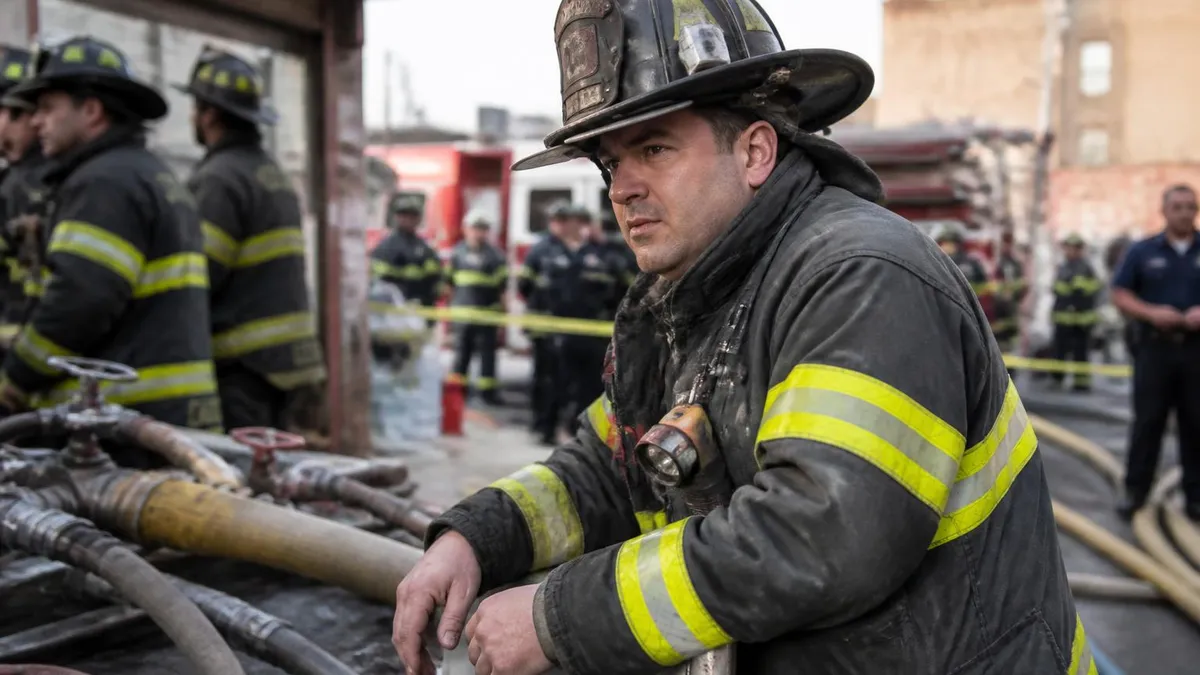
FDNY 10 Codes: Complete Guide to Fire Department Radio Communication
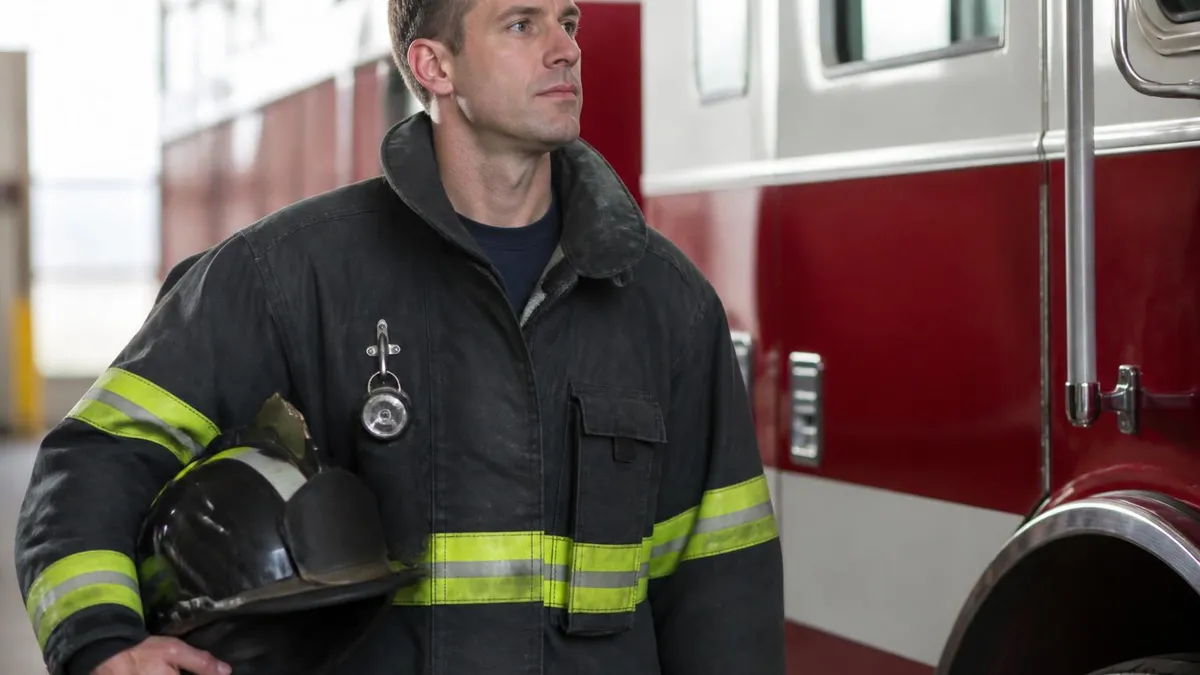
FDNY Stations, Engine & Ladder Companies
FDNY Logo: History, Meaning, and Symbolism of the Fire Department of New York Emblem
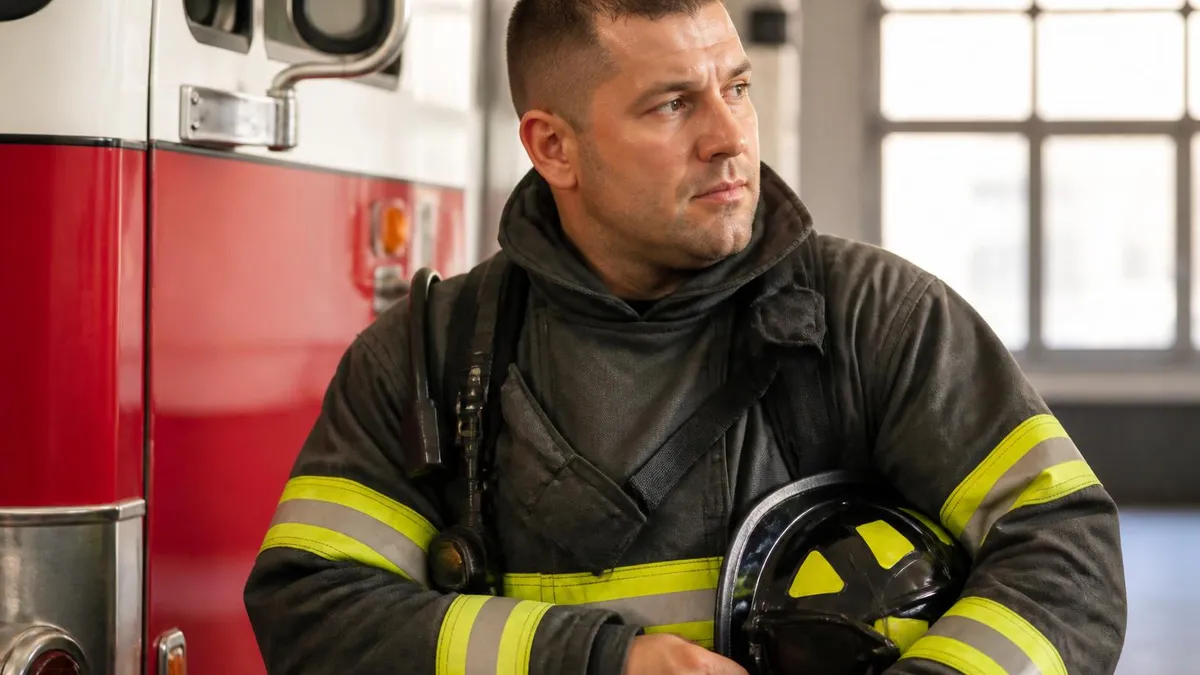
FDNY vs NYPD Hockey Game: Inside New York's Bravest vs Finest Heroes on Ice Rivalry
FDNY Marine Units: Inside the Fire Department of New York's Fireboat Fleet and Marine 6
About the Author

Law Enforcement Trainer & Civil Service Exam Specialist
John Jay College of Criminal JusticeMarcus B. Thompson earned his Master of Arts in Criminal Justice from John Jay College of Criminal Justice and served 12 years as a law enforcement officer before transitioning to full-time academy instruction. He is a POST-certified instructor who has prepared candidates for police entrance exams, firefighter assessments, and civil service examinations across dozens of agencies.
Join the Discussion
Connect with other students preparing for this exam. Share tips, ask questions, and get advice from people who have been there.
View discussion (9 replies)