
FDNY Logo: History, Meaning, and Symbolism of the Fire Department of New York Emblem
💡 Explore the FDNY logo's history, meaning, and design — from the Maltese cross to the modern emblem worn by New York's Bravest today.

The FDNY logo is one of the most recognized emblems in American public service, instantly identifying the Fire Department of New York wherever it appears. Whether stitched on a turnout coat, painted on the side of an apparatus, or stamped on a department challenge coin, the FDNY logo carries more than 150 years of tradition, loss, courage, and civic pride. For New Yorkers and firefighters worldwide, the badge represents not just an agency but a brotherhood that has stood between the city and disaster since 1865.
At its core, the FDNY logo blends two enduring traditions: the Maltese cross, a symbol borrowed from medieval fire-brigade history, and the seal of the City of New York. Together they tell a story about who the department serves, what it protects, and the code its members live by. The cross signals protection, sacrifice, and faith; the city seal anchors the department to the streets, harbors, and neighborhoods of the five boroughs.
Although many people use the words badge, patch, shield, and logo interchangeably, each item has its own design rules and use cases inside the department. The official emblem appears on uniforms, vehicles, official letterhead, the FDNY Foundation logo, and licensed merchandise. Variants exist for the EMS bureau, the Fire Marshal's office, and individual companies, but every version traces back to the same family of symbols rooted in the department's founding charter.
The story of the logo also intersects with how the public sees the FDNY. Every red apparatus that rolls out of a firehouse carries the emblem on its doors, broadcasting the department's identity at every alarm. The logo on a member's coat tells civilians who to trust during the worst moment of their day, and the same emblem now appears on hats, mugs, and memorial plaques sold to fund family-support programs after line-of-duty deaths.
Understanding the FDNY logo means understanding the department itself: how it was built, who it serves, and the values it asks of every probie who graduates from the academy on Randall's Island. The Maltese cross is not decoration — it is a continuous link to firefighters who served before, including the 343 members lost on September 11, 2001, whose memory is woven into every modern version of the seal.
This guide breaks down the logo's history, the meaning of each element, the official color palette, how it differs from related insignia like the FDNY EMS patch and the Fire Marshal star, and the rules around using the emblem on apparel, memorials, or fan merchandise. Whether you are a candidate studying for the entrance exam, a designer working on a tribute project, or a New Yorker who simply wants to understand the symbol on the side of every red rig, the next sections cover everything in plain language.
By the end you will know why the cross has eight points, what the Latin motto means, why the seal includes a sailor and a Native American, and how the department's branding has quietly evolved while keeping its soul intact. The FDNY logo is more than a graphic — it is a 24,000-member promise stamped in red, gold, and navy that the city is never alone when the bells go off.
FDNY Logo by the Numbers
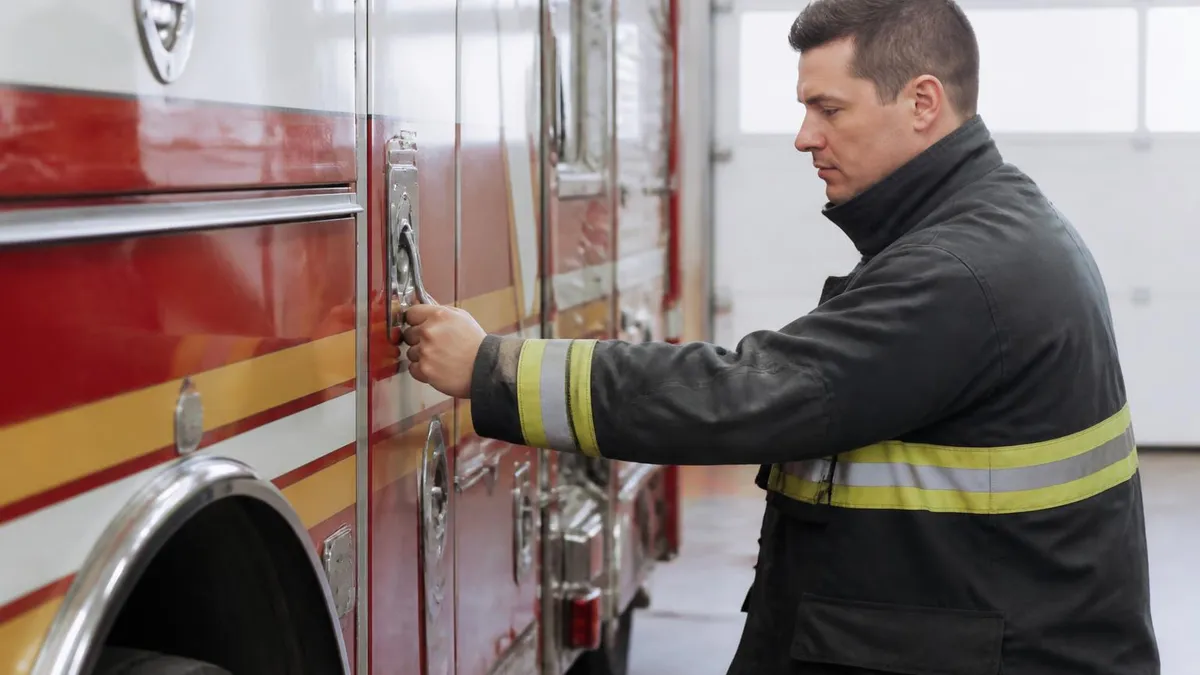
Evolution of the FDNY Logo
1865 — Department Founded
1898 — Five Boroughs Consolidated
1996 — EMS Joins FDNY
2001 — Post-9/11 Memorial Era
Modern Era — Digital Standardization
The Maltese cross at the center of the FDNY logo is the single most important symbol in the firefighting world, and its meaning predates the department by more than 800 years. The cross originated with the Knights Hospitaller, a 12th-century order that defended pilgrims and tended the wounded during the Crusades. When the Saracens used naphtha-soaked fire as a weapon, the knights rushed in to rescue the burning — a sacrifice that turned their emblem into the universal mark of those who run toward fire.
Each of the cross's eight points traditionally represents a knightly virtue: loyalty, piety, generosity, bravery, glory, contempt of death, helpfulness toward the poor and sick, and respect for the church. American fire departments adopted these virtues as their own code of conduct in the 19th century, and FDNY firefighters are still taught the meaning of the eight points during academy training. The cross is not just decorative geometry — it is a moral contract.
Inside the cross on the FDNY logo sits the Seal of the City of New York, which features a sailor, a Native American figure, a bald eagle perched on a hemisphere, and a windmill with beavers and flour barrels referencing the city's Dutch trading origins. The seal grounds the firefighter in the specific city they serve, reminding members that their oath is to New York, its harbor, and its history, not just to the abstract idea of public safety.
Surrounding the seal in many official versions is a banner reading "Fire Department City of New York," sometimes abbreviated F.D.N.Y. on smaller insignia. On gold dress badges the words appear in raised lettering, while embroidered patches stitch them in red against a navy field. The exact arrangement varies by application, but the cross, the seal, and the lettering form an inseparable trio in every official rendition.
The colors carry meaning too. Red represents the fire itself and the blood of those who served; navy blue ties the department to its civil-service heritage and the City of New York; gold honors the honor and valor demanded of every member; and white symbolizes the purity of the mission. Together they produce the unmistakable palette that lets a New Yorker spot an FDNY vehicle three blocks away in any weather, day or night.
It is worth noting that the FDNY's Maltese cross differs slightly from the eight-point "Florian cross" used by many other departments. The FDNY version is squared and bold, designed to read clearly from a distance on an apparatus door, while the Florian variant has more rounded outer edges. This small distinction matters to collectors, historians, and members who want to make sure a memorial tattoo, patch, or plaque accurately reflects the New York lineage.
Finally, the cross also serves as a visual link to firefighters around the world. Departments in Boston, Chicago, Los Angeles, London, and Tokyo all use variations of the same Maltese form. When an FDNY member travels and meets a foreign firefighter wearing a similar cross, the symbol does the introduction. It is the universal handshake of the fire service, and the FDNY wears it with as much pride as any department on earth.
FDNY Practice Test Questions
Prepare for the FDNY - Fire Department New York exam with our free practice test modules. Each quiz covers key topics to help you pass on your first try.
FDNY Building Construction
FDNY Exam Questions covering Building Construction. Master FDNY Test concepts for certification prep.
FDNY Community Engagement and Public Educa...
Free FDNY Practice Test featuring Community Engagement and Public Education. Improve your FDNY Exam score with mock test prep.
FDNY Emergency Medical Response
FDNY Mock Exam on Emergency Medical Response. FDNY Study Guide questions to pass on your first try.
FDNY Emergency Medical Services
FDNY Test Prep for Emergency Medical Services. Practice FDNY Quiz questions and boost your score.
FDNY Hazardous Materials Response
FDNY Questions and Answers on FDNY Hazardous Materials Response. Free FDNY practice for exam readiness.
FDNY Technical Rescue Operations
FDNY Mock Test covering FDNY Technical Rescue Operations. Online FDNY Test practice with instant feedback.
FDNY Fire Behavior
Free FDNY Quiz on Fire Behavior. FDNY Exam prep questions with detailed explanations.
FDNY Firefighting Operations and Equipment
FDNY Practice Questions for Firefighting Operations and Equipment. Build confidence for your FDNY certification exam.
FDNY Logo Colors, Typography, and Variants
The FDNY's primary palette uses fire-engine red (close to Pantone 186 C), navy blue (Pantone 282 C), gold or metallic yellow (Pantone 124 C), and high-contrast white. Red dominates on apparatus and patches, while navy and gold lead on dress badges and formal documents. These four colors are protected as part of the department's visual identity and licensed-merchandise standards.
Reproduction rules limit how the colors can be combined. Red text on navy is reserved for patches; gold-on-navy is the dress-uniform standard. The seal must always appear in full color on official documents — black-and-white versions are only permitted on legal forms, internal memos, or memorial print where color reproduction is not possible without losing legibility.
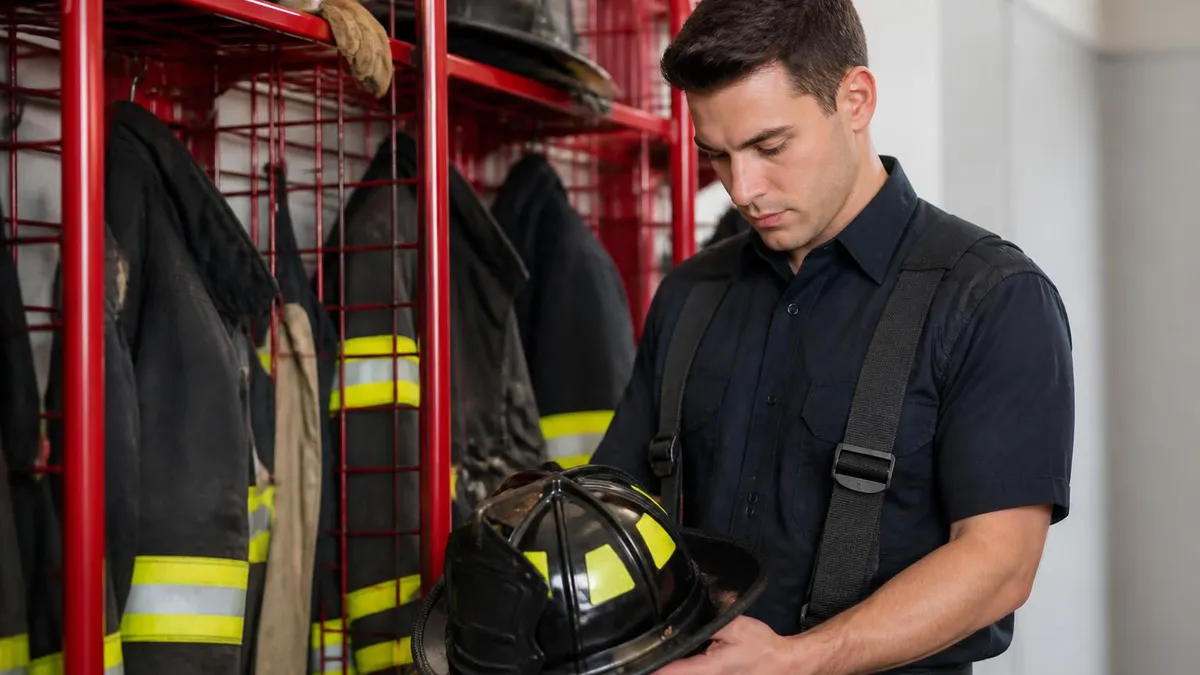
Why the Maltese Cross Endures as a Fire Service Symbol
- +Instantly recognizable worldwide as the universal mark of firefighters
- +Eight points encode a clear code of virtues every member can recite
- +Links modern firefighters to 800 years of rescue tradition
- +Reads cleanly from a distance on apparatus, patches, and helmets
- +Carries deep emotional meaning after 9/11 and other line-of-duty losses
- +Adapts well to memorial tattoos, plaques, and family tributes
- +Visually distinct from police, EMS, and military insignia
- −Often confused with the similar but different Florian cross
- −Religious origin can feel disconnected from modern secular service
- −Bold geometry limits creative redesign without breaking tradition
- −Many fan and bootleg versions distort the official proportions
- −Hard to render at very small sizes on lapel pins and challenge coins
- −Color rules restrict casual use on social media graphics
FDNY Logo Usage Rules and Trademark Checklist
- ✓Never alter the proportions of the Maltese cross or seal in any reproduction
- ✓Use full color whenever possible — grayscale is for legal documents only
- ✓Keep clear space equal to one cross-point on every side of the emblem
- ✓Do not place the logo over busy photographs that reduce legibility
- ✓Request written permission before using the logo on commercial merchandise
- ✓Avoid pairing the seal with political slogans, brands, or endorsements
- ✓Do not recolor the cross — red, navy, gold, and white only
- ✓Memorial uses generally permitted for family and line-of-duty tributes
- ✓Bootleg merchandise with the seal is subject to trademark takedowns
- ✓Direct licensing inquiries to the FDNY Foundation, not 311 or local houses
Every Element on the Logo Was Chosen on Purpose
Nothing on the FDNY logo is decorative. The eight-point cross encodes a code of virtues; the New York City seal anchors the department to the harbor that built the city; the red and gold honor sacrifice and valor. When you look at the emblem, you are reading a 160-year-old contract between firefighters and the city they serve — every line tells you what to expect when the bells go off.
The FDNY logo lives in three primary places: on apparatus, on uniforms, and on official documents. Each application has its own rules, dimensions, and history. Walk past any firehouse in Manhattan, Brooklyn, Queens, the Bronx, or Staten Island and you will see the logo on the bay doors, the apparatus, the bulletin board, the helmet shields, and the dress coats hanging inside the watch desk window. Few city agencies maintain such consistent visual identity across so many surfaces.
On apparatus, the seal sits prominently on both cab doors. The cross-and-seal combination is usually paired with the company number — Engine 54, Ladder 4, Rescue 1 — painted directly below or beside it in matching gold. Tiller trucks, tower ladders, hazmat units, and rescue rigs all carry the emblem in a standardized position, though some specialty units like Marine Company 1 add their own subtle motifs without displacing the official seal.
Uniforms layer the logo across multiple garments. Probationary firefighters receive their first official patches on graduation day, and from that point forward every dress shirt, turnout coat, and Class-A jacket carries the seal on the left sleeve. The right sleeve typically displays a unit, specialty, or memorial patch. Helmet front-pieces add another layer of identification, often combining the cross with the company number in colors that mark rank: black for firefighters, red for officers, white for chiefs.
The badge — the metal shield worn over the heart on dress uniforms — is a closely related but distinct artifact. Each badge carries an individual number tied to a specific member, and many of those numbers are inherited from retired or fallen relatives. When a probie picks up the badge of a parent or grandparent who served, the emblem becomes a literal family heirloom, not just a piece of city property. Few professions blend lineage and logo so tightly.
On documents the logo appears at the top of every department order, training bulletin, and official memo. Orders signed by the Commissioner or Chief of Department carry the full color seal, while routine memos sometimes use a simplified black-and-white version to save print costs. The presence of the seal signals authority — a memo without the official emblem is not enforceable inside the department, no matter who signed it. To dig deeper, see FDNY department orders and how each one is authorized.
Memorials are perhaps the most emotionally significant use of the logo. Engraved into granite at firehouse plaques, embroidered on funeral bunting, etched onto challenge coins given to widows and families, the emblem becomes the last visible link between a fallen member and the department they served. The 9/11 Memorial Wall at FDNY Headquarters in Brooklyn integrates the seal into a continuous bronze frieze listing the 343 names lost on that day.
Finally, the logo appears in licensed merchandise sold through the FDNY Foundation and approved retailers. T-shirts, hats, coffee mugs, plush dalmatians, and collectible model trucks all carry official seals under tight licensing agreements. Proceeds support widows, orphans, and ongoing training. The same emblem that identifies a rescue truck at 3 a.m. on a winter night funds the family-support programs that keep the department whole long after the alarms stop.
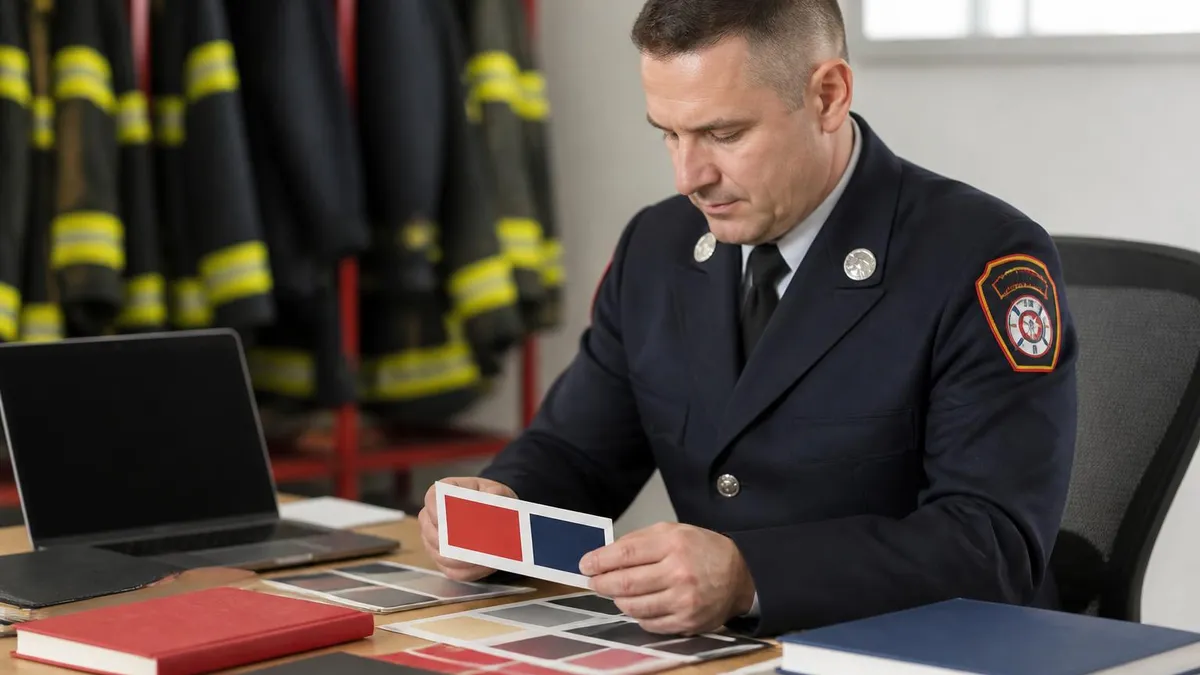
The FDNY emblem is a registered mark, and unauthorized merchandise — especially items sold near major tourist sites — often violates department trademarks. Buying from unlicensed sources also means none of your money supports widows, orphans, or training programs. Always look for the FDNY Foundation logo, an official licensee tag, or a department-affiliated retailer before purchasing.
Designers, historians, and fans regularly ask the same set of questions about the FDNY logo. What does each part mean? Why is the cross squared at the edges? Why are there two figures on the seal? Why hasn't the design changed in over a century? The short answer is that the department treats the emblem as a piece of living history — refining it for new applications without modernizing away the core symbols that define it.
The cross is squared because it traces directly to the Maltese cross used by 12th-century knights, not to the rounded Florian variant adopted by many European departments. New York's choice in 1865 was deliberate: the bold, blocky shape reads well at distance, holds up under abuse, and connects American firefighters to a clear historic lineage rather than a stylized adaptation. The decision has held up for over 160 years, surviving every visual-identity fashion trend.
The two figures on the New York City seal — a Native American Algonquian figure and a Dutch sailor — represent the city's original inhabitants and early European settlers. Critics over the years have debated whether the imagery is appropriate today, but it remains the official seal of the city, and therefore part of the FDNY's logo. The department has not altered the seal independently; any change would require coordinated action with City Hall.
People often ask whether the FDNY logo can be tattooed. The short answer is yes, and many active and retired members do exactly that. Tattoos with the seal, the cross, or the company number are an old tradition in the fire service, particularly memorial tattoos honoring 9/11 or other line-of-duty deaths. Civilians generally avoid the official seal out of respect, though Maltese-cross tattoos in solidarity are common and welcomed by most members. Learn more about the people who wear it in FDNY jobs.
Another common question is whether the EMS patch counts as part of the FDNY logo. Technically the EMS star-of-life is a separate emblem worn alongside the department seal, but in everyday use the two are inseparable. EMTs and paramedics wear both, and the bureau identifies itself through the combination. The same applies to Fire Marshals, who layer a gold star over the standard seal to indicate their peace-officer authority during arson investigations.
The logo also adapts to ceremonial and athletic uses. The FDNY hockey team, FDNY rugby team, FDNY pipes-and-drums band, and FDNY softball league all use authorized derivatives that combine the seal with their own motifs. These variants are strictly internal — they cannot be sold commercially without licensing — but they show how flexible the core emblem remains across a department of 24,000 members with diverse roles and traditions.
Finally, many fans ask why the FDNY hasn't "modernized" the logo with flat icons, sans-serif type, or minimalist design. The answer is cultural: a fire department is built on tradition, lineage, and continuity. Changing the emblem would sever a visual chain that runs from the volunteer companies of the 1860s through 9/11 to every probie graduating today. The current logo is not outdated — it is the deliberate, irreplaceable face of an institution that values memory as much as it values speed.
If you want to use or appreciate the FDNY logo correctly — whether as a candidate, a fan, a designer, or a family member of a member — there are practical habits worth following. Start by sourcing imagery from official channels. The FDNY Foundation publishes high-resolution vector versions of the seal for approved partners, and licensed merchandise carries clearly visible authenticity markings. Avoid pulling images off random search results, which are often distorted bootlegs.
Designers working on tribute graphics should respect the proportions and colors. The cross-to-seal ratio is fixed, the navy and red must be specific Pantone matches, and the lettering on the banner must read "Fire Department City of New York" in full when space allows. Compressing the wordmark or trying to mimic the slab-serif type with a different font almost always produces something that looks subtly wrong to anyone who has worked around the department.
Candidates studying for the FDNY exam should know the basics of department history, including the year of founding, the meaning of the Maltese cross, the role of the seal, and the structure of the modern logo family across bureaus. These topics rarely appear directly on the written exam, but they come up regularly in oral interviews, academy classes, and informal house conversations once you arrive at your first assignment. Familiarity signals respect for the traditions you are about to join.
Tourists and fans who want to support the department should buy from the FDNY Foundation store, the official Bravest Apparel program, or approved partner retailers. Each purchase channels proceeds into widows-and-orphans funds, the FDNY Family Assistance program, and ongoing training. Buying counterfeit gear on a street corner may save a few dollars, but the only beneficiaries are the bootleggers — none of whom run into burning buildings.
For tattoos or personal art using the cross, you do not need permission, but you should think carefully about the message. A simple Maltese cross is a universal sign of solidarity with the fire service, while a full FDNY seal with badge numbers, company names, or memorial dates carries deeper meaning typically reserved for members and their families. Many shops near major firehouses understand these conventions and will steer customers accordingly.
For memorial purposes — plaques, engraved bricks, anniversary graphics — accuracy and tone matter more than visual polish. Get the date right, the company designation right, and the spelling of the member's name absolutely correct. The FDNY family will notice, and a respectful tribute with simple type and the official seal will always outperform a slick design that gets the details wrong. Quiet accuracy is the highest compliment.
Finally, treat the logo the way the members treat each other: with respect for what it represents. The cross has covered firefighters at General Slocum, at the Triangle Shirtwaist Factory, at the World Trade Center, and at thousands of smaller tragedies the public has long forgotten. Every time the emblem appears on a screen or a sleeve or a wall, it carries those memories forward. Understanding the symbol is a small but meaningful way of standing with the people who wear it.
FDNY Questions and Answers
FDNY Foundation: How the Official Nonprofit Supports New York's Bravest
FDNY Stations, Engine & Ladder Companies

FDNY Jobs: Careers, Salaries, and How to Get Hired by the Fire Department of New York
FDNY Department Orders: How Daily Directives Run the Fire Department of New York
FDNY Runs and Workers: What the Numbers Really Mean
About the Author

Law Enforcement Trainer & Civil Service Exam Specialist
John Jay College of Criminal JusticeMarcus B. Thompson earned his Master of Arts in Criminal Justice from John Jay College of Criminal Justice and served 12 years as a law enforcement officer before transitioning to full-time academy instruction. He is a POST-certified instructor who has prepared candidates for police entrance exams, firefighter assessments, and civil service examinations across dozens of agencies.
Join the Discussion
Connect with other students preparing for this exam. Share tips, ask questions, and get advice from people who have been there.
View discussion (9 replies)