
FDNY Stations, Engine & Ladder Companies 2026 October
FDNY firehouses, Engine and Ladder companies, Squad 18, Rescue 3, and EMS Station 45 explained. 🎯 Plus exam prep tips for candidates.
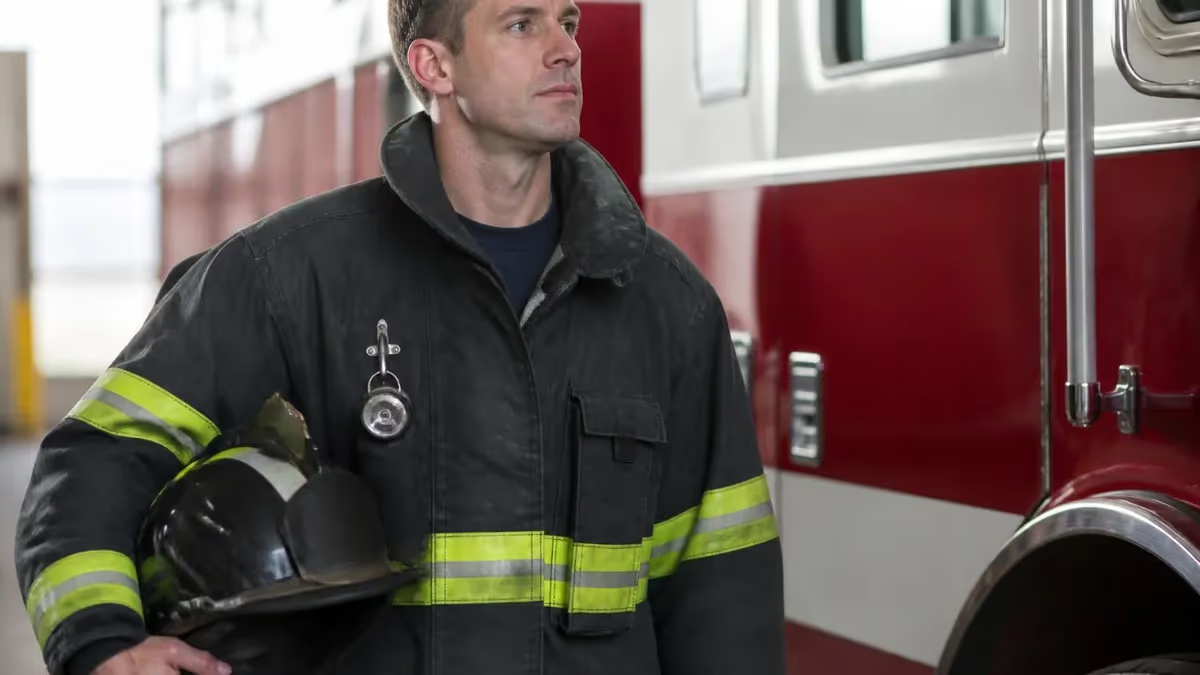
The Fire Department of New York operates one of the largest and most studied fire service organizations on the planet. Spread across the five boroughs, the FDNY fields 218 firehouses, hundreds of fire and EMS companies, and a special operations command that can put a rescue team on almost any kind of incident within minutes.
For candidates studying for the FDNY exam, for tourists who walk past a quarters and wonder what those numbers on the door actually mean, and for anyone who wants to understand how New York City puts out fires and reaches the trapped, the structure is worth learning.
That structure is built around company types. The Engine company brings water. The Ladder (or Truck) company brings rescue and ventilation tools. The Squad blends fire suppression with technical rescue. The Rescue handles the calls no one else is equipped for. EMS stations cover medical emergencies independently of the fire side. Around the city you will hear names like FDNY Squad 18, FDNY Engine 1 Ladder 24, FDNY Engine 7 Ladder 1, and FDNY Rescue 3.
Each one belongs to a slot in the same organizational chart, and once you understand the chart, the city makes more sense.
This guide breaks down how FDNY firehouses are organized, what each company type does, how the boroughs distribute their resources, and how to research any specific company you come across. It is built for candidates preparing for the entrance exam and for readers who just want a clear picture of how the department works on a day-to-day basis. No legends, no inflation — just the facts as they sit in the dispatch system.
FDNY By the Numbers
The numbers above describe a working fleet, not a museum exhibit. Every Engine and Ladder company on that list runs calls every day, often dozens of times per shift in busier neighborhoods. The 218 firehouses are sometimes single-company quarters — one Engine or one Ladder alone — but most house a pair, and many house a Battalion Chief, an EMS unit, or a special operations company alongside the line companies.
A single building can hold five distinct operational units, each with their own staffing, apparatus, and roster. The staffing math adds up quickly when you account for three platoons working on rotation, with each platoon broken into day-tour and night-tour groups. A medium-sized firehouse may have more than 80 members assigned across all the units that live under its roof, even though only a fraction of those members are present at any single moment.
Within the chart, special operations sits at the top of the technical pyramid. The Squad companies and Rescue companies report up through Special Operations Command (SOC), along with the Hazmat Battalion, the Marine Division, and the SOC Support Ladder. The Squads — including FDNY Squad 18 in the West Village — are hybrid units that fight fire like an Engine and perform rescue work like a Rescue, giving incident commanders a flexible second-due option on heavy jobs.
The Rescues are the most specialized, with five companies covering the city and members who train constantly on rope, collapse, machinery, hazmat, and water disciplines. Studying for the FDNY firefighter exam includes a baseline familiarity with how this structure works, because mechanical reasoning and judgment questions often draw on real fireground decisions. Candidates who arrive at the academy already understanding the difference between an Engine and a Ladder, between a Squad and a Rescue, between a Battalion and a Division, save themselves weeks of confusion during probationary training.
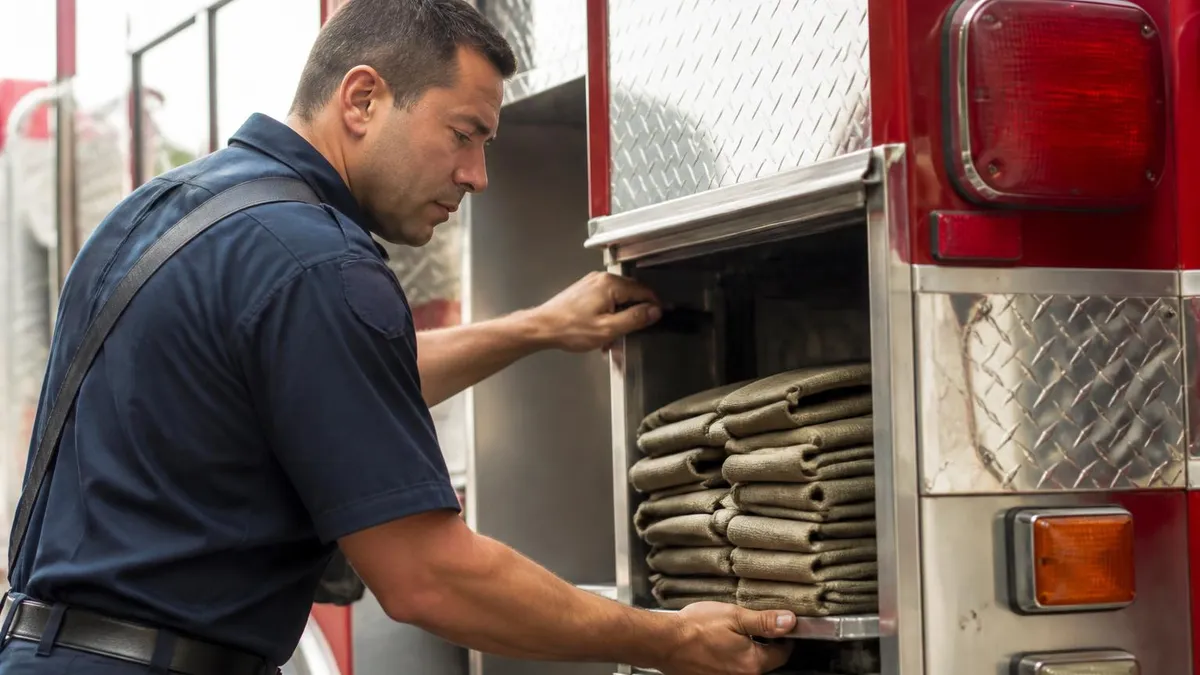
FDNY companies are numbered sequentially regardless of borough. Engine 1 sits in Midtown Manhattan. Engine 23 covers the Hell's Kitchen area. Engine 65 is in Midtown East. Numbers do not restart per borough, so Engine 200 in Brooklyn shares the same numbering pool as Engine 1 in Manhattan. Ladder companies use their own sequence, which is why you can have an Engine 24 and a Ladder 24 in different quarters. When two companies share a firehouse, they often share the radio call sign and apparatus floor — for example, Engine 1 Ladder 24 on West 31st Street.
The numbering system goes back more than a century. As neighborhoods grew, the department added companies and assigned the next available number. That history is why you can find clusters of low numbers near older population centers like lower Manhattan and adjacent areas, while higher numbers cluster in newer outer-borough neighborhoods.
Some companies that were disbanded over the years have had their numbers reused later for new units, and other numbers have been permanently retired in memorial. The result is a numbering scheme that looks chaotic at first glance but tells a precise story to anyone who has worked dispatch or studied response patterns.
Inside each firehouse, the housewatch desk near the front door tracks every member on duty, every apparatus assignment, and every call going out. The kitchen is the social center, and the bunkroom holds racks for the night tour members. Apparatus floors range from one to four bays, depending on how many units the building hosts.
FDNY Engine 8 Ladder 2 Battalion 8 on East 51st Street, for example, houses three units in a single quarters, including the Battalion Chief who supervises the surrounding companies. Larger combined quarters like that are part of why FDNY can put a heavy initial response on the ground so quickly — on a working fire, the chief and multiple companies may all leave the same building together.
FDNY Company Types Explained
The water suppliers. Engine companies operate pumpers that draft from hydrants and deliver hose streams to extinguish fires. Crews stretch lines, force entry, search alongside the Truck, and overhaul once the fire is knocked down. FDNY fields 198 Engine companies citywide.
Also called Truck companies. They handle forcible entry, search and rescue, ventilation, and aerial operations. Ladder crews open up the building so the Engine can attack the fire and rescue trapped occupants. Apparatus carry aerial ladders or tower ladders along with extensive tool inventories. FDNY runs 143 Ladders.
Hybrid SOC units that fight fire like an Engine and run heavy rescue like a Rescue. Squads carry hazmat decon equipment and serve as a second-due technical option on serious jobs. There are seven Squads citywide, including FDNY Squad 18 in lower Manhattan.
Five highly specialized units — one per borough — trained in rope, collapse, machinery, confined space, hazmat, and water rescue. Rescues respond to the calls that exceed standard company capability. FDNY Rescue 3 covers the Bronx with mutual response across Manhattan and Queens.
Beyond the line companies, EMS stations cover the medical side of the response system. FDNY EMS operates dozens of stations across the city, each housing a number of ambulances staffed with EMTs or paramedics. FDNY EMS Station 45 in the Bronx is one example among many, sitting on a residential street and dispatching units to medical calls, motor vehicle accidents, and emergency transports throughout its catchment area.
EMS stations are typically smaller than fire firehouses because the apparatus — ambulances rather than fire trucks — takes less space, but they run at a high call volume. Some EMS units are stationed inside fire firehouses to share quarters and shorten dispatch times, while others operate from standalone EMS buildings. Either way, the call volume runs in the hundreds of thousands of medical responses per year citywide, which is far higher than the fire-side call total.
Battalions sit one level above company quarters. A Battalion Chief supervises a cluster of nearby Engine, Ladder, and EMS units, riding to working fires and significant incidents as the initial incident commander. Battalions are numbered too — the chief at Engine 3 Tower Ladder 12 Battalion 7 on West 19th Street, for instance, oversees a chunk of west-side Manhattan that includes Chelsea and parts of the Flatiron district.
Above the Battalions are the Divisions, which cover broader geographic areas and respond to second-alarm and greater incidents. Above the Divisions sit the Borough Commands and the citywide tour commanders, who roll on the largest incidents and coordinate resources across the department when a single fire or rescue exceeds what a Division can handle alone.
FDNY Companies by Borough
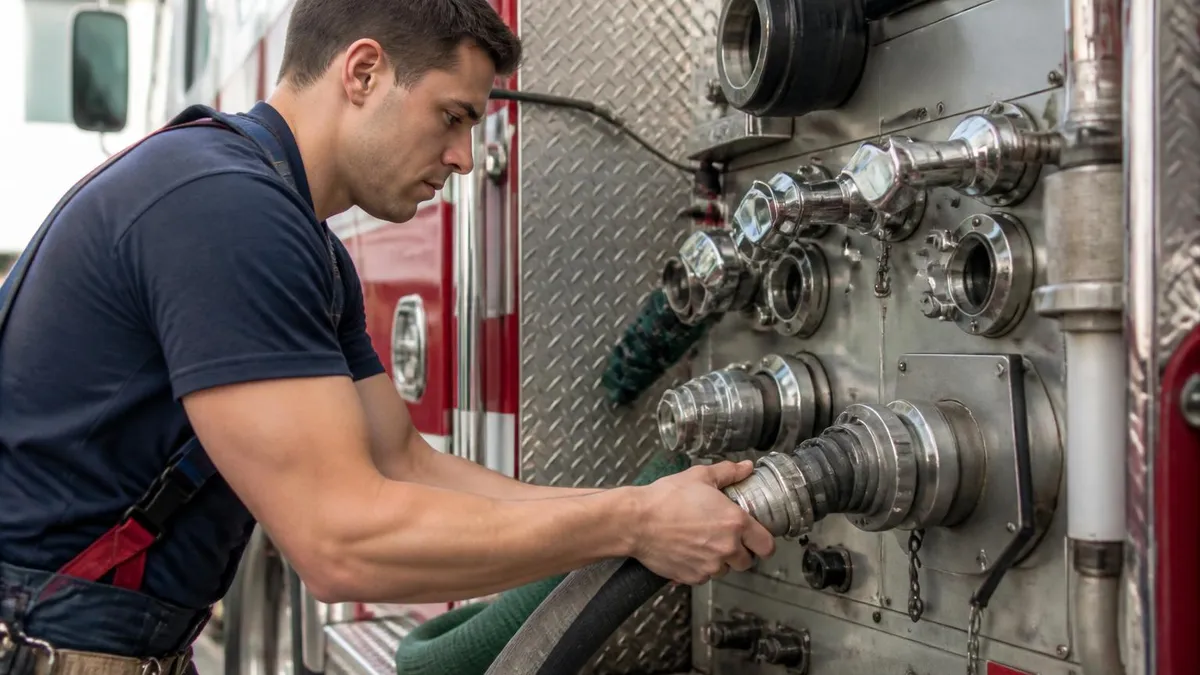
Manhattan packs the highest density of FDNY companies into the smallest land area. Engine 1 Ladder 24 sits on West 31st Street near the Garment District. Engine 7 Ladder 1 covers the financial district from Duane Street. Engine 10 Ladder 10 is across from the World Trade Center site. Engine 16 Ladder 7 is in the Chelsea area. Engine 23 covers Hell's Kitchen. Engine 65 handles Midtown East. Engine 14 covers the East Village. Rescue 1 is in Midtown, and Squad 18 anchors the West Village response. The borough's company density reflects both its history and its 24-hour population of residents, commuters, and tourists.
Reading the company list this way makes the math clearer. Manhattan packs companies in tight because the call volume per square foot is enormous. The outer boroughs spread them out, but each company covers a larger first-due area as a result.
When a working fire breaks out in a borough with longer response distances, the initial assignment is the same — multiple Engines, multiple Ladders, a Battalion Chief, and an EMS unit — but the arrival times stagger differently than they would in Midtown. Studying response patterns is part of how senior chiefs build judgment, and it is part of why FDNY exam preparation covers map reading and spatial reasoning so heavily.
The company numbering also creates pairings that show up in dispatch radio traffic constantly. Engine 1 Ladder 24 covers the area around the Garment District together. Engine 7 Ladder 1 shares quarters near City Hall. Engine 10 Ladder 10 shares the famous house across from the World Trade Center site, a quarters that lost members on 9/11 and remains a symbolic anchor of the department.
Engine 16 Ladder 7 covers the area around Chelsea and the West 20s. Engine 3 Tower Ladder 12 at the corner of West 19th and Sixth Avenue shares its house with Battalion 7, and the apparatus floor often has the chief's SUV parked next to the pumper and the tower ladder. These pairings produce coordinated work because the crews train together, eat together, and run calls together for years on end.
The number on the firehouse door does not always mean the same as the company number. A quarters that houses Engine 8, Ladder 2, and Battalion 8 might be referred to by any of those identifiers depending on context. Tourists who visit a famous house should also remember that members are working — do not interrupt apparatus checks, drills, or rapid response. The companies run real calls, and a visitor blocking the apparatus bay during a turnout creates a real safety problem.
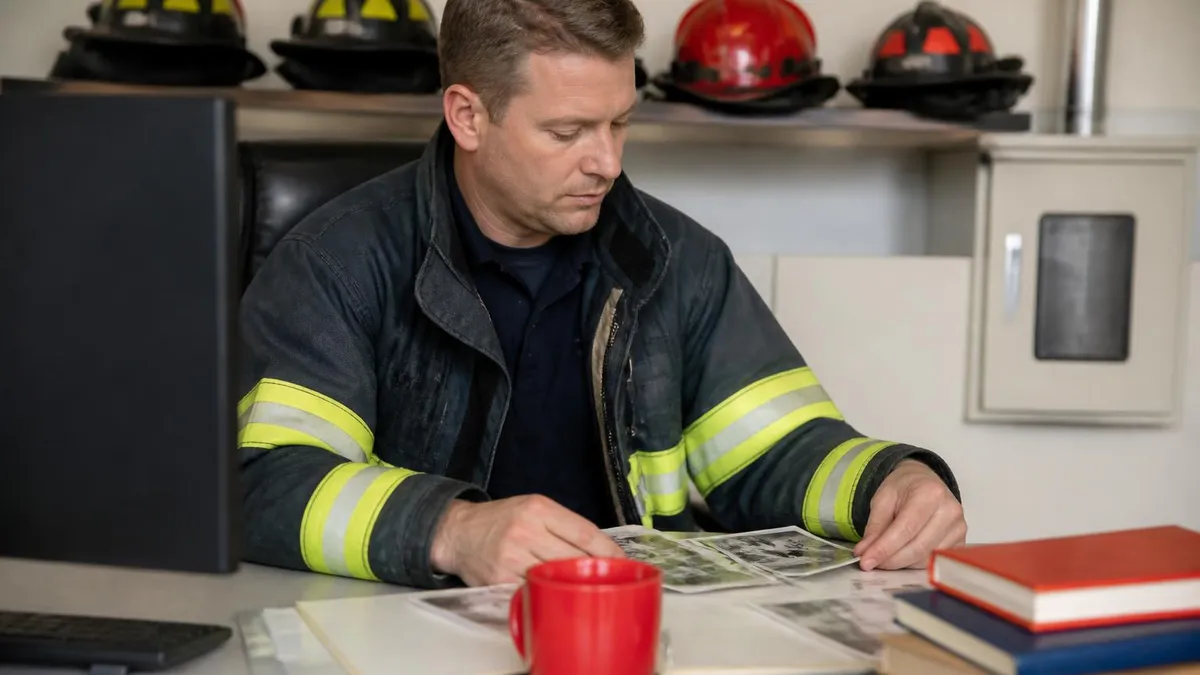
For candidates and researchers who want to learn about a specific company, the path is straightforward but requires a few sources. The FDNY website lists every active company and quarters. Open-source dispatch sites like FDNY Dispatch transcripts and community forums track call assignments in real time. Local press has reported on most notable companies over the years. And the unit's own history — preserved through plaques, dedication walls, and member oral history — tells stories that paper records cannot. Approaching the research methodically gives a clear picture of any company you want to understand.
The checklist below walks through how to research a specific FDNY company in a way that respects the department's working tempo while still surfacing the information you need. The same approach works for a candidate writing a personal statement, a journalist preparing a feature, or a member of the public who wants to better understand the unit that serves their block.
How to Research a Specific FDNY Company
- ✓Find the company's quarters address through the official FDNY firehouse directory
- ✓Identify which units share the quarters (Engine, Ladder, Battalion, EMS, special operations)
- ✓Check the borough and Battalion the company belongs to for response context
- ✓Read the dedication plaques and memorial walls at the firehouse during public hours
- ✓Search FDNY annual reports for company-specific run totals and notable incidents
- ✓Review local press coverage and member oral histories preserved by the FDNY Museum
- ✓Look up the apparatus type (engine, tower ladder, rear-mount aerial, rescue rig) and what equipment it carries
One of the most common questions from candidates and outside readers is whether a particular kind of work suits them better — the Engine side or the Ladder side. Both assignments are physically demanding, both run constant calls in busy houses, and both build careers that last decades. But the day-to-day rhythm differs, and the tools and tactics each crew brings to a fire scene reward different temperaments. The pros and cons list below summarizes the difference in a way that helps candidates form their own preference long before they ever get to make the choice.
Understanding the difference matters because new probies are assigned to either an Engine or a Ladder out of the academy, and most members spend at least the first few years of their career in that initial assignment. Members can transfer later, but the early years shape muscle memory and habits that stick. Knowing whether you naturally gravitate toward the hose stretch or the search-and-vent work helps you understand what you are signing up for, and it helps you make the most of whichever assignment you receive.
Engine vs Ladder Assignments
- +Engine work emphasizes hose handling, water supply, and direct fire attack — physical and rewarding
- +Engine crews build deep knowledge of hydraulics, friction loss, and pump operations
- +Engine assignments suit members who enjoy the team rhythm of stretching, charging, and moving the line
- +Ladder work is varied and tool-heavy — forcible entry, search, ventilation, overhaul, and aerial operations
- +Ladder crews develop carpentry, tool maintenance, and building construction expertise that lasts a career
- +Ladder assignments suit members drawn to problem-solving and rescue-oriented work
- −Engine work can be physically punishing on the back and shoulders after years of stretching heavy lines
- −Engine crews often work in the highest heat conditions, directly behind the nozzle
- −Engine tactics are sometimes seen as less varied than Ladder work, though the depth of skill is the same
- −Ladder work involves heavy tool carries up many flights of stairs and aggressive forcible entry
- −Ladder crews handle more search and rescue under low-visibility conditions, which is mentally taxing
- −Ladder apparatus is more complex to operate, with longer training timelines for chauffeur qualification
Whichever side a candidate ends up on, the broader lesson is that FDNY companies function as small, tight teams within a very large organization. The numbers on the door tell you which company, but the people inside define the culture, the standards, and the reputation of that quarters.
New members are evaluated quickly by senior firefighters and officers, and the way you carry yourself in the first few weeks shapes your career for years. Showing up early, knowing the apparatus, asking smart questions, and never complaining about minor inconveniences sets the tone. The job is hard. Members make it look easy because they have prepared relentlessly.
For specific high-profile quarters like Engine 10 Ladder 10 across from Ground Zero or Engine 8 Ladder 2 Battalion 8 in Midtown East, the public attention is constant. Tour buses stop. Families pose for pictures. Some members enjoy the attention. Others find it draining over years of repeated questions.
Either way, the work continues. The apparatus rolls when the bell hits. The members get up, suit up, and respond, regardless of who is watching from the sidewalk. That consistency is what makes the department respected worldwide, and it is what candidates are aiming to join when they take the entrance exam.
If you are studying for that exam, the company structure described above will appear in your prep materials in indirect ways. Map reading questions assume some familiarity with how response zones are organized. Mechanical reasoning questions sometimes draw on tool operations the Engine or Ladder might perform. Judgment questions place you in scenarios where understanding the company structure helps you pick the best answer.
None of the prep materials require you to memorize every company number, but a working sense of how the department is laid out will help you reason through unfamiliar questions on test day. Pair that knowledge with steady physical preparation for the CPAT, and your candidacy will rest on a much firmer foundation than the average applicant brings to the process.
Veteran members often point out that the company you start in shapes the way you see the entire department for the rest of your career. A new firefighter assigned to a busy Manhattan Ladder builds different reflexes than a new firefighter assigned to a quieter Staten Island Engine, even though both are competent professionals at the end of probation.
That is not a bad thing — it just means that the FDNY produces well-rounded members by giving them long careers in which to rotate through different assignments, tour groups, and special units. Companies like Engine 14 in the East Village or Engine 23 in Hell's Kitchen each have their own distinct identity, and the members carry the imprint of that identity for years.
Before the FAQ section, one more practical note. If you visit a New York firehouse and want to learn more, the right approach is simple: be respectful of the working tempo, look for public-facing displays like memorial plaques and dedication boards, and ask the housewatch member politely if the company is between runs.
Most members are happy to answer a quick question if the timing is right, and many companies have informal traditions of welcoming candidates who are studying for the exam. A two-minute conversation at the housewatch desk can give you more useful insight than an hour of online research, because real members will tell you what the job is actually like from the inside.
Below are the questions candidates and readers ask most often about FDNY firehouses and company structure. The answers come from official FDNY sources, public reporting, and the day-to-day operating practices that members and officers describe in published interviews. Use them as a starting point for your own deeper study, and remember that the department changes over time — new companies form, others restructure, and the apparatus and tools evolve. Always confirm the current setup of any specific company through FDNY's own channels before quoting numbers in a paper, an interview, or an application essay.
FDNY Questions and Answers
About the Author

Law Enforcement Trainer & Civil Service Exam Specialist
John Jay College of Criminal JusticeMarcus B. Thompson earned his Master of Arts in Criminal Justice from John Jay College of Criminal Justice and served 12 years as a law enforcement officer before transitioning to full-time academy instruction. He is a POST-certified instructor who has prepared candidates for police entrance exams, firefighter assessments, and civil service examinations across dozens of agencies.
Join the Discussion
Connect with other students preparing for this exam. Share tips, ask questions, and get advice from people who have been there.
View discussion (9 replies)