
FDNY Hiring 2026 October: Complete Guide to Becoming a New York City Firefighter
🎓 FDNY hiring guide covering eligibility, the written exam, CPAT, medical and psych screening, salary, academy training, and how to apply in 2026 October.
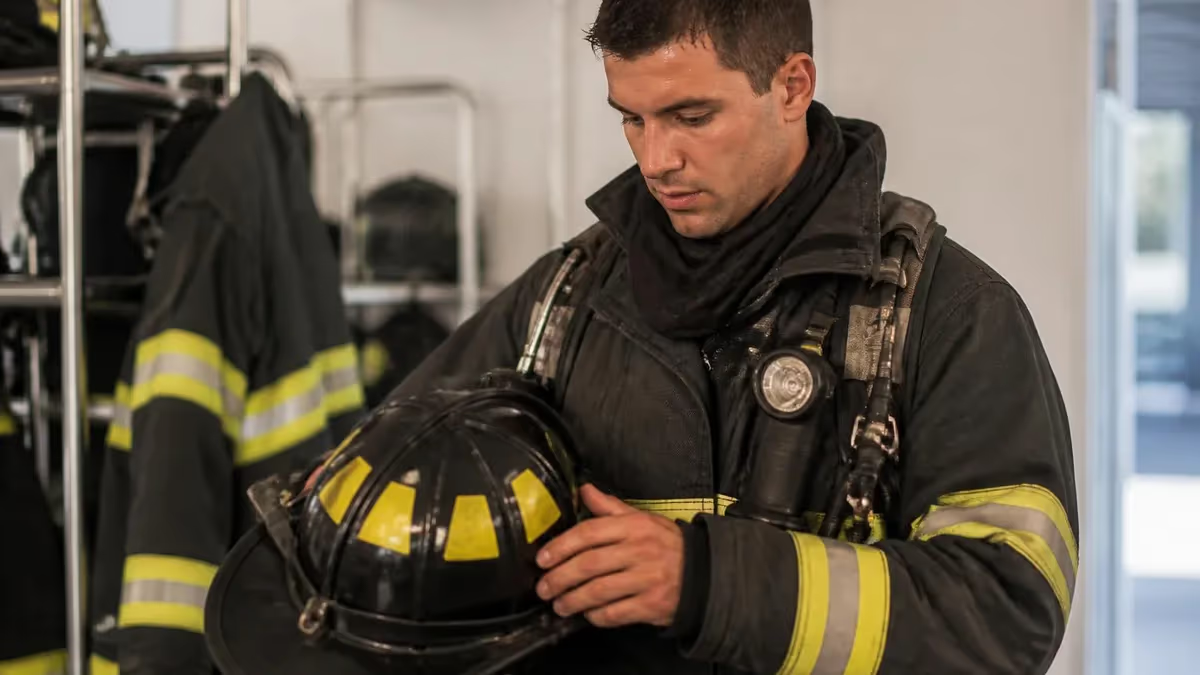
The FDNY hiring process is one of the most competitive and structured public safety pipelines in the United States, and understanding every checkpoint before you apply can mean the difference between a career-defining offer letter and a five-year wait for the next exam cycle.
The Fire Department of New York receives tens of thousands of applications each filing period, and the agency relies on a multi-stage selection process that screens for academic readiness, physical capability, medical fitness, psychological stability, and moral character. Candidates who treat the application as a single test rather than a long campaign are usually the first to wash out before they ever reach the academy.
This guide walks you through every phase of fdny hiring from the moment the open competitive notice posts on the Department of Citywide Administrative Services (DCAS) website to the day you raise your right hand at the Randall's Island academy. We will cover age limits, residency rules, education requirements, military preference points, the written exam content, the Candidate Physical Ability Test (CPAT), medical and psychological evaluations, the background investigation, and the eighteen weeks of Probationary Firefighter School. Each step has its own paperwork, deadlines, and disqualifiers.
The FDNY is the largest municipal fire department in the country, protecting roughly 8.3 million residents across 302 square miles, plus the tens of millions of commuters, tourists, and workers who pass through New York City every year. Becoming a member of the Bravest is a chance to join a 156-year-old tradition that includes elite rescue companies, marine units, hazmat technicians, and emergency medical responders. Before you can wear the bunker gear, however, you have to navigate a hiring list that can take three to five years from exam to academy.
Filing fees are modest, the salary is competitive, and the benefits package is among the strongest in American public safety. Starting pay in 2026 sits at approximately $54,000 with a five-year top-out near $110,000 before overtime, holiday pay, and night differentials. Pension vesting after five years and unlimited sick leave for line-of-duty injuries make the long-term math attractive. But the application window opens only every four years on average, so missing a deadline can cost you a half-decade of your career.
If you are reading this because you just heard the next exam is approaching, you are already ahead of most applicants. The candidates who score in the top 1,000 are almost always the ones who started preparing six to twelve months before the filing period. They study the FDNY FDNY codes and signals system, work out on a CPAT-specific program, and clean up their social media long before the background investigators arrive. This guide assumes you want that kind of head start.
We will also address the questions that the official notice does not always answer clearly: how list rank actually translates to a class date, what disqualifies you in the medical screening, how the psychological interview works, and what the academy actually demands physically and mentally. Every section is built around the current 2026 hiring standards and the most recent collective bargaining agreement with the Uniformed Firefighters Association. By the end, you will know exactly what to do this week, this month, and this year to become a New York City firefighter.
A final note before we dive in: the FDNY hiring process rewards patience, organization, and honesty. Lying on the application, exaggerating credentials, or hiding a driving record almost always surfaces during the background investigation and produces a permanent disqualification. Approach each stage as a separate test, document everything, keep copies of every form, and respond to every notice within the deadline. Do that, and the system works in your favor.
FDNY Hiring by the Numbers
The FDNY Hiring Timeline From Application to Academy
Filing Period Opens
Written Examination
List Established
Investigation & CPAT
Academy Class
Eligibility for fdny hiring starts with four non-negotiable thresholds: age, education, license, and residency. You must be at least 17.5 years old to file the application and under 29 on the date of filing, although veterans of the U.S. armed forces can deduct up to six years of active duty time from their actual age to meet that ceiling.
A high school diploma or GED is required, and at the time of appointment you must produce 15 college semester credits or an equivalent combination of 6 college credits plus six months of full-time work experience. These rules are statutory and almost never waived.
The driver's license requirement trips up more applicants than any other single rule. You must hold a valid driver's license from any U.S. state at the time of appointment to the academy, and you must be willing to obtain a New York State Class B Commercial Driver License with passenger and air-brake endorsements within your probationary year.
If your license has been suspended, revoked, or accumulated more than six points in the eighteen months before processing, the background unit will flag your file. Clear up any tickets, surcharges, or insurance lapses well before you apply, because the DMV abstract is pulled multiple times during the hiring cycle.
Residency rules are more flexible than many candidates assume. You do not have to live in the five boroughs to apply or to test, but you must reside in New York City or one of the surrounding counties (Westchester, Rockland, Nassau, Suffolk, Orange, or Putnam) at the time of appointment. New York City residents earn a five-point preference on the written exam, which can move you thousands of spots up the list in a competitive cycle. Many candidates relocate to one of the boroughs during the filing period specifically to capture those points.
The character and background requirements are where many otherwise qualified applicants stumble. Felony convictions, certain misdemeanor convictions involving violence or dishonesty, dishonorable military discharge, and a pattern of arrests without conviction can all trigger disqualification. The FDNY conducts a full background investigation that includes a polygraph in some cases, employer interviews, neighbor canvasses, social media review, and credit checks. Sealed and expunged records are sometimes still accessible to law enforcement, so disclose everything on the personal history questionnaire. Honesty almost always beats omission.
Citizenship is required by the time of appointment. You must be a United States citizen, although you can apply as a lawful permanent resident if you are actively pursuing naturalization. Vision standards require uncorrected vision of 20/40 or better in each eye, or corrected to 20/20 with glasses, contacts, or LASIK; PRK and LASIK candidates must be at least one year post-surgery with stable vision. Color vision must be normal, and hearing must meet federal NFPA 1582 standards in both ears across the speech frequency range.
Tattoos, beards, and physical appearance are governed by department grooming standards rather than hiring rules, but they matter at the academy. Visible tattoos that are offensive, gang-related, or extend onto the neck and face will require coverage or disqualification. Beards are prohibited for any member who wears a self-contained breathing apparatus, which is essentially every probationary firefighter, because facial hair breaks the seal on the SCBA mask. Plan to shave clean for the duration of the academy and most of your operational career.
Finally, you must be willing to work rotating tours, holidays, and overtime. The FDNY operates a 9-and-6 schedule of two day tours, two night tours, and three days off, but assignments to busy houses can mean dozens of runs per tour. Anyone uncomfortable with shift work, sleep disruption, or weekend duty should reconsider before filing. For a deeper look at compensation, schedule structure, and promotional opportunities, see our companion article on FDNY jobs, which breaks down every rank and salary step in detail.
FDNY Practice Test Questions
Prepare for the FDNY - Fire Department New York exam with our free practice test modules. Each quiz covers key topics to help you pass on your first try.
FDNY Building Construction
FDNY Exam Questions covering Building Construction. Master FDNY Test concepts for certification prep.
FDNY Community Engagement and Public Educa...
Free FDNY Practice Test featuring Community Engagement and Public Education. Improve your FDNY Exam score with mock test prep.
FDNY Emergency Medical Response
FDNY Mock Exam on Emergency Medical Response. FDNY Study Guide questions to pass on your first try.
FDNY Emergency Medical Services
FDNY Test Prep for Emergency Medical Services. Practice FDNY Quiz questions and boost your score.
FDNY Hazardous Materials Response
FDNY Questions and Answers on FDNY Hazardous Materials Response. Free FDNY practice for exam readiness.
FDNY Technical Rescue Operations
FDNY Mock Test covering FDNY Technical Rescue Operations. Online FDNY Test practice with instant feedback.
FDNY Fire Behavior
Free FDNY Quiz on Fire Behavior. FDNY Exam prep questions with detailed explanations.
FDNY Firefighting Operations and Equipment
FDNY Practice Questions for Firefighting Operations and Equipment. Build confidence for your FDNY certification exam.
FDNY Written Exam and CPAT Breakdown
The FDNY written exam is a computer-based multiple-choice test that runs approximately three and a half hours. It contains roughly 100 questions distributed across memory and observation, reading comprehension, spatial orientation, mechanical reasoning, and judgment. Memory items typically present a photograph or diagram for several minutes, then ask you to recall details after the image is removed. Reading passages are drawn from firefighter procedural manuals, so terminology is technical but readable.
Scoring is on a 100-point scale with a 70 minimum passing score. Most candidates who reach the academy score in the 95-100 range after veterans and residency points are added. The exam is offered roughly every four years, so investing in a structured study plan is worth it. Practice the memory and spatial sections in particular because they cannot be improved through last-minute cramming. Begin training your visual recall and rotational reasoning at least three months before the test date.
Should You Pursue an FDNY Career?
- +Starting salary above $54,000 with rapid step increases to $110,000+ in five years
- +Pension vesting after 5 years and full retirement after 22 years of service
- +Comprehensive medical, dental, and vision coverage for member and family
- +Strong union representation through the UFA with collective bargaining protections
- +Job security with civil service tenure and clear promotional ladder to officer ranks
- +Specialty assignments available in rescue, squad, marine, hazmat, and EMS divisions
- +Tuition reimbursement and access to John Jay degree programs for career advancement
- −Hiring cycle runs every 4 years, so missed deadlines cost half a decade
- −Physically demanding work with long-term injury and cardiac risks
- −Rotating shift schedule disrupts sleep, family time, and social commitments
- −Academy is unpaid for some candidates depending on the appointment class structure
- −Probationary year offers limited job protection if performance issues arise
- −Exposure to carcinogens, smoke, and traumatic incidents takes a cumulative toll
- −List numbers can take 2-5 years to be reached, creating long career uncertainty
FDNY Hiring Application Checklist
- ✓Confirm you meet the age, education, and citizenship requirements before filing
- ✓Obtain and maintain a valid U.S. driver's license with a clean abstract
- ✓Establish New York City residency at least 30 days before the filing deadline for preference points
- ✓Gather military DD-214 if claiming veterans preference points on the written exam
- ✓Resolve any outstanding warrants, fines, traffic surcharges, or unpaid tickets
- ✓Pull your own credit report and dispute or pay down any negative items
- ✓Clean up all social media accounts including old usernames and tagged photos
- ✓Begin a CPAT-specific training program at least six months before test day
- ✓Schedule a vision exam and update prescription or complete LASIK well in advance
- ✓Save 60-90 days of pay stubs, tax returns, and employment verification documents
- ✓Prepare a complete list of every address, employer, and reference for the past ten years
- ✓Review the official FDNY Notice of Examination line by line and mark every deadline
Your list number is not your destiny.
Even candidates ranked in the 5,000s can reach the academy if they remain reachable, keep documentation current, and respond promptly to every department notice. The FDNY drops candidates from the list every cycle for missed deadlines, expired forms, and bad contact information. Diligence beats raw score.
The medical evaluation is one of the most rigorous in American public safety, governed by NFPA 1582 and conducted by the FDNY Bureau of Health Services at a dedicated medical office in Brooklyn. You will be scheduled for a full day of testing that includes a comprehensive physical exam, electrocardiogram, stress test on a treadmill, pulmonary function test, audiometry, ophthalmology screening, blood and urine chemistry panels, urine drug screen, and chest X-ray. Bring photo identification, eyeglasses or contacts, your inhaler if you use one, and a complete list of every prescription medication.
Cardiovascular health receives heavy scrutiny because sudden cardiac death is the leading cause of on-duty firefighter fatality in the United States. The stress test follows a Bruce protocol or modified equivalent, and you must reach at least 12 metabolic equivalents (METs) without ischemic changes on the EKG. Resting blood pressure must be controlled, typically below 140/90, and any history of arrhythmia, prior cardiac event, or family history of early heart disease will trigger additional testing. Lower your sodium intake and avoid caffeine for 24 hours before the exam.
Pulmonary function is tested with spirometry, and any history of asthma must be documented carefully. Childhood asthma that has been symptom-free and medication-free for many years is generally acceptable, but recent exacerbations, hospitalizations, or daily inhaler use are disqualifying under the standard. The same applies to allergies severe enough to require an EpiPen, because firefighters routinely encounter bee stings, smoke irritants, and unknown chemical exposures where an anaphylactic reaction would be catastrophic.
The psychological screening is administered in two phases. The first is a written personality inventory, usually a combination of the MMPI-2-RF and a custom firefighter-focused questionnaire, totaling 400 to 600 questions. The second phase is a structured interview with a licensed psychologist that lasts 45 to 90 minutes. The psychologist reviews your written answers, your background file, your CPAT performance, and asks open-ended questions about your motivation, family, relationships, and prior stressors. Inconsistencies are the primary red flag.
The background investigation runs parallel to the medical and psych phases. A uniformed investigator from the Candidate Investigation Division is assigned to your file and will visit your current and former employers, knock on doors in your neighborhood, contact your references, and review your educational, financial, military, and criminal records. The Personal History Questionnaire you submitted at the beginning of processing is the spine of the investigation, and any discrepancies between your statements and the investigator's findings will require a written explanation.
Drug testing is conducted twice during the hiring process, once during medical processing and again on the first day of the academy. The panel screens for cannabis, cocaine, opioids, amphetamines, methamphetamine, PCP, and synthetic substances. Although recreational cannabis is legal in New York State, the FDNY follows federal hiring standards, which prohibit any positive screen. Stop all cannabis use, including CBD products that may contain trace THC, at least 90 days before any anticipated test date and ideally for the entire hiring cycle.
The polygraph examination is not used for every candidate, but it is reserved for cases where the background investigator identifies inconsistencies or omissions on the personal history questionnaire. The examiner will focus on drug use, theft from employers, undisclosed arrests, and falsification of application materials. Polygraph results alone do not disqualify a candidate, but they can be used to confront you with prior inconsistencies and to demand a more detailed written explanation. The cleanest defense is a complete and honest application from day one.
The FDNY firefighter exam opens for filing roughly once every four years. If you miss the 30 to 60 day window, you will wait until the next cycle, which may not occur until the following presidential term. Set calendar alerts the moment DCAS announces the filing period and submit your application within the first two weeks to avoid any technical issues.
Once you survive every screening phase, you receive an academy class date and report to the Fire Academy on Randall's Island, a 27-acre campus in the East River that has trained every FDNY firefighter since 1975. The academy runs 18 weeks of instruction divided into roughly equal blocks of firefighting fundamentals, building construction, hazardous materials, emergency medical services, and physical conditioning. You report at 0700 every weekday in uniform, complete inspection, and rotate between classroom, drill field, and live-fire training props.
The physical training in the academy is significantly more demanding than the CPAT. You wear full bunker gear plus SCBA totaling about 75 pounds for stair climbs, hose advancement drills, ventilation evolutions, and forcible entry exercises. Probationary firefighters who passed the CPAT but did not maintain training during the wait between processing and academy often struggle in the first three weeks. Continue strength and conditioning work throughout the entire wait so you arrive at Randall's Island in operational shape rather than test shape.
The academic load is heavy. You will memorize hundreds of pages of department procedures, building construction terminology, hazmat placards, EMS protocols, and the FDNY FDNY runs and workers classification system that drives company assignments. Weekly written exams require a 75 percent minimum to pass, and failing two consecutive exams puts you on academic probation. Form study groups within your platoon during the first week and meet at least three nights per week. Every recent academy class graduates 90 to 95 percent of starters, but the bottom 5 percent washes out for academic reasons.
Emergency medical training is integrated throughout the academy because every FDNY company responds to medical calls in addition to fires. You will earn the New York State Certified First Responder credential at minimum, and many academy classes pursue the full Emergency Medical Technician certification. The medical block covers patient assessment, CPR, AED operation, basic airway management, and trauma stabilization. Practical skills are tested with timed scenarios using mannequins and live volunteer patients.
Live-fire training is the most memorable phase. Burn buildings on Randall's Island are configured to simulate apartment fires, commercial fires, and ventilation-limited basement fires. You advance hoselines into superheated, dark, smoke-filled rooms, locate and extinguish the seat of the fire, and perform search-and-rescue drills with weighted training mannequins. Instructors evaluate your air consumption, communication, partner accountability, and decision-making under stress. Burn day is when classroom theory becomes muscle memory.
Graduation places you in a probationary status that lasts twelve months from your academy completion date. You are assigned to a firehouse based on department needs, not your preference, and you spend your first year proving yourself to the company officer and senior firefighters. Probies are expected to arrive early, stay late, learn every rig, every street in the response area, and every senior member's coffee order. The probationary year is when reputations form and follow you for the rest of your career.
The first day in quarters is intimidating but the company culture is supportive. Senior firefighters remember their own probationary year and will mentor you through your first working fire, your first cardiac arrest, your first pediatric call, and the dozens of routine alarms that build the foundation of your career. Take notes, ask questions, never bluff knowledge you do not have, and remember that everyone in the kitchen was once exactly where you are. The brotherhood that defines the FDNY begins on that first tour.
Practical preparation for fdny hiring begins twelve months before the filing period opens. The single most valuable thing you can do during that year is build a study habit. Pick two evenings a week and one weekend morning for written exam practice and CPAT-specific training. Treat those appointments as non-negotiable. Candidates who commit to a routine in the year before the test consistently outperform last-minute studiers, and the gap shows up most clearly in the memory and spatial reasoning sections of the written exam.
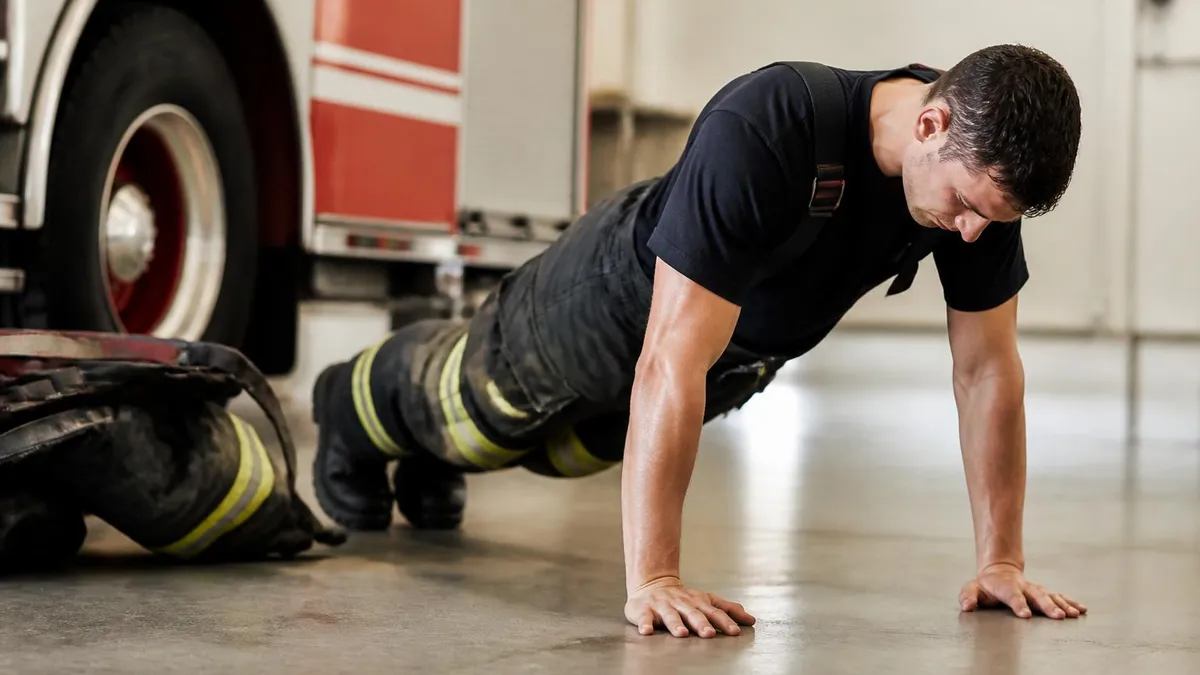
For physical training, build a program around three pillars: anaerobic stair work, weighted carries, and grip-and-pull strength. A typical week might include two stair-mill sessions of 30 minutes in a 50-pound weighted vest, two sessions of sledgehammer tire strikes alternated with heavy rope drags, and one full-body strength day focused on deadlifts, farmer carries, and pull-ups. Avoid one-rep-max powerlifting work that does not transfer to firefighting and emphasize sustained effort under load. Most CPAT failures happen in event six, the rescue drag, because grip and core fatigue compound across the test.
Document everything from the day you start preparing. Keep a folder, physical or digital, with copies of your driver's license, social security card, birth certificate, high school and college transcripts, military DD-214 if applicable, naturalization papers, every address you have lived at for the past ten years, every employer with dates and supervisor contact, and every reference. The personal history questionnaire is roughly 30 pages long and requires this information in precise detail. Having it ready saves weeks during processing and prevents the omissions that trigger background flags.
Manage your finances before the background investigation begins. Investigators pull a credit report and look for patterns of late payments, charge-offs, accounts in collection, and large unexplained deposits or withdrawals. You do not need a perfect credit score, but you do need to demonstrate financial responsibility. Pay down credit card balances, settle any judgments, and resolve old collection accounts. If you have student loan debt, make sure you are current or in an approved repayment program. Bankruptcies are not automatic disqualifiers but require a clean recovery pattern.
Clean up your social media presence systematically. Investigators will search Facebook, Instagram, X, TikTok, LinkedIn, YouTube, and any other platform where you have an account, including accounts under nicknames or maiden names. Delete posts depicting drug use, excessive drinking, weapons, gang affiliations, racist or sexist commentary, and any content that could embarrass the department. Do this six months before filing, not the week before, because cached and archived versions of pages can still be retrieved by skilled investigators. Honesty about prior posts beats discovery of hidden ones.
Build a support network of current or retired FDNY members if you can. Most firehouses welcome serious candidates who ask respectful questions during community events or open houses. A senior firefighter can review your personal history questionnaire, prep you for the psychological interview, and explain the firehouse culture you will enter. The FDNY also runs official candidate prep programs for women and minority applicants through the Vulcan Society and the United Women Firefighters; both organizations offer mentorship that demonstrably improves academy success rates.
Finally, prepare your mindset for a long wait. From the day you file the application to the day you graduate the academy is typically four to six years. During that span you will move forward through fits and starts: months of silence followed by sudden demands for paperwork within 10 days. Keep your contact information current with DCAS and the FDNY at all times. Update them within 30 days of any move, name change, marriage, or employment change. The candidates who disappear from the list almost always do so because the department simply could not reach them anymore.
FDNY Questions and Answers
FDNY Marine Units: Inside the Fire Department of New York's Fireboat Fleet and Marine 6
FDNY Jobs: Careers, Salaries, and How to Get Hired by the Fire Department of New York
FDNY Rescue 2: Inside Brooklyn's Elite Rescue Company
FDNY Codes: A Complete Guide to Fire Department of New York Radio Signals, Box Numbers, and Response Codes
FDNY Runs and Workers: What the Numbers Really Mean
About the Author
Law Enforcement Trainer & Civil Service Exam Specialist
John Jay College of Criminal JusticeMarcus B. Thompson earned his Master of Arts in Criminal Justice from John Jay College of Criminal Justice and served 12 years as a law enforcement officer before transitioning to full-time academy instruction. He is a POST-certified instructor who has prepared candidates for police entrance exams, firefighter assessments, and civil service examinations across dozens of agencies.
Join the Discussion
Connect with other students preparing for this exam. Share tips, ask questions, and get advice from people who have been there.
View discussion (9 replies)