
FDNY Foundation: How the Official Nonprofit Supports New York's Bravest
FDNY Foundation funds training, safety gear, and education for New York firefighters and EMS. ❓ Learn how the nonprofit supports the Bravest.
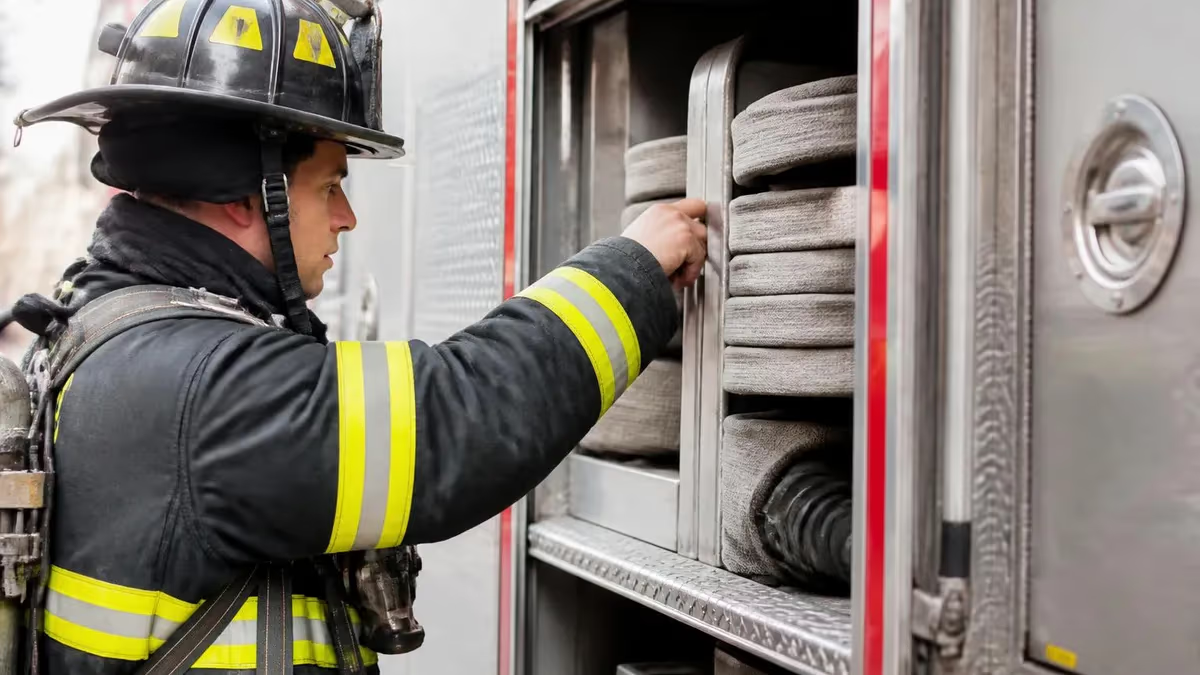
The FDNY Foundation is the official, independent 501(c)(3) nonprofit partner of the Fire Department of the City of New York, and it exists for one reason: to fund the training, equipment, education, and safety programs that the city budget alone cannot cover. Since 1981 the Foundation has poured tens of millions of dollars into projects that keep firefighters, EMTs, paramedics, fire marshals, and civilians safer every single day across the five boroughs.
Most New Yorkers know the FDNY by its red rigs, ambulances, and the green and white emblem stitched on every uniform. Far fewer realize that many of the advanced tools behind that uniform — virtual-reality smoke trainers, advanced rope-rescue gear, fire safety curricula for second graders, and even therapy resources for members exposed to trauma — were paid for by the FDNY Foundation rather than by tax dollars.
The Foundation sits at the intersection of philanthropy and public service. It does not run firehouses, dispatch units, or set department policy. Instead, it identifies gaps the operating budget cannot close and raises private funds from corporations, individual donors, estate gifts, and signature events like the annual Humanitarian Dinner. Every dollar is then earmarked for a specific FDNY priority approved by department leadership.
That model matters because the modern fire service is far more than putting wet stuff on red stuff. FDNY members respond to nearly 1.6 million incidents a year, including medical calls, hazmat releases, building collapses, terrorism preparedness drills, and technical rescues from the harbor to the subway tunnels. Each of those disciplines requires specialized gear, simulation environments, and continuing education that the Foundation helps underwrite.
The Foundation also plays a quieter, deeply human role. It supports the families of members who die in the line of duty, helps fund counseling and peer-support programs through the FDNY Counseling Services Unit, and pays for educational scholarships for the children of fallen and active members. In a department shaped permanently by September 11 and the long tail of World Trade Center illness, that mission has never been more relevant.
This guide breaks down how the FDNY Foundation is organized, where its money goes, how its work shows up on real fire scenes and inside the FDNY Fire Academy on Randall's Island, and how civilians, businesses, and aspiring members of New fdny nypd hockey game can get involved. Whether you are a candidate studying for the firefighter exam, a vendor exploring corporate partnership, or a city resident who simply wants to give back after a great EMS experience, the pages ahead will show you exactly how this nonprofit translates donations into safer streets.
By the end you will understand the difference between the FDNY itself and the Foundation that supports it, the major programs the Foundation funds, the events that drive its fundraising calendar, and the practical ways the Foundation's investments make a measurable difference in survival rates, response times, and member wellness across New York City.
FDNY Foundation by the Numbers
What the FDNY Foundation Actually Does
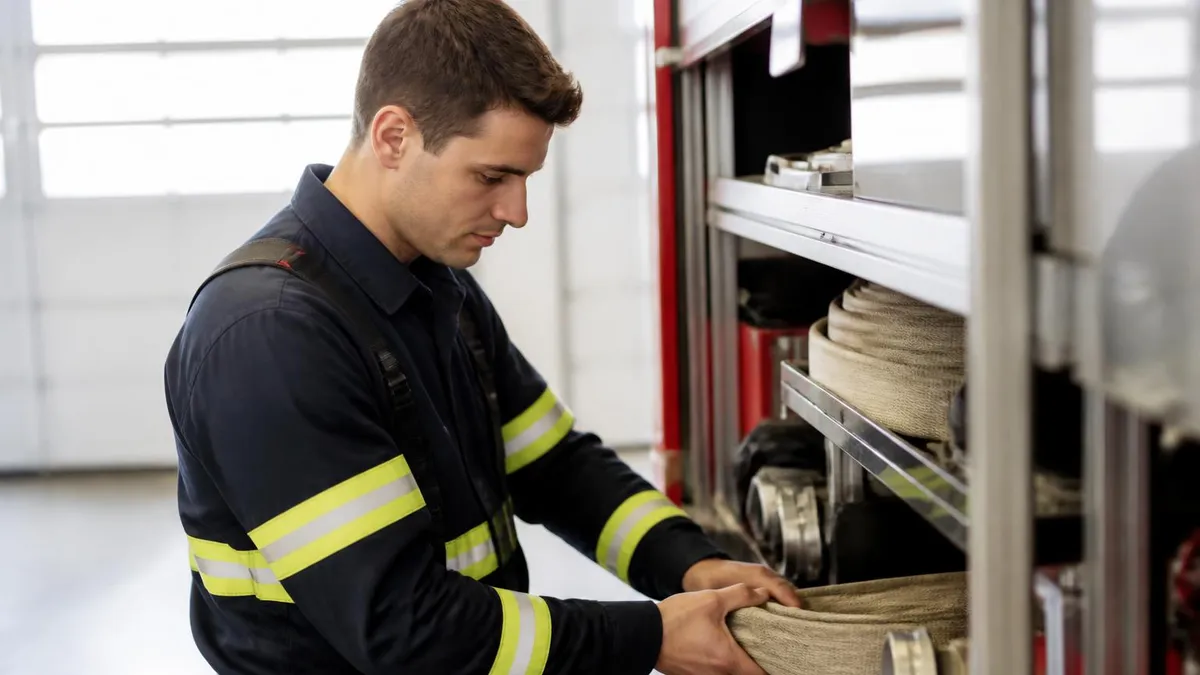
Pays for virtual-reality simulators, live-fire props, and specialized academy curricula that prepare members for high-rise fires, hazmat, and terrorist incidents the operating budget cannot fully cover.
Underwrites thermal imaging cameras, rope-rescue kits, tactical EMS bags, and ballistic protective equipment so engine, ladder, rescue, and squad companies can operate safely in modern threat environments.
Powers the FDNY Fire Zone, school visits, smoke alarm giveaways, and CPR campaigns that reach more than 100,000 New Yorkers a year and reduce civilian fire deaths citywide.
Helps fund counseling, peer support, World Trade Center health initiatives, and family scholarships for the children of members lost in the line of duty or to 9/11 related illness.
Backs the FDNY Museum, historic apparatus preservation, and ceremonial events that connect today's Bravest to more than 150 years of service and sacrifice in New York City.
The FDNY Foundation is funded almost entirely through private dollars rather than taxpayer appropriations, and that funding structure is what gives it flexibility. Because it is a registered 501(c)(3), every contribution is tax-deductible to the fullest extent allowed by federal law, which encourages corporate giving, donor-advised fund grants, planned bequests, and gifts of stock from individual New Yorkers who want to support the department directly.
The annual revenue mix typically includes a major Humanitarian Dinner, a fire safety education gala, golf outings, motorcycle runs, the FDNY Foundation merchandise program, and recurring monthly giving from grassroots supporters. Corporate sponsors range from financial services firms with deep Lower Manhattan ties to construction companies, insurance carriers, and small businesses that simply want to thank their local firehouse for showing up when it mattered most.
Once dollars come in, the Foundation works hand in hand with FDNY leadership — including the Commissioner, Chief of Department, Chief of EMS, and the heads of the Bureau of Training and Bureau of Fire Prevention — to identify priorities. A grant might pay for a single piece of equipment used by one specialty unit, or it might bankroll a multi-year initiative such as expanding the academy's high-rise simulator complex.
The Foundation's board includes civic leaders, retired chiefs, business executives, and family members of fallen firefighters. That blend of public-service experience and private-sector discipline keeps grant-making focused on measurable outcomes: faster response times, better cardiac arrest survival, fewer civilian fire deaths, healthier members, and a workforce trained for whatever the next century throws at New York.
Transparency is non-negotiable. Annual reports, IRS Form 990 filings, audited financials, and program impact summaries are published publicly so donors can trace exactly how their gifts are deployed. Watchdog organizations like Charity Navigator and GuideStar review the Foundation's efficiency metrics, and the percentage of every dollar that reaches program services rather than overhead is consistently in line with top-rated public-safety charities.
The Foundation also coordinates closely with related entities such as the FDNY Fire Family Transport Foundation, the Vulcan Society scholarship efforts, and the families of the 343 firefighters lost on 9/11. While each organization is legally independent, they share a common purpose: making sure that the people who run toward danger in New York City have what they need to come home safely.
For anyone studying the wider department — including aspiring candidates who will be tested on the structure of the agency — it helps to read alongside resources like fdny stations and companies, because the Foundation's grants ultimately flow into those individual houses through gear, training hours, and member support programs.
FDNY Practice Test Questions
Prepare for the FDNY - Fire Department New York exam with our free practice test modules. Each quiz covers key topics to help you pass on your first try.
FDNY Building Construction
FDNY Exam Questions covering Building Construction. Master FDNY Test concepts for certification prep.
FDNY Community Engagement and Public Educa...
Free FDNY Practice Test featuring Community Engagement and Public Education. Improve your FDNY Exam score with mock test prep.
FDNY Emergency Medical Response
FDNY Mock Exam on Emergency Medical Response. FDNY Study Guide questions to pass on your first try.
FDNY Emergency Medical Services
FDNY Test Prep for Emergency Medical Services. Practice FDNY Quiz questions and boost your score.
FDNY Hazardous Materials Response
FDNY Questions and Answers on FDNY Hazardous Materials Response. Free FDNY practice for exam readiness.
FDNY Technical Rescue Operations
FDNY Mock Test covering FDNY Technical Rescue Operations. Online FDNY Test practice with instant feedback.
FDNY Fire Behavior
Free FDNY Quiz on Fire Behavior. FDNY Exam prep questions with detailed explanations.
FDNY Firefighting Operations and Equipment
FDNY Practice Questions for Firefighting Operations and Equipment. Build confidence for your FDNY certification exam.
FDNY Foundation Programs and Initiatives
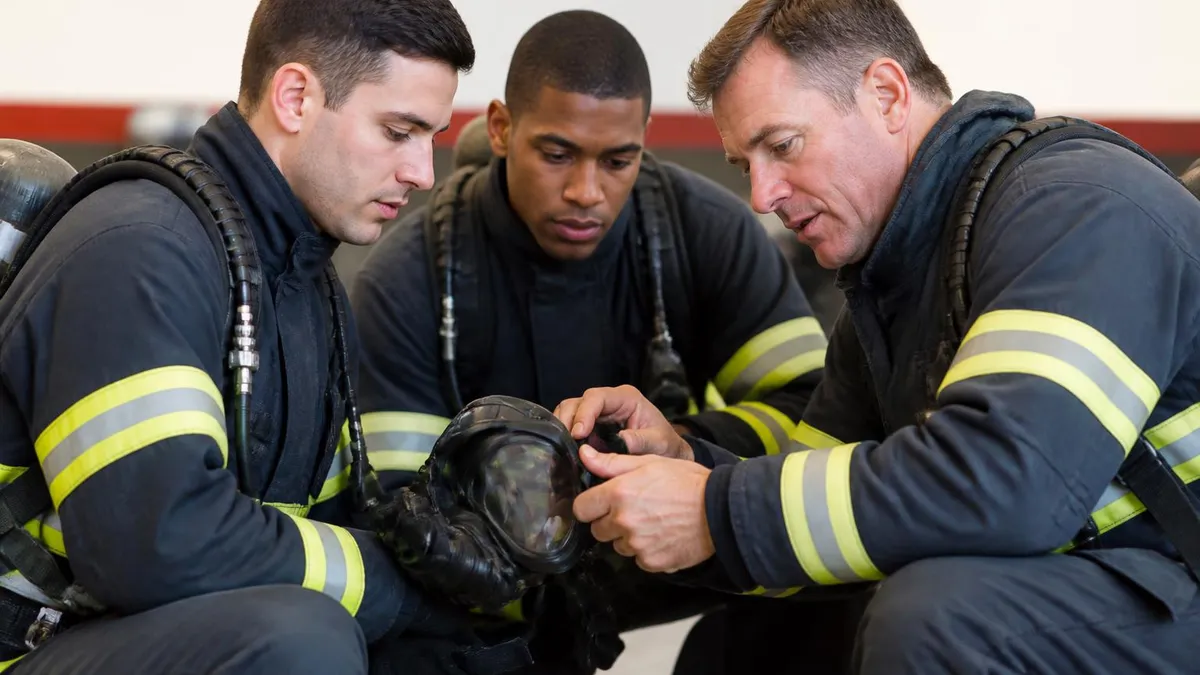
The single largest spending category for the FDNY Foundation is training. Funded projects include the immersive virtual-reality firefighter simulator at the Fire Academy, advanced rope and confined-space rescue props, hazmat decontamination trailers, and active-shooter rescue task force drills that prepare members for coordinated police-fire-EMS response to terror events. These investments shorten the learning curve for probies and refresh skills for veterans.
The Foundation has also paid for thermal imaging cameras assigned to every truck company, second sets of bunker gear so crews can rotate clean gear after a fire to reduce carcinogenic exposure, and ballistic vests and helmets for EMS members responding to violent incidents. Each piece of gear is selected with input from operational chiefs and tested in real conditions before being deployed citywide across the boroughs.
Should Donors Choose the FDNY Foundation? Strengths and Tradeoffs
- +Official nonprofit partner of the Fire Department of the City of New York
- +501(c)(3) status means contributions are fully tax-deductible
- +Strong financial transparency with annual reports and IRS 990 filings
- +Direct funding of frontline training, gear, and academy programs
- +Long track record of supporting families of fallen members
- +Broad reach across firefighting, EMS, fire marshals, and civilian education
- +Multiple ways to give: events, recurring gifts, stock, planned giving
- −Donations cannot be earmarked to a specific firehouse or individual member
- −Some New Yorkers confuse it with unrelated unofficial fundraising groups
- −Major events are NYC-centric, limiting national supporter engagement
- −Grant approval requires FDNY leadership alignment, slowing some projects
- −Restricted gifts must match approved department priorities
- −Less name recognition than national charities despite local impact
- −Cannot lobby city government on labor or contract issues
Ways to Support the FDNY Foundation
- ✓Make a one-time online donation through the official FDNY Foundation website
- ✓Set up a recurring monthly gift to provide predictable program funding
- ✓Attend the annual Humanitarian Dinner or Fire Safety Education Fund Dinner
- ✓Sponsor a corporate table at a Foundation event under your company's name
- ✓Buy official FDNY Foundation gear from the licensed merchandise store
- ✓Honor a loved one with a tribute or memorial gift in their name
- ✓Include the FDNY Foundation in your estate plan or as a will beneficiary
- ✓Donate appreciated stock or use a donor-advised fund recommendation
- ✓Organize a workplace fundraiser, run, or community event for the Foundation
- ✓Volunteer at Fire Zone education days or smoke alarm canvassing events
Private dollars, public mission
The FDNY Foundation does not replace the city budget — it extends it. Every grant fills a specific operational gap identified by FDNY leadership, from a single thermal imager for a busy ladder company to a multi-million-dollar simulator that trains every probationary firefighter in the academy. That is why even small recurring gifts compound into measurable life-safety improvements.
Training and education sit at the heart of nearly every FDNY Foundation grant, and the reason is simple: in a city of more than 8 million residents, 1 million buildings, and a transit system that never sleeps, the cost of an under-prepared crew can be measured in lives. The Foundation's investments in academy infrastructure on Randall's Island are designed to make sure no probationary firefighter or EMT graduates without exposure to the worst-case scenarios they may someday face on duty.
One signature project is the high-rise simulator complex, where members rehearse standpipe operations, elevator rescues, and stairwell evacuations in a controlled environment that mirrors Manhattan office towers. Another is the maritime and harbor training prop, which prepares rescue and marine companies for the unique hazards of operating on and around the waterways that surround the five boroughs, including capsized vessels and shoreline rescues.
The Foundation also funds continuing education for officers, paying for leadership development courses, command and control simulations, and incident management training that goes beyond what the operating budget covers. Captains, battalion chiefs, and deputy chiefs benefit from scenario-based learning that sharpens decision-making under pressure, especially for the kind of large-scale incidents the FDNY has been called to handle from Times Square to Far Rockaway.
Scholarships are another pillar. The Foundation administers and supports multiple scholarship programs that send the children of active and fallen FDNY members to college, trade schools, and graduate programs. For families who lost a parent on September 11 or to subsequent World Trade Center illnesses, these awards represent a tangible promise that the department's debt to its members extends across generations.
Academic partnerships also benefit. The Foundation has supported research collaborations with universities studying firefighter cancer rates, cardiac health, behavioral health outcomes, and the long-term effects of toxic exposure. The data produced flows directly back into FDNY policy, including changes to gear cleaning, on-scene rehab protocols, and post-incident health surveillance for members exposed to significant fires or chemical releases.
Public education programs train civilians too. Curricula developed for New York City public schools — much of it underwritten by Foundation grants — teach children as young as four about smoke alarms, escape planning, kitchen safety, and what to do if their clothing catches fire. Those lessons have measurable outcomes: civilian fire deaths in NYC are at historic lows, and many survivors credit a school visit from an FDNY educator with saving their life.
For aspiring members of the department, understanding how the Foundation supports training also helps clarify what to expect once they enter the system. Resources like the FDNY (Fire Department New York) Test: Your Guide walk through the entrance exam process, but candidates should know that once they reach the academy, much of the gear and many of the simulators they will train on were paid for by Foundation donors.
Several unaffiliated organizations use names that sound similar to the FDNY Foundation, and some aggressive phone solicitors falsely imply they represent the department. Always confirm you are giving to the official FDNY Foundation at fdnyfoundation.org, check the 501(c)(3) EIN, and never share credit card details with an unsolicited caller claiming to fundraise for New York's Bravest.
The real measure of the FDNY Foundation is not the size of its endowment or the glamour of its galas, but what happens at three in the morning when a fourth-floor walkup is burning in the Bronx, when a cardiac arrest patient drops on a Queens sidewalk, or when a lithium-ion battery ignites inside a Brooklyn apartment. In each of those moments, Foundation-funded training, gear, and protocols are quietly working in the background to give civilians and members the best possible outcome.
Consider thermal imaging cameras. Before widespread deployment — accelerated by Foundation grants — search teams crawled through smoke-filled apartments with little more than gloved hands and intuition. Today every truck company carries a TIC that can locate an unconscious victim through dense smoke in seconds, dramatically improving survival in residential fires across all five boroughs and reducing exposure time for firefighters as well.
EMS is another success story. Foundation support has helped FDNY EMS become one of the busiest and most sophisticated 911 ambulance systems in the world, handling more than 1.5 million medical incidents a year. Investments in advanced airway equipment, cardiac monitors, and pediatric simulation training have measurably improved out-of-hospital cardiac arrest survival rates in New York City — a metric that consistently ranks the city among the best large urban systems in North America.
The department's wellness and counseling infrastructure has also benefited. The Foundation's backing of peer-support and behavioral health programs means a firefighter who responds to a difficult pediatric call, or an EMT processing trauma from years of overdoses, has confidential resources within reach. That has translated into better retention, healthier careers, and lower long-term costs for the city and its members.
For families, the Foundation is often most visible in the worst moments. When a member is killed in the line of duty, Foundation-backed programs help with everything from immediate financial bridges to long-term scholarship commitments for children who may not yet be old enough to understand what happened. That continuity of care, year after year, is part of what makes the FDNY family bond so durable.
Civilian impact is just as concrete. School fire safety programs, smoke alarm giveaways in high-risk ZIP codes, e-bike battery awareness campaigns, and CPR training events all contribute to a safer city. Many New Yorkers who have never set foot in a firehouse have nonetheless benefited from Foundation-funded outreach, whether they realize it or not. To dig deeper into the operational side of the department these efforts support, see FDNY Runs and Workers: What the Numbers Really Mean.
That is the quiet genius of the Foundation model: it lets ordinary New Yorkers, businesses, and philanthropists translate gratitude into real-world capability for the people who run toward danger. Every dollar becomes a slightly faster response, a slightly better trained crew, a slightly safer home, and over time, a measurably safer city.
If you want your support for the FDNY Foundation to have maximum impact, a few practical strategies stand out. First, consider becoming a monthly donor rather than a one-time giver. Predictable recurring revenue lets the Foundation plan multi-year initiatives — like long-term cancer screening programs or sustained academy upgrades — instead of stretching to fund them through episodic gala revenue alone, and it usually carries lower processing overhead per dollar raised.
Second, take advantage of employer matching gift programs. Many large New York employers, particularly financial services firms, law firms, insurance carriers, and tech companies, match charitable contributions dollar for dollar, sometimes at higher ratios for designated public-safety causes. A $250 personal gift can quickly become $500 or even $750 in real program funding without costing the donor anything extra beyond a short HR form.
Third, think about appreciated assets rather than cash. Donating long-held stock that has gained significant value lets you avoid capital gains tax while still receiving a deduction for the full fair-market value of the gift. Donor-advised funds, charitable IRA rollovers for donors over 70½, and bequests in a will or trust are all efficient ways to make a meaningful gift while preserving overall financial flexibility.
Fourth, attend at least one Foundation event in person if you can. The Humanitarian Dinner, fire safety galas, and smaller community fundraisers offer the chance to meet active members, hear directly from leadership about current priorities, and see how dollars are translated into programs. It is also one of the most powerful ways to introduce friends or business contacts to the mission and grow the donor base organically.
Fifth, if you are a business owner, explore corporate sponsorships. Sponsoring an event, an education program, or a piece of equipment provides genuine community visibility while directly supporting FDNY operations. Small businesses can participate too through table sponsorships, in-kind donations, and partnerships on safety campaigns that resonate with their local customer base in any of the five boroughs.
Sixth, do not underestimate non-financial support. Volunteering at a fire safety event, helping canvass a neighborhood with smoke alarms, sharing the Foundation's posts on social media, or organizing a workplace fundraiser all add value. The Foundation runs lean, and engaged volunteer ambassadors extend its reach far beyond what a small professional staff could accomplish on its own across an enormous city.
Finally, stay informed. Sign up for the Foundation's email updates, follow it on social media, and read the annual report each year. Understanding how grants are being deployed — and which member, family, or public safety initiative your dollars are touching — makes giving more meaningful and helps you advocate intelligently for the Foundation's work to friends, colleagues, and your own professional network.
FDNY Questions and Answers
About the Author
Law Enforcement Trainer & Civil Service Exam Specialist
John Jay College of Criminal JusticeMarcus B. Thompson earned his Master of Arts in Criminal Justice from John Jay College of Criminal Justice and served 12 years as a law enforcement officer before transitioning to full-time academy instruction. He is a POST-certified instructor who has prepared candidates for police entrance exams, firefighter assessments, and civil service examinations across dozens of agencies.
Join the Discussion
Connect with other students preparing for this exam. Share tips, ask questions, and get advice from people who have been there.
View discussion (9 replies)