
FDNY Manhattan Firehouses: A Complete Guide to New York's Bravest Stations
Explore FDNY Manhattan firehouses, their history, layout, and role in protecting NYC. ✅ Learn how stations work and what firefighters do daily.

The FDNY Manhattan firehouses represent some of the most storied fire stations in the entire world. Manhattan alone is home to dozens of engine companies and ladder companies spread across a dense, vertical urban landscape that presents unique challenges no other city in North America quite replicates.
From the narrow streets of Chinatown to the towering skyscrapers of Midtown and the historic brownstones of Harlem, each firehouse serves a distinct neighborhood with its own architectural profile, population density, and fire risk. Understanding how these stations are organized helps residents, aspiring firefighters, and FDNY exam candidates appreciate the remarkable system that keeps New York City safe around the clock.
New York City's Fire Department operates more than 250 firehouses across all five boroughs, with Manhattan containing a significant share of the department's highest-call-volume units. The busiest firehouses in the entire country are consistently found in Manhattan, particularly in areas like the South Bronx border, East Harlem, and the Financial District.
Engine Company 55 in Little Italy, for example, routinely logs thousands of responses per year, making it one of the most active units in the FDNY system. This extraordinary call volume shapes everything from staffing schedules to apparatus selection and specialized training requirements for firefighters assigned to these demanding posts.
Each Manhattan firehouse is staffed by either an engine company, a ladder company, or both — what the FDNY calls a split house. Engine companies carry the hose lines, water supply, and the crew responsible for advancing lines into burning buildings. Ladder companies focus on forcible entry, search and rescue, ventilation, and aerial operations. When both share a single building, coordination between the two units is seamless because they train together, eat together, and respond together. This co-location model is especially common in busy Manhattan neighborhoods where real estate constraints make separate buildings impractical.
The physical structures that house FDNY units in Manhattan range from century-old brick buildings with ornate cornices and brass fixtures to modern, purpose-built facilities designed for contemporary apparatus. Many of the older firehouses are listed on the National Register of Historic Places or designated as New York City landmarks, preserving architectural details that date back to the horse-drawn era of firefighting.
Walking past a firehouse like Engine 55 on Lafayette Street or Ladder 20 nearby, visitors can see the tall arched apparatus bays, the hose-drying towers, and the distinctive red-painted doors that have been synonymous with FDNY facilities for over a century.
For anyone studying for the FDNY written exam or preparing for a career in the fire service, a solid grasp of how firehouses are organized — their chain of command, the roles of each unit, and the geographic distribution of companies across Manhattan — provides context that makes exam material far more meaningful. Questions about fdny firehouses culture, community engagement, and operational procedures appear regularly on FDNY promotional and entrance exams. Knowing the real-world environment behind those questions helps candidates answer with confidence rather than guesswork.
The cultural life of a Manhattan firehouse is also worth understanding. Firefighters assigned to these stations develop deep bonds forged through shared meals, long overnight shifts, and the high-stakes experiences they face together on the street. Many firehouses maintain informal museums of memorabilia, including photographs from landmark fires, retired helmets, and plaques honoring members who gave their lives in the line of duty. The September 11 memorial plaques found in firehouses across Manhattan serve as constant, powerful reminders of the department's greatest loss and its enduring commitment to the city it protects.
This guide covers everything from the geographic layout of Manhattan's fire companies to the daily routine inside a firehouse, the specialized units that operate out of select stations, and the resources available for anyone who wants to pursue a career with the FDNY. Whether you are a lifelong New Yorker, a history enthusiast, or an aspiring firefighter grinding through practice exams, the story of FDNY Manhattan firehouses is one of service, sacrifice, and extraordinary professionalism that deserves to be told in full.
FDNY Manhattan Firehouses by the Numbers

Manhattan Firehouse Layout by Borough Zone
Home to some of the FDNY's oldest and most storied companies, covering the Financial District, Tribeca, and Chinatown. These units face enormous daytime population surges and complex high-rise office building fires requiring specialized tactics.
The densest concentration of skyscrapers in the world demands specialized high-rise firefighting tactics. Companies here respond to the Empire State Building, Penn Station, and major hotels, logging some of the highest call volumes in the department.
Covering Central Park's flanks and the Museum Mile, these companies balance residential brownstone fires with large institutional buildings including hospitals and cultural centers that require mass-casualty planning and specialized evacuation procedures.
Some of Manhattan's highest-volume engine and ladder companies operate above 110th Street, where dense residential occupancies and older building stock create frequent structural fire challenges that test every level of FDNY training and experience.
Understanding the difference between an engine company and a ladder company is fundamental to anyone studying FDNY operations or preparing for a department exam. Engine companies — also called pumpers — are the workhorses of fire suppression. Their primary mission is to supply and advance hose lines to extinguish fires.
A standard Manhattan engine carries hundreds of feet of supply hose, attack hose of varying diameters, a complement of nozzles and adapters, and the pump systems needed to deliver water from hydrants at the pressure required to knock down fires in multi-story buildings. The officer and four or five firefighters aboard an engine work as a tight unit, each knowing their exact assignment the moment they step off the rig.
Ladder companies take a different but equally critical approach to firefighting. Where engine crews focus on water and suppression, ladder companies are the search-and-rescue specialists, the forcible entry experts, and the ventilation crew. They carry aerial ladders capable of reaching upper floors, halligan bars and other forcible entry tools, thermal imaging cameras, and the equipment needed to perform roof operations.
In a standard Manhattan response to a structural fire, the first arriving ladder company will typically split into an inside team that searches the fire floor and floors above, and an outside team that handles the aerial, utility control, and exposure protection.
Manhattan firehouses that house both an engine and a ladder company operate what the FDNY calls a co-located or split-house arrangement. These buildings are designed with enough bay space to accommodate both rigs side by side, and they house a combined crew that may total eight to twelve firefighters on a given tour.
The logistics of running two separate units out of one building require precise coordination, especially when both companies receive simultaneous alarms for different incidents. Dispatch software and radio communications keep both officers aware of each other's assignments and availability, minimizing the risk of leaving either unit's response district uncovered.
Beyond engine and ladder companies, Manhattan is also home to several specialized units that operate from select firehouses. Rescue companies — there are five in New York City, with Rescue 1 in Midtown Manhattan being among the most famous — handle the most technically demanding incidents: collapsed structures, confined space rescues, water rescues, and incidents involving hazardous materials.
Squad companies, such as Squad 18 in Greenwich Village, combine suppression capability with heavy rescue tools, giving them flexibility to function as either a standard engine or a technical rescue unit depending on what an incident demands. Hazmat operations are coordinated through Hazmat Company 1, which responds citywide from its quarters in the Bronx but works closely with Manhattan companies on incidents involving chemical, biological, radiological, or nuclear materials.
The daily life inside a Manhattan firehouse follows a rhythm shaped equally by routine and readiness. Each tour — the FDNY uses three rotating shifts — begins with a roll call, apparatus inspection, and equipment check. Every piece of gear from SCBA masks to thermal cameras is tested and logged.
Firefighters then rotate through housework, training drills, physical fitness, and meal preparation, all while maintaining the constant readiness required to drop everything and respond within sixty seconds of an alarm. Meal preparation has become a genuine point of pride in many Manhattan firehouses, with crews developing reputations for culinary skill that has inspired books, documentaries, and even competitive cooking events between companies.
Training within the firehouse supplements the formal instruction firefighters receive at the FDNY Fire Academy on Randalls Island. Company-level drills may focus on building-specific pre-fire plans for major occupancies in the response district, high-rise evacuation procedures, below-grade rescue scenarios in subway systems, or new tactics introduced by the department following significant fires. Battalion chiefs periodically conduct multi-company drills that simulate the complexities of a serious working fire, ensuring that engine and ladder crews from neighboring companies know how to integrate their operations effectively when multiple units are working together on a large incident.
For aspiring FDNY members, the firehouse is ultimately the destination that all the studying, physical training, and exam preparation is building toward. The camaraderie, the sense of purpose, and the direct impact on community safety make a Manhattan firehouse assignment one of the most sought-after positions in American public service.
Candidates who take the time to understand firehouse operations — not just as exam content but as a genuine reflection of the job they are pursuing — bring a depth of knowledge and motivation to the process that often makes a measurable difference in their performance on written tests and oral interviews alike.
Inside a Firehouse: Daily Life and Routine
The day tour in a Manhattan firehouse typically begins at 9:00 AM with an official change of tours. Incoming firefighters check out every piece of apparatus and personal protective equipment from the outgoing crew, signing off that SCBA cylinders are full, tools are properly mounted, and medical bags are fully stocked. This careful handoff process ensures that any rig can be in service within seconds of an alarm, regardless of which crew is on duty.
After apparatus check, the morning hours are filled with housework assignments, building inspections in the response district, and company-level training drills. Officers may conduct pre-fire planning visits to large occupancies — hospitals, schools, or high-rise residential buildings — updating their knowledge of access points, standpipe locations, and potential life safety hazards. Physical fitness training is also a morning staple, with many Manhattan companies using on-site gyms or nearby parks to maintain the conditioning that firefighting demands.

Working in a Manhattan Firehouse: Rewards and Challenges
- +Extremely high call volume builds rapid tactical experience and fireground confidence
- +Exposure to the full spectrum of emergency types, from high-rise fires to subway rescues
- +Deep camaraderie and unit cohesion forged through shared high-stakes experiences
- +Access to specialized training and equipment not available at lower-volume stations
- +Assignments in landmark historic firehouses with rich institutional histories and traditions
- +Strong community ties with dense, diverse New York City neighborhoods that rely heavily on FDNY
- −Physical and psychological demands are significantly higher than lower-volume assignments
- −Sleep disruption during night tours is frequent due to high alarm rates in busy Manhattan districts
- −Parking and commuting logistics are challenging given Manhattan's limited vehicle storage options
- −Older firehouse buildings may present maintenance issues and less modern amenity infrastructure
- −High exposure to traumatic incidents increases risk of cumulative occupational stress and PTSD
- −Competitive assignment process means most new firefighters do not start at high-demand Manhattan stations
Firehouse Readiness Checklist for FDNY Recruits
- ✓Study the FDNY organizational structure including division, battalion, and company levels before your exam.
- ✓Learn the difference between engine company and ladder company primary responsibilities and apparatus.
- ✓Memorize the geographic boundaries of Manhattan's fire divisions and key battalion coverage areas.
- ✓Research the specialized units — Rescue, Squad, Hazmat — and understand where each is stationed.
- ✓Review FDNY building construction classifications, since firehouse tactical planning depends on construction type.
- ✓Understand standpipe operations for high-rise buildings, a core competency for any Manhattan assignment.
- ✓Practice reading FDNY incident command structures so you can describe the chain of command accurately on exams.
- ✓Familiarize yourself with the FDNY's community education programs that firehouses help in their districts.
- ✓Study FDNY apparatus specifications, particularly pump capacities and aerial ladder reach categories.
- ✓Take at least two full-length FDNY practice tests covering building construction and community engagement topics.
- ✓Research the history of landmark Manhattan firehouses to demonstrate knowledge and passion during oral interviews.
High-Rise Standpipe Knowledge Is Non-Negotiable
Manhattan firehouses respond to more high-rise building fires than virtually any other jurisdiction in the United States. FDNY exam questions on building construction and fire behavior frequently test standpipe operations, floor-above-fire strategy, and elevator recall procedures. Candidates who understand these Manhattan-specific tactics score measurably higher on department exams than those who study only generic firefighting theory.
Manhattan's firehouses carry histories that parallel the history of New York City itself. Engine Company 55, located on Lafayette Street in the Nolita neighborhood, dates to 1898 and has served through some of the most catastrophic fires in lower Manhattan's history. Its response district includes the former site of the Triangle Shirtwaist Factory, where a devastating 1911 fire killed 146 workers and directly led to major reforms in fire code, building safety standards, and labor law. Firefighters stationed at Engine 55 carry that history with them as part of the station's identity and their sense of professional purpose.
Hook and Ladder Company 8 in Tribeca is arguably the most photographed firehouse in the world, having achieved global recognition as the filming location for the original Ghostbusters movie in 1984. The white-painted brick facade, the iconic firehouse sign, and the brass fire pole visible through the apparatus bay window draw tourists from every continent. But beneath the pop culture fame, Ladder 8 is a working firehouse staffed by FDNY professionals who respond to real emergencies in one of the most densely populated and architecturally complex neighborhoods in the city.
Engine Company 1 and Ladder Company 24 on West 31st Street operate adjacent to Madison Square Garden and Penn Station, giving them one of the most challenging response profiles in Manhattan. A major incident at either venue could involve tens of thousands of civilians simultaneously, requiring a coordinated multi-alarm response that draws companies from across multiple battalions. Pre-fire planning for these mega-occupancies is an ongoing, detail-intensive process that officers at this firehouse take extremely seriously, updating their plans with each renovation and each new event configuration at the arena.
The firehouses of upper Manhattan tell a different story. Engine Company 69 in Harlem, known as the Harlem Hilton for its palatial 1906 Beaux-Arts architecture, serves a neighborhood that has experienced dramatic transformation over the past century. The company has been stationed in the same building for over a hundred years, making it a continuous institutional presence in a community that has seen waves of immigration, economic change, and urban renewal. Many firefighters who grew up in Harlem sought assignment at Engine 69 specifically because of the connection it represents between the FDNY and the neighborhood they call home.
Washington Heights and Inwood, at the northern tip of Manhattan, present unique challenges related to geography and community demographics. The neighborhood's steep terrain, including the cliffs of Fort Tryon Park, complicates access for apparatus and creates unusual firefighting scenarios involving buildings built into hillsides. Companies in this part of Manhattan also serve a large Dominican-American community and work closely with community organizations to deliver fire safety education in Spanish, reflecting the FDNY's broader commitment to serving every New York City neighborhood in the language its residents speak.
Many historic Manhattan firehouses have been the subject of significant restoration efforts in recent years. The FDNY, working with the New York City Department of Buildings and preservation organizations, has invested in maintaining the architectural integrity of landmark firehouse structures while updating their interiors for modern operations. New apparatus bays are sometimes wider than the original openings, requiring careful structural work to preserve the historic facade while accommodating contemporary fire trucks that are significantly larger than the horse-drawn steamers the buildings were originally designed to house.
The September 11 memorial spaces within Manhattan firehouses deserve special recognition. Companies like Engine 10 and Ladder 10 in Lower Manhattan, located directly across Liberty Street from the World Trade Center site, lost members on that day and maintain permanent memorials within their quarters.
The bronze relief sculpture on the south wall of their firehouse depicts the Twin Towers and the firefighters who responded, serving as both a tribute and a daily reminder of the responsibility that every FDNY member carries. For candidates who aspire to wear the FDNY uniform, visiting these memorials before sitting an exam connects the abstract preparation process to the very real human stakes of the career they are pursuing.
The FDNY regularly hosts open houses at firehouses across Manhattan as part of its community outreach and recruitment efforts. Prospective candidates are encouraged to visit their local firehouse, introduce themselves to on-duty personnel, and ask questions about the application process. These informal visits demonstrate initiative and community engagement — qualities that FDNY evaluators specifically look for during oral board interviews and background investigations.
Preparing for the FDNY written exam requires more than memorizing facts; it demands building a mental model of how fire companies actually operate in a city like Manhattan. Exam questions on building construction, for example, are not abstract engineering problems — they are tests of whether a candidate understands why a firefighter must know the difference between ordinary construction and heavy timber construction before advancing a hose line into a burning building.
The firehouses of Manhattan are the real-world context that gives those questions meaning, and candidates who understand that context answer with a clarity and precision that rote memorization alone cannot produce.
The FDNY written exam covers a wide range of subject areas, but building construction and fire behavior consistently represent a significant portion of the material. Candidates who have studied how different construction types behave under fire conditions — wood frame, ordinary, heavy timber, non-combustible, and fire-resistive — are better equipped to answer scenario-based questions that ask them to identify the safest course of action for a crew operating on a specific floor of a specific type of building.
This is not theoretical knowledge; it is the exact information that company officers in Manhattan firehouses use when sizing up a fire in their response district.
Community engagement knowledge is equally important for FDNY exam preparation. Firehouses do not exist in isolation — they are embedded in neighborhoods, and FDNY members are expected to serve as community educators, fire prevention advocates, and public safety ambassadors as part of their regular duties. Exam content on community engagement covers fire safety inspections, smoke detector programs, school education initiatives, and the FDNY's relationships with community organizations. Candidates who understand the community role of the firehouse score better on these sections and come across as more credible in oral interviews.
The FDNY's structured study resources, including practice tests focused on building construction and community engagement, are among the most effective tools available to exam candidates. These resources mirror the style and difficulty of actual exam questions, allowing candidates to identify knowledge gaps and focus their study time efficiently. Regular practice testing also builds the test-taking stamina and time management skills needed to perform well on a timed exam that covers a broad range of material under pressure.
For candidates who want to go beyond the standard study materials, spending time in the neighborhoods served by Manhattan firehouses adds a layer of contextual understanding that is genuinely valuable. Walking the response district of a firehouse — noting the building types, counting the stories, observing the street widths and hydrant spacing — builds spatial intelligence that translates directly into better performance on scenario questions. This kind of active, observational study is something that few candidates do, which means those who make the effort gain a real competitive advantage.
Oral board interviews for FDNY positions often include questions about why a candidate wants to work for this particular department in this particular city. Candidates who can speak knowledgeably about Manhattan firehouses, their history, their operational demands, and their community relationships demonstrate a level of commitment and preparation that interviewers consistently recognize and reward. Citing specific firehouses, notable incidents, or the FDNY's community education initiatives shows that a candidate's interest in the department goes beyond job security and salary — it reflects genuine passion for the work and the mission.
The ultimate goal of all this preparation is to join the ranks of the men and women who staff Manhattan's firehouses every day, protecting one of the most complex and densely populated urban environments on Earth. Those firefighters are consummate professionals who have earned their assignments through rigorous testing, demanding training, and years of operational experience. Every candidate who approaches the FDNY exam with seriousness, intellectual curiosity, and genuine respect for the job is taking the first step toward joining that tradition — and the firehouses of Manhattan will be waiting.
Practical preparation for an FDNY career centered on Manhattan firehouse assignments should begin well before the official application window opens. Physical fitness is the foundation everything else rests on — the FDNY's Candidate Physical Ability Test requires sustained aerobic capacity, functional strength, and the ability to perform strenuous tasks while wearing full personal protective equipment. Candidates who begin a structured fitness program at least six months before their anticipated exam date give themselves the best chance of performing well on the physical component while maintaining the mental focus needed for written exam preparation.
Written exam study works best when it is organized around the subject areas the FDNY actually tests rather than a generic firefighting curriculum. Building construction is consistently one of the highest-weighted topics and one where dedicated practice testing produces measurable score improvements. Starting with the fundamentals — construction classifications, load-bearing systems, fire resistance ratings, and how fires spread through different building types — creates a framework that makes more advanced scenario questions far easier to answer correctly. Allocate at least four to six weeks of focused study to building construction before moving to other subject areas.
Community engagement and public education questions reward candidates who understand the FDNY's broader social mission. The department is not merely a reactive emergency service — it is an active community partner that runs fire safety education programs in schools, inspects residential buildings, distributes smoke detectors, and trains community members in basic fire prevention. Candidates who internalize this dual identity of firefighter-and-educator answer community engagement questions with authenticity that graders and interviewers recognize. Reading the FDNY's official community outreach materials and reviewing published program data adds real substance to exam answers.
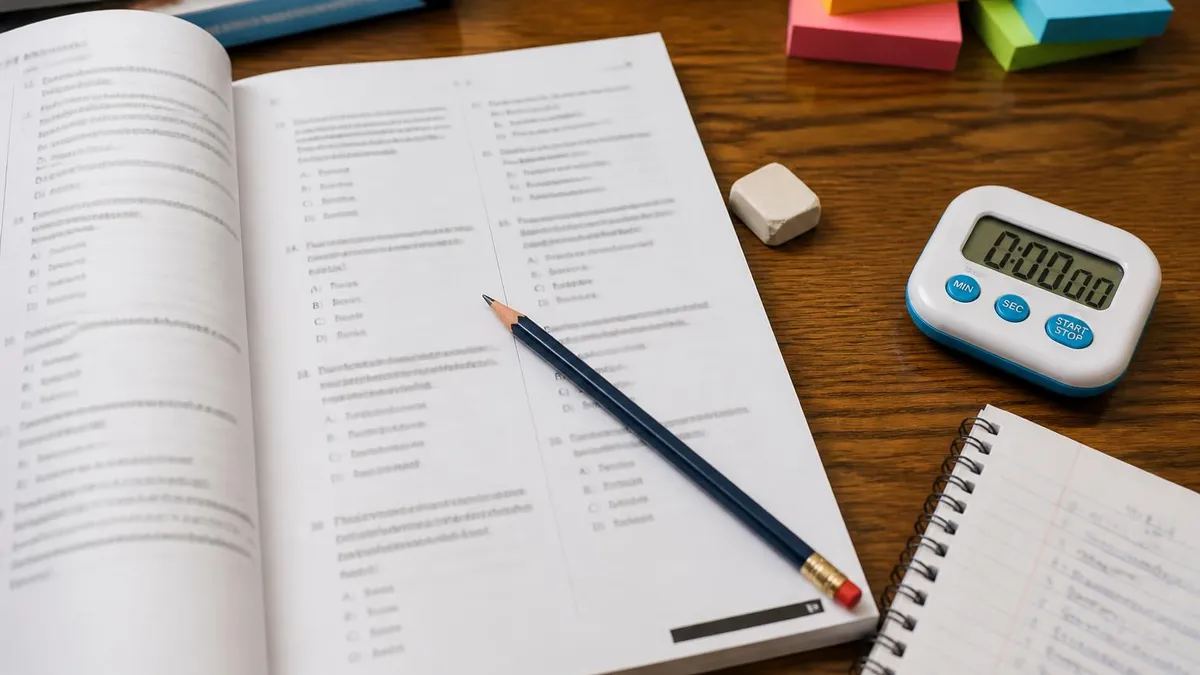
Practice testing strategy matters as much as study volume. Candidates who take timed practice tests under realistic conditions — no phone, no breaks, answering every question before reviewing results — develop the test discipline that high-stakes exams require. After each practice test, reviewing every incorrect answer in detail rather than simply moving on is the single habit that produces the steepest improvement curves. Understanding why a wrong answer was wrong is more instructive than confirming why a right answer was right, and it prevents the same conceptual errors from recurring on the actual exam.
Group study can accelerate preparation when it is structured effectively. Studying with other FDNY candidates who are equally serious allows for discussion of scenario questions, peer explanation of difficult concepts, and the kind of accountability that keeps preparation on track over a multi-month timeline. Many FDNY prep groups organize around specific boroughs or neighborhoods, and those based in Manhattan often incorporate walkthroughs of firehouse response districts as a study activity, combining classroom preparation with the observational field knowledge described earlier in this guide.
Mental preparation is an often-overlooked component of FDNY exam readiness. The oral board, in particular, tests a candidate's ability to think clearly and communicate effectively under pressure — skills that can be developed through mock interview practice with friends, family, or a structured prep group. Candidates who rehearse answers to common oral board questions, including those about firehouse operations, community engagement, and personal motivation, perform significantly better than those who prepare only the written component and walk into the oral board unprepared for its distinctive format and demands.
Finally, candidates should monitor the FDNY's official recruitment communications carefully for exam date announcements, application window openings, and any changes to testing format or subject areas. The department periodically updates its exam specifications, and candidates who are following official channels will have the most accurate and current information. Combining that official guidance with the kind of deep, contextual preparation described throughout this guide produces candidates who are not just technically qualified but genuinely ready — in knowledge, fitness, and mindset — to begin a career in the firehouses of Manhattan and across the greatest fire department in the world.
FDNY Questions and Answers

FDNY Hockey: The Rich Tradition of New York's Bravest on the Ice

FDNY Super Pumper: The Massive Fire-Fighting System That Transformed New York City's Firefighting
FDNY (Fire Department New York) Test: Your Guide
FDNY vs NYPD Hockey Game: Inside New York's Bravest vs Finest Heroes on Ice Rivalry
FDNY Runs and Workers: What the Numbers Really Mean
About the Author
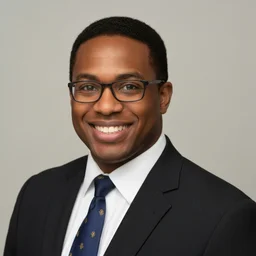
Law Enforcement Trainer & Civil Service Exam Specialist
John Jay College of Criminal JusticeMarcus B. Thompson earned his Master of Arts in Criminal Justice from John Jay College of Criminal Justice and served 12 years as a law enforcement officer before transitioning to full-time academy instruction. He is a POST-certified instructor who has prepared candidates for police entrance exams, firefighter assessments, and civil service examinations across dozens of agencies.
Join the Discussion
Connect with other students preparing for this exam. Share tips, ask questions, and get advice from people who have been there.
View discussion (9 replies)