
FDNY 10 Codes: Complete Guide to Fire Department Radio Communication
Learn all FDNY 10 codes used in Fire Department of New York radio communications. ✅ Full list, meanings, and how they work in real emergencies.
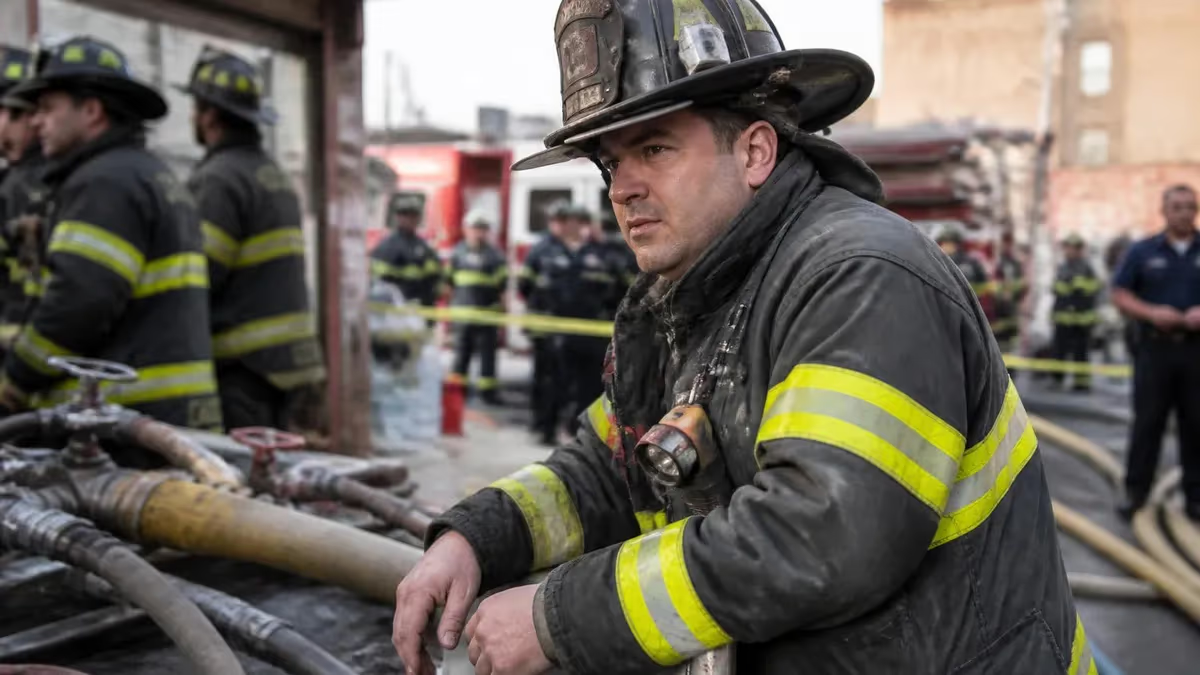
The FDNY 10 codes are a standardized system of radio shorthand used by the Fire Department of New York to communicate quickly, clearly, and efficiently during emergency operations. These numeric codes allow dispatchers, firefighters, and officers to transmit critical information in seconds rather than minutes — a difference that can determine whether a fire is controlled or a life is lost. Understanding these codes is essential for anyone studying for the FDNY exam or seeking a deeper appreciation of how New York's Bravest operate on the fireground and across the city's five boroughs.
Radio communication in the fire service has evolved significantly since the early days of telegraph systems and call boxes. Today, the FDNY uses a combination of plain language and coded transmissions to manage thousands of incidents each year. The 10-code system, originally developed for law enforcement but adapted for fire departments across the country, provides a compact vocabulary that reduces ambiguity, cuts down on air time, and helps crews maintain composure during high-stress situations. Each code carries a precise meaning that all personnel must recognize instantly, regardless of background noise, stress, or the chaos of an active emergency scene.
For candidates preparing for the civil service exam, learning fdny 10 codes alongside the structure of FDNY stations and companies creates a comprehensive picture of how the department functions. Radio discipline is a core competency tested throughout the hiring process and reinforced throughout a firefighter's career. From the moment a unit receives an assignment to the moment it clears a scene, every transmission follows a protocol designed to keep channels open for life-safety traffic and to ensure that command officers have accurate situational awareness at all times.
The codes span a wide range of operational conditions — from routine status updates like being available or en route, to critical emergency signals like a firefighter in distress or a working structural collapse. Some codes are administrative in nature, covering meal breaks or equipment checks, while others trigger immediate tactical responses from multiple units across the city. The layered nature of the system reflects the complexity of urban firefighting in one of the world's most densely populated cities, where a single alarm can involve dozens of apparatus and hundreds of personnel converging on a single block within minutes.
Beyond the fireground, FDNY 10 codes also play a role in interoperability with other New York City agencies. When the FDNY works alongside the NYPD, EMS, or the Office of Emergency Management during large-scale incidents, shared radio vocabulary becomes critical. While some codes differ between agencies, the foundational logic of the 10-code system provides a common framework that helps multi-agency responses stay coordinated. This interoperability was tested and refined after major incidents including the September 11 attacks, which led to significant investment in shared communications infrastructure across city emergency services.
This guide breaks down the most important FDNY 10 codes, explains how they are used in real operations, and provides context that helps candidates, students, and curious New Yorkers understand the language of the fire service. Whether you are preparing for the FDNY exam, considering a career as a firefighter or dispatcher, or simply want to understand what those transmissions mean when you hear a fire truck roll past, this comprehensive overview gives you the knowledge you need to decode the radio traffic of America's largest fire department.
Throughout this article, we will examine the history of the 10-code system, walk through the most commonly used codes, explore how dispatchers and firefighters use them in real emergencies, and offer practical guidance for anyone who needs to master this vocabulary for professional or academic purposes. The FDNY handles over 1.5 million emergency calls per year, and behind every one of those responses is a carefully choreographed communication system built on codes, protocols, and decades of hard-won experience.
FDNY Radio Communications by the Numbers
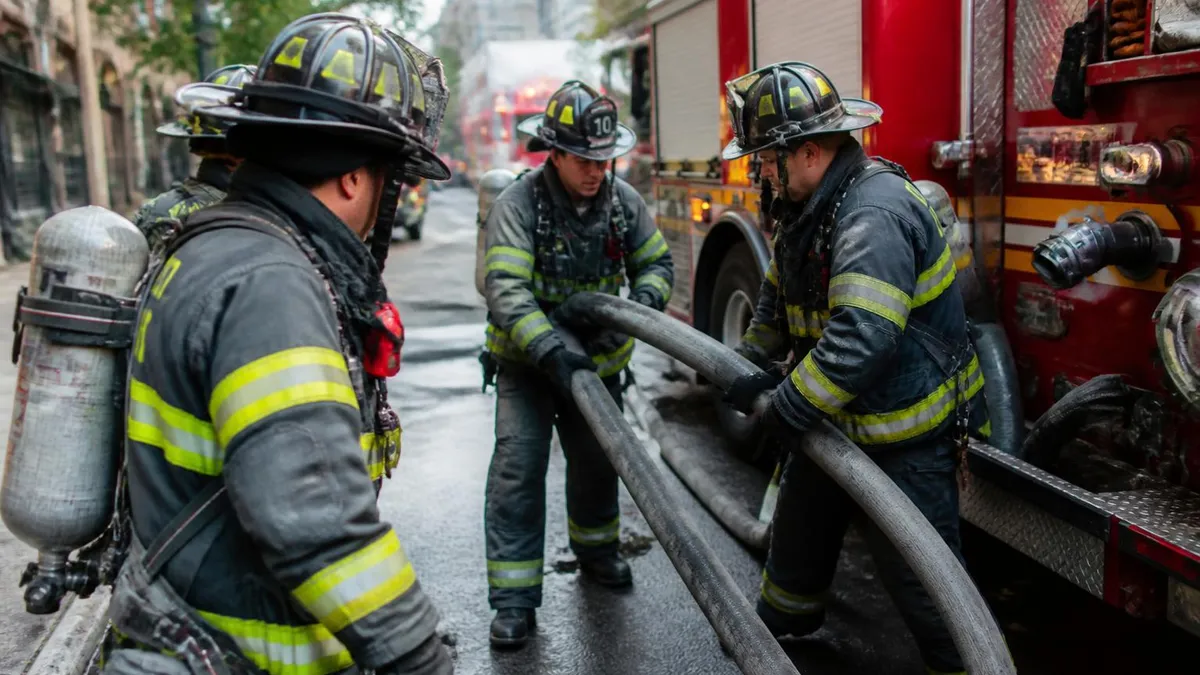
History and Evolution of FDNY Radio Communication
Telegraph Call Box Era (1870s–1920s)
Radio Adoption (1930s–1950s)
APCO 10-Code Standardization (1960s–1970s)
Post-9/11 Communications Overhaul (2001–2010)
Digital Radio and Modern Dispatch (2010–Present)
The core of the FDNY radio communication system is a series of numeric codes that begin with the number 10, followed by a second number that specifies the meaning. These codes cover everything from unit availability to emergency distress signals, and every member of the department is expected to know the full list without hesitation. The 10-code system works because it converts long verbal descriptions into compact, unambiguous transmissions that cut through radio noise and eliminate the fumbling for words that can occur under stress in a burning building or at a multi-vehicle accident scene.
10-1 means receiving poorly — the transmitting unit is having trouble being understood, and the dispatcher or receiving unit should request a repeat. 10-2 signals that reception is clear and the message has been understood. These two foundational codes establish a quality-check mechanism that keeps communications reliable even when radio conditions degrade due to building construction, underground operations, or atmospheric interference. 10-3 means stop transmitting, typically used when a priority message is about to be sent or when channel congestion needs to be cleared immediately for life-safety traffic.
10-4 is perhaps the most universally recognized radio code across all public safety disciplines — it simply means acknowledged or understood. When a unit receives an assignment and transmits 10-4, the dispatcher knows the message was received and the crew is acting on it. 10-6 indicates a unit is busy and not available for additional assignments, while 10-7 means the unit is out of service entirely — whether for maintenance, a crew meal break, or an administrative reason that takes them temporarily offline. 10-8 is the crucial return-to-service code, signaling that a unit is available and ready to respond.
10-13 is one of the most serious codes in the FDNY system — it signals a firefighter or officer needs assistance. When a unit transmits 10-13, it triggers an immediate response from nearby companies and often escalates the assignment level of the incident. The 10-13 is distinct from a Mayday declaration but carries similarly urgent weight. 10-20 requests or provides a unit's location, which is critical in large-scale incidents where command needs to track the position of multiple companies operating across a wide area or inside a complex structure.
10-30 indicates a violation of radio regulations — typically an unauthorized transmission or an individual using department channels without proper authorization. 10-33 signals an emergency on the air, comparable to the universal distress call, and requires all non-essential traffic to cease immediately. 10-45 in FDNY usage refers to a cardiac arrest or similar medical emergency requiring ALS intervention. This code bridges the fire and EMS sides of the department's dual mission and is frequently used given FDNY's responsibility for fire suppression and emergency medical services across New York City.
The status codes — 10-6, 10-7, 10-8 — form the backbone of unit tracking in the computer-aided dispatch system. Every time a unit changes status, that transmission updates the dispatcher's board and the incident management software used by the battalion chief and incident commander. In a city where multiple incidents occur simultaneously across five boroughs, accurate status tracking is what allows the dispatcher to make intelligent resource allocation decisions, sending the closest available unit to each new call rather than dispatching units already committed to active emergencies.
Beyond the standard 10-codes, the FDNY also uses signal codes and plain language in combination with 10-codes to provide a full operational picture. For example, a unit arriving at a working fire might transmit their unit designation, followed by a location confirmation (10-20 equivalent), followed by a signal indicating fire conditions — all in a transmission lasting under ten seconds. This compressed communication style is the product of years of training and operational experience, and it is one of the key competencies that separates a proficient FDNY firefighter from a candidate who has only studied the codes in the abstract.
How FDNY 10 Codes Work Across Different Operations
At a structural fire, FDNY 10 codes are transmitted in rapid succession as units arrive and conditions develop. The first-arriving engine company confirms their status with a 10-84 (arrived at scene), then immediately transmits a preliminary report using plain language combined with signal codes to describe fire conditions. The battalion chief assigns a 10-20 for accountability, ensuring every unit's location is logged in real time as firefighters advance into the building.
As the incident escalates, codes like 10-13 (assistance needed) or a Mayday signal can be declared to redirect resources. Incident command uses 10-4 acknowledgments to confirm that tactical assignments have been received by each company. When the fire is knocked down, a 10-8 from each unit signals the dispatcher to begin releasing mutual-aid companies and returning the scene to a single-company investigation mode.
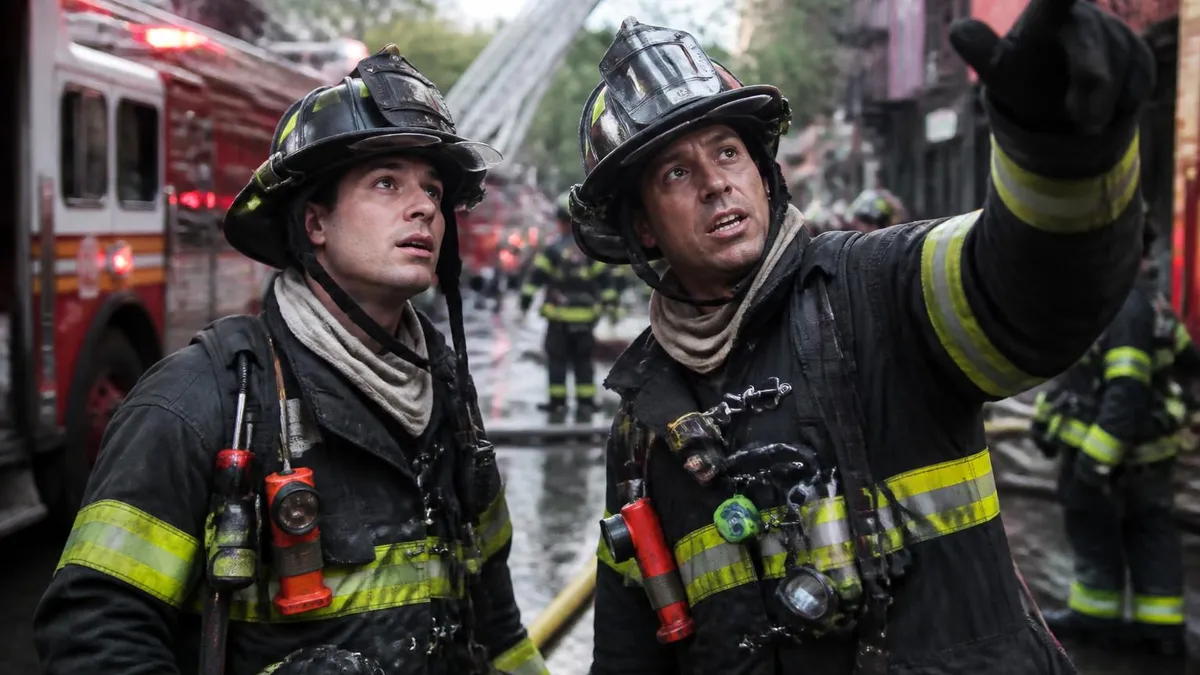
Advantages and Limitations of the FDNY 10-Code System
- +Dramatically reduces air time by compressing common phrases into two-digit codes
- +Reduces stress-induced verbal fumbling during high-pressure emergency transmissions
- +Creates consistent language across all shifts, divisions, and boroughs
- +Facilitates rapid status tracking through computer-aided dispatch integration
- +Provides a professional radio discipline standard that improves situational awareness
- +Enables fast interoperability with EMS and other city agencies using compatible codes
- −Codes vary between agencies, creating confusion during multi-department responses
- −New recruits require significant training time to internalize the full code list
- −Ambiguity can arise when codes have slightly different meanings in different contexts
- −FEMA and DHS have pushed for plain-language standards that conflict with 10-code use
- −Radio noise or weak signal can make numeric codes harder to distinguish than plain words
- −Over-reliance on codes can suppress critical situational information that requires plain language
Essential FDNY 10 Codes Every Candidate Must Know
- ✓Memorize 10-1 (receiving poorly) and 10-2 (receiving clearly) as the baseline signal quality checks.
- ✓Know 10-3 (stop transmitting) and practice recognizing when to clear the channel for priority traffic.
- ✓Understand 10-4 (acknowledged) as the universal confirmation code used across all FDNY communications.
- ✓Learn 10-6 (unit busy), 10-7 (out of service), and 10-8 (in service) as the core status trio.
- ✓Master 10-13 (assistance needed) and understand the immediate multi-unit response it triggers.
- ✓Study 10-20 (location/position) and how it is used for accountability tracking at major incidents.
- ✓Recognize 10-33 (emergency on the air) and know that all non-emergency traffic must immediately cease.
- ✓Understand 10-45 (cardiac arrest/ALS required) as the key bridge between fire and EMS operations.
- ✓Practice recalling codes under timed conditions to simulate the stress of a radio transmission scenario.
- ✓Review the plain-language exceptions required for inter-agency transmissions at multi-department incidents.
The 10-13 Code Can Appear on Written and Practical Exams
The 10-13 assistance code is one of the most frequently tested radio communication topics in FDNY written examinations and oral board interviews. Candidates should be prepared to explain not just the meaning of 10-13 but the precise response protocol it triggers — including which units respond, how command structure shifts, and what personal accountability system activates when a firefighter is declared in distress inside a structure.
For candidates preparing for the FDNY entrance exam, radio communications knowledge is woven into multiple sections of the written test, the oral board interview, and eventually the practical evaluations at the Fire Academy. Understanding FDNY 10 codes is not simply a matter of memorizing a list — it requires understanding how codes fit into the broader operational context of fireground command, incident management, and the chain of communication that runs from the dispatcher to the incident commander to the nozzle team advancing a hoseline into a burning building.
The written examination for FDNY firefighter candidates typically includes questions that test reading comprehension, situational judgment, and the ability to follow instructions — all of which are directly relevant to radio communication competency. A candidate who has spent time learning the logic behind the 10-code system, rather than just rote memorizing individual codes, will be better prepared to answer situational questions that ask what a firefighter should do when they receive a particular transmission or when communication with a unit goes silent unexpectedly. These scenario-based questions reward deep understanding over surface-level recall.
During the oral board phase of the hiring process, candidates may be asked to describe how they would handle a communication breakdown at an emergency scene, how they would request help using proper radio protocol, or how they would relay a size-up report to incident command. Examiners look for composure, precision, and an understanding of radio discipline — including the knowledge that channels must be kept clear, that transmissions should be brief and unambiguous, and that the 10-code system exists to serve the mission of saving lives rather than to impress colleagues with technical vocabulary.
At the Fire Academy, probationary firefighters receive structured instruction in FDNY radio protocols as part of their initial training curriculum. This instruction covers the full range of 10 codes, signal codes, and plain-language requirements, along with practical exercises in which recruits must transmit and receive coded messages under simulated emergency conditions. The academy training is designed to build the muscle memory and calm radio demeanor that experienced firefighters display — the ability to transmit a clear, complete message while physically performing a demanding task in a smoke-filled environment.
Beyond the written exam, candidates benefit from familiarizing themselves with the types of radio transmissions they would make in common scenarios. For instance, a unit arriving at the scene of a reported fire in a residential building would transmit their unit number, their 10-20, a brief size-up of visible conditions (smoke or fire showing, floor level, exposure hazards), and their initial action.
Practicing these scenario-based transmissions out loud — even without a radio — builds the verbal fluency that reduces hesitation under pressure. Exam boards frequently note that candidates who demonstrate operational realism in their answers stand out from those who answer with generic textbook definitions.
It is also worth noting that the FDNY has published operational guides and firefighter manuals that include radio communication protocols, and these documents are publicly accessible through the department's official resources. Candidates who take the time to review these materials alongside their exam prep will have a significant advantage in understanding not just what each code means but how the department expects those codes to be used in context. This contextual knowledge is exactly what separates a qualified candidate from an exceptional one in the highly competitive FDNY hiring process.
Additionally, candidates preparing for promotion exams within the department — including lieutenant and captain exams — will encounter radio communications at a higher operational level. Promotional exam study materials address how company officers manage radio traffic, how to conduct a proper roll call and accountability check using radio protocols, and how to coordinate multiple units on a fireground using both 10-codes and tactical plain language. The foundational knowledge built during exam preparation for the entry-level firefighter position pays dividends throughout an FDNY career.
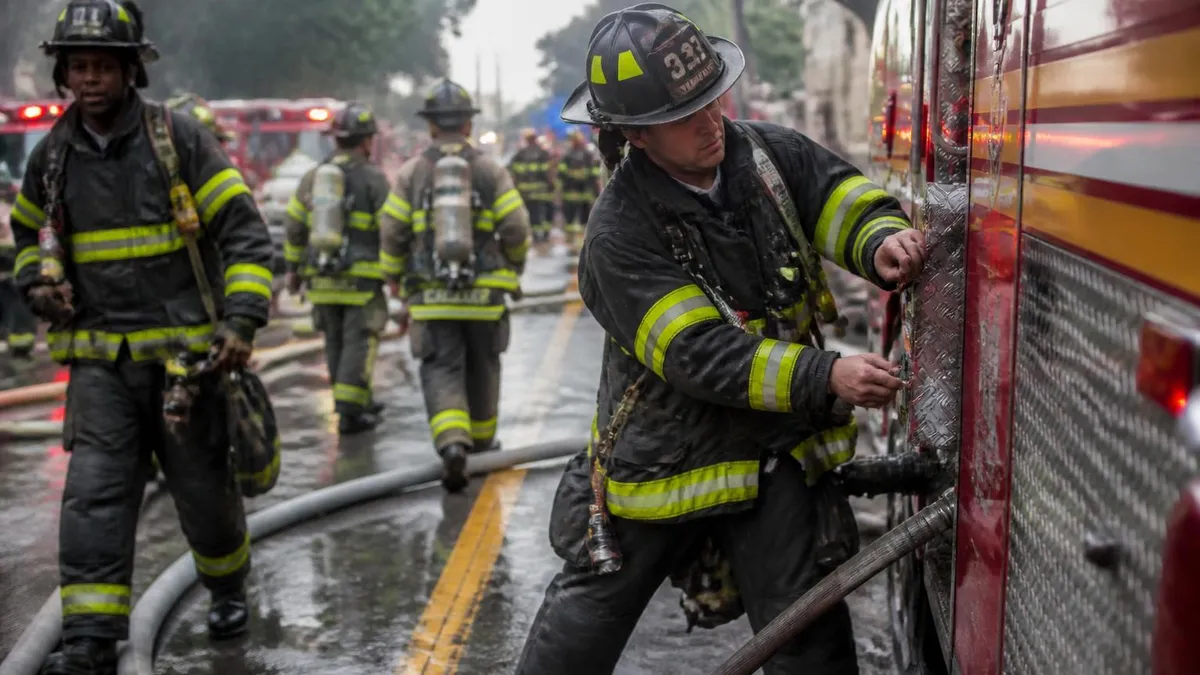
Since 2006, FEMA's National Incident Management System (NIMS) has required plain language communications for all federally funded emergency responses. While FDNY continues to use 10 codes for internal operations, candidates should be aware that multi-agency and federally coordinated incidents require switching to plain language. Exam questions and oral boards may specifically test whether candidates understand when codes are appropriate and when plain language is required by law.
Radio discipline is one of the most important yet least discussed aspects of professional firefighting, and the FDNY's reputation for operational excellence is built in part on the radio professionalism of its members. Good radio discipline means more than knowing the codes — it means knowing when to transmit, how to transmit, and when to stay off the air entirely so that critical messages can get through.
In a busy New York City firehouse, where a single dispatcher may be managing dozens of units across multiple simultaneous incidents, a poorly timed or poorly worded transmission can cause a dangerous delay in getting help to a unit in trouble.
The first principle of FDNY radio best practices is brevity. Every transmission should contain exactly the information needed — no more, no less. Unit identification, location or reference, message content, and a clear ending signal are the four components of a complete radio transmission. Firefighters who fumble with extra words, repeat themselves unnecessarily, or forget to identify their unit create noise that clutters the channel and frustrates the dispatcher trying to track multiple units simultaneously. Training at the academy emphasizes this brevity from day one, and senior firefighters reinforce it informally through the culture of professional radio communication.
The second principle is accuracy. A wrong 10-code or a misunderstood location can send resources to the wrong address, delay assistance to a member in distress, or cause a second alarm to be transmitted prematurely. This is why the system includes confirmation codes like 10-4 and quality-check codes like 10-1 and 10-2 — they provide a feedback loop that catches errors before they become operational problems. When a member is uncertain about whether their transmission was received, protocol requires them to wait for acknowledgment before proceeding, even if that pause feels inefficient under pressure.
The third principle is priority management. Not all radio traffic is created equal, and FDNY protocols establish a clear hierarchy for channel use. Emergency traffic — distress signals, Mayday declarations, critical tactical updates — takes absolute precedence over administrative traffic. A firefighter transmitting a 10-13 or a Mayday expects all other traffic on the channel to cease immediately. This priority system is why the 10-33 (emergency on the air) code exists — it is a channel-wide signal that clears the frequency and creates the space needed for emergency traffic to be heard clearly by all units and the dispatcher.
Proper radio etiquette also includes listening before transmitting — a practice that prevents two units from transmitting simultaneously and creating a garbled, unintelligible signal known as a double transmission. In high-activity periods during major incidents, channels can become congested with units all trying to update their status, request resources, or relay conditions. Experienced firefighters and officers develop the skill of identifying openings in channel traffic and transmitting during those windows, keeping their messages tight so that the channel remains functional for the entire incident.
The interplay between fdny 10 codes and the physical organization of FDNY companies is important for understanding why radio discipline matters operationally. With engine companies, ladder companies, rescue companies, battalion chiefs, and division commanders all potentially operating on the same incident, the volume of potential radio traffic is enormous. Each company officer is responsible for managing their crew's radio usage and ensuring that transmissions from their unit add value to the command picture rather than contributing to channel congestion that could mask a distress call.
Finally, radio communications in the FDNY are subject to recording and review. Every transmission on department radio channels is logged and time-stamped by the computer-aided dispatch system, and these recordings are routinely reviewed as part of after-action reports, incident investigations, and promotional assessments. This accountability means that radio discipline is not just a matter of operational efficiency — it is part of the professional record of every member of the department. Candidates preparing for FDNY careers would do well to internalize this culture of accountability from the earliest stages of their preparation.
Practical preparation for mastering FDNY 10 codes begins long before setting foot in the Fire Academy. Candidates who start building their radio vocabulary early will arrive at training with a distinct advantage, since the academy curriculum moves quickly and presupposes that recruits have done foundational work on their own. The most effective self-study approach combines memorization of individual codes with scenario-based practice that forces you to apply the codes in realistic operational contexts rather than simply recalling them from a flashcard.
One of the most effective study methods is to create a personal reference card with the full list of FDNY 10 codes and carry it with you for daily review during downtime. The goal is not to rely on the card permanently, but to use it as a tool for active recall — covering the meaning and trying to retrieve it from memory before checking the answer.
Studies in cognitive science consistently show that active recall is far more effective for long-term retention than passive rereading, and the goal with radio codes is to achieve automatic recall under pressure, which requires building that memory trace through repeated testing rather than exposure.
Scenario practice can be done with a study partner or alone. Create cards describing different emergency situations — a unit arriving at a working fire, a firefighter requesting assistance, a unit clearing a medical call — and practice transmitting the appropriate codes in sequence. Time yourself to simulate the compressed radio windows that real dispatch environments create.
If you have access to a scanner app that monitors FDNY radio traffic, listening to real transmissions (while respecting privacy and operational security considerations) can help you hear how codes are used in actual practice, which reinforces the connection between the abstract code and its real-world application.
Group study sessions with other exam candidates can be particularly valuable for radio communications prep. Taking turns playing the dispatcher and the field unit in simulated scenarios builds both transmitting and receiving skills. The receiving side of radio communication is often neglected in self-study but is equally important — a firefighter who transmits well but fails to comprehend and act on incoming transmissions is a liability on the fireground. Practice confirming messages, asking for repeats when unclear (10-1), and relaying information accurately to crew members who may not have heard the direct transmission.
For candidates who want to go deeper, the FDNY has published various guides, operational bulletins, and training documents that describe radio protocols in detail. The FDNY Operations Manual and various training circulars address radio communications as part of the broader fireground operations framework. Reviewing these materials gives you insight into how the department itself describes proper radio procedure, which is exactly the perspective you need when answering exam questions or responding to oral board prompts about communication protocols.
Technology can also support your preparation. Several mobile apps offer FDNY exam preparation materials, and some include flashcard modules specifically covering radio codes and communications procedures. Practice tests that include situational judgment questions about radio communications are particularly valuable, as they test your ability to apply code knowledge in context rather than simply recognize definitions. Look for practice resources that present scenarios requiring you to choose the correct code from a set of options — this format closely mirrors how radio communications knowledge is tested in the written examination.
Finally, maintain perspective on where radio communications knowledge fits within the broader FDNY exam preparation picture. The written exam covers a wide range of topics including reading comprehension, mathematics, mechanical aptitude, spatial reasoning, and situational judgment.
Radio codes are one component of this larger knowledge base, and while they are important, candidates should allocate study time proportionally across all exam domains. A balanced preparation strategy that builds deep competency across all tested areas will outperform a narrowly focused approach that masters one domain at the expense of others — and it will serve you far better throughout a long FDNY career.
FDNY Questions and Answers
FDNY Stations, Engine & Ladder Companies
FDNY Logo: History, Meaning, and Symbolism of the Fire Department of New York Emblem
FDNY vs NYPD Hockey Game: Inside New York's Bravest vs Finest Heroes on Ice Rivalry
FDNY Marine Units: Inside the Fire Department of New York's Fireboat Fleet and Marine 6
FDNY (Fire Department New York) Test: Your Guide
About the Author
Law Enforcement Trainer & Civil Service Exam Specialist
John Jay College of Criminal JusticeMarcus B. Thompson earned his Master of Arts in Criminal Justice from John Jay College of Criminal Justice and served 12 years as a law enforcement officer before transitioning to full-time academy instruction. He is a POST-certified instructor who has prepared candidates for police entrance exams, firefighter assessments, and civil service examinations across dozens of agencies.
Join the Discussion
Connect with other students preparing for this exam. Share tips, ask questions, and get advice from people who have been there.
View discussion (9 replies)