
Esthetician Massage Movements: Complete Guide to Techniques, Careers, and Licensing
Master esthetician massage movements, career paths, salary data & licensing steps. 🎯 Complete guide for aspiring skincare professionals.

Understanding esthetician massage movements is one of the most foundational skills any skincare professional must master. Whether you are exploring what is an esthetician for the first time or preparing for your state board exam, the five classic massage movements — effleurage, petrissage, tapotement, friction, and vibration — form the technical core of every facial treatment. These techniques influence circulation, lymphatic drainage, product absorption, and client relaxation, making them indispensable to professional practice across every setting, from day spas to medical clinics.
An esthetician is a licensed skincare professional trained to assess, cleanse, exfoliate, and treat the skin of the face and body. The profession sits at the intersection of science and wellness: practitioners must understand anatomy and physiology, chemistry of cosmetic ingredients, sanitation protocols, and hands-on manual techniques. The term aesthetician vs esthetician often confuses newcomers — both spellings refer to the same licensed professional, with regional preferences varying by state and institution, though some distinguish medical versus spa-focused roles.
Esthetician massage movements are not simply relaxing luxuries added to a facial service. Each stroke serves a clinical purpose. Effleurage, the smooth gliding stroke performed at the opening and close of every facial massage, warms the skin and begins stimulating circulation. Petrissage involves kneading and lifting movements that work deeper into the muscle tissue, improving blood flow and helping to soften congested areas. When an esthetician selects the right movement at the right moment in a treatment, the results are measurably better — reduced puffiness, improved texture, and enhanced product penetration.
The career landscape for estheticians in the United States is broader than many people realize. Beyond traditional day spas and salons, licensed estheticians work in medical offices alongside dermatologists and plastic surgeons, in resort spas, on cruise ships, in film and television makeup departments, and in product development roles for cosmetic brands. Esthetician employment opportunities are growing steadily, driven by increasing consumer awareness of skin health and a cultural shift toward self-care. The Bureau of Labor Statistics projects continued demand for skincare specialists well into the next decade.
For those researching how to become an esthetician, the path typically begins with enrolling in an accredited esthetician school, completing a state-required number of training hours (ranging from 260 to 1,500 depending on the state), and passing both a written and a practical state board examination. The written exam tests knowledge of theory, sanitation, anatomy, and — critically — massage technique. The practical exam evaluates hands-on skill, including the correct execution of facial massage movements on a live model or mannequin, making technical mastery non-negotiable for licensure.
Esthetician salary data is encouraging for prospective students. The median annual wage for skincare specialists in the United States hovers around $38,000 to $42,000 base, but experienced professionals working in medical settings, luxury spas, or commission-based environments frequently earn $55,000 to $80,000 or more per year. Independent estheticians who build their own clientele through booth rental or private studio arrangements often exceed six figures when retail commissions and gratuities are factored in. Understanding the technical foundations — including massage movements — directly correlates with client retention and earning potential.
This guide covers every major esthetician technique in depth, explains the physiological rationale behind each massage movement, outlines the steps to licensure, and provides actionable preparation strategies for the state board exam. Whether you are a first-year student at an esthetician school or an experienced practitioner refreshing your knowledge before an exam, the information here will strengthen both your theoretical understanding and your practical confidence.
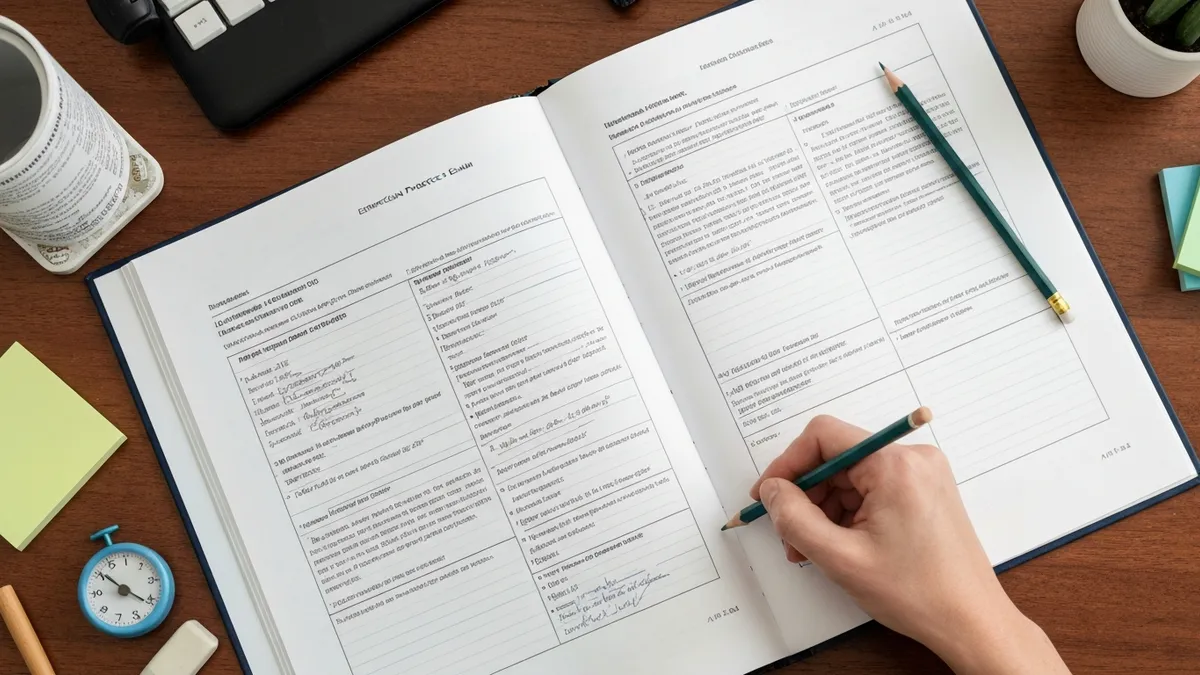
Esthetician Career & Licensing by the Numbers
The 5 Core Esthetician Massage Movements Explained
Effleurage — The Foundation Stroke
Petrissage — Kneading and Lifting
Tapotement — Percussion Movements
Friction — Deep Circular Rubbing
Vibration — Oscillating Pressure
Knowing how to become an esthetician requires understanding both the educational pathway and the practical skill sets the profession demands. Most states require prospective estheticians to complete a cosmetology or esthetics program at an accredited esthetician school before they can sit for their licensing exam.
Program lengths vary dramatically by state — California requires 600 hours, New York 260 hours, and Texas 750 hours — so researching your specific state's requirements early in the decision process is essential. How long is esthetician school often depends on whether you enroll in a full-time accelerated program or a part-time evening schedule designed for working adults.
Inside an accredited esthetician program, students spend their hours learning far more than massage technique. The curriculum typically covers skin anatomy and physiology in considerable depth: the layers of the epidermis, the dermis and its collagen and elastin structures, sebaceous and sweat gland function, and the pathology of common conditions like acne, rosacea, hyperpigmentation, and dehydration.
Students learn to perform a thorough skin analysis using the Fitzpatrick scale and the Rubin classification, both of which guide treatment decisions and chemical peel selection. Product chemistry — understanding pH, active ingredients like AHAs, BHAs, retinoids, niacinamide, and peptides — comprises another major section of the curriculum.
The hands-on clinic hours within esthetician schools are where massage movements transition from classroom theory to embodied skill. Under instructor supervision, students practice on peers and on paying clients in the school's clinic spa. Repetition is everything: effleurage must become so natural that the esthetician can maintain it while simultaneously monitoring the client's breathing and skin response. Petrissage pressure must be calibrated to the client's tissue density — firmer pressure for a client with congested, oily skin versus lighter touch for a thin-skinned mature client. This calibration only comes with supervised practice hours.
State board examinations typically include a written component and a practical component. The written exam, administered by the National-Interstate Council of State Boards of Cosmetology (NIC) in many states, covers sanitation, anatomy, skin conditions, chemical services, and — heavily tested — massage theory and contraindications. Contraindications for facial massage are a favorite exam topic: active infections, open lesions, severe inflamed acne, sunburn, fever, and certain autoimmune conditions are all absolute contraindications, while conditions like mild rosacea or sensitive skin require modification rather than complete avoidance.
The practical exam evaluates a live or mannequin demonstration of a basic facial, and the massage sequence is graded on technique, sequence, rhythm, and client draping protocol. Examiners specifically look for: beginning the massage with effleurage, transitioning smoothly between movements, maintaining appropriate pressure without causing discomfort, returning to effleurage between deeper techniques, and closing the massage sequence with light effleurage strokes toward lymph nodes. Students who have drilled this sequence until it is automatic perform significantly better under the pressure of examination conditions than those who depend on recall alone.
Beyond the exam, newly licensed estheticians frequently report that their first months in the workforce feel like a second education. A student who performed 300-hour clinic treatments will now encounter clients with complex skin histories, unrealistic expectations, and medical conditions that fall outside spa scope of practice.
Building a professional consultation intake form, learning to ask the right questions about medications (many of which cause photosensitivity or thinning skin), and establishing clear professional boundaries are skills that textbooks cover but real experience cements. Mentorship under a senior esthetician in your first position is invaluable and often the difference between early burnout and a long, successful career.
Esthetician employment opportunities extend into every segment of the beauty and wellness industry. Day spas remain the largest single employer, but medical aesthetic practices — those offering laser treatments, injectables, and advanced chemical peels — are the fastest-growing segment. In a medical setting, the esthetician's role expands into pre- and post-procedure care: preparing skin before a laser resurfacing session, managing healing protocols after a deep peel, and recommending medical-grade skincare products. These roles command higher salaries and often require additional certification or training beyond the basic esthetician license.
Esthetician License: Requirements, Costs, and Timeline
To obtain an esthetician license in the United States, candidates must complete a state-approved training program, pass a written theory examination, and pass a practical skills exam. Most states require applicants to be at least 16 or 17 years old and hold a high school diploma or GED. Some states also require a background check before granting licensure. The number of required training hours varies significantly — from 260 hours in New York to 1,500 hours in states like Oregon — so verifying your state's specific requirements at the official cosmetology board website is a critical first step before enrolling in any program.
After completing your training program, you submit a licensure application to your state board, pay the application fee (typically $25 to $100), and schedule your written and practical exams through NIC or your state's designated testing provider. Passing scores vary by state but generally hover around 70 to 75 percent for the written exam. Once you pass both components and your application is approved, you receive your esthetician license, which must be renewed every one to two years with continuing education hours to stay current with evolving skincare science and safety standards.

Is an Esthetician Career Right for You? Pros and Cons
- +Flexible schedule options including part-time, full-time, and booth rental arrangements
- +Relatively short training period compared to other healthcare professions — as little as 6 months full-time
- +Strong career growth in the fast-expanding medical aesthetics segment
- +High job satisfaction from visible, immediate results and client relationship-building
- +Multiple specialization paths: medical esthetician, laser technician, makeup artist, spa director
- +Low barrier to entrepreneurship — many estheticians successfully open their own studio within 3 to 5 years
- −Physical demands are significant — standing for 6 to 8 hours and repetitive hand movements can cause fatigue and injury over time
- −Income can be inconsistent early in a career while building a client base
- −Exposure to chemical products and disinfectants requires strict safety protocol adherence to avoid skin sensitization
- −Scope of practice is strictly limited by state law, requiring referrals for medical conditions beyond spa treatment
- −Continuing education requirements and license renewal fees are an ongoing financial commitment
- −Emotional labor is high — managing demanding or dissatisfied clients requires significant interpersonal resilience
Pros and Cons at a Glance
| Pros | Cons |
|---|---|
| Flexible schedule options including part-time, full-time, and booth rental arrangements | Income can be inconsistent early in a career while building a client base |
| Strong career growth in the fast-expanding medical aesthetics segment | Exposure to chemical products and disinfectants requires strict safety protocol adherence to avoid skin sensitization |
| High job satisfaction from visible, immediate results and client relationship-building | Scope of practice is strictly limited by state law, requiring referrals for medical conditions beyond spa treatment |
| Multiple specialization paths: medical esthetician, laser technician, makeup artist, spa director | Continuing education requirements and license renewal fees are an ongoing financial commitment |
Esthetician State Board Exam Prep Checklist
- ✓Memorize the five massage movements (effleurage, petrissage, tapotement, friction, vibration) and their clinical purposes.
- ✓Study all absolute and relative contraindications for facial massage and chemical services.
- ✓Review the Fitzpatrick skin typing scale and be able to classify all six phototypes from memory.
- ✓Learn the difference between bactericidal, fungicidal, virucidal, and sporicidal disinfection levels and when each is required.
- ✓Practice the complete practical facial sequence — consultation, draping, cleanse, analysis, massage, mask, SPF — timed to fit within exam parameters.
- ✓Complete at least 3 full-length timed written practice exams under realistic testing conditions.
- ✓Review skin anatomy layers: stratum corneum, granulosum, spinosum, basale, and dermis structures.
- ✓Study chemical peel classifications (superficial, medium, deep) and associated acids (glycolic, salicylic, TCA, phenol).
- ✓Confirm your exam location, required identification, and prohibited items at least one week before your exam date.
- ✓Review your state's specific sanitation and disinfection regulations, as these vary and are heavily weighted on written exams.
Effleurage Always Opens and Closes the Massage
One of the most consistently tested facts on esthetician state board exams is that effleurage is always the first and last movement in any facial massage sequence. Examiners specifically watch for this in the practical exam. Beginning with effleurage warms the tissue and establishes client trust; ending with it signals closure and promotes lymphatic drainage. Using any other movement to open or close the sequence is considered incorrect technique and will result in point deductions.
Esthetician salary potential varies considerably based on work setting, geographic location, years of experience, and specialization. According to the Bureau of Labor Statistics, the median annual wage for skincare specialists in the United States was approximately $38,000 to $42,000 in recent reporting years. However, this figure understates the earning ceiling for experienced professionals. Estheticians working in high-end resort spas in markets like New York City, Miami, or Los Angeles regularly earn $55,000 to $70,000 in base wages, with commission on retail product sales and gratuities pushing total compensation substantially higher.
The highest-earning segment of the esthetician profession is the medical esthetician, also called a clinical esthetician, who works alongside board-certified dermatologists and plastic surgeons. Medical estheticians perform advanced treatments including microdermabrasion, chemical peels of greater depth than those permitted in day spa settings, laser-assisted procedures (as permitted by state law and under physician supervision), microneedling, and pre- and post-operative skin care for surgical patients. Annual salaries in medical aesthetics typically range from $50,000 to $85,000, with some specializations in cosmetic surgery practices exceeding $90,000 for experienced practitioners.
Geographic variation in esthetician salary is significant. States with high costs of living — California, New York, Washington, Massachusetts — generally offer higher wages but also have higher operating costs for independent estheticians. States in the Southeast and Midwest may offer lower base wages but significantly lower costs of living and studio rental, making total financial outcomes comparable. When researching esthetician near me options for employment or services, considering both compensation and local market demand for esthetics services is essential for making an informed career or relocation decision.
Esthetician employment opportunities beyond traditional spas and salons have expanded dramatically in the past decade. The rise of medical aesthetics practices, medical spas (medspas), and dermatology-affiliated aesthetic centers has created thousands of positions that simply did not exist twenty years ago. Additionally, the growth of skincare retail — both brick-and-mortar stores and direct-to-consumer brands — has created demand for estheticians in product education, brand ambassador, and clinical trainer roles that combine skincare expertise with sales and communication skills. These non-traditional roles often offer competitive salaries with regular business hours rather than the weekend and evening scheduling typical of spa environments.
Independent practice remains a powerful option for experienced estheticians. Booth rental arrangements, in which an esthetician pays a flat weekly or monthly fee to rent a treatment room within an established salon or spa, allow professionals to set their own pricing, build their own brand, and keep the majority of their earnings.
Private studio ownership — renting or purchasing a standalone treatment room — offers even greater autonomy and earning potential, though it requires business acumen in addition to technical skill. Many successful independent estheticians report income of $70,000 to $120,000 annually once their client base is established, particularly when they combine services with a curated retail offering.
The connection between technical mastery and earning potential is direct and measurable. Clients return to estheticians who consistently produce results, and results are driven by correct technique. An esthetician who understands why each massage movement works — what it does to circulation, lymphatic flow, muscle tone, and product penetration — can customize treatments far more effectively than one who simply follows a scripted protocol. This customization creates the kind of client experience that generates word-of-mouth referrals, which remain the single most powerful driver of new business for solo and independent estheticians.
Professional associations also play a role in career development and earning potential. The Associated Skin Care Professionals (ASCP) and the American Association of Cosmetology Schools (AACS) offer resources, liability insurance, continuing education, and networking opportunities that help estheticians stay current and competitive. Licensed esthetician professionals who carry professional liability insurance through associations like ASCP are better protected against client claims and often viewed as more credible by employer spas and medical practices. Investing in membership and ongoing education is a career strategy, not just an expense.

Never perform facial massage or chemical services on clients with active skin infections, open lesions, severe inflamed acne, sunburn, fever, or a recent history of facial surgery. These are absolute contraindications — performing a service under these conditions can cause serious harm, violate your scope of practice, and expose you to professional liability. Always conduct a thorough intake consultation and update client records at every visit, since health status and medications change. If in doubt, refer the client to their physician before proceeding with any treatment.
A medical esthetician career represents the advanced tier of the esthetics profession, combining the foundational skills of a licensed esthetician with specialized clinical knowledge and equipment training. The pathway to becoming a medical esthetician typically begins with obtaining your basic esthetician license, followed by additional training in laser and light-based therapies, advanced chemical peeling, microneedling, dermaplaning, and the medical protocols specific to the practice type where you will work. Many medical aesthetics employers provide this additional training in-house, while others prefer candidates who have already completed a recognized advanced aesthetics certificate program.
The scope of practice for a medical esthetician is broader than that of a spa esthetician but is strictly defined by state law and must be supervised by a licensed physician or, in some states, a nurse practitioner or physician assistant. Medical estheticians may use devices and perform procedures that are outside the scope of spa esthetics — including certain laser wavelengths, radiofrequency devices, and physician-delegated injectable assist protocols — but only under defined supervisory relationships.
Understanding and respecting these boundaries is both a legal requirement and an ethical professional obligation. What does an esthetician do in a medical context is meaningfully different from what they do in a day spa, and prospective medical estheticians should research state-specific regulations carefully.
The clinical setting demands a different communication style from the spa environment. Medical esthetician clients are often post-procedure patients managing healing skin, or individuals with diagnosed dermatological conditions being co-managed by a physician. Documenting observations accurately, communicating changes in client skin status to the supervising physician, maintaining HIPAA-compliant client records, and understanding the interactions between medical treatments and esthetic services are all critical competencies. Many medical estheticians pursue additional credentials in laser safety (such as certification from the National Council on Laser Certification) to expand their scope and marketability.
Massage movements remain relevant in the medical esthetics context, though their application is modified for clinical populations. Post-surgical patients recovering from procedures like rhinoplasty or facelift benefit from gentle lymphatic drainage massage performed by a trained esthetician, which reduces post-operative edema and speeds healing. Effleurage and very gentle petrissage adapted for compromised skin barriers are used in scar management protocols months after procedures. The esthetician's manual technique skills, far from being irrelevant in a clinical setting, become more nuanced and consequential because the skin being treated is more vulnerable and the stakes of incorrect technique are higher.
Career progression in medical aesthetics can lead to roles as an aesthetics director, clinical trainer for device manufacturers, product educator for pharmaceutical-grade skincare lines, or eventually practice ownership of a medical spa. Medical spa ownership requires not only esthetics expertise but also compliance with state medical practice statutes, which typically require physician ownership or a specific supervisory structure. Many experienced medical estheticians partner with a physician medical director to establish their own medically-compliant aesthetic practices, creating a business structure that leverages both clinical credibility and entrepreneurial freedom.
The demand for medical estheticians is projected to grow faster than overall esthetician employment as the U.S. population ages and non-surgical cosmetic treatments become increasingly mainstream. Procedures like laser resurfacing, IPL photofacials, and professional chemical peels have moved from luxury services to routine skincare maintenance for a broad demographic. As these treatments become more accessible and more widely sought, practices need skilled estheticians who can deliver consistent, safe results and build lasting clinical relationships with patients. The technical excellence demonstrated in massage movements and manual skills forms the foundation upon which all advanced clinical skills are built.
Whether your career path leads to a boutique day spa, a luxury resort, an independent studio, or a dermatology practice, the technical fundamentals taught in esthetician school — including precise execution of the five massage movements — remain the bedrock of professional excellence. Clients and patients alike can feel the difference between a practitioner who has truly internalized these techniques and one who is mechanically executing a protocol. That felt difference is what creates loyal, long-term professional relationships and, ultimately, a sustainable and rewarding esthetics career.
Practical preparation for the esthetician state board exam requires a structured study approach that combines written review with hands-on repetition. The most effective strategy is to divide your preparation into themed weekly blocks: spend the first week on anatomy and physiology, the second on sanitation and safety, the third on massage theory and contraindications, and the fourth on chemical services and product chemistry. This thematic approach prevents the common mistake of reviewing all topics superficially rather than achieving genuine mastery of each domain tested on the exam.
For the massage movements specifically, create a physical practice ritual. Set aside 20 to 30 minutes daily to perform the full five-movement sequence on a mannequin or willing practice partner. Narrate each movement aloud as you perform it — name the technique, describe its purpose, identify the direction of pressure relative to lymphatic flow. This multi-modal practice (kinesthetic, auditory, and verbal) encodes the knowledge more deeply than reading alone. Many students find that teaching the movements to a classmate is the single fastest way to identify and close gaps in their own understanding.
Time management during the practical exam is a skill that must be practiced deliberately. Most state boards allow 30 to 45 minutes for the practical facial demonstration, and students who have not timed themselves in practice frequently run long on early steps — particularly consultation, draping, and cleansing — and then rush through the massage sequence, which is where the most points are allocated.
Film yourself performing the full sequence at least twice in the weeks before your exam. Watching the playback reveals technical errors that are invisible when you are in the flow of performing the treatment, such as uneven pressure between left and right hand strokes or failure to complete the full effleurage closing sequence.
Written exam preparation should include at least 200 to 300 practice questions completed under timed conditions before exam day. Questions about massage movements will test you on the definition of each technique, the physiological effect of each technique, the correct sequence, the contraindications for each technique, and the specific client populations for whom each technique should be modified or avoided.
Reviewing rationales for both correct and incorrect answer choices — not just selecting the right answer — trains your clinical reasoning rather than simple memorization and produces better performance on the actual exam where question wording may differ from practice materials.
Managing pre-exam anxiety is a legitimate part of exam preparation that many students neglect. The esthetician state board exam, like all professional licensing exams, involves performance pressure that can degrade the execution of skills that feel effortless in the practice setting.
Developing a consistent pre-exam routine — getting full sleep the night before, eating a stable meal the morning of, arriving 20 minutes early, and doing a brief physical warm-up for your hands before the practical — creates physiological conditions that support optimal performance. Breathing techniques used in massage therapy to calm the nervous system are equally applicable to calming yourself as the practitioner before and during the exam.
After passing the exam and obtaining your esthetician license, treat your first year of professional practice as a continuation of your education. Observe more experienced colleagues, attend professional workshops and trade shows like IECSC (International Esthetics Cosmetics and Spa Conference), and commit to completing your continuing education hours in areas that genuinely advance your clinical skills rather than simply choosing the easiest options available.
The massage techniques and anatomical knowledge that get you through the board exam become increasingly sophisticated as clinical experience accumulates — what felt like a rigid sequence to memorize as a student becomes an intuitive, adaptive tool as a practicing professional.
The esthetics profession rewards lifelong learners. Skincare science evolves rapidly: new ingredients, new delivery systems, new device technologies, and new clinical research on skin physiology all emerge regularly and require practitioners to update their knowledge continuously. The esthetician who approaches their career as a perpetual student — building technical precision in fundamentals like massage movements while remaining curious about emerging treatments — will find both greater clinical effectiveness and greater career longevity than one who treats initial licensure as the end point of professional development rather than its beginning.
Sample Esthetician Practice Questions
Try these questions from our free Esthetician practice tests. The correct answer and an explanation follow each question.
Which massage movement is best for relaxing facial muscles?
- A. Petrissage
- B. Tapotement
- C. Effleurage
- D. Friction
Answer: C. Effleurage
Effleurage is a gentle, gliding, stroking massage movement performed with the palms or fingertips, designed to be soothing and relaxing. It is ideal for warming up the muscles and applying products at the beginning and end of a facial. Its smooth, continuous motion helps to calm the nervous system and promote deep relaxation of the facial muscles.
What is the correct direction of massage movements when performing lymphatic drainage on the face?
- A. Toward the nearest lymph nodes
- B. Away from the lymph nodes
- C. In circular motions over the cheekbones
- D. Upward toward the forehead only
Answer: A. Toward the nearest lymph nodes
Lymphatic drainage massage follows the natural lymph pathways, directing fluid toward the nearest lymph nodes for proper drainage.
During a facial massage, which movement involves light, continuous stroking used at the beginning and end of a treatment?
- A. Effleurage
- B. Petrissage
- C. Tapotement
- D. Friction
Answer: A. Effleurage
Effleurage is a gentle, gliding stroke that promotes relaxation and is traditionally used to open and close a facial massage sequence.
Which type of facial massage movement uses a circular, rotary motion with the fingertips to stimulate circulation and soften the skin?
- A. Effleurage
- B. Petrissage
- C. Friction
- D. Tapotement
Answer: C. Friction
Friction movements use small, circular rotary motions applied with the fingertips or palms to generate heat, stimulate circulation, and help soften and loosen debris within the follicles.
Esthetician Questions and Answers
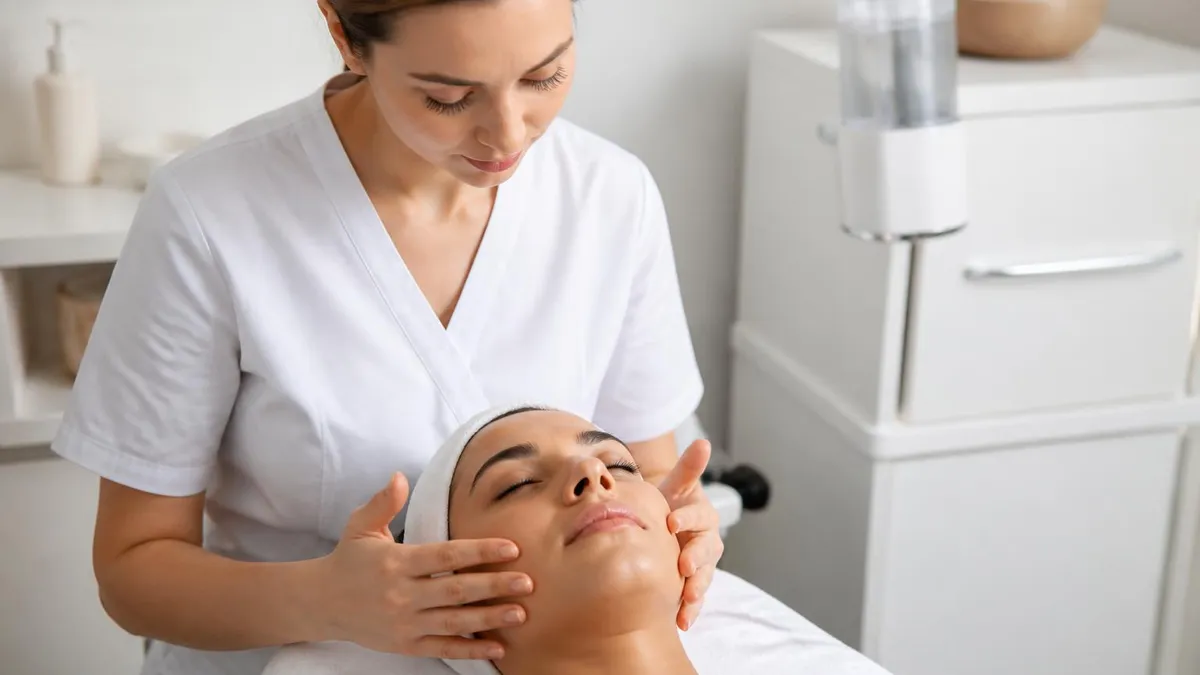
Esthetician School Houston: Programs, Costs, Licensing Requirements, and Career Outcomes in Texas

Esthetician Spa Floor Plan: Design Your Treatment Space for Maximum Efficiency and Client Comfort
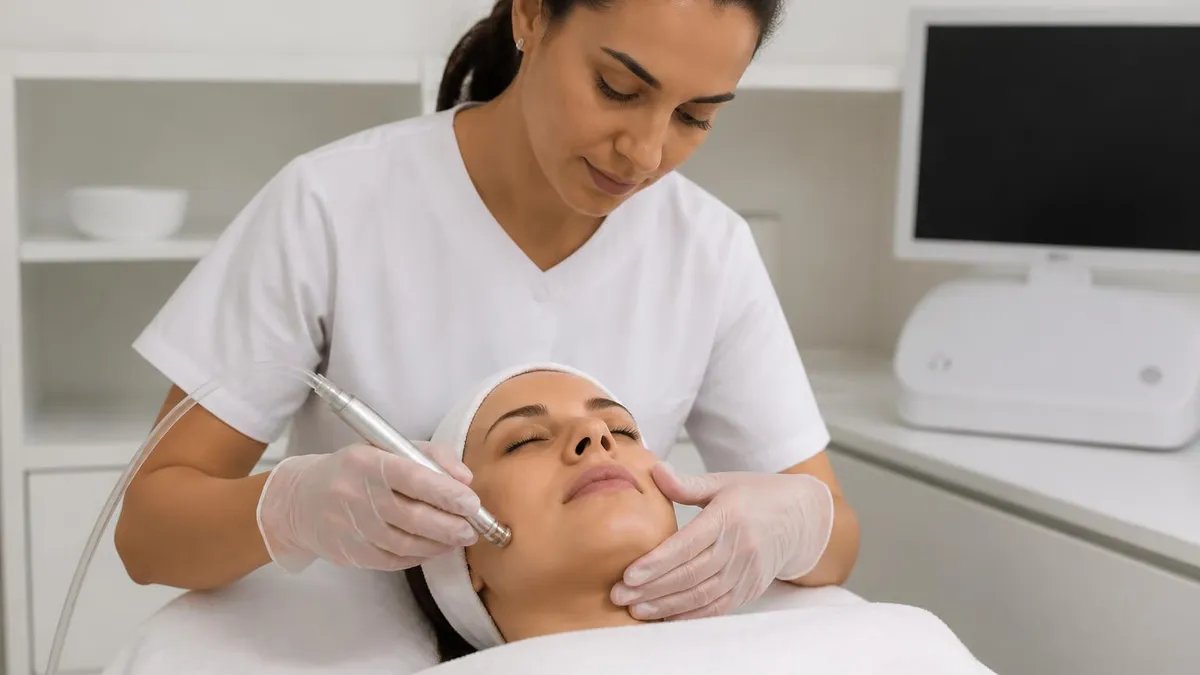
Esthetician Jobs Near Me: Pay, Settings & Hiring Guide
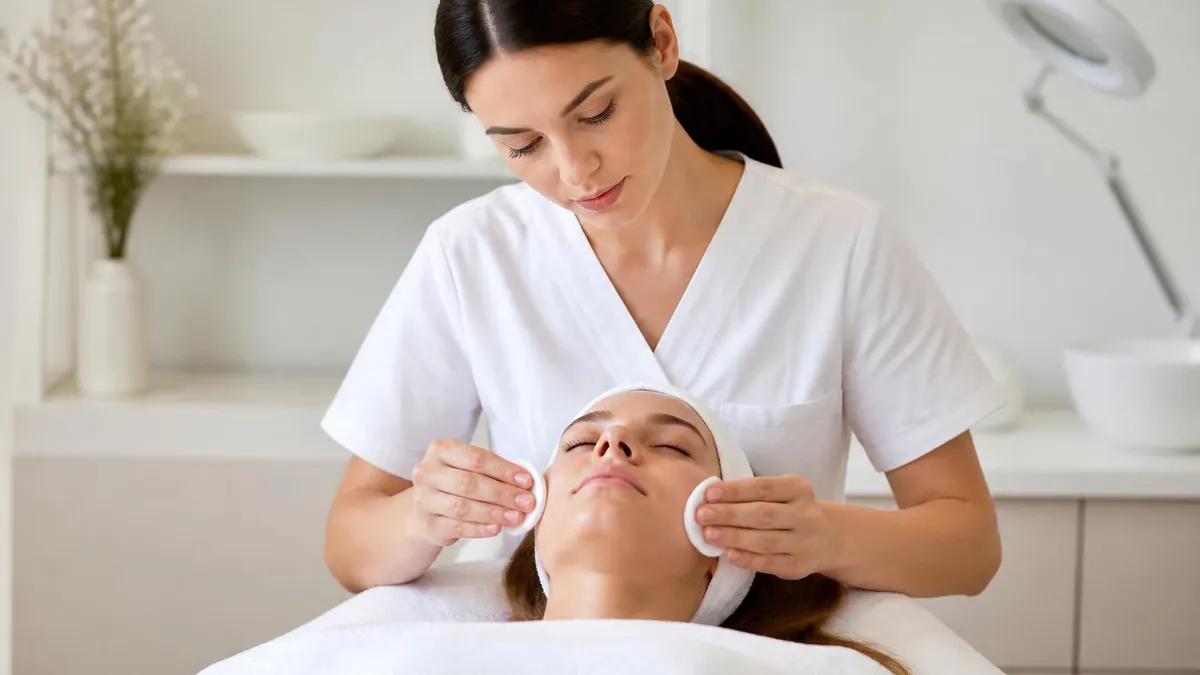
Esthetician Insurance: Coverage, Costs & Tax Write-Offs
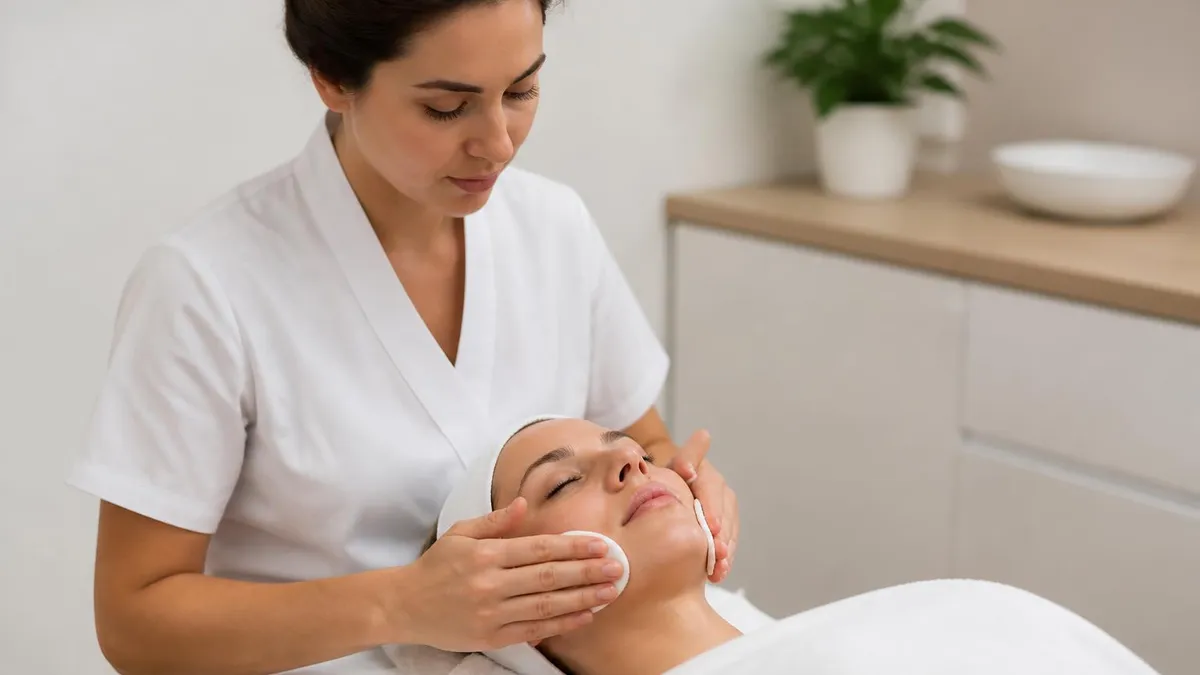
National Esthetician Day: Celebrating Skincare Professionals in 2026
About the Author
Licensed Cosmetologist & Beauty Licensing Exam Specialist
Paul Mitchell SchoolsMichelle Santos is a licensed cosmetologist with a Bachelor of Science in Esthetics and Salon Management from Paul Mitchell School. She has 16 years of salon industry experience and 8 years preparing students for state cosmetology board exams in theory, practical skills, and sanitation. She specializes in licensure preparation for cosmetologists, estheticians, and nail technicians.
Join the Discussion
Connect with other students preparing for this exam. Share tips, ask questions, and get advice from people who have been there.
View discussion (4 replies)