
Nurse Esthetician: Career Overview, Training Path, Salary, Job Duties, and How to Become One
Nurse esthetician career guide: 💡 training path, RN + esthetician requirements, job duties in medspas, salary, certifications, and how to combine
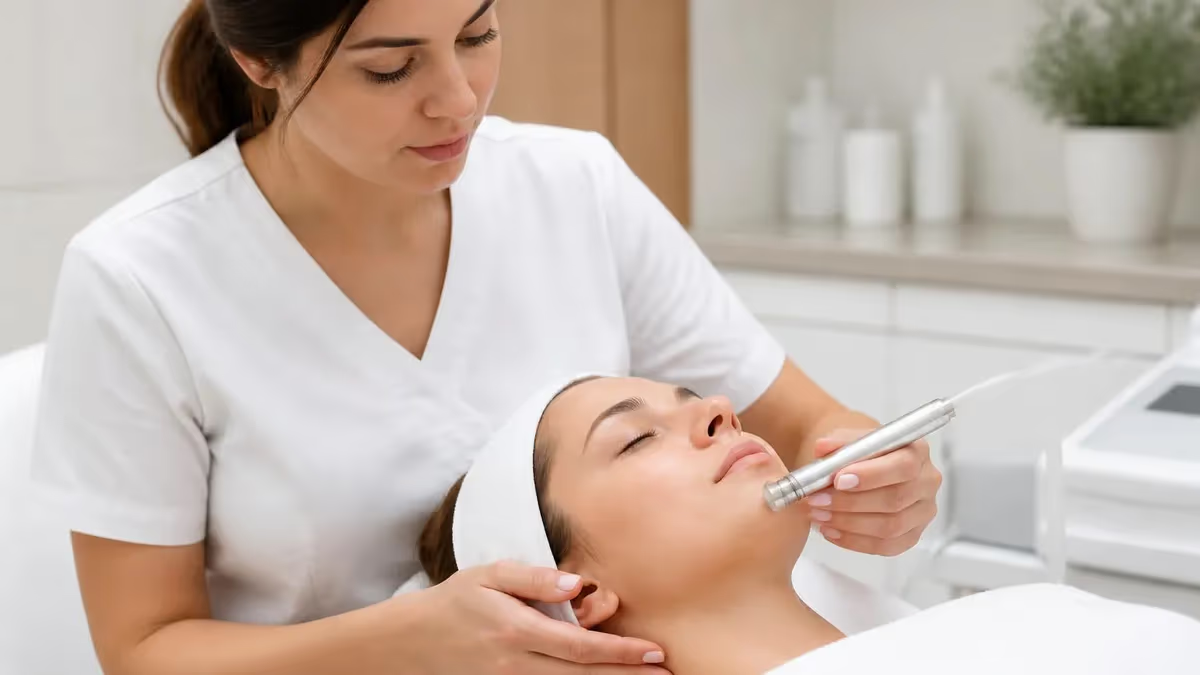
A nurse esthetician combines registered nursing with esthetic skincare expertise. These hybrid professionals work in medical spas (medspas), dermatology offices, plastic surgery practices, and increasingly in standalone beauty clinics. They blend the clinical authority and scope of an RN with the artistic skill of an esthetician — performing injectables, advanced skin treatments, laser procedures, and cosmetic medical services.
What makes nurse esthetics distinct. RN credential allows administering medications including botulinum toxin (Botox), dermal fillers (Restylane, Juvederm), and other medical-grade treatments. Estheticians without RN cannot perform these. Combined background creates strong client trust and career value.
Career trajectory. Most nurse estheticians start as RNs, then add esthetician training. Some go directly into medspa work after RN certification with on-the-job training. Career grows from entry-level (assisting experienced practitioner) to independent practice, ownership, or medspa management.
Salary range. Entry-level nurse esthetician: $50,000-65,000. Mid-career: $65,000-90,000. Senior or owner-operator: $90,000-150,000+. Some plus tips and commissions. Higher than typical RN salaries in many markets due to specialty skill set.
Growth. Medspa industry growing rapidly. American Med Spa Association reports 25%+ annual growth. Demand for skilled nurse aestheticians outpaces supply in many markets.
This guide covers training path, scope of practice, salary, where to work, and how to launch a career as a nurse esthetician.

What to Know
- Education: RN degree (ADN or BSN) + esthetician training
- Time investment: 2-4 years for RN + 6 months esthetician school
- State licensure: RN license + state esthetician license
- Salary range: $50K-150K+ depending on experience and location
- Work settings: Medspas, dermatology, plastic surgery, beauty clinics
- Procedures: Botox, fillers, lasers, microneedling, chemical peels
- Growth: Medspa industry 25%+ annual growth
- Certifications: Various aesthetic certifications enhance earnings
- Top markets: California, NYC, Miami, Texas, major metros
- Continuing education: Annual for license renewal + procedure-specific
What nurse estheticians do. Day-to-day duties.
Injectables. Botulinum toxin (Botox, Dysport, Xeomin): facial wrinkles, sweat reduction. Dermal fillers: Juvederm, Restylane, Sculptra for facial volume, contouring. Kybella for chin fat. Common procedures, high revenue.
Skin treatments. Chemical peels: glycolic, salicylic, TCA for various skin concerns. Microneedling and PRP (platelet-rich plasma). Hydrafacial and similar advanced facials. Acne treatments.
Laser procedures. Hair removal lasers. Skin resurfacing lasers (CO2, Erbium). IPL (intense pulsed light) for pigmentation, vascular issues. Some practices, some states require physician oversight.
Body procedures. CoolSculpting (cryolipolysis). EmSculpt or similar muscle stimulation. Ultherapy. Radiofrequency body treatments. Often nurse esthetician performs these.
Patient consultations. Skin analysis. Treatment planning. Educating clients on procedures, recovery, expectations. Medical history review. Determining client suitability.
Pre and post-procedure care. Skin preparation. Topical anesthesia application. Post-treatment instructions. Follow-up appointments. Managing minor complications.
Medical aspects. RN scope: administering medications, monitoring patients, recognizing adverse reactions. Maintaining sterile technique. IV insertion for some procedures. Coordination with supervising physician.
Esthetic aspects. Detailed skin analysis. Knowledge of cosmetic ingredients. Product recommendation. Color theory. Aesthetic eye for treatment outcomes.
Administrative duties. Scheduling. Charting. Inventory management. Sometimes marketing on social media. Sometimes practice management.
Client communication. Strong interpersonal skills critical. Many clients return for years. Long-term relationship building. Some clients become referral sources.
Job Duties
Botox, fillers, Kybella. High-revenue procedures. Daily duty.
Peels, microneedling, advanced facials, acne treatments.
Hair removal, resurfacing, IPL. State-specific scope rules.
CoolSculpting, EmSculpt, RF treatments. Increasingly common.
Skin analysis, treatment planning, client education.
Pre/post-procedure care, monitoring, follow-up.
Path to becoming a nurse esthetician. Two main routes.
Route 1: RN first, then esthetician. Most common path. Complete RN program (ADN 2 years or BSN 4 years). Pass NCLEX-RN. Get RN license. Work as RN (ideally in dermatology, plastic surgery, or medical setting) for 1-2 years to build clinical foundation. Enroll in esthetician school (6 months typical). Pass state esthetician exam. Apply for esthetician license. Start nurse esthetician position.
Route 2: Esthetician first, then RN. Less common but possible. Complete esthetician school (6 months). Pass state esthetician exam. Get licensed. Work as esthetician. Apply to nursing school (ADN or BSN). Complete RN program. Pass NCLEX. Add RN credential to esthetician practice. Combined timeline 5-7 years total.
Route 3: Combined or accelerated programs. Some nursing programs partner with esthetician schools for integrated training. Limited availability. May save time.
Route 4: Aesthetic-focused nursing. Some RNs work directly in medspa without formal esthetician license. On-the-job training. Initially under supervision. Build expertise over years. Limited compared to dual-licensed peers but common entry point.
Pre-requisites. High school diploma. Strong science background helpful (biology, chemistry). Pre-RN courses (anatomy, physiology, chemistry) required for nursing school.
Time investment. RN route: 2-4 years for degree + 6 months esthetician = 2.5-4.5 years total. Esthetician first: 6 months + 2-4 years for RN = 2.5-4.5 years. Plus 1-2 years clinical experience recommended before specialty work.
Cost. RN program: ADN $5K-20K; BSN $25K-100K. Esthetician school: $5K-15K. Combined: $30K-115K. Significant investment but typically rapid return.
Continuing education. RN license: 24-30 CEs every 2 years (state varies). Esthetician license: 10-15 CEs every 2 years (state varies). Plus procedure-specific training (Botox certification, laser safety, etc.).
Training Routes
Most common path. ADN or BSN (2-4 years) + NCLEX + RN license + 1-2 years clinical experience + esthetician school (6 months) + state esthetician exam. Total 2.5-4.5 years. Provides clinical foundation first.
Where nurse estheticians work. Settings and earnings.
Medical spas (medspas). Most common workplace. Mix of medical aesthetics + traditional spa services. Medical director (physician) typically owns or oversees. Nurse estheticians often perform most procedures. Salary $60K-100K + commissions/tips. Growing rapidly.
Dermatology practices. Work alongside dermatologists. Focus on medical skin treatments + cosmetic. Lower volume of cosmetic procedures than medspa. More medical (acne, psoriasis treatments). Salary $55K-80K typical. Strong medical learning.
Plastic surgery practices. Work with plastic surgeons. Help with pre/post-op care. Cosmetic procedures between surgical patients. Specialized skin care for surgical patients. Salary $60K-90K. Long-term client relationships.
Standalone aesthetic clinics. Some clinics specialize in aesthetics only. Nurse estheticians may be primary practitioners. Less medical oversight. Salary $70K-120K. Variable structure.
Beauty/wellness clinics. Combine traditional spa + medical aesthetics. Holistic approach. Salary $55K-85K. Growing in major metros.
Private practice (independent contractor). Some experienced nurse estheticians establish independent practice. Rent space or work as contractor at multiple locations. Income very variable: $70K-200K+. Requires business skills.
Hospital-affiliated cosmetic centers. Some large hospitals have aesthetic departments. More medical orientation. Stable salary + benefits. $65K-85K. Strong job security.
Mobile/at-home services. Some nurse estheticians offer in-home services to high-end clients. Higher per-treatment fees. More travel. Variable income.
Top markets. California: highest salaries. Texas: rapid growth. Florida: large medspa market. NYC: high salaries, intense competition. Major metros generally have more opportunity than rural areas.
Compensation structure. Base salary or hourly rate. Commission on treatments performed (typically 10-30%). Tips from clients ($5-50 per treatment typical). Profit sharing in some practices. Bonuses for client retention or sales targets.
Nurse Esthetician Stats

Required certifications and credentials.
RN license. Active license in state of practice. Requires graduation from accredited RN program + passing NCLEX-RN. Maintain through continuing education.
State esthetician license. Required for esthetician practice. Requires completion of state-approved esthetician school + state practical and written exams. Hours vary by state (300-1500 hours typical).
State medical aesthetic license/registration. Some states have specific licensure for medical aestheticians. California requires additional license beyond standard esthetician. Other states have different requirements.
Procedure-specific certifications. Botox/dermal filler training. Manufacturer programs (Allergan, Galderma). Aesthetic medicine fellowships and bootcamps. Multiple options ranging from 2-day courses to 6-month fellowships.
Laser safety certification. Required in many states. Laser physics, eye protection, treatment selection. Continuing education common.
IPL certification. Intense pulsed light specific training.
Microneedling certification. Vendor-specific or general (multiple available).
Specialty certifications. Cosmetology certification (if state requires for combined work). Permanent makeup. Eyelash extensions (separate certification in some states). Aesthetic anatomy specialist.
Membership organizations. American Society for Cosmetic Medicine (ASCM). International Association for Physicians in Aesthetic Medicine (IAPAM). Society of Permanent Makeup Professionals. ASLMS (American Society for Laser Medicine and Surgery). Building credibility and education.
Continuing education. Annual or biennial. State varies. Procedure-specific updates ongoing. Industry rapidly evolving — staying current matters.
Credentials
Active in state of practice. Required foundation.
State-approved school + exams. 300-1500 hours.
State-specific. California requires additional license.
Manufacturer programs or fellowships. Procedure-specific.
Required by many states. Laser physics, safety.
PMU, lash extensions, microneedling, etc. Per market.
State-by-state scope of practice. Critical to understand.
California. RN can administer injectables under standardized procedure with physician's protocol. Cosmetic nurse specialty growing. State medical aesthetic license required for some procedures. Highly developed regulatory framework.
Texas. RN can administer injectables under physician's standing order. Medspa law evolving. Growing market.
Florida. RN can administer injectables under physician supervision. Strong medspa industry. Less restrictive than some states.
New York. RN must work under physician supervision. State has specific medical spa regulations. Highly competitive market.
Arizona. Less restrictive. RN can perform many procedures with physician collaborative practice agreement. Many medspas.
Nevada. Strong RN scope. Strong medspa market in Las Vegas, Reno.
Washington. Detailed regulations. RN can administer injectables under physician's standing order. Strong continuing education requirements.
Oregon. Similar to Washington. Strong regulatory oversight.
Illinois. Detailed scope of practice law. Strong Chicago medspa market.
Hawaii. Strong RN scope. Tourist-heavy medspa market.
States with stronger physician supervision requirements. New York, Pennsylvania, Massachusetts, some southern states have stricter rules. Verify before practicing.
State-by-state research essential. Each state has unique laws. Consult state board of nursing and state medical board. Practice within scope to avoid licensure issues. Some procedures restricted to physician practice in certain states.
Multistate practice. Most nurse estheticians work in one state. Some maintain licensure in multiple states for telehealth or travel.
Practice changes by state. As medspa industry grows, states updating laws. Always check current regulations. New laws frequently.
State Scope
RN can administer injectables under standardized procedure. Cosmetic nurse specialty growing. State medical aesthetic license required for some procedures. Highly developed framework. Strong continuing education requirements.
Building a successful nurse esthetician career.
Early career (years 1-2). Focus on technical skills. Practice under experienced practitioners. Take procedure-specific training. Build client base. Earn $50K-65K typical.
Mid-career (years 3-7). Develop specialty (Botox expert, laser specialist, etc.). Expand skill set. Manage some practice operations. Build reputation. Earnings grow to $70K-90K.
Senior career (years 7-15). Lead practitioner. Train newer staff. Possibly part-owner. Recognized in community. Income $90K-130K.
Practice ownership. Some nurse estheticians purchase or open practices. Requires business skills, management experience, capital. Income highly variable: $80K-300K+. Big risk, big reward potential.
Continued learning. Industry evolves rapidly. New procedures, products, techniques constantly. Annual conferences (Aesthetic Show, Allergan, Galderma). Online courses. Vendor training. Lifelong learning essential.
Specialization opportunities. Anti-aging focus (Botox, fillers). Laser specialization. Body contouring. PRP and biological therapies. Permanent makeup. Each adds revenue and competitive differentiation.
Building client retention. Most income from repeat clients. Build relationships. Document treatment plans. Follow up regularly. Personal touches matter.
Marketing yourself. Social media presence (Instagram, TikTok very effective). Before/after photos. Educational content. Personal branding. Some practices encourage individual social presence; others restrict.
Sales skills. Treatment recommendations and package sales contribute to income. Authentic recommendations build trust. Don't oversell — long-term relationships matter more than single sale.
Risk management. Maintain insurance. Document treatments thoroughly. Manage complications carefully. Patient screening for contraindications. Build reputation for safety.
Continuing education. Strong correlation between earning potential and education depth. Invest in yourself. Recoup costs through higher earning potential.
Career Growth
Technical skills focus. Under supervision. Build base. $50-65K.
Develop specialty. Manage. Build reputation. $70-90K.
Lead practitioner. Train others. Community recognition. $90-130K.
Business ownership. Variable income $80-300K+. Big risk/reward.
Anti-aging, laser, body, PRP. Differentiation drives income.
Rapid industry change. Annual learning essential.

Pros and cons of nurse esthetician career.
Pros. High earning potential ($50K-150K+ range). Combine medical authority with creative work. Long-term relationships with clients (many repeat). Predictable schedule (less shift work than traditional nursing). Less physically demanding than bedside nursing. Continuing learning in evolving field. Career mobility (different practice settings). Eventual ownership opportunity.
Cons. Significant educational investment (2.5-4.5 years + cost). Strong sales pressure in some practices (uncomfortable for some). Variable income with commissions. Self-marketing required. Industry competition increasing. Continuing education ongoing expense and time. Some states restrict scope severely. Risk of complications (rare but possible).
When this career wins for you. You enjoy patient/client interaction. You're detail-oriented. You have aesthetic eye. You're comfortable with continuing education. You want clinical authority + creative work. You value relationships over high volume.
When traditional nursing wins. You prefer hospital/medical setting. You don't want sales pressure. You prefer working with sick patients. You value strong shift differential pay. You want broader nursing skill set. You don't have sales aptitude.
Salary comparison. Traditional RN: $75K median. Nurse esthetician: $50K-150K range, $75K median. Similar median but much higher ceiling potential. Lower ceiling for traditional nursing without going to NP or specialty.
Career satisfaction. Surveys show nurse estheticians report higher job satisfaction than traditional RNs in many studies. Reasons: less burnout, better work-life balance, client appreciation, financial reward. However, this varies by individual and practice setting.
Stress levels. Lower acute medical stress (no codes, less emergencies). Higher business/marketing stress for those in commission-heavy practices. Different but real stresses.
Future outlook. Continued strong growth expected. Aging population. Cosmetic procedures going mainstream. Demand outpaces supply in many markets. Strong career outlook.
1. Practicing outside scope. Each state has specific rules about what RNs can do without physician supervision. Verify before performing any procedure.
2. Inadequate training. Don't learn from YouTube only. Take formal training for each procedure. Hands-on supervised practice essential.
3. Working without proper insurance. Liability insurance essential. Some employers cover; others require individual coverage. Verify before starting.
4. Skipping continuing education. Industry evolves rapidly. Falling behind means losing competitive edge. Budget for ongoing learning.
5. Ignoring administrative work. Charting matters. Insurance claims. Inventory. Don't underestimate non-clinical aspects.
6. Poor patient screening. Contraindications matter. Pregnancy, certain medications, certain conditions exclude clients. Take history seriously.
7. Overpromising results. Different clients respond differently. Set realistic expectations. Underpromise, overdeliver.
8. Working in marginal practices. If physician oversight is poor, or practices skirt scope rules, you're at risk. Choose employers carefully.
Job search strategies for nurse estheticians.
Where to look. Online job boards: Indeed, LinkedIn, ZipRecruiter, Glassdoor. Healthcare-specific: Health eCareers, Aesthetic and Medical Spa job boards. State medical association job postings. Local medspa websites: many list job openings. Network through aesthetic industry associations.
Networking. Attend industry conferences (American Med Spa Association, Aesthetic Show). Join state esthetician/RN associations. LinkedIn groups for aesthetic nursing. Connect with current nurse estheticians.
Resume tips. Highlight clinical experience. Emphasize any aesthetic experience. Specific procedures performed. Certifications. Continuing education. Patient outcomes if possible.
Cover letter. Tailor to each practice. Show interest in their specific approach. Mention experience with their preferred products or procedures.
Interview prep. Research the practice's services. Know products they use. Understand medical director's specialty. Be ready to discuss your clinical decision-making.
Sample questions you might face. Why aesthetic nursing? What's your experience with [Botox/laser/etc.]? How do you handle a complication? Describe a difficult client situation and resolution. What's your sales approach?
Salary negotiation. Research market rates ($55K-150K range). Ask about commission structure. Compensation includes salary + commissions + tips + benefits. Negotiate beyond base salary.
What to look for in employer. Quality medical director. Proper licensure of all staff. Continuing education investment. Patient retention rates (if available). Online reviews. Staff turnover rate.
Trial period. Many medspas have trial periods. Use this to evaluate fit. Ask questions. Talk to current staff if possible.
Multiple offers. Generally good time for nurse estheticians. May have multiple offers. Compare carefully. Salary, commission, schedule, growth potential.
Job Search
Indeed, LinkedIn, ZipRecruiter. Health-specific boards. Medspa websites directly. Network at industry conferences. Connect with current nurse estheticians on LinkedIn.
Industry trends to watch.
Mainstreaming of cosmetic procedures. Once stigmatized, now common. Younger demographics increasingly accepting. Men's market growing rapidly. Driving overall demand.
Demographic shifts. Baby boomers reaching prime age for cosmetic procedures. Gen Z showing interest at earlier ages. Diverse populations represented at higher rates. Demand spread across age groups.
Technology integration. Apps for treatment planning. 3D visualization tools. AI-assisted treatment recommendations. Improving outcomes and client experience.
Holistic approaches. Combining medical aesthetics with wellness, nutrition, hormones. Some practices integrate traditional medicine, naturopathic approaches. Holistic medspas emerging.
Tele-aesthetics. Limited but growing. Some consultations remote. Skin analysis via photo. Treatment planning remote. Procedures still in-person.
Sustainability and ethics. Clean ingredients movement. Anti-cruelty product sourcing. Ethical pricing. Greater client demand for transparency.
Regulation tightening. Some states tightening medspa regulations. Verifying scope. Requiring physician oversight. Industry maturing.
Increased competition. More schools graduating nurse estheticians. More medspas opening. Markets crowded in major metros. Differentiation through specialty or reputation matters more.
Income tier emerging. Top-performers earning significantly more than average. Excellent practitioners with strong client retention earning $150K-200K+. Average practitioners stuck in $60-80K range.
Mental health integration. Recognition that aesthetic procedures affect mental health. Body image concerns. Some practices integrate counseling or referrals.
Industry Trends
Cosmetic procedures now common across demographics.
AI tools, 3D visualization improving outcomes.
Wellness + medical aesthetics combining.
Limited remote consultations growing.
Stricter rules in many states. Industry maturing.
Top performers earning $150K-200K+. Differentiation matters.
Common questions about nurse esthetician careers.
Do I have to be an RN? For full nurse esthetician role with injectables, yes. State laws restrict who can administer prescription medications. RN is the foundation.
Can I do this without becoming an RN? You can be an esthetician without RN. Cannot do injectables, lasers in most states, prescription medications. Limited compared to nurse esthetician scope.
How does this differ from a regular esthetician? Regular esthetician: skin treatments only, no medical scope. Nurse esthetician: skin treatments + medical procedures (injectables, lasers, etc.). Higher pay, more authority, different career path.
Can I switch from regular nursing to aesthetic nursing? Yes. Common transition. Many start in hospital nursing, then transition. May take additional aesthetic training. Often a welcome change.
What if I'm tired of my current nursing job? Nurse esthetics offers fresh perspective. Different patient population (mostly healthy people seeking cosmetic improvement). Different pace. Different rewards.
Will I really earn $150K+? Possible. Top performers in major markets. Practice owners. Specialty practitioners. Not typical but achievable. Most earn $60-90K mid-career.
How long until I'm comfortable performing procedures? Botox/fillers: 6-12 months with regular practice. Lasers: 6-12 months. Skill development continues throughout career. Confidence grows.
What if I make a mistake? Most complications minor and resolvable. Maintain insurance. Document carefully. Manage with supervisor support. Rare but real risk.
How do I handle clients with unrealistic expectations? Honest conversation pre-treatment. Set realistic expectations. Decline unrealistic requests. Build trust through honesty.
How do I find good mentors? Network at conferences. Reach out to established practitioners. Apprenticeship opportunities. Online communities. Mentorship critical to development.
Nurse Pros and Cons
- +Nurse has a publicly available content blueprint — you know exactly what to prepare for
- +Multiple preparation pathways accommodate different schedules and budgets
- +Clear score reporting shows specific strengths and weaknesses
- +Study communities share current insights from recent test-takers
- +Retake policies allow recovery from a difficult first attempt
- −Tested content scope requires substantial preparation time
- −No single resource covers everything optimally
- −Exam-day performance can differ from practice test performance
- −Registration, prep, and retake costs accumulate significantly
- −Content changes between versions can make older materials less reliable
Esthetician Questions and Answers
Final thoughts. Nurse esthetics is one of healthcare's most dynamic and rewarding career paths. Combining clinical authority with creative work, it offers earnings far beyond traditional nursing, better work-life balance, and meaningful client relationships. For RNs considering a career change, or for new nurses wanting non-traditional paths, nurse esthetics deserves serious consideration.
Plan your path. Decide on RN first (most common) or esthetician first. Choose your education programs. Time the training investment. Build clinical foundation before specializing.
Get the credentials. RN license + esthetician license + procedure-specific certifications. Each step builds on previous. State laws determine specific requirements.
Choose your workplace carefully. Medspa, dermatology, plastic surgery, beauty clinic — each has different culture and earning potential. Quality of practice matters more than industry segment for long-term success.
Build expertise systematically. Master injectables. Add laser. Add advanced procedures. Specialize. Continuing education is non-negotiable.
Develop business sense. Sales matter. Marketing matters. Patient retention matters. Even employed nurse estheticians benefit from business mindset.
Network strategically. Conferences, associations, LinkedIn. Industry connections lead to opportunities, advice, partnerships. Build relationships throughout career.
Stay current. Industry evolves rapidly. New products, procedures, techniques. Falling behind means losing competitive edge. Annual learning essential.
For aspiring nurse estheticians. The path is challenging but worth it. Invest in education. Build clinical foundation. Pursue ongoing learning. Develop business skills. The career rewards those who commit to mastery.
The nurse esthetician of tomorrow combines top-tier clinical skill, refined aesthetic sense, strong business acumen, and committed continuous learning. The career path exists; building it takes intention and effort. The rewards — financial, professional, personal — make it worthwhile for those who choose it.
About the Author
Licensed Cosmetologist & Beauty Licensing Exam Specialist
Paul Mitchell SchoolsMichelle Santos is a licensed cosmetologist with a Bachelor of Science in Esthetics and Salon Management from Paul Mitchell School. She has 16 years of salon industry experience and 8 years preparing students for state cosmetology board exams in theory, practical skills, and sanitation. She specializes in licensure preparation for cosmetologists, estheticians, and nail technicians.
Join the Discussion
Connect with other students preparing for this exam. Share tips, ask questions, and get advice from people who have been there.
View discussion (4 replies)