
Esthetician License: Requirements, Training Hours, and Path by State
Esthetician license guide: 📗 state-specific training hours, exam requirements, application process, costs, and how to navigate licensing efficiently.
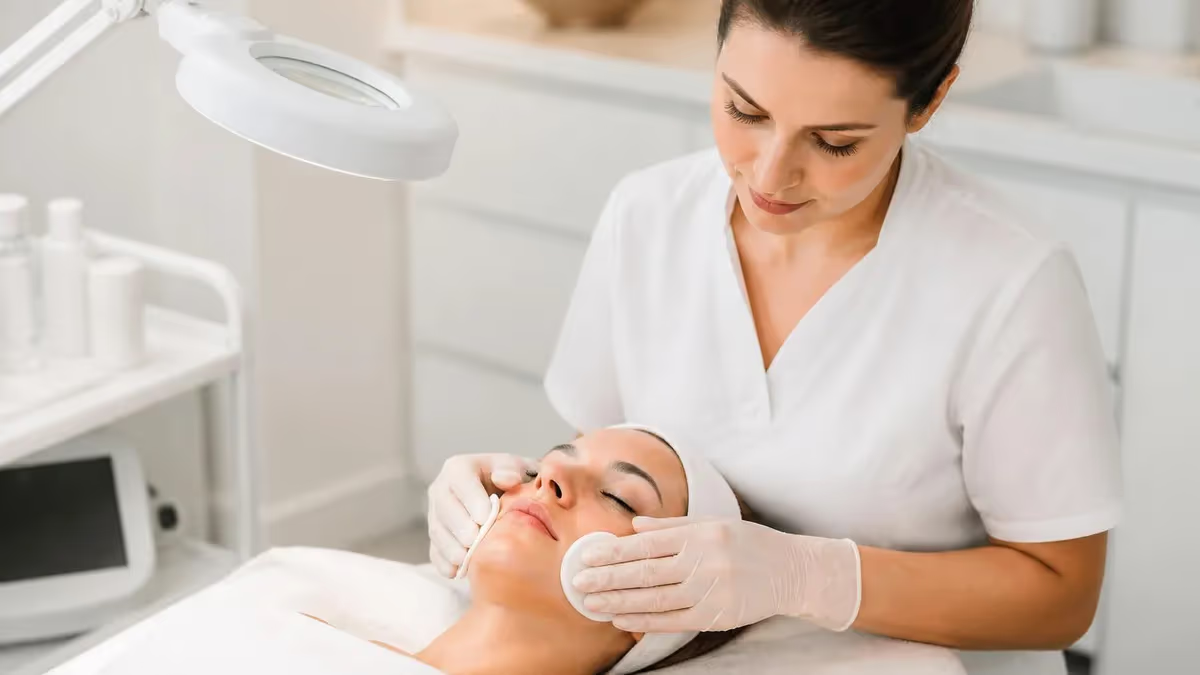
Esthetician license is the credential required to legally practice skincare services in most U.S. states. Estheticians provide facials, chemical peels, microdermabrasion, body treatments, makeup application, and various other skincare services. Licensing requirements vary substantially by state — training hours range from 260 (some states) to 1,500+ (some states), exam requirements differ, and specific scope of practice varies. Understanding state-specific licensing requirements before starting esthetics education prevents costly path corrections. Whether you're considering esthetics career or already starting esthetics school, understanding licensing helps navigate the path efficiently.
For state variation specifically, requirements differ enormously. Massachusetts requires 300 hours of training. Texas requires 750 hours. New York requires 600 hours. Florida requires 260 hours (lowest typical). California requires 600 hours. Illinois requires 750 hours. Some states have additional written and practical exam requirements; others have simpler exam structures. Some states have specific advanced practitioner licensing for more sophisticated services. Each state's requirements differ; researching your specific state matters substantially.
For typical licensing process specifically, several stages apply. Complete required training hours at state-approved esthetics school. Pass state board examinations (typically written and practical components). Submit licensing application with required documentation and fees. Receive license to practice. Renew license periodically (typically every 1-2 years) with continuing education requirements. Total time from beginning school to licensed practice typically 6-12 months for full-time programs. Costs include training tuition ($3,000-$10,000+), examination fees ($50-$200), and licensing fees ($25-$200).
This guide covers esthetician licensing comprehensively: state-specific requirements and variations, training hour requirements, examination process, application procedures, costs and timelines, and how to choose esthetics school supporting your specific licensing needs. Whether you're researching career options or already enrolled, you'll find practical guidance here.

Required by: Most U.S. states for skincare practice
Training hours range: 260-1,500+ depending on state
Total program time: 6-12 months full-time typical
Total cost: $3,000-$15,000+ including training, exams, licensing
Renewal: Typically every 1-2 years with continuing education
For training hours specifically, several patterns emerge across states. Lower hour states (260-500): Florida, Massachusetts, Connecticut, Rhode Island. Mid-range states (500-750): Texas, New York, California, Illinois. Higher hour states (750-1,500+): Some states have substantial training requirements that produce longer programs. Master esthetician licensing in some states requires substantial additional hours beyond basic license. Each state's specific hours determine program length and cost. The variation reflects different state regulatory philosophies about adequate training for safe practice.
For accredited esthetics schools specifically, several considerations matter. State approval is essential — only state-approved schools satisfy licensing training requirement. National accreditation (NACCAS, ACCSCT) supports federal financial aid eligibility. Curriculum quality varies between schools — some provide minimum compliance training; others provide comprehensive education. Job placement rates indicate how well schools support graduate employment. Clinical hours (working on real clients during school) build practical skills. The esthetician school resources cover school selection.
For state board examinations specifically, most states require both written and practical components. Written exam covers theory: skin anatomy and physiology, skin conditions, treatment protocols, sanitation and infection control, regulations, and various other topics. Practical exam covers actual skill demonstration: facial techniques, chemical peel application (in some states), proper sanitation procedures, client consultation. Specific exam content varies by state. Pass scores typically 75-80%. Failing requires retake (additional fees, sometimes additional waiting periods). Quality preparation supports first-attempt passage.
For exam preparation specifically, several approaches help. School curriculum should provide foundation. State-approved exam preparation materials. Practice exams when available. Study groups with classmates. Review of state examination outline. Hands-on practice with required techniques. Mock practical exams under timed conditions. Each preparation element supports examination success. The investment in thorough preparation produces better outcomes than minimal prep. Most successful candidates pass first attempt with diligent preparation. The what is an esthetician resources cover the role broadly.
For state-specific differences specifically, several patterns matter beyond just training hours. Some states have specific scope limits (estheticians cannot perform certain treatments without additional licensing). Some states require apprenticeship hours after school. Some have specific continuing education requirements (typically 4-12 hours per renewal period). Some states have reciprocity agreements with other states (license transfers without full retesting). Each state's specific framework affects licensing decisions. Researching specific state thoroughly before committing to esthetics path produces best outcomes.
Esthetician License Process
Research state-approved esthetics schools in your area. Verify accreditation status. Compare programs on cost, schedule, curriculum quality, job placement rates. Visit schools, talk to students. Specific school choice affects training quality and post-graduation success substantially. Investment in selection pays back through better preparation.
State-required hours (260-1,500+) at approved school. Combination of theory courses and practical training. Clinical hours working on real clients. Take detailed notes throughout — content covered on board examinations. Time investment 6-12 months full-time typical. Part-time options extend timeline. Maintain academic standards required by school.
Most states require written and practical exams. Written tests theoretical knowledge. Practical demonstrates actual skill. Pass scores typically 75-80%. Schedule exams promptly after school completion to maintain knowledge. Quality preparation through state-approved materials, practice exams, mock practical sessions. Failing requires retakes with additional fees.
Submit licensing application with school documentation, exam scores, application fees ($25-$200 typical). Processing time 2-8 weeks typical. Background check in some states. Photo, fingerprints in some states. Once issued, license valid for 1-2 years before renewal. Begin professional practice with active license. Continuing education for renewal.
For costs specifically, total investment varies by program and state. Esthetics school tuition: $3,000-$10,000+ typical. Books and supplies: $500-$1,500. Examination fees: $50-$200. Licensing application fees: $25-$200. Initial professional kit and equipment: $500-$2,000+. Ongoing supplies and product investment for practice. Total upfront investment typically $4,000-$15,000+. Financial aid through accredited schools sometimes available. Some employers provide tuition reimbursement for current employees pursuing esthetics. Cost-conscious candidates research community college programs vs private esthetics schools.
For financial aid specifically, several options support esthetics education. Federal financial aid (Pell Grants, federal loans) through accredited programs filing FAFSA. Scholarships from beauty industry organizations. Some employers offer tuition assistance. Veterans benefits where applicable. State workforce development programs sometimes fund cosmetology/esthetics training. Each financial aid option has specific eligibility. Comparing financial aid packages between schools sometimes reveals better effective cost than sticker price suggests. The esthetician jobs resources cover related employment context.
For combined cosmetology vs separate esthetician licensing specifically, some states offer combined cosmetology licenses covering hair, skin, and nails — others have separate esthetician licenses. Combined cosmetology requires substantially more training (1,500+ hours typical) but allows practice across all areas. Separate esthetician license is faster path to skincare-only practice. Each approach has tradeoffs. Skincare-focused practitioners often prefer dedicated esthetician licensing; those wanting flexibility may pursue combined cosmetology. Match licensing to your career goals.
For master esthetician specifically, some states (Utah, Virginia, Washington, others) have master esthetician licensing for advanced practitioners. Master estheticians can perform more advanced services (specific chemical peels, microdermabrasion at higher levels, etc.). Requires additional training hours beyond basic esthetician license. Career advancement to master esthetician supports better income and broader scope. Not all states have master esthetician licensing; basic esthetician license sufficient in many states for full scope of typical services.
For specific regulated services specifically, several services may require additional licensing or certification. Laser hair removal requires laser specialist certification in many states (separate from esthetician license). Microblading requires specific certification in many states. Eyelash extensions sometimes require specific certification. Each specialty service has specific regulatory requirements. Building specialty services into practice requires planning for required additional credentials. The esthetician school resources cover related training.

Esthetician Licensing by State Type
States with 260-500 hour requirements:
- Examples: Florida (260), Massachusetts (300), Connecticut (300), Rhode Island
- Program length: 4-8 months typical
- Cost: Lower than mid/high-hour states
- Pros: Faster entry to practice, lower investment
- Cons: Less comprehensive training; specific scope may be limited
For reciprocity between states specifically, esthetician licenses don't automatically transfer between states. Reciprocity agreements vary — some states accept other states' licenses with specific requirements; others require complete retesting. Specific bridge processes (additional courses, exam, fees) often required when moving between states. NIC (National-Interstate Council of State Boards of Cosmetology) facilitates some transfer processes. Researching reciprocity before relocating prevents licensing surprises. Some practitioners maintain licenses in multiple states for flexibility.
For renewal requirements specifically, esthetician licenses require periodic renewal. Renewal cycle 1-2 years typical (varies by state). Continuing education requirements 4-12 hours per renewal period typical. CE topics typically include: infection control, skincare advances, business topics, ethics. Renewal fees $25-$100 typical. Failing to renew on time may produce penalty fees or license lapse. Tracking renewal date and CE requirements supports continuous practice. Quality professional development through CE extends knowledge beyond minimum requirements.
For employment as licensed esthetician specifically, several options exist. Spas and salons employ estheticians as staff. Plastic surgeons and dermatology offices employ estheticians for medical-grade services. Independent practice as booth renter at salons or spa. Self-employment as solo esthetician. Mobile/in-home services. Each setting has tradeoffs. New estheticians often start at established spas/salons before considering independent practice. Self-employment requires substantial business skills beyond just esthetics expertise. The esthetician jobs resources cover employment broadly.
For income specifically, esthetician earnings vary substantially. Hourly wages typically $13-$25+ depending on geographic area and venue. Commission structures common at spas (typically percentage of services performed). Self-employed estheticians earn variable income depending on client base. Tips supplement income substantially in many settings. Total annual earnings range widely: $25,000-$70,000+ typical. Top performers at high-end venues earn substantially more. Building client base over years substantially affects income trajectory.
For starting business as solo esthetician specifically, several considerations matter. State business licensing requirements. Specific space requirements (sometimes governed by state regulations). Insurance (professional liability essential). Equipment investment ($5,000-$25,000+ depending on services offered). Marketing investment to build initial client base. Substantial business skills required beyond esthetics expertise. Many estheticians benefit from working at established business before pursuing solo practice. The independence appeals to many but requires substantial business commitment.
State-specific requirements vary substantially. Wrong-state programs may not satisfy your state's specific requirements, wasting time and money. Verify directly with your state's board of cosmetology or licensing authority before committing to specific esthetics programs. Research what hours, exams, and continuing education your state requires. Then select esthetics schools explicitly approved by your state. Some general programs are nationally recognized; others target specific states. Don't rely solely on school marketing claims — verify with state directly. The investment in proper preparation prevents costly start-overs from wrong path selection.
For specific specialty paths within esthetics specifically, several niches exist. Medical esthetics works in plastic surgery offices, dermatology practices supporting medical-grade services. Spa esthetics works at high-end spas focusing on relaxation and wellness. Cosmetic counter esthetics works at department stores or beauty retailers. Mobile esthetics provides services at clients' homes. Bridal esthetics specializes in wedding services. Each specialty has specific clientele, working environment, and income patterns. Choosing specialty matching personal preferences and career goals produces better satisfaction.
For continuing education specifically, several pathways support skill development beyond minimum requirements. Industry conferences (ISPA, IECSC, others) provide networking and education. Online courses on specific techniques. Manufacturer training on specific product lines. Specialty certifications (medical esthetics, advanced peels, microneedling). Each ongoing learning opportunity extends scope and supports career advancement. The investment in continuing education pays back through better skills, broader services, and higher earning potential. The esthetician insurance resources cover related professional matters.
For career trajectory beyond direct service specifically, several paths exist. Spa or salon management for those with leadership interests. Esthetics educator at training schools. Industry sales representing product lines. Brand ambassador roles. Specialty consulting. Spa/salon ownership for entrepreneurial path. Each beyond-direct-service path uses esthetics foundation for different career direction. Some estheticians pursue these paths after building direct service experience; others move to education or sales relatively early.
For specific regulatory bodies specifically, several organizations matter. State board of cosmetology in each state regulates licensing and practice. NIC supports interstate cooperation. NACCAS accredits cosmetology and esthetics schools. Various professional associations represent estheticians. Understanding the regulatory landscape helps navigate licensing and ongoing compliance. State board specifically should be primary reference for licensing questions specific to your state.
Looking forward, esthetics field continues evolving. New treatments and technologies emerge regularly. Medical esthetics expanding with growing aesthetic treatment market. Wellness-focused approaches gaining popularity. Technology integration (devices, apps, social media) continues affecting practice. Aging population drives sustained demand for aesthetic services. The career remains accessible for committed entrants with multiple specialty paths supporting individual interests. Investment in licensing represents foundation for varied career options within growing field.

Esthetician Licensing Decision Steps
- ✓Verify state-specific training hour and exam requirements
- ✓Research state-approved esthetics schools in your area
- ✓Compare programs on cost, curriculum quality, job placement rates
- ✓Plan for total investment ($4,000-$15,000+) and timeline (6-12 months)
- ✓Consider career goals: spa, medical esthetics, mobile, etc.
For specific advanced certifications beyond basic esthetician license specifically, several pathways extend scope. Medical esthetics certification supports work in physician offices. Microneedling certification (specific in some states). Chemical peel advanced certification. Laser specialist certification. LED therapy certification. Each certification requires specific training and credentials beyond basic esthetician license. The investment in advanced certifications supports specialty positioning and higher earning potential. Most successful estheticians invest in multiple certifications over career.
For social media and online presence specifically, modern esthetician careers often involve substantial online marketing. Instagram showcasing client transformations and skill demonstrations. Before/after photos with client permission. Tutorial videos building authority. Reviews and testimonials from satisfied clients. Online booking integration. Each element supports building client base. Social media skills increasingly part of esthetician's marketable abilities. Some estheticians build substantial followings supporting strong client demand.
For specific schools to research specifically, several reputable options exist. Aveda Institute network provides comprehensive esthetics training. Paul Mitchell Schools offer cosmetology including esthetics. Empire Beauty Schools have multiple locations. Various local schools serve specific markets. Community college programs sometimes provide lower-cost paths. Each school has specific characteristics. Researching specific schools in your area thoroughly produces better selection than picking based on name recognition alone.
For online esthetics theory specifically, while practical training requires in-person work, some theoretical content increasingly delivers online. Hybrid programs combining online theory with in-person practical training have grown. Pure online esthetics training doesn't satisfy state licensing requirements (practical training essential). Quality hybrid programs provide schedule flexibility while maintaining required hands-on training. Verify program format meets state requirements before enrolling.
For client retention specifically, building repeat clients matters substantially for esthetician income stability. Quality service produces repeat business. Consistent communication and follow-up. Loyalty programs incentivizing repeat visits. Personalized client recommendations. Each element supports client retention. The transition from one-time clients to regular clientele determines income stability. Most successful estheticians focus substantially on retention beyond just acquiring new clients.
For pricing services specifically, several considerations matter. Market rate research in your specific area establishes benchmark. Higher pricing supports premium positioning but may reduce client volume. Lower pricing builds volume but reduces per-service revenue. Premium services (specialized treatments, advanced techniques) support higher pricing. Initial competitive pricing during establishment phase, increasing over time as reputation builds. Each pricing decision affects practice trajectory.
For working with skin conditions specifically, estheticians work within scope of practice regarding actual skin conditions. Recognize when client's condition warrants medical referral (suspected skin cancer, severe acne requiring prescription treatment, eczema requiring dermatological care). Estheticians don't diagnose or treat medical skin conditions. Knowing scope limits and referring appropriately supports both client safety and esthetician's ethical practice. Building relationships with local dermatologists supports appropriate referrals when needed.
Professional ethics around scope of practice protect both clients and estheticians. Operating outside scope creates legal and reputational risk. State licensing boards investigate and act on complaints about scope violations. Maintaining ethical practice within scope supports long-term career sustainability. Boards take ethics violations seriously and can revoke licenses. Investing time in understanding scope of practice prevents costly violations. Continuing education periodically reviews scope and ethical standards.
Esthetician License Quick Facts
Key Facts at a Glance
| Item | Value | Details |
|---|---|---|
| Total cost range for licensing including school, exams, fees | $3K-$15K+ | |
| Typical full-time program length | 6-12 months | |
| Typical license renewal cycle | 1-2 years |
Esthetician Career Path
- +Accessible entry — 6-12 months training vs longer paths to many careers
- +Multiple specialty options (medical, spa, mobile, bridal, etc.)
- +Strong demand in beauty and wellness industries
- +Self-employment possible after building experience
- +Foundation for various career trajectories beyond direct service
- −Substantial training investment ($3,000-$15,000+ total)
- −Income often modest, especially early career
- −Physical demands (standing, repetitive motions) over time
- −Income depends substantially on building client base
- −State licensing variations limit easy interstate mobility
Sample Esthetician Practice Questions
Try these questions from our free Esthetician practice tests. The correct answer and an explanation follow each question.
An esthetician is performing a facial on a client with mature skin that lacks elasticity. Which massage movement, involving a kneading or pinching action, would be most beneficial for stimulating underlying tissues and improving muscle tone?
- A. Friction
- B. Tapotement
- C. Effleurage
- D. Pétrissage
Answer: D. Pétrissage
Pétrissage is a kneading movement that involves lifting, squeezing, and pressing the tissue. This action stimulates the underlying muscles, improves circulation, and helps tone the skin, making it ideal for mature or sagging skin.
During a facial massage, an esthetician applies pressure and strokes that stimulate nerve endings in the skin. Which type of nerve fibers are responsible for carrying sensations like touch, pressure, and temperature from the skin to the brain?
- A. Motor nerves
- B. Sensory nerves
- C. Secretory nerves
- D. Autonomic nerves
Answer: B. Sensory nerves
Sensory nerves, also known as afferent nerves, are responsible for detecting stimuli from the environment, such as touch, pain, pressure, and temperature, and transmitting this information to the central nervous system for processing.
After a waxing service, which type of product should be avoided on the treated area for at least 24 hours?
- A. Fragrance-free moisturizer
- B. Aloe vera gel
- C. Products containing alcohol or exfoliating acids
- D. Cool water rinse
Answer: C. Products containing alcohol or exfoliating acids
Following waxing, the skin's surface is temporarily sensitized and the follicles are open. Alcohol-based products and chemical exfoliants (AHAs, BHAs) can cause significant irritation, stinging, and potential inflammation in this vulnerable state.
A client has symmetrical brown patches on the forehead, upper lip, and cheeks that worsened during pregnancy. Which condition should the esthetician suspect?
- A. Post-inflammatory hyperpigmentation
- B. Solar lentigines
- C. Melasma
- D. Vitiligo
Answer: C. Melasma
Melasma causes symmetrical hyperpigmented patches on the face and is commonly triggered by hormonal changes such as pregnancy.
Esthetician Questions and Answers
About the Author
Licensed Cosmetologist & Beauty Licensing Exam Specialist
Paul Mitchell SchoolsMichelle Santos is a licensed cosmetologist with a Bachelor of Science in Esthetics and Salon Management from Paul Mitchell School. She has 16 years of salon industry experience and 8 years preparing students for state cosmetology board exams in theory, practical skills, and sanitation. She specializes in licensure preparation for cosmetologists, estheticians, and nail technicians.
Join the Discussion
Connect with other students preparing for this exam. Share tips, ask questions, and get advice from people who have been there.
View discussion (4 replies)