
Esthetician School Houston: Programs, Costs, Licensing Requirements, and Career Outcomes in Texas
Compare esthetician school Houston programs, tuition costs, 750-hour TDLR requirements, and salary outcomes. Complete guide to Texas licensing. ✏️
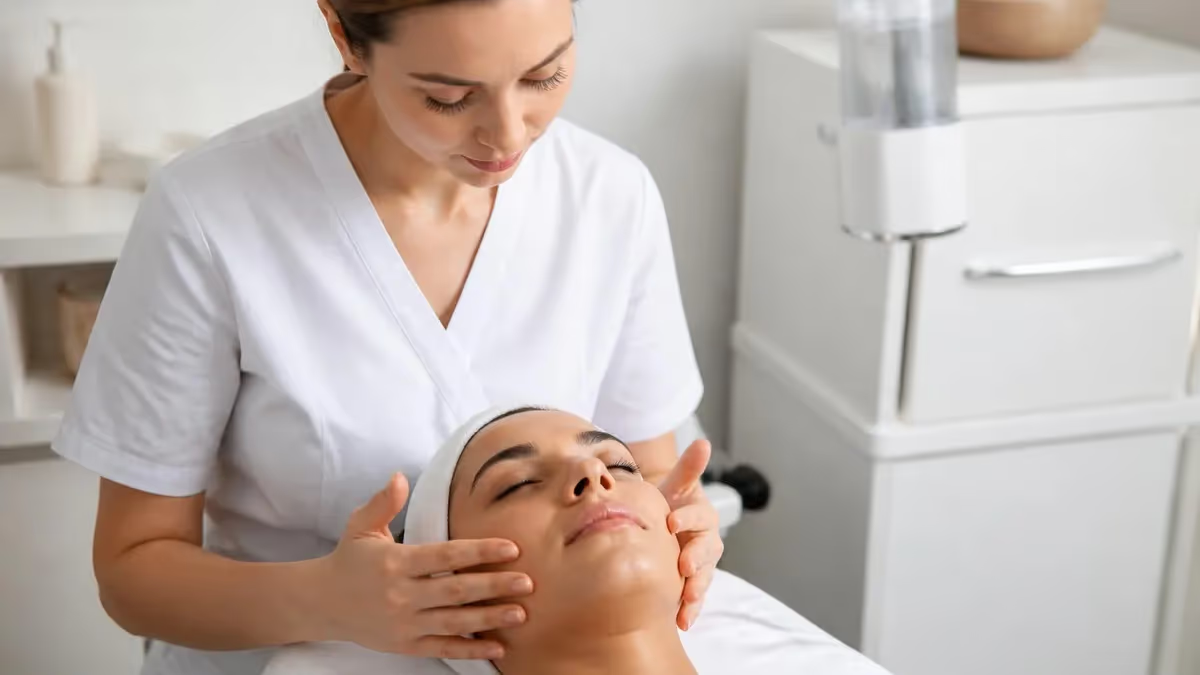
Choosing the right esthetician school Houston offers can shape the next decade of your skincare career, and the Bayou City has more options than most Texas metros. Houston hosts everything from cosmetology giants like Paul Mitchell and Aveda Institute to specialized esthetics academies inside the Texas Medical Center corridor. The Texas Department of Licensing and Regulation (TDLR) requires 750 hours of training before you can sit for the state board exam, and most Houston programs deliver that in seven to twelve months depending on whether you attend day or evening classes.
Houston's beauty economy is genuinely massive. The Bureau of Labor Statistics ranks the Houston-The Woodlands-Sugar Land metro among the top five U.S. markets for skincare specialist employment, with more than 2,400 licensed estheticians actively working in spas, dermatology clinics, plastic surgery practices, and medical aesthetics offices. That demand drives both tuition prices and job placement outcomes, so picking a school that aligns with your career goals matters as much as picking one that fits your budget.
The Houston market also rewards specialization. A graduate who only does basic facials competes with hundreds of others, while someone trained in chemical peels, microneedling, LED therapy, and lash extensions can charge $85 to $150 per service inside Memorial, River Oaks, or The Heights. Understanding how to become an esthetician in Texas helps you evaluate which Houston schools actually prepare you for that higher-tier work versus those that only teach the minimum required for licensure.
What is an esthetician in Texas specifically? Under TDLR rules, an esthetician is a licensed professional who performs skin analysis, facials, hair removal, makeup application, and approved advanced treatments. Houston schools must teach Texas-specific scope of practice, which differs from California and Florida in important ways. For example, Texas allows estheticians to perform certain chemical peels and microdermabrasion that some other states restrict to medical settings.
This guide walks through the major Houston esthetics schools, real tuition numbers for 2026, financial aid options, the TDLR application process, salary data from Houston employers, and how to evaluate medical esthetician programs if you want to work in dermatology or plastic surgery. We also cover the aesthetician vs esthetician spelling distinction since it confuses many Houston applicants reading job postings from Memorial Hermann and Houston Methodist clinics.
Whether you are a recent high school graduate, a career changer leaving oil and gas, or a cosmetologist adding an esthetics license, Houston has a program that fits. The trick is matching your learning style, financial situation, and career target to the right school before you sign an enrollment agreement that could cost $15,000 or more. Take your time, tour multiple campuses, and ask hard questions about pass rates and job placement before committing.
Esthetician School Houston by the Numbers
Top Esthetician Schools in Houston
Located in the Galleria area, Aveda's 750-hour esthiology program emphasizes botanical skincare, advanced facials, and retail business skills. Tuition runs approximately $17,500 and includes a professional kit.
Known for its energetic culture, Paul Mitchell offers a 750-hour skincare program with strong focus on lash, brow, and waxing services. Located in Spring with satellite tours of working spas.
With multiple Houston-area campuses including North Houston and Hobby, Ogle has trained Texas estheticians for over 50 years and offers flexible day or evening schedules with TDLR-approved curriculum.
A community college option with significantly lower tuition (around $4,200 in-district) for the 750-hour esthetics program. Great for budget-conscious students who qualify for Texas residency.
Houston Heights location with hands-on clinic floor experience, medical esthetics electives, and partnerships with local dermatology practices for externship placements after graduation.
Tuition at esthetician school Houston programs varies dramatically based on whether you choose a private academy or a public community college. Aveda Institute and Paul Mitchell sit at the premium end around $15,000 to $18,000, which includes a professional kit, uniforms, textbooks, and the state exam application fee. Ogle School falls in the middle at roughly $12,500, while San Jacinto College and Houston Community College offer the same 750-hour curriculum for under $5,000 if you qualify as a Texas resident living in their taxing district.
Federal financial aid changes the math significantly. Most accredited Houston esthetics programs participate in Title IV funding, meaning you can apply Pell Grants (up to $7,395 per year for 2025-2026) and federal student loans toward tuition. Career schools must publish a Gainful Employment Disclosure showing typical debt loads and graduate earnings, and Houston-area Aveda graduates carry roughly $14,000 in federal loans on average, repaid over ten years on income-driven plans.
Scholarships exist but require proactive applications. The Texas Cosmetology Educational Foundation awards $500 to $2,000 scholarships annually, and individual schools offer merit awards for high school GPA, ACT scores, or hardship circumstances. Workforce Solutions Gulf Coast occasionally funds esthetics training for eligible adults through WIOA grants, particularly for displaced oil and gas workers retraining into healthcare-adjacent fields like medical esthetics.
Payment plans matter when comparing schools. Aveda and Paul Mitchell typically require monthly tuition payments through partners like Climb Credit or Sallie Mae, with interest rates ranging from 6% to 14% depending on credit. Community colleges allow you to pay tuition per semester at lower rates, but you must complete prerequisite enrollment paperwork including TSI assessments unless exempt. Ask each school for a complete cost-of-attendance worksheet before signing anything.
Hidden costs catch many students off guard. Beyond tuition, budget $400 to $800 for the TDLR exam fees and license application, $200 to $400 for additional supplies your kit may not cover, parking permits ($75 to $300 per term), and lost wages during the 750 clinic hours when you cannot work full time. Many Houston students underestimate transportation costs given the city's spread — driving from Pearland to a Galleria campus runs $200+ monthly in gas alone.
Hybrid online programs have emerged post-2020, with some Houston schools now offering up to 250 theory hours online while keeping practical clinic work in person. This works well for students with childcare obligations or full-time jobs, though TDLR still requires all hands-on training to happen at an approved facility under licensed instructor supervision. Compare these options against traditional esthetician schools that follow a five-day in-person model.
Return on investment depends heavily on where you work after graduation. A Houston Memorial-area medspa graduate earning $55,000 base plus commission pays off a $15,000 loan within three years, while a graduate working part-time at a chain salon earning $28,000 may struggle for six or seven. Research starting wages at potential employers before choosing a school based purely on prestige.

Esthetician Practice Practice Test Questions
Prepare for the Esthetician Practice Exam exam with our free practice test modules. Each quiz covers key topics to help you pass on your first try.
Esthetician Practice Advanced Facial Treat...
Esthetician Practice Exam Questions covering Advanced Facial Treatments. Master Esthetician Practice Test concepts for certification prep.
Esthetician Practice Anatomy and Physiology
Free Esthetician Practice Practice Test featuring Anatomy and Physiology. Improve your Esthetician Practice Exam score with mock test prep.
Esthetician Practice Chemistry and Product...
Esthetician Practice Mock Exam on Chemistry and Product Ingredients. Esthetician Practice Study Guide questions to pass on your first try.
Esthetician Practice Client Consultation a...
Esthetician Practice Test Prep for Client Consultation and Analysis. Practice Esthetician Practice Quiz questions and boost your score.
Esthetician Practice Esthetics Chemistry a...
Esthetician Practice Questions and Answers on Esthetics Chemistry and Ingredients. Free Esthetician Practice practice for exam readiness.
Esthetician Practice Exam Esthetician Prac...
Esthetician Practice Mock Test covering Exam Esthetician Practice Advanced Facial Treatments Questions and Answers. Online Esthetician Practice Test practice with instant feedback.
Esthetician Practice Exam Esthetician Prac...
Free Esthetician Practice Quiz on Exam Esthetician Practice Anatomy and Physiology Questions and Answers. Esthetician Practice Exam prep questions with detailed explanations.
Esthetician Practice Exam Esthetician Prac...
Esthetician Practice Practice Questions for Exam Esthetician Practice Chemistry and Product Ingredients Questions and Answers. Build confidence for your Esthetician Practice certification exam.
Esthetician Practice Exam Esthetician Prac...
Esthetician Practice Test Online for Exam Esthetician Practice Client Consultation and Analysis Questions and Answers. Free practice with instant results and feedback.
Esthetician Practice Exam Esthetician Prac...
Esthetician Practice Study Material on Exam Esthetician Practice Esthetics Chemistry and Ingredients Questions and Answers. Prepare effectively with real exam-style questions.
Esthetician Practice Exam Esthetician Prac...
Free Esthetician Practice Test covering Exam Esthetician Practice Facial Treatments and Massage Questions and Answers. Practice and track your Esthetician Practice exam readiness.
Esthetician Practice Exam Esthetician Prac...
Esthetician Practice Exam Questions covering Exam Esthetician Practice Hair Removal Methods Questions and Answers. Master Esthetician Practice Test concepts for certification prep.
Esthetician Practice Exam Esthetician Prac...
Free Esthetician Practice Practice Test featuring Exam Esthetician Practice Infection Control and Safety Questions and Answers. Improve your Esthetician Practice Exam score with mock test prep.
Esthetician Practice Exam Esthetician Prac...
Esthetician Practice Mock Exam on Exam Esthetician Practice Skin Analysis and Conditions Questions and Answers. Esthetician Practice Study Guide questions to pass on your first try.
Esthetician Practice Exam Esthetician Prac...
Esthetician Practice Test Prep for Exam Esthetician Practice Skin Histology and Disorders Questions and Answers. Practice Esthetician Practice Quiz questions and boost your score.
Esthetician Practice Exam FREE Esthetician...
Esthetician Practice Questions and Answers on Exam FREE Esthetician Knowledge Questions and Answers. Free Esthetician Practice practice for exam readiness.
Esthetician Practice Exam FREE Esthetician...
Esthetician Practice Mock Test covering Exam FREE Esthetician MCQ Questions and Answers. Online Esthetician Practice Test practice with instant feedback.
Esthetician Practice Exam FREE Esthetician...
Free Esthetician Practice Quiz on Exam FREE Esthetician Practice Anatomy and Physiology Questions and Answers. Esthetician Practice Exam prep questions with detailed explanations.
Esthetician Practice Exam FREE Esthetician...
Esthetician Practice Practice Questions for Exam FREE Esthetician Practice Cosmetic Chemistry and Ingredients Questions and Answers. Build confidence for your Esthetician Practice certification exam.
Esthetician Practice Exam FREE Esthetician...
Esthetician Practice Test Online for Exam FREE Esthetician Practice Facial Treatments and Devices Questions and Answers. Free practice with instant results and feedback.
Esthetician Practice Exam FREE Esthetician...
Esthetician Practice Study Material on Exam FREE Esthetician Practice Hair Removal Procedures Questions and Answers. Prepare effectively with real exam-style questions.
Esthetician Practice Exam FREE Esthetician...
Free Esthetician Practice Test covering Exam FREE Esthetician Practice Infection Control and Safety Questions and Answers. Practice and track your Esthetician Practice exam readiness.
Esthetician Practice Exam FREE Esthetician...
Esthetician Practice Exam Questions covering Exam FREE Esthetician Practice Skin Analysis and Conditions Questions and Answers. Master Esthetician Practice Test concepts for certification prep.
Esthetician Practice Exam FREE Esthetician...
Free Esthetician Practice Practice Test featuring Exam FREE Esthetician (Reading) Questions and Answers. Improve your Esthetician Practice Exam score with mock test prep.
Esthetician Practice Facial Treatments and...
Esthetician Practice Mock Exam on Facial Treatments and Massage. Esthetician Practice Study Guide questions to pass on your first try.
Esthetician Practice Hair Removal Methods
Esthetician Practice Test Prep for Hair Removal Methods. Practice Esthetician Practice Quiz questions and boost your score.
Esthetician Practice Infection Control and...
Esthetician Practice Questions and Answers on Infection Control and Safety. Free Esthetician Practice practice for exam readiness.
Esthetician Practice Skin Analysis and Con...
Esthetician Practice Mock Test covering Skin Analysis and Conditions. Online Esthetician Practice Test practice with instant feedback.
Esthetician Practice Skin Histology and Di...
Free Esthetician Practice Quiz on Skin Histology and Disorders. Esthetician Practice Exam prep questions with detailed explanations.
Esthetician Practice Esthetician Knowledge
Esthetician Practice Practice Questions for Esthetician Knowledge. Build confidence for your Esthetician Practice certification exam.
Esthetician Practice Esthetician MCQ
Esthetician Practice Test Online for Esthetician MCQ. Free practice with instant results and feedback.
Esthetician Practice Cosmetic Chemistry an...
Esthetician Practice Study Material on Cosmetic Chemistry and Ingredients. Prepare effectively with real exam-style questions.
Esthetician Practice Facial Treatments and...
Free Esthetician Practice Test covering Facial Treatments and Devices. Practice and track your Esthetician Practice exam readiness.
Texas TDLR Esthetician License Requirements
To apply for a Texas esthetician license, you must be at least 17 years old and have completed the seventh grade or its equivalent. You do not need a high school diploma to enroll in most Houston schools, though some programs require it. Non-U.S. citizens must provide proof of legal residency, and applicants with prior criminal convictions can request a TDLR criminal history evaluation before enrolling to determine licensing eligibility.
Your 750 training hours must be completed at a TDLR-licensed esthetician school within Texas, or you must apply for hour transfer if you trained out of state. Reciprocity exists with several states, but California and Florida graduates typically need supplemental hours since those states require 600 and 260 hours respectively. Always verify your school's TDLR license number is active before enrolling, as a few Houston schools have lost accreditation over the years.
Pros and Cons of Esthetician School in Houston
- +Large metro area with 2,400+ active esthetician jobs across spas, medical practices, and resorts
- +Multiple program formats including evening, weekend, and hybrid online options
- +Lower cost of living than Los Angeles or New York with comparable salary ceilings
- +Strong medical esthetics market tied to Texas Medical Center and plastic surgery clinics
- +Diverse clientele provides experience with all Fitzpatrick skin types and cultural skincare preferences
- +Year-round mild winters mean consistent demand for services without seasonal slowdowns
- −Tuition at top private schools exceeds $17,000 — significantly higher than community college alternatives
- −Houston traffic adds 60-90 minutes to daily commute for many cross-town students
- −Hurricane season can disrupt school schedules and clinic operations from June through October
- −Saturated market in some neighborhoods means new grads compete with established estheticians
- −Texas humidity affects skin product performance and requires regional formulation knowledge
- −Independent contractor structure at most spas means no benefits or guaranteed minimum wage

Esthetician School Houston Enrollment Checklist
- ✓Verify the school's TDLR license number is active on the Texas.gov licensing search
- ✓Tour at least three Houston campuses in person before signing any enrollment agreement
- ✓Request the school's last three years of state board pass rates in writing
- ✓Ask for graduate job placement statistics including average starting wages
- ✓Compare total cost of attendance including kit, uniforms, parking, and exam fees
- ✓Complete the FAFSA at studentaid.gov to determine federal aid eligibility
- ✓Get a copy of the enrollment contract and read all refund policies carefully
- ✓Confirm your gut feeling matches the instructor quality during a class visit
- ✓Verify the school offers externship opportunities at medspas or dermatology clinics
- ✓Submit your TDLR student permit application within 30 days of starting classes
Visit campuses on the same day of week you plan to attend
Schools often showcase their best instructors during scheduled tours. Drop in unannounced on a Tuesday evening or Saturday afternoon when you'll actually be attending classes. You want to see how the clinic floor operates under normal conditions, not during a curated tour. Talk to current students about their real experience with instructor responsiveness, kit quality, and exam preparation support.
Houston esthetician salaries vary widely by setting and experience. According to the Bureau of Labor Statistics 2024 Houston metro data, the median annual wage for skincare specialists is approximately $42,180, with the top 10 percent earning over $68,000 and entry-level workers starting around $28,000. These figures exclude tips and commission, which often add 20 to 40 percent to base wages in high-end River Oaks, Memorial, and Galleria locations. Total compensation for experienced Houston estheticians frequently crosses $70,000.
The Texas Medical Center has fundamentally reshaped the Houston esthetician salary landscape over the past decade. Medical estheticians working under dermatologists or plastic surgeons in areas like the Med Center, Bellaire, and Memorial earn $55,000 to $85,000 plus benefits because they perform higher-value services like chemical peels, microneedling, dermaplaning, and pre-laser skin preparation. These positions usually require an additional year of post-license training in medical aesthetic protocols and laser physics.
Independent contractor structure dominates Houston spa employment. Most chair-rental and commission spas pay 35 to 50 percent of service revenue to the esthetician without benefits, taxes withholding, or paid time off. A successful contractor performing 25 services per week at $85 average gross can earn $50,000 to $60,000, but must self-fund health insurance, retirement, and liability coverage. Always model the after-tax reality before celebrating a high commission percentage.
Booth rental works differently and rewards entrepreneurial estheticians. For $200 to $600 weekly, you rent a treatment room and keep 100 percent of service revenue, controlling your schedule, pricing, and product retail. The break-even threshold runs 8 to 12 services per week depending on rent. Many Houston booth renters in The Heights and Montrose neighborhoods build $80,000+ businesses within three years by focusing on premium services and consistent retail sales.
Specialization drives the highest Houston esthetician salaries. Lash artists charging $200 per full set complete three appointments daily for $600 gross. Acne specialists with established protocols charge $150 per session and book treatment packages worth $1,200 to $2,400. Brow artists doing microblading earn $400 to $700 per client. The general facial market is saturated and price-sensitive, while specialty practitioners face less competition and command premium pricing across Houston neighborhoods.
Employment opportunities extend beyond traditional spa work. Houston pharmaceutical sales representatives, cosmetic line educators for brands like SkinCeuticals and Obagi, esthetics school instructors, dermatology product launch teams, and luxury hotel spa managers all draw from the licensed esthetician pool. These career paths often pay $55,000 to $90,000 with benefits and require strong communication skills, retail experience, and sometimes a bachelor's degree alongside the esthetics license.
Understanding the difference between aesthetician vs esthetician matters for Houston job searching since employers use both spellings. The terms are functionally identical in Texas (TDLR uses esthetician officially), but European-trained luxury spas, medical practices, and some plastic surgeons prefer aesthetician on job postings. Search both spellings on Indeed, LinkedIn, and SpaJobs.com to avoid missing opportunities in the Houston market.
Two Houston-area esthetics schools lost TDLR accreditation between 2020 and 2024, leaving students with debt and no transferable hours. Always verify the school's TDLR license is current on Texas.gov, and avoid schools that pressure you to enroll within 24 hours or that cannot produce written pass rate data. The Department of Education's College Scorecard also publishes graduate earnings and debt data for accredited programs.
Choosing the right esthetician school in Houston comes down to four factors: your career goals, your budget, your learning style, and the school's track record with both licensing exams and job placement. A student aiming for a high-end medical esthetics career at Houston Methodist or Memorial Hermann should prioritize schools with strong medical aesthetics electives and dermatology externship partnerships. A student wanting to open a solo waxing studio in Pearland needs different training emphasis on hair removal speed, retail sales, and small business basics.
Visit your top three school choices on different days and during different class periods. Pay attention to the cleanliness of the clinic floor, the engagement level of current students, and the responsiveness of administrators when you ask hard questions. Schools that hesitate to share recent pass rates, graduate earnings, or refund policies are signaling problems. The best Houston programs proudly publish this data and connect prospective students with recent graduates for honest conversations.
Consider learning style honestly. Some students thrive in the high-energy Paul Mitchell culture with daily affirmations and team competitions, while others prefer the more academic feel of community college programs or the structured retail-focused approach at Aveda. There is no universally best school — only the best school for your personality, schedule, and career target. A program that feels uncomfortable during your tour will feel suffocating during 750 hours of attendance.
Externships and clinic floor experience separate strong programs from weak ones. By the time you graduate, you should have worked on at least 75 to 100 paying clients during clinic hours, performed a wide range of services, and ideally completed a four-to-eight week externship at an established Houston spa or medical practice. Programs that keep students stuck on theory or peer practice without real client experience leave graduates unprepared for first-day expectations at most employers.
Financial planning matters as much as program selection. Build a 12-month budget that accounts for tuition payments, kit replenishment, lost work hours, transportation, exam fees, and the gap between graduation and your first full paycheck. Many Houston graduates take six to ten weeks to land their first esthetician role and ramp up to full-time hours, so having three months of living expenses saved before graduation prevents financial panic that pushes people into bad job decisions.
Network during school, not after. The Houston esthetician community is interconnected through Instagram, Facebook groups, and product distributor events. Follow Houston medspas, attend SkinCeuticals events at Cosmoprof, and connect with instructors who often have referral pipelines into top employers. Many of the best Houston esthetician jobs never get posted publicly — they are filled through word-of-mouth referrals from instructors, current employees, or product reps who remember promising students.
Houston offers excellent options for finding an esthetician near me training program regardless of whether you live in The Woodlands, Sugar Land, Pasadena, or central Houston. Take your time, do thorough research, and remember that the school you choose shapes not just your license but your entire professional network and earning trajectory for decades. The right Houston esthetician school is the one that prepares you for the specific career you actually want, not just the one that handed you the glossiest brochure.
Practical preparation tips help Houston esthetician school applicants succeed both during training and on the TDLR state board exam. Start by building a daily skincare practice on yourself and willing family members weeks before classes start. Recognizing skin conditions, performing basic extractions, and understanding ingredient labels become second nature with repetition. Schools move quickly through curriculum, and students who arrive with zero skincare experience often struggle in the first 100 hours while peers with self-taught backgrounds advance comfortably through theory and basic practical work.
Buy a high-quality face chart and Fitzpatrick scale reference before starting classes. The TDLR exam tests skin analysis heavily, and being able to instantly identify type, condition, and Fitzpatrick rating speeds up both clinic floor work and exam preparation. Houston's diverse population means you will work with all six Fitzpatrick skin types, so memorize the cultural and physiological characteristics of each. Estheticians who cannot accurately analyze deeper skin tones limit their potential client base significantly.
Invest early in your practice model relationships. The TDLR practical exam requires you to bring a model with reasonable skin condition who can sit for facial, makeup, and waxing demonstrations. Find two or three reliable models months before your exam date and practice the entire two-and-a-half-hour sequence with them. Many candidates fail the practical not from skill gaps but from poor time management or unfamiliar model behavior. Repetition removes both variables and builds confidence on exam day.
Document your clinic floor services with photos (with client permission) for your portfolio. Houston employers increasingly ask for visual proof of your facial, lash, makeup, and waxing work during interviews. A professional Instagram account showcasing your progression from week one through graduation tells a compelling story to spa managers and medspa directors. Build the portfolio during school, not after — recruiters can tell when accounts are rushed together post-graduation versus organically developed over months.
Schedule your state board exam strategically. TDLR allows you to apply for the exam during your final 100 training hours, and most Houston schools coordinate group applications. Take the exam within 30 to 45 days of graduation while the material is freshest. Waiting six months dramatically reduces pass rates as theory knowledge fades. Use the gap between application approval and exam date for focused practice exam drilling using the same question formats and time pressure you will face at the PSI testing center.
Build your post-graduation job search before you finish school. By month six of your program, you should be applying to Houston spas, medspas, and dermatology practices for positions opening 60 to 90 days out. Many top employers prefer to interview candidates still in school so they can hire immediately upon licensure. Use LinkedIn aggressively to connect with Houston spa directors, medical aesthetician leads, and your instructors. The students who line up jobs before licensure earn full income from week one of their license, while those who start searching after passing often face two months of underemployment.
Continuing education starts day one of your career, not at renewal time. Houston's competitive esthetician market rewards specialists, and adding certifications in microneedling, chemical peels, LED therapy, and oncology esthetics within your first two years can double your earning potential. Many advanced certification programs accept students with active Texas licenses and just one year of experience. Plan your CE pathway during esthetics school so you graduate knowing exactly which advanced skills you will pursue and when.
Esthetician Questions and Answers

Esthetician Practice Exam 2026
Nurse Esthetician: Career Overview, Training Path, Salary, Job Duties, and How to Become One
How to Become an Esthetician: Requirements, Training Hours, Costs, and Career Paths
Esthetician vs Cosmetologist: Complete Career Comparison Guide for 2026
Esthetician School Online: Programs, Hours, Costs & How Hybrid Training Actually Works in 2026
About the Author
Licensed Cosmetologist & Beauty Licensing Exam Specialist
Paul Mitchell SchoolsMichelle Santos is a licensed cosmetologist with a Bachelor of Science in Esthetics and Salon Management from Paul Mitchell School. She has 16 years of salon industry experience and 8 years preparing students for state cosmetology board exams in theory, practical skills, and sanitation. She specializes in licensure preparation for cosmetologists, estheticians, and nail technicians.
Join the Discussion
Connect with other students preparing for this exam. Share tips, ask questions, and get advice from people who have been there.
View discussion (4 replies)