
Esthetician School Online: Programs, Hours, Costs & How Hybrid Training Actually Works in 2026 October
Esthetician school online guide: 🔎 hybrid programs, theory hours, costs, accreditation, and how to qualify for your state license in 2026 October.
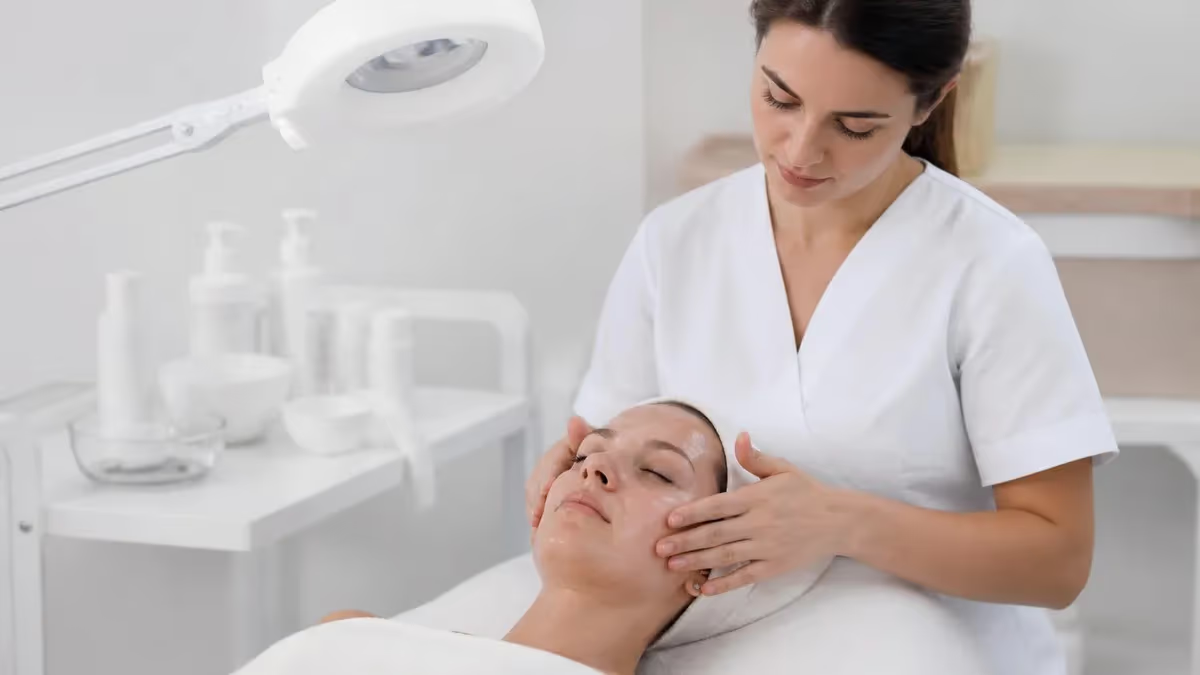
Searching for an esthetician school online in 2026 means navigating a hybrid landscape where theory lectures stream to your laptop while hands-on facial, waxing, and chemical exfoliation training still happens in a physical clinic. Every state cosmetology board in the United States requires supervised in-person practical hours before you can sit for the written and practical licensing exams, so a 100% online esthetician program does not legally exist for entry-level licensure. What does exist, and what this guide unpacks, is the growing menu of accredited hybrid programs that move 30% to 50% of coursework online.
The appeal is obvious. Online theory blocks let working parents, career-changers, and rural students cut commute time, schedule reading around shifts, and pause lectures to take notes. Tuition for hybrid programs often runs $1,000 to $4,000 less than traditional 600-hour programs because schools save on classroom seat-time. Combined with shorter weekend lab intensives, hybrid models have pulled completion rates above 70% in many programs, up from the 55% to 60% typical of evening-only formats a decade ago.
Before enrolling, you need to verify three non-negotiables: the school is accredited by NACCAS or a regional accreditor your state recognizes; the program meets your state's minimum training hours (which range from 260 in Florida to 1,500 in Alabama); and the practical lab location is realistically commutable for you. If you want a quick refresher on the scope of the profession, this what is an esthetician resource breaks down treatments, settings, and state-by-state authority before you commit to tuition.
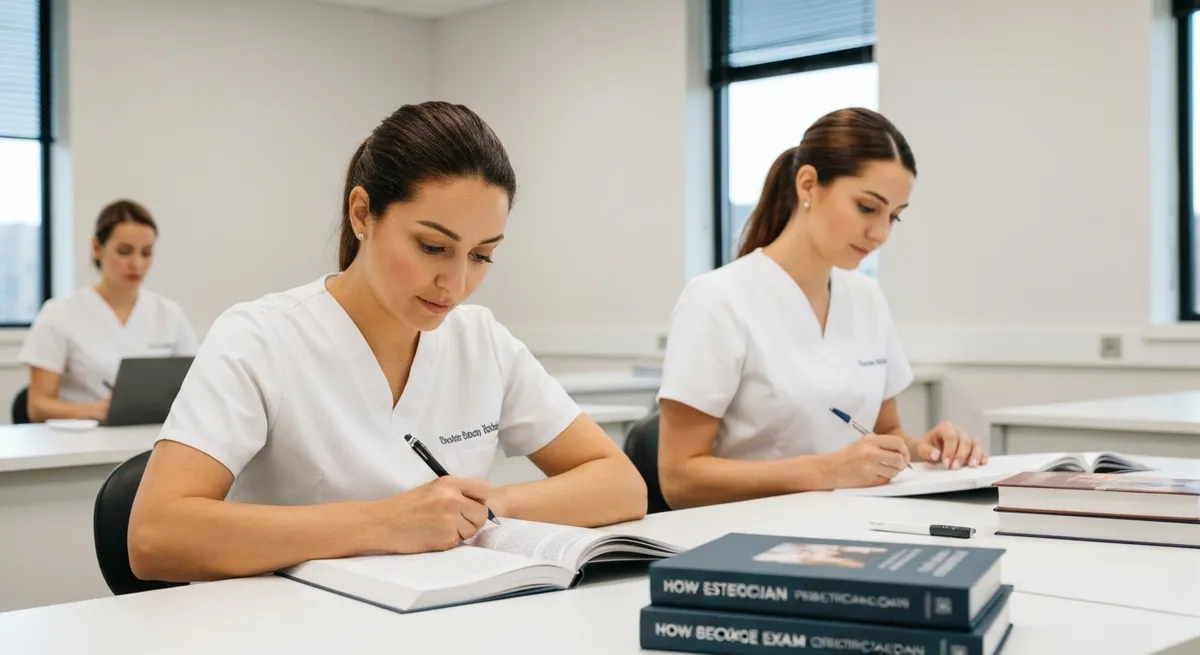
Hybrid programs typically split into two streams. Asynchronous theory uses recorded lectures, reading PDFs, and auto-graded quizzes you complete on your own clock, usually 10 to 20 hours per week. Synchronous lab days happen Saturday and Sunday or in week-long intensives every six weeks, where you practice facials, extractions, body waxing, and machine modalities on classmates and supervised clients. Most reputable programs require 75% to 100% lab attendance because state boards audit attendance records during license application review.
Tuition varies wildly. Aveda Institute hybrid tracks run $14,000 to $18,000. Community college programs like those at Lone Star College or Salt Lake Community College charge $4,500 to $8,000 because state subsidies offset costs. Private online-forward schools like Career School USA or Esthetics by Joelle list $6,000 to $12,000. Add $400 to $1,200 for a starter kit (steamer, mag lamp, mannequin head, product line), $150 to $300 for state exam fees, and roughly $200 for the initial license itself.
This guide walks through accreditation, state-hour requirements, program comparison, the daily reality of online coursework, common pitfalls students hit during practical lab transitions, and the financial aid mechanics that determine whether Pell Grants and federal loans actually apply to your school. Whether you are eyeing a fast-track 260-hour Florida program or a full 1,000-hour Texas course, the structure below tells you what to verify before you sign an enrollment agreement.
Expect six to fourteen months from first login to taking your state board exam, depending on whether you study full-time or part-time and how aggressive your state's hour requirement is. Plan early, ask about job placement statistics in writing, and never enroll in a school that cannot show you its NACCAS accreditation certificate or its state board approval letter on demand.
Online Esthetician School by the Numbers

How Hybrid Esthetician Programs Are Structured
Recorded video lectures, digital textbooks, and auto-graded quizzes covering skin science, sanitation, ingredient chemistry, and client consultation. Typically 10 to 20 hours weekly, completed on your own schedule with weekly submission deadlines and proctored module exams.
Scheduled Zoom classes for case-study discussion, exam review, and product demonstrations. Attendance counts toward total program hours in most states and helps build cohort relationships before lab weekends begin in earnest.
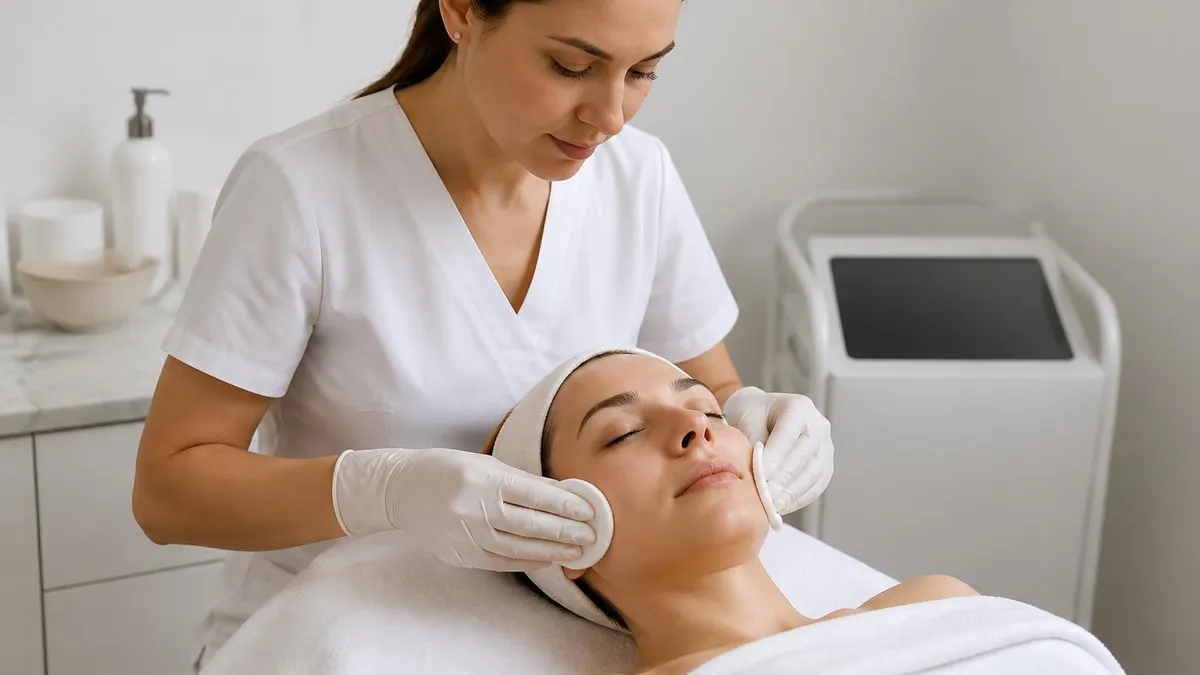
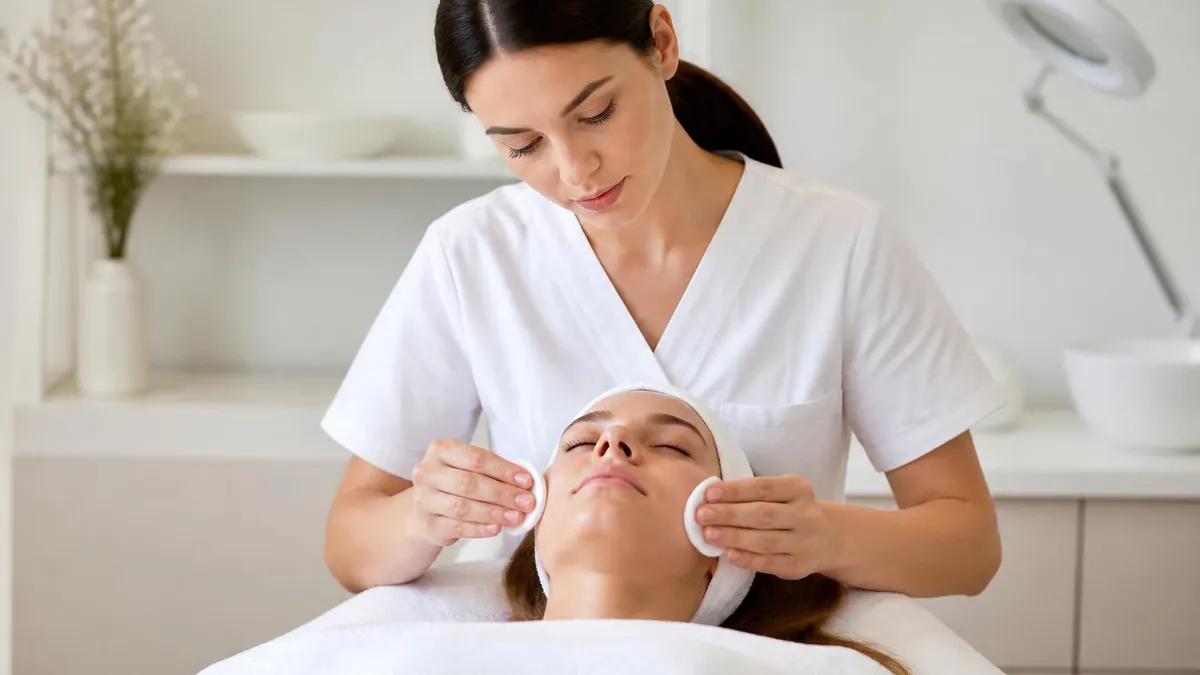
Weekend or week-long intensives at the school clinic where you perform supervised facials, waxing, makeup, extractions, and machine work on classmates and paying clients. State boards require these hours physically supervised and signed off.
Late-stage practical training where you treat real clients for reduced fees under direct instructor supervision. These hours build speed, professionalism, and consultation confidence — and often produce your first portfolio photos.
Final phase mimics the state practical exam: timed facial setup, draping, sanitation checks, and treatment performance. Mock written boards drill the multiple-choice format you will face at Prometric or PSI testing centers.
Accreditation is the single most important box to check before paying any deposit. The National Accrediting Commission of Career Arts and Sciences (NACCAS) is the gold-standard programmatic accreditor for cosmetology, esthetics, and barbering schools. NACCAS accreditation is what unlocks Title IV federal financial aid — Pell Grants, Direct Subsidized Loans, and PLUS loans. If a school is not NACCAS-accredited or regionally accredited by an institutional body like SACSCOC or WSCUC, you generally cannot use federal aid, even if the program is otherwise solid.
State board approval is a separate, equally critical layer. A school can be NACCAS-accredited but still not approved to operate in your state. Check your state cosmetology or barbering board's website for the official list of approved schools and approved out-of-state distance programs. California, Texas, Florida, and New York maintain searchable databases. If a school is not on your state's list, the hours you complete will not count toward licensure in that state — full stop.
Out-of-state hybrid attendance gets tricky. If you live in Georgia but enroll in a Texas-based hybrid program, you must confirm that Georgia accepts Texas-program hours via reciprocity, OR that the Texas school's hours apply directly. Most state boards publish reciprocity guidance, but the safest path is calling your home-state board directly and asking, in writing, whether the specific school qualifies. Get the answer in email before enrolling.
Beware of "online esthetician certification" offerings on Udemy, Coursera, or various dot-com schools that promise a certificate in 30 days for $99. These are continuing education or hobby certificates — they are not state-recognized esthetician licenses, will not let you legally perform paid skin services, and will not transfer to any board program. The only path to a license is through a state-board-approved school completing your state's required hours.
Ask for three documents in writing before signing: the NACCAS accreditation certificate (or institutional accreditation letter), the state board approval letter or program-approval number, and the school's annual completion-rate, licensure-pass-rate, and job-placement statistics. NACCAS-accredited schools are required to publish these under federal Gainful Employment rules, and any school that hesitates to share them is signaling a problem.
The job market rewards licensed estheticians. Salons, day spas, dermatology offices, and medical spas all hire from accredited program graduates first because their state license is the threshold credential. If you plan to specialize as a esthetician employment opportunities in a medical spa, hospital, or laser clinic, the underlying esthetics license is still your foundation — advanced or master esthetics credentials build on top of that base.
Finally, verify the school's transfer policy. Life happens. If you move halfway through a program, you want a school that documents your completed hours in a transcript-ready format that other state-approved schools will accept. NACCAS schools generally do this well; un-accredited mills often do not, and students can lose hundreds of hours of progress in transit.
Esthetician Practice Practice Test Questions
Prepare for the Esthetician Practice Exam exam with our free practice test modules. Each quiz covers key topics to help you pass on your first try.
Esthetician Practice Advanced Facial Treat...
Esthetician Practice Exam Questions covering Advanced Facial Treatments. Master Esthetician Practice Test concepts for certification prep.
Esthetician Practice Anatomy and Physiology
Free Esthetician Practice Practice Test featuring Anatomy and Physiology. Improve your Esthetician Practice Exam score with mock test prep.
Esthetician Practice Chemistry and Product...
Esthetician Practice Mock Exam on Chemistry and Product Ingredients. Esthetician Practice Study Guide questions to pass on your first try.
Esthetician Practice Client Consultation a...
Esthetician Practice Test Prep for Client Consultation and Analysis. Practice Esthetician Practice Quiz questions and boost your score.
Esthetician Practice Esthetics Chemistry a...
Esthetician Practice Questions and Answers on Esthetics Chemistry and Ingredients. Free Esthetician Practice practice for exam readiness.
Esthetician Practice Exam Esthetician Prac...
Esthetician Practice Mock Test covering Exam Esthetician Practice Advanced Facial Treatments Questions and Answers. Online Esthetician Practice Test practice with instant feedback.
Esthetician Practice Exam Esthetician Prac...
Free Esthetician Practice Quiz on Exam Esthetician Practice Anatomy and Physiology Questions and Answers. Esthetician Practice Exam prep questions with detailed explanations.
Esthetician Practice Exam Esthetician Prac...
Esthetician Practice Practice Questions for Exam Esthetician Practice Chemistry and Product Ingredients Questions and Answers. Build confidence for your Esthetician Practice certification exam.
Esthetician Practice Exam Esthetician Prac...
Esthetician Practice Test Online for Exam Esthetician Practice Client Consultation and Analysis Questions and Answers. Free practice with instant results and feedback.
Esthetician Practice Exam Esthetician Prac...
Esthetician Practice Study Material on Exam Esthetician Practice Esthetics Chemistry and Ingredients Questions and Answers. Prepare effectively with real exam-style questions.
Esthetician Practice Exam Esthetician Prac...
Free Esthetician Practice Test covering Exam Esthetician Practice Facial Treatments and Massage Questions and Answers. Practice and track your Esthetician Practice exam readiness.
Esthetician Practice Exam Esthetician Prac...
Esthetician Practice Exam Questions covering Exam Esthetician Practice Hair Removal Methods Questions and Answers. Master Esthetician Practice Test concepts for certification prep.
Esthetician Practice Exam Esthetician Prac...
Free Esthetician Practice Practice Test featuring Exam Esthetician Practice Infection Control and Safety Questions and Answers. Improve your Esthetician Practice Exam score with mock test prep.
Esthetician Practice Exam Esthetician Prac...
Esthetician Practice Mock Exam on Exam Esthetician Practice Skin Analysis and Conditions Questions and Answers. Esthetician Practice Study Guide questions to pass on your first try.
Esthetician Practice Exam Esthetician Prac...
Esthetician Practice Test Prep for Exam Esthetician Practice Skin Histology and Disorders Questions and Answers. Practice Esthetician Practice Quiz questions and boost your score.
Esthetician Practice Exam FREE Esthetician...
Esthetician Practice Questions and Answers on Exam FREE Esthetician Knowledge Questions and Answers. Free Esthetician Practice practice for exam readiness.
Esthetician Practice Exam FREE Esthetician...
Esthetician Practice Mock Test covering Exam FREE Esthetician MCQ Questions and Answers. Online Esthetician Practice Test practice with instant feedback.
Esthetician Practice Exam FREE Esthetician...
Free Esthetician Practice Quiz on Exam FREE Esthetician Practice Anatomy and Physiology Questions and Answers. Esthetician Practice Exam prep questions with detailed explanations.
Esthetician Practice Exam FREE Esthetician...
Esthetician Practice Practice Questions for Exam FREE Esthetician Practice Cosmetic Chemistry and Ingredients Questions and Answers. Build confidence for your Esthetician Practice certification exam.
Esthetician Practice Exam FREE Esthetician...
Esthetician Practice Test Online for Exam FREE Esthetician Practice Facial Treatments and Devices Questions and Answers. Free practice with instant results and feedback.
Esthetician Practice Exam FREE Esthetician...
Esthetician Practice Study Material on Exam FREE Esthetician Practice Hair Removal Procedures Questions and Answers. Prepare effectively with real exam-style questions.
Esthetician Practice Exam FREE Esthetician...
Free Esthetician Practice Test covering Exam FREE Esthetician Practice Infection Control and Safety Questions and Answers. Practice and track your Esthetician Practice exam readiness.
Esthetician Practice Exam FREE Esthetician...
Esthetician Practice Exam Questions covering Exam FREE Esthetician Practice Skin Analysis and Conditions Questions and Answers. Master Esthetician Practice Test concepts for certification prep.
Esthetician Practice Exam FREE Esthetician...
Free Esthetician Practice Practice Test featuring Exam FREE Esthetician (Reading) Questions and Answers. Improve your Esthetician Practice Exam score with mock test prep.
Esthetician Practice Facial Treatments and...
Esthetician Practice Mock Exam on Facial Treatments and Massage. Esthetician Practice Study Guide questions to pass on your first try.
Esthetician Practice Hair Removal Methods
Esthetician Practice Test Prep for Hair Removal Methods. Practice Esthetician Practice Quiz questions and boost your score.
Esthetician Practice Infection Control and...
Esthetician Practice Questions and Answers on Infection Control and Safety. Free Esthetician Practice practice for exam readiness.
Esthetician Practice Skin Analysis and Con...
Esthetician Practice Mock Test covering Skin Analysis and Conditions. Online Esthetician Practice Test practice with instant feedback.
Esthetician Practice Skin Histology and Di...
Free Esthetician Practice Quiz on Skin Histology and Disorders. Esthetician Practice Exam prep questions with detailed explanations.
Esthetician Practice Esthetician Knowledge
Esthetician Practice Practice Questions for Esthetician Knowledge. Build confidence for your Esthetician Practice certification exam.
Esthetician Practice Esthetician MCQ
Esthetician Practice Test Online for Esthetician MCQ. Free practice with instant results and feedback.
Esthetician Practice Cosmetic Chemistry an...
Esthetician Practice Study Material on Cosmetic Chemistry and Ingredients. Prepare effectively with real exam-style questions.
Esthetician Practice Facial Treatments and...
Free Esthetician Practice Test covering Facial Treatments and Devices. Practice and track your Esthetician Practice exam readiness.
What Is an Esthetician Curriculum Online: Module Breakdown
The asynchronous skin science block covers the integumentary system from the stratum corneum down to the subcutis, including melanocyte function, keratinization cycles, sebaceous gland behavior, and the acid mantle. Expect roughly 60 to 100 hours of recorded lectures, digital textbook reading from Milady or Pivot Point, and module quizzes you complete on demand.
Anatomy and physiology lectures translate directly to the state written exam, where 20% to 30% of questions test cell biology, skin disorders, and contraindications. Strong programs include 3D skin atlases, case-study videos of actual conditions, and weekly synchronous review sessions where instructors answer questions about confusing topics like inflammatory mediators or wound-healing phases.
Online Esthetician School: Pros and Cons
- +Flexible asynchronous theory fits around full-time jobs and parenting schedules
- +Tuition often $1,000–$4,000 lower than seat-time traditional programs
- +No daily commute for lecture portions saves hundreds of dollars in gas and time
- +Recorded lectures can be re-watched at 1.5x or 2x speed for efficient review
- +Digital quiz banks build state-board exam familiarity early in the program
- +Reduced classroom overhead translates to more individualized lab attention on weekends
- +Hybrid format suits adult learners who prefer self-paced theory mastery
- −Lab hours still require physical attendance — no fully online path to licensure exists
- −Self-discipline gap causes higher mid-program drop-off than traditional formats
- −Hands-on skill development is compressed into weekend intensives, which exhausts some learners
- −Networking with peers and instructors is thinner without daily classroom contact
- −Internet outages and tech issues can disrupt timed quizzes and proctored exams
- −Some states limit how many program hours can be earned via distance learning
- −Equipment costs are sometimes higher because students need home practice supplies
Pros and Cons at a Glance
| Pros | Cons |
|---|---|
| Flexible asynchronous theory fits around full-time jobs and parenting schedules | Lab hours still require physical attendance — no fully online path to licensure exists |
| No daily commute for lecture portions saves hundreds of dollars in gas and time | Self-discipline gap causes higher mid-program drop-off than traditional formats |
| Digital quiz banks build state-board exam familiarity early in the program | Hands-on skill development is compressed into weekend intensives, which exhausts some learners |
| Reduced classroom overhead translates to more individualized lab attention on weekends | Networking with peers and instructors is thinner without daily classroom contact |
| Hybrid format suits adult learners who prefer self-paced theory mastery | Internet outages and tech issues can disrupt timed quizzes and proctored exams |
Esthetician School Enrollment Readiness Checklist
- ✓Confirm the school holds current NACCAS accreditation or recognized regional accreditation
- ✓Verify the school is on your state cosmetology board's approved program list
- ✓Match the program's clock hours to your state's minimum licensure requirement
- ✓Request the most recent completion, licensure pass, and job placement rates in writing
- ✓Tour the in-person lab facility before signing — or attend a virtual lab walkthrough
- ✓Calculate total cost: tuition, kit, books, exam fees, license fee, and travel to lab
- ✓Confirm your reliable internet speed handles streaming HD video for theory blocks
- ✓Schedule the FAFSA submission if you plan to apply federal Pell or Direct Loans
- ✓Read the enrollment agreement's refund policy carefully — note the cancellation cutoff
- ✓Check whether hours transfer to other state-approved schools if you relocate mid-program
There is no legal 100% online path to an entry-level esthetician license.
Every U.S. state requires supervised in-person practical hours before licensure. Programs marketed as fully online either cover only theory portions of a hybrid track, or they award non-license certificates that cannot be used to perform paid skin services. Always verify with your state cosmetology board.
Tuition for hybrid esthetician school online ranges from $4,500 at community college programs to $18,000 at brand-name beauty institutes. The middle of the market — accredited private hybrid programs — typically charges $7,000 to $12,000 for 600 hours of training. Add roughly $1,200 for a student kit (steamer, magnifying lamp, mannequin head, gloves, disinfectant, starter product line), $200 to $400 for textbooks if not bundled, and $250 to $500 in state board examination and license fees.
Federal financial aid changes everything. NACCAS-accredited schools that participate in Title IV programs let you apply Pell Grants (up to $7,395 per academic year in 2025-26), Direct Subsidized Loans (up to $3,500 for first-year undergraduates), and Direct Unsubsidized Loans (up to $5,500 for dependent students, more for independents). Filling out the FAFSA at studentaid.gov takes about 45 minutes and is the single highest-ROI hour you'll spend in the enrollment process.
Workforce Innovation and Opportunity Act (WIOA) funding pays full tuition at approved schools for displaced workers, single parents, and certain low-income adults. Each state administers WIOA differently — Texas calls it the Workforce Solutions program, California uses America's Job Center of California, and Florida runs CareerSource. Walk into a local one-stop career center, ask for WIOA-funded training inquiry, and bring tax returns plus a job-loss letter if applicable. Approval typically takes 4 to 8 weeks.
Payment plans are common at private schools. Most offer 0% interest internal financing if you pay tuition over the length of the program — for example, $9,600 tuition divided into 12 monthly $800 payments. Read the late-fee clauses carefully; some schools charge $50 to $150 per missed payment and can suspend access to online theory until payment is current. Avoid third-party financing arrangements with rates above 12% unless you have no alternative.
Return on investment math is straightforward when you compare program cost to entry-level earnings. The U.S. Bureau of Labor Statistics median pay for skincare specialists was about $43,200 annually in 2023, with the top 10% earning over $77,000. Medical spa and dermatology-office estheticians often start $5,000 to $10,000 higher than salon estheticians. Even a $12,000 program at median pay pays back in roughly two years of full-time work, faster if you build a tip-generating clientele. The current esthetician salary data by state and setting helps you forecast realistic earnings in your target market.
Hidden costs people forget: liability insurance once you start working ($150 to $400 annually), continuing education for license renewal ($100 to $500 every 1 to 2 years depending on state), professional product allowance if you switch from school-supplied to your own brand ($300 to $1,000 to stock a basic treatment menu), and lost income during the unpaid clinic-floor hours. Some students keep a part-time job through school and accept slower completion; others go full-time and accept loans. Both work — match the choice to your cash flow.
Scholarships exist but are competitive. NACCAS publishes its annual Example Awards, the Aveda Institute Network awards thousands in tuition reductions yearly, and brands like Dermalogica, Eminence, and Image Skincare sponsor regional student awards. Apply to every relevant scholarship; even $500 reductions stack quickly. Local Rotary clubs, women's business associations, and community foundations also fund vocational education — search "[your county] vocational scholarship" for hidden local pots.
One critical warning: if a school cannot show you its three-year cohort default rate on federal loans, walk away. High default rates signal that graduates aren't earning enough to repay — usually because the curriculum is weak, the license-pass rate is low, or the job-placement support is non-existent. NACCAS-accredited schools below 30% default rates are generally safe; above 40% is a red flag worth investigating.
Some states cap the percentage of program hours that can be earned through distance learning. Texas, for example, allows up to 50% remote theory hours; other states allow only 25%, and a few require 100% in-person attendance. Confirm with your state board before assuming a hybrid program's online hours will count.
Graduation from an esthetician school is the launchpad, not the finish line. Within 30 days of completing your required hours, your school files an official hours-completion form with the state board, sometimes called a "proof of training" or "affidavit of completion." This document, your transcript, and the school's official seal travel together to the licensing authority. Track this paperwork yourself — schools occasionally lose forms, and the delay can push your exam date by weeks.
State board exams have two parts in most jurisdictions: a written multiple-choice exam (usually administered by PSI, Prometric, or a state-contracted vendor) and a practical exam where you demonstrate facial treatment, sanitation, and consultation skills on a live model or mannequin. Written exams typically run 100 to 150 questions over 2 to 3 hours. Practical exams run 90 minutes to 4 hours depending on state and include timed stations for setup, treatment, and breakdown.
First-time pass rates vary widely by school. Strong programs report 85% to 95% first-time pass rates on the written portion; weaker programs sit at 50% to 60%. The practical exam pass rate is generally higher — 90% or above — because schools drill the practical protocol in mock-boards sessions during the final weeks.
Always ask your school for the most recent pass-rate figures, and ask whether they include retakes or only first-attempt scores. Many esthetician near me learners use practice quizzes and mock exams in the four weeks before sitting the actual state board, and pass rates climb meaningfully with structured drilling.
After passing both exams, you apply for the license itself. Fees range from $50 to $200 depending on state, and processing takes 2 to 6 weeks. Some states issue temporary work permits while the license processes, allowing you to start a salon job immediately after passing boards. Once licensed, you must renew every 1 to 2 years and complete continuing education — typically 4 to 12 hours per renewal cycle covering sanitation updates, new modalities, or business topics.
The first six months on the job are when school content gets tested for real. Speed, client communication under time pressure, retail recommendations, and managing back-to-back bookings are skills that classroom hours only partially prepare you for. Most new estheticians spend 60 to 120 days building speed before they hit a full schedule. Salon mentors, online forums like r/Estheticians on Reddit, and continuing education from product brands fill the gap between graduation-day skills and senior-clinician confidence.
Specialty paths open up after entry-level licensure. Medical esthetics requires either a master esthetician license (in states like Washington, Virginia, and Utah) or working under a physician's direct supervision in states without that tier. Lash extension certifications, microneedling certifications, and chemical peel advanced training are usually 1 to 5 day courses costing $300 to $2,500. Within two to four years, many estheticians double their entry-level salary by stacking specialties and building a loyal client book.
Long-term, the credential mobility matters. License reciprocity between states is inconsistent — California, for instance, does not reciprocate with most states and requires retesting. Texas, Florida, and Nevada have broader reciprocity. If you anticipate moving, choose a school in a state with strong reciprocity, or build hours that meet the highest common standard (1,000 hours covers most states except Alabama, which requires 1,500). Planning this at the enrollment stage saves expensive retraining later.
Practical tips from students who have completed online esthetician programs cluster around a few themes. First, treat the asynchronous theory like a job. Block specific hours on your calendar — say, Tuesday and Thursday evenings 7 to 10 PM, Saturday mornings 8 to 11 — and protect them. Students who try to squeeze theory in between errands consistently fall behind, miss quiz deadlines, and end up cramming before lab weekends. Calendar discipline beats motivation every time.
Second, build a small home practice setup early. A mannequin head ($35 on Amazon), a basic facial mirror, sample products from your kit, and a friend willing to be your guinea pig let you rehearse consultation language, draping, and product application between lab weekends. Recording yourself on your phone and reviewing the footage exposes habits — talking too fast, fidgeting with gloves, forgetting to wash hands — that classroom feedback alone won't catch.
Third, form a study group with two or three classmates from your cohort. Online programs make peer connection harder, but a weekly 30-minute Zoom where you quiz each other on chapter material, share difficult ingredient flashcards, or compare practical mock-board feedback dramatically improves retention. The students who graduate first-attempt licensed almost universally report a study buddy or small group helped them through the hardest blocks (usually chemistry and electricity for facial machines).
Fourth, get to know your instructors on lab days. They watch dozens of students per cohort and can usually tell within two weekends who will pass and who will struggle. Ask for direct feedback after each lab: "What's the one thing I should focus on improving before the next session?" Specific, narrow feedback compounds — fixing your hand position during extractions in week three saves you from re-learning it in mock boards in week twenty.
Fifth, plan your state board exam date before you finish the program. Most testing centers book out 3 to 6 weeks in advance, and you want the exam scheduled for 2 to 4 weeks after your final school day — close enough that content is fresh, far enough that you can do focused review. Test centers are sometimes hours from rural areas; budget for hotel stay the night before if your drive exceeds 90 minutes, because exam-morning fatigue tanks scores.
Sixth, save photos and videos of your best treatment work during clinic floor hours. With client consent, document your before-and-after facial photography, your wax setup, your facial product layering. This portfolio is what gets you hired into competitive salon and medical spa positions after licensure. Schools rarely emphasize portfolio-building enough, and graduates who arrive at job interviews with even six well-photographed treatment cases stand out instantly.
Seventh, prepare your post-graduation job search before you finish school. Update LinkedIn, write a one-page resume highlighting hours completed and specialty interests, identify 10 to 15 salons or spas in your area where you would want to work, and follow them on Instagram. Reach out to two or three for informational visits during your final program month. Estheticians who line up interviews before licensure often start work within two weeks of receiving their license number — versus three to six months of job search for those who wait.
Sample Esthetician Practice Questions
Try these questions from our free Esthetician practice tests. The correct answer and an explanation follow each question.
Which of the following ingredients is a physical sunscreen agent that works by reflecting and scattering UV radiation away from the skin?
- A. Avobenzone
- B. Oxybenzone
- C. Octinoxate
- D. Zinc Oxide
Answer: D. Zinc Oxide
Zinc Oxide and Titanium Dioxide are physical (or mineral) sunscreen ingredients. They create a physical barrier on the skin that blocks, reflects, and scatters UV rays. Avobenzone, Oxybenzone, and Octinoxate are chemical sunscreen agents that work by absorbing UV radiation and converting it into heat.
After a waxing service, which type of product should be avoided on the treated area for at least 24 hours?
- A. Fragrance-free moisturizer
- B. Aloe vera gel
- C. Products containing alcohol or exfoliating acids
- D. Cool water rinse
Answer: C. Products containing alcohol or exfoliating acids
Following waxing, the skin's surface is temporarily sensitized and the follicles are open. Alcohol-based products and chemical exfoliants (AHAs, BHAs) can cause significant irritation, stinging, and potential inflammation in this vulnerable state.
Which type of depilatory product works by chemically breaking down the disulfide bonds in the hair shaft?
- A. Warm soft wax
- B. Thioglycolate-based cream
- C. Sugaring paste
- D. Calcium hydroxide powder
Answer: B. Thioglycolate-based cream
Thioglycolate-based (thioglycolic acid) creams are the active ingredient in most chemical depilatories. They break the disulfide bonds in the keratin structure of the hair shaft, causing the hair to weaken and be wiped away at the skin's surface.
Which EPA-registered disinfectant category is required for disinfecting multi-use esthetician implements such as tweezers and metal extractors?
- A. Hospital-grade disinfectant
- B. Household-grade disinfectant
- C. Sanitizer-grade solution
- D. Sterilant-grade autoclave solution
Answer: A. Hospital-grade disinfectant
Hospital-grade (also called hospital-level) EPA-registered disinfectants are required for multi-use non-critical tools in esthetics because they are proven effective against a broad spectrum of pathogens including bacteria, viruses, and fungi at concentrations safe for salon use.
Esthetician Questions and Answers

About the Author
Licensed Cosmetologist & Beauty Licensing Exam Specialist
Paul Mitchell SchoolsMichelle Santos is a licensed cosmetologist with a Bachelor of Science in Esthetics and Salon Management from Paul Mitchell School. She has 16 years of salon industry experience and 8 years preparing students for state cosmetology board exams in theory, practical skills, and sanitation. She specializes in licensure preparation for cosmetologists, estheticians, and nail technicians.
Join the Discussion
Connect with other students preparing for this exam. Share tips, ask questions, and get advice from people who have been there.
View discussion (4 replies)