
How to Become a Medical Esthetician: Step-by-Step Career Guide 2026 October
⏳ How to become a medical esthetician: training requirements, state licensing, certifications, salary expectations, work settings, and step-by-step
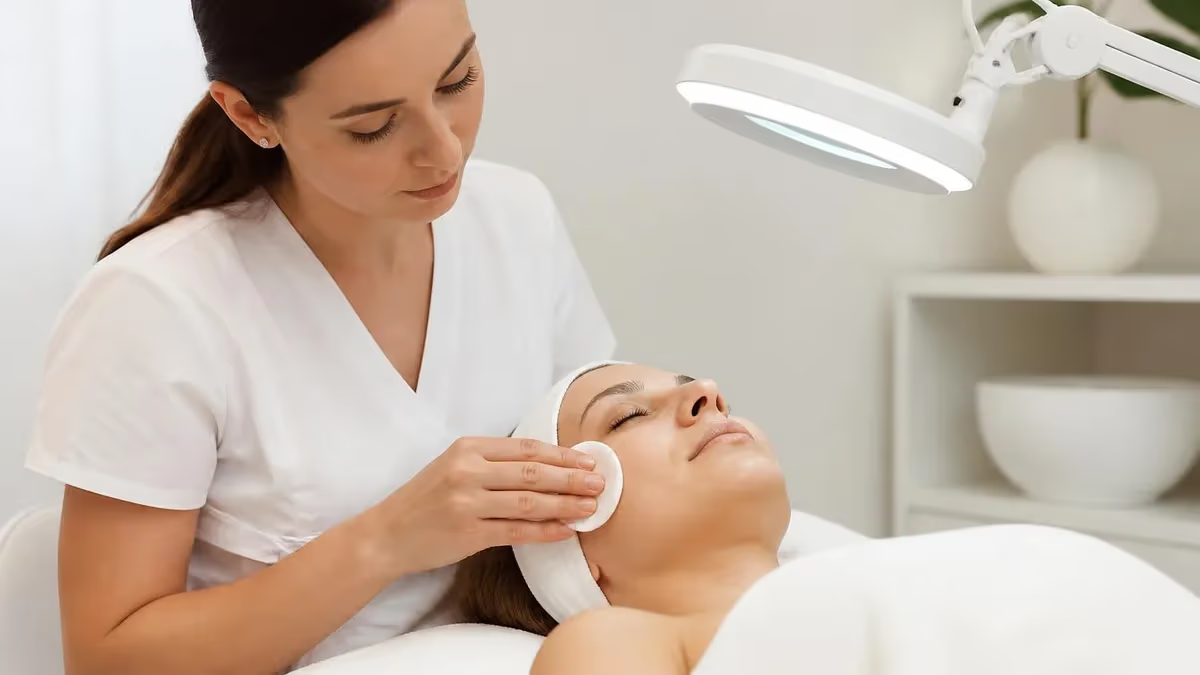
Becoming a medical esthetician combines the skincare expertise of a standard esthetician with additional training in clinical procedures performed in medical settings — dermatology offices, plastic surgery clinics, medical spas, and laser centers. The path requires more education than standard esthetics, but the career opportunities, work environment, and salary potential are substantially better. If you're considering this career or planning your transition from standard esthetics to medical esthetics, this guide walks through every step from initial training through licensing and ongoing professional development.
By the end of this guide you'll understand the state licensing requirements, the educational pathway from cosmetology school through medical esthetics training, the certifications that distinguish medical estheticians from standard estheticians, the realistic salary ranges by work setting and geography, the day-to-day work environments, and how to position yourself for hire by medical practices. Whether you're a high school senior considering esthetics as a first career or an established esthetician planning to upgrade, the framework here will help you build a realistic plan.

What the Role Involves
Medical estheticians work in clinical settings under physician supervision performing advanced skincare treatments: chemical peels, microdermabrasion, laser hair removal assistance, microneedling, pre- and post-operative skincare, and patient education. The role differs from standard esthetics in setting (medical office vs spa), procedures performed (more advanced clinical work), supervision (physician oversight), and clientele (often patients with specific skin conditions rather than wellness clients).
Three Steps to Becoming a Medical Esthetician
Complete state-required esthetics program (typically 600-1500 hours) and pass state board exam to get standard esthetician license. The foundation for everything else.
Additional 100-400+ hours of advanced training covering chemical peels, microdermabrasion, lasers, and clinical skincare. Available through specialized schools and continuing education.
Work in a medical practice — dermatology, plastic surgery, medical spa. Many practices hire licensed estheticians and provide on-the-job training in their specific procedures.
The first step is becoming a licensed esthetician in your state. Every state requires completion of a state-approved esthetics program followed by passing the state board exam. Program length varies — most states require 600 hours of training, but some require up to 1,500 hours. Programs cover skincare theory, anatomy and physiology of skin, sanitation, equipment use, facial treatments, hair removal, and basic chemistry of skincare products. Programs typically take 6-12 months for full-time students, longer for part-time enrollment.
Choosing the right esthetics school matters more than students realize. State-licensed programs all teach the basics, but the quality of training varies significantly. Look for programs with experienced instructors, modern equipment, hands-on clinic time with real clients, and good job placement rates. Cost ranges from $4,000-$15,000 depending on program length and institution. Many programs accept federal financial aid. Some employers offer tuition reimbursement for current employees pursuing esthetics training.
State board exams test both written knowledge and practical skills. The written portion covers topics from the curriculum — chemistry of skincare, sanitation requirements, contraindications for treatments, state laws and regulations. The practical portion requires demonstrating proper technique on facial treatments, hair removal, and related procedures. Most states use exams developed by the National Interstate Council of State Boards of Cosmetology (NIC). Passing the state board is required before practicing professionally.
Medical Esthetician Career Numbers
Where Medical Estheticians Work
Work alongside dermatologists treating patients with various skin conditions. Perform pre-treatment skin preparation, post-procedure care, and educate patients on home skincare routines. Strong steady demand. Pay typically $50,000-$70,000.

Medical esthetics training beyond standard esthetician licensing comes from several sources. Specialized post-graduate medical esthetics programs at private institutions offer 100-400+ hours of additional training. Topics include chemical peels at deeper levels than allowed in spa settings, microdermabrasion technique, laser treatment assistance, microneedling, dermaplaning, IPL treatments, and clinical pharmacology. Programs vary in length and cost. Some are weekend intensives; others run for months. Cost typically ranges from $2,000-$10,000.
Continuing education from professional organizations provides ongoing training throughout your career. The Society for Clinical and Medical Hair Removal, the American Society of Dermatology Estheticians, the National Coalition of Estheticians, and various medical device manufacturers all offer specialized training programs. Annual conferences provide multi-day intensive learning plus networking. Most medical estheticians continue their education throughout their careers as new treatments and technologies emerge.
Equipment manufacturer training is essential when learning specific laser or device-based treatments. Companies that make medical lasers and devices (Sciton, Cynosure, Allergan for fillers, etc.) provide training on their specific equipment. This training is often required by employers using that equipment and may be required for insurance coverage of treatments performed. Build a portfolio of equipment-specific certifications relevant to the practices where you want to work.
Medical esthetics regulations vary significantly by state. Some states have specific medical esthetician licenses or designations. Others regulate procedures rather than titles — meaning certain procedures can only be performed by certain license types. Research your specific state's rules before planning your career. State cosmetology board websites have current information and exam requirements.
Procedures Medical Estheticians Perform
Glycolic, salicylic, TCA, and other peels at strengths beyond what spa estheticians use. Treat acne, hyperpigmentation, fine lines, and texture issues.
Mechanical exfoliation using crystals or diamond tips. Removes dead skin cells and stimulates cell turnover. Common standalone treatment or pre-peel preparation.
Controlled skin injury with fine needles to stimulate collagen production. Treats scarring, fine lines, and texture issues. Often combined with serums or PRP.
Assist with or perform laser hair removal, IPL photofacials, and laser skin treatments. Specific scope varies by state and physician oversight.
The day-to-day work of a medical esthetician differs from spa work in important ways. The pace tends to be faster — medical practices schedule patients more tightly than spas. The documentation requirements are heavier — clinical notes for each patient interaction become part of the medical record. The patient population includes people with specific skin concerns rather than primarily wellness-focused clients. Physician oversight means following protocols more strictly. The clinical environment requires different communication skills than the relaxation-focused spa setting.
Insurance and billing add complexity in medical settings. Some procedures may be billable to insurance (acne treatment, scar revision, certain laser treatments for medical conditions). Most cosmetic procedures are self-pay. Medical estheticians work with administrative staff on billing and insurance claims. Understanding what's billable and what's cosmetic helps you talk knowledgeably with patients about treatment options and pricing. This business awareness distinguishes medical estheticians from spa-only practitioners.
Patient consultation skills are essential in medical settings. Patients often arrive with specific concerns — acne scarring, hyperpigmentation from sun damage, post-surgical care needs. The consultation involves understanding what they want, assessing their actual skin condition, recommending appropriate treatments, setting realistic expectations, and obtaining informed consent. This consultation work matters more in medical settings than in spas where treatments are often more uniform. Strong consultation skills directly affect treatment outcomes and patient satisfaction.
Career Progression in Medical Esthetics
New licensed esthetician with medical training. Start at dermatology or med spa as junior practitioner. Learn practice protocols. Build clinical experience. Pay typically $45,000-$55,000.

Salary varies significantly by setting, location, and experience. Dermatology and plastic surgery practices in major metropolitan areas tend to pay best. California, New York, Massachusetts, Texas, and Florida have particularly active markets. Medical spas in upscale areas often pay well, especially when commission-based pay is part of the package. Smaller markets pay less but typically have lower cost of living. Travel for training and conferences is common in the field — budget for ongoing professional development.
Compensation structure varies widely. Some practices pay straight hourly or salary. Others use base pay plus commission on services performed or products sold. Some pure-commission positions exist but are less common in medical settings than in spas. Tipping practices vary by region and setting — generally less expected in clinical medical settings than in spa environments. When evaluating job offers, look at total compensation including benefits, continuing education allowances, and product/service discounts.
Insurance considerations are important for medical estheticians. Malpractice insurance protects against claims related to treatment complications. Most employers carry coverage that protects their employees, but independent practitioners need their own coverage. Cost varies based on scope of practice and claims history. Several professional organizations offer member discounts on liability insurance. Don't skip this coverage — even one serious claim without insurance can devastate your financial situation.
Steps to Become a Medical Esthetician
- ✓Research your state's specific licensing requirements
- ✓Choose a state-licensed esthetics program with hands-on clinical experience
- ✓Complete required training hours (typically 600-1500 hours)
- ✓Pass your state board licensing exam
- ✓Get hired at a spa or salon for initial experience while pursuing advanced training
- ✓Complete medical esthetics training program or certification
- ✓Apply for positions in dermatology, plastic surgery, or medical spa settings
- ✓Pursue equipment-specific certifications relevant to your workplace
- ✓Join professional organizations (ASDE, Society for Clinical Hair Removal)
- ✓Plan ongoing continuing education to maintain license and stay current
- ✓Consider eventual specialization in lasers, peels, or specific treatment areas
Networking matters significantly in this field. Professional organizations provide conferences, regional meetings, and online communities. Manufacturer-sponsored training events bring together practitioners using similar equipment. Local cosmetology and esthetics meetings provide community. The medical esthetics community is relatively small, so professional reputation builds quickly — both for good and for ill. Building strong relationships with physicians, other estheticians, and product representatives creates opportunities throughout your career.
Common misconceptions about medical esthetics include thinking it's the same as standard esthetics with just a fancy name. The work is genuinely different. Standard esthetics focuses on relaxation, wellness, and cosmetic improvement. Medical esthetics focuses on clinical treatment of skin conditions and aesthetic concerns in medical settings. The pace, clientele, supervision, and documentation requirements all differ. Some estheticians love the spa environment and would be unhappy in a medical setting. Others find the clinical environment far more rewarding than spa work.
The career has both pros and cons worth considering honestly. The pay is generally better than standard esthetics. The work environment is more clinical and faster-paced. The patient interactions are often more focused on specific outcomes rather than general wellness. The opportunities to learn advanced procedures and use sophisticated equipment are substantial. The ongoing education requirement is real. The physical demands include standing for long shifts and detailed work that can strain the eyes and hands. Plan for self-care to sustain a long career.
For people considering medical esthetics as a career change from another field, the transition is realistic. Many medical estheticians enter the field in their 30s, 40s, or even later after careers in other industries. The training programs accommodate working adults with evening and weekend classes. The career rewards mature interpersonal skills that come with life experience. Don't let age dissuade you from pursuing this path if you're genuinely interested in the work.
Medical estheticians cannot diagnose skin conditions, prescribe medications, perform injections (in most states), or perform many procedures reserved for licensed medical professionals. Knowing your scope of practice protects you legally and protects patients clinically. Always work within your training and licensing. Refer patients to physicians when concerns exceed your scope. The boundaries vary by state — check your specific regulations.
For estheticians already licensed who want to transition into medical esthetics, the path is more direct than starting from scratch. Your existing license is the foundation. Add medical esthetics training through specialized programs. Apply for positions in medical practices — many will hire experienced spa estheticians and provide on-the-job training in their specific procedures. The transition typically takes 6-12 months from decision to working in a medical setting. The income usually increases meaningfully along with the career change.
Looking at the long-term trajectory, medical esthetics is a stable career with continuing demand. The aesthetics industry has grown significantly over the past two decades and continues growing. Advances in laser technology, injectable treatments, and skin science create new treatment categories regularly. Practitioners who stay current with technology and continuing education position themselves well for ongoing career growth. The field rewards both clinical skill and business savvy — both can be developed through deliberate practice.
For students just beginning to explore this career, the best starting point is talking to medical estheticians currently working in the field. Most are happy to share their experiences with people considering the career. Local dermatology offices, plastic surgery practices, and medical spas often allow shadowing for prospective students. Spending a day observing the work clarifies expectations and confirms whether the career matches your interests. This due diligence prevents expensive mistakes — investing in training only to discover the work isn't what you imagined.
Medical Esthetics Career
- +Higher pay than standard esthetics
- +Clinical work environment with structured protocols
- +Opportunity to perform advanced treatments with sophisticated equipment
- +Continuing demand across multiple healthcare settings
- +Pathway to specialty practice in lasers or specific treatments
- +Long-term career stability and growth potential
- −Significant initial training investment in both time and money
- −Physically demanding with long standing shifts and detailed close work
- −Ongoing continuing education requirements throughout career
- −Strict scope of practice limits — must refer many concerns to physicians
- −Patient outcomes carry more weight than spa work — pressure for results
Beyond licenses, employers value evidence of skill: before/after photos of treatments (with patient consent), references from instructors, completed training certificates, and experience with specific equipment. Build this portfolio throughout your training. A strong portfolio differentiates you in competitive job markets and supports requests for higher starting pay.
The specific skills most valuable to medical practices include the ability to perform a thorough skin analysis, knowledge of contraindications for various procedures, communication skills with both patients and physicians, attention to documentation detail, comfort with medical equipment, and basic understanding of pharmacology related to skincare. Estheticians who develop these clinical competencies beyond basic licensing requirements are significantly more competitive in the medical job market.
Specialization within medical esthetics often produces the highest income trajectories. Some practitioners specialize in acne treatment, becoming the go-to provider in their area for complex acne cases. Others specialize in pigmentation correction, working with patients managing melasma or post-inflammatory hyperpigmentation. Others focus on anti-aging treatments using lasers and microneedling. Specialization typically develops naturally as you find what you're good at and what interests you, but consciously building specialty expertise accelerates the process.
Building a private clientele within a medical practice is often the path to higher income. Estheticians who consistently produce good results attract returning patients who refer others. Over years, you build a book of business that follows you. Some experienced medical estheticians eventually transition to renting space within practices and operating as essentially independent contractors with their own clienteles. This independence requires business skills beyond clinical expertise but produces both higher income and greater autonomy.
For people considering franchise med spas as employers, the situation differs from independent practices. Franchises typically have standardized training and procedures, which can be good for learning but limits individual creativity. Compensation structures often include commission and product sales targets. Some franchises invest heavily in employee development; others treat estheticians as relatively interchangeable. Research specific franchises before committing — employee reviews on industry forums and job sites provide useful intelligence about working conditions.
Self-care for medical estheticians is genuinely important. The work is physically demanding — standing for long shifts, performing detailed work with arms raised, requiring strong fine motor control. Repetitive strain injuries are common. Eye strain from close work is real. Skincare practitioners often experience their own skin issues from chemical exposure. Investing in ergonomic equipment, taking proper breaks, and protecting your own physical health enables a long sustainable career rather than burnout in 5-10 years.
The professional culture of medical esthetics includes ongoing learning as a baseline expectation. Conferences, manufacturer trainings, journal subscriptions, professional organization memberships, and online education are all standard parts of the career. Budget time and money for ongoing development. Practices that don't support continuing education for their staff aren't great long-term employers. Look for employers who pay for or reimburse continuing education as part of compensation packages.
Industry trends worth tracking include the growth of injectable treatments (which are typically outside esthetician scope), the rise of telemedicine consultations for skincare, increasing acceptance of cosmetic treatments among male patients, and the integration of skincare with broader wellness offerings. Stay informed about industry direction through trade publications, social media accounts of leading practices, and conference attendance. Practitioners who anticipate industry direction position themselves better than those who only react to changes.
For licensed estheticians considering whether to pursue medical esthetics, the question often comes down to personal preference about work environment. If you love the relaxation focus and slower pace of spa work, standard esthetics may be more satisfying long-term. If you prefer faster pace, more variety, more clinical orientation, and bigger income potential, medical esthetics fits better. Some practitioners do both — working in spas part of the week and medical settings other days. This hybrid approach provides variety and income diversification.
Beyond all these considerations, the most successful medical estheticians tend to share certain personal qualities: genuine interest in skin science and ongoing learning, strong people skills and patience with diverse patients, attention to detail in both treatment and documentation, business savvy about building a clientele over time, and physical resilience for demanding workdays. If you have most of these qualities and are willing to develop the rest, medical esthetics can be a rewarding long-term career path that combines technical expertise with meaningful patient outcomes.
Medical Esthetician Career Questions and Answers
About the Author
Licensed Cosmetologist & Beauty Licensing Exam Specialist
Paul Mitchell SchoolsMichelle Santos is a licensed cosmetologist with a Bachelor of Science in Esthetics and Salon Management from Paul Mitchell School. She has 16 years of salon industry experience and 8 years preparing students for state cosmetology board exams in theory, practical skills, and sanitation. She specializes in licensure preparation for cosmetologists, estheticians, and nail technicians.
Join the Discussion
Connect with other students preparing for this exam. Share tips, ask questions, and get advice from people who have been there.
View discussion (4 replies)