
How to Become an Esthetician: Requirements, Training Hours, Costs, and Career Paths
✅ Pass the How to Become an Esthetician: exam with confidence. Practice questions with detailed explanations and instant feedback on every answer.

Becoming an esthetician involves four steps: completing a state-approved esthetics program (250-750+ training hours depending on your state), passing the state board exam (written and practical), applying for your state license, and building your career through employment or independent practice. The entire process from enrollment to licensure typically takes 4-12 months for a basic esthetician license. Program costs range from $3,000 to $15,000, with community college programs at the lower end and private esthetics schools at the higher end.
Candidates targeting this certification can strengthen their exam readiness with our ATB ability to benefit test 2026, which covers all key content areas and question formats from the official exam blueprint.

Requirements and Training Hours by State
The first step in understanding how to become an esthetician is knowing your state's specific requirements. Every state requires completion of a state-approved esthetics training program, but the number of required hours varies significantly.
Training Hours by State (Basic Esthetician License):
| Hours Required | States |
|---|---|
| 250 hours | Vermont |
| 260 hours | Massachusetts |
| 300 hours | New York, Nebraska |
| 320 hours | Virginia |
| 450 hours | Hawaii, Michigan, Wyoming |
| 500 hours | Maine, Maryland, New Hampshire, Pennsylvania |
| 600 hours | Arizona, California, Colorado, Connecticut, Delaware, Florida, Georgia, Idaho, Illinois, Indiana, Iowa, Kansas, Kentucky, Louisiana, Minnesota, Mississippi, Missouri, Montana, Nevada, New Jersey, New Mexico, North Carolina, North Dakota, Ohio, Oklahoma, Oregon, Rhode Island, South Carolina, South Dakota, Tennessee, Texas, Utah, Washington, West Virginia, Wisconsin |
| 650 hours | Alabama, Arkansas |
| 700 hours | Alaska |
| 750 hours | D.C. |
Note: Connecticut is the only state that does not require a license for estheticians, though voluntary registration is available. Always verify current requirements with your state cosmetology board, as requirements can change.
Basic Requirements (All States):
- Age: Must be at least 16-18 years old (varies by state; most require 16 or 17)
- Education: High school diploma or GED (some states allow enrollment at 16 with parental consent while still in high school)
- Background check: Some states require a criminal background check as part of the licensing process
- Health: No communicable diseases that would prevent safe practice
Master Esthetician / Medical Esthetician:
Some states offer a higher-level license called "master esthetician" or "medical esthetician" that allows you to perform advanced treatments. Virginia requires 1,200 hours total (600 basic + 600 advanced). Washington, D.C. requires 1,200 hours. States without a master esthetician designation may still allow advanced treatments under a physician's supervision after obtaining your basic license and completing additional manufacturer training.
Choosing a Program and Understanding Costs
Selecting the right esthetics program is one of the most important decisions in your journey to becoming an esthetician. The program you choose affects your education quality, career preparation, and financial investment.
Types of Esthetics Programs:
1. Community College Programs ($3,000-$6,000)
The most affordable option. Community colleges offer esthetics certificate programs that meet state hour requirements. Advantages include lower tuition (especially for in-district residents), financial aid eligibility (Pell Grants, student loans), academic credibility, and the option to earn an associate degree alongside your esthetics training. Disadvantages include less flexible scheduling and potentially larger class sizes.
2. Private Esthetics / Cosmetology Schools ($6,000-$15,000)
Dedicated beauty schools like Aveda Institute, Paul Mitchell Schools, and independent esthetics academies. Advantages include industry-focused curriculum, professional product lines for training, strong salon/spa placement networks, and more flexible scheduling (evening and weekend options). Disadvantages include higher cost and potential for aggressive enrollment tactics — research school reputation and graduation/placement rates before committing.
3. Vocational / Technical Schools ($4,000-$10,000)
Trade schools and vocational programs that offer esthetics alongside other trades. These programs balance affordability with specialized training and often have strong relationships with local employers.
Total Cost Breakdown:
| Cost Category | Range | Notes |
|---|---|---|
| Tuition | $3,000 - $15,000 | Largest expense; varies by school type |
| Books and Materials | $200 - $600 | Textbooks, study guides |
| Starter Kit | $300 - $1,000 | Professional implements, products, carrying case |
| State Board Exam Fees | $50 - $200 | Written and practical exam fees |
| License Application | $25 - $100 | State licensing fee |
| Liability Insurance | $100 - $300/year | Required by most employers and some states |
| Total Estimated | $3,675 - $17,200 |
How to Choose the Right Program:
- State approval: Verify the program is approved by your state cosmetology board — graduating from a non-approved program means you cannot sit for the state board exam
- Graduation and pass rates: Ask for the school's graduation rate and state board exam pass rate. Programs with pass rates below 70% should be approached cautiously
- Job placement: Ask about job placement rates and relationships with local spas, salons, and medical practices
- Curriculum focus: Some programs emphasize medical esthetics while others focus on spa services. Choose based on your career goals
- Financial aid: Determine eligibility for Pell Grants, state grants, and student loans. Community colleges offer the most financial aid options
- Schedule flexibility: Consider full-time (finish faster) vs. part-time (work while studying) options
- ✓Review the official Esthetician Practice Exam exam content outline
- ✓Take a diagnostic practice test to identify weak areas
- ✓Create a study schedule (4-8 weeks recommended)
- ✓Focus on your weakest domains first
- ✓Complete at least 3 full-length practice exams
- ✓Review all incorrect answers with detailed explanations
- ✓Take a final practice test 1 week before exam day
The Licensing Process
After completing your esthetics program, the licensing process involves several steps that vary slightly by state. Understanding this process ahead of time helps you transition smoothly from student to licensed professional.
Step-by-Step Licensing Process:
Step 1: Obtain Proof of Completion
Your school provides documentation — typically a certificate of completion or transcript — showing that you have completed the required number of training hours in a state-approved program. Some states require the school to submit your hours directly to the state board.
Step 2: Register for the State Board Exam
Apply to take the state board exam through your state's cosmetology or esthetics licensing board. This usually involves an online application and payment of exam fees. Most states contract with NIC or PSI to administer the exam. You will receive instructions on scheduling your written and practical exam dates.
Step 3: Pass the Written Exam
The written exam tests your knowledge of infection control, skin science, facial procedures, hair removal, makeup, chemistry, and state regulations. Prepare thoroughly — use practice tests and focused study on the highest-weighted topics. Prepare with our Infection Control and Safety practice quiz and our Skin Histology and Disorders practice quiz to cover the two most heavily tested areas on the written exam.
Step 4: Pass the Practical Exam
Demonstrate hands-on proficiency in facial treatments, waxing, makeup application, and sanitation procedures. You must bring a live model and a complete esthetics kit. Focus on making every sanitation step visible to the examiner.
Step 5: Apply for Your License
After passing both exam sections, submit your license application to the state board. This includes the application form, exam results, proof of completed training hours, application fee, and (in some states) a background check. Processing time is typically 2-6 weeks.
Step 6: Maintain Your License
Most states require license renewal every 1-2 years, with continuing education (CE) requirements ranging from 4-24 hours per renewal cycle. CE courses cover new techniques, product knowledge, safety updates, and state regulation changes. Keep your license current — practicing on an expired license can result in fines and disciplinary action.
Career Paths and Earning Potential
Understanding the career options available helps you make strategic decisions about your training and specialization. The esthetics field offers diverse paths with significantly different earning potential.
Career Paths for Licensed Estheticians:
1. Day Spa Esthetician ($30,000-$50,000)
The most common entry-level career path. Day spa estheticians perform facials, body treatments, waxing, and makeup services. Compensation is typically hourly ($14-$22/hour) plus tips (which can add 15-25% to total earnings) plus commission on retail product sales. Many new estheticians start in a spa to build their skills, client base, and professional reputation before specializing or going independent.
2. Medical Esthetician ($45,000-$85,000+)
Working in dermatology offices, medical spas (medspas), and plastic surgery practices. Medical estheticians perform advanced treatments including chemical peels, microdermabrasion, laser treatments (under physician supervision), microneedling, and pre/post-surgical skincare. This is the highest-paying esthetician career path and typically requires additional training beyond the basic license. Some states require a master esthetician license or physician supervision for advanced procedures.
3. Freelance / Mobile Esthetician ($35,000-$70,000+)
Independent estheticians who build their own client base and set their own schedule. Freelance estheticians may rent a room in a salon suite, operate a home studio (where local zoning allows), or offer mobile services. Earning potential is high for those with strong marketing skills and a loyal client base, but income is less predictable — especially in the first 1-2 years while building clientele. Business skills (marketing, accounting, scheduling) are essential.
4. Resort and Hotel Spa Esthetician ($32,000-$55,000)
Working in luxury resort and hotel spas. These positions often include benefits (health insurance, hotel discounts, meals) and provide exposure to high-end clientele. Resort spas may require evening and weekend availability. Tips from luxury clientele can significantly increase total compensation.
5. Esthetics Educator ($40,000-$60,000)
Teaching at esthetics schools, community colleges, or private training programs. Requires several years of professional experience plus (in most states) a separate instructor's license. Educators earn a stable salary with benefits and often maintain a small client base on the side.
6. Brand Representative / Sales ($45,000-$75,000+)
Working for skincare product companies as a sales representative, brand educator, or account manager. Combines esthetics knowledge with sales skills. Compensation typically includes base salary plus commission on sales. Extensive travel may be required but earning potential is strong.
Salary-Boosting Strategies:
Nail technicians working toward the Certified Master Pedicurist credential often also prepare with our Certified Scheduling Technician practice test 2026, since both require professional service management and technical competency.
- Specialize in medical esthetics: The single biggest salary multiplier. Medical estheticians earn 30-60% more than spa-only estheticians
- Build retail sales skills: Retail commission on skincare products can add $5,000-$15,000 annually. Recommending products you genuinely believe in builds client trust and repeat purchases
- Develop a niche: Specializing in acne, anti-aging, hyperpigmentation, or sensitive skin lets you charge premium prices and attracts clients seeking expertise
- Pursue advanced certifications: Manufacturer certifications in chemical peels, microneedling, dermaplaning, and LED therapy increase your service menu and earning potential
- Move to high-demand markets: Major metro areas (New York, Los Angeles, Miami, San Francisco) offer higher wages, though cost of living is also higher
How to Pros and Cons
- +Understanding the full cost structure — exam fees, study materials, retakes, renewal — enables accurate financial planning
- +Many states, employers, and professional associations offer partial or full reimbursement for certification costs
- +Free and library-accessible study resources can significantly reduce preparation costs without sacrificing quality
- +Early investment in quality preparation materials typically reduces the total cost by avoiding costly retakes
- +Certification ROI in salary increases often recoups the total investment within 1–2 years in most markets
- −Total costs including study materials, exam fees, and time investment are typically 2–3x the exam fee alone
- −Fee assistance availability varies widely by employer, state, and professional organization — not universally accessible
- −Cost increases over time as credentialing bodies raise fees — delaying creates additional financial pressure
- −Retake fees (often 50–100% of original exam fee) make first-attempt failure significantly more expensive than budgeted
- −Hidden costs such as study group memberships, supplementary resources, and exam prep services add up quickly
Esthetician Questions and Answers
About the Author
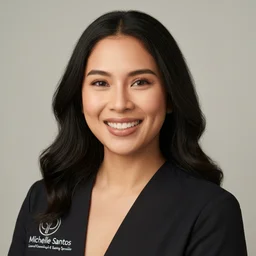
Licensed Cosmetologist & Beauty Licensing Exam Specialist
Paul Mitchell SchoolsMichelle Santos is a licensed cosmetologist with a Bachelor of Science in Esthetics and Salon Management from Paul Mitchell School. She has 16 years of salon industry experience and 8 years preparing students for state cosmetology board exams in theory, practical skills, and sanitation. She specializes in licensure preparation for cosmetologists, estheticians, and nail technicians.
Join the Discussion
Connect with other students preparing for this exam. Share tips, ask questions, and get advice from people who have been there.
View discussion (4 replies)