
Esthetician Near Me: How to Find a Quality Skincare Pro 2026 October
Looking for an esthetician near me? Compare services, prices ($40-$300), licenses, and red flags. 📗 Book the right facial pro in your city.
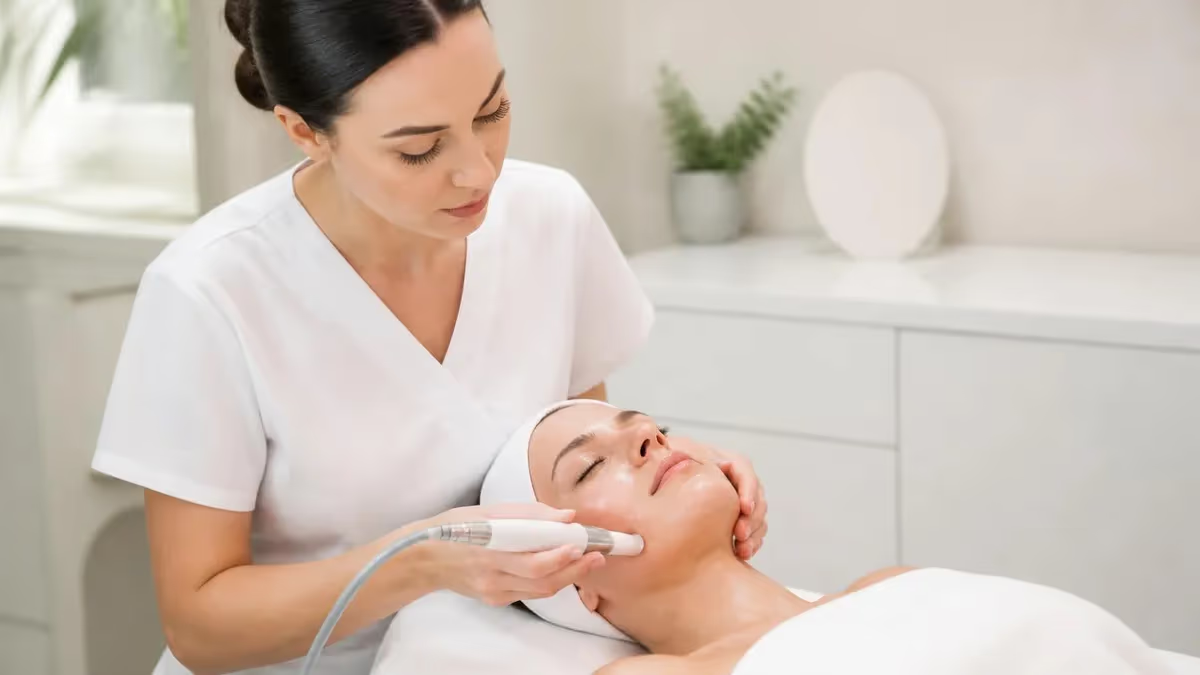
An esthetician near me is a state-licensed skincare professional who handles facials, peels, microdermabrasion, waxing, and lash work. Expect to pay $75-$150 for a classic facial and $150-$300 for a HydraFacial. The right one analyzes your skin, patch tests products, and never pushes pricey add-ons. This guide walks you through finding, vetting, and booking one in your zip code.
Quick truth — an esthetician is not a dermatologist. They're a licensed cosmetic skincare pro. Think facials, chemical peels, microdermabrasion, waxing, lash lifts, brow tinting, and makeup application. No needles. No prescriptions. No medical diagnoses. The scope ends where medical procedures begin.
Every solid esthetician starts the same way. Skin analysis first. They examine your pores, hydration levels, sun damage, and texture under a magnifying lamp or Wood's light. Then they build a custom plan. Some people see their esthetician monthly. Others come in only before weddings or big events. Both schedules work fine. The right cadence depends on your skin goals.
What surprises most first-timers is how much of the appointment is education. A great esthetician explains every product she uses. She shows you why she's extracting one area and skipping another. She points out skin issues you didn't notice. By the end of your second visit, you'll understand your skin better than ever. If you want to know more about the role itself, check our breakdown of what is an esthetician — it covers training, scope, and the daily grind in a treatment room.

How to Find an Esthetician Near You
- ✓Google "esthetician near me" plus your zip code for closest results
- ✓Browse Yelp local listings and filter by 4.5+ stars
- ✓Search Vagaro, Booksy, and Mindbody booking platforms
- ✓Check Instagram local hashtags like #estheticianyourcity
- ✓Use the spa locator on your state cosmetology board website
- ✓Ask your dermatologist for a trusted referral
- ✓Try Yelp's Top Estheticians filter for vetted picks
- ✓Post in local Facebook community or neighborhood groups
- ✓Get word-of-mouth recs from friends with great skin
- ✓Read at least 15 recent reviews before booking
The titles get confusing. Here's the short version. A basic esthetician works on cosmetic skincare — facials, waxing, no injectables. A medical esthetician works under a doctor's supervision in a med-spa, often assisting with laser and prepping patients before injectables. They cannot inject. Only RNs, NPs, PAs, and MDs are legally allowed to push a needle into your face.
A master esthetician is an advanced credential available only in Washington and Virginia. More training hours, more advanced procedures, broader scope on light chemical peels and microneedling. A cosmetic dermatologist is an MD who performs Botox, fillers, laser, and surgical procedures. They can prescribe Tretinoin and oral medication. Estheticians can't. The distinction matters when you're shopping for the right pro.
Picking the wrong tier wastes money and time. Got a suspicious mole? Skip the spa and see a derm. Want clearer pores and smoother texture? An esthetician handles that better and cheaper than a dermatologist's office. Want injectables? Med-spa or derm clinic. Some practices employ all three under one roof, which is convenient but usually pricier than going independent. If you're curious about credentialing differences, our esthetician license page breaks down state-by-state hour requirements.
Common Esthetician Services and Average Prices
- Express facial (30 min): $40-$70
- Classic facial (60 min): $75-$150
- HydraFacial: $150-$300
- Dermaplaning: $75-$150
- Chemical peel (light to deep): $80-$200
- Microdermabrasion: $75-$200
- Microneedling: $200-$500
- LED light therapy add-on: $25-$75
- Lash lift: $75-$150
- Brow lamination: $75-$125
- Waxing (brows to Brazilian): $15-$80
- Lash extensions full set: $150-$300
Booking blind is the most common mistake. Someone Googles "facial near me" and books the cheapest 60-minute appointment. They walk out underwhelmed because the spa was great at lash lifts, not facials. Each esthetician has a different strength. Some are extraction queens. Others are masters of relaxation but light on results. A few specialize in chemical peels with serious before-and-after credibility.
Read the menu first. Look for tells. A spa advertising eight different facials, two HydraFacials, three peel options, and acne protocols probably specializes in serious skincare. A spa with one generic facial and dozens of body treatments is more of a relaxation destination. Both have value. Just match the visit to your actual goal. Need clearer skin? Pick the results-focused place. Need a 90-minute escape from your kids? Book the relaxation spa.
The tabs below break down what falls under each service category. Basic facials cover regular maintenance. Advanced treatments tackle specific issues like deep peels and microneedling. Specialty services include lash work, brow lamination, and acne protocols. Use this framework when comparing menus across two or three estheticians in your area. Pricing varies wildly between categories — a basic facial at $75 and a HydraFacial at $250 from the same person is normal.
Service Categories Explained
The bread and butter of every spa. A classic facial runs about 60 minutes — cleanse, exfoliate, steam, extract, mask, massage, moisturize. Express versions cut that to 30 minutes and target one issue like acne or dehydration. Customized facials follow your skin analysis. Most people benefit from monthly maintenance. Pre-wedding? Book two facials, four weeks apart, then again the week before. Skip the day-of. Redness happens.
Best for: regular maintenance, glow before events, and getting consistent extraction without damaging your skin at home.
What to Expect at Your First Visit
Arrive 10 minutes early
Skin consultation
Discuss concerns
Treatment plan
Begin treatment
Aftercare instructions
Product recommendations
Rebook appointment
Payment and tip

How to Choose a Quality Esthetician
- ✓Current license visibly displayed in the treatment room or lobby
- ✓Five or more years of hands-on experience preferred
- ✓Specialization matches your specific skin concerns
- ✓Reviews average 4.5+ stars across Google, Yelp, and Instagram
- ✓Clean facility — visit in person before booking if you can
- ✓Asks detailed health, medication, and allergy questions upfront
- ✓Patch tests any new product before applying to full face
- ✓Doesn't pressure you into expensive product bundles
- ✓Uses professional-grade skincare brands (PCA, SkinCeuticals, Dermalogica)
- ✓Communicates clearly and explains every step before doing it
Where your esthetician works changes the vibe and the price. A day spa offers everything — massages, body wraps, facials — at premium pricing in a luxurious setting. A medi-spa adds laser, injectables, and IV drips. Costs more because of medical overhead and licensing. A salon esthetician shares space with hair stylists. Lower prices, faster pace, less zen.
Then you have independents — solo pros working from home studios or rented rooms inside coworking salons. These often deliver the best skill-to-price ratio because overhead is low. The downside? No frilly amenities. No champagne. Just great work in a clean, small room. Chain spas like Massage Envy run standardized protocols at affordable monthly membership rates. The pros there rotate, so consistency varies. Booking the same person every time helps a lot.
Finally, dermatology clinics employ medical estheticians for pre-and-post-op care. Insurance occasionally covers visits tied to a medical diagnosis. Pricing tends to fall mid-range — pricier than a chain, cheaper than a luxury spa. The atmosphere is clinical, not relaxing. You're there for results, not vibes. Curious how estheticians end up in these different settings? Our esthetician jobs guide covers career paths and salaries in detail.
Don't ignore these warning signs. No license posted. Pushy product sales the second you sit down. Skipping the skin consultation. Reused needles, blades, or extractor tools. Pain beyond mild discomfort. Burns or excessive redness lasting 24+ hours. Promises like "look 10 years younger in one session." Zero before-and-after photos. Dim or uneven lighting in the treatment room. Rushed 20-minute facials sold as full hour. Trust your gut. Leave a deposit behind if needed and go.
Esthetician prices look like chaos at first. The same 60-minute facial runs $50 in a Cleveland suburb and $300 in Manhattan. What gives? Rent and overhead drive most of the difference. A studio rental in NYC costs 10x what it does in Iowa. Insurance and licensing fees vary by state too. California estheticians pay more in business taxes than Texas pros do.
Skill and reputation matter even more than geography in some markets. A celebrity esthetician with a Vogue feature charges $400 in LA. A skilled but unknown pro three blocks away charges $120 for the exact same protocol. Reviews, Instagram following, and word-of-mouth all push prices up. So does specialty training — an esthetician with master-level peel training and 15 years of experience commands top dollar everywhere.
Product overhead adds a hidden layer. Spas using PCA Skin, SkinCeuticals, or Image Skincare pass those wholesale costs to clients. Cheap chains use white-label products and stay affordable. Both deliver results — but premium product lines come with research-backed ingredient claims. Compare three local options at different price points. Sometimes the $90 facial outperforms the $200 one. Skill beats branding every time when results are what you want.
Average Esthetician Prices by Region
Every esthetician needs a current state license — mandatory across all 50 US states. The license number should be visible in the treatment room or available on request. Cross-reference it against your state's cosmetology board website. Most boards offer free public verification in seconds. Continuing education hours run 4-25 per year depending on the state. Pros who renew on time usually post their fresh paperwork proudly. The ones who don't are often working on lapsed credentials.
Beyond the basic license, look for advanced certifications that signal real expertise. NCEA Certified is granted by the National Coalition of Estheticians — extra coursework and a written exam. CIDESCO is the international gold standard, Swiss-based and recognized worldwide. Master Esthetician is a separate advanced credential available only in Washington and Virginia. It requires 600-1,200 extra training hours covering chemical peels and microdermabrasion at deeper levels.
Specialty credentials matter too. Laser certifications, microblading training, advanced peel certifications from PCA Skin or Dermalogica, oncology esthetics training for cancer patients — these all show ongoing investment in skill. CPR certification is required in many states because skin reactions can rarely escalate quickly. Ask about credentials directly. A confident pro shares them happily. Anyone who gets defensive about basic licensing questions probably has something to hide.
Questions to Ask Before Your First Appointment
- ✓How long have you been licensed in this state?
- ✓What's your specialty — acne, anti-aging, sensitive skin?
- ✓Do you patch test new products before applying to my full face?
- ✓What skincare brands do you use professionally?
- ✓Will you provide a written treatment plan and skin analysis?
- ✓What's your cancellation policy and rebooking fee?
- ✓Do you accept HSA/FSA cards for any of your services?
- ✓Are you trained in extractions and acne treatment specifically?
- ✓Can I see before-and-after photos of recent clients?
- ✓What aftercare instructions will you provide in writing?

Frequency depends on the treatment. A standard facial every 4-6 weeks matches your skin's natural cell-turnover cycle. Chemical peels space out further — every 4-12 weeks depending on strength. Light glycolic? Monthly is fine. Medium TCA? Quarterly at most. Microdermabrasion works every 2-4 weeks for active resurfacing. HydraFacial fans typically go monthly because the treatment is gentle enough to do that often.
Lash extensions need fills every 2-3 weeks as natural lashes shed. Waxing repeats every 4-6 weeks as hair regrows. LED therapy works best in concentrated bursts — twice weekly for two months, then maintenance every 4-6 weeks. None of this matters without daily home care. SPF every single morning. Gentle cleanser twice daily. Moisturizer matched to your skin type, not whatever your friend uses.
The biggest mistake people make is going too often. Once a week is too much for facials. Your skin needs time between treatments to heal, regenerate collagen, and rebuild its barrier. Push frequency too hard and you'll see redness, breakouts, and increased sensitivity. A great esthetician reinforces home routine — she doesn't replace it. If you're considering this career path yourself, our how to become an esthetician guide covers training hours, costs, and licensing exams.
How to Prep for Your First Appointment
- ✓Arrive with a clean face — no makeup, no SPF over your moisturizer
- ✓Stop retinol and prescription Tretinoin 24-48 hours before
- ✓Avoid sunburn for at least one week prior
- ✓Write down all medications and skincare products you currently use
- ✓Bring your top three current skincare products if asked
- ✓Don't schedule any events or photos for two days after the visit
- ✓Hydrate well the day before — water, not just coffee
- ✓Skip caffeine that morning if you're prone to anxiety or sensitivity
- ✓Wear comfortable, easy-to-remove clothes — your shoulders may be exposed
- ✓Plan to pay full service price plus 15-20% tip
Walking into a treatment room half-naked while a stranger inspects your skin under bright light? Yeah, it's awkward the first time. Here's how to skip the anxiety. Book a consultation-only appointment if your esthetician offers one. Many will do 15-30 minutes free or at a reduced rate just to discuss your skin and treatment options. No undressing, no committing to a service. Just a conversation in normal lighting.
Bring a list of every product currently on your face. Even drugstore stuff. Even the foundation you wear daily. Skincare interactions matter and your pro needs the full picture. Mention any medications too — Accutane is a hard no for chemical peels. Retinoids increase sensitivity. Blood thinners affect waxing. Antibiotics can cause photosensitivity. Be honest about smoking, sun habits, and how often you actually use sunscreen. Lying makes it harder for her to help you.
What if you don't love the first session? Tell her. Politely but directly. A good pro adjusts on session two — softer extractions, gentler exfoliant, different mask. If she gets defensive or doubles down, find someone new. Compatibility matters as much as skill in skincare. You're going to spend hours with this person over time. The chemistry needs to work both ways.
Standard tip: 15-20% of the service total. Cash is preferred when possible. Holiday tip equals the full price of one regular service. Bad experience? Still leave 10% and don't rebook. Independent solo studio owners? Tipping is optional but always appreciated. Bundled packages — tip on the individual session value, not the discounted total. First-time visit? Tip on the full service price, not any promo discount.
Tipping etiquette is simple. Standard tip is 15-20% of the service total — cash preferred when possible. During the holidays, regulars often gift the full price of one service as a year-end thank you. Bad experience? Still leave 10% and just don't rebook. For independents running their own studio, tipping is optional but always appreciated. They keep 100% of their service fees but also pay all their own overhead and supplies.
Insurance generally won't touch cosmetic services. HSA/FSA cards sometimes cover medical-adjacent products like prescription-strength retinoids or doctor-recommended sunscreen. Acne treatment by a dermatologist? Often covered. Pre-cancerous lesion removal? Yes, usually 100%. A relaxing facial? Never covered. Keep your receipts anyway — some employers reimburse wellness expenses through workplace wellness programs.
Match your esthetician to your specific skin too. Oily and acne-prone needs an extraction specialist who handles inflammation gently. Sensitive skin needs someone who avoids strong acids and fragrances. Mature skin wants an anti-aging pro who knows peptides and microcurrent. Melanin-rich skin needs someone trained in ethnic-skin protocols — pigmentation reacts differently to acids and lasers than fair skin does. Rosacea-prone? Find a vascular-aware pro who skips heat and aggressive exfoliation. If you want a deeper background on how training shapes specialization, take a look at esthetician school programs and curriculum.
Pros and Cons of Regular Esthetician Visits
- +Deeper exfoliation than anything you can do at home
- +Professional extractions without scarring your face
- +Expert advice tailored to your exact skin type
- +Customized product recommendations based on real analysis
- +Relaxing 60-90 minutes of zero-screen time
- +Predictable, visible results within 2-3 sessions
- +Less skin damage than aggressive DIY peels or tools
- +Catches early signs of skin issues before they spiral
- −Costs $80-$200+ per session in most markets
- −Requires weekly to monthly commitment for best results
- −Over-exfoliation possible if you push frequency too high
- −Some pros aggressively push expensive product bundles
- −Almost never covered by health insurance
- −Takes research to find a quality match locally
Most modern estheticians use one of six booking platforms. Vagaro is spa-focused and dominates the high-end market with calendar sync and online intake forms. Booksy is wildly popular with nail and beauty independents — clean app, easy waitlist. MindBody is the giant of the wellness industry. Gyms, yoga, full-service spas all use it. Square Appointments is free for solo operators and integrates with Square payments. Yelp Reservations lets you book right from a review page. Google Reserve works straight from the search result. Pick whichever your esthetician uses — don't make her switch systems just to fit your preference.
Once you've found your person, protect the investment between visits. Sunscreen daily — SPF 30 minimum, applied 15 minutes before leaving the house and reapplied every two hours outside. Hydrate consistently — water, electrolytes, herbal tea. Skip the harsh exfoliating scrubs at home that tear up your skin barrier. Use whatever retinol or serum she prescribed at the right concentration. Stop touching your face throughout the day. Wash pillowcases weekly in hot water. No tanning beds, period.
Diet shows up on your skin within 48-72 hours. Limit sugar — it spikes inflammation and accelerates glycation, which damages collagen. Cut back on alcohol because it dehydrates skin and dilates blood vessels. Eat more omega-3s through fatty fish, walnuts, and flax. Antioxidants from berries, leafy greens, and dark chocolate help fight free radical damage from sun and pollution. Smoking does more visible damage to skin than almost any other lifestyle factor. Quitting alone takes years off your apparent age.
The first visit is just a test drive. The real value compounds over months and years with the same person. She'll learn your skin's patterns — when it gets hormonal, how it reacts to seasons, which products keep working and which need to swap out. By visit four or five, she'll predict your concerns before you mention them. That's worth way more than chasing the cheapest facial each time.
Book consistently. Same time slot if possible — easier on both schedules. Show up clean and prepared. Don't ghost on appointments and expect to walk back in three months later. Communicate honestly when something works or doesn't. Send referrals when you can. A great esthetician relationship is collaborative, not transactional. The clients she pours her best energy into are the ones who treat the relationship like a partnership.
Reward consistency with loyalty. Pre-pay packages, buy gift cards for friends, and stay with one pro instead of bouncing around chasing 20% off coupons. The marginal savings rarely beat the deep skin knowledge a familiar esthetician builds over time. Skin is a long game — the wins show up in years, not weeks. Plant the relationship, water it, and watch your skin transform across the calendar.
Don't book your first esthetician visit two days before a big event. Pictures, weddings, work presentations, dates — none of them mix well with the redness, peeling, or purging that can follow a treatment with a new pro. Give yourself a one-week buffer. Better yet, do the first session 3-4 weeks out so the second visit lands right before the event with a known, predictable result. Future-you will thank you when the photos turn out flawless.
Finding a great esthetician near you takes a weekend of research, not a year. Start with Google reviews and Yelp listings filtered by 4.5 stars and up. Verify the state license is current — most state boards offer free online verification. Read at least 15 recent reviews to spot patterns. Pick someone whose specialty matches your skin type and your specific concerns. Expect to pay $75-$150 for a quality classic facial and $80-$200 total per visit once products and tip get added in.
The best estheticians do a thorough skin analysis on day one, patch test before applying anything new, and never pressure you into a $400 product bundle on the first visit. They explain every step. They listen when you say something stings. They book the next visit before you leave the room. Schedule monthly maintenance for the first three months while you and the esthetician calibrate to your skin. Space out as your skin improves and you find your rhythm.
Pair professional treatments with daily SPF, plenty of hydration, and a consistent home routine of three to four products. That's the real formula for skin that holds up year after year. The treatment room is only half the work. The other half happens in your bathroom every morning and evening. Find a pro you trust, follow her recommendations, and your skin will thank you within two months.
Esthetician Near Me Questions and Answers
About the Author
Licensed Cosmetologist & Beauty Licensing Exam Specialist
Paul Mitchell SchoolsMichelle Santos is a licensed cosmetologist with a Bachelor of Science in Esthetics and Salon Management from Paul Mitchell School. She has 16 years of salon industry experience and 8 years preparing students for state cosmetology board exams in theory, practical skills, and sanitation. She specializes in licensure preparation for cosmetologists, estheticians, and nail technicians.
Join the Discussion
Connect with other students preparing for this exam. Share tips, ask questions, and get advice from people who have been there.
View discussion (4 replies)