
Esthetician Spa Floor Plan: Design Your Treatment Space for Maximum Efficiency and Client Comfort
Plan your esthetician spa floor plan right. Room sizes, equipment layout, sanitation zones & licensing requirements covered. ✅ Start designing today.

An esthetician spa floor plan is one of the most consequential decisions you will make when launching or renovating a skin care practice. The physical layout of your treatment rooms, reception area, sanitation station, and retail display directly affects how efficiently you can serve clients, how professional your space feels, and whether local health inspectors will grant or renew your operating permit.
Whether you are a solo licensed esthetician converting a spare bedroom into a home studio or a spa owner designing a multi-room commercial build-out, understanding the spatial requirements before you sign a lease or swing a hammer can save tens of thousands of dollars.
The phrase "esthetician spa floor plan" covers everything from the square footage of a single treatment room to the flow of traffic between your front desk and your waxing suite. Regulatory agencies in most US states specify minimum room dimensions, ventilation requirements, hand-washing sink placement, and the separation of clean and dirty utility areas. Ignoring these rules is not just costly — it can result in failed inspections that delay your opening by months, or force expensive retrofits after construction is complete.
Understanding what an esthetician does in the course of a workday is essential context for good spatial planning. What does an esthetician do varies by specialty, but the core services — facials, chemical peels, microdermabrasion, waxing, lash work, and body treatments — each demand different spatial configurations, equipment footprints, and ventilation considerations. A chemical peel suite, for example, requires strong exhaust ventilation and a dedicated eyewash station, while a lash extension suite needs blackout capability and extremely precise lighting.
Designing around client flow is equally important. A well-planned spa guides guests from the entrance through a calming reception zone, into a private consultation nook, and finally into the treatment room — all without crossing paths with dirty laundry carts, chemical storage, or staff break areas. This sense of seamless, private movement is what separates a five-star spa experience from a clinical, disorienting one. Clients who feel comfortable and cared for in your physical space are far more likely to rebook and refer friends.
Budget and local code intersect in every design decision. The average esthetician salary in the United States sits near $42,000 per year for employees, but successful spa owners who design efficient, high-throughput spaces often gross significantly more. Fitting two or three treatment rooms in 800 square feet rather than one room in 600 square feet can double or triple your revenue potential without a proportionate increase in lease costs. Smart floor planning is therefore as much a financial strategy as it is an aesthetic or compliance exercise.
This guide walks you through every layer of esthetician spa floor plan design: room-by-room dimensions, equipment placement, sanitation zone requirements, lighting and ventilation considerations, code compliance essentials, and practical tips for maximizing both your client experience and your operational throughput. By the end, you will have a clear mental blueprint — and a checklist — you can bring to an architect, a contractor, or your own measuring tape.
Whether you are preparing for your esthetician license exam and want to understand the professional standards behind facility design, or you are an established practitioner ready to open your first standalone space, this deep-dive into spa floor planning will give you the concrete knowledge you need to make smart, compliant, and client-centered decisions.
Esthetician Spa Floor Planning by the Numbers

Core Zones Every Esthetician Spa Floor Plan Must Include
The front-of-house zone handles client check-in, payment, and product sales. Plan for at least 150–200 sq ft to accommodate a front desk, seating for 2–3 waiting clients, and a retail display that does not create a bottleneck at the entrance.
A dedicated consultation nook — as small as 40 sq ft with a chair and counter — allows estheticians to review client intake forms and skin analysis results away from the treatment table, protecting privacy and establishing professional trust before services begin.
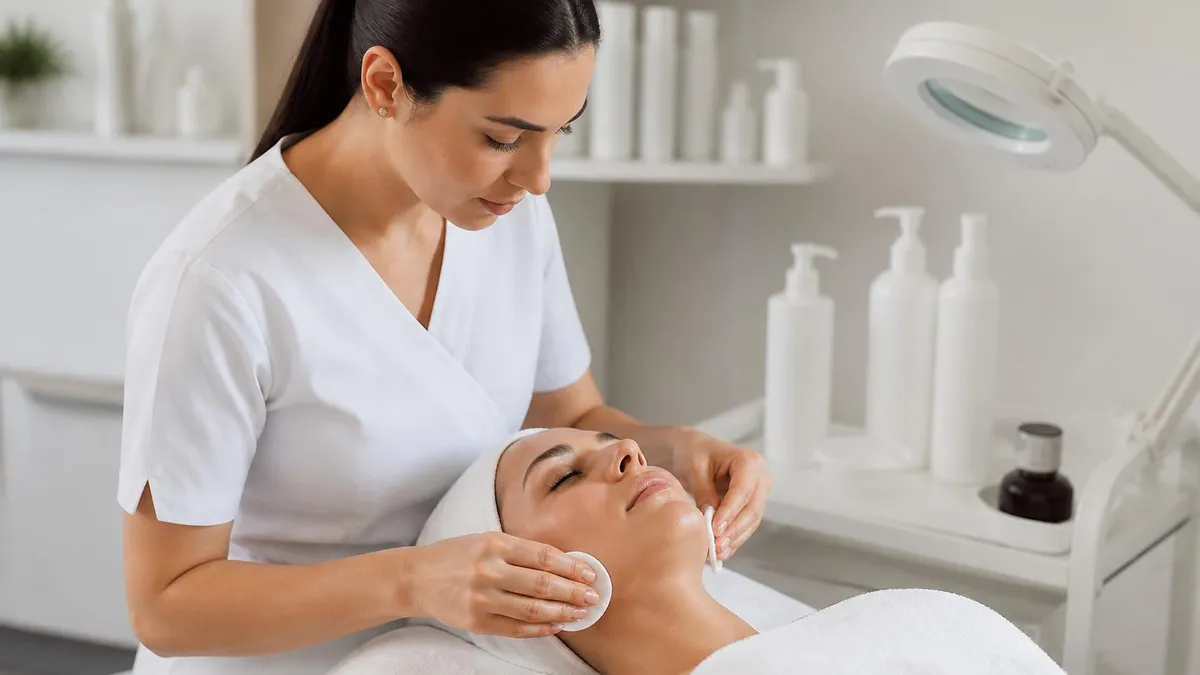
Each room needs 80–120 sq ft minimum per most state boards, a hydraulic or electric treatment table, a rolling stool, a magnifying lamp, an electrical outlet on every wall, adequate ventilation, and a hand-washing sink within arm's reach of the treatment surface.
A dedicated area — typically 50–80 sq ft — for storing clean linens, unopened product inventory, sterilized tools, and single-use supplies. This zone must be physically separated from dirty utility areas to meet state cosmetology board sanitation standards.
Soiled linens, used implements, and biohazard waste must be stored in a separate, closed, clearly labeled area. If you launder on-site, the washer and dryer footprint (roughly 5 ft × 3 ft each) needs to be factored into your total square footage budget.
The treatment room is the revenue engine of any esthetics practice, which is why its design deserves the most careful attention in your spa floor plan. Most US state cosmetology boards specify a minimum room size — commonly 80 to 120 square feet for a standard facial room — but experienced spa designers recommend planning for at least 100 to 130 square feet to give both the esthetician and the client comfortable, unrestricted movement. A room that is too cramped creates ergonomic strain on the practitioner over long shifts and can feel clinical or anxiety-inducing for clients seeking relaxation.
Equipment placement within the treatment room follows a simple rule: the esthetician should be able to circle the treatment table on all sides without stepping over cords or squeezing between furniture. In practice, this means the treatment table (typically 28–30 inches wide and 72–74 inches long) should sit at least 36 inches from the nearest wall on the working sides. The rolling stool, magnifying lamp, and steamer each need dedicated floor space, and the electrical panel behind the head of the table should be reachable without the esthetician leaning across the client.
Lighting in a treatment room serves two distinct functions: task lighting for precise skin analysis and treatment application, and ambient lighting for creating the calm, spa-like environment clients expect. Many estheticians solve this with a two-circuit system — one circuit for bright, daylight-spectrum magnifying lamps and LED treatment lights, and a second dimmer circuit for recessed or wall-mounted ambient fixtures. Natural light from windows, while appealing in theory, can complicate chemical peel protocols that require clients to avoid UV exposure immediately post-treatment, so windows should have blackout blind capability.
Ventilation is a frequently overlooked element of treatment room design that becomes a compliance issue the moment you begin offering chemical peels, lash adhesives, or nail services alongside your skin care menu. The Occupational Safety and Health Administration (OSHA) and many state boards require mechanical exhaust ventilation in rooms where chemical vapors may accumulate.
A minimum of six to ten air changes per hour is a widely cited standard for treatment rooms using chemical exfoliants or adhesives. Installing a local exhaust vent at counter height — not just ceiling-mounted return air — provides the most effective fume capture at the source.
Plumbing within the treatment room is a significant cost driver in any spa build-out. Running a dedicated hand-washing sink into each treatment room typically adds $1,500 to $4,000 per room in plumbing costs, but most state boards require this sink to be present and accessible within the treatment space itself — not just in a shared hallway restroom. Some states also require a separate mop sink in the soiled utility zone. Understanding your state's specific plumbing requirements before you finalize your floor plan prevents expensive mid-construction changes.
Storage planning inside the treatment room requires balancing accessibility with sanitation. Open shelving may look elegant, but state inspectors often cite open product storage near treatment tables as a contamination risk. Closed cabinetry with clearly labeled compartments for clean supplies, retail-sized testers, and single-use items keeps your room compliant and organized. A small, locked cabinet for chemical peeling agents and prescription-adjacent products is a best practice even when not explicitly required by code, as it signals professional competence to both clients and inspectors.
Color, acoustics, and temperature control complete the treatment room design picture. Research in environmental psychology consistently shows that cool-toned neutrals (soft greiges, pale blues, sage greens) reduce perceived stress and enhance relaxation. Acoustic panels or double-drywall construction between treatment rooms protect client privacy and prevent noise bleed from adjacent services. A programmable thermostat in each room lets you adjust temperature to client comfort during hot-towel treatments or cool-gel facials.
These finishing details are not frivolous — they translate directly into client satisfaction scores, online reviews, and rebooking rates. Understanding the nuance between an aesthetician vs esthetician can also help you determine which scope of practice your facility needs to accommodate, since medical estheticians may require additional equipment and square footage for device-based treatments.
Esthetician Employment Opportunities: How Floor Plan Affects Your Business Model
Renting a single treatment suite — typically 100 to 150 square feet inside a shared salon or wellness center — is the most popular entry point for newly licensed estheticians seeking independence. Monthly suite rents range from $400 to $1,200 depending on the market, and the landlord typically handles building maintenance, reception common areas, and utilities. Your floor plan responsibilities are limited to the four walls of your treatment room, making compliance relatively straightforward but your growth ceiling lower.
The primary design challenge in a solo suite is multi-functionality. You must configure one room to handle facials, waxing, lash services, and retail display without any of those zones interfering with the others. A wall-mounted fold-down shelf for lash supplies, a wax warmer cart that rolls into a closet between services, and a narrow retail shelf behind the door are common space-saving solutions that experienced solo estheticians use to maximize a small footprint without sacrificing the client experience.

Open-Plan vs. Private Room Layout: Which Is Right for Your Esthetic Spa?
- +Open layouts cost less to build out — fewer walls, fewer doors, and simpler plumbing runs
- +Shared magnifying lamps and steamers reduce equipment costs in open multi-station designs
- +Easier staff supervision in open training environments or esthetician school clinic floors
- +Natural light can be distributed across more workstations in an open plan
- +Faster room turnover because estheticians do not need to wait for room sanitization between isolated clients
- +Simpler HVAC design since air exchange serves the whole open space uniformly
- −Open layouts provide zero visual or auditory privacy, which clients seeking relaxation strongly dislike
- −Chemical fumes from peels or waxing products spread across the entire open space, creating air quality challenges
- −State boards in most US states require private or semi-private enclosures for many esthetic services
- −Cross-contamination risk is higher when multiple practitioners work in an open shared space
- −Retail and reception noise disrupts treatment clients who can hear conversations across an open floor
- −Resale value and lease appeal of a purpose-built, private-room spa is significantly higher than an open layout
Pros and Cons at a Glance
| Pros | Cons |
|---|---|
| Open layouts cost less to build out — fewer walls, fewer doors, and simpler plumbing runs | Open layouts provide zero visual or auditory privacy, which clients seeking relaxation strongly dislike |
| Shared magnifying lamps and steamers reduce equipment costs in open multi-station designs | Chemical fumes from peels or waxing products spread across the entire open space, creating air quality challenges |
| Easier staff supervision in open training environments or esthetician school clinic floors | State boards in most US states require private or semi-private enclosures for many esthetic services |
| Natural light can be distributed across more workstations in an open plan | Cross-contamination risk is higher when multiple practitioners work in an open shared space |
| Faster room turnover because estheticians do not need to wait for room sanitization between isolated clients | Retail and reception noise disrupts treatment clients who can hear conversations across an open floor |
| Simpler HVAC design since air exchange serves the whole open space uniformly | Resale value and lease appeal of a purpose-built, private-room spa is significantly higher than an open layout |
Esthetician Spa Floor Plan Design Checklist
- ✓Confirm minimum room size requirements with your specific state's cosmetology or barbering board before finalizing dimensions.
- ✓Include a dedicated hand-washing sink within every treatment room — not just in a shared restroom or hallway.
- ✓Designate physically separate clean utility and soiled utility zones with labeled, closed storage in each.
- ✓Verify electrical panel capacity supports all planned equipment, including high-draw devices like steamers, warmers, and lasers.
- ✓Plan mechanical exhaust ventilation in rooms where chemical peels, lash adhesives, or waxing services will be performed.
- ✓Ensure ADA-compliant pathways (minimum 36-inch clear width) through all client-accessible areas, including treatment rooms.
- ✓Allocate 55–65% of total square footage to revenue-generating treatment rooms before assigning space to reception or retail.
- ✓Install a two-circuit lighting system in each treatment room — one for task lighting and one dimmable circuit for ambient mood.
- ✓Confirm chemical storage meets fire code and OSHA HazCom requirements, including proper labeling and secondary containment.
- ✓Obtain a copy of your state health department's salon/spa facility inspection checklist and use it as a design review document.
Every Treatment Room You Add Multiplies Your Earning Potential
A solo esthetician working 40 hours per week in a single room can realistically see 20–25 clients per week. Adding a second treatment room and a part-time associate doubles that throughput without doubling your lease cost. The most financially successful spas are designed around maximum room count within the available footprint — not around impressive lobby or reception square footage.
Maximizing a small esthetician spa space is both an art and a science, and it is a challenge that the majority of practicing estheticians face. The US commercial real estate market in urban and suburban areas makes large, purpose-built spa spaces prohibitively expensive for solo practitioners and small teams. Learning to extract maximum functionality from 400 to 800 square feet without sacrificing the sensory quality of the client experience is therefore one of the most valuable skills an entrepreneurial esthetician can develop.
Multi-functional furniture is the first and most impactful tool in the small-space designer's toolkit. A hydraulic treatment table with built-in storage drawers replaces both the table and a separate supply cart. A wall-mounted, fold-down retail shelf doubles as a product consultation surface when lowered and frees floor space when folded up. Rolling carts allow equipment to be repositioned for different service types within the same room — wax cart in, steamer out — without requiring separate dedicated zones for each modality.
Vertical storage is dramatically underutilized in most small spa designs. Floor-to-ceiling cabinetry along one wall can house an entire treatment room's worth of clean supplies, retail back-stock, and professional equipment without consuming any additional floor square footage beyond the cabinet's 14-to-16-inch depth. Well-organized, closed cabinetry also photographs beautifully for social media and satisfies state board inspectors simultaneously — a rare win-win in spa design.
Color and mirror placement can make a small treatment room feel significantly larger than its actual dimensions. Light-reflecting colors (whites, pale creams, very soft pastels) on all four walls and the ceiling, combined with a full-length mirror on one wall, create the perception of expanded space. Avoiding visual clutter — keeping the treatment table surface clear, hiding cord management behind cable channels, and tucking waste bins inside closed cabinets — reinforces the sense of order and spaciousness that high-end clients associate with premium pricing.
Scheduling strategy is the often-overlooked complement to physical space optimization. A 100-square-foot room running a single 60-minute appointment slot per hour generates roughly the same revenue as a 200-square-foot room running one 90-minute slot per hour, but costs half as much to build and maintain. Shifting to 50-minute express facial protocols — which deliver genuine client value and actually have strong client retention data behind them — allows an esthetician in a small space to see one additional client per day. Over 200 working days, that is 200 additional appointments per year from the same square footage.
Acoustics in small spaces require attention that larger facilities can sometimes ignore. When treatment rooms share walls with reception areas, staff hallways, or adjacent suites, sound bleed becomes a significant client satisfaction issue. Affordable solutions include acoustic mineral wool insulation in shared walls (approximately $1.50 to $3.00 per square foot of wall area), acoustic door sweeps to eliminate the gap-under-the-door transmission path, and a small white noise machine placed outside the treatment room door to mask low-frequency speech. These measures are particularly important in converted residential spaces where standard drywall construction was never designed for sound privacy.
Finally, consider the scent environment of your spa from a spatial planning perspective. HVAC systems in multi-room spas can inadvertently distribute fragrance, wax odor, or chemical peel aromas from one room to all others via shared return-air ductwork.
Designing independent exhaust circuits for each treatment room — routing exhaust directly to the exterior rather than into a shared return plenum — prevents scent cross-contamination and supports better overall indoor air quality. This is a detail most general contractors will not think to raise unless you specifically ask, so include it explicitly in your design brief and your contractor scope of work.

Many estheticians underestimate how long it takes to schedule and pass a state cosmetology board facility inspection after construction is complete. In high-demand markets, inspection appointments may be booked four to eight weeks out, and a single failed inspection — for something as correctable as a missing hand-washing sink or unlabeled chemical storage — restarts the clock. Build at least 60 days of post-construction buffer into your opening timeline, and request a pre-inspection walkthrough from your local board office before scheduling the formal inspection.
Licensing and inspection requirements for esthetician spa facilities vary more significantly across state lines than most new spa owners anticipate. While the federal government sets baseline workplace safety standards through OSHA, the specific facility requirements for licensed estheticians — room dimensions, plumbing standards, ventilation specifications, sanitation protocols, and equipment requirements — are governed by each state's cosmetology or barbering board, and sometimes by the state health department as a separate authority. Before you design a single square foot of your spa, you must obtain and read the current facility regulations from every applicable regulatory body in your state.
The National-Interstate Council of State Boards of Cosmetology (NIC) provides a general framework that many state boards draw from, but significant variations exist. For example, California's Board of Barbering and Cosmetology specifies that a shampoo bowl — irrelevant to most esthetics services — must be present in any salon offering hair services adjacent to skin care, while a dedicated esthetics-only establishment may have a different set of requirements entirely.
Florida requires a separate dispensary room in full-service salons, while Texas focuses heavily on sanitation equipment specifications rather than room-count requirements. Knowing which ruleset applies to your specific license category and facility type is the essential first step.
Understanding how long is esthetician school in your state often gives you early insight into the regulatory culture of your cosmetology board. States that require 1,500 hours of pre-licensing education (like California) tend to maintain more detailed and stringent facility regulations as well, because their boards take a more comprehensive view of professional standards. States with shorter required training hours, like Colorado at 600 hours, may have comparably simplified facility regulations. Researching your state's training-hour requirement is therefore a useful proxy for how demanding your facility compliance process is likely to be.
The Americans with Disabilities Act (ADA) applies to any commercial spa space open to the public, regardless of size. ADA compliance for a spa involves more than just a ramp at the front door.
Treatment rooms must have sufficient clear floor space for wheelchair users (a 60-inch turning radius is the federal standard), retail displays must have accessible pathways and reachable shelves, restrooms must meet ADA dimensional requirements, and parking (if provided) must include accessible spaces. ADA modifications are often an afterthought in spa renovation projects and can add $5,000 to $25,000 in unbudgeted costs if not incorporated from the start of the design process.
Fire code compliance adds another layer of requirements to your floor plan. Commercial kitchens and salons both fall under heightened fire code scrutiny because of the chemical storage and heat-generating equipment involved. Your local fire marshal will review your floor plan for compliance with occupant load limits, egress path widths, fire extinguisher placement, emergency lighting, and the distance between chemical storage and ignition sources.
Wax warmers, paraffin baths, and autoclave sterilizers all fall under fire inspector scrutiny. Scheduling a pre-construction meeting with your local fire marshal — most will do this for free — is one of the highest-return-on-investment steps in the spa planning process.
Business licensing requirements layer on top of the facility-specific requirements. Operating a spa typically requires a business license from your city or county, a state sales tax permit for retail product sales, and potentially a separate health permit from the local health department in addition to your cosmetology board permit.
Each of these agencies may conduct its own inspection on its own timeline, so understanding all of the required permits and their respective inspection processes before you open is essential for an accurate opening-day timeline. Missing even one permit can result in a cease-and-desist order that forces you to close an otherwise fully constructed and staffed spa.
Finally, your professional liability insurance carrier may have facility requirements of their own that exceed what state boards mandate. Most esthetician liability policies require that your treatment space meet applicable state board standards as a condition of coverage, and some policies include facility inspection clauses that could void your coverage if an unreported facility change is discovered after a claim. Reviewing your policy's facility requirements before finalizing your floor plan — and notifying your carrier of any significant changes to your practice space — protects your licensure, your business, and your clients simultaneously.
Translating your esthetician spa floor plan from a sketch to a fully operational, code-compliant treatment space requires coordinating several professional relationships simultaneously. Most solo estheticians and small spa owners are not experienced construction managers, which means the quality of your outcomes will depend heavily on the professionals you hire and how clearly you communicate your requirements to them.
Building a brief, well-organized design brief — a single document that captures your service menu, your equipment list, your state board requirements, and your revenue-per-room targets — is the single most effective thing you can do before your first meeting with an architect or contractor.
Choosing between a commercial interior designer and a licensed architect for your spa project depends primarily on the scope of structural work involved. If your space requires moving walls, adding plumbing, or modifying electrical panels, a licensed architect or engineer must stamp the drawings in most US jurisdictions.
For cosmetic renovations within existing walls — painting, cabinetry, flooring, lighting upgrades — a skilled commercial interior designer with salon and spa experience can deliver excellent results at a lower cost. Many spa owners use both: an architect for the structural and permitting phase and a designer for the finish selections and furniture placement.
Contractor selection for a spa build-out deserves as much diligence as you would apply to hiring a senior employee. Ask for a portfolio of completed salon or spa projects, verify their contractor's license with your state contractor licensing board, check references specifically from salon and spa clients, and confirm that their subcontractors (plumber, electrician, HVAC technician) are licensed in your state.
A general contractor who has never built out a treatment room will not inherently know that your hand-washing sink needs to be within arm's reach of the treatment table, or that your exhaust fan needs to vent to the exterior rather than into the ceiling plenum — those are details you must specify in writing.
Budget management during a spa build-out requires a contingency mindset. Industry experience suggests that spa renovation projects run 10 to 20 percent over the initial contractor estimate approximately 70 percent of the time, with the most common overruns in plumbing and electrical — the two trades most likely to encounter unforeseen conditions once walls are opened.
Building a 15 percent contingency into your construction budget before you start, rather than hoping to use unspent funds elsewhere, is the financially prudent approach. This contingency is not a pessimistic assumption; it is an accurate reflection of how commercial renovation projects behave in practice.
Technology integration in modern spa design has become a meaningful floor plan consideration. Wi-Fi dead zones in treatment rooms create problems with booking systems, music streaming, and digital client intake forms. Point-of-sale terminals need power and network connectivity at the front desk and potentially at each treatment room for in-room checkout.
Security cameras, electronic door locks, and smart lighting systems all require conduit and power runs that are dramatically cheaper to install during construction than after the fact. Working through your technology stack with your contractor during the rough-in phase — before drywall goes up — is a few hours of planning that saves thousands in post-construction retrofitting.
Sustainability considerations are increasingly relevant to spa design, both for cost management and for the brand positioning that environmentally conscious clients respond to. LED lighting in all fixtures reduces electrical costs by 60 to 75 percent versus incandescent alternatives and generates less heat, which is meaningful in small treatment rooms where warmers and steamers are already running.
Low-VOC (volatile organic compound) paints and adhesives improve indoor air quality in a space where clients are breathing deeply during relaxation treatments. Tankless water heaters sized correctly for your hot-towel and steam demands reduce standby heat loss and can meaningfully lower your monthly utility bills once your spa reaches full operational capacity.
The final practical tip for any esthetician designing a spa floor plan is to visit and study three to five established spas in your target market before finalizing your own design. Call ahead and ask if the spa owner would be willing to give you a brief facility tour during an off-peak time. Most established spa owners are generous with this knowledge, particularly if you are not opening in direct competition with their existing client base.
Seeing what works in a real, operating spa — where the traffic flow jams up, where the light is too harsh, where the storage is always overflowing — is irreplaceable preparation that no floor plan guide can fully substitute for. Learn from facilities that are already running before you pour your investment into concrete and drywall.
Sample Esthetician Practice Questions
Try these questions from our free Esthetician practice tests. The correct answer and an explanation follow each question.
A client expresses that their primary goal is to reduce the appearance of hyperpigmentation. Which section of the client consultation and analysis is MOST critical for developing an effective and safe treatment plan?
- A. Client's contact information and referral source.
- B. Discussion of the client's preferred product scents.
- C. Review of lifestyle, sun exposure habits, and current home care.
- D. Assessment of the client's budget for future treatments.
Answer: C. Review of lifestyle, sun exposure habits, and current home care.
To effectively treat hyperpigmentation, the esthetician must understand its potential causes and contributing factors. A client's lifestyle (e.g., stress), sun exposure habits (a primary cause of hyperpigmentation), and current skincare products are all crucial pieces of information for creating a safe and effective plan that includes professional treatments and home care recommendations.
A client receives a series of microdermabrasion treatments. The primary goal of this procedure is to exfoliate and remove dead cells from which layer of the skin?
- A. Stratum spinosum
- B. Stratum corneum
- C. Papillary dermis
- D. Reticular dermis
Answer: B. Stratum corneum
Microdermabrasion is a form of mechanical exfoliation that targets the stratum corneum, the outermost layer of the epidermis. Removing the excess accumulation of these dead skin cells helps to improve skin texture, reduce the appearance of fine lines, and allow for better product penetration.
A new client's intake form indicates they have a history of cold sores (Herpes Simplex Virus). They currently do not have an active lesion. How should the esthetician proceed with a scheduled facial treatment?
- A. Refuse service, as the virus is always contagious.
- B. Proceed with the treatment but avoid the lip and mouth area entirely.
- C. Perform the facial as planned without any modifications.
- D. Require a doctor's note before proceeding with any facial.
Answer: B. Proceed with the treatment but avoid the lip and mouth area entirely.
Herpes Simplex is a viral infection, and while it is most contagious during an active outbreak, it can still be present. To prevent stimulating an outbreak and for safety, it is standard practice to avoid treating the area around the mouth, even if no active lesion is visible.
A new client presents with persistent facial redness, visible capillaries (telangiectasia), and some papules and pustules primarily on the cheeks and nose. They are seeking a treatment to improve skin texture. Which condition does this client most likely have, and what is a key contraindication?
- A. Acne Vulgaris; LED Light Therapy is contraindicated.
- B. Contact Dermatitis; Soothing masks are contraindicated.
- C. Rosacea; Aggressive exfoliation like microdermabrasion is contraindicated.
- D. Psoriasis; Hydrating facials are contraindicated.
Answer: C. Rosacea; Aggressive exfoliation like microdermabrasion is contraindicated.
The symptoms described are classic signs of rosacea. For skin with rosacea, which has a compromised barrier and is prone to inflammation, aggressive exfoliation methods like microdermabrasion or strong chemical peels should be avoided as they can exacerbate redness and irritation.
Esthetician Questions and Answers
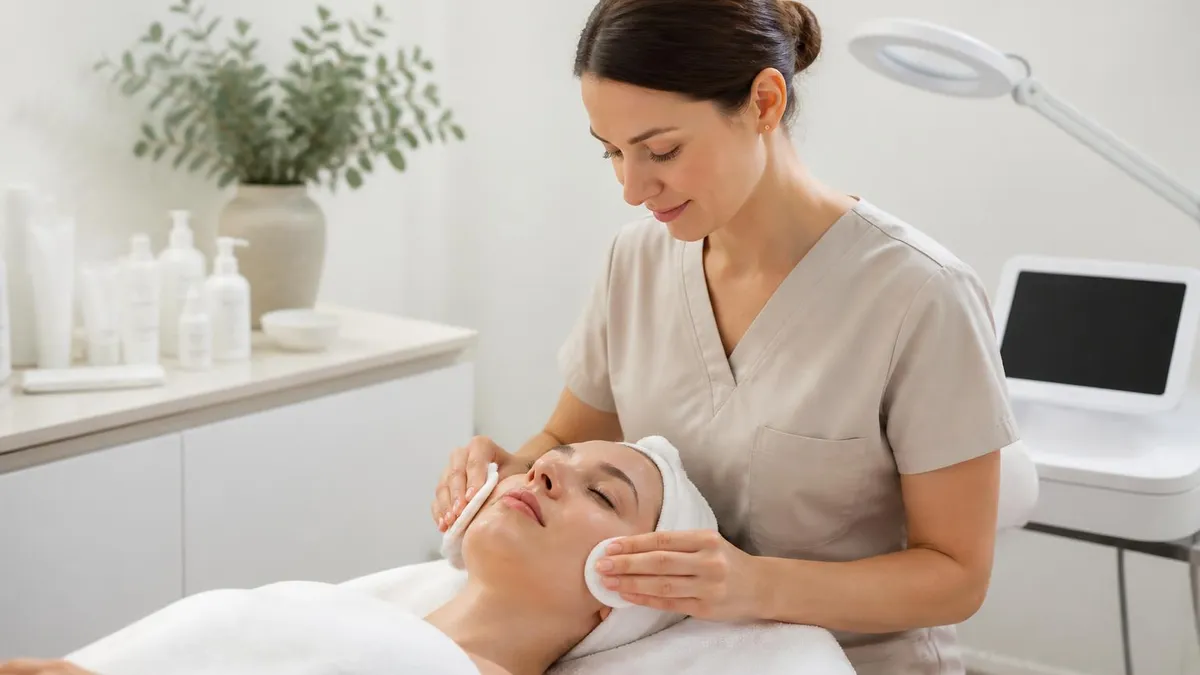
Esthetician Services: Complete Guide to Skincare Treatments, Careers, and Licensing in 2026
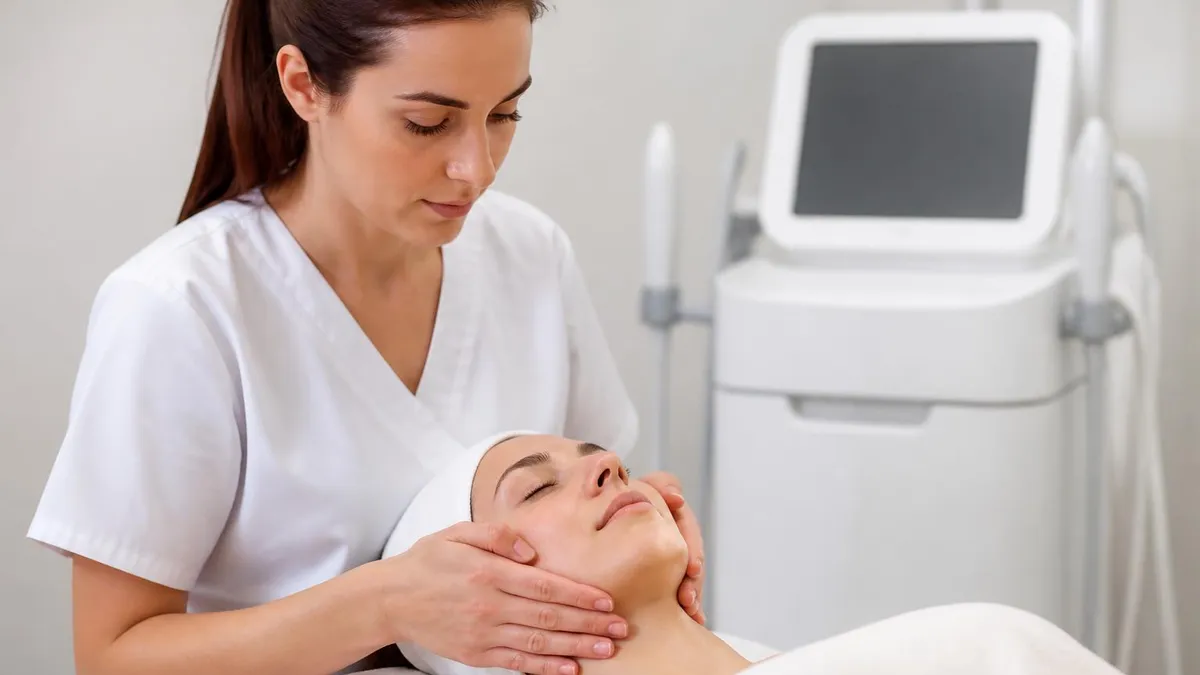
Esthetician School by Location: State-by-State Guide to Training, Hours, and Licensing in 2026
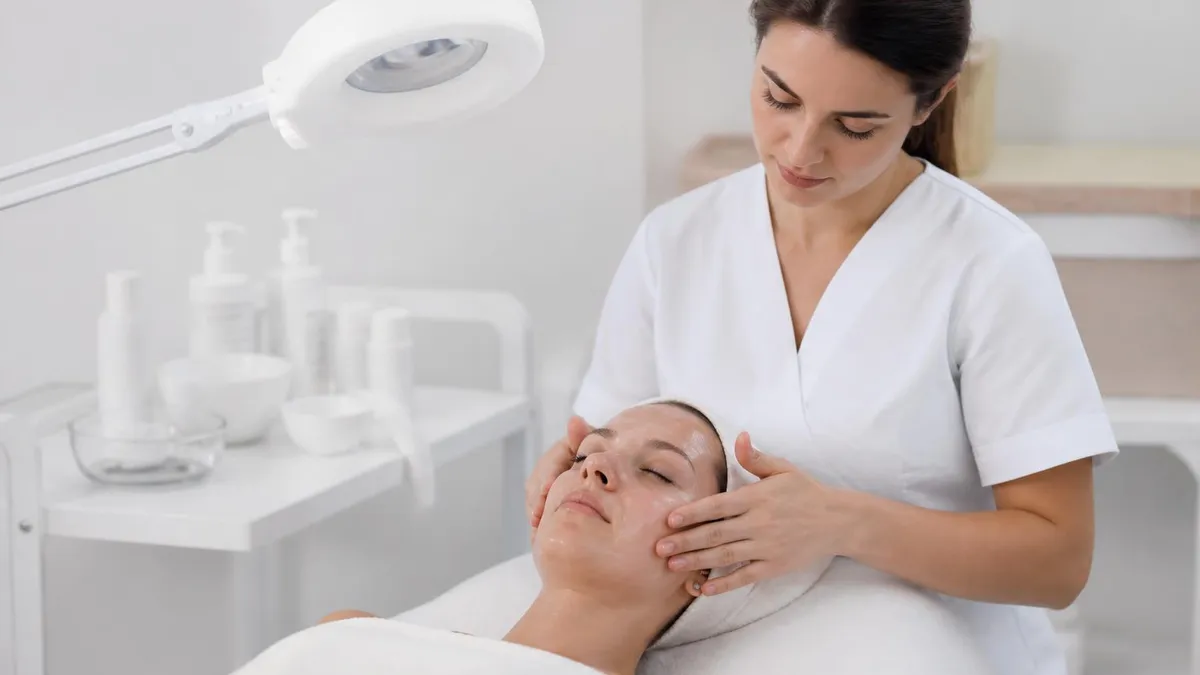
Esthetician School Online: Programs, Hours, Costs & How Hybrid Training Actually Works in 2026
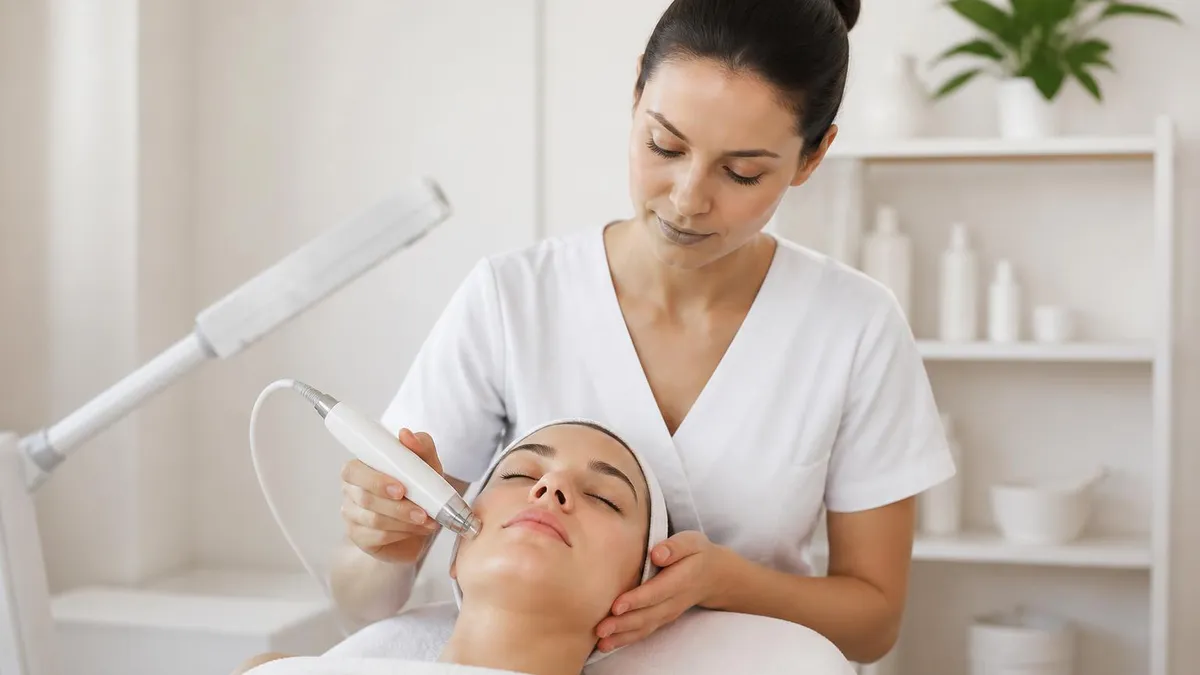
Esthetician Classes: Pre-Licensing, CE, Online & Specialty Courses
Medical Esthetician Jobs: Career Paths, Salaries, Settings, and How to Land Your First Role in 2026
About the Author

Licensed Cosmetologist & Beauty Licensing Exam Specialist
Paul Mitchell SchoolsMichelle Santos is a licensed cosmetologist with a Bachelor of Science in Esthetics and Salon Management from Paul Mitchell School. She has 16 years of salon industry experience and 8 years preparing students for state cosmetology board exams in theory, practical skills, and sanitation. She specializes in licensure preparation for cosmetologists, estheticians, and nail technicians.
Join the Discussion
Connect with other students preparing for this exam. Share tips, ask questions, and get advice from people who have been there.
View discussion (4 replies)