Esthetician Services: Complete Guide to Skincare Treatments, Careers, and Licensing in 2026
Explore esthetician services, treatments offered, salary expectations, licensing requirements, and how to start a career in professional skincare in 2026. ⏳
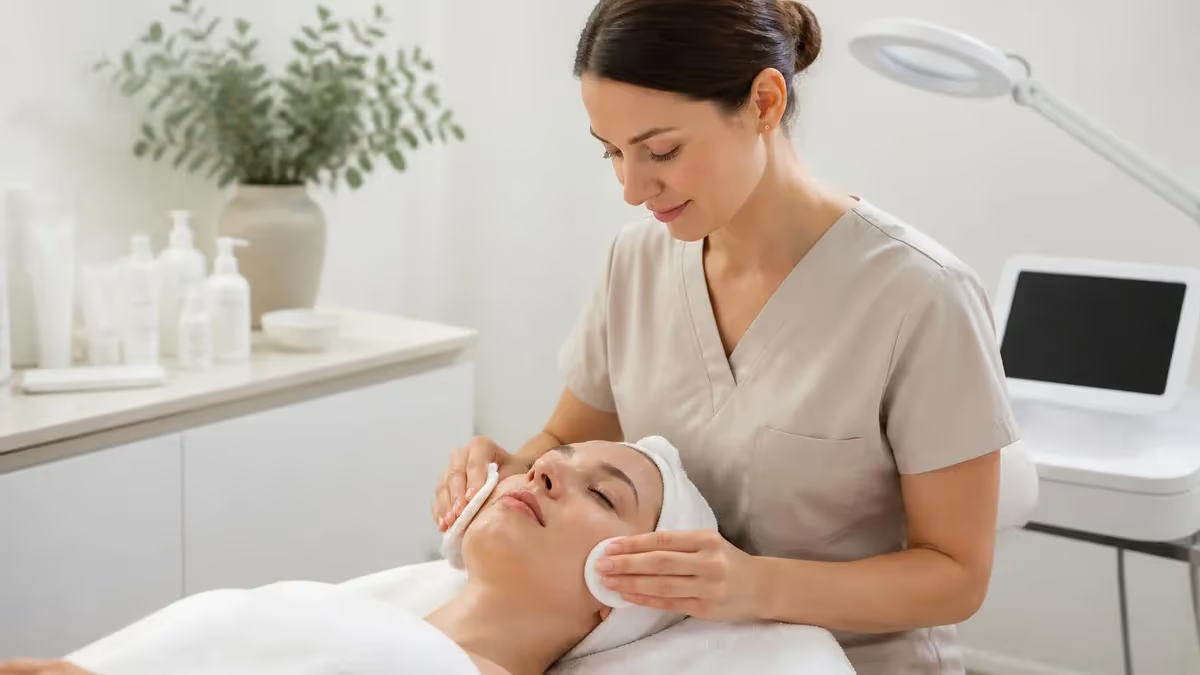
Esthetician services encompass a wide spectrum of professional skincare treatments designed to cleanse, exfoliate, hydrate, and rejuvenate the skin. From classic European facials to advanced chemical peels, microdermabrasion, waxing, body treatments, and lash and brow services, licensed estheticians work across spas, salons, dermatology clinics, and medical practices. The industry has grown dramatically since 2020 as consumers prioritize skin health, anti-aging maintenance, and preventive care. Understanding what an esthetician does, where they work, and what they earn helps both aspiring professionals and curious clients navigate this rapidly expanding field with confidence and clarity.
A licensed esthetician is a skincare specialist trained to analyze skin conditions, recommend personalized treatments, and perform non-invasive procedures that improve the health and appearance of the epidermis. Unlike dermatologists, estheticians do not diagnose or treat medical skin conditions, but they collaborate closely with medical providers in many settings. If you have ever wondered what is an esthetician doing differently from a cosmetologist or medical aesthetician, the answer lies in scope, training hours, and specialization within the broader beauty industry.
Demand for esthetician services has surged among Gen Z and millennial consumers who view consistent professional skincare as essential rather than indulgent. According to Bureau of Labor Statistics projections, employment of skincare specialists is expected to grow approximately 9 percent between 2024 and 2034, much faster than the average for all occupations. Treatment menus now extend beyond basic facials to include LED therapy, dermaplaning, oxygen infusions, microcurrent toning, hydrafacials, and customized acne protocols using prescription-grade ingredients sourced from professional skincare lines.
The compensation picture varies dramatically by geography, setting, and experience level. Entry-level estheticians in suburban spas may earn $30,000 to $38,000 annually, while seasoned medical estheticians in major metropolitan markets routinely surpass $75,000 with commissions and product sales factored in. Adding retail sales bonuses, gratuities, and specialty service upcharges further widens the income range. Career mobility within the field is also strong, with many estheticians eventually opening private studios, working as brand educators, or transitioning into laser technology and aesthetic medical roles.
Becoming a licensed esthetician requires completing state-approved training that typically ranges from 260 to 1,200 hours depending on jurisdiction, followed by written and practical board examinations. Texas requires 750 hours, California requires 600, while states like Alabama mandate 1,500 hours for traditional esthetics licensure. Curriculum covers sanitation, skin histology, ingredient chemistry, client consultation, contraindications, facial massage techniques, hair removal, makeup application, and business fundamentals. Schools must be approved by the state cosmetology board and meet specific instructor-to-student ratios for hands-on practice time.
This comprehensive guide walks through every dimension of esthetician services: the treatments you will perform or receive, the equipment and products that define modern practice, the realistic income potential by state and setting, the licensing path from enrollment to your first client booking, and the career advancement opportunities that distinguish standard estheticians from specialists earning six-figure incomes. Whether you are evaluating skincare school programs, comparing aesthetician versus esthetician roles, or simply preparing for your next spa appointment, the sections below deliver the practical information you need to make informed decisions.
You will also find practice quiz tiles linked throughout the article that test the exact knowledge state boards examine before issuing licenses. These quizzes cover advanced facial treatments, anatomy and physiology, product chemistry, and client consultation protocols, mirroring what graduating students face during the National-Interstate Council of State Boards of Cosmetology (NIC) exam or individual state-specific assessments. Use them to gauge your readiness, identify weak topics, and reinforce concepts that frequently appear on licensing examinations across the United States.
Esthetician Services by the Numbers

Core Esthetician Treatments and Services Offered
Custom facials addressing acne, hyperpigmentation, aging, and sensitivity. Includes deep cleansing, exfoliation, extractions, masks, massage, and personalized home-care recommendations after thorough skin consultation.
Glycolic, salicylic, lactic, and TCA peels resurface skin, fade discoloration, and improve texture. Estheticians perform superficial peels within scope; deeper peels typically require medical supervision.
Soft wax, hard wax, and sugaring for face, body, and Brazilian services. Proper technique minimizes ingrown hairs, irritation, and breakage while maintaining sanitary standards.
LED light therapy, microcurrent, microdermabrasion, dermaplaning, ultrasound, and oxygen infusion treatments enhance facial outcomes and command premium service pricing in upscale settings.
Lash lifts, tinting, extensions, brow shaping, and event makeup expand revenue streams. Many estheticians specialize entirely in these add-on services for higher per-hour earnings.
Esthetician services are delivered across a remarkably diverse range of work environments, each with its own pace, clientele, compensation model, and growth ceiling. Day spas remain the most common starting point for newly licensed graduates, offering steady booking volume, established product lines, and mentorship from senior staff. Resort and hotel spas tend to pay higher hourly rates but require flexibility around tourist seasonality. Medical spas and dermatology offices represent the fastest-growing segment, combining clinical protocols with retail-driven luxury experiences that demand additional certifications beyond the basic state license.
Salon-based estheticians often share space with hair stylists and nail technicians, creating cross-referral opportunities that build clientele quickly. Solo studios and suite-rental arrangements appeal to experienced professionals who want full control over schedule, pricing, and product selection. Mobile and in-home services have expanded since 2020, particularly for bridal makeup, special-event facials, and wellness-focused concierge skincare. Each setting carries trade-offs: employee positions offer stability and benefits, while booth rental and self-employment maximize earning potential but require business acumen and marketing investment.
The medical esthetician role deserves special attention because it sits at the intersection of beauty and healthcare. These professionals work under physicians, registered nurses, or physician assistants, assisting with pre- and post-procedure skincare for clients undergoing laser treatments, injectables, and surgical interventions. While they do not administer injections or operate medical-grade lasers in most states, medical estheticians earn meaningfully higher wages than their day-spa counterparts because they support higher-ticket procedures and serve more affluent clientele in clinical environments.
Geographic location dramatically influences both opportunity and income. Coastal metros like Los Angeles, New York, Miami, and Seattle host the highest concentration of luxury spas, medical aesthetic clinics, and celebrity-driven skincare brands. Sunbelt cities including Austin, Phoenix, and Atlanta have seen explosive growth in med-spa openings as wellness tourism expands. Rural and small-market estheticians often build loyal client bases more quickly due to less competition, though average ticket prices and total bookable hours tend to be lower than in dense urban markets. Researching esthetician salary data by region helps set realistic expectations during program selection.
Specialization is the single biggest income lever within the profession. Estheticians who master acne management, oncology esthetics, lash artistry, or advanced corrective treatments charge two to three times more per service than generalists. Continuing education investments in dermaplaning, LED protocols, microneedling-adjacent services (where state-permitted), and chemistry-driven peeling techniques consistently translate into higher booking averages and shorter waitlists. Many top-earning estheticians dedicate 40 to 80 hours per year to advanced training, treating it as an essential cost of doing business rather than an optional expense.
Brand education and industry sales represent another rewarding career branch. Major professional skincare companies like Dermalogica, SkinCeuticals, Image Skincare, and PCA Skin employ licensed estheticians as field educators, account managers, and treatment trainers who travel to spa accounts demonstrating new products and protocols. These positions typically pay base salaries between $55,000 and $85,000 with bonus and commission structures, plus travel benefits, making them attractive transitions for veteran practitioners who want to step away from physically demanding treatment-room work without leaving the industry entirely.
Entrepreneurship attracts a substantial portion of estheticians within five to ten years of licensure. Opening a private studio requires modest startup capital relative to other small businesses, often between $15,000 and $40,000 for equipment, build-out, branding, and initial inventory. Success depends heavily on marketing skills, client retention systems, and strategic pricing. Estheticians who treat their book of business like a brand, building social media presence around before-and-after results, generally outperform peers who rely solely on walk-in traffic or generic salon advertising in their first three years of solo operation.

Esthetician Practice Practice Test Questions
Prepare for the Esthetician Practice Exam exam with our free practice test modules. Each quiz covers key topics to help you pass on your first try.
Esthetician Practice Advanced Facial Treat...
Esthetician Practice Exam Questions covering Advanced Facial Treatments. Master Esthetician Practice Test concepts for certification prep.
Esthetician Practice Anatomy and Physiology
Free Esthetician Practice Practice Test featuring Anatomy and Physiology. Improve your Esthetician Practice Exam score with mock test prep.
Esthetician Practice Chemistry and Product...
Esthetician Practice Mock Exam on Chemistry and Product Ingredients. Esthetician Practice Study Guide questions to pass on your first try.
Esthetician Practice Client Consultation a...
Esthetician Practice Test Prep for Client Consultation and Analysis. Practice Esthetician Practice Quiz questions and boost your score.
Esthetician Practice Esthetics Chemistry a...
Esthetician Practice Questions and Answers on Esthetics Chemistry and Ingredients. Free Esthetician Practice practice for exam readiness.
Esthetician Practice Exam Esthetician Prac...
Esthetician Practice Mock Test covering Exam Esthetician Practice Advanced Facial Treatments Questions and Answers. Online Esthetician Practice Test practice with instant feedback.
Esthetician Practice Exam Esthetician Prac...
Free Esthetician Practice Quiz on Exam Esthetician Practice Anatomy and Physiology Questions and Answers. Esthetician Practice Exam prep questions with detailed explanations.
Esthetician Practice Exam Esthetician Prac...
Esthetician Practice Practice Questions for Exam Esthetician Practice Chemistry and Product Ingredients Questions and Answers. Build confidence for your Esthetician Practice certification exam.
Esthetician Practice Exam Esthetician Prac...
Esthetician Practice Test Online for Exam Esthetician Practice Client Consultation and Analysis Questions and Answers. Free practice with instant results and feedback.
Esthetician Practice Exam Esthetician Prac...
Esthetician Practice Study Material on Exam Esthetician Practice Esthetics Chemistry and Ingredients Questions and Answers. Prepare effectively with real exam-style questions.
Esthetician Practice Exam Esthetician Prac...
Free Esthetician Practice Test covering Exam Esthetician Practice Facial Treatments and Massage Questions and Answers. Practice and track your Esthetician Practice exam readiness.
Esthetician Practice Exam Esthetician Prac...
Esthetician Practice Exam Questions covering Exam Esthetician Practice Hair Removal Methods Questions and Answers. Master Esthetician Practice Test concepts for certification prep.
Esthetician Practice Exam Esthetician Prac...
Free Esthetician Practice Practice Test featuring Exam Esthetician Practice Infection Control and Safety Questions and Answers. Improve your Esthetician Practice Exam score with mock test prep.
Esthetician Practice Exam Esthetician Prac...
Esthetician Practice Mock Exam on Exam Esthetician Practice Skin Analysis and Conditions Questions and Answers. Esthetician Practice Study Guide questions to pass on your first try.
Esthetician Practice Exam Esthetician Prac...
Esthetician Practice Test Prep for Exam Esthetician Practice Skin Histology and Disorders Questions and Answers. Practice Esthetician Practice Quiz questions and boost your score.
Esthetician Practice Exam FREE Esthetician...
Esthetician Practice Questions and Answers on Exam FREE Esthetician Knowledge Questions and Answers. Free Esthetician Practice practice for exam readiness.
Esthetician Practice Exam FREE Esthetician...
Esthetician Practice Mock Test covering Exam FREE Esthetician MCQ Questions and Answers. Online Esthetician Practice Test practice with instant feedback.
Esthetician Practice Exam FREE Esthetician...
Free Esthetician Practice Quiz on Exam FREE Esthetician Practice Anatomy and Physiology Questions and Answers. Esthetician Practice Exam prep questions with detailed explanations.
Esthetician Practice Exam FREE Esthetician...
Esthetician Practice Practice Questions for Exam FREE Esthetician Practice Cosmetic Chemistry and Ingredients Questions and Answers. Build confidence for your Esthetician Practice certification exam.
Esthetician Practice Exam FREE Esthetician...
Esthetician Practice Test Online for Exam FREE Esthetician Practice Facial Treatments and Devices Questions and Answers. Free practice with instant results and feedback.
Esthetician Practice Exam FREE Esthetician...
Esthetician Practice Study Material on Exam FREE Esthetician Practice Hair Removal Procedures Questions and Answers. Prepare effectively with real exam-style questions.
Esthetician Practice Exam FREE Esthetician...
Free Esthetician Practice Test covering Exam FREE Esthetician Practice Infection Control and Safety Questions and Answers. Practice and track your Esthetician Practice exam readiness.
Esthetician Practice Exam FREE Esthetician...
Esthetician Practice Exam Questions covering Exam FREE Esthetician Practice Skin Analysis and Conditions Questions and Answers. Master Esthetician Practice Test concepts for certification prep.
Esthetician Practice Exam FREE Esthetician...
Free Esthetician Practice Practice Test featuring Exam FREE Esthetician (Reading) Questions and Answers. Improve your Esthetician Practice Exam score with mock test prep.
Esthetician Practice Facial Treatments and...
Esthetician Practice Mock Exam on Facial Treatments and Massage. Esthetician Practice Study Guide questions to pass on your first try.
Esthetician Practice Hair Removal Methods
Esthetician Practice Test Prep for Hair Removal Methods. Practice Esthetician Practice Quiz questions and boost your score.
Esthetician Practice Infection Control and...
Esthetician Practice Questions and Answers on Infection Control and Safety. Free Esthetician Practice practice for exam readiness.
Esthetician Practice Skin Analysis and Con...
Esthetician Practice Mock Test covering Skin Analysis and Conditions. Online Esthetician Practice Test practice with instant feedback.
Esthetician Practice Skin Histology and Di...
Free Esthetician Practice Quiz on Skin Histology and Disorders. Esthetician Practice Exam prep questions with detailed explanations.
Esthetician Practice Esthetician Knowledge
Esthetician Practice Practice Questions for Esthetician Knowledge. Build confidence for your Esthetician Practice certification exam.
Esthetician Practice Esthetician MCQ
Esthetician Practice Test Online for Esthetician MCQ. Free practice with instant results and feedback.
Esthetician Practice Cosmetic Chemistry an...
Esthetician Practice Study Material on Cosmetic Chemistry and Ingredients. Prepare effectively with real exam-style questions.
Esthetician Practice Facial Treatments and...
Free Esthetician Practice Test covering Facial Treatments and Devices. Practice and track your Esthetician Practice exam readiness.
Aesthetician vs Esthetician: Key Differences Explained
The terms aesthetician and esthetician are often used interchangeably, but in the United States the distinction can carry professional weight. Esthetician is the standard spelling adopted by state cosmetology boards for licensed skincare specialists who work in salons, day spas, and beauty environments. The shortened spelling aligns with how the profession is regulated under state cosmetology acts.
Aesthetician, spelled with the European a-e, is more commonly used in medical or clinical contexts. Many medical spas, dermatology offices, and surgical aftercare clinics prefer the aesthetician spelling to signal a clinical orientation. The actual scope of practice depends entirely on state law and supervising physician protocols, not on which spelling appears on the business card or job posting.
Pros and Cons of an Esthetician Career
- +Relatively short training timeline of six months to one year
- +Strong job growth projected through 2034 by BLS
- +Flexible work environments from spa to medical to mobile
- +Opportunity to build a loyal book of repeat clients
- +Multiple income streams: services, retail, tips, commissions
- +Clear path to entrepreneurship and studio ownership
- +Continuing education unlocks higher-paying specialties
- −Entry-level wages can be modest in saturated markets
- −Physically demanding work with repetitive arm and wrist motion
- −Income depends heavily on consistent client booking volume
- −Initial schooling costs $5,000 to $20,000 out of pocket
- −Self-employment requires marketing and business skills
- −Licensing exams add stress and additional fees
- −Trends and technology require ongoing investment to remain competitive
Pros and Cons at a Glance
| Pros | Cons |
|---|---|
| Relatively short training timeline of six months to one year | Entry-level wages can be modest in saturated markets |
| Flexible work environments from spa to medical to mobile | Physically demanding work with repetitive arm and wrist motion |
| Opportunity to build a loyal book of repeat clients | Income depends heavily on consistent client booking volume |
| Multiple income streams: services, retail, tips, commissions | Self-employment requires marketing and business skills |
| Clear path to entrepreneurship and studio ownership | Licensing exams add stress and additional fees |
| Continuing education unlocks higher-paying specialties | Trends and technology require ongoing investment to remain competitive |

Esthetician License Requirements Checklist
- ✓Verify your state board's required training hours (260-1,500)
- ✓Enroll in a state-approved esthetician or skincare program
- ✓Complete all classroom theory and practical clinic hours
- ✓Pass your school's internal final and practical evaluations
- ✓Submit license application to your state cosmetology board
- ✓Provide proof of high school diploma or GED equivalency
- ✓Pay licensing application fees, typically $50 to $150
- ✓Pass the written theory examination, often NIC-based
- ✓Pass the practical skills demonstration before examiners
- ✓Complete fingerprinting and background check where required
- ✓Renew license biennially with required CE hours
- ✓Maintain liability insurance once actively practicing
Generalists earn the median, specialists earn double
Estheticians who specialize in oncology esthetics, acne expertise, advanced corrective treatments, or lash artistry consistently outearn generalists by 50 to 120 percent. Specialty certifications typically cost $500 to $2,500 but return that investment within the first three to six months of repositioned pricing and waitlist demand from new and existing clients.
Compensation for esthetician services in 2026 reflects a wide spectrum shaped by state cost-of-living differences, employment setting, experience level, and specialty credentials. The Bureau of Labor Statistics reports a national median wage of $45,830 for skincare specialists as of the most recent data release, but headline numbers obscure significant variation in how estheticians actually take home pay. Most professionals earn a combination of hourly base rates, commission percentages on services and retail, plus client gratuities that often add 15 to 25 percent on top of reported wages.
Hawaii, Washington, Massachusetts, Colorado, and Connecticut consistently rank among the highest-paying states for skincare specialists, with mean annual wages exceeding $55,000 in several metropolitan statistical areas. California and New York show enormous internal variation because Los Angeles, San Francisco, and Manhattan luxury markets pay dramatically more than smaller cities within those states. Conversely, lower-cost states like Mississippi, Arkansas, and West Virginia post mean wages closer to $32,000, although disposable income parity narrows the gap once housing and tax differences are considered carefully.
Work setting matters as much as geography. Medical spas and dermatology practices pay 25 to 60 percent more than traditional day spas because revenue per appointment is higher and retail attachment rates are stronger. A typical day-spa esthetician might service six to eight clients per shift at $85 to $130 average ticket prices, while a medical esthetician supports two to four higher-ticket appointments at $200 to $500 ticket prices, plus pre- and post-procedure skincare retail sales attached to physician-administered services in the same visit.
Tips form a substantial portion of total esthetician compensation in service-based settings. Industry surveys suggest gratuities typically run between 18 and 22 percent on services, with luxury and resort properties trending higher. An esthetician booking $1,200 in weekly services might therefore see $200 to $260 in cash and credit-card tips weekly, adding roughly $10,000 to $13,500 annually to base earnings. Tax planning matters: tips are taxable income, and recordkeeping habits established early in a career protect against IRS audit complications later as income grows.
Retail commission represents another meaningful income stream often overlooked by new graduates. Most spas pay 5 to 15 percent commission on home-care products sold to service clients. Estheticians who recommend professional skincare routines as a clinical extension of in-room treatments routinely add $300 to $1,200 per month in retail commissions. Top performers treat retail attachment as a professional duty rather than a sales pitch, framing recommendations as essential maintenance between visits to deliver the long-term results clients expect from their treatment plans.
Career advancement timelines vary, but predictable income jumps occur at recognizable milestones. Years one and two typically deliver modest growth as you build a client book and master efficient time management. Year three usually marks a meaningful inflection where rebooking rates stabilize and word-of-mouth referrals accelerate. By year five, top performers often double their year-one income, particularly if they have invested in specialty credentials, mastered consultative selling, or transitioned into higher-paying medical or master esthetician roles within the broader skincare and wellness industry.
Self-employment changes the math entirely. Suite renters and studio owners replace hourly wages with revenue minus operating costs. A solo esthetician charging $150 average tickets at 25 clients per week generates $195,000 annual gross revenue. After rent, supplies, marketing, insurance, taxes, and continuing education, net take-home commonly lands between $85,000 and $135,000. The trade-off is unpaid time off, full responsibility for client acquisition, and self-funded healthcare. Many estheticians weigh this carefully before transitioning from employee positions into independent practice during years four through seven.
Estheticians cannot diagnose skin conditions, prescribe medications, perform injections, or use medical-grade lasers in most states without additional licensure or physician supervision. Practicing outside your state-defined scope risks license revocation, civil liability, and criminal charges. Always verify current regulations with your state cosmetology board before adding new services to your treatment menu.
Choosing the right esthetician services as a client begins with understanding your skin's specific needs and the goals you want to address. A licensed professional starts every relationship with a thorough consultation that includes intake forms about medications, allergies, recent sun exposure, previous treatments, and lifestyle factors like sleep, stress, and diet. This intake process is not a formality. It identifies contraindications that could turn a routine service into an adverse event and determines which treatments are clinically appropriate for your skin at this particular moment in time.
Skin analysis itself usually combines visible inspection under a magnifying lamp, palpation to assess texture and elasticity, and sometimes Wood's lamp examination or imaging technology like Visia or Observ. Estheticians categorize skin by type, dry, oily, combination, normal, and by condition, sensitive, acneic, dehydrated, aging, pigmented, or rosacea-prone. Understanding the distinction matters because skin type tends to be genetic and relatively stable, while skin condition is influenced by behavior, environment, and treatment, meaning conditions can be improved while types are managed rather than changed.
For acne-prone skin, look for an esthetician who has completed advanced acne education and uses pharmaceutical-grade ingredients like benzoyl peroxide, salicylic acid, mandelic acid, and azelaic acid. Treatment plans typically extend across three to six months with biweekly visits, structured home-care routines, and behavior-modification guidance around pillowcases, phone hygiene, and post-workout cleansing. Sustainable acne improvement rarely comes from a single facial. It comes from compliance with a comprehensive protocol designed and adjusted by a skilled clinician over several months. To explore where these specialists work, browse esthetician near me resources.
Aging concerns respond best to layered protocols combining professional treatments with disciplined home care. Chemical peels at appropriate strengths, microcurrent for muscle tone, microdermabrasion or dermaplaning for surface renewal, LED light therapy for collagen stimulation, and topical actives like retinol, peptides, growth factors, and vitamin C deliver measurable improvements over six to twelve months. Realistic expectation-setting is essential. Esthetician services improve skin quality, texture, tone, and radiance, but they do not replace the structural lifting that surgical or injectable interventions provide for more advanced aging concerns.
Hyperpigmentation, including melasma, post-inflammatory marks, and sun damage, requires especially careful ingredient selection and treatment pacing. Aggressive resurfacing can worsen pigmentation in melanin-rich skin tones if performed without appropriate pre-treatment, sun protection compliance, and post-treatment care. A knowledgeable esthetician asks about Fitzpatrick skin type, medication history, recent sun exposure, and pregnancy status before recommending any peel, laser-adjacent service, or aggressive exfoliation protocol that could trigger rebound pigmentation if mishandled or pushed too quickly between visits.
Pricing for esthetician services varies enormously by region, treatment complexity, and provider expertise. Basic facials run $65 to $180 in most markets, while advanced corrective treatments and signature multi-modality services can reach $250 to $600 per session. Series packages typically offer 10 to 20 percent savings over single-session pricing and improve outcomes by ensuring treatment consistency. When evaluating cost, prioritize provider credentials, hygiene protocols, and personalized consultation over the absolute lowest price, especially for chemical peels, extractions, and any service involving needles or potential skin trauma.
Finally, treat your esthetician as a long-term partner rather than a transactional vendor. The most dramatic skin improvements come from consistent visits, honest communication about what is working at home, and willingness to adjust the plan when results plateau. Bring your current products to appointments for review, ask questions about why specific ingredients are recommended, and be honest about compliance. The esthetician-client relationship works best when both parties commit to the protocol, communicate openly, and view progress through realistic six- and twelve-month timelines rather than single-appointment expectations.
Practical preparation for a career in esthetician services blends classroom learning, hands-on clinical practice, business literacy, and self-marketing skills that schools often do not cover deeply enough. Start by selecting an accredited program with strong placement records, modern equipment in student clinics, and instructors actively working in the field. Tour multiple schools, sit in on classes, ask graduates about post-licensure job placement, and compare total program costs including kit fees, books, exam preparation materials, and any required uniforms or supplies before signing enrollment agreements with significant tuition obligations attached.
While in school, treat clinic days like real client appointments. Practice complete consultation protocols, document treatments accurately, and develop muscle memory for facial massage sequences, extraction techniques, and waxing strokes that you will perform thousands of times during your career. Estheticians who graduate with confident hands-on skills land better first jobs and ramp to full books faster than peers who skated through clinical hours focused only on minimum graduation requirements. Treat every classroom client like a tipping paying guest who will rebook with you next month.
State board exam preparation should begin at least six weeks before your scheduled testing date. The written portion covers infection control, skin sciences, anatomy and physiology, product chemistry, electricity, facial treatments, hair removal, and state law and regulations. The practical portion typically requires you to demonstrate setup, sanitation, facial protocol, hair removal procedure, and proper cleanup within timed segments. Practice tests, flashcards, and mock practical sessions with classmates dramatically improve first-attempt pass rates and reduce the cost of retake fees and rescheduling delays.
Once licensed, your first job offers learning value beyond the paycheck. Choose employers with structured training programs, mentor pairing, ongoing education benefits, and a treatment menu broad enough to expose you to multiple modalities during your first year. Avoid being seduced by signing bonuses or commission promises at locations with high turnover, weak training, or poor reputations among local clients. Reviews on Glassdoor, Indeed, and local esthetician community forums often reveal what corporate marketing pages do not about day-to-day work environments and management quality.
Building a personal client book starts on day one. Politely ask every satisfied client whether they would like to rebook before they leave the treatment room. Offer to text appointment confirmations using your business cell, not just the spa's automated system. Connect on Instagram if your employer permits, share before-and-after results with client consent, and develop a recognizable personal brand within the framework of your employer's policies. Estheticians who portably build clientele have far more career flexibility than those whose books exist only in someone else's booking software they cannot access.
Continuing education is not optional in this profession if you intend to grow. Budget at least $1,500 to $3,000 annually for advanced training, conferences, brand certifications, and equipment workshops. Track new ingredients, treatment trends, and consumer demand shifts through industry publications like Dermascope, Skin Inc., and Les Nouvelles Esthetiques. The estheticians who consistently outearn peers are those who invest in skills six to eighteen months before clients start asking for them, positioning themselves as the go-to expert when demand spikes for a specific new service or modality. For broader career planning, review esthetician employment opportunities available across employment sectors.
Finally, take care of your own body so this career remains sustainable for decades. Ergonomic stools, supportive shoes, wrist stretches between clients, scheduled lunch breaks, and consistent strength training protect against the cumulative strain that ends many esthetician careers prematurely. The professionals who thrive into their fifties and sixties treat their physical health as a non-negotiable business investment, not a hobby, recognizing that protected hands, shoulders, and posture are the literal tools of their trade and require maintenance just like any other professional-grade equipment.
Sample Esthetician Practice Questions
Try these questions from our free Esthetician practice tests. The correct answer and an explanation follow each question.
After a waxing service, which product should an esthetician apply to soothe the skin and reduce redness?
- A. Exfoliating scrub with alpha hydroxy acids
- B. An astringent containing high alcohol content
- C. A cooling aloe vera gel or post-wax calming lotion
- D. Retinol-based anti-aging serum
Answer: C. A cooling aloe vera gel or post-wax calming lotion
Aloe vera or calming lotions help reduce inflammation, soothe irritation, and hydrate the skin after waxing.
Which contraindication would prevent an esthetician from performing a microcurrent facial treatment on a client?
- A. Dry or dehydrated skin
- B. The presence of a pacemaker or metal implants in the face
- C. Fine lines and mild facial sagging
- D. A history of normal seasonal allergies
Answer: B. The presence of a pacemaker or metal implants in the face
Microcurrent devices deliver low-level electrical current that can interfere with pacemakers or be conducted by metal implants, making these absolute contraindications to the service.
Which type of current is used in galvanic facial treatments to drive water-soluble products deeper into the skin?
- A. Alternating current (AC)
- B. Direct current (DC)
- C. High-frequency current
- D. Faradic current
Answer: B. Direct current (DC)
Galvanic treatments use direct current (DC) to create an ionic flow that drives water-soluble treatment products deeper into the skin through a process called iontophoresis.
What is the minimum concentration of isopropyl alcohol recommended for disinfecting non-porous surfaces in an esthetician setting?
- A. 50%
- B. 60%
- C. 70%
- D. 90%
Answer: C. 70%
A 70% isopropyl alcohol solution is the standard minimum concentration effective for disinfecting non-porous surfaces in salon and spa environments.
Esthetician Questions and Answers

Esthetician Practice Exam 2026
Esthetician Salary: Pay by State, Setting, and Experience (2026)

How to Become an Esthetician: Requirements, Training Hours, Costs, and Career Paths
Esthetician School Online: Programs, Hours, Costs & How Hybrid Training Actually Works in 2026