Esthetician School by Location: State-by-State Guide to Training, Hours, and Licensing in 2026
Compare esthetician school by location: training hours, tuition, licensing rules, and top programs in Alabama, Texas, California, and every U.S. state. ✍🏼
Choosing an esthetician school alabama students can actually graduate from on time means weighing training hours, tuition, accreditation, and the specific licensing rules your state board enforces. Location matters more than most prospective students realize, because the credit hours required to sit for the written and practical exams range from 260 hours in Florida to 1,500 hours in Alaska. The right campus can shave months off your runway to licensure and thousands of dollars off your total investment, so research carefully before you enroll. Practice with the free Esthetician practice test on PracticeTestGeeks (9 questions with answer explanations).
This guide walks through esthetician school requirements by state, the difference between basic and master esthetics programs, what to expect from accredited curricula, and how to evaluate a school before you sign the enrollment contract. We'll also cover how location influences your starting salary, the demand for an esthetician near me in your zip code, and which states are growing fastest for licensed skin care professionals heading into 2026.
If you're searching for terms like "esthetician schools near me" or "how do I become an esthetician in my state," you've already taken the first practical step. The next is understanding that no two state boards regulate this profession identically. California, for example, treats estheticians as a subset of cosmetology under the Board of Barbering and Cosmetology, while Texas houses licensing under the Department of Licensing and Regulation with a separate facialist endorsement option.
We've compiled hour requirements, tuition averages, exam fees, and accreditation flags from official state board websites and the National Coalition of Estheticians, Manufacturers/Distributors and Associations. Whether you live in a 260-hour state like Florida or a 1,000-hour state like Texas, this article gives you the data you need to enroll with confidence and finish on schedule.
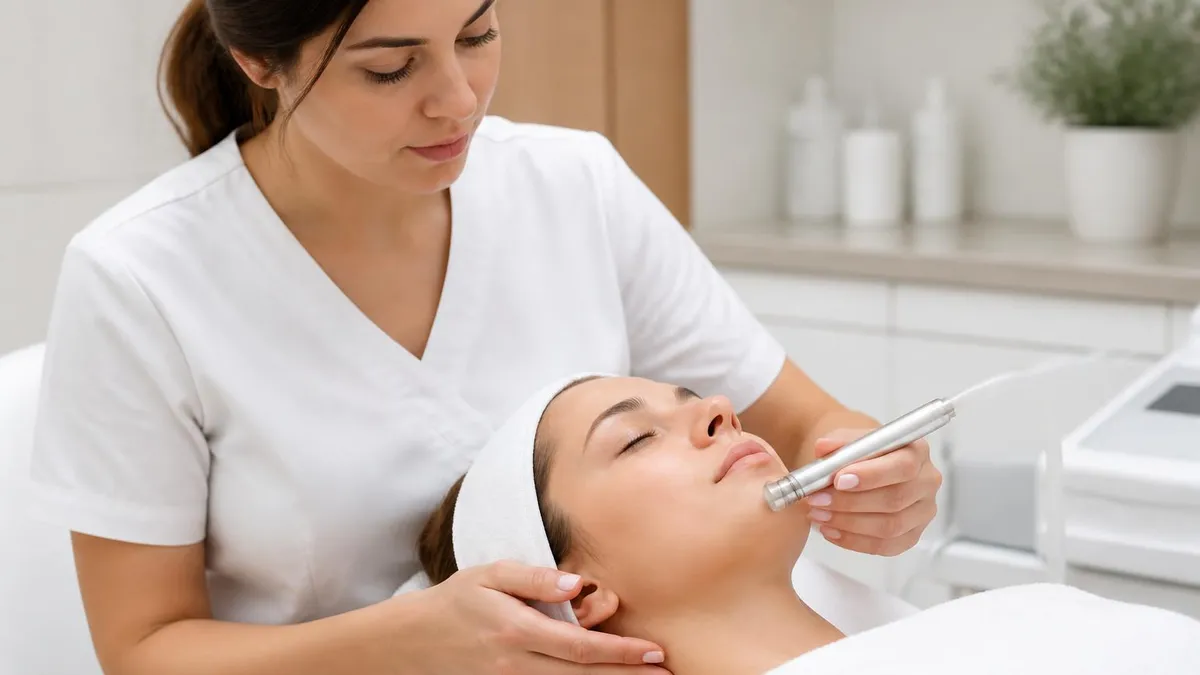
Estheticians are licensed skin care specialists trained in facials, chemical peels, hair removal, microdermabrasion, lash and brow services, and increasingly, light-based device treatments like LED therapy and IPL under medical supervision. The scope of practice is set by your state, which is why location-specific research matters so much before you write a tuition check.
Demand for licensed estheticians has grown steadily since 2018, with the Bureau of Labor Statistics projecting 9 percent job growth through 2032—faster than the national average for all occupations. Med spas, dermatology practices, dedicated skin clinics, and resort spas are the fastest-growing employers, and graduates from accredited programs in metropolitan areas tend to land jobs within 60 days of passing the state board exam.
Before you choose a school, decide what kind of esthetician you want to be. A basic license qualifies you for spa and salon work; advanced or master programs (offered in states like Utah, Virginia, and Washington) prepare you for medical settings, laser assistance, and more complex chemical work. Your career goal drives the kind of school you should be evaluating.
- The NIC National Esthetics Theory Examination has 110 items, of which 100 are weighted and count toward the candidate's final score. (prometric.com)
- The time allowed for the NIC National Esthetics Theory Examination is 90 minutes. (prometric.com)
- NIC's computer-based, practical and remote esthetics exams are administered by test administration companies and states that NIC has approved and authorized. (National-Interstate Council of State Boards of Cosmetology (NIC), which develops the exam. State boards and test vendors)
- The NIC National Esthetics Theory Examination is the licensure examination for estheticians. (prometric.com)
Facts verified Oct 17, 2026 against National-Interstate Council of State Boards of Cosmetology (NIC), which develops the exam. State boards and test vendors. Dates that have passed are removed automatically.
Esthetician Practice Exam Exam at a Glance
| Item | Detail | Official source |
|---|---|---|
| Number of questions (National Esthetics Theory Examination) | 110 items (100 scored) | prometric.com |
| Time limit (National Esthetics Theory Examination) | 90 minutes | prometric.com |
| Delivery | Administered by test vendors and states, including remote testing | National-Interstate Council of State Boards of Cosmetology (NIC), which develops the exam. State boards and test vendors |
| Eligibility (National Esthetics Theory Examination) | Licensure exam for estheticians | prometric.com |
Facts verified Oct 17, 2026 against National-Interstate Council of State Boards of Cosmetology (NIC), which develops the exam. State boards and test vendors. Dates that have passed are removed automatically.
Free Esthetician Study Tools
Interactive Esthetician resources on PracticeTestGeeks, free to start:
- Esthetician flashcards — review key terms and concepts card by card
- Esthetician study guide — topic-by-topic overview of what the exam covers
- Esthetician cheat sheet — one-page printable summary for last-minute review
Esthetician Schools by the Numbers

Training Hour Requirements by State Tier
Florida (260), Massachusetts (300), New York (600), and Maryland (600) require the fewest hours. Graduates can finish in as little as 4–6 months of full-time study and enter the workforce faster than peers in other regions.
Most states, including Georgia, Illinois, North Carolina, and Pennsylvania, fall in this band. Programs typically take 7–10 months full-time and balance theory, sanitation, and clinical hours in a realistic spa simulation setting.
Texas (1,000), Alabama (1,000), Oregon (1,200), and Alaska (1,500) require the most clock hours. These programs run 12–18 months and prepare students for broader scopes of practice, including advanced modalities.
Utah, Virginia, Washington, and Maine offer master esthetician credentials requiring 1,200–1,500 additional hours beyond the basic license. Graduates can perform deeper peels, microneedling, and laser-adjacent services.
Comparing esthetician schools across cities and states comes down to six factors: accreditation, instructor credentials, clinic hours, equipment, pass rates, and job placement support. Start by confirming the school is licensed by your state board and accredited by NACCAS (National Accrediting Commission of Career Arts and Sciences) or a regional accrediting body. Without proper accreditation, your diploma may not qualify you to sit for the exam, and you cannot use federal financial aid such as Pell Grants or Title IV loans.
Next, look at instructor-to-student ratios. The industry standard is one instructor per twenty students for theory and one per ten for clinical floor work. Programs with smaller ratios produce better-prepared graduates because each student receives more hands-on correction during waxing, extractions, and chemical peel procedures. Ask for the average instructor experience; ten or more years in practice plus a current teaching credential is the benchmark to aim for.
Clinic hours are equally critical. Quality programs require you to complete 200–400 hours working on paying clients under supervision, which builds the speed and confidence you need on day one of a real spa job. Schools that skimp on clinic hours and substitute mannequin practice tend to produce graduates who pass the written exam but struggle in their first ninety days of employment, especially in busy med spas with back-to-back appointments.
Pass rates published by NACCAS-accredited schools are public and worth requesting in writing. A 90 percent or higher first-time pass rate on your state board exam signals strong instruction and curriculum alignment, while anything below 70 percent is a warning sign you should investigate further. Also ask about the job placement rate at six months post-graduation, and whether the school has formal employer partnerships with local spas, derm offices, and resort properties.
Don't overlook the equipment. A modern esthetics program should have steamers, magnifying lamps, high-frequency machines, microdermabrasion units, LED panels, and at minimum exposure to ultrasonic skin scrubbers. If you plan to work in medical settings, look for schools that include laser physics, IPL safety, and an intro to injectable-adjacent protocols even if the actual injections fall outside esthetician scope.
Career services and employer relationships often separate good schools from great ones. The best programs host monthly employer visits, run mock interviews, help students build portfolios, and maintain alumni networks that lead to referrals years after graduation. When you tour schools, ask to speak with recent graduates about their job search; their answers will tell you more than any glossy brochure about how the school supports its students after they finish their hours.
Finally, evaluate location and lifestyle fit. A 1,000-hour program in a high-cost-of-living city may stretch your budget thinner than a 600-hour program in a smaller market, even if the listed tuition is similar. Factor in housing, commuting, kit costs, and lost wages while you study. The right school is the one where you'll actually finish, pass your boards, and land a job you enjoy. For a full breakdown of esthetician employment opportunities by region, see our state-by-state earnings guide.

Esthetician Practice Practice Test Questions
Prepare for the Esthetician Practice Exam exam with our free practice test modules. Each quiz covers key topics to help you pass on your first try.
Esthetician Practice Advanced Facial Treat...
Esthetician Practice Exam Questions covering Advanced Facial Treatments. Master Esthetician Practice Test concepts for certification prep.
Esthetician Practice Anatomy and Physiology
Free Esthetician Practice Practice Test featuring Anatomy and Physiology. Improve your Esthetician Practice Exam score with mock test prep.
Esthetician Practice Chemistry and Product...
Esthetician Practice Mock Exam on Chemistry and Product Ingredients. Esthetician Practice Study Guide questions to pass on your first try.
Esthetician Practice Client Consultation a...
Esthetician Practice Test Prep for Client Consultation and Analysis. Practice Esthetician Practice Quiz questions and boost your score.
Esthetician Practice Esthetics Chemistry a...
Esthetician Practice Questions and Answers on Esthetics Chemistry and Ingredients. Free Esthetician Practice practice for exam readiness.
Esthetician Practice Exam Esthetician Prac...
Esthetician Practice Mock Test covering Exam Esthetician Practice Advanced Facial Treatments Questions and Answers. Online Esthetician Practice Test practice with instant feedback.
Esthetician Practice Exam Esthetician Prac...
Free Esthetician Practice Quiz on Exam Esthetician Practice Anatomy and Physiology Questions and Answers. Esthetician Practice Exam prep questions with detailed explanations.
Esthetician Practice Exam Esthetician Prac...
Esthetician Practice Practice Questions for Exam Esthetician Practice Chemistry and Product Ingredients Questions and Answers. Build confidence for your Esthetician Practice certification exam.
Esthetician Practice Exam Esthetician Prac...
Esthetician Practice Test Online for Exam Esthetician Practice Client Consultation and Analysis Questions and Answers. Free practice with instant results and feedback.
Esthetician Practice Exam Esthetician Prac...
Esthetician Practice Study Material on Exam Esthetician Practice Esthetics Chemistry and Ingredients Questions and Answers. Prepare effectively with real exam-style questions.
Esthetician Practice Exam Esthetician Prac...
Free Esthetician Practice Test covering Exam Esthetician Practice Facial Treatments and Massage Questions and Answers. Practice and track your Esthetician Practice exam readiness.
Esthetician Practice Exam Esthetician Prac...
Esthetician Practice Exam Questions covering Exam Esthetician Practice Hair Removal Methods Questions and Answers. Master Esthetician Practice Test concepts for certification prep.
Esthetician Practice Exam Esthetician Prac...
Free Esthetician Practice Practice Test featuring Exam Esthetician Practice Infection Control and Safety Questions and Answers. Improve your Esthetician Practice Exam score with mock test prep.
Esthetician Practice Exam Esthetician Prac...
Esthetician Practice Mock Exam on Exam Esthetician Practice Skin Analysis and Conditions Questions and Answers. Esthetician Practice Study Guide questions to pass on your first try.
Esthetician Practice Exam Esthetician Prac...
Esthetician Practice Test Prep for Exam Esthetician Practice Skin Histology and Disorders Questions and Answers. Practice Esthetician Practice Quiz questions and boost your score.
Esthetician Practice Exam FREE Esthetician...
Esthetician Practice Questions and Answers on Exam FREE Esthetician Knowledge Questions and Answers. Free Esthetician Practice practice for exam readiness.
Esthetician Practice Exam FREE Esthetician...
Esthetician Practice Mock Test covering Exam FREE Esthetician MCQ Questions and Answers. Online Esthetician Practice Test practice with instant feedback.
Esthetician Practice Exam FREE Esthetician...
Free Esthetician Practice Quiz on Exam FREE Esthetician Practice Anatomy and Physiology Questions and Answers. Esthetician Practice Exam prep questions with detailed explanations.
Esthetician Practice Exam FREE Esthetician...
Esthetician Practice Practice Questions for Exam FREE Esthetician Practice Cosmetic Chemistry and Ingredients Questions and Answers. Build confidence for your Esthetician Practice certification exam.
Esthetician Practice Exam FREE Esthetician...
Esthetician Practice Test Online for Exam FREE Esthetician Practice Facial Treatments and Devices Questions and Answers. Free practice with instant results and feedback.
Esthetician Practice Exam FREE Esthetician...
Esthetician Practice Study Material on Exam FREE Esthetician Practice Hair Removal Procedures Questions and Answers. Prepare effectively with real exam-style questions.
Esthetician Practice Exam FREE Esthetician...
Free Esthetician Practice Test covering Exam FREE Esthetician Practice Infection Control and Safety Questions and Answers. Practice and track your Esthetician Practice exam readiness.
Esthetician Practice Exam FREE Esthetician...
Esthetician Practice Exam Questions covering Exam FREE Esthetician Practice Skin Analysis and Conditions Questions and Answers. Master Esthetician Practice Test concepts for certification prep.
Esthetician Practice Exam FREE Esthetician...
Free Esthetician Practice Practice Test featuring Exam FREE Esthetician (Reading) Questions and Answers. Improve your Esthetician Practice Exam score with mock test prep.
Esthetician Practice Facial Treatments and...
Esthetician Practice Mock Exam on Facial Treatments and Massage. Esthetician Practice Study Guide questions to pass on your first try.
Esthetician Practice Hair Removal Methods
Esthetician Practice Test Prep for Hair Removal Methods. Practice Esthetician Practice Quiz questions and boost your score.
Esthetician Practice Infection Control and...
Esthetician Practice Questions and Answers on Infection Control and Safety. Free Esthetician Practice practice for exam readiness.
Esthetician Practice Skin Analysis and Con...
Esthetician Practice Mock Test covering Skin Analysis and Conditions. Online Esthetician Practice Test practice with instant feedback.
Esthetician Practice Skin Histology and Di...
Free Esthetician Practice Quiz on Skin Histology and Disorders. Esthetician Practice Exam prep questions with detailed explanations.
Esthetician Practice Esthetician Knowledge
Esthetician Practice Practice Questions for Esthetician Knowledge. Build confidence for your Esthetician Practice certification exam.
Esthetician Practice Esthetician MCQ
Esthetician Practice Test Online for Esthetician MCQ. Free practice with instant results and feedback.
Esthetician Practice Cosmetic Chemistry an...
Esthetician Practice Study Material on Cosmetic Chemistry and Ingredients. Prepare effectively with real exam-style questions.
Esthetician Practice Facial Treatments and...
Free Esthetician Practice Test covering Facial Treatments and Devices. Practice and track your Esthetician Practice exam readiness.
Esthetician Schools: Curriculum Breakdown
Theory typically covers 25–35 percent of your total hours and includes anatomy and physiology of the skin, histology, infection control, chemistry of cosmetic ingredients, sanitation, state laws and rules, and client consultation. Students learn to identify common skin conditions like rosacea, acne grades I–IV, hyperpigmentation, and contraindications for various services. Most programs administer weekly written tests modeled on the NIC theory exam, which all but a few states use as the written portion of licensure.
Strong theory instruction is the foundation of safe practice and exam success. Schools that integrate theory with clinical learning—teaching the chemistry of glycolic acid the same week you practice glycolic peels—produce graduates who score significantly higher on board exams and adapt faster to real-world client scenarios. Ask whether your school uses the Milady Standard Esthetics textbooks, which align directly with NIC content outlines and remain the industry gold standard.
In-Person vs. Hybrid Esthetician Programs
- +Hands-on instructor feedback during waxing, extractions, and chemical work
- +Full access to professional steamers, lamps, and microdermabrasion equipment
- +Real-client clinic hours that build speed and confidence before graduation
- +Built-in study groups and peer networking that lead to job referrals
- +Direct relationships with local spa and dermatology employers
- +Easier to qualify for federal financial aid at brick-and-mortar accredited schools
- +Structured schedule keeps full-time students on track to finish in 6–12 months
- −Higher total cost, often $8,000–$15,000 versus $4,000–$7,000 for hybrid
- −Inflexible class times that conflict with work or family responsibilities
- −Commuting costs and time, especially in metropolitan areas
- −Less self-pacing for students who pick up material faster than the cohort
- −Kit and supply fees can add $1,500–$2,500 on top of base tuition
- −Limited evening or weekend options at many traditional campuses
- −Some programs feel rushed in the final months as students push to finish clinic hours
Pros and Cons at a Glance
| Pros | Cons |
|---|---|
| Hands-on instructor feedback during waxing, extractions, and chemical work | Inflexible class times that conflict with work or family responsibilities |
| Full access to professional steamers, lamps, and microdermabrasion equipment | Commuting costs and time, especially in metropolitan areas |
| Real-client clinic hours that build speed and confidence before graduation | Less self-pacing for students who pick up material faster than the cohort |
| Built-in study groups and peer networking that lead to job referrals | Limited evening or weekend options at many traditional campuses |
| Direct relationships with local spa and dermatology employers | Some programs feel rushed in the final months as students push to finish clinic hours |

Enrollment Checklist for Esthetician Schools
- ✓Confirm the school is licensed by your state board of cosmetology or barbering
- ✓Verify NACCAS or regional accreditation in writing before paying any deposit
- ✓Request the most recent first-time board exam pass rate and graduation rate
- ✓Tour the campus, observe a clinic floor session, and meet at least two instructors
- ✓Compare total program cost including tuition, kit, books, lab fees, and uniforms
- ✓Apply for federal financial aid using FAFSA if the school is Title IV eligible
- ✓Ask about job placement rates and employer partnerships in your target city
- ✓Read the enrollment contract carefully for refund policies and completion deadlines
- ✓Confirm the school's hour count matches your state's minimum licensure requirement
- ✓Speak with at least three recent graduates about their experience and outcomes
Plan Where You'll Practice Before You Enroll
If you train in a 600-hour state and move to a 1,000-hour state, you typically cannot transfer hours automatically. Many state boards require you to either complete the additional hours at an in-state school or pass a reciprocity exam. Decide where you want to work long-term before you choose your school, or you may end up paying twice for the same education.
Tuition for an accredited esthetics program ranges from about $4,000 at community college programs to $20,000 or more at private beauty academies in major metropolitan areas. The national average for a basic 600-hour program sits near $6,500, while 1,000-hour programs in states like Texas, Alabama, and Oregon average closer to $11,000. Master esthetician programs run an additional $5,000–$10,000 on top of basic licensure, though graduates typically recoup that investment within 18 months through higher hourly rates in medical settings.
Beyond tuition, plan for several mandatory line items most prospective students underestimate. A professional kit including a uniform, smock, headbands, towels, skincare products, waxing supplies, and tools usually costs $1,200–$2,200. Textbooks, primarily the Milady series, run $300–$500. State exam fees including written, practical, and license issuance typically total $150–$300 depending on the state. Background checks, fingerprinting, and CPR certification add another $100–$200.
Federal financial aid is available at Title IV–eligible accredited schools. Pell Grants of up to $7,395 per year (2025–2026 award year) do not require repayment and cover a substantial portion of basic program tuition. Direct subsidized and unsubsidized loans round out federal aid packages, and many states offer additional grants for workforce training programs. Submit your FAFSA as early as possible, and ask the financial aid office about state-specific scholarships you may qualify for based on residency, income, or career pathway.
School-specific scholarships and payment plans are widely available but rarely advertised. Many private beauty academies offer $1,000–$5,000 institutional scholarships for first-time enrollees, military veterans, displaced workers, or high school students enrolling immediately after graduation. Interest-free monthly payment plans typically split the remaining balance over the length of the program. Ask the admissions office for a complete list of every scholarship and payment option before you commit.
Workforce Innovation and Opportunity Act (WIOA) funding is one of the most overlooked sources of tuition support. WIOA-eligible adults, dislocated workers, and youth can receive grants of up to $10,000 toward training programs on their state's Eligible Training Provider List. Contact your local American Job Center to find out if you qualify; many esthetics students who are career changers or returning to the workforce after a layoff fund their entire program through WIOA without taking on debt.
Return on investment varies significantly by region and credential level. A graduate from a $6,500 program in a mid-sized market earning $45,000 in year one as a spa esthetician sees a strong ROI within twelve months. A graduate of a $15,000 master esthetics program landing a medical esthetics role at $65,000–$75,000 plus retail commission recovers their investment in roughly the same timeframe but earns dramatically more over a career. To understand what is an esthetician earning potential by state and setting, our salary guide breaks down hourly rates, tips, and retail commissions across markets.
One final cost to plan for: continuing education. Most states require 4–16 hours of CE every one or two years to maintain your license. Add roughly $100–$400 annually for CE courses, professional association memberships, and ongoing product or device training. Estheticians who invest consistently in advanced education out-earn peers by a wide margin and rarely struggle to find work even in soft local markets.
Some unaccredited schools advertise low tuition but their graduates cannot sit for state board exams or qualify for federal financial aid. Always verify accreditation directly through NACCAS or your state board's website, not just the school's marketing materials. Also be cautious of schools that quote suspiciously low hour totals; the state board sets the minimum, not the school.
Top esthetics programs cluster around regions with strong spa, resort, and medical aesthetics economies. In the Southeast, Aveda Institutes in Atlanta and Tampa, along with Paul Mitchell schools across Florida and Georgia, dominate enrollment thanks to brand recognition and strong job placement pipelines. Alabama's leading programs include Bevill State Community College, Wallace State, and Capps Cosmetology College, each offering the full 1,000-hour curriculum at community college prices ranging from $5,500 to $9,500.
In Texas, Ogle School, Aveda Institute Dallas, and the cosmetology departments at Lone Star College and Houston Community College consistently rank near the top for board exam pass rates and job placement. Texas requires 750 hours for the standard esthetician license and 1,200 hours for the master credential, making it one of the most rigorous training markets in the country. Graduates routinely move into med spa work in Dallas, Austin, and Houston with starting wages above the national average.
California programs operate under some of the strictest oversight in the nation. Marinello Schools, Paul Mitchell campuses, and community colleges like Santa Monica College and City College of San Francisco lead the field. California requires 600 hours and a separate state board exam, and the Board of Barbering and Cosmetology actively audits schools for compliance. Graduates often command higher hourly rates than peers elsewhere, especially in Los Angeles, San Diego, and the Bay Area where medical aesthetics is a major employer.
The Pacific Northwest offers unique advanced training options. Oregon requires 600 hours but offers an additional advanced esthetician credential, while Washington requires 750 hours plus a separate 1,200-hour master esthetician program. Schools like Gene Juarez Academy, Euphoria Institute, and Bellevue College serve students seeking both basic and master credentials. Graduates from Washington master programs are particularly competitive for laser tech and medical esthetic roles across the West Coast and intermountain region.
In the Northeast, the Aveda Institute New York, the Christine Valmy International School, and the New York Institute of Beauty are well-established options for the state's 600-hour curriculum. Massachusetts requires only 300 hours, the lowest in the country, making schools like Catherine Hinds Institute of Esthetics in Woburn especially efficient choices for students who want to enter the workforce quickly. Be aware that a Massachusetts license may require additional hours if you later move to a higher-hour state.
Midwest programs balance affordability with strong career outcomes. Schools like the Aveda Institute Minneapolis, Empire Beauty Schools across Ohio and Illinois, and community college programs in Wisconsin and Michigan typically charge $5,000–$8,000 for full programs and feed graduates into healthy regional spa and dermatology markets. Pass rates at established Midwest community colleges often match or exceed those of much pricier private academies, which is worth considering if budget is a priority. For students pursuing advanced medical roles, esthetician schools that bundle training with healthcare credentials can fast-track careers in dermatology offices and laser clinics.
Finally, online and hybrid options have expanded significantly since 2020, though no U.S. state allows a fully online esthetics license. Schools like Avenue Five Institute and Paul Mitchell have launched hybrid models where theory is delivered online and hands-on practicals occur in compressed in-person residencies. These can work well for career changers and parents but require strong self-discipline. Confirm with your state board that the hybrid format counts toward licensure hours before enrolling.
Once you've enrolled, your success depends on the habits you build in the first sixty days. Show up on time every day, log every clinic service in a personal portfolio, and ask instructors specific questions during practical critiques rather than waiting to be graded. Students who treat school like a job from week one consistently pass boards on the first try and land jobs within two months of graduation, often before their peers have even scheduled their state exam.
Study in short, focused sessions rather than marathon cram nights. Anatomy, ingredient chemistry, and sanitation rules require repeated exposure to stick, and most state board exams test heavily on contraindications and infection control. Use spaced repetition apps and timed practice question banks at least three times a week, starting from your first month of school, not the last month before your exam. By board day, you should have completed at least 1,500 practice questions across all major content domains.
Build your professional network while you're still in school. Attend industry trade shows like the International Beauty Show, IECSC, or Premiere events whenever they come to your region. Many students land their first jobs through connections made at these events months before graduation. Follow local spas, derm offices, and med spas on social media, engage thoughtfully with their content, and start a professional Instagram account that documents your clinic work with proper client consent.
Master a signature service before you finish school. Whether it's a careful lash lift, a flawless Brazilian wax, or a results-driven acne facial, having one service you can perform faster and better than your peers gives you a competitive edge in interviews. Employers are looking for graduates who can step into a booked appointment book, and a portfolio of before-and-after photos for your signature service can land you a job over a candidate with a generic resume.
Prepare for the practical exam as seriously as the written. The practical portion requires you to perform a basic facial, set up your station, follow infection control protocols, and demonstrate specific procedures within strict time limits. Examiners deduct points for any deviation from approved technique, including how you drape your client, where you place implements, and how you label your products. Practice the exact NIC practical protocol weekly for the last three months before testing.
Don't underestimate the importance of soft skills. Communication, punctuality, professionalism, and the ability to read a client's mood are what separate good estheticians from great ones, and they're what get you hired. Spas hire for technical competence but promote for emotional intelligence and reliability. Practice consultation language until it sounds natural, and learn how to recommend home care products in a way that feels helpful rather than salesy.
Finally, plan your transition from student to professional before graduation day. Update your resume, build a one-page portfolio, line up references from instructors, complete your state license application, and apply for liability insurance through providers like Associated Skin Care Professionals or PBA. Many graduates lose six to ten weeks of earnings simply because they wait until after they pass boards to start the job search. Move in parallel and you'll be on the floor earning within two weeks of getting your license.
Sample Esthetician Practice Questions
Try these questions from our free Esthetician practice tests. The correct answer and an explanation follow each question.
According to state board regulations, what information must be documented on a client consultation card before providing services?
- A. The client's insurance provider and policy number
- B. The client's medical history, allergies, and current medications
- C. The client's preferred social media handles
- D. The client's previous esthetician's contact information
Answer: B. The client's medical history, allergies, and current medications
Client consultation cards must include medical history, allergies, and medications to ensure safe treatment and identify any contraindications.
A client's intake form states they are using tretinoin. Based on this information, which treatment should the esthetician avoid?
- A. A hydrating mask application
- B. A chemical exfoliation peel
- C. A basic cleansing facial
- D. A hand and arm massage
Answer: B. A chemical exfoliation peel
Tretinoin thins the stratum corneum and increases skin sensitivity, making chemical peels contraindicated due to the high risk of burns and irritation.
A product brochure states that a serum is 'non-comedogenic.' Based on reading this claim, which client concern is this product most specifically formulated to address?
- A. Sensitive skin prone to redness and irritation
- B. Skin prone to clogged pores and breakouts
- C. Dehydrated skin lacking moisture retention
- D. Mature skin showing signs of aging
Answer: B. Skin prone to clogged pores and breakouts
Non-comedogenic means the product is formulated to not clog pores or promote the formation of comedones (blackheads and whiteheads), making it appropriate for acne-prone or breakout-prone skin types.
After a waxing service, which type of product should be avoided on the treated area for at least 24 hours?
- A. Fragrance-free moisturizer
- B. Aloe vera gel
- C. Products containing alcohol or exfoliating acids
- D. Cool water rinse
Answer: C. Products containing alcohol or exfoliating acids
Following waxing, the skin's surface is temporarily sensitized and the follicles are open. Alcohol-based products and chemical exfoliants (AHAs, BHAs) can cause significant irritation, stinging, and potential inflammation in this vulnerable state.
Esthetician Questions and Answers

Esthetician Practice Exam 2026
Esthetician Salary: Pay by State, Setting, and Experience (2026)
Esthetician Certification: Complete Guide to Licensing, Training, and Career Paths in 2026
Nurse Esthetician: Career Overview, Training Path, Salary, Job Duties, and How to Become One