
Esthetician Certification: Complete Guide to Licensing, Training, and Career Paths in 2026 October
Esthetician certification guide covering licensing requirements, 🧠 training hours, exam prep, costs, and career paths for aspiring skincare
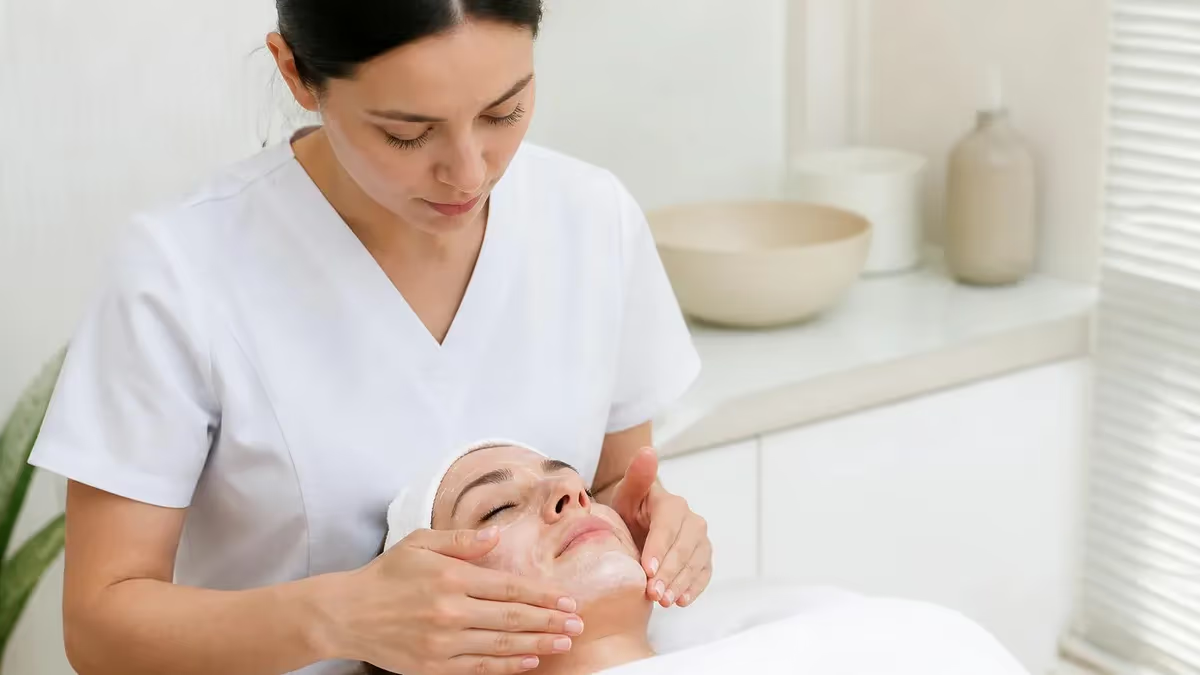
Earning your esthetician certification is the gateway to one of the fastest-growing careers in the personal care industry, and in 2026 the path is more structured and rewarding than ever. An esthetician certification is the formal credential that proves you have completed state-mandated training hours, passed written and practical examinations, and met the legal requirements to perform skincare services on paying clients. Without it, you simply cannot work legally, no matter how skilled you are with a facial steamer or chemical peel.
The credential matters because every U.S. state regulates esthetics under cosmetology or dedicated esthetics boards. These boards exist to protect consumers from unsafe practices, untrained hands, and unsanitary tools. When clients search for an esthetician near me, they expect a licensed professional who understands skin anatomy, contraindications, sanitation protocols, and product chemistry. Certification is the proof that you belong in that chair behind the lamp.
The journey typically takes between four and twelve months depending on your state's required hours, which range from 260 hours in Florida to 1,500 hours in Alabama and Utah. Most states settle around 600 hours of combined theory and hands-on practical training. After completing an accredited program, you sit for two examinations: a written theory test and a practical skills demonstration administered by a third-party vendor like PSI, DLRoope, or Prometric.
Beyond legality, certification opens doors to vastly different career environments. Licensed estheticians work in day spas, resort spas, medical offices, dermatology clinics, plastic surgery practices, cruise ships, film and television sets, and increasingly as solo entrepreneurs renting suites. Each setting demands the same baseline credential but rewards specialization differently. A certified medical esthetician working alongside a dermatologist often out-earns a spa colleague by 30 to 50 percent simply because the clinical setting commands higher service prices.
The certification process also serves as a filter that weeds out those unprepared for the realities of the profession. Esthetics is physically demanding work involving hours of standing, repetitive hand motions, and emotional labor managing client expectations. The written exam tests your knowledge of histology, microbiology, electricity, and chemistry alongside practical service knowledge. Roughly 30 percent of candidates fail their first attempt, usually because they underestimated the science-heavy content.
This guide walks you through every component of the certification process: program selection, training hour requirements by state, exam content breakdowns, application timelines, costs, study strategies, and what to expect during your first year as a newly licensed professional. Whether you are exploring esthetics as a second career or graduating high school with skincare ambitions, the information below reflects 2026 regulations and current industry data from state boards, NIC reports, and Bureau of Labor Statistics projections.
You will also find direct links to free practice questions covering every major exam domain, from advanced facial treatments to chemistry and product ingredients. These question banks mirror the format used by national testing vendors and are calibrated to the difficulty level of actual licensing exams. Bookmark this guide, work through the practice tiles between sections, and treat the certification journey as the professional foundation it truly is.
Esthetician Certification by the Numbers
Certification Requirements by State
Florida (260), Massachusetts (300), New York (600 cosmetology-only path) require shorter programs. These states focus on core skincare basics and allow faster entry into the workforce but limit advanced service scope until experience builds.
Texas, Illinois, California, Georgia, and roughly 20 other states require 600 training hours. This is the de facto national standard and typically takes six to nine months full-time, blending theory, sanitation, facials, hair removal, and makeup.
Alabama, Utah, and Tennessee require up to 1,500 hours. These intensive programs often include advanced modalities like microdermabrasion, chemical peels, and clinical skincare, producing graduates with broader scope and higher initial earning potential.
Virginia, Washington, Utah, and the District of Columbia offer a second-tier credential requiring an additional 450–600 hours covering medical-grade modalities, advanced chemistry, and laser-adjacent treatments under physician supervision in clinical settings.
Choosing the right esthetics program is the single most consequential decision you will make in your certification journey, and the wrong choice can cost you thousands of dollars and months of wasted time. Start by confirming the school is approved by your state board of cosmetology or esthetics. State approval is non-negotiable because hours completed at unapproved schools cannot be applied toward licensure, even if the school is otherwise reputable or nationally accredited.
Beyond state approval, look for accreditation from NACCAS, the National Accrediting Commission of Career Arts and Sciences. NACCAS accreditation unlocks federal financial aid eligibility, which matters enormously when programs cost between $6,000 and $20,000. Schools without NACCAS accreditation may still produce qualified graduates, but you will need to pay out of pocket or rely on private loans with significantly higher interest rates than federal student loans offer.
Curriculum depth varies dramatically between programs even within the same state. Request a copy of the curriculum syllabus before enrolling and compare hour allocations across categories. A program that dedicates 200 hours to facial treatments and only 30 hours to chemistry is preparing you for the practical exam but leaving you weak on the written portion. Balanced programs cover anatomy and physiology, electricity and apparatus, infection control, product chemistry, business skills, and state law alongside hands-on services.
Instructor quality is often more important than facility aesthetics. Tour the school during active class hours rather than scheduled enrollment events. Watch how instructors interact with students on the clinic floor, observe whether they correct technique in real time, and ask current students about job placement support after graduation. The best schools maintain industry connections that translate into interview opportunities at local spas and medical practices before you even take the licensing exam.
Clinic hours within the program are where you build speed, confidence, and a small client base. Most state-approved schools require students to perform services on paying members of the public during supervised clinic shifts, usually starting around hour 200 of the program. These shifts simulate real spa workflow and let you practice client consultations, treatment planning, and retail recommendations on actual paying customers rather than fellow students.
Online and hybrid options expanded significantly after 2020, with several states now permitting up to 50 percent of theory hours to be completed remotely. Hybrid programs work best for self-motivated learners with reliable internet and a quiet study space. If you are considering this route, read our detailed breakdown of what is an esthetician training online to understand which states recognize remote hours and which still require fully in-person instruction.
Finally, evaluate financial aid, payment plans, and total cost honestly against the salary you can expect in your local market. A $20,000 program in a rural area where estheticians earn $32,000 starting salaries creates a difficult debt-to-income ratio. The same program in Manhattan or Beverly Hills where seasoned estheticians clear $80,000 with tips and retail commissions is a sensible investment. Run the numbers before signing enrollment paperwork.
Esthetician Practice Practice Test Questions
Prepare for the Esthetician Practice Exam exam with our free practice test modules. Each quiz covers key topics to help you pass on your first try.
Esthetician Practice Advanced Facial Treat...
Esthetician Practice Exam Questions covering Advanced Facial Treatments. Master Esthetician Practice Test concepts for certification prep.
Esthetician Practice Anatomy and Physiology
Free Esthetician Practice Practice Test featuring Anatomy and Physiology. Improve your Esthetician Practice Exam score with mock test prep.
Esthetician Practice Chemistry and Product...
Esthetician Practice Mock Exam on Chemistry and Product Ingredients. Esthetician Practice Study Guide questions to pass on your first try.
Esthetician Practice Client Consultation a...
Esthetician Practice Test Prep for Client Consultation and Analysis. Practice Esthetician Practice Quiz questions and boost your score.
Esthetician Practice Esthetics Chemistry a...
Esthetician Practice Questions and Answers on Esthetics Chemistry and Ingredients. Free Esthetician Practice practice for exam readiness.
Esthetician Practice Exam Esthetician Prac...
Esthetician Practice Mock Test covering Exam Esthetician Practice Advanced Facial Treatments Questions and Answers. Online Esthetician Practice Test practice with instant feedback.
Esthetician Practice Exam Esthetician Prac...
Free Esthetician Practice Quiz on Exam Esthetician Practice Anatomy and Physiology Questions and Answers. Esthetician Practice Exam prep questions with detailed explanations.
Esthetician Practice Exam Esthetician Prac...
Esthetician Practice Practice Questions for Exam Esthetician Practice Chemistry and Product Ingredients Questions and Answers. Build confidence for your Esthetician Practice certification exam.
Esthetician Practice Exam Esthetician Prac...
Esthetician Practice Test Online for Exam Esthetician Practice Client Consultation and Analysis Questions and Answers. Free practice with instant results and feedback.
Esthetician Practice Exam Esthetician Prac...
Esthetician Practice Study Material on Exam Esthetician Practice Esthetics Chemistry and Ingredients Questions and Answers. Prepare effectively with real exam-style questions.
Esthetician Practice Exam Esthetician Prac...
Free Esthetician Practice Test covering Exam Esthetician Practice Facial Treatments and Massage Questions and Answers. Practice and track your Esthetician Practice exam readiness.
Esthetician Practice Exam Esthetician Prac...
Esthetician Practice Exam Questions covering Exam Esthetician Practice Hair Removal Methods Questions and Answers. Master Esthetician Practice Test concepts for certification prep.
Esthetician Practice Exam Esthetician Prac...
Free Esthetician Practice Practice Test featuring Exam Esthetician Practice Infection Control and Safety Questions and Answers. Improve your Esthetician Practice Exam score with mock test prep.
Esthetician Practice Exam Esthetician Prac...
Esthetician Practice Mock Exam on Exam Esthetician Practice Skin Analysis and Conditions Questions and Answers. Esthetician Practice Study Guide questions to pass on your first try.
Esthetician Practice Exam Esthetician Prac...
Esthetician Practice Test Prep for Exam Esthetician Practice Skin Histology and Disorders Questions and Answers. Practice Esthetician Practice Quiz questions and boost your score.
Esthetician Practice Exam FREE Esthetician...
Esthetician Practice Questions and Answers on Exam FREE Esthetician Knowledge Questions and Answers. Free Esthetician Practice practice for exam readiness.
Esthetician Practice Exam FREE Esthetician...
Esthetician Practice Mock Test covering Exam FREE Esthetician MCQ Questions and Answers. Online Esthetician Practice Test practice with instant feedback.
Esthetician Practice Exam FREE Esthetician...
Free Esthetician Practice Quiz on Exam FREE Esthetician Practice Anatomy and Physiology Questions and Answers. Esthetician Practice Exam prep questions with detailed explanations.
Esthetician Practice Exam FREE Esthetician...
Esthetician Practice Practice Questions for Exam FREE Esthetician Practice Cosmetic Chemistry and Ingredients Questions and Answers. Build confidence for your Esthetician Practice certification exam.
Esthetician Practice Exam FREE Esthetician...
Esthetician Practice Test Online for Exam FREE Esthetician Practice Facial Treatments and Devices Questions and Answers. Free practice with instant results and feedback.
Esthetician Practice Exam FREE Esthetician...
Esthetician Practice Study Material on Exam FREE Esthetician Practice Hair Removal Procedures Questions and Answers. Prepare effectively with real exam-style questions.
Esthetician Practice Exam FREE Esthetician...
Free Esthetician Practice Test covering Exam FREE Esthetician Practice Infection Control and Safety Questions and Answers. Practice and track your Esthetician Practice exam readiness.
Esthetician Practice Exam FREE Esthetician...
Esthetician Practice Exam Questions covering Exam FREE Esthetician Practice Skin Analysis and Conditions Questions and Answers. Master Esthetician Practice Test concepts for certification prep.
Esthetician Practice Exam FREE Esthetician...
Free Esthetician Practice Practice Test featuring Exam FREE Esthetician (Reading) Questions and Answers. Improve your Esthetician Practice Exam score with mock test prep.
Esthetician Practice Facial Treatments and...
Esthetician Practice Mock Exam on Facial Treatments and Massage. Esthetician Practice Study Guide questions to pass on your first try.
Esthetician Practice Hair Removal Methods
Esthetician Practice Test Prep for Hair Removal Methods. Practice Esthetician Practice Quiz questions and boost your score.
Esthetician Practice Infection Control and...
Esthetician Practice Questions and Answers on Infection Control and Safety. Free Esthetician Practice practice for exam readiness.
Esthetician Practice Skin Analysis and Con...
Esthetician Practice Mock Test covering Skin Analysis and Conditions. Online Esthetician Practice Test practice with instant feedback.
Esthetician Practice Skin Histology and Di...
Free Esthetician Practice Quiz on Skin Histology and Disorders. Esthetician Practice Exam prep questions with detailed explanations.
Esthetician Practice Esthetician Knowledge
Esthetician Practice Practice Questions for Esthetician Knowledge. Build confidence for your Esthetician Practice certification exam.
Esthetician Practice Esthetician MCQ
Esthetician Practice Test Online for Esthetician MCQ. Free practice with instant results and feedback.
Esthetician Practice Cosmetic Chemistry an...
Esthetician Practice Study Material on Cosmetic Chemistry and Ingredients. Prepare effectively with real exam-style questions.
Esthetician Practice Facial Treatments and...
Free Esthetician Practice Test covering Facial Treatments and Devices. Practice and track your Esthetician Practice exam readiness.
Esthetician License Exam Format
The written portion contains 100 to 110 multiple-choice questions covering scientific concepts and infection control protocols. Candidates have ninety minutes to complete the exam on a computer terminal at an approved testing center. The passing score is typically 70 or 75 percent depending on the state, with some boards requiring higher thresholds for master esthetician credentials.
Content domains include skin sciences (25 percent), services and treatment knowledge (40 percent), client services and consultation (15 percent), infection control and safety (15 percent), and electricity and apparatus (5 percent). Questions are scenario-based rather than rote memorization, requiring you to apply knowledge to realistic client situations involving contraindications, product selection, and treatment sequencing.
Pursuing an Esthetician Certification: Pros and Cons
- +Relatively short training timeline compared to nursing, dental hygiene, or cosmetology programs
- +Strong job growth projected at nine percent through 2034 according to BLS data
- +Tip income often adds twenty to thirty percent on top of base service fees
- +Flexibility to work in spas, medical offices, freelance, or as a salon suite owner
- +Specialization paths into medical esthetics dramatically increase earning potential
- +Federal financial aid available through NACCAS-accredited schools reduces upfront cost
- +Skills transfer across all fifty states with reciprocity agreements in most regions
- −Physical demands include long hours standing, repetitive motions, and eye strain
- −Income is heavily commission-based with slow building periods early in your career
- −Continuing education requirements add ongoing costs every renewal cycle
- −Some states require extensive 1,000+ training hours that delay earnings significantly
- −Initial license and exam costs total $300 to $600 beyond tuition expenses
- −Burnout rates in spa settings are notably higher than other allied health fields
- −Booth rent and supply costs eat into self-employed esthetician profits substantially
Pros and Cons at a Glance
| Pros | Cons |
|---|---|
| Relatively short training timeline compared to nursing, dental hygiene, or cosmetology programs | Physical demands include long hours standing, repetitive motions, and eye strain |
| Tip income often adds twenty to thirty percent on top of base service fees | Income is heavily commission-based with slow building periods early in your career |
| Flexibility to work in spas, medical offices, freelance, or as a salon suite owner | Continuing education requirements add ongoing costs every renewal cycle |
| Specialization paths into medical esthetics dramatically increase earning potential | Burnout rates in spa settings are notably higher than other allied health fields |
| Federal financial aid available through NACCAS-accredited schools reduces upfront cost | Booth rent and supply costs eat into self-employed esthetician profits substantially |

Esthetician License Application Documentation Checklist
- ✓Completed state board application form with notarized signature
- ✓Official transcript or proof of training hours from your accredited school
- ✓Government-issued photo identification matching the name on your application
- ✓Application fee payment ranging from $50 to $150 depending on state
- ✓Examination fee payment of $100 to $200 for written and practical portions
- ✓Passport-style photographs taken within the last six months
- ✓Social Security verification or work authorization documentation
- ✓Background check or fingerprint clearance where required by state law
- ✓Proof of high school diploma, GED, or equivalent educational completion
- ✓Liability insurance verification if required prior to license issuance
- ✓Sanitation kit checklist confirmation for practical exam day
- ✓Reciprocity documentation if transferring a license from another state
Submit your application before graduation day
Most state boards take four to eight weeks to process examination eligibility, so submitting your application six to eight weeks before your projected graduation date keeps your testing momentum intact. Candidates who wait until after graduation often face a three-month gap between completing school and sitting for the exam, during which retention drops sharply and pass rates fall.
A fresh esthetician certification opens far more career doors than most students realize during school, and choosing your first work environment shapes your earning trajectory for years afterward. Day spas remain the most common entry point, hiring new graduates as junior estheticians performing facials, body treatments, and basic hair removal services. Compensation typically combines an hourly base wage of $13 to $18 with service commissions of 35 to 50 percent and retail commissions of 8 to 15 percent on products sold to clients.
Medical spa and dermatology clinic positions pay significantly more but require either prior spa experience or aggressive self-study in clinical protocols. A medical esthetician working under a dermatologist or plastic surgeon performs chemical peels, microneedling, laser treatment preparation, post-procedure care, and pre-surgical skin conditioning. Starting pay in these clinical roles runs $20 to $28 per hour with bonus structures tied to treatment package sales rather than tips. Many clinics provide free advanced training in modalities the state credential does not formally cover.
Resort and destination spa positions offer different trade-offs entirely. Pay structures often include base wages, housing stipends, and tip pooling that can produce strong seasonal earnings during peak tourist months. The cruise ship pathway through Steiner or OneSpaWorld places newly certified estheticians on ships performing 60 to 80 services per week with contracts running four to six months. These roles are physically grueling but allow you to bank significant savings without the cost of land-based living expenses.
Solo entrepreneurship through booth rental or suite leasing attracts experienced estheticians ready to control their own schedule, pricing, and client list. Suite rental at facilities like Sola Salons or Phenix Salon Suites runs $250 to $500 weekly depending on the market. Successful solo practitioners net $60,000 to $120,000 annually but bear all expenses for products, marketing, insurance, and continuing education. Most industry advisors recommend two to three years of employed experience before going independent.
Specialized niches command premium pricing and loyal clientele. Brow and lash artists who master microblading or lash extensions can build $80,000+ practices working four days per week. Acne specialists trained through programs like Face Reality build referral networks with dermatologists. Oncology estheticians serving cancer patients during and after treatment provide both rewarding work and access to a clinical career pathway many never consider in school.
Geographic location influences earnings more than any other variable, and our detailed guide to esthetician salary by state breaks down where the certification produces the strongest financial returns. Top-paying metros include San Francisco, Seattle, Boston, Washington DC, and New York City where median esthetician earnings exceed $58,000 before tips. Rural markets in the Southeast and Midwest cluster around $32,000 to $38,000 medians, though cost-of-living adjustments often make these markets competitive on a quality-of-life basis.
Career longevity in esthetics depends on continuing education and modality expansion. Estheticians who add a new credentialed service every 18 to 24 months — dermaplaning, LED therapy, advanced peels, body contouring, scalp treatments — consistently out-earn peers who stay narrowly focused on basic facials. The certification is not a destination but a launching pad for two to three decades of skill stacking, specialization, and increasing professional autonomy.
Most states require esthetician license renewal every one to two years, with continuing education requirements ranging from four to sixteen hours per renewal cycle. Missing your renewal deadline can result in late fees of $50 to $200, and a license that lapses for more than 12 months may require retesting. Calendar your renewal date the same week you receive your initial license to avoid this expensive mistake.
Understanding the total cost of esthetician certification helps you plan financially and evaluate whether the career delivers a strong return on investment in your specific market. Tuition is the largest single expense, ranging from $4,500 at community college programs to $20,000 or more at private career colleges. The national median tuition for a 600-hour program sits around $9,800 in 2026, with kit and supplies typically adding another $500 to $1,500 on top.
Beyond tuition, candidates pay a stack of regulatory fees that catch many students off guard. The state license application fee averages $75. The written and practical exam fees combined run approximately $185 nationally. Background check and fingerprinting fees add $40 to $75 in states that require them. Annual or biennial license renewal fees add another $40 to $120. Total first-year regulatory costs typically land between $300 and $600 above tuition.
Hidden costs include professional liability insurance, which most employers require even when they provide coverage during work hours. Annual premiums from Associated Skin Care Professionals or Insurance Canopy run $100 to $260 and provide $2 million in coverage along with continuing education access. Many graduates also invest $300 to $800 in additional certifications immediately after licensure to access specialized services like dermaplaning or LED therapy.
Financial aid availability transforms the affordability equation for many students. NACCAS-accredited schools accept federal Pell Grants worth up to $7,395 annually for low-income students and federal Direct Loans for additional needs. Workforce Innovation and Opportunity Act funding through state workforce boards can cover full tuition for displaced workers and qualifying low-income adults. Veterans benefits including the GI Bill and VR&E program also fund esthetics training at approved institutions.
Return on investment timelines vary by market but generally favor estheticians who treat the first 18 months as an income-building phase. Expect first-year earnings of $28,000 to $42,000 as you build a client base, master service speed, and develop retail recommendation skills. Year two earnings typically jump 20 to 35 percent as repeat clients fill your book and you transition from junior pricing tiers to standard service rates.
The break-even point for tuition repayment averages 14 to 22 months for graduates entering full-time spa employment. Graduates who pursue esthetician employment opportunities in medical settings or higher-end resort spas often reach break-even within 10 to 14 months due to higher base wages and product commissions. Solo practitioners face a longer ramp because of equipment purchases and marketing investment but ultimately reach higher income ceilings than employed peers.
Ten-year career value calculations consistently show that an esthetics certification generates $400,000 to $750,000 in net career earnings beyond what the same person would earn in retail, food service, or general administrative work. When you factor in the tip income that does not appear in BLS wage data and the flexibility to work part-time around family responsibilities, the actual lifestyle return often exceeds the dollar-only comparison. Certification remains one of the strongest short-program credentials available in the personal care sector.
Passing your esthetician certification exam on the first attempt is entirely achievable with a structured 8-to-12 week study plan that begins during your final months of school rather than after graduation. Start by downloading your state board's candidate information bulletin, which lists the exact content outline used by the testing vendor. Map your weekly study sessions directly to those domain weights so you spend the most time on the topics that carry the most exam questions.
Use a spaced repetition system for vocabulary-heavy topics like anatomy, histology, and product chemistry. Apps like Anki or Quizlet let you create flashcard decks that resurface difficult terms more frequently than ones you have already mastered. Estheticians who consistently score in the top 10 percent on written exams typically complete 2,000 to 3,000 flashcard reviews during their preparation period, embedding terminology so deeply that exam day questions feel like recall rather than recognition.
Practice questions matter more than passive reading. Aim to complete at least 500 practice questions across all exam domains before testing day, and review every incorrect answer with the relevant textbook chapter open. The goal is not to memorize specific questions but to recognize the reasoning patterns examiners use. Most written exam errors come from misreading the question rather than not knowing the content, so untimed practice followed by timed practice in the final two weeks builds both knowledge and test-taking stamina.
For the practical exam, choose your model carefully and run full dress rehearsals on a weekly basis during the final month. Your model should be available for the entire scheduled exam window, comfortable being touched by an examiner, and free of contraindications like active acne, broken skin, or recent cosmetic procedures. Practice the complete service sequence including setup, sanitation, consultation, and breakdown until you can complete it within 90 percent of the allotted time without rushing.
Sanitation protocols are the most common source of practical exam failures, and the rules are stricter than most students experience in their school clinic environment. Implements must be visibly disinfected at specific moments, gloves must be changed at defined transitions, and your workstation cannot have any unsealed or unlabeled products. Print a sanitation checklist from your testing vendor's candidate guide, laminate it, and practice with it visible until every step becomes automatic.
Sleep, nutrition, and stress management deserve the same priority as content review during exam week. Cognitive performance drops by 15 to 20 percent after a single night of poor sleep, which can be the difference between passing and failing a borderline exam. Schedule your testing day for a morning slot if possible, eat a familiar breakfast with protein, arrive 30 minutes early to settle nerves, and bring water and a small snack for the practical exam waiting period.
Finally, treat the period between exam pass notification and license issuance as career launch preparation rather than downtime. Update your resume with the credential, photograph your best practical work for a portfolio, build a basic Instagram or LinkedIn presence highlighting your specialization interests, and apply to three to five employers before your license arrives in the mail. The graduates who hit the ground running typically receive job offers within two weeks of license issuance, while those who wait often face a three-month employment gap that erodes confidence and reduces starting pay use.
Sample Esthetician Practice Questions
Try these questions from our free Esthetician practice tests. The correct answer and an explanation follow each question.
During a skin analysis using a Wood's lamp, the esthetician observes light violet and purple fluorescent hues on the client's forehead and cheeks. What does this observation most likely indicate?
- A. Oily skin with comedones
- B. Normal, healthy skin
- C. Hyperpigmentation and sun damage
- D. Dehydrated skin
Answer: D. Dehydrated skin
Under a Wood's lamp, dehydrated skin will appear light violet or purple. Normal healthy skin typically has a blue-white hue, oily areas appear yellow or orange, and brown spots indicate hyperpigmentation.
Immediately following a full leg waxing service, which of the following post-care instructions is MOST critical for the esthetician to provide the client to prevent folliculitis and irritation?
- A. Apply a thick, oil-based lotion to the area to soothe the skin.
- B. Exfoliate the legs with a coarse scrub that evening to prevent ingrown hairs.
- C. Avoid hot tubs, saunas, intense exercise, and tight-fitting clothing for the next 24-48 hours.
- D. Expose the legs to direct sunlight for at least 15 minutes to help kill surface bacteria.
Answer: C. Avoid hot tubs, saunas, intense exercise, and tight-fitting clothing for the next 24-48 hours.
After waxing, the hair follicles are open and the skin is sensitized, making it vulnerable to bacteria, friction, and irritation. Heat from hot tubs, saunas, and sweat from exercise can introduce bacteria into the open follicles, leading to inflammation or infection (folliculitis). Tight clothing can cause friction that further irritates the sensitive skin. Therefore, avoiding these activities is the most important immediate aftercare advice.
A new client's intake form indicates they have a history of cold sores (Herpes Simplex Virus). They currently do not have an active lesion. How should the esthetician proceed with a scheduled facial treatment?
- A. Refuse service, as the virus is always contagious.
- B. Proceed with the treatment but avoid the lip and mouth area entirely.
- C. Perform the facial as planned without any modifications.
- D. Require a doctor's note before proceeding with any facial.
Answer: B. Proceed with the treatment but avoid the lip and mouth area entirely.
Herpes Simplex is a viral infection, and while it is most contagious during an active outbreak, it can still be present. To prevent stimulating an outbreak and for safety, it is standard practice to avoid treating the area around the mouth, even if no active lesion is visible.
An esthetician is performing a galvanic current treatment to facilitate extractions on a client with oily, congested skin. Which process are they using, and what chemical reaction does it create?
- A. Cataphoresis, which causes an acidic reaction to harden sebum.
- B. Iontophoresis, which introduces water-soluble products into the skin.
- C. Desincrustation, which creates a chemical reaction called saponification.
- D. High frequency, which produces ozone to create a germicidal effect.
Answer: C. Desincrustation, which creates a chemical reaction called saponification.
Desincrustation is the process that uses the negative pole (anaphoresis) of a galvanic current to soften and emulsify sebum and debris in the follicles. This process creates a chemical reaction known as saponification, which turns the sebum into soap, making extractions much easier.
Esthetician Questions and Answers

Esthetician Practice Exam 2026
Esthetician Salary: Pay by State, Setting, and Experience (2026)
How to Become an Esthetician: Requirements, Training Hours, Costs, and Career Paths
Esthetician School Online: Programs, Hours, Costs & How Hybrid Training Actually Works in 2026
Esthetician Practice Test PDF (Free Printable 2026)
About the Author
Licensed Cosmetologist & Beauty Licensing Exam Specialist
Paul Mitchell SchoolsMichelle Santos is a licensed cosmetologist with a Bachelor of Science in Esthetics and Salon Management from Paul Mitchell School. She has 16 years of salon industry experience and 8 years preparing students for state cosmetology board exams in theory, practical skills, and sanitation. She specializes in licensure preparation for cosmetologists, estheticians, and nail technicians.
Join the Discussion
Connect with other students preparing for this exam. Share tips, ask questions, and get advice from people who have been there.
View discussion (4 replies)