
What to Take to Your Theory Test: Complete DVSA Checklist for 2026 September
Exactly what to take to theory test day in the UK. Full DVSA checklist: valid ID, documents, and what to leave at home. 🟢

Knowing exactly what to take to theory test day is one of the most important steps in your driving journey — and it is simpler than many candidates expect. The DVSA has a strict list of acceptable identification documents, and if you arrive at the test centre without the right ID, you will be turned away and lose your booking fee entirely. That is why preparing your documents the night before is just as important as studying hazard perception clips or revising the Highway Code.
The single most critical item you must bring is a valid, current photocard driving licence. For the vast majority of UK candidates, this is the only document required. Your photocard licence must be the full, current version issued by the DVLA, and the details on it must exactly match the name and date of birth you used when booking your theory test online through the DVSA portal. Even a small discrepancy — a middle name listed differently, for example — can cause problems at check-in.
If you are a non-GB licence holder or hold an older paper-only licence, the rules differ slightly, and you will also need to bring your valid passport alongside your licence. The DVSA uses a strict two-document check in these circumstances to verify both your identity and your entitlement to take the test in Great Britain. Always check the latest DVSA guidance if you hold a non-UK issued licence, as requirements can be updated.
Beyond identification, there are a few practical items worth bringing on the day. A bottle of water can help you stay calm and focused during the 57-minute multiple-choice section and the hazard perception video clips that follow. Noise-cancelling earplugs or standard foam earplugs are permitted in most centres, though the test computer itself generates very little ambient noise. Arriving with a clear head and comfortable clothing will help you perform to the best of your ability.
It is equally important to understand what you must not bring into the examination room. Mobile phones must be switched off and stored securely — usually in a locker provided by the test centre. Revision notes, books, and any study materials are strictly prohibited inside the testing room. Smart watches are also banned and must be removed before you enter. The invigilators take these rules seriously, and breaching them can result in your test being terminated immediately and the result being voided.
Many candidates are also unsure about whether they need to bring proof of their booking confirmation. You do not need a printed confirmation slip, as the test centre staff can look up your booking using your driving licence number. However, it can be reassuring to have a screenshot or email confirmation accessible on your phone (stored in a bag or locker, not in your pocket) in case there is any administrative query. Visit our what to take to theory test overview page for a full breakdown of what the DVSA theory test involves and how to book it.
Arriving at least 15 minutes before your scheduled test time is strongly recommended. This gives you time to complete the check-in process, store your belongings in the locker, and settle into the waiting area before you are called through. The whole check-in procedure — including identity verification and a brief tutorial on the computer system — typically takes around ten minutes. Rushing at the last minute adds unnecessary stress on what can already be a nerve-wracking day.
UK Theory Test by the Numbers
Your Theory Test Day: Step-by-Step Timeline
The Night Before: Prepare Your Documents
Arrival: At Least 15 Minutes Early
Check-In: Identity Verification
Locker: Store Prohibited Items
Tutorial: Learn the Computer Interface
Results: Printed Pass Certificate or Fail Sheet
The DVSA accepts a limited range of identification documents for the theory test, and it is vital to understand exactly which ones qualify. For the majority of candidates who hold a current Great Britain photocard driving licence, no additional documentation is required. Your photocard is a combined photo ID and driving record, and the DVSA system can verify your entitlement to sit the test directly from your licence number. If your photocard is damaged, faded, or expired, you must apply for a replacement through the DVLA before booking your test.
Candidates who hold a Northern Ireland photocard driving licence are also accepted without additional documentation. Northern Ireland licences are issued by the DVA (Driver and Vehicle Agency) rather than the DVLA, but they are fully recognised by the DVSA for theory test purposes across Great Britain. The format and requirements are essentially identical to a Great Britain photocard, so the same rules apply: name and date of birth must match the booking exactly.
If you are a non-GB licence holder — for instance, if you hold a licence issued by a country outside the United Kingdom and are taking the UK theory test to obtain a British licence — the process is more involved. You will need to bring both your foreign driving licence and your valid passport or National Identity Card.
The DVSA checks both documents together to confirm your identity, your current address or immigration status, and your right to drive in the UK. Always consult the official DVSA website before your test to confirm current requirements for your specific licence type.
Older UK candidates who still hold a paper-only driving licence (issued before the photocard system was introduced in 1998) are now in an unusual position. The DVSA no longer officially accepts a paper-only licence as standalone identification for the theory test. If you have a paper licence, you should apply to upgrade to a photocard licence through the DVLA before attempting to book your theory test. This is a straightforward process that costs £17 and can be done online via the DVLA website.
It is worth noting that the name on your identification document must match the name you used when booking online to the letter. If you have recently changed your name — for example, following a marriage or legal deed poll — your driving licence must be updated before you book. The DVSA will not accept a marriage certificate as evidence to bridge the name difference between your licence and your booking reference. Update your licence first, then book your test.
For candidates under 17 who are taking the theory test in preparation for taking their practical test on their 17th birthday, the standard photocard provisional licence rules apply. Your provisional licence is perfectly valid for theory test identification purposes. There is no requirement to hold a full licence — in fact, you cannot hold a full licence at this stage, since passing the theory test is one of the prerequisites for taking the practical driving test.
Some candidates ask whether they can use a passport alone, without any driving licence, as their form of identification. The answer is no. A passport on its own is not accepted by the DVSA for theory test check-in. Your driving licence — whether provisional or full, photocard or in combination with a passport for overseas licences — is always required as a primary document. There are no exceptions to this rule, and test centre staff are not able to exercise discretion.
What to Bring, What to Leave, and What Happens If You Forget
Your valid photocard driving licence is the single non-negotiable item for your theory test. Double-check that it is current, undamaged, and that the details match your booking exactly. If you are a non-GB licence holder, bring your passport or National Identity Card as a second document. A clear water bottle is permitted at your desk inside the testing room, which can help you stay hydrated and calm during the exam.
Comfortable, quiet clothing is worth considering — you will be sitting at a computer terminal for up to 90 minutes in total. Foam earplugs are permitted and can help block out any background noise in the testing room. If you drive to the test centre, bring your car keys, but plan to store them in your locker during the test. Arriving with a fully charged phone (kept off and in your locker) means you can access your booking confirmation if there is an administrative query at check-in.
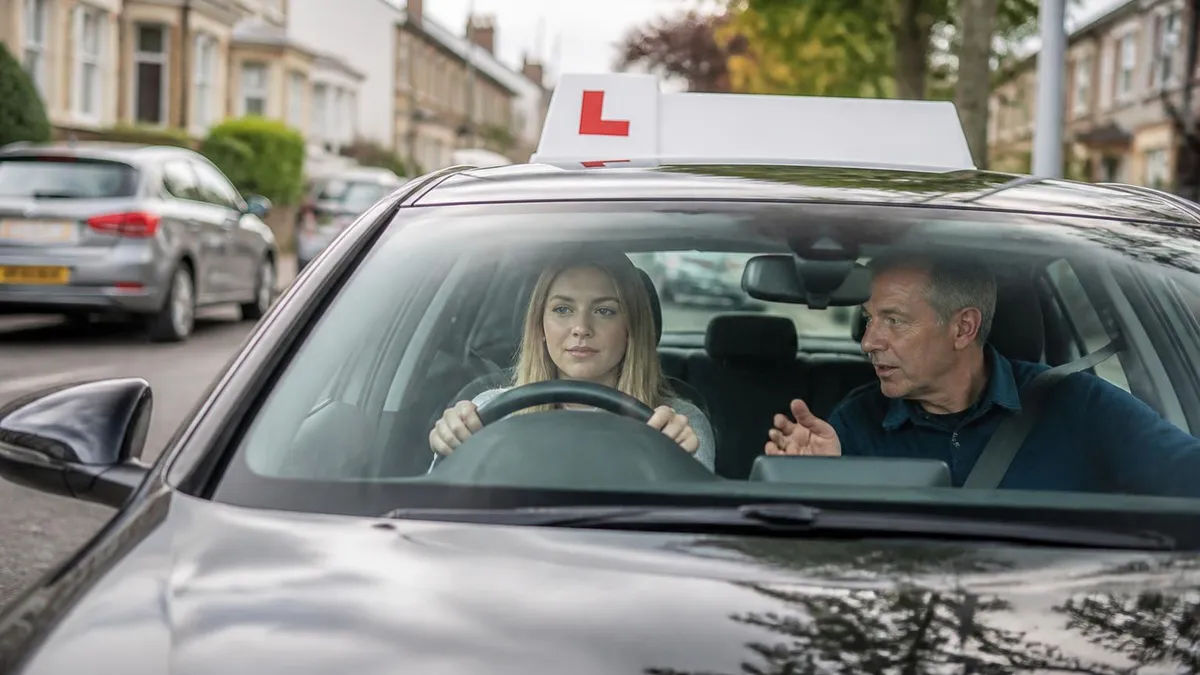
Preparing the Night Before vs. Rushing on the Morning
- +Your licence is ready and you avoid a panicked last-minute search through drawers
- +You can double-check name and date of birth match the booking reference without time pressure
- +You know exactly how long the journey will take and where to park
- +You arrive calm, rested, and with time to settle before check-in
- +You have time to eat a proper breakfast, which aids concentration and memory recall
- +Any issues with your licence — damage, discrepancy — are discovered with time to resolve them
- −Requires a small amount of discipline the evening before a potentially stressful day
- −If your licence is lost, discovering it the night before leaves limited time to resolve it
- −Over-preparing or excessive anxiety the night before can disrupt your sleep quality
- −Arriving too early at some centres means waiting in a small reception area for a long time
- −Setting alarms too early can cause fatigue that impairs your test performance
- −Overthinking document requirements can create unnecessary stress if everything is already in order
Complete Theory Test Day Checklist
- ✓Locate your valid photocard driving licence the night before and place it somewhere you cannot miss it.
- ✓Verify that your full name and date of birth on your licence match exactly what you entered when booking.
- ✓If you hold a non-GB licence, pack both your foreign licence and your valid passport.
- ✓Plan your route to the test centre and check for roadworks or parking restrictions on the day.
- ✓Set your alarm to arrive at least 15 minutes before your scheduled test appointment.
- ✓Wear comfortable, quiet clothing that will not distract you or other candidates during the test.
- ✓Pack a small, clear water bottle — the only refreshment permitted at the test desk.
- ✓Charge your phone fully and keep a screenshot of your booking confirmation accessible in your bag.
- ✓Remove your smart watch or any wearable technology before leaving home — you cannot wear it in the test.
- ✓Review the Highway Code stopping distance rules and road sign categories on the morning of your test.
Name Mismatches Are the Number One Reason for Refused Entry
Even a minor discrepancy between the name on your photocard driving licence and the name used in your DVSA online booking — such as a missing middle name, a hyphenated surname entered differently, or a nickname used at registration — can result in the test centre refusing to let you sit your test. Always copy your name directly from your licence when booking, and update your licence through the DVLA before booking if your name has recently changed.
Even well-prepared candidates make avoidable mistakes on theory test day, and understanding the most common pitfalls can help you sidestep them entirely. The single most frequent reason candidates are turned away at UK DVSA theory test centres is bringing an expired or invalid driving licence. It is easy to overlook the expiry date on a photocard — particularly if you have held it for several years and never needed to present it for official purposes. Check the expiry date printed on the back of your licence well in advance of your booking date.
A second common mistake is arriving at the wrong test centre. DVSA theory tests are conducted at dedicated Pearson VUE test centres, which are entirely separate from the practical driving test centres managed by the DVSA. Some towns have both types of facility, and in larger cities they may be located some distance apart. When you receive your theory test booking confirmation, save the full address of the Pearson VUE centre — not just the town name. GPS navigation to a wrong building has caused candidates to miss their slot with no refund.
Candidates also sometimes misread the test time in their confirmation email. The UK DVSA booking system uses 24-hour time in some communications and 12-hour time in others, leading to AM/PM confusion. A small number of candidates have arrived at 2:30 PM for a test booked at 10:30 AM, or vice versa. Read your confirmation carefully, note the time and date clearly in your calendar, and check it again the morning of your test. Setting a calendar reminder 24 hours in advance as well as a morning alarm on test day is good practice.
Bringing a debit card instead of a photocard driving licence is a surprisingly common error — especially among younger candidates who habitually grab their bank card rather than their licence when leaving the house. A bank card, even a photo ID version issued by some banks, is not accepted by the DVSA as valid identification for the theory test under any circumstances. Only your driving licence (and passport if required) satisfies the identity check. Practise grabbing your licence automatically when preparing to leave on test day.
Another overlooked pitfall is failing to account for traffic delays. DVSA Pearson VUE centres run on a tight schedule, and if you are more than a few minutes late your test slot may be given to a standby candidate. Unlike some private exam providers, the DVSA does not offer grace periods for late arrivals. If you know you are going to be seriously delayed, call the test centre directly using the number in your confirmation email — in rare circumstances they may be able to hold your slot briefly or reschedule without full fee forfeiture, but this is not guaranteed.
Some candidates also forget that the theory test pass certificate has a two-year validity period. If you pass your theory test and then do not take (or pass) your practical test within two years, your theory test certificate expires and you must retake and pass the theory test again from scratch before booking another practical test. This catches candidates who experience long waiting times for practical test slots, particularly in areas with high demand. Factor this timeline into your overall driving test plan.
Finally, many candidates underestimate the hazard perception section of the theory test. Unlike the multiple-choice questions, which you can revise from a book, hazard perception requires repeated practice with actual video clips. There is a specific technique involved: you must click when you first spot a developing hazard, not when it has fully developed. Clicking too late — or clicking repeatedly in a frantic pattern, which the system detects as cheating — costs you marks. Dedicated hazard perception practice using DVSA-approved software is the most effective preparation strategy.
The DVSA will not refund your £23 theory test fee if you are turned away for incorrect ID, arrive late, or cancel with fewer than three clear working days' notice. Smart watch violations can also result in your test being terminated mid-session with no refund and a potential flag on your record. Always prepare your documents the night before and arrive at least 15 minutes early to protect your investment and your test slot.
Once you have passed your theory test, the next phase of your driving journey begins. Your printed pass certificate — handed to you immediately at the test centre — is valid for exactly two years from the date of issue. Within that window, you must book and pass your practical driving test.
If you allow the certificate to lapse, there are no extensions or deferrals; you simply have to retake and pass the theory test again. For this reason, many driving instructors recommend booking your practical test as soon as you feel ready, rather than waiting until your theory certificate is approaching its expiry date.
At your practical driving test, the examiner will ask to see your photocard driving licence again. They will also ask for your theory test pass certificate number, which is printed on the certificate you receive on theory test day. You do not need to physically produce the certificate at the practical test — the examiner enters the certificate number into the DVSA system to verify its validity electronically. However, keeping the certificate safe is still sensible, as you will need the reference number if there is any query about your eligibility.
If you fail your theory test on the first attempt, you must wait at least three working days before you can rebook. There is no limit on the number of times you can sit the theory test, though you will pay the £23 fee each time. Most candidates who fail do so by a narrow margin in either the multiple-choice section or the hazard perception section — rarely both simultaneously. Review the feedback printed on your result slip carefully, as it indicates which topic areas you scored lowest in, allowing you to focus your revision for the next attempt.
The DVSA provides an official theory test revision app, which is widely regarded as the most reliable revision tool available. It includes the full official question bank — more than 700 questions — along with mock tests, hazard perception practice clips, and topic-by-topic study modules. Third-party apps and websites vary considerably in quality and accuracy; some use outdated question banks that no longer reflect current DVSA theory test content. Always cross-reference any third-party resource against the official DVSA revision materials.
For candidates retaking the theory test after a previous pass certificate has expired, it is worth noting that the exam format and question bank are updated periodically by the DVSA. Do not assume that your previous study materials are still fully current — particularly the Highway Code sections, which have been revised in recent years to reflect updated rules around pedestrian priority, cycling infrastructure, and electric vehicles. The most recent Highway Code updates came into force in January 2022 and introduced several changes to the rules that appear directly in the theory test multiple-choice questions.
Booking your theory test is done exclusively through the official DVSA website. Be cautious of third-party booking websites that charge additional fees — some are legitimate comparison tools, but others add significant mark-ups to the official £23 fee without providing any additional value. Always verify that you are booking through the official GOV.UK DVSA theory test booking service before entering your payment details. The URL should begin with gov.uk/book-theory-test.
For a comprehensive overview of what the test involves from start to finish — including the full syllabus, how the hazard perception scoring works, and the latest pass rates by category — the official DVSA guidance is your most reliable source. Combine that with consistent practice across all topic areas, and your chances of passing first time are considerably higher than the average 47% first-attempt pass rate. Preparation, not luck, is the decisive factor on theory test day.
With your documents prepared and your knowledge of the test process clear, the final piece of the puzzle is making sure your actual theory knowledge is as strong as possible on test day. The DVSA theory test covers a wide range of topics drawn from the Highway Code, and the most effective candidates do not just memorise answers — they develop a genuine understanding of the rules and why they exist. This deeper understanding helps when you encounter a question phrased differently from the revision version you practiced.
In the days leading up to your test, focus your energy on the topic areas where you are weakest. Most official revision apps allow you to track your performance by category, so you can quickly identify whether you are struggling with motorway rules, vehicle loading limits, first aid procedures, or eco-friendly driving techniques. Spend more time on your weak areas rather than repeatedly practising questions you already know well. An hour of targeted revision in a weak area is worth far more than two hours of comfortable practice in a strong one.
The night before your test, avoid an intense cramming session. Research on exam performance consistently shows that sleep consolidates memory more effectively than late-night revision. A moderate review of key facts — speed limits, stopping distances, drink-drive limits — followed by a good night's sleep will serve you better than staying up until midnight reviewing the entire Highway Code. Set your documents out, set your alarms, and give your brain the rest it needs to perform at its best the next morning.
On the morning of the test itself, a proper breakfast is more important than many candidates realise. The theory test requires sustained concentration for nearly 90 minutes — the 57-minute multiple-choice section followed by the hazard perception clips. Low blood sugar impairs concentration, reaction time, and recall. Eat a balanced meal that includes protein and slow-release carbohydrates — eggs on toast, porridge with fruit, or a similar breakfast that will keep your energy steady throughout the test session without making you feel sluggish.
During the multiple-choice section, manage your time carefully. You have 57 minutes for 50 questions, which is just over a minute per question. Do not spend too long on any single question — use the flag-for-review function to mark questions you are unsure about, complete the rest of the section, and then return to flagged questions at the end. Many candidates find that their first instinct is correct, and overthinking flagged questions often leads to changing a right answer to a wrong one. Trust your preparation.
For the hazard perception section, remember that each clip contains one developing hazard that scores up to five points, except for one clip which contains two developing hazards. You score points by clicking as soon as you identify a hazard that is beginning to develop — not after it has fully materialised into a dangerous situation. The scoring window opens early and closes quickly, so the habit of anticipating hazards rather than reacting to them is exactly the skill you need. Practise this with video clips rather than just reading about the technique.
After the test is over, regardless of the outcome, take a moment to acknowledge the effort you put in. If you pass, protect your certificate and book your practical test as soon as you are ready. If you do not pass on the first attempt, use the detailed feedback on your result slip to guide your next revision phase. The vast majority of candidates who fail once go on to pass on their next attempt — the experience of sitting the real test, combined with targeted additional revision, makes the second attempt significantly more likely to succeed.
DVSA Questions and Answers
DVSA Theory Test: What It Covers, How to Prepare, and What to Expect on Test Day
How to Change Theory Test Date: Complete DVSA Rebooking Guide for 2026
Driving Test Centre Near Me: How to Find, Book, and Prepare for Your Local DVSA Centre (2026)
UK Theory Test Pass Mark: Car, Bike, LGV, PCV & ADI Scores
Driving Lessons Intensive Course Birmingham: Complete UK Guide to Fast-Track Your Licence in 2026
About the Author
Licensed Driving Instructor & DMV Test Specialist
Penn State UniversityRobert J. Williams graduated from Penn State University with a degree in Transportation Management and has spent 20 years as a certified driving instructor and DMV examiner consultant. He has personally coached thousands of applicants through written knowledge tests, skills assessments, and commercial driver licensing programs across more than 30 states.