
Driving Test Centre Near Me: How to Find, Book, and Prepare for Your Local DVSA Centre (2026)
🏆 Find your nearest driving test centre near me, compare pass rates, book the right slot, and learn what to expect on test day — full 2026 UK guide.
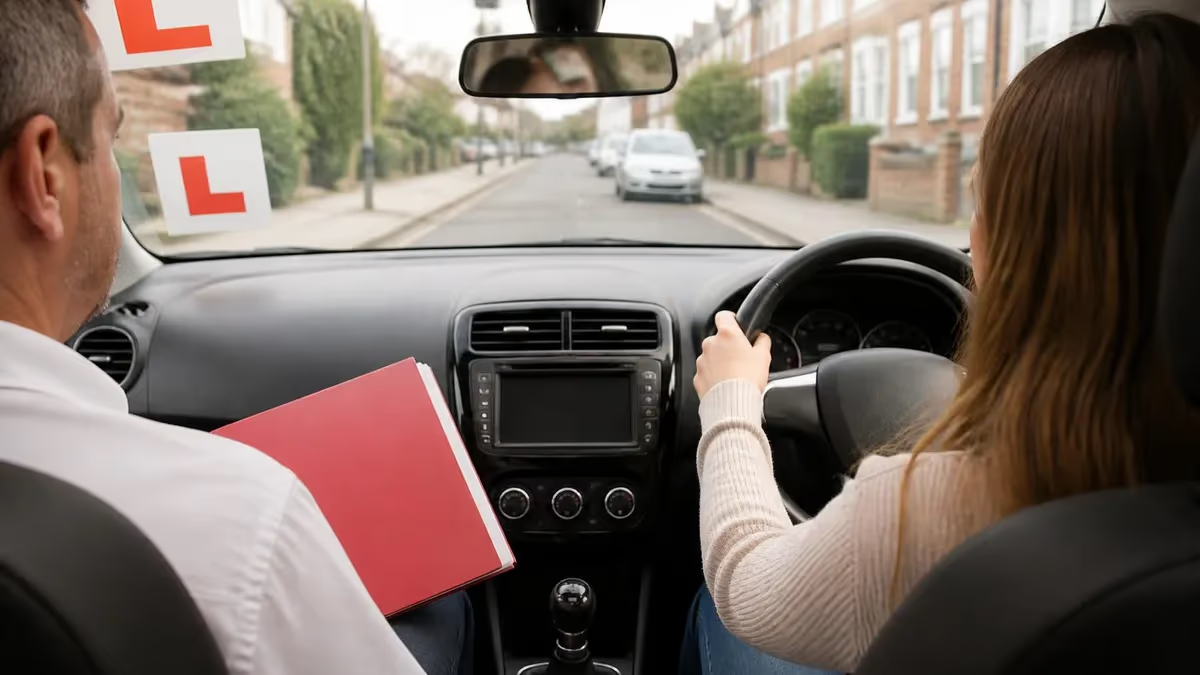
Searching for a driving test centre near me is usually the first practical step any UK learner takes once they have passed the theory test and feel ready to book the practical. The DVSA operates around 320 practical test centres across England, Scotland, and Wales, and the one you pick can shape your test-day experience more than almost any other decision. Centre choice affects routes, traffic density, manoeuvre availability, examiner pool, and even your statistical chance of passing. Practice with the free DVSA UK Driving Theory practice test on PracticeTestGeeks (7 questions with answer explanations).
Most learners type the phrase into Google expecting a single closest result, but the reality is more nuanced. A centre five miles from your home might have a six-month waiting list, while one twelve miles away could offer slots next week with a higher pass rate. Understanding how to compare centres, read DVSA data, and time your booking is the difference between testing in three weeks and testing in three months.
This guide walks through everything you need to know about finding, evaluating, and booking your local Theory Test Centre counterpart for the practical exam. We cover how the DVSA assigns availability, why some centres consistently outperform others, what equipment and identification you must bring, and how to use route familiarisation to your advantage in the final weeks before test day.
You will also learn the official DVSA tools for locating centres, including the GOV.UK booking portal, the centre finder map, and the published pass-rate tables updated each year. We compare urban centres in London, Manchester, and Birmingham against rural alternatives in places like Yeadon, Hereford, and Llandrindod Wells, where pass rates can run twenty percentage points higher.
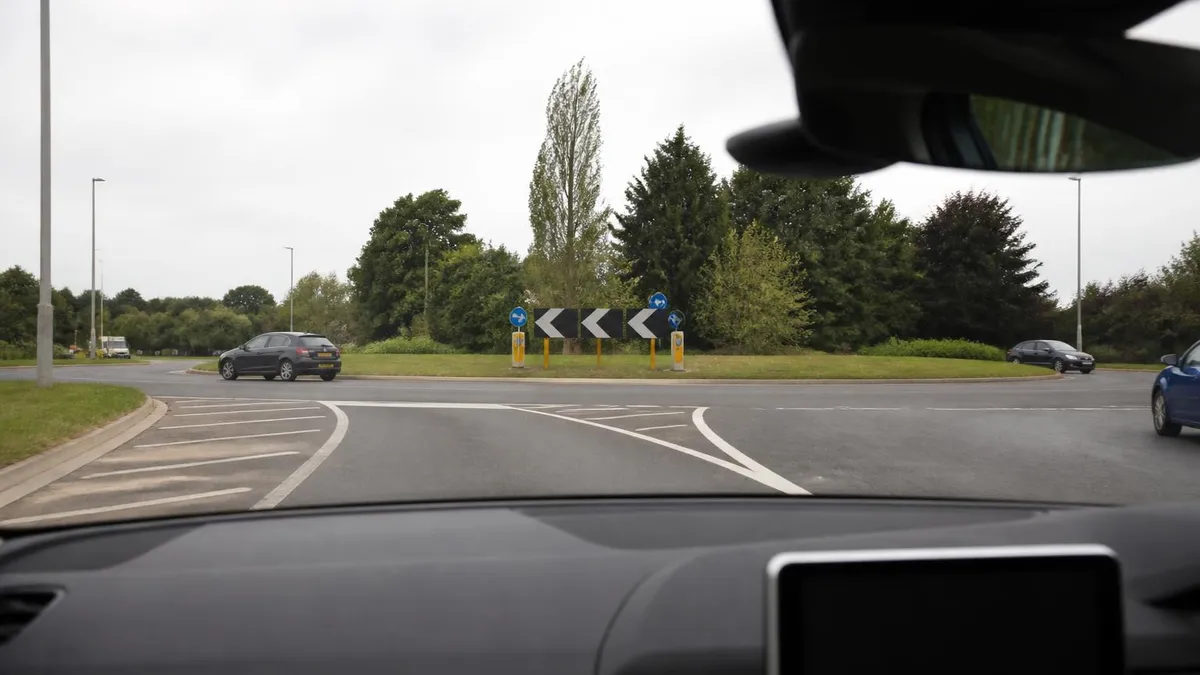
Booking the right centre is only half the work. The other half is preparing for the specific local conditions you will face — narrow village lanes, multi-lane roundabouts, dual-carriageway entries, or tram lines depending on where you sit. We explain how to research test routes legally, what your instructor should drill in the final ten lessons, and why mock tests run in the actual catchment area dramatically improve first-time pass odds.
By the end of this article you will know how to identify the best practical test centre near me for your circumstances, how to secure a slot that does not require a six-month wait, and how to walk into the building on test day feeling like you have already driven the route. The DVSA does not publish test routes officially anymore, but there are plenty of ways to prepare intelligently and legally.
Whether you are a first-time learner in a busy city, an adult returner switching from automatic to manual, or someone whose previous test was cancelled and needs to rebook fast, the information below applies. The 2026 booking system, fee structure, and cancellation rules are covered in full, along with the small print most learners discover only when something goes wrong.
Free DVSA UK Driving Theory Study Tools
Interactive DVSA UK Driving Theory resources on PracticeTestGeeks, free to start:
- DVSA UK Driving Theory flashcards — review key terms and concepts card by card
- DVSA UK Driving Theory study guide — topic-by-topic overview of what the exam covers
- DVSA UK Driving Theory cheat sheet — one-page printable summary for last-minute review
"To pass a practical driving test you must demonstrate that you can drive safely, competently and independently. You will be assessed on your ability to obey the rules of the road and show consideration for other road users."
— DVSA Car Driving Test Guidance (GOV.UK), 2026
DVSA: upcoming dates and official changes
- Updated Oct 19, 2026: Eligibility (Car practical driving test) is now Theory pass usually required; 185 days' residency in England, Wales or Scotland (previously Theory pass usually required; 185 days' GB residency).
- Updated Oct 19, 2026: Time limit (Independent driving) is now 20 to 35 minutes (previously 20 to 35 minutes).
- Updated Oct 19, 2026: Eligibility is now Age 17+ (16 with higher-rate PIP mobility); provisional licence required (previously Age 17+ (16 with higher-rate PIP mobility), provisional licence required).
Facts verified Oct 20, 2026 against Driver and Vehicle Standards Agency (DVSA), GOV.UK. Dates that have passed are removed automatically.
- The hazard perception part of the UK driving theory test consists of 14 video clips. (Driver and Vehicle Standards Agency (DVSA), GOV.UK)
- The UK driving theory test multiple-choice part has 50 questions. (Driver and Vehicle Standards Agency (DVSA), GOV.UK)
- The UK car practical driving test involves driving for around 35 minutes. (Driver and Vehicle Standards Agency (DVSA), GOV.UK)
- The independent driving part of the UK car practical test lasts 20 to 35 minutes. (Driver and Vehicle Standards Agency (DVSA), GOV.UK)
- The pass mark for the hazard perception part of the UK driving theory test is 44 out of 75. (Driver and Vehicle Standards Agency (DVSA), GOV.UK)
- The pass mark for the multiple-choice part of the UK driving theory test is 43 out of 50. (Driver and Vehicle Standards Agency (DVSA), GOV.UK)
- The UK car practical driving test costs £62 on weekdays. (Driver and Vehicle Standards Agency (DVSA), GOV.UK)
- The UK car theory test costs £23. (Driver and Vehicle Standards Agency (DVSA), GOV.UK)
- After failing the UK driving theory test you must wait at least 3 working days before taking it again. (Driver and Vehicle Standards Agency (DVSA), GOV.UK)
Facts verified Oct 20, 2026 against Driver and Vehicle Standards Agency (DVSA), GOV.UK. Dates that have passed are removed automatically.
DVSA Exam at a Glance
| Item | Detail | Official source |
|---|---|---|
| Number of questions (Hazard perception) | 14 video clips | Driver and Vehicle Standards Agency (DVSA), GOV.UK |
| Number of questions (Multiple-choice questions) | 50 multiple-choice questions | Driver and Vehicle Standards Agency (DVSA), GOV.UK |
| Time limit (Car practical driving test) | Around 35 minutes of driving | Driver and Vehicle Standards Agency (DVSA), GOV.UK |
| Time limit (Independent driving) | 20 to 35 minutes | Driver and Vehicle Standards Agency (DVSA), GOV.UK |
| Time limit (Multiple-choice questions) | 57 minutes | Driver and Vehicle Standards Agency (DVSA), GOV.UK |
| Passing score (Hazard perception) | 44 out of 75 | Driver and Vehicle Standards Agency (DVSA), GOV.UK |
| Passing score (Multiple-choice questions) | 43 out of 50 | Driver and Vehicle Standards Agency (DVSA), GOV.UK |
| Exam fee (Car practical driving test (weekday)) | £62 on weekdays | Driver and Vehicle Standards Agency (DVSA), GOV.UK |
| Exam fee (Car theory test) | £23 | Driver and Vehicle Standards Agency (DVSA), GOV.UK |
| Retake policy | Wait at least 3 working days | Driver and Vehicle Standards Agency (DVSA), GOV.UK |
| Validity | 2 years | Driver and Vehicle Standards Agency (DVSA), GOV.UK |
| Eligibility | Age 17+ (16 with higher-rate PIP mobility); provisional licence required | Driver and Vehicle Standards Agency (DVSA), GOV.UK |
| Eligibility (Car practical driving test) | Theory pass usually required; 185 days' residency in England, Wales or Scotland | Driver and Vehicle Standards Agency (DVSA), GOV.UK |
| Score release | At the test centre, same day | Driver and Vehicle Standards Agency (DVSA), GOV.UK |
| Registration opens | Online booking 6am–11:40pm | Driver and Vehicle Standards Agency (DVSA), GOV.UK |
| Testing window (Car practical driving test) | Released 24 weeks ahead, 6am every Monday | Driver and Vehicle Standards Agency (DVSA), GOV.UK |
Facts verified Oct 20, 2026 against Driver and Vehicle Standards Agency (DVSA), GOV.UK. Dates that have passed are removed automatically.
UK Driving Test Centres by the Numbers
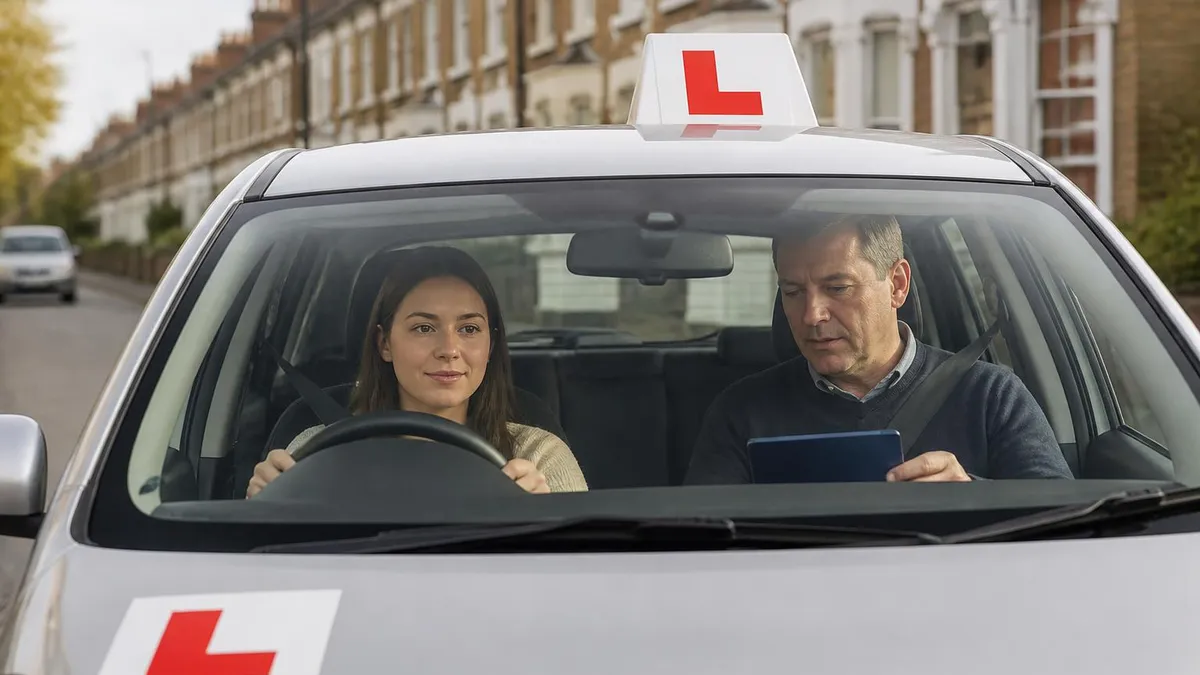
How DVSA Practical Test Centres Are Organised
Located in cities like London, Birmingham, Manchester, and Glasgow. These centres run 40-60 tests per day across multiple examiners, with complex routes covering dual carriageways, bus lanes, and dense junctions. Pass rates typically sit between 35-45 percent due to traffic complexity.
Found on the edge of towns like Reading, Norwich, or Leeds. They balance residential roads, A-road sections, and one or two roundabouts. Pass rates average 45-55 percent. Waiting lists tend to be shorter than city centres but still stretch 12-20 weeks during peak periods.
Smaller centres in places like Llandrindod Wells, Pwllheli, or Inverness. Routes use country lanes, single-track roads, and small market towns. Pass rates can exceed 65 percent, making them popular for learners willing to travel. Slots open less frequently but waits are usually shorter.
A handful of centres support large vehicle, motorcycle module 1 and 2, or trailer tests. These often share premises with car practical centres but operate separate booking calendars and examiner pools. Always verify the test type before booking to avoid showing up at the wrong building.
DVSA occasionally opens temporary test sites to clear backlogs, particularly after disruption events. These run for a defined period, use modified local routes, and accept overflow bookings from nearby permanent centres. Slots appear with little notice on the booking portal.
Finding a driving test centre near me starts with the official GOV.UK service, which lets you search by postcode and returns a map of nearby centres with rough driving times. The tool is free, does not require an account, and is the only authoritative list — third-party sites sometimes show closed centres or incorrect addresses. Always cross-check before you base a decision on what you read elsewhere.
When you enter your postcode, the system displays centres ordered by proximity, but proximity is not the same as suitability. A centre two miles closer might require driving through a complex city centre to reach, while one slightly further sits beside a quiet A-road. Think about how you will travel to the test on the day and whether your instructor's car or your own vehicle will handle the approach comfortably without raising your nerves before you even arrive.
Once you have a shortlist of three or four centres, the next step is checking real-time slot availability. The DVSA booking portal shows the next available date for each centre, but this date can shift hour by hour as cancellations come in. Many learners use cancellation-checking apps or refresh the official site at off-peak times like 6am to catch newly released slots without paying third-party fees.
You should also read the published pass-rate statistics, released annually by the DVSA. These break down performance by centre, age group, and gender, and they reveal patterns that are not obvious from a map alone. A centre with a 60 percent pass rate is not automatically the right choice — it might be 90 minutes away, have older examiners with stricter standards, or use routes that do not match what your instructor has trained you on.
If you are unsure where to start, ask your driving instructor which centres they prefer and why. Experienced instructors have driven dozens of test routes and know which centres reward smooth, defensive driving versus those that punish hesitation. They will often have a clear opinion on which centre suits your current skill level, and they may even offer mock tests run on actual local routes. Look at the DVSA Car Practical Test guide for the full route and assessment criteria.
Distance matters more than learners assume. Driving 45 minutes to an unfamiliar centre on test day adds fatigue, eats time you should be spending warming up, and increases the chance of unexpected traffic disruption. Most instructors recommend choosing a centre within 30 minutes of your normal lesson area so the route to the centre itself is something you have driven before. Familiarity reduces cognitive load and frees mental bandwidth for the test.
Finally, consider parking, drop-off zones, and waiting facilities. Some centres are tucked inside industrial estates with limited public transport, while others sit on main roads with cafes and toilets nearby. If a parent or instructor is bringing you, check whether they can wait inside or must stay in the car. Small logistical details often determine how relaxed you feel in the ten minutes before your examiner calls your name.
DVSA Practice Test Questions
Prepare for the DVSA - UK Driving Theory Test exam with our free practice test modules. Each quiz covers key topics to help you pass on your first try.
DVSA Eco-Friendly Driving and Vehicle Loading
DVSA Exam Questions covering Eco-Friendly Driving and Vehicle Loading. Master DVSA Test concepts for certification prep.
DVSA Hazard Awareness
Free DVSA Practice Test featuring Hazard Awareness. Improve your DVSA Exam score with mock test prep.
DVSA Incidents, Accidents and First Aid
DVSA Mock Exam on Incidents, Accidents and First Aid. DVSA Study Guide questions to pass on your first try.
DVSA Motorway Rules and Smart Motorways
DVSA Test Prep for Motorway Rules and Smart Motorways. Practice DVSA Quiz questions and boost your score.
DVSA Rules of the Road (Highway Code)
DVSA Questions and Answers on Rules of the Road (Highway Code). Free DVSA practice for exam readiness.
DVSA - UK Driving Theory Hazard Awareness ...
DVSA Mock Test covering - UK Driving Theory Hazard Awareness and Perception. Online DVSA Test practice with instant feedback.
DVSA - UK Driving Theory Motorway Rules an...
Free DVSA Quiz on - UK Driving Theory Motorway Rules and Regulations. DVSA Exam prep questions with detailed explanations.
DVSA - UK Driving Theory Road and Traffic ...
DVSA Practice Questions for - UK Driving Theory Road and Traffic Signs. Build confidence for your DVSA certification exam.
DVSA - UK Driving Theory Rules of the Road
DVSA Test Online for - UK Driving Theory Rules of the Road. Free practice with instant results and feedback.
Comparing Driving Test Centres Near Me
Pass rates vary dramatically by centre. National average sits at 48.4 percent for car tests, but individual sites range from below 30 percent in inner London to above 75 percent in remote Welsh and Scottish centres. The DVSA publishes these figures every August, broken down by centre, gender, and age group. Higher rural pass rates often reflect simpler routes rather than easier examiners.
Do not chase pass rates blindly. Travelling two hours to a 70 percent centre only helps if you have practised on roads similar to its routes. A 50 percent centre near your usual lesson area is statistically better than a 65 percent centre on roads you have never driven. Local familiarity outweighs raw percentages in almost every case for first-time candidates.
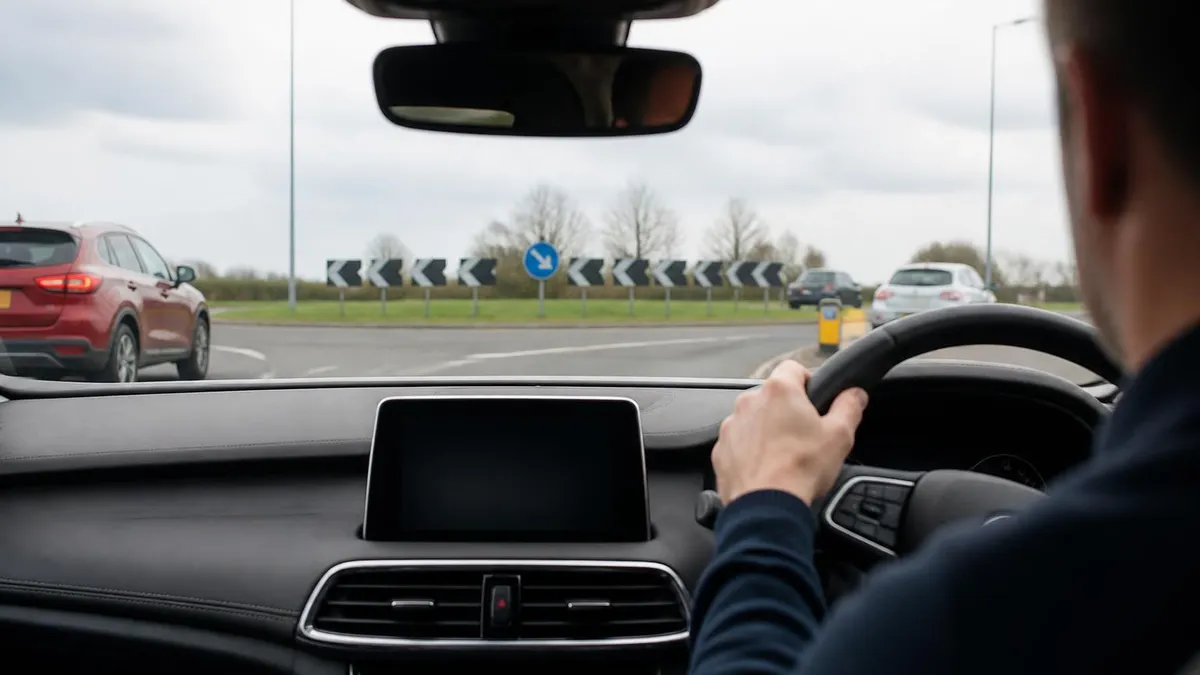
Should You Choose the Closest Centre or a Further One?
- +Familiar local roads reduce test-day anxiety and cognitive load
- +Shorter travel means less fatigue before the test starts
- +Easier to schedule mock tests on the actual route area
- +Instructor likely knows the routes inside out from years of pupils
- +Parents or supporters can attend more easily
- +Cheaper to reach if using public transport or fuel
- +Less chance of traffic disruption causing late arrival
- −Closest centre may have the longest waiting list in your region
- −Local pass rates may be lower than centres 20-30 miles away
- −Complex urban routes can intimidate newer drivers
- −Some local centres lack covered waiting rooms or parking
- −Examiner pool is smaller so personality clashes are harder to avoid
- −Limited slot availability outside working hours
- −Higher demand means cancellation slots disappear within minutes
Pros and Cons at a Glance
| Pros | Cons |
|---|---|
| Familiar local roads reduce test-day anxiety and cognitive load | Closest centre may have the longest waiting list in your region |
| Shorter travel means less fatigue before the test starts | Complex urban routes can intimidate newer drivers |
| Easier to schedule mock tests on the actual route area | Some local centres lack covered waiting rooms or parking |
| Instructor likely knows the routes inside out from years of pupils | Examiner pool is smaller so personality clashes are harder to avoid |
| Parents or supporters can attend more easily | Limited slot availability outside working hours |
| Cheaper to reach if using public transport or fuel | Higher demand means cancellation slots disappear within minutes |
Driving Test Centre Day Checklist
- ✓Bring your photocard provisional driving licence — no licence, no test
- ✓Confirm your theory test pass certificate is still valid (two-year window)
- ✓Arrive 10-15 minutes early to settle nerves and use the toilet
- ✓Make sure the vehicle has L-plates fitted front and rear
- ✓Check tyres, lights, indicators, brakes, and screenwash before leaving home
- ✓Bring your booking confirmation email or reference number
- ✓Wear comfortable clothing and footwear suitable for pedal control
- ✓Clean the windscreen, mirrors, and number plate thoroughly
- ✓Have valid insurance and MOT documents for the test vehicle
- ✓Disable phone notifications and silence any in-car alerts
- ✓Discuss any last-minute concerns with your instructor before entering
- ✓Take a bottle of water but avoid large meals immediately before
Check the booking portal between 6am and 7am
DVSA system maintenance releases newly cancelled slots in the early morning hours. Learners who check around 6am-7am regularly find dates weeks earlier than the headline 'next available' figure. Cancellations also appear throughout the day, especially Sunday evenings, but the morning window is the most consistent for spotting fresh availability without paying for a third-party cancellation service.
Route familiarisation is one of the most underused preparation techniques among UK learners. While the DVSA no longer publishes official test routes, the geographic area used by each centre is predictable, and your instructor will know it well. Spending the final four or five lessons inside that area driving every plausible road type — residential, A-road, dual carriageway, roundabout, urban one-way — builds the automatic responses that pass tests.
Start by asking your instructor to map out the typical 5-7 mile radius the centre uses. Then break the area into route segments, focusing on tricky junctions, blind bends, and zones where examiners commonly call manoeuvres. Bay parking, parallel parking, pulling up on the right, and the emergency stop each have favoured locations near every centre, and your instructor will recognise them after years of taking pupils through the same streets.
Use Google Street View at home to walk through unfamiliar junctions before driving them. Identify the road markings, lane assignments, and any unusual features like filter lanes, bus gates, or contraflow cycle lanes. Seeing a junction in advance reduces hesitation when you encounter it under test pressure. Many learners report that simply recognising a road from prior study calms their nerves enough to drive it naturally on the day itself.
Independent driving — the 20-minute section where you follow sat-nav directions or road signs — is heavily influenced by route familiarity. Examiners pick destinations you might reasonably encounter, and confidence with the layout means you focus on driving rather than navigation. Practise following sat-nav directions during lessons even when you know the route, since the test specifically assesses your ability to handle the slight cognitive load of listening and driving simultaneously.
Manoeuvre locations are another underrated preparation area. Each centre has favoured streets for bay parking (often the centre car park itself or a nearby quiet residential road), for parallel parking (usually a wider residential street with consistent parked cars), and for pulling up on the right (a road wide enough to safely cross traffic). Knowing the typical streets means you will not be surprised by the surface, camber, or available space when the examiner gives the instruction.
Mock tests in the actual catchment area are the single most predictive practice activity. Ask your instructor to run a full 40-minute mock following test-style routes, manoeuvres, and independent driving section. Real examiners are not present, but the format mirrors the experience closely enough to expose weaknesses you can still fix. Many instructors offer a discounted mock test in the final week before the actual booking.
Finally, drive the route to the test centre itself at least twice before the day. Identify parking spaces, drop-off zones, and toilet locations. Time the journey at the same hour as your test slot so you account for traffic patterns specific to that time. Small details like knowing which entrance to use, where to wait, and which examiner door to approach reduce decision fatigue before the test even begins.

If you cancel or move your practical test with fewer than 10 full working days' notice, you forfeit the full fee and must pay again to rebook. DVSA counts Saturdays as working days for this rule, but not Sundays or bank holidays. Always check the exact cut-off date in your booking confirmation email so you do not lose money by miscounting weekends.
Booking, changing, and cancelling your practical test is handled entirely through the GOV.UK driving test booking service. You need your theory test pass certificate number, your provisional driving licence number, and a debit or credit card to pay the £62 weekday fee (£75 evenings, weekends, or bank holidays). Always book directly through the official portal — never pay a third party to book a slot for you, since the DVSA does not authorise reseller fees.
Once booked, you receive a confirmation email with your reference number, test date, time, and centre address. Save this email and consider taking a screenshot of the booking details onto your phone. The reference number is what staff use to find your record if you forget your licence or arrive without paperwork, and it speeds up any phone calls to the DVSA contact centre if something goes wrong.
Changing the date, time, or centre is possible through the same booking portal at no charge, provided you give 10 full working days' notice. The interface lets you swap to any other available slot at any UK centre, which is useful if a closer date opens up unexpectedly. Some learners book a deliberately distant date as insurance, then swap forward when a sooner cancellation appears — this is allowed and widely used. If you need to Change Theory Test Booking as well, the same notice rules apply to the theory exam.
Short-notice cancellations are unavoidable sometimes — illness, family emergencies, or vehicle breakdowns happen. If you cancel with less than three working days' notice, the fee is forfeited and you must pay again to rebook. The DVSA may waive this in exceptional circumstances with documentary evidence, but the default position is no refund, so build flexibility into your schedule wherever possible to avoid the cost of last-minute changes.
If the DVSA cancels your test — typically due to examiner unavailability, weather, or vehicle issues at the centre — you receive an automatic rebooking offer plus compensation for out-of-pocket costs like lesson fees on the day. Keep receipts for anything you paid in connection with the cancelled test and claim through the GOV.UK service within 14 days. The compensation scheme is well-documented but underused by learners who do not realise they are entitled to it.
Special requirements like extra time, reading assistance, or sign language interpreters must be requested at the time of booking. Examiners can adjust the test format for medical conditions, learning differences, and language needs without affecting the pass standard. Declaring these accommodations early ensures the centre has the right examiner and equipment available on the day, and it does not appear on the test result or licence afterwards.
If you have moved or your local centre has closed, the booking portal lets you transfer your existing booking to a different centre without paying the fee again. This is handy for learners who relocate during the wait, switch instructors, or discover a closer centre with shorter availability. The transfer takes effect immediately and updates your confirmation email automatically. Always double-check the new address before test day to avoid arriving at the wrong site.
Practical preparation in the final two weeks before your test should focus less on learning new skills and more on consolidating what you already do well. Most learners who fail at this stage do so because of nerves, not technique — they have the ability but lose composure under examiner pressure. Build a daily routine that includes one driving lesson focused on weaker areas, twenty minutes of theory revision, and ten minutes of mental rehearsal visualising the test going smoothly.
Sleep matters more than most learners realise. The two nights before your test are the ones that count, not just the night immediately before. Avoid caffeine after midday on test day, eat a balanced meal an hour before, and arrive hydrated but not over-hydrated — the test lasts forty minutes with no breaks, so plan your liquid intake accordingly. Small physical preparations remove distractions that would otherwise undermine your concentration during critical moments.
Examiners are trained to be neutral and impartial, and they do not have pass quotas. The myth that examiners must fail a certain percentage of candidates is simply false. If you drive to the standard required, you will pass — even if the examiner says little, takes notes constantly, or asks you to perform manoeuvres in awkward locations. Treat the examiner as a passenger who has asked for a lift, not a judge looking for reasons to fail you on technicalities.
The most common faults at any centre are observation failures (especially at junctions and during manoeuvres), inappropriate speed (too slow as often as too fast), and poor anticipation of other road users. Drill these three areas in the final week. Have your instructor call out commentary while you drive, describing every mirror check, signal, and observation aloud. The verbalising reinforces habit and gives you something to focus on under test pressure.
On the morning of the test, run a short refresher drive of 30-45 minutes with your instructor immediately before the slot. This warms up your decision-making, settles any nervous tension, and lets you confirm the car feels right. Many learners pass after a calm warm-up drive and fail after sitting in a waiting room for an hour growing increasingly anxious. Movement and familiar action work better than passive waiting for nerve management. See our Practice Theory Test hub for free question banks if you need a final mental warm-up.
If you do not pass on the first attempt, the result is not a verdict on your driving — it is feedback. The examiner provides a debrief explaining exactly which faults caused the fail, and you can book a retest after a minimum 10-day waiting period. Roughly half of all first-time candidates fail, so the experience is statistically normal, and second-time pass rates rise sharply because learners address the specific weaknesses identified on attempt one.
Above all, remember that thousands of people pass at every centre every week. The driving test is designed to confirm safe, independent driving — not to catch out competent drivers. Trust your preparation, drive how you have been taught, and treat the test as the next lesson rather than a separate ordeal. The learners who pass first time consistently report that the test felt much like a normal drive once they relaxed into the first few minutes.
For a fuller set of questions on this topic, see our driving test centre near me resource.
Many readers pair this guide with the driving test centre near me to check their readiness before exam day.
You can continue preparing with the driving test centre near me, which includes answer explanations for every question.
Sample DVSA UK Driving Theory Practice Questions
Try these questions from our free DVSA UK Driving Theory practice tests. The correct answer and an explanation follow each question.
You are driving on a single carriageway road with double white lines in the centre. The line on your side is broken. When is it permissible to cross these lines?
- A. To overtake a vehicle travelling at 15 mph.
- B. To turn into a side road on the right.
- C. To overtake if you can complete the manoeuvre before the line on your side becomes solid.
- D. To park on the right-hand side of the road.
Answer: C. To overtake if you can complete the manoeuvre before the line on your side becomes solid.
According to the Highway Code (Rule 128), if the white line nearest to you is broken, you may cross the lines to overtake, but only if it is safe and you can complete the manoeuvre before reaching a solid white line on your side. Turning into a side road is also permitted, but overtaking is the more comprehensive correct action described. You must not park on the opposite side of the road, and the speed for overtaking slow-moving vehicles is specified as 10 mph or less.
You will not be using your car for several months and plan to keep it in your garage. To avoid paying for vehicle tax and insurance, what must you officially do?
- A. Inform your local council.
- B. Cancel your direct debits for tax and insurance.
- C. Make a Statutory Off Road Notification (SORN) to the DVLA.
- D. Return the number plates to the DVLA.
Answer: C. Make a Statutory Off Road Notification (SORN) to the DVLA.
To legally keep an untaxed and uninsured vehicle off a public road, you must make a Statutory Off Road Notification (SORN) to the DVLA. This declares that the vehicle is not in use.
What effect does tiredness have on your driving ability?
- A. It improves concentration as you try harder to focus
- B. It has no effect if you keep the window open
- C. It significantly increases your reaction time and impairs judgement
- D. It only affects you on long motorway journeys
Answer: C. It significantly increases your reaction time and impairs judgement
Tiredness significantly increases reaction times, impairs judgement, and can cause microsleeps where you briefly lose consciousness. It is a major factor in road collisions. The only effective countermeasure is to stop and rest.
When driving in wet conditions, what is the minimum time gap you should leave between your vehicle and the one in front?
- A. A one-second gap
- B. A two-second gap
- C. A three-second gap
- D. A four-second gap
Answer: D. A four-second gap
The Highway Code advises that in wet weather, you should double the normal two-second gap to at least a four-second gap. This is because your vehicle will take longer to stop on a wet surface, and the increased distance provides a safer stopping margin.
DVSA Questions and Answers
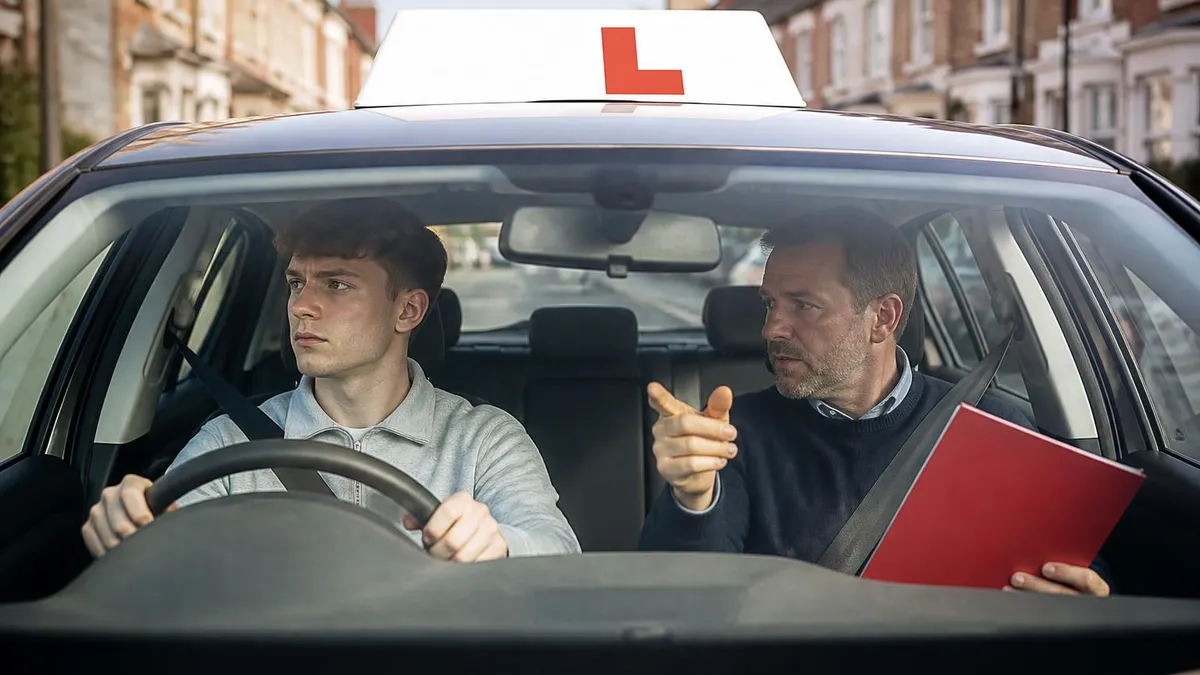

How this page was made: written with AI tools and published by Nathan Beja, founder of Practice Test Geeks, who is responsible for its content. Exam facts are checked against the official sources listed below. Not reviewed by a subject-matter expert. Editorial policy
Sources & references
Exam facts on this page (fees, format, dates, passing scores) are checked against these official sources; the date is our last check. Editorial policy
- gov.uk — Eligibility, registration, test dates, passing score, retake policy, score release, score validity, time limit, exam format · verified Oct 2026