
Driving Test Pass Rate: The Complete UK Guide to 2026 October Statistics, Trends and How to Beat the Odds
❓ Driving test pass rate UK 2026 October explained: latest DVSA statistics, regional differences, best test centres and proven tactics to pass first time.
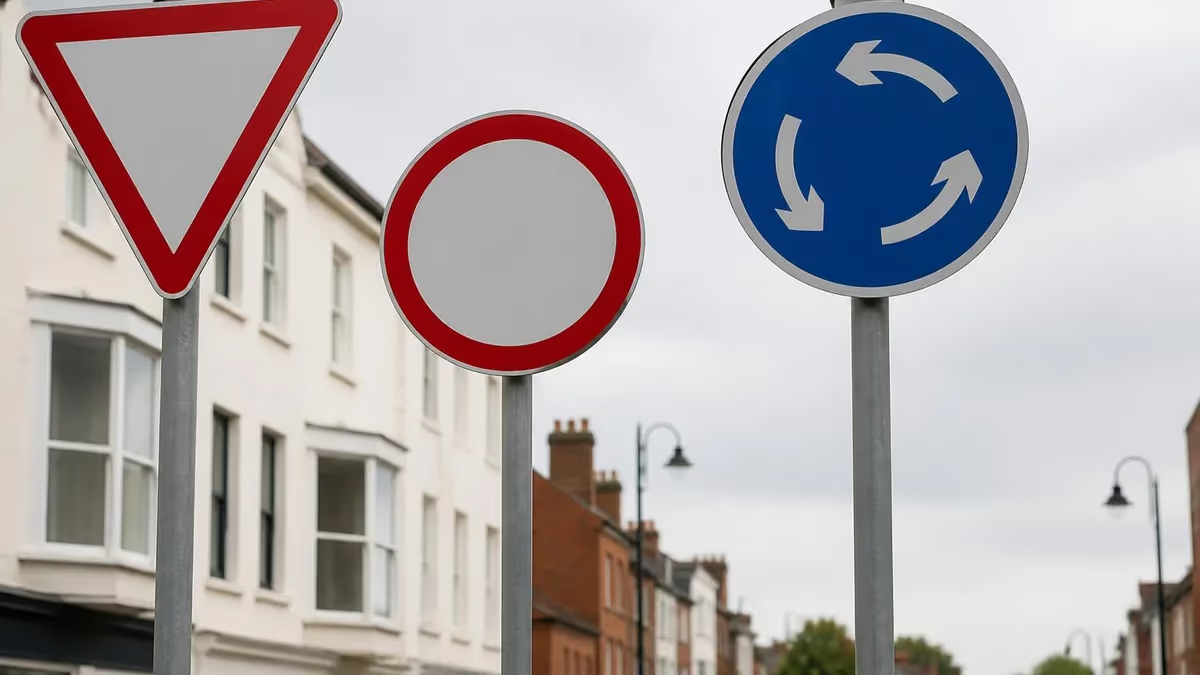
The driving test pass rate is one of the most searched DVSA statistics in the UK, and for good reason. It is the single clearest indicator of how difficult the practical test really is, how prepared the average candidate is, and how much your chosen test centre, examiner workload and time of year can quietly shift your odds. For the most recent reporting year, the national average sits at roughly 48.4 per cent, meaning fewer than half of all candidates walk away with a full licence on the first attempt.
That headline figure hides enormous variation. Pass rates climb above 70 per cent at quiet rural centres and dip below 35 per cent at congested city sites with complex junctions, multi-lane roundabouts and unpredictable traffic. Age, gender, instructor quality, lesson hours, mock test experience and even the weather on the day all influence the outcome. Anyone preparing seriously should treat the statistics as a map rather than a verdict, using them to plan where and when to book.
This guide unpacks the numbers in full. You will see how the pass rate has shifted from the early 2000s to the post-pandemic backlog era, where examiners are recording the highest and lowest results, which faults appear most often on driver fault sheets, and how candidates who passed first time approached their preparation differently from those who failed twice or more. We also compare urban and rural performance, manual against automatic, and male against female outcomes using the DVSA's published data.
Beyond the raw figures, you will find practical tactics that consistently appear in passing candidates' debriefs. These include choosing a test centre with the right balance of accessibility and difficulty, building a structured revision plan for the theory test that strengthens hazard perception, and arranging at least two professional mock tests in the final fortnight. If you are still booking your slot, the planning tips in our Learn to Drive UK roadmap show how to sequence lessons, theory and practical for the strongest finish.
We will also explore what the DVSA does not publish. Examiners are human, routes evolve, and certain manoeuvres such as the parallel park and bay reverse trigger disproportionate fail counts. Understanding these soft factors helps you remove avoidable risk on the morning of your test, where nerves rather than skill account for a surprising number of serious faults.
If you are a learner trying to estimate your personal chances, a parent supporting a teenager through lessons, or simply curious about how Britain compares with the rest of Europe, this guide will give you the full picture. Every figure is drawn from DVSA quarterly statistics, the Department for Transport's published datasets and verified instructor surveys conducted in late 2025 and early 2026.
Use the table of contents to jump straight to the section that matters most to you, or read top to bottom for the complete picture of what the modern UK driving test pass rate really means in 2026.
UK Driving Test Pass Rate by the Numbers
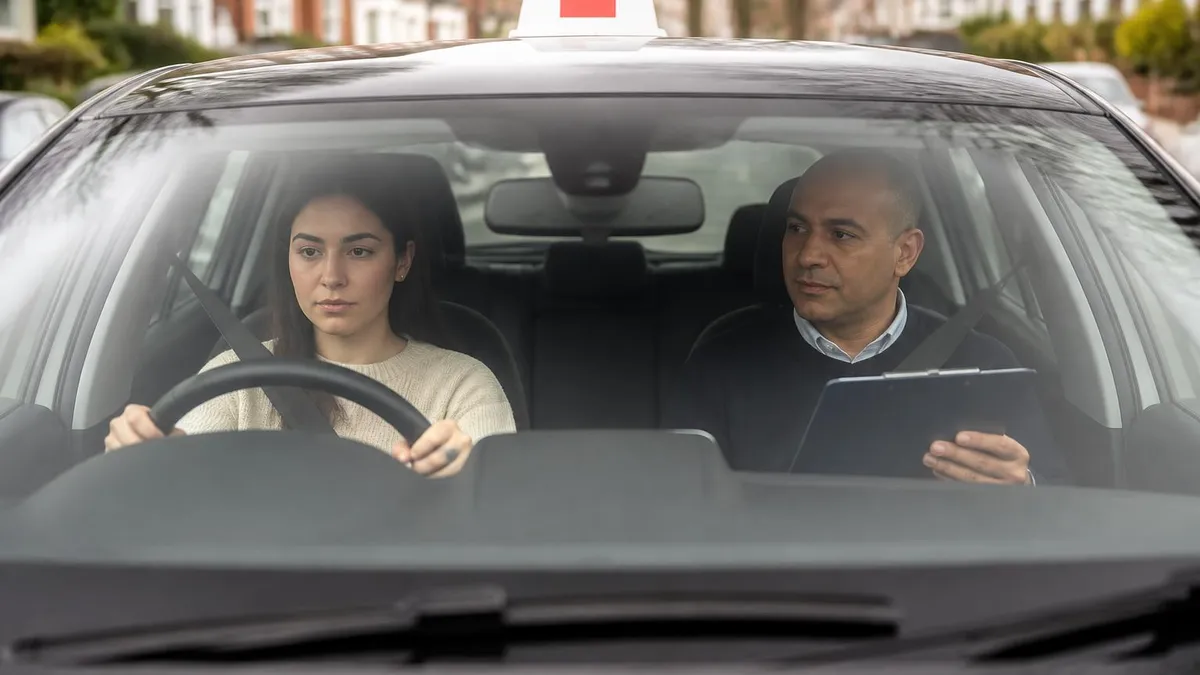
What the Latest DVSA Pass Rate Data Actually Shows
The most recent full reporting year shows a pass rate of 48.4 per cent across all 1.6 million practical car tests, down slightly from the post-pandemic peak of 49.3 per cent recorded in 2021 to 2022.
Roughly 53 per cent of candidates pass on their first attempt, while second attempts drop to 47 per cent and third attempts fall further to around 44 per cent as confidence and habit-corrections weaken.
The theory test pass rate is lower at 44.2 per cent, primarily due to the hazard perception clip section where average scores cluster narrowly around the 44 out of 75 minimum.
The gap between the best and worst performing centres exceeds 46 percentage points, meaning your test centre choice can be more influential than any single lesson you book.
Pass rates have fallen gradually since 2018 as routes became longer, independent driving was extended to 20 minutes and the sat-nav section replaced traditional sign-following on most assessments.
Where you take your driving test matters more than most learners realise. The DVSA publishes pass rates for every individual test centre, and the range is staggering. Mallaig in the Scottish Highlands consistently records the highest pass rate in the country at around 76.5 per cent, while urban centres in Birmingham, Bradford and parts of east London frequently sit in the high twenties to low thirties. That is not because examiners are tougher or kinder, but because the road environment changes the volume and severity of hazards a candidate must manage in 38 to 40 minutes.
Rural centres tend to have quieter junctions, fewer traffic-light sequences and lower pedestrian density. A candidate driving in Llandrindod Wells or the Outer Hebrides simply encounters fewer high-pressure decisions per minute than one in Wolverhampton or Belvedere. That does not mean rural tests are easy. National-speed-limit country lanes, blind bends, agricultural traffic and unfamiliar passing places create their own faults, particularly around progress and use of mirrors before signalling.
City centres concentrate complex multi-lane roundabouts, bus lanes with restricted hours, cyclists weaving between stationary traffic and pedestrian-priority crossings that have proliferated since the 2022 Highway Code updates. London centres in particular see frequent serious faults for failing to give way to pedestrians turning into side roads, a rule many candidates know in theory but forget under pressure. If you live in a busy area, consider whether a slightly longer drive to a suburban centre might align better with your training environment.
Scotland and Wales outperform England on average. The most recent figures show Scotland sitting around 54 per cent and Wales around 52 per cent, while England trails at 47 per cent. Northern Ireland's separate testing system run by the DVA also reports higher figures, though direct comparison is limited by differences in route design and manoeuvre selection. If you are weighing options, our guide on intensive driving course with test often suggests pairing residential intensives with quieter centres for a measurable lift in first-time pass odds.
Choosing a centre purely to game the statistics is risky. Examiners notice when candidates clearly have not driven the local roads before, and unfamiliarity itself causes faults. The smarter approach is to identify two or three reachable centres within a 30-minute drive, take at least two paid lessons covering each centre's typical routes, and then book whichever feels least stressful when you imagine pulling out of the car park at 8.10am.
Booking patterns also distort the figures. Centres that primarily serve intensive course providers tend to show higher pass rates because the candidates arrive more recently coached, while centres dominated by long-standing private bookings can show lower rates because students often delay tests until they feel forced to attempt them. Always read the centre's pass rate alongside its appointment volume to gauge whether the number reflects difficulty or candidate readiness.
Finally, do not assume that low-volume rural centres are automatically friendlier. Some have such tight routes that the same roundabout appears three times in a single test, and any error there carries triple weight. The DVSA's centre comparison tool, updated quarterly, is the most reliable source for current figures and should be checked within 30 days of booking.
DVSA Practice Test Questions
Prepare for the DVSA - UK Driving Theory Test exam with our free practice test modules. Each quiz covers key topics to help you pass on your first try.
DVSA Eco-Friendly Driving and Vehicle Loading
DVSA Exam Questions covering Eco-Friendly Driving and Vehicle Loading. Master DVSA Test concepts for certification prep.
DVSA Hazard Awareness
Free DVSA Practice Test featuring Hazard Awareness. Improve your DVSA Exam score with mock test prep.
DVSA Incidents, Accidents and First Aid
DVSA Mock Exam on Incidents, Accidents and First Aid. DVSA Study Guide questions to pass on your first try.
DVSA Motorway Rules and Smart Motorways
DVSA Test Prep for Motorway Rules and Smart Motorways. Practice DVSA Quiz questions and boost your score.
DVSA Rules of the Road (Highway Code)
DVSA Questions and Answers on Rules of the Road (Highway Code). Free DVSA practice for exam readiness.
DVSA - UK Driving Theory Hazard Awareness ...
DVSA Mock Test covering - UK Driving Theory Hazard Awareness and Perception. Online DVSA Test practice with instant feedback.
DVSA - UK Driving Theory Motorway Rules an...
Free DVSA Quiz on - UK Driving Theory Motorway Rules and Regulations. DVSA Exam prep questions with detailed explanations.
DVSA - UK Driving Theory Road and Traffic ...
DVSA Practice Questions for - UK Driving Theory Road and Traffic Signs. Build confidence for your DVSA certification exam.
DVSA - UK Driving Theory Rules of the Road
DVSA Test Online for - UK Driving Theory Rules of the Road. Free practice with instant results and feedback.
Driving Test Pass Rate by Age, Gender and Gearbox
Younger learners post the strongest results overall. Candidates aged 17 record a pass rate close to 56 per cent, the highest of any age group, while 18 and 19 year-olds sit around 53 per cent. The numbers slide steadily through the twenties and thirties before recovering slightly in the late forties as more mature candidates approach lessons with a structured, patient mindset and tend to log more practice hours before booking.
The oldest age band, 65 and over, sits closer to 39 per cent, reflecting the challenge of building new driving habits later in life. The takeaway is not that age determines outcome, but that habitual practice patterns matter. A 17 year-old taking weekly lessons consistently outperforms an inconsistent learner of any age, so the schedule you commit to is more predictive than the number on your birth certificate.

Is the Modern UK Driving Test Fair? Pros and Cons of the Current Format
- +Sat-nav independent driving reflects real-world journeys rather than memorising signs
- +Standardised marking sheets give consistent treatment across all 319 test centres
- +Show-me-tell-me questions ensure basic vehicle safety awareness before driving
- +Longer independent section better measures genuine readiness for solo driving
- +Examiners must justify every serious fault with a route reference and timing note
- +Free online pass-rate transparency lets candidates choose centres on real data
- −Route variability between centres creates a noticeable difficulty gap of over 40 points
- −A single serious fault ends the test regardless of otherwise strong performance
- −Long waiting lists push many candidates into tests before they feel fully ready
- −Parallel parking and bay reversing carry disproportionate failure weight against safer faults
- −Anxiety on test day produces serious faults in candidates who drive perfectly in lessons
- −Pass rate metrics encourage centre shopping rather than genuine skill development
Pros and Cons at a Glance
| Pros | Cons |
|---|---|
| Sat-nav independent driving reflects real-world journeys rather than memorising signs | A single serious fault ends the test regardless of otherwise strong performance |
| Show-me-tell-me questions ensure basic vehicle safety awareness before driving | Long waiting lists push many candidates into tests before they feel fully ready |
| Longer independent section better measures genuine readiness for solo driving | Parallel parking and bay reversing carry disproportionate failure weight against safer faults |
| Examiners must justify every serious fault with a route reference and timing note | Anxiety on test day produces serious faults in candidates who drive perfectly in lessons |
| Free online pass-rate transparency lets candidates choose centres on real data | Pass rate metrics encourage centre shopping rather than genuine skill development |
Test-Day Checklist to Push Your Personal Pass Rate Higher
- ✓Take at least two mock tests with a different instructor in the final 14 days
- ✓Drive the actual test-centre routes during your last three professional lessons
- ✓Book a morning slot between 9am and 11am for the lowest traffic-volume window
- ✓Bring both your provisional licence and your theory test pass certificate
- ✓Arrive 10 to 15 minutes early but stay in the car to avoid pre-test anxiety in the waiting room
- ✓Eat a balanced meal at least 90 minutes before the test to stabilise blood sugar
- ✓Practise the show-me-tell-me questions out loud the evening before
- ✓Confirm mirrors, seat and steering wheel are set before the examiner enters the vehicle
- ✓Use commentary driving on your warm-up lesson to anchor observation habits
- ✓Plan how you will handle a request to repeat a manoeuvre without panicking
Mock tests with a stranger almost halve serious-fault rates
Instructor surveys consistently show that candidates who complete two full-length mock tests with an instructor they have not driven with before are roughly 1.7 times more likely to pass first time. The unfamiliarity replicates examiner-presence stress and exposes habits your regular instructor may have stopped noticing. Schedule at least one of these mocks one week before your real test for the strongest carry-over effect.
Understanding why people fail is more useful than celebrating the headline pass rate. The DVSA publishes a top-ten list of fault reasons every year, and the rankings barely change. The number-one cause of failure remains observation at junctions, accounting for more than 11 per cent of all serious faults recorded across the country. Candidates either fail to look properly at all before emerging, or they look but fail to act on what they see, which examiners record as effective observation rather than the simple act of turning a head.
The second most common reason is use of mirrors, particularly when changing direction. Many learners glance at the interior mirror but neglect the door mirror that matters most for the manoeuvre being performed. Cyclists undertaking on the nearside have made door-mirror discipline a near-automatic serious fault when missed. The third most frequent cause is steering control, which often surfaces during reversing manoeuvres or in tight residential streets where mounting the kerb counts immediately.
Junction positioning, response to traffic lights, control on the move, response to signs and signals, and reverse parking complete the upper half of the failure-reason ranking. Notice that none of these are obscure or unfair. They are exactly the skills your instructor drills in early lessons, but they break down under exam pressure. That is the gap a structured mock-test programme is designed to close, and why centres that integrate mocks into lesson packages see noticeably higher first-time pass rates among their pupils.
It is also worth knowing what does not usually fail people. Stalling rarely causes a fail unless it happens in a dangerous place such as the middle of a roundabout. Speed slightly under the limit is rarely faulted unless it impedes traffic. Forgetting to cancel an indicator is a driver fault but almost never serious unless it misleads other road users. The lesson is to focus your final preparation on the things that genuinely end tests, not on the long tail of minor habits.
Test cancellations and rebookings can also affect your personal rate. If you panic-cancel within 10 full working days you lose the fee, and if you have already failed once, the urge to rebook immediately can be counterproductive. The DVSA recommends a minimum 10 working-day gap between attempts, but instructor data suggests that learners who wait 3 to 5 weeks and complete a targeted refresher block pass their next attempt at significantly higher rates than those who rebook within a fortnight.
Examiner consistency is sometimes questioned online, but the DVSA's internal moderation processes are rigorous. Every examiner has their sheets sampled monthly, and any whose pass or fail patterns deviate significantly from local norms are observed on live tests. The myth of the harsh examiner persists mostly because candidates remember unsuccessful attempts more vividly than routine ones, not because individual examiners materially shift the odds.
If you have already failed once, you are in the company of nearly half of all candidates. Treat the debrief sheet as a structured study plan rather than a verdict. The faults are listed in priority order, and addressing the top two in your next set of lessons typically eliminates around 80 per cent of the risk you faced on the day you failed.
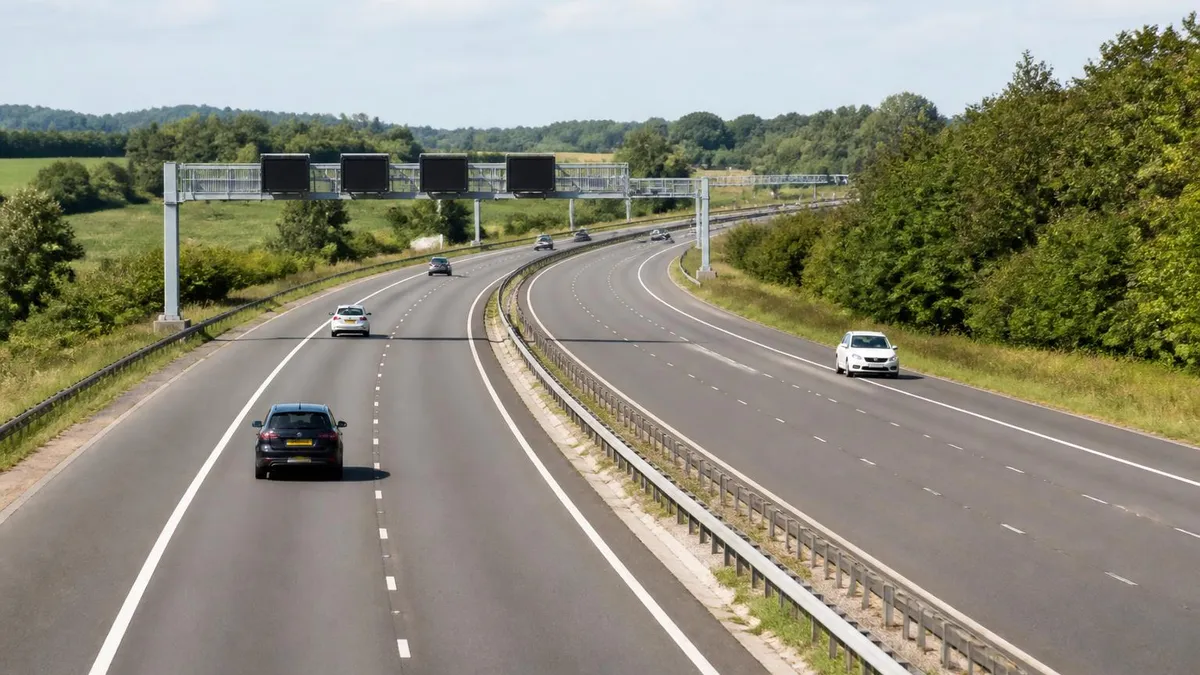
The DVSA enforces a minimum 10 working-day wait after any failed practical test, but the optimal gap based on rebooking outcome data is closer to three to five weeks. Use the wait to address the top two faults from your driver report. Rushing back in under a fortnight risks repeating the same serious fault, which is the single biggest predictor of a second fail.
Beating the average requires a different mindset than passing it. Average candidates take 45 lesson hours, sit one or two mock tests and book the first available slot. Above-average candidates engineer their preparation around the specific weaknesses that statistics tell us cost most candidates their licence. That means front-loading observation training, scripting your manoeuvre routine and accepting that the practical test rewards measurable habits more than instinctive skill.
Begin with your test centre choice. Spend a Saturday morning driving the surrounding roads with your instructor or a qualified accompanying driver. Identify the three roundabouts and two junctions most likely to appear in your route, and rehearse them at the time of day your test is booked for. Traffic patterns at 9am differ enormously from those at 2pm, and examiner routes are designed to expose your reaction to genuine local conditions, not idealised quiet roads.
Next, audit your lesson plan honestly. Have you driven in heavy rain, fading dusk light or busy school-run traffic? Examiners do not delay tests for weather unless conditions are unsafe, and a learner who has only driven in calm dry weather faces a measurable disadvantage if the day brings drizzle and reduced visibility. Ask your instructor to deliberately schedule at least three lessons in suboptimal weather during the month before your test.
The third pillar is theory transfer. Many practical fails trace back to weak theory understanding. Candidates who score 47 out of 50 on multiple-choice questions and 65-plus on hazard perception consistently outperform candidates who scrape pass marks. If your theory result was borderline, plan a short refresher block before the practical. The same hazard scanning rewarded in clip-based exams is rewarded again by an examiner watching your eyes and mirror checks. If circumstances change, our guide on how to change your theory test date outlines the rebooking process without losing your fee.
Sleep, hydration and caffeine timing matter more than learners admit. A test at 11.40am is best fuelled by an early breakfast, a light snack 90 minutes before and water rather than energy drinks. High-caffeine intake within 30 minutes of test start consistently correlates with hand tremor and erratic steering, both of which examiners notice immediately and which can manifest as faults under poor steering control.
Finally, frame the test correctly. You are not being judged as a person. You are being measured against a checklist that has been refined for decades. Every minor fault you accumulate has a ceiling of 15. Every serious fault has a ceiling of zero. Drive deliberately and politely, narrate your decisions internally and resist the urge to over-correct after a small mistake. Most candidates who fail did not fail at the moment they made an error, they failed at the moment they let the error distract them from the next decision.
Combine these habits and you tilt the statistics decisively in your favour. The published 48.4 per cent national figure includes underprepared candidates rushing tests, candidates booked into the wrong gearbox, and candidates whose nerves overwhelmed otherwise solid skills. Your personal pass rate, when you have addressed each of these levers, looks much closer to the 70 per cent achieved by the strongest cohort of UK learners.
The final stretch before your driving test is where preparation either crystallises or unravels. Use the seven days leading up to the test for targeted polishing rather than new learning. If your instructor introduces a new manoeuvre in the final week, it will not embed deeply enough to survive examiner pressure. Stick to refining the routines you already know, particularly the bay park, parallel park and pull-up on the right, which together account for almost a quarter of all manoeuvre-related serious faults recorded in 2025.
Plan the morning of your test like an event. Lay out your provisional licence, glasses if needed, comfortable shoes and a water bottle the night before. Arrive at the centre with 15 minutes to spare, but stay in the car until five minutes before your slot. Centre waiting rooms amplify anxiety because candidates compare nerves with each other, and the resulting cortisol spike measurably reduces fine motor control during your first five minutes behind the wheel.
Use your warm-up lesson wisely. Many instructors offer a one-hour pre-test session. Spend it on three specific tasks: drive a route similar to a likely examiner route, perform whichever manoeuvre worries you most, and rehearse the show-me-tell-me questions out loud. Do not spend it on completely new ground. Repetition of comfortable skills calms the nervous system. Novel material does the opposite.
During the test itself, treat every instruction with a two-second pause before acting. Examiners report that the single most common cause of avoidable faults is candidates reacting instantly to an instruction without first scanning mirrors and signalling. The two-second buffer feels long internally but reads as deliberate, safe driving externally. It also gives you time to identify hazards that change your response, such as a cyclist you had not previously noticed.
If something goes wrong mid-test, do not assume you have failed. Candidates regularly pass after stalling, taking a wrong turn or completing a manoeuvre on the second attempt. Examiners are required to assess your driving as a whole, not punish a single moment. The most damaging response to a small error is a second, larger error caused by lost concentration. Reset mentally at the next junction and continue as planned.
After the test, whether you pass or fail, ask for the full debrief. Examiners are trained to explain every mark on the sheet, and the explanations contain the most valuable feedback you will ever get about your driving. If you passed, the minor faults still tell you what to work on in your first 1,000 solo miles.
If you failed, you leave with a structured study plan for your next attempt that costs nothing and is more precise than any paid lesson critique. Practical familiarity with everything covered in our car practical test will make that debrief easier to act on.
Above all, remember that the driving test is a snapshot, not a verdict. The UK pass rate hovers near 48 per cent because half of candidates take the test before they are ready, not because the test is unbeatable. Choose your moment, choose your centre, and book only when your mock tests are running consistently in the comfortable zone. Do that and the statistics work for you, not against you.
Sample DVSA UK Driving Theory Practice Questions
Try these questions from our free DVSA UK Driving Theory practice tests. The correct answer and an explanation follow each question.
What is the key difference between a Toucan crossing and a Puffin crossing?
- A. Puffin crossings have a flashing amber light phase, whereas Toucan crossings do not.
- B. Toucan crossings are for pedestrians only, while Puffin crossings are for pedestrians and cyclists.
- C. Toucan crossings allow both pedestrians and cyclists to cross, while Puffin crossings are for pedestrians only.
- D. Puffin crossings have pedestrian signals on the opposite side of the road.
Answer: C. Toucan crossings allow both pedestrians and cyclists to cross, while Puffin crossings are for pedestrians only.
The name 'Toucan' is a play on 'two can' cross, meaning both pedestrians and cyclists can use the crossing without cyclists having to dismount. Puffin (Pedestrian User-Friendly Intelligent) crossings are for pedestrians only and have sensors to detect when people are waiting or crossing.
On a smart motorway, what does a speed limit sign inside a red circle on a gantry mean compared to one without a red circle?
- A. Red circle means advisory only, no circle means mandatory
- B. Red circle means mandatory and enforceable, no circle means advisory
- C. Both are mandatory
- D. Neither is enforceable
Answer: B. Red circle means mandatory and enforceable, no circle means advisory
A speed limit displayed in a red circle on a gantry is a mandatory, legally enforceable speed limit. A speed limit displayed without a red circle is advisory — it is recommended but not legally enforceable. However, you should still follow advisory limits as they indicate a hazard.
What is the national speed limit on a motorway for a car not towing a trailer?
- A. 60 mph
- B. 70 mph
- C. 80 mph
- D. There is no set limit
Answer: B. 70 mph
The national speed limit on motorways for cars, motorcycles, car-derived vans, and dual-purpose vehicles is 70 mph. Cars towing trailers or caravans have a lower limit of 60 mph on motorways.
You are towing a trailer that is loaded unevenly with too much weight at the rear. What is most likely to happen?
- A. The outfit will be more stable than normal
- B. The trailer may sway or snake, making it difficult to control
- C. Fuel consumption will improve
- D. The front wheels of the towing vehicle will have better grip
Answer: B. The trailer may sway or snake, making it difficult to control
Rear-heavy trailer loading shifts weight off the towing vehicle's rear axle, causing instability and a risk of dangerous snaking or jack-knifing.
DVSA Questions and Answers

Cancelling Driving Test: The Complete UK Guide to Refunds, Rebooking and Avoiding Lost Fees in 2026

DVSA Car Practical Test: Complete Guide to Passing First Time
How to Change Theory Test Date: Complete DVSA Rebooking Guide for 2026
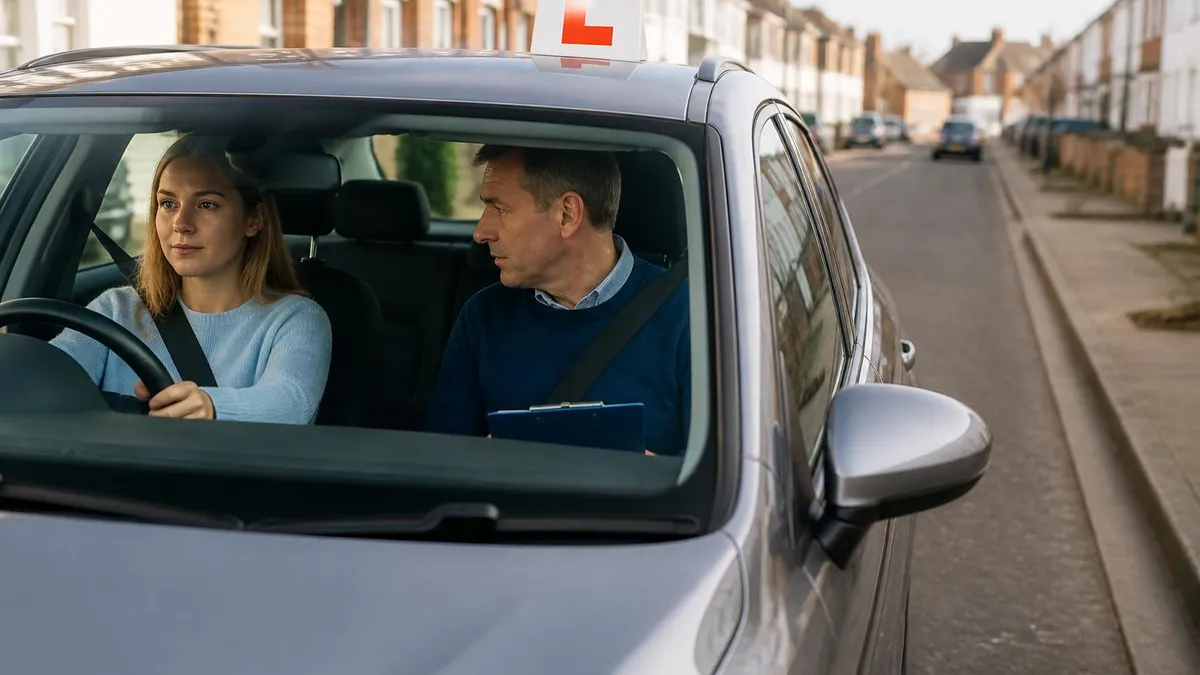
Learn to Drive UK: The Complete 2026 Beginner's Guide to Lessons, Tests and Licence Success
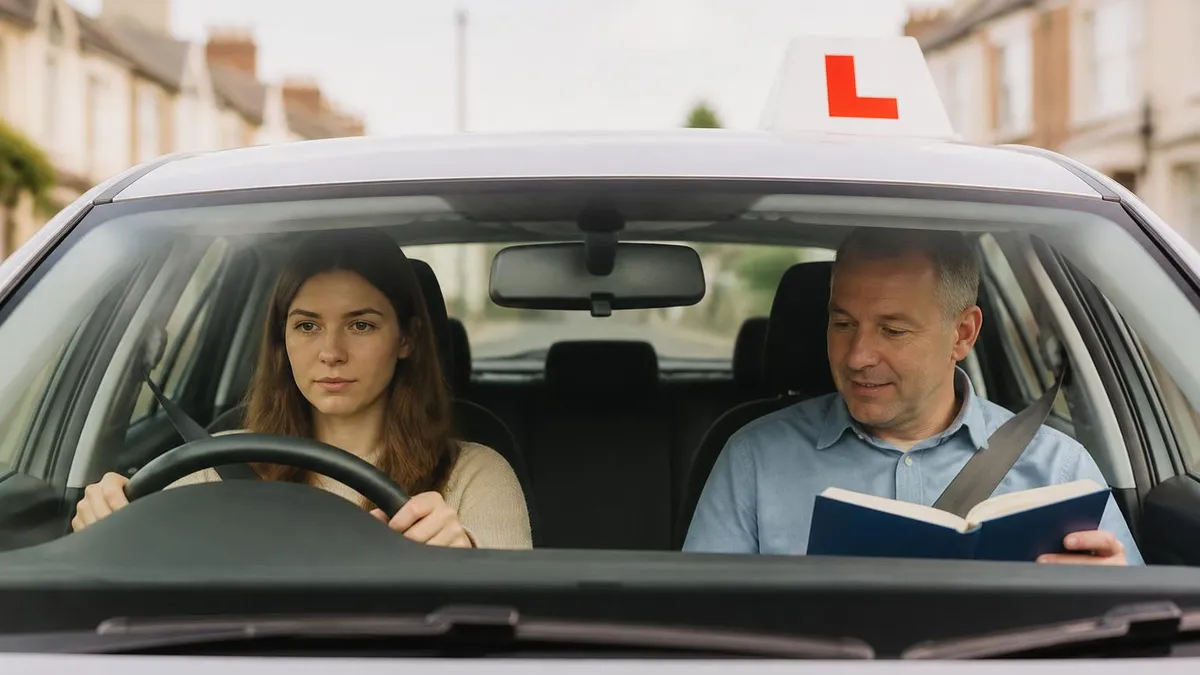
Intensive Driving Course With Test: Complete UK Guide to Fast-Track Your Licence in 2026
About the Author

Licensed Driving Instructor & DMV Test Specialist
Penn State UniversityRobert J. Williams graduated from Penn State University with a degree in Transportation Management and has spent 20 years as a certified driving instructor and DMV examiner consultant. He has personally coached thousands of applicants through written knowledge tests, skills assessments, and commercial driver licensing programs across more than 30 states.