
DVSA Car Practical Test: Complete Guide to Passing First Time 2026 October
Complete guide to the DVSA car practical test: 📝 40-min format, 48% pass rate, faults system, manoeuvres, show me/tell me, and how to pass first time.

The DVSA car practical test is the on-road driving examination you must pass to earn a full UK driving licence. It comes after your theory test and assesses whether you can drive safely, confidently, and independently in real traffic conditions. Pass rates have hovered around 48% for the last several years, and waiting times for a slot can stretch from a few weeks to several months depending on your test centre.
Most candidates spend between 40 and 50 hours with an approved driving instructor before they reach test standard, plus extra private practice with a supervising driver. The cost itself is modest, £62 on weekdays, £75 on evenings and weekends, but the real investment is the lessons, the fuel, the time, and the mental effort to build the kind of consistent driving the examiner wants to see. Get it wrong and you face the wait, the rebooking fee, and the demoralising feeling of going back to square one.
This guide walks you through everything that matters on the day: how the test is structured, what the examiner is actually checking, the fault system, the manoeuvres, the show me / tell me questions, the independent driving section, and the most common reasons people fail. By the end you'll know exactly what to expect and how to prepare, which is the difference between a stressful guess and a confident pass.
DVSA Car Practical Test by the Numbers
The statistics tell their own story. Roughly half of all candidates pass on their first attempt, which means roughly half don't. That isn't because the test is unfair, it's because driving on real roads, with real traffic, real pedestrians and real consequences, demands a steadier set of habits than most learners realise. The examiner isn't trying to catch you out. They are trying to confirm you can drive without supervision and without endangering anyone else.
Forty minutes feels long when you're nervous and short when you make a mistake early on. The fee is set nationally and doesn't vary by region, but you'll often see third-party booking sites trying to charge extra. Always book directly through gov.uk. The 15 minor fault ceiling is generous in theory, but in practice most passes have far fewer, examiners notice patterns, and the same minor repeated four or five times starts to look like a habit rather than a slip.
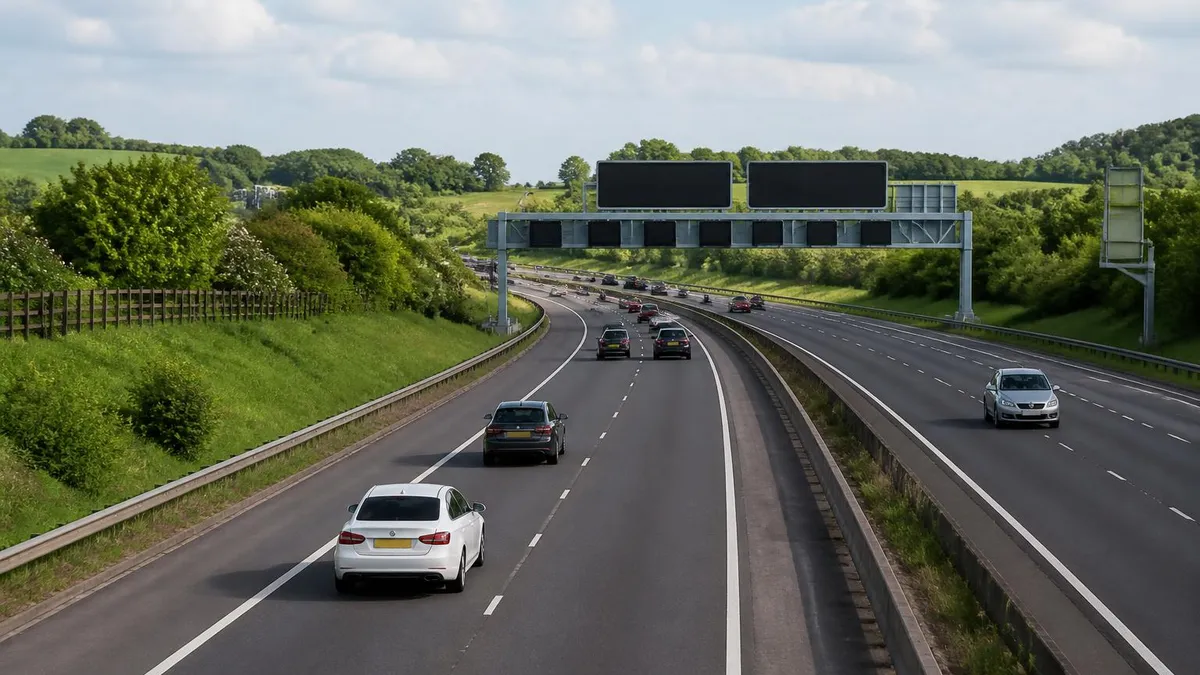
You are test-ready when your instructor signs off on mock tests with zero serious faults and fewer than 8 minors across multiple sessions, not just one lucky run. Consistency beats peak performance every time on test day. If you've only managed one clean mock out of four, you are not ready. Wait until you have three clean mocks in a row, ideally with two different instructors observing.
Driving instructors talk about "test standard" as if it's a fixed line, but it shifts slightly depending on the examiner, the route, and the conditions. What doesn't shift is the principle: the examiner needs to see that you have made driving decisions automatically and correctly, dozens of times in a row, without prompting. If your instructor still has to remind you to check your mirrors at junctions or signal at roundabouts, you're not ready, even if you've completed the recommended hours.
Many learners book their test too early because they want to avoid the long wait, then waste the fee and start the wait all over again. Far better to put yourself forward when you have genuinely earned a pass on three or four consecutive mock tests with a different instructor sitting in. A second opinion is the cheapest insurance policy in driving.
Six Phases of the Practical Test
Read a number plate from 20 metres in the test centre car park. Fail this and the test ends before it begins. Wear your glasses or contacts if required on your licence.
Two vehicle safety questions, one before driving (tell me) and one while driving (show me). Each wrong answer is a single minor fault.
Around 20 minutes of varied roads, junctions, roundabouts and traffic. The examiner gives directions and notes how you handle each situation.
One of: parallel park, bay park (in or out), or pull up on the right and reverse two car lengths before rejoining traffic.
About 20 minutes following sat-nav directions or road signs without prompting from the examiner. Wrong turns are not faulted, only unsafe driving.
One in three tests includes a controlled emergency stop on the examiner's signal. Practice braking firmly without locking the wheels.
The order of these elements is fairly fixed, although examiners will sometimes vary which manoeuvre comes first and when the emergency stop appears. The eyesight check happens in the test centre car park before you get into the car, so don't forget your glasses or contacts if you need them. Failing the eyesight test is treated as a serious safety fault and you'll lose the fee with nothing else assessed.
The show me / tell me questions test whether you know how to operate basic safety features: demisters, lights, hazard warning, washer fluid, brakes, tyres, steering, instruments. The "tell me" question is asked before you drive away, and the "show me" question is asked while you're driving, so you have to demonstrate without taking your attention off the road. Get one wrong and that's a single minor fault. Get both wrong and it's still just two minors, but it suggests rushed preparation.
Independent driving makes up half the test now. You'll either follow directions from a sat-nav (provided and set up by the examiner) or follow road signs. You're allowed to take a wrong turn, navigation errors aren't faulted unless you cause a safety problem. The examiner will guide you back to the route. What they're watching is whether you can drive safely while making your own decisions, which is what driving alone actually feels like.
Understanding the Fault System
A driving fault that isn't dangerous in itself. You can collect up to 15 and still pass. Examples include a single missed mirror check, a slightly wide turn, hesitation at a clear junction, or a lazy signal that goes on a second too late. Minors only become a problem when they cluster.
Understanding the fault system changes how you drive. Many learners obsess about not stalling or not hitting the kerb, but the real risk is repeated small errors: the same blind spot check missed at every roundabout, the same lazy signal at every left turn. Examiners record everything on a tablet now, and the software flags patterns. By minute 25 of your test, the examiner already knows whether your mirror discipline is reliable or whether you've just been lucky four times in a row.
Serious and dangerous faults are easier to avoid than you'd think, because they almost always come from one of three things: poor observation, poor planning, or impatience. If you commit to checking mirrors before every signal, planning your speed for every hazard, and waiting an extra second when you're not sure, you'll usually steer clear of the instant-fail faults. The minors are where preparation really pays off.
The examiner doesn't deduct points in a numerical sense. They tick boxes against 27 fault categories: control, observation, signals, response to signs, and so on. At the end, the totals are summed. If you've kept all serious and dangerous columns empty, and your minors total 15 or fewer, you pass. Anything else is a fail.
You can ask for the result to be explained at the end of the test, but arguing with the examiner about a specific fault won't change anything. The decision is final once the paperwork is signed. If you genuinely believe the test was conducted unfairly, you have 14 days to appeal through gov.uk, but this route is for procedural complaints (rude examiner, broken vehicle, incorrect documentation) not for disagreement about driving standard.
Most failed candidates spend the drive home replaying the moment they think they failed. Usually they're wrong about which moment it was. The examiner often marks something the candidate didn't even notice: a slightly late mirror check before a lane change, a foot resting too lightly on the clutch in slow traffic, a stop line crossed by inches. That's why a detailed debrief at the end matters. Listen carefully, take notes if you need to, and ask your instructor to translate the feedback into specific practice tasks before you rebook.
Some test centres have higher pass rates than others, but chasing a "soft" centre is usually a mistake. The data is widely published and the gap is rarely as big as people think, maybe five to seven percentage points. More importantly, examiners rotate centres, and the road layouts in some areas are harder than the averages suggest. You're better off testing at the centre your instructor knows best, because they can teach you the local quirks: the roundabout that everyone misjudges, the high street with the awkward parked-car gauntlet, the unmarked junction that traps the unwary.
One unspoken aspect of test centre choice is examiner reputation. Online forums are full of names and stories, but most of that gossip is unreliable. Examiners are tightly monitored and audited; a centre's overall pass rate is far more meaningful than a single examiner's reputation. If the test centre you've chosen has a noticeably low pass rate (under 40%), look at the routes themselves.
Some centres are surrounded by tricky junctions, unmarked rural lanes, or busy multi-lane gyratories that punish hesitation. Two extra lessons learning those specific routes is worth more than chasing a centre 30 miles away with a fractionally higher headline rate. Familiarity beats statistics almost every time.
Time of day also affects the test. Morning slots before 11am tend to have less traffic and lower stress, but they can also feature school-run congestion if you're near a primary school. Afternoon slots can include the worst of urban rush, while late-morning is often the sweet spot. Ask your instructor what they consider the easier window at your local centre, and book that slot when you can.

Test Day Checklist
- ✓Provisional driving licence (photocard)
- ✓Theory test pass certificate number (or DVSA can look it up)
- ✓Glasses or contact lenses if you need them
- ✓Comfortable shoes, not flip-flops or thick boots
- ✓Your instructor's car (or one that meets DVSA requirements)
- ✓Up-to-date insurance covering test use
- ✓Valid MOT and tax on the vehicle
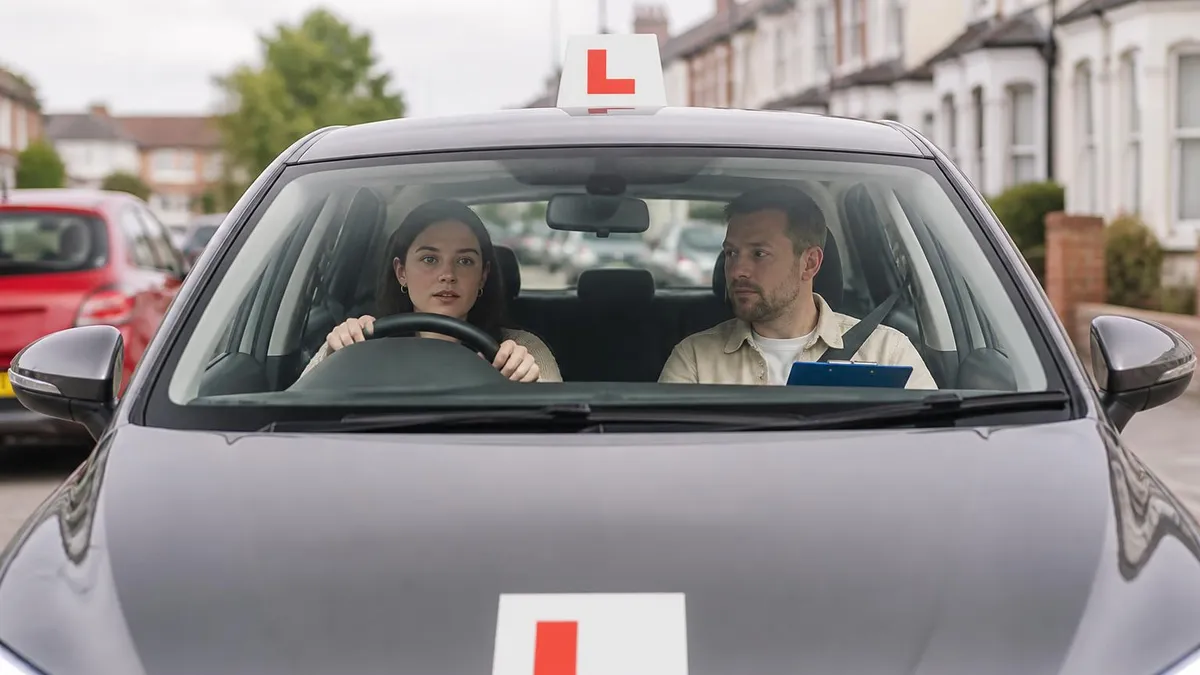
- ✓L plates fitted front and back, removed once passed
- ✓Tyres legal and at correct pressure
- ✓Mirrors and seat adjusted before starting
The checklist looks long but it's almost entirely about removing reasons to be turned away. Examiners cancel tests for surprisingly small things: a bald tyre, a missing L plate, an expired MOT certificate, and a cancelled test still costs you the fee. If you're using your instructor's car (which most learners do), they'll handle the legal documents and tyre checks. If you're using a private vehicle, especially a parent's car, do the checks the night before, not on the morning of the test when you're already tense.
Footwear matters more than people expect. The pedals on a test car are sensitive, and thick soles dampen the feedback you get through your feet. Flip-flops are an obvious problem, but heavy work boots and chunky trainers cause more failed manoeuvres than you'd guess because learners over-press the clutch and over-brake. Thin-soled trainers or proper driving shoes give you the finest control.
Glasses are another quiet failure point. If your provisional licence says you need corrective lenses and the examiner thinks you might not be wearing them, they will ask. Showing up without them, or with the wrong prescription because you haven't had an eye test in years, is an avoidable, embarrassing fail. Book an eye test six weeks before your practical if you wear glasses.
Insurance for test day is non-negotiable. If your instructor is supplying the car, their policy will already cover you, but if you're using a family vehicle you must have provisional learner insurance that explicitly permits use during a practical driving test. Cheap-day learner policies sometimes exclude this, so read the wording. The examiner will not start the test if the vehicle isn't legally insured for the purpose, and they're entitled to ask. The same applies to MOT, road tax, and tyre condition. Anything that would make the car illegal on the road also makes it illegal for the test.
Booking Sooner vs Booking Later
- +Shorter wait at busy test centres
- +Less time for skills to plateau or drift
- +Lower total lesson cost if you're ready
- +Builds momentum from theory test pass
- +Forces discipline and a target date
- +Cancellation apps can pull date forward
- −Risk of failing while still rough around the edges
- −Less time for varied conditions, wet, dark, busy
- −Fewer mock tests under your belt
- −Higher chance of paying the fee twice
- −Can dent confidence if rushed
- −10 working day wait before retake
Pros and Cons at a Glance
| Pros | Cons |
|---|---|
| Shorter wait at busy test centres | Risk of failing while still rough around the edges |
| Less time for skills to plateau or drift | Less time for varied conditions, wet, dark, busy |
| Lower total lesson cost if you're ready | Fewer mock tests under your belt |
| Builds momentum from theory test pass | Higher chance of paying the fee twice |
| Forces discipline and a target date | Can dent confidence if rushed |
The booking-time dilemma divides driving instructors. Some argue you should book as soon as you have a target date, because the wait at popular centres can be 14 to 24 weeks and the date forces you to work toward it. Others argue you should only book once you're already at test standard, because there is no faster way to fail than rushing a test you weren't ready for. Both sides have a point. The right answer depends on how disciplined you are about your lessons and whether you have somebody pushing you to keep going.
One trick that works well: book a date roughly six weeks ahead of when your instructor thinks you'll be ready, then use a cancellation-checker app to bring the date forward if you progress quickly. That way you've locked in a deadline but you have flexibility. Just make sure your instructor has availability for the new date, nothing worse than getting an early slot and discovering you can't have the car you've been practising in.
If you've already failed once, the wait can feel doubly painful. Resist the urge to rebook for the earliest possible slot. Give yourself three or four lessons specifically focused on the faults the examiner flagged, plus at least two full mock tests with a different instructor. Then book. A second failure costs more than the fee, it dents the confidence you need for the third attempt.
Sample DVSA UK Driving Theory Practice Questions
Try these questions from our free DVSA UK Driving Theory practice tests. The correct answer and an explanation follow each question.
Your car breaks down on a motorway with a hard shoulder. After pulling over to the hard shoulder, what is the first thing you should do?
- A. Attempt to carry out simple repairs on your vehicle.
- B. Place a warning triangle 45 metres behind your vehicle.
- C. Switch on your hazard warning lights.
- D. Get out of your vehicle and stand in front of it to warn oncoming traffic.
Answer: C. Switch on your hazard warning lights.
If you break down on a motorway, the first priority is to warn other drivers. You should switch on your hazard warning lights immediately. You should not use a warning triangle on a motorway. Exit the vehicle from the left-hand side and wait behind the safety barrier.
What hazard should you be particularly aware of at a junction near a school during term time?
- A. Heavy goods vehicles delivering supplies
- B. Parked cars reducing visibility and children crossing unexpectedly
- C. Road works near the school entrance
- D. Cyclists using the bus lane
Answer: B. Parked cars reducing visibility and children crossing unexpectedly
Near schools during term time, parked cars from parents dropping off or collecting children can severely restrict visibility. Children may also dash across the road unexpectedly, especially at the start and end of the school day.
Which of the following road markings indicates that you must not stop your vehicle at any time?
- A. A single yellow line along the edge of the road
- B. A broken white line in the centre of the road
- C. Double red lines along the edge of the road
- D. Yellow zigzag lines outside a school
Answer: C. Double red lines along the edge of the road
Double red lines, found on 'Red Routes', mean that no stopping is allowed at any time for any reason (except for licensed taxis or Blue Badge holders in some cases). This is a stricter control than single or double yellow lines.
You have just bought a brand-new car. When will it need its first MOT test?
- A. On the first anniversary of its registration.
- B. After it has been driven 12,000 miles.
- C. On the third anniversary of its registration.
- D. When the manufacturer's warranty expires.
Answer: C. On the third anniversary of its registration.
A new car in the UK does not require an MOT test until the third anniversary of its first registration date. After this, it must be tested annually.
DVSA Questions and Answers
Passing the DVSA car practical test isn't about being a brilliant driver. It's about being a consistent one. The examiner has driven with hundreds of candidates and they can spot a confident, settled learner within the first five minutes. The opposite is also true: nerves, hesitation, and last-minute panic are obvious from the passenger seat. The good news is that consistency is built, not born, and every hour of focused practice tilts the odds in your favour.
Treat the test as the last lesson, not the first exam. Drive the way you've been taught: mirrors before every action, signals to inform other road users, plenty of clear space around the car, deliberate speed for every road type, and decisions made early rather than late. When the examiner asks you to take the next available left, take the next available left, not the one after, not the one you wish you'd taken, but the next one. Trust your training, follow the instructions you're given, and the result usually looks after itself.
And if you don't pass first time, you join roughly half the country. Failing the practical test is the rule, not the exception. What matters is what you do next: specific feedback, focused practice, a stronger second attempt. Plenty of safe, capable drivers needed two or three attempts to get the certificate. The licence in your wallet doesn't say how many tries it took.
Finally, manage your post-test energy. Whether you pass or fail, the adrenaline crash that follows can be intense. Don't book a long drive home, an important meeting, or a stressful conversation for the hour or two after the test. Give yourself space to process it. If you've passed, take a moment to register what you've earned, the licence you carry now represents thousands of small decisions that you got right, often without anyone watching.
If you haven't, don't dwell on the result for more than an evening. Sleep, then look at the feedback fresh in the morning. A failed test is just data: it tells you precisely which habits to work on before your next attempt. Tens of thousands of people pass each month. You will join them.
About the Author
Licensed Driving Instructor & DMV Test Specialist
Penn State UniversityRobert J. Williams graduated from Penn State University with a degree in Transportation Management and has spent 20 years as a certified driving instructor and DMV examiner consultant. He has personally coached thousands of applicants through written knowledge tests, skills assessments, and commercial driver licensing programs across more than 30 states.