
Hardest Driving Test Centres UK: Which Locations Have the Lowest Pass Rates?
Discover the hardest driving test centres UK wide, why pass rates vary, and how to prepare smarter. 🎯 Real DVSA data inside.
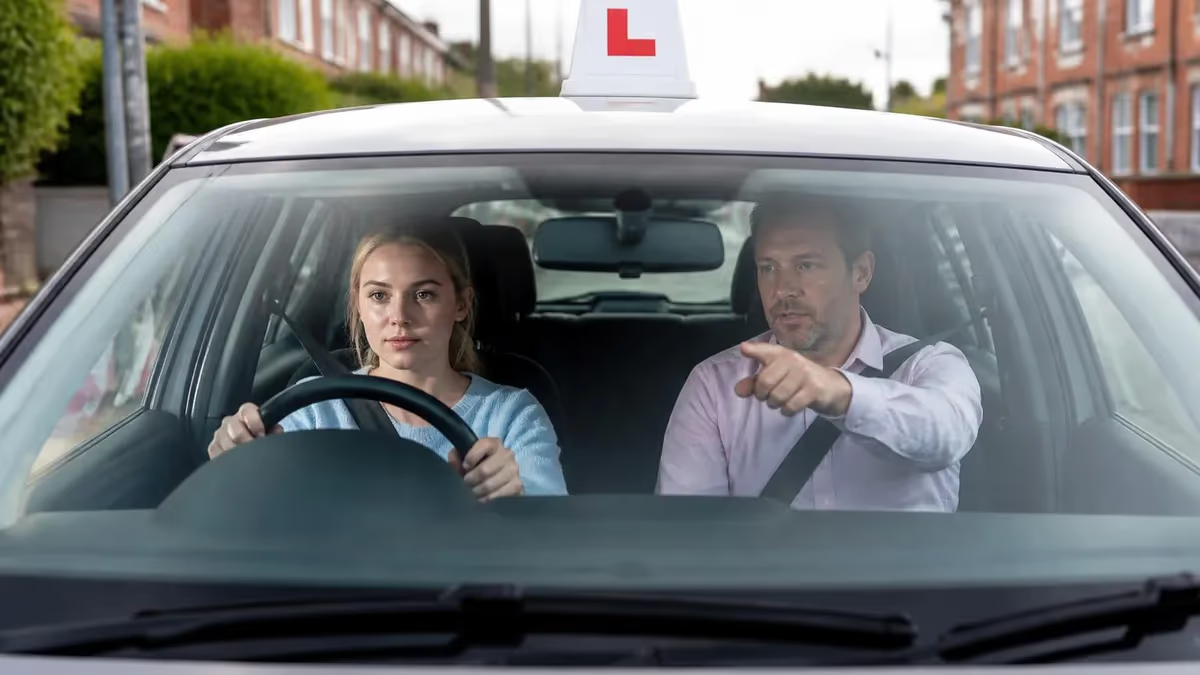
The hardest driving test centres UK candidates face are not simply a matter of myth or bad luck — they reflect genuine differences in road complexity, examiner standards, and local traffic conditions. Pass rates at DVSA test centres across England, Scotland, and Wales vary dramatically, from just 35% at some inner-city locations to well above 65% in quieter rural areas. Understanding which centres are toughest, and more importantly why, can make a real difference to how you prepare and which centre you choose to book.
Every year, the DVSA publishes official pass rate statistics broken down by individual test centre. These figures reveal that geography plays an enormous role in your chances of success. A learner driver taking their test in central London, Birmingham, or Manchester faces a very different challenge from someone sitting theirs in a market town in rural Wales or the Scottish Highlands. The routes are more complex, the traffic more unpredictable, and the margin for error substantially smaller when congested city streets are involved.
Many candidates are surprised to learn that they have a degree of choice when it comes to selecting their test centre. While most people book at the nearest available location, there is nothing stopping you from travelling a little further to a centre with a historically higher pass rate — provided you have practised on those roads and feel genuinely comfortable driving there. Booking at an easier centre without adequate local knowledge, however, tends to backfire badly on test day.
It is also worth understanding that test centre difficulty does not exist in isolation from your overall preparation. Passing the theory test is the essential first hurdle before you can even book your practical, and the standard of hazard perception and multiple-choice knowledge required is the same regardless of where in the UK you sit your test. Getting your theory foundations right will sharpen your observation skills for the practical as well.
Some test centres have gained a notorious reputation online, with forums and social media full of warnings about particular routes or examiners. While anecdotal evidence can be useful for understanding local hazards, official DVSA statistics remain the most reliable guide. These figures are updated regularly and show long-term trends that reflect genuine structural differences in test difficulty rather than isolated bad days or individual examiner quirks.
This article examines the official data on UK test centre pass rates, identifies the locations with consistently low pass rates, explores the reasons behind these differences, and gives you practical strategies to prepare effectively — whether you are sitting your test in a busy city or a quieter town. Armed with accurate information, you can make a more informed decision about where to book, how much practice to do, and what specific skills to focus on to maximise your chances of success first time.
UK Driving Test Centre Difficulty by the Numbers
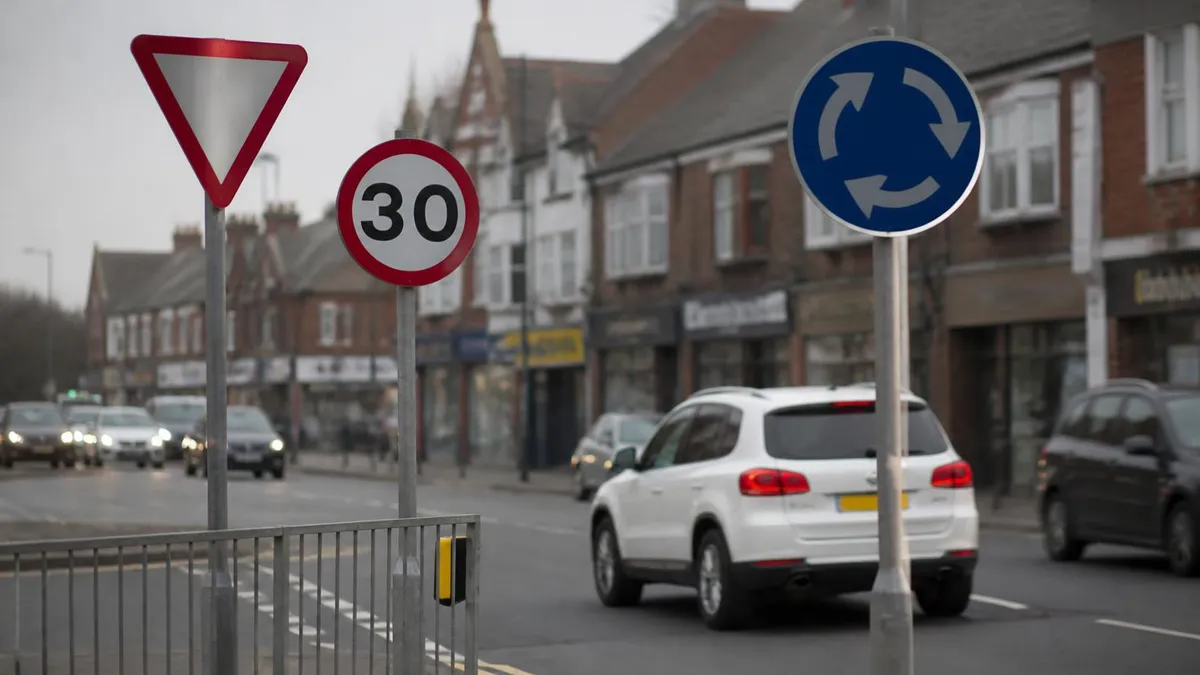
What Makes a Test Centre Difficult?
Inner-city test centres involve multi-lane roads, busy junctions, and unpredictable pedestrian movements. Candidates must make rapid decisions under pressure in environments that demand a much higher baseline of driving skill than rural routes.
Complex one-way systems, box junctions, contraflows, and unclear road markings contribute significantly to test failure. Urban centres in London, Birmingham, and Manchester feature some of the most complex road layouts in the country.
DVSA examiners apply national standards consistently, but the opportunities to make faults are far greater on complex routes. More junctions, more decisions, and more hazards simply create more chances for a serious or dangerous fault to occur.
In cities where aggressive or assertive driving is the norm, learner drivers who are not used to these conditions can be caught off guard. Learning in the local area before test day is essential to avoid being intimidated by the pace of traffic.
Some regions, particularly in Scotland and Northern England, face more adverse weather conditions that add difficulty. Rain, low sun, and reduced visibility require additional skill and concentration that can catch unprepared candidates out.
Understanding why certain test centres produce dramatically lower pass rates requires looking beyond simple geography. The complexity of a test route is determined by the type of road infrastructure candidates must navigate, the volume and speed of local traffic, the number and variety of junctions encountered, and the range of manoeuvres the examiner can reasonably ask candidates to perform. In urban environments, all of these factors combine to create a testing environment that is objectively more demanding than quieter suburban or rural routes.
London consistently produces some of the lowest pass rates of any area in the UK. Centres such as Barking, Erith, and Belvedere have recorded pass rates in the mid-to-low thirties over extended periods. This is not because examiners in London are harsher — the DVSA applies consistent national standards across all centres — but because the roads themselves demand a higher level of skill, awareness, and decision-making ability. A learner navigating a busy TfL bus corridor, a contraflow system, or a complex roundabout junction is facing genuinely greater risk of making a fault than one driving along quieter roads.
Outside London, other urban centres such as Birmingham Kingstanding, Manchester Belvedere, and Glasgow Shettleston regularly feature near the bottom of national pass rate tables. These locations share common characteristics: dense residential street networks connecting to busy arterial roads, frequent pedestrian crossings, complex multi-lane roundabouts, and high volumes of HGV and bus traffic that learner drivers must share space with confidently. The sheer number of decision points on a typical route from these centres means there are simply more opportunities for faults to accumulate.
In contrast, the easiest test centres in the UK tend to be located in market towns, coastal communities, and rural areas with lower traffic volumes and simpler road infrastructure. Centres in places like Dorchester, Berwick-upon-Tweed, and Llandrindod Wells consistently record pass rates well above the national average. Candidates at these locations encounter fewer complex junctions, less aggressive traffic, and routes where the main challenges are speed limit awareness and good all-round observation rather than rapid tactical decision-making in dense traffic.
The national average practical driving test pass rate sits at approximately 47%, though this figure masks enormous variation. When you break the data down by individual centre, the range is extraordinary — from under 36% at the very hardest locations to above 66% at the most straightforward. This means that, all else being equal, the statistical probability of passing your test on a given attempt roughly doubles depending purely on where you choose to sit it. This is why prospective candidates are increasingly researching pass rate data before making their booking.
It would be a mistake, however, to simply book the easiest test centre without proper preparation for its specific roads. Examiners assess driving ability relative to the conditions encountered, and a candidate who appears hesitant, unsure of road markings, or unfamiliar with local hazards will still accumulate faults regardless of how simple the route is on paper. The purpose of choosing a sensible test centre is to give yourself a fair opportunity to demonstrate your true level of ability — not to find a shortcut around developing genuine competence as a driver.
Instructors who operate in both urban and rural areas often report a marked difference in the preparation required for their respective local centres. An instructor based near a high-difficulty urban centre may spend more lesson time on junction priority, lane discipline on multi-lane roads, and dealing with assertive traffic, while a rural-area instructor might focus more on open-road hazard perception and dealing with agricultural vehicles.
This tailoring of preparation to local conditions is one of the most effective ways to improve pass rates — and it underscores why your test centre choice should be made in close consultation with your driving instructor.
Hardest Driving Test Centres UK: Regional Breakdown
London dominates the list of hardest driving test centres in the UK by a significant margin. Centres including Barking, Erith, Belvedere, and Tolworth consistently record pass rates between 35% and 42%. The capital's dense road network, constant pedestrian activity, complex bus lane systems, and aggressive traffic culture create an exceptionally demanding test environment. Candidates must demonstrate confident decision-making at busy junctions, competent lane discipline on multi-lane roads, and calm awareness under real pressure.
Outside Greater London, centres in towns like Slough, Reading, and parts of Essex also see below-average pass rates due to heavy commuter traffic and complex road layouts. Canterbury and Maidstone present particular challenges with historic town centre routing, while the M25 corridor area creates difficult dual-carriageway exposure requirements. Candidates in this region benefit enormously from accumulating high mileage in varied local traffic conditions before attempting their test.
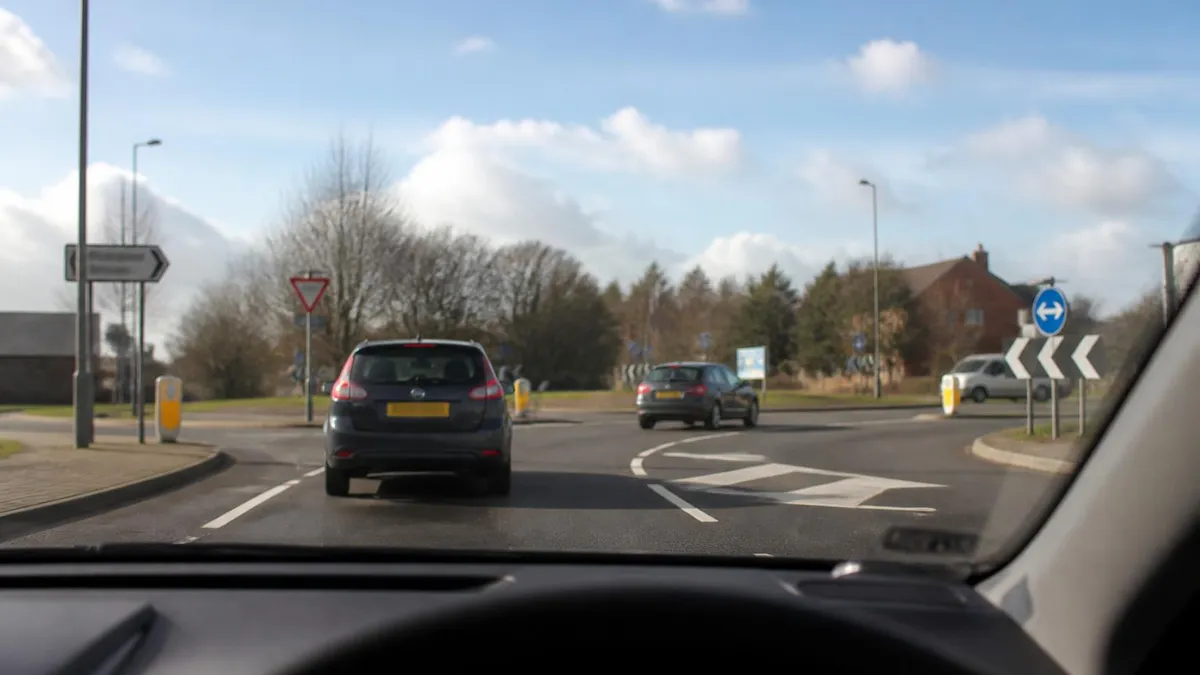
Booking a Hard vs Easy Test Centre: Weighing Your Options
- +Easier centres statistically give you a better chance of passing on your first attempt
- +Lower-traffic routes allow you to demonstrate skill without constant pressure from aggressive drivers
- +Rural and suburban centres often have shorter test waiting times
- +Simpler road layouts reduce the cognitive load of constant split-second decision-making
- +Practising in a quieter area builds confidence that transfers well to complex driving later
- +A pass certificate from any UK centre is equally valid — location does not affect your licence
- −Travelling to a distant easy centre means you must practise thoroughly on unfamiliar roads first
- −Instructors familiar with your chosen centre may not be available in distant locations
- −An easy pass may leave gaps in your urban driving competence that emerge post-test
- −Waiting times at popular easy centres can be very long, delaying your test by months
- −If you fail at a distant centre, repeat lessons and travel costs increase significantly
- −Some DVSA centres have limited flexibility in test times, complicating logistics for working candidates
Pros and Cons at a Glance
| Pros | Cons |
|---|---|
| Easier centres statistically give you a better chance of passing on your first attempt | Travelling to a distant easy centre means you must practise thoroughly on unfamiliar roads first |
| Lower-traffic routes allow you to demonstrate skill without constant pressure from aggressive drivers | Instructors familiar with your chosen centre may not be available in distant locations |
| Rural and suburban centres often have shorter test waiting times | An easy pass may leave gaps in your urban driving competence that emerge post-test |
| Simpler road layouts reduce the cognitive load of constant split-second decision-making | Waiting times at popular easy centres can be very long, delaying your test by months |
| Practising in a quieter area builds confidence that transfers well to complex driving later | If you fail at a distant centre, repeat lessons and travel costs increase significantly |
| A pass certificate from any UK centre is equally valid — location does not affect your licence | Some DVSA centres have limited flexibility in test times, complicating logistics for working candidates |
Preparation Checklist for High-Difficulty Test Centres
- ✓Research the official DVSA pass rate for your chosen test centre before booking
- ✓Ask your driving instructor which local junctions and roads appear most frequently on test routes
- ✓Complete at least three full mock tests on the actual roads surrounding your test centre
- ✓Practice driving during peak traffic hours to build confidence in busy conditions
- ✓Master all required manoeuvres — parallel park, bay park, pull up on the right — in a variety of locations
- ✓Study local road markings, box junctions, and any unusual signage specific to your area
- ✓Develop a clear mental routine for MSM (Mirror, Signal, Manoeuvre) at every junction and turn
- ✓Practise safe following distances and lane discipline on dual carriageways near your centre
- ✓Complete your theory test and hazard perception preparation thoroughly before your practical test date
- ✓Plan your journey to the test centre in advance and arrive at least 10 minutes early on test day
Check Your Centre's Pass Rate on the DVSA Website
The DVSA publishes official pass rate statistics for every UK driving test centre, updated regularly. Before booking your practical test, search for your local centre's pass rate at the official DVSA statistics portal. This data covers car, motorcycle, and vocational tests separately and gives you a clear, evidence-based benchmark for what to expect — helping you decide whether to book locally or consider a centre with a more favourable pass rate history.
Choosing the right test centre is a strategic decision that deserves more careful thought than most candidates give it. The majority of learners simply book the nearest available centre without checking pass rates, asking their instructor for a recommendation, or considering whether a slightly longer journey might significantly improve their odds. In reality, your choice of test centre is one of the few variables you can genuinely control in the testing process — and taking that control seriously can make a meaningful difference to your outcome.
The first step is to check the official DVSA pass rate data for any centre you are considering. This information is freely available online and breaks down pass rates by centre, by vehicle type, and over multiple years. Looking at multi-year trends rather than a single year's figure gives you a more reliable picture, since pass rates can fluctuate year to year due to local road changes, temporary route modifications, or even staffing changes at the centre. A centre that has consistently sat 10 percentage points below the national average over five years is giving you meaningful signal.
Your driving instructor's input is invaluable in this decision. An experienced local instructor will know which routes their test centre uses most frequently, which specific junctions or manoeuvre locations appear regularly, and what the local traffic patterns look like at different times of day. Many instructors actively discourage candidates from booking at particularly challenging centres if they believe the candidate's current skill level would be better matched by a more straightforward environment. This is not a criticism of the candidate — it is sensible strategic advice.
Timing your test is another underappreciated factor in test centre difficulty. Booking a morning test in the middle of the school run at an urban centre near a secondary school is a very different proposition from the same route on a Saturday afternoon. Rush-hour traffic between 8 and 9 AM and 3 and 4 PM substantially increases the complexity and unpredictability of urban test routes. Where possible, aiming for mid-morning or early afternoon slots on weekdays often means quieter roads and a somewhat more controlled testing environment, even at challenging centres.
Candidates who are retaking their practical test after a previous failure should pay particular attention to the fault analysis from their first attempt. The DVSA provides a detailed breakdown of all faults recorded during your test, categorised as minor, serious, or dangerous.
If your previous failure involved specific junction types, speed management issues, or observation problems that are particularly frequent at your chosen centre, this should directly inform your preparation plan — and potentially your centre choice for the retake. There is no shame in choosing a slightly easier centre for a retake if the evidence suggests your original centre was poorly matched to your current ability level.
For candidates who live near a boundary between significantly different pass-rate zones, the case for travelling slightly further to a better-matched centre is especially strong. Someone living on the outskirts of a major city, for example, may be within 20 minutes of both an inner-city centre with a 38% pass rate and a suburban or market-town centre with a 55% pass rate.
The 17-percentage-point difference in pass rate represents a very real improvement in the statistical likelihood of success — one that may well justify the additional travel time and the need for a few extra lessons on the specific roads around the chosen centre.
Whatever centre you choose, the foundation of success remains thorough preparation on the actual roads you will be tested on. Candidates who have logged significant practice mileage in the immediate vicinity of their chosen centre, under varied conditions and at different times of day, consistently outperform those who have practised primarily elsewhere and treated the test centre as an afterthought. Familiarity with the specific roads reduces cognitive load on test day, allowing you to focus your attention on demonstrating good driving rather than navigating an unfamiliar environment while simultaneously trying to impress an examiner.

Booking a test centre with a high pass rate is only beneficial if you have genuinely practised on those specific roads beforehand. Examiners will notice immediately if you appear unfamiliar with local markings, junctions, or traffic patterns, and this unfamiliarity will generate faults regardless of the centre's overall pass rate. Always complete at least three mock test drives in the area surrounding your chosen centre before your actual test date.
Building a strong preparation strategy for any test centre — but especially a challenging one — starts well before your practical test date. One of the most common mistakes candidates make is treating the theory test and the practical test as entirely separate challenges with little connection to each other. In fact, the hazard perception skills you develop for the theory test directly translate into the observation and anticipation habits that examiners reward in the practical. Strong hazard awareness makes you a safer, more confident driver in the complex environments that characterise the hardest UK test centres.
Effective preparation for a high-difficulty test centre should include deliberate practice of the specific skills that urban and complex routes demand most heavily. Junction observation is critical — examiners at busy city centres see more faults related to emerging too early, failing to observe adequately before proceeding, or misjudging the speed of approaching vehicles than almost any other category. Spending dedicated lesson time at the junctions that appear on your local test routes, with your instructor providing immediate feedback, is one of the highest-value preparation activities you can undertake.
Lane discipline is another area that catches candidates at complex centres more than simpler ones. Multi-lane roundabouts, dual carriageways, and roads with bus lanes or cycle lanes all require clear, confident lane positioning and early decisions about which lane to occupy. Hesitation or late lane changes are among the most common serious faults recorded at urban test centres. Practising these situations until your lane choices feel automatic — rather than requiring conscious deliberation — will significantly reduce your risk of a serious fault in these areas.
Speed management across changing speed limits is a particular challenge at test centres that include both urban streets and faster A-road or dual-carriageway sections. Candidates who are used to practising exclusively on quieter roads sometimes struggle to adjust their speed promptly when the limit changes, either travelling too slowly on faster sections or failing to reduce speed quickly enough when approaching lower-limit zones. Your examiner will be watching your speedometer interaction and response to signs, so developing good habits around limit awareness during lessons is essential.
Independent driving sections of the practical test have become increasingly important since the introduction of sat-nav navigation as a standard element. On a 12-minute independent drive, candidates must follow either a series of road signs or a sat-nav route without prompting from the examiner. At complex urban centres, this section can feel genuinely stressful, particularly if the sat-nav gives late direction cues at busy junctions. Practising independent driving during lessons — rather than always relying on your instructor for navigation — builds the confidence and composure needed to handle this element smoothly under test conditions.
The Show Me, Tell Me vehicle safety questions at the start of your practical test are a small but important element that some candidates underprepare for. These questions test basic vehicle safety knowledge — how to check oil levels, tyre pressure, brake fluid, and lighting — and a wrong answer generates a minor fault.
While they will not cause you to fail on their own, adding unnecessary faults at the start of the test is poor strategy when you are aiming to stay within the 15-minor-fault limit. Spend ten minutes reviewing the standard DVSA Show Me, Tell Me questions before test day so they feel completely routine.
Preparing thoroughly for your theory test is also a prerequisite that must not be rushed. You cannot book your practical test without a valid theory test pass certificate, and the two-year validity period means that if you delay your practical significantly, you may need to resit the theory.
For more information on what the theory test involves and how to prepare effectively, see our guide on test centre difficulty and how the scoring system works across different licence categories. A strong theory foundation is not just a gateway requirement — it actively improves the quality of your hazard awareness and decision-making on the road.
On test day itself, managing your mental state is as important as your technical driving ability. Candidates at high-difficulty test centres often report feeling overwhelmed by the pace and complexity of the route, particularly in the first few minutes of the test when nerves are highest.
One of the most effective strategies is to treat the first few minutes of the test exactly as you would a normal drive out with your instructor — maintaining your usual safety checks, commentary habits, and junction routine without trying to perform or impress. Examiners are experienced enough to recognise genuine competence quickly, and a calm start sets a positive tone for the rest of the test.
If you make a mistake during your test, your ability to recover calmly and continue driving well is itself a demonstration of competence. Many candidates who fail do so not because of a single serious error but because a minor mistake causes them to lose concentration, rush a subsequent junction, or forget their mirror checks.
When something goes wrong, acknowledge it internally, correct your position or speed if necessary, and immediately refocus on the road ahead. Examiners see minor faults as normal — what they are assessing is whether you recognise and respond to situations appropriately, not whether you drive with mechanical perfection.
The examiner's role is to assess your ability to drive safely and independently, not to trick you or create unfair scenarios. DVSA examiners follow standardised marking criteria and cannot fail you for personal reasons or arbitrary judgements. Understanding this can help reduce the anxiety that some candidates feel about being watched and evaluated. The examiner is a passenger with a clipboard, not an adversary — and they will actively want you to succeed, because a well-prepared, safe driver passing their test represents exactly what the system is designed to produce.
Post-test reflection is valuable regardless of the outcome. If you pass, consider which elements of your driving felt strongest and which areas still need development for your first months as a newly licensed driver. If you fail, read your examiner's feedback sheet carefully and without defensiveness — it is a detailed, objective record of exactly where your driving fell short, and it is the most targeted revision tool available to you for your retake.
Many candidates who initially fail go on to pass comfortably on their second attempt precisely because the first test gave them specific, actionable feedback that general lessons could not have provided.
The practical driving test is designed to be a genuine assessment of whether you are safe to drive independently on public roads — not a perfection contest. The hardest driving test centres UK candidates face are hard primarily because their roads are objectively complex, not because the standards applied are different. If you can drive safely and confidently on those roads during your preparation, you can demonstrate that same ability on test day. The combination of excellent theory knowledge, thorough local practice, and calm test-day composure is the formula that works regardless of which centre you are sitting at.
Many candidates also find it helpful to observe the roads around their test centre from a passenger's perspective before their test — riding as a passenger in a car driven by a parent, friend, or instructor through the likely test route areas can help you notice road features, junctions, and potential hazard locations that are harder to absorb when you are focused on driving. This kind of passive familiarisation builds a mental map of the area that can reduce surprise on test day and allow you to allocate more cognitive resource to actually demonstrating your driving skills to the examiner.
Finally, remember that a single test result — pass or fail — does not define your ability as a driver. The vast majority of the UK's 30 million licensed drivers passed their test at some point, and many of them failed on earlier attempts.
The important thing is to treat each attempt as a genuine learning experience, to seek specific feedback, to practise deliberately on the areas that need improvement, and to approach each subsequent attempt with the same thorough preparation. The drivers who succeed at the hardest test centres in the UK do so through effort, targeted practice, and realistic self-assessment — not through luck or special treatment.
Sample DVSA UK Driving Theory Practice Questions
Try these questions from our free DVSA UK Driving Theory practice tests. The correct answer and an explanation follow each question.
You are approaching a horse and rider on a country lane. What is the maximum speed at which you should pass?
- A. 10 mph
- B. 20 mph
- C. 30 mph
- D. The speed is not specified, but you must pass 'wide and slow'
Answer: A. 10 mph
The Highway Code (Rule 215) is very specific about passing horses. You must slow down to a maximum of 10 mph and allow at least 2 metres of space. Horses are flight animals and can be easily scared by vehicles that are moving too fast or are too close.
When loading a vehicle, which items should be placed lowest and closest to the centre of the vehicle?
- A. Light, bulky items
- B. The heaviest items
- C. Fragile items wrapped in packaging
- D. Items needed most frequently during the journey
Answer: B. The heaviest items
Heavy items should be secured as low and central as possible to keep the vehicle's centre of gravity low and maintain stability.
In which situation is it safe to move an injured person after a road collision?
- A. When they are in immediate danger such as fire or further collision risk
- B. Whenever you think it will help them
- C. Only when they ask you to move them
- D. Only when another motorist tells you to
Answer: A. When they are in immediate danger such as fire or further collision risk
An injured person should only be moved if leaving them in place poses an immediate threat to their life, such as fire or risk of being struck by traffic.
You are approaching a zebra crossing where a pedestrian is waiting to cross. Which of the following actions is the correct one to take?
- A. Continue at the same speed as they have not stepped onto the crossing.
- B. Slow down and prepare to stop if they step onto the crossing.
- C. Sound your horn to let them know it is not safe to cross.
- D. Speed up to pass the crossing before they decide to step out.
Answer: B. Slow down and prepare to stop if they step onto the crossing.
According to the Highway Code, you must give way when a pedestrian has moved onto a zebra crossing. As a driver, you should anticipate that a waiting pedestrian will cross, so you must slow down and be prepared to stop to allow them to do so safely.
DVSA Questions and Answers
UK Theory Test Pass Mark: Car, Bike, LGV, PCV & ADI Scores

Free Theory Test App: The Complete UK Guide to Choosing, Using and Passing With Mobile Practice in 2026

Cancelling Driving Test: The Complete UK Guide to Refunds, Rebooking and Avoiding Lost Fees in 2026
Theory Test Certificate: Complete UK Guide to Passing and Using Your DVSA Pass Letter in 2026
How To Pass Theory Test: Free DVSA Practice & Pass First Time (2026)
About the Author

Licensed Driving Instructor & DMV Test Specialist
Penn State UniversityRobert J. Williams graduated from Penn State University with a degree in Transportation Management and has spent 20 years as a certified driving instructor and DMV examiner consultant. He has personally coached thousands of applicants through written knowledge tests, skills assessments, and commercial driver licensing programs across more than 30 states.