
Free Theory Test App: The Complete UK Guide to Choosing, Using and Passing With Mobile Practice in 2026 October
✏️ Free theory test app guide for UK learners — compare top apps, revise DVSA questions, master hazard perception and pass first time in 2026 October.

Choosing the right free theory test app is one of the smartest moves any UK learner can make before sitting the DVSA theory test in 2026. With over 700 official multiple-choice questions in circulation, plus 14 hazard perception clips that demand split-second decision making, trying to revise from a paper book alone is no longer realistic for most candidates. A good mobile app turns dead time on the bus, lunch breaks at work and ten minutes before bed into focused study sessions that genuinely move the needle on your pass mark.
The phrase free theory test app covers a surprisingly wide range of products, from polished tools built directly around the DVSA Revision Question Bank to lightweight quiz apps with limited coverage and intrusive adverts. Some include hazard perception clips, others do not. Some track weak topics over time and adapt your practice, while others just shuffle the same fifty questions repeatedly. Understanding what a quality free app should actually deliver is the first step toward picking one that will save you the £23 retest fee.
This guide is written for UK learner drivers preparing for a car theory test, although most of the advice transfers cleanly to motorcycle, LGV and PCV candidates who use the same Driver and Vehicle Standards Agency framework. We will walk through what makes an app legitimate, what features matter most for first-time passers, common traps in the free tier of paid apps, and exactly how to build a study routine around your phone. By the end you will know which apps to install, which to delete and how to use them to walk into your test centre confident.
It is worth setting expectations early. No app, free or paid, can guarantee a pass. The DVSA pass mark is 43 out of 50 on the multiple-choice section and 44 out of 75 on hazard perception, and you must clear both in a single sitting. Apps are excellent at building familiarity with question wording, the Highway Code rules behind each answer and the rhythm of timed practice. They are less good at teaching you the reasoning skills that separate a 42 from a 45, which is where structured revision and mock tests under exam conditions come in.
Throughout this article we reference the official DVSA syllabus, the rules in the latest edition of the Highway Code and statistics from the most recent published GOV.UK theory test data. If you are at the very beginning of your journey, our complete guide to Learn to Drive UK walks through the full sequence from provisional licence application to passing the practical test, with the theory test sitting roughly in the middle of that timeline.
One quick caveat about pricing: many apps advertise themselves as free but quietly gate the most useful features, like full mock tests or hazard perception clips, behind a one-off purchase or subscription. We will be honest about which apps are genuinely free, which use a freemium model and which are essentially a free trial dressed up as a free product. The goal is to help you avoid wasting hours on tools that will eventually force a paywall right when you are ready to take serious mock exams.
Finally, treat your phone as a serious study tool rather than a distraction. Turn off notifications during practice, use headphones for hazard perception clips so you can hear engine and traffic cues, and set a daily reminder. Twenty focused minutes on a free theory test app every day for six weeks beats a panicked weekend of cramming, and the data on first-time pass rates supports that pattern overwhelmingly.
Free Theory Test Apps by the Numbers
Key Facts at a Glance
| Item | Value | Details |
|---|---|---|
| Official DVSA questions | 700+ | Across all car categories |
| Total test time | 57 min | Multiple choice + hazard |
| Pass mark required | 43/50 | Multiple choice section |
| Cost of each retake | £23 | Saved by using apps |
What a Quality Free Theory Test App Should Include
Look for apps that explicitly state they cover the official DVSA Revision Question Bank. Anything vaguer than that is likely using outdated or unofficial questions that will not match what appears on test day.
A free tier with at least a handful of CGI hazard perception clips lets you practise the trickier half of the test. Apps without any clips force you to learn that skill elsewhere.
The 14 official DVSA topics, from alertness to vehicle loading, should each be selectable so you can drill weak areas rather than rotating through the same easy ones.
Timed 50-question mocks under genuine exam conditions are essential. The best free apps allow at least one full mock per day without nagging you to upgrade.
An honest pass-rate trend, weak-topic analysis and a streak counter turn casual practice into a measurable routine. Apps that hide your stats behind a paywall are a red flag.
The UK App Store and Google Play are saturated with theory test apps, and quality varies wildly. To narrow it down, focus first on developers who publicly state that their question bank is licensed from the DVSA or kept aligned with the latest official syllabus. Driving Test Success, Theory Test UK by James May Apps, Driving Theory Test 4 in 1 Kit and the official TSO Theory Test app all sit at the top of most reviewers' lists, and each offers a meaningful free tier that you can build a study habit around before deciding whether to spend money.
Driving Test Success remains the most downloaded free option, with millions of UK learners using it every year. The free version gives you access to a sample of revision questions, a single hazard perception clip and limited mock tests. It is enough to gauge whether the interface suits you, though serious users typically upgrade. The strength of this app is its clean question layout, instant explanations and a well-designed weak-topic dashboard that makes it obvious which DVSA categories need more work.
Theory Test UK by James May Apps takes a more straightforward approach. The free tier offers a generous pool of multiple-choice questions categorised by official topic, with the Highway Code rule reference shown beneath each explanation. There are no hazard perception clips in the free tier, but the writing quality of the explanations is unusually strong, which makes it ideal for learners who like to understand the reasoning rather than memorise answers. Mock exam mode is included for free, which is rare.
The official TSO Theory Test Kit, published by the same organisation that supplies questions to the DVSA, is the gold standard but is paid. However, TSO releases regular free sample apps and demo versions, and using one alongside a free app from another developer is a useful sanity check. If two independent apps show you the same question with the same answer, you can be confident it reflects the current question bank rather than a stale version that has been floating around for years.
Beyond the headline names, look at smaller apps with strong recent reviews. PassMeFast, RAC Theory Test and a handful of independent developer apps offer surprisingly good free experiences. Avoid anything with fewer than a thousand reviews, an outdated last-updated date or generic stock-photo icons. These are usually scraped, unmaintained tools that quickly diverge from the real test. Cross-check at least one tricky question in any new app against the GOV.UK practice page before trusting it.
If you are already deep in the booking and rebooking process, an app is also useful for keeping momentum during disruption. Many learners discover they need to change their theory test date because of work, illness or weather, and our detailed walkthrough on how to change theory test date explains the DVSA process step by step. Keeping daily revision going through an app means a rescheduled exam becomes an opportunity rather than a setback.
One often overlooked feature is offline mode. The best free theory test apps store the question bank locally on your phone so you can revise on the Tube, on a long coach journey or in any rural area with patchy signal. If an app requires a constant internet connection, you will find that your study time evaporates exactly when you have the most downtime. Always test the app in flight mode for a few minutes before committing to it as your primary revision tool.
Finally, do not underestimate the importance of a comfortable visual design. You are going to be staring at this app for between thirty and ninety minutes a day for several weeks. Apps with cluttered interfaces, aggressive video ads or fonts that strain your eyes will quietly undermine your study habit. A clean, calm design with dark mode support sounds trivial but is one of the biggest predictors of which apps learners actually stick with for the full revision cycle.
DVSA Practice Test Questions
Prepare for the DVSA - UK Driving Theory Test exam with our free practice test modules. Each quiz covers key topics to help you pass on your first try.
DVSA Eco-Friendly Driving and Vehicle Loading
DVSA Exam Questions covering Eco-Friendly Driving and Vehicle Loading. Master DVSA Test concepts for certification prep.
DVSA Hazard Awareness
Free DVSA Practice Test featuring Hazard Awareness. Improve your DVSA Exam score with mock test prep.
DVSA Incidents, Accidents and First Aid
DVSA Mock Exam on Incidents, Accidents and First Aid. DVSA Study Guide questions to pass on your first try.
DVSA Motorway Rules and Smart Motorways
DVSA Test Prep for Motorway Rules and Smart Motorways. Practice DVSA Quiz questions and boost your score.
DVSA Rules of the Road (Highway Code)
DVSA Questions and Answers on Rules of the Road (Highway Code). Free DVSA practice for exam readiness.
DVSA - UK Driving Theory Hazard Awareness ...
DVSA Mock Test covering - UK Driving Theory Hazard Awareness and Perception. Online DVSA Test practice with instant feedback.
DVSA - UK Driving Theory Motorway Rules an...
Free DVSA Quiz on - UK Driving Theory Motorway Rules and Regulations. DVSA Exam prep questions with detailed explanations.
DVSA - UK Driving Theory Road and Traffic ...
DVSA Practice Questions for - UK Driving Theory Road and Traffic Signs. Build confidence for your DVSA certification exam.
DVSA - UK Driving Theory Rules of the Road
DVSA Test Online for - UK Driving Theory Rules of the Road. Free practice with instant results and feedback.
Using a Free Theory Test App for Each Section of the DVSA Exam
The multiple-choice section gives you 57 minutes to answer 50 questions drawn from 14 official DVSA topics. A free theory test app is ideal for this format because you can repeat short bursts of ten or twenty questions throughout the day, gradually moving every topic from weak to confident on the dashboard. Focus first on topics you find boring, such as documents and vehicle loading, because they are usually where careless marks are lost.
Use the app's explanation feature obsessively rather than the answer key. Every wrong answer should be paired with reading the rule explanation, looking it up in the Highway Code if needed and writing a single sentence in a notes app about why you got it wrong. This small habit, repeated across a few hundred questions, is what turns app practice into genuine understanding instead of pattern matching.
Are Free Theory Test Apps Enough On Their Own?
- +Cover the vast majority of official DVSA questions at zero cost
- +Allow short, frequent revision sessions that build long-term memory
- +Track weak topics automatically so you focus on real gaps
- +Include offline mode for revision on commutes and breaks
- +Provide instant explanations linked to Highway Code rules
- +Let you complete unlimited timed mock exams in some cases
- −Hazard perception coverage is usually limited in free tiers
- −Some apps display intrusive video ads between questions
- −Question banks can drift out of sync with DVSA updates
- −No human tutor support for confusing rules or scenarios
- −Phone screen is smaller than the real test workstation
- −Freemium models often gate full mock exams behind upgrades
Daily Revision Checklist for Your Free Theory Test App
- ✓Open the app at the same time each day to build a study habit
- ✓Complete at least 20 multiple-choice questions in a focused session
- ✓Review every wrong answer and read the full Highway Code explanation
- ✓Drill one weak DVSA topic for ten minutes using topic mode
- ✓Watch one hazard perception clip and analyse the scoring breakdown
- ✓Take one timed mock exam at least three times per week
- ✓Log your mock score in a notes app to track week-on-week trends
- ✓Reset weak topics to confident only after three consecutive correct rounds
- ✓Use offline mode on commutes to convert dead time into revision
- ✓Reward yourself with a screen break after every focused study block
Twenty focused minutes a day beats a panicked weekend
DVSA data consistently shows that learners who revise in short daily sessions over six weeks pass at roughly double the rate of those who cram in a single weekend. Set a recurring alarm, install your chosen free theory test app on your home screen and protect that twenty minutes the same way you would protect a driving lesson.
Hazard perception is the single biggest reason learners fail the theory test, accounting for the majority of resits even among candidates who comfortably clear the multiple-choice section. Free theory test apps can help, but only if you understand the mechanics of how the test is scored and adapt your practice to it. Each of the 14 clips contains one developing hazard, with the exception of one clip that contains two. You score between zero and five points per hazard based on how early you click during the scoring window.
The crucial concept is the difference between a potential hazard and a developing one. A parked car is a potential hazard. The same parked car with a door opening into the road is a developing hazard. You score points only for clicking during the developing phase, and only if your clicks are not flagged as a pattern. Clicking five times in rapid succession on every clip will score you zero, because the system assumes you are gaming it rather than genuinely responding.
When practising in a free app, watch each clip in full at least twice. The first viewing is to identify what the hazard is. The second viewing is to time your single, decisive click at the start of the development phase. Many free apps show you a colour-coded bar that reveals where the scoring window opened and where you actually clicked, which is invaluable feedback. Aim to consistently click within the first second of the window, not the last.
Audio matters more than most learners realise. The DVSA clips include realistic engine sounds, road noise and the occasional horn or shout that signals an upcoming hazard. Using headphones with your app forces you to engage with these cues, which is closer to the real test environment and which transfers well to real-world driving. If you are revising on the Tube without headphones, focus on multiple-choice questions and save hazard clips for home sessions.
One common mistake is treating hazard perception as a reflex test. It is actually an anticipation test. The clips are deliberately filmed from the perspective of a driver scanning the road ahead, and the hazards develop in ways that mirror real driving scenarios. The skill you are building transfers directly to the practical driving test and beyond, which is one reason the DVSA refuses to compromise on the standard despite years of complaints from learners.
If you find hazard perception consistently weak, supplement your app practice with structured observation exercises during real driving lessons. Ask your instructor to talk through the hazards they spot in real traffic and how early they begin reacting. This is the bridge between clicking on a screen and genuinely driving safely, and it is also one of the strongest predictors of first-time passing both your theory and your practical.
Finally, do not panic if your hazard perception scores swing wildly between sessions. The system is sensitive, and a single misjudged clip can drop your score by ten points. What matters is your average over twenty or thirty clips, not any individual result. Track your moving average in your app's statistics view, and once that average sits comfortably above 50 out of 75 across varied clips, you are in genuine pass territory for that section.
The DVSA updates its question bank periodically, and free apps that have not been updated in over a year may contain questions that no longer reflect current rules. Always check the last-updated date on the App Store or Google Play listing before installing, and cross-reference any unusual question against the official GOV.UK practice page.
The final week before your theory test is when a free theory test app earns its place on your phone. By this point you should have a strong sense of which DVSA topics are reliably above 90 percent for you, which sit in the 70 to 90 percent danger zone and which are still below 70 percent. The temptation is to drill your strongest topics for the dopamine hit, but the gains in the final week come almost entirely from grinding the weak ones until they cross into reliable territory.
Schedule one full mock exam each morning of the final week, ideally at the same time of day as your booked appointment. Treat each one as the real thing. Sit at a table, turn your phone to do-not-disturb, set a 57-minute timer and do not pause. Score yourself honestly. If you are consistently scoring 46 or above across three or four mocks, you are ready. If you are bouncing between 40 and 44, you have specific topic gaps that need targeted attention rather than more general practice.
Use the final weekend for two longer revision blocks of about ninety minutes each, separated by a full rest day before the test itself. The rest day is genuinely important. The DVSA test is mentally tiring, and walking in fresh produces measurably better results than walking in exhausted from last-minute cramming. Light review on the morning of the test, perhaps fifteen minutes of your weakest topic, is fine, but resist any urge to take another full mock just hours before sitting the real one.
Logistics matter too. Confirm your booking reference, the address of your test centre, your photocard licence and your appointment time the night before. Set two alarms. Plan to arrive at least fifteen minutes early so you can settle, use the toilet and get through the identity check without rushing. The mental state you walk into the testing room with directly affects your hazard perception score, and stressed candidates consistently underperform their app averages.
If life has thrown you a curveball and you need to cancel rather than reschedule, our complete walkthrough on cancelling driving test covers the refund rules, notice periods and how to avoid losing your fee. It is always better to cancel and rebook properly than to sit a test you know you are not ready for and waste both money and confidence.
One underrated final-week habit is reading a small chunk of the Highway Code every day, even if you have been relying on app explanations. The official rules are written in a particular voice that the DVSA mirrors in question wording, and exposure to that voice helps your brain parse tricky questions quickly under exam pressure. Pages on road signs, motorway rules and stopping distances are the highest-value to revisit.
Finally, take care of the basics. Sleep at least seven hours the night before. Eat a real breakfast. Bring water for the journey but not into the test room. Wear something comfortable. These sound obvious, but the volume of learners who fail by one or two marks while sleep-deprived and stressed is striking. Your free theory test app has done its job over the past six weeks. The final week is about consolidation and walking in ready.
Once you have passed your theory test, your free theory test app is not necessarily redundant. Many learners delete it the moment they receive the pass certificate, then find themselves cramming again before their practical test for show-me-tell-me questions, road sign recognition and rules-of-the-road quizzes that an examiner will absolutely test in conversation. Keeping the app installed for the gap between theory and practical, which can stretch to several months with current waiting times, keeps your knowledge fresh.
If you are now preparing for the practical, our detailed guide to the DVSA car practical test walks through every element of the on-road examination, from the eyesight check to the independent driving section. The theoretical knowledge you built through app revision becomes the foundation for confident in-car decision making, and examiners can usually tell within ten minutes which candidates have a strong rules base and which are working from instinct alone.
For learners who have already failed once or twice, a free theory test app combined with a clear post-mortem of what went wrong is the fastest route back to a pass. Pull up your fail certificate, note which sections you failed and rebuild your topic plan around those weaknesses. Do not let a fail dent your confidence permanently. The DVSA's national first-time pass rate has hovered between 44 and 50 percent for years, meaning more than half of all candidates fail at least once, and the majority of those go on to pass at the second attempt.
Some learners benefit from pairing app revision with a structured short course, particularly if English is not their first language or if they have specific learning needs. The DVSA offers extended test time, voiceover support and other reasonable adjustments on request, and most free apps include accessibility settings such as larger text and high-contrast modes. Combining these tools with a paid tutor for an hour or two can dramatically accelerate the journey to a pass without breaking a tight budget.
It is worth saying clearly: the official DVSA materials are the source of truth, and any app you use should be measured against them. The GOV.UK practice page offers a free sample of real questions, and the official TSO Theory Test Kit is widely available in libraries and from instructors. If a free app contradicts the official materials, trust the official materials. The vast majority of reputable apps stay closely aligned, but stale or unofficial apps occasionally include outdated answers that could cost you marks.
A final practical tip on app fatigue. If you find yourself plateauing after several weeks of revision, take a complete two-day break from the app rather than pushing through. Mental rest is genuinely productive, and learners frequently report that their first mock after a short break is noticeably stronger than the one immediately before it. Treat your revision like training for a sport. Volume matters, but so does recovery and variety.
Ultimately, the best free theory test app is the one you will actually open every day. Test two or three from the App Store or Google Play, pick the one with the cleanest interface and the most accurate questions, and commit to it for a full six-week revision cycle. Combine it with weekly Highway Code reading, regular hazard perception clips on a larger screen and at least one full timed mock per week. Do that, and your odds of passing first time climb well above the national average.
Sample DVSA UK Driving Theory Practice Questions
Try these questions from our free DVSA UK Driving Theory practice tests. The correct answer and an explanation follow each question.
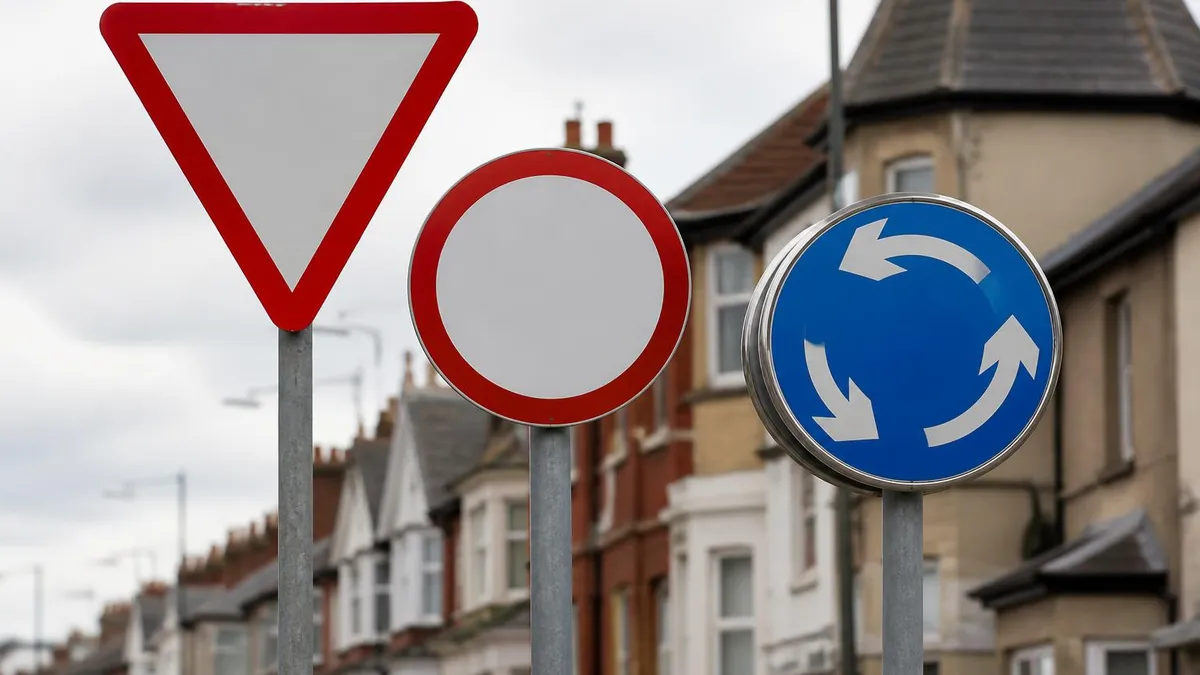
You are approaching a traffic-calming measure and see a solid blue circular sign with a white arrow pointing left. What must you do?
- A. Keep to the right of the sign
- B. Turn left at the next junction
- C. Keep to the left of the sign
- D. Give way to traffic from the left
Answer: C. Keep to the left of the sign
A blue circular sign gives a mandatory instruction. An arrow pointing down and to the left, often used on traffic islands or at the start of a dual carriageway, means you must keep to the left of the sign.
You are towing a trailer that is loaded unevenly with too much weight at the rear. What is most likely to happen?
- A. The outfit will be more stable than normal
- B. The trailer may sway or snake, making it difficult to control
- C. Fuel consumption will improve
- D. The front wheels of the towing vehicle will have better grip
Answer: B. The trailer may sway or snake, making it difficult to control
Rear-heavy trailer loading shifts weight off the towing vehicle's rear axle, causing instability and a risk of dangerous snaking or jack-knifing.
When approaching a junction, you see a rectangular blue sign with a large white arrow pointing forwards and a smaller red arrow pointing in the opposite direction. What does this mean for you?
- A. You are on a one-way street
- B. The road ahead narrows
- C. Oncoming traffic has priority
- D. You have priority over oncoming vehicles
Answer: D. You have priority over oncoming vehicles
This rectangular blue sign indicates that you have priority over vehicles travelling from the opposite direction. It is often used where the road narrows and only one vehicle can pass at a time.
What should you do if you break down on a smart motorway with no hard shoulder?
- A. Stay in the live lane and wait for help
- B. Try to reach an emergency refuge area and call for help using the SOS phone
- C. Walk along the motorway to the next junction
- D. Stand behind your vehicle to warn other drivers
Answer: B. Try to reach an emergency refuge area and call for help using the SOS phone
If you break down on a smart motorway without a hard shoulder, try to reach an emergency refuge area (ERA). If you cannot, move to the left-hand verge if possible, switch on your hazard lights, and call 999. Stay behind the crash barrier if there is one.
DVSA Questions and Answers

Cancelling Driving Test: The Complete UK Guide to Refunds, Rebooking and Avoiding Lost Fees in 2026
Cancel Driving Test UK: Complete DVSA Guide to Refunds, Rebooking & Avoiding Lost Fees in 2026

DVSA Car Practical Test: Complete Guide to Passing First Time
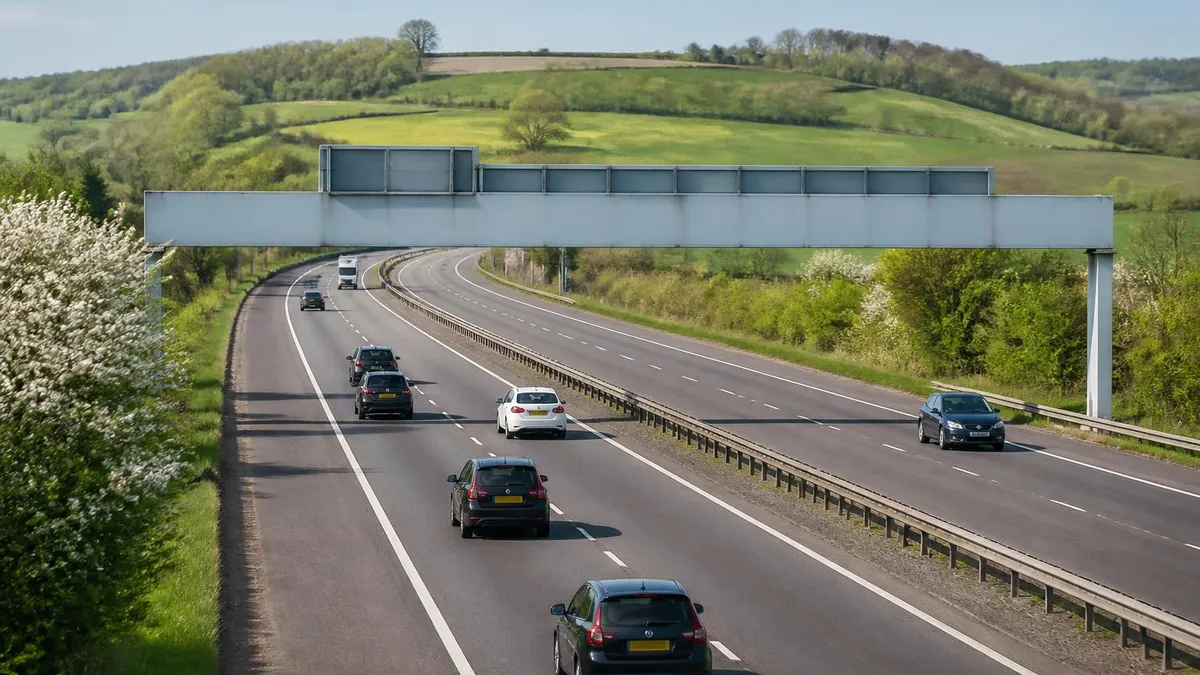
How to Change Theory Test Date: Complete DVSA Rebooking Guide for 2026
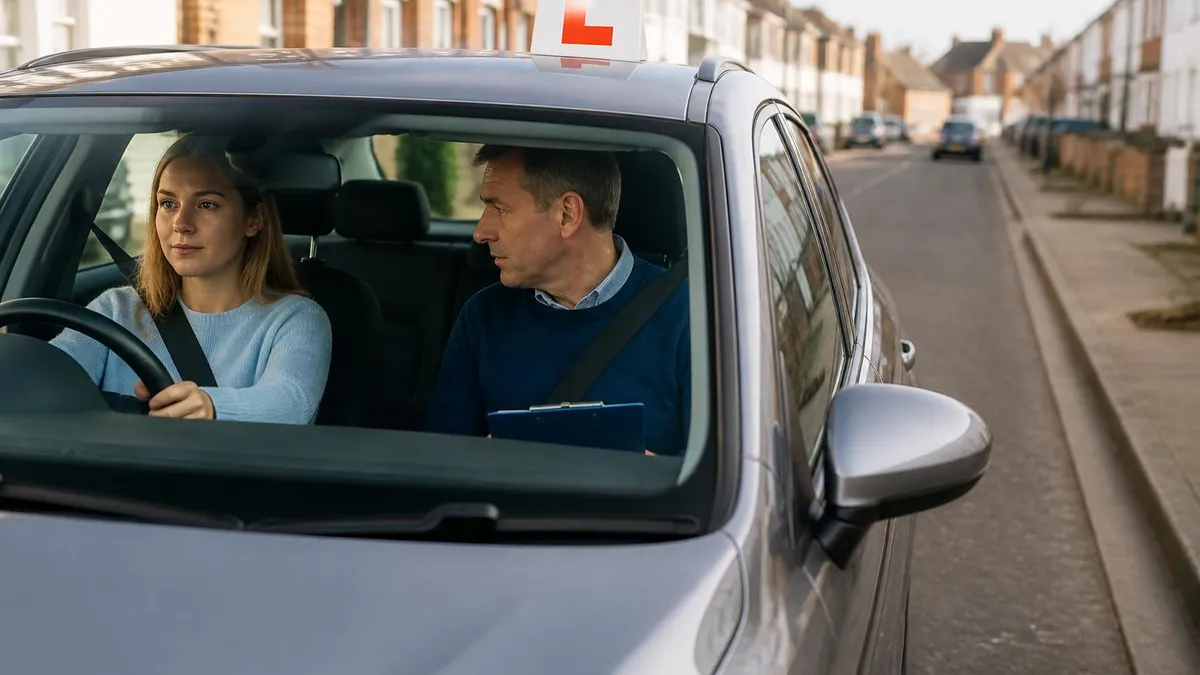
Learn to Drive UK: The Complete 2026 Beginner's Guide to Lessons, Tests and Licence Success
About the Author

Licensed Driving Instructor & DMV Test Specialist
Penn State UniversityRobert J. Williams graduated from Penn State University with a degree in Transportation Management and has spent 20 years as a certified driving instructor and DMV examiner consultant. He has personally coached thousands of applicants through written knowledge tests, skills assessments, and commercial driver licensing programs across more than 30 states.