
Book Theory Test Gov: Complete UK Guide to Booking Your DVSA Theory Test Online
Learn how to book theory test gov online in minutes. ✅ Step-by-step DVSA guide covering eligibility, fees, rescheduling, and what to bring on test day.
Knowing how to book theory test gov through the official DVSA website is the essential first step every UK learner driver must take before they can sit behind the wheel for their practical exam. The government's online booking portal at gov.uk is the only authorised route for securing a car theory test appointment in England, Scotland, and Wales, and the process — once you understand it — takes fewer than ten minutes from start to confirmation email. This guide walks you through every stage so you never waste time, money, or a precious test slot.
The DVSA theory test has two distinct parts: the multiple-choice section and the hazard perception video clips. Both sections are completed in the same sitting on the same day, and you must pass both to receive an overall pass certificate. Your pass certificate is valid for two years, meaning you must pass your practical driving test within that window or you will be required to retake the theory test. Understanding this timeline before you book helps you plan your preparation properly rather than rushing into a test date you are not ready for.
Eligibility is the first thing to confirm before visiting the booking portal. You must be at least 17 years old to take the car theory test, although you can book from age 15 years and 9 months in anticipation of turning 17. You will need a valid UK driving licence number — either your full provisional licence or, in some circumstances, your full licence — to create your booking. Without a valid provisional licence number, the DVSA system will not let you proceed past the registration screen.
The standard fee for a car theory test is £23, payable by debit or credit card at the time of booking. This fee is non-refundable if you fail to attend or cancel with less than three clear working days' notice. The DVSA does offer free rebooking in exceptional circumstances, such as a bereavement or serious illness, but these cases require supporting documentation and are assessed individually. Budget at least £23 plus any revision materials when planning your learning journey to avoid financial surprises close to test day.
Test centres are spread across the UK, and the booking portal lets you search by postcode to find the most convenient location. Urban areas typically have multiple centres within a short commute, while rural candidates may need to travel further. Availability varies enormously by location and time of year — busy periods such as summer holidays and post-Christmas January often see slots booked several weeks in advance. Checking availability regularly and booking early gives you the best chance of securing a date that suits your preparation timeline.
One frequently overlooked advantage of the gov.uk booking system is the ability to request reasonable adjustments for candidates with disabilities, learning difficulties such as dyslexia, or other special educational needs. Adjustments can include extra time, a voiceover for the multiple-choice questions, or a British Sign Language video for instructions. These accommodations must be requested at the time of booking or in advance by contacting the DVSA directly — they cannot be arranged on the day of your test, so plan ahead if you think you may benefit from any support.
This guide covers the complete booking process, official fees, what to bring on the day, how to reschedule or cancel if your plans change, and how to make the most of your preparation time using practice materials tailored to the DVSA's official question bank. Whether you are booking your very first theory test or rebooking after an unsuccessful attempt, the information here will save you time and help you arrive at the test centre fully prepared and confident.
DVSA Theory Test by the Numbers
Key Facts at a Glance
| Item | Value | Details |
|---|---|---|
| Official Booking Fee | £23 | Car theory test |
| Multiple-Choice Questions | 50 | 43 correct needed to pass |
| Hazard Perception Pass Mark | 57/75 | Out of 75 total clips scored |
| Total Test Duration | 57 mins | Both sections combined |
| Pass Certificate Validity | 2 Years | Must pass practical within this window |
How to Book Your Theory Test on Gov.uk: Step-by-Step
Check Eligibility and Get Your Provisional Licence
Visit the Official Gov.uk Booking Page
Enter Your Driving Licence Details
Choose Your Test Centre and Date
Pay the £23 Fee
Receive Your Confirmation Email
Once you have secured your booking through the official gov.uk portal, the next priority is structuring a study plan that covers all 14 topic categories tested in the DVSA multiple-choice section. These categories range from alertness and attitude through to vehicle loading, motorway rules, and road and traffic signs. The DVSA publishes an official question bank that contains every question that can appear on your test, and working through this bank systematically — rather than memorising random questions — is by far the most effective revision strategy used by candidates who pass first time.
The hazard perception part of the test is often underestimated by learners who spend all their preparation time on the multiple-choice section. In the hazard perception clips, you watch 14 video clips filmed from a driver's perspective and must click whenever you see a developing hazard — a situation that causes the driver to change speed or direction.
Fourteen of the clips contain one scored hazard, and one clip contains two. You score between 0 and 5 points per hazard depending on how quickly you respond after the hazard starts developing. Clicking too early, too late, or in a pattern that suggests you are clicking continuously rather than responding to genuine hazards will result in a score of zero for that clip.
Many learners find it helpful to use a structured revision timetable that covers one or two topic categories per session rather than attempting to cram all categories in a short period. Spaced repetition — revisiting topics at increasing intervals — has strong scientific support as a memory consolidation technique. Apps and websites that use adaptive questioning, presenting topics you struggle with more frequently than topics you have mastered, are particularly effective for building the retrieval practice that helps knowledge stick under exam conditions.
Understanding the marking thresholds is critical for managing nerves on test day. In the multiple-choice section, you need 43 out of 50 correct answers — an 86 percent pass mark that is considerably higher than many candidates expect. Each question has four answer options, with one correct answer. Some questions include a photograph, a diagram, or a video clip to provide context. You can flag questions to return to and review before submitting, and you will have 57 minutes for the multiple-choice section, giving you roughly one minute per question with time remaining for review.
For the hazard perception section, the pass mark is 44 out of 75. With 14 clips and 15 scored hazards, achieving 44 points means averaging just under three points per hazard — achievable with moderate practice but requiring genuine responsiveness rather than guesswork. The DVSA provides free official hazard perception practice clips on its website, and these are worth completing alongside any third-party revision tools because they demonstrate exactly the standard of hazard timing the examiners expect.
Special consideration candidates — those with dyslexia, ADHD, hearing impairment, or other recognised conditions — should note that the reasonable adjustments process can significantly affect how you prepare. For example, candidates approved for a voiceover have every multiple-choice question read aloud, which changes the pace of the test and requires practising with audio rather than visual-only study materials. Contact the DVSA accessibility team before booking to discuss what adjustments are available and how to apply for them, because the approval process can take several weeks.
The morning of your theory test should involve minimal new revision. Research into test performance consistently shows that attempting to learn new material immediately before an exam increases anxiety without improving results. Instead, spend the hour before your test doing light review of road signs — the category most likely to catch candidates out with minor visual differences between similar signs — and then focus on arriving at the test centre with time to spare, your valid photo ID ready, and a calm mindset built on weeks of thorough preparation.
DVSA Practice Test Questions
Prepare for the DVSA - UK Driving Theory Test exam with our free practice test modules. Each quiz covers key topics to help you pass on your first try.
DVSA Eco-Friendly Driving and Vehicle Loading
DVSA Exam Questions covering Eco-Friendly Driving and Vehicle Loading. Master DVSA Test concepts for certification prep.
DVSA Hazard Awareness
Free DVSA Practice Test featuring Hazard Awareness. Improve your DVSA Exam score with mock test prep.
DVSA Incidents, Accidents and First Aid
DVSA Mock Exam on Incidents, Accidents and First Aid. DVSA Study Guide questions to pass on your first try.
DVSA Motorway Rules and Smart Motorways
DVSA Test Prep for Motorway Rules and Smart Motorways. Practice DVSA Quiz questions and boost your score.
DVSA Rules of the Road (Highway Code)
DVSA Questions and Answers on Rules of the Road (Highway Code). Free DVSA practice for exam readiness.
DVSA - UK Driving Theory Hazard Awareness ...
DVSA Mock Test covering - UK Driving Theory Hazard Awareness and Perception. Online DVSA Test practice with instant feedback.
DVSA - UK Driving Theory Motorway Rules an...
Free DVSA Quiz on - UK Driving Theory Motorway Rules and Regulations. DVSA Exam prep questions with detailed explanations.
DVSA - UK Driving Theory Road and Traffic ...
DVSA Practice Questions for - UK Driving Theory Road and Traffic Signs. Build confidence for your DVSA certification exam.
DVSA - UK Driving Theory Rules of the Road
DVSA Test Online for - UK Driving Theory Rules of the Road. Free practice with instant results and feedback.
Theory Test Study Strategies: Multiple Choice, Hazard Perception, and Mock Tests
The multiple-choice section draws from the DVSA's official question bank of approximately 900 questions across 14 categories. The most effective approach is to work through every category at least twice using an app or website that tracks your accuracy by topic. Focus extra sessions on categories where your mock scores fall below 80 percent, particularly road signs, motorway rules, and vehicle handling, which consistently produce the most incorrect answers among first-time candidates.
Timed mock tests are essential in the final two weeks before your booking date. Sitting a full 50-question mock under exam conditions — no pauses, no looking up answers — trains you to manage the time pressure and builds the mental stamina needed to maintain concentration for the full 57-minute session. Aim to complete at least five full mock tests in the week before your test, targeting a consistent score of 47 or higher so that exam-day nerves still leave you comfortably above the 43-question pass mark.

Online Booking vs Walk-In: Which Approach Works Better?
- +Available 24 hours a day, 7 days a week — book at any time that suits you
- +Instant confirmation email with all test details immediately after payment
- +Easy to compare availability across multiple test centres in one view
- +Simple online rescheduling and cancellation without needing to phone
- +Secure payment by debit or credit card with DVSA-encrypted checkout
- +Accessible adjustments and special requirements can be flagged during booking
- −No walk-in bookings accepted — online or phone booking is mandatory
- −High-demand slots at popular centres can disappear within hours of release
- −Technical issues on gov.uk can occasionally prevent completion of booking
- −£23 fee is non-refundable if you miss the test without 3 clear days' notice
- −No live chat support — queries require phone or email to the DVSA contact centre
- −Provisional licence number required upfront — no way to register interest without one
Theory Test Day Preparation Checklist
- ✓Bring your valid UK photocard driving licence — this is mandatory and no alternative ID is accepted.
- ✓Arrive at the test centre at least 15 minutes before your scheduled appointment time.
- ✓Leave your mobile phone switched off and stored in a locker — phones cannot be in the testing room.
- ✓Do not bring revision notes or books into the test centre waiting area.
- ✓Wear comfortable clothing — test rooms are sometimes cool; layers are helpful.
- ✓Confirm the exact address of your test centre the day before, as some towns have multiple venues.
- ✓Plan your route and check for travel disruptions the evening before your test.
- ✓Eat a light meal or snack beforehand — sitting a 57-minute exam on an empty stomach reduces concentration.
- ✓Get a full night's sleep — fatigue measurably increases error rates on both test sections.
- ✓Read and understand the test centre rules emailed to you in your booking confirmation.
Your theory test pass is only valid for 2 years
Many learners are unaware that passing the theory test starts a strict two-year clock. If you do not pass your practical driving test within 24 months of your theory test pass date, your certificate expires and you must retake — and repay for — the theory test before you can book another practical. Book your practical driving test as soon as you feel ready to avoid losing your theory pass, especially if lesson availability in your area is limited.
Rescheduling or cancelling your theory test is straightforward as long as you act with sufficient notice. The DVSA requires you to give at least three clear working days' notice to change or cancel a booking and receive a refund or free reschedule. 'Clear working days' means the days between your request and the test date — weekends and bank holidays do not count. So if your test is on a Thursday, your last opportunity to cancel with a refund is before midnight on the preceding Saturday. Miss this window and you forfeit the £23 fee entirely.
To reschedule through the gov.uk portal, log in with the same credentials you used when booking and navigate to the 'manage your theory test' section. You will see options to change the date, change the centre, or cancel entirely. If you cancel and want to rebook at a different centre, you will need to start a fresh booking rather than transferring — the system does not move credits between centres automatically. Keep your original booking reference on hand when making any changes, as it is the fastest way to locate your record in the DVSA system.
If you miss your test without cancelling — whether due to illness, a transport failure, or simply forgetting — the standard position is that you lose your £23 fee and must make a fresh booking and payment. However, the DVSA does operate a compassionate circumstances policy for genuinely serious situations.
Evidence such as a hospital letter for an emergency admission, a death certificate for a close family bereavement, or a letter from your GP documenting a serious medical episode can support a request for a free reschedule or refund in exceptional cases. Contact the DVSA contact centre as soon as possible after the missed test rather than waiting weeks before making your case.
Test centres occasionally close at short notice due to technical failures, severe weather, or staffing issues. When this happens, the DVSA contacts all affected candidates by email and automatically offers a free reschedule. You do not lose your fee in these circumstances, and the system typically presents a list of alternative dates at the same or nearby centre. Check your email regularly in the days leading up to your test for any such notifications, particularly during periods of bad weather in winter months when closures are more likely to occur.
Candidates who need to take their theory test in Welsh can request a Welsh-language version of the multiple-choice section through the booking portal. The hazard perception section does not currently have a Welsh audio option, but the visual content of the clips is identical. Welsh-language candidates should indicate their preference at the time of booking to ensure the correct version is loaded at their test station. A small number of test centres in Wales have dedicated Welsh-medium sessions — the booking portal highlights these options during the centre selection stage.
If your provisional driving licence is lost or damaged before your theory test, you must apply for a replacement licence from the DVLA before you can use it as your identity document at the test centre. A replacement licence can take up to six weeks to arrive by post, though the DVLA offers a faster turnaround for applications submitted online with a valid passport photo.
Attempting to attend a theory test with a damaged or expired provisional licence will result in being turned away, forfeiting your fee, and needing to rebook — so address licence issues as soon as you notice them rather than hoping the test centre will accept a workaround.
The DVSA publishes updated question bank content periodically to reflect changes to the Highway Code, new road signage legislation, and evolving guidance on topics such as electric vehicles, autonomous driving features, and updated first aid procedures. If a significant Highway Code update has been announced since you began your revision, check the DVSA website to confirm whether the changes affect questions that will appear on tests booked from a specific date.
The 2022 Highway Code update was the most significant revision in decades and affected dozens of right-of-way and hierarchy-of-road-users questions — staying current with such changes is an important part of test preparation that many revision apps are slow to reflect.
The DVSA will not refund your £23 booking fee if you cancel with fewer than three clear working days' notice. Weekends and bank holidays do not count as working days when calculating this window. If your test falls on a Monday, you must cancel before midnight on the previous Wednesday to qualify for a refund. Log into your gov.uk account immediately if your plans change — do not delay.
Passing the theory test first time requires more than simply knowing the Highway Code — it demands familiarity with how the DVSA phrases questions and presents answer options.
The official question bank uses precise, sometimes technical language, and a significant number of incorrect answers are chosen not because the candidate lacked knowledge but because they misread a single word such as 'must', 'should', 'may', or 'never'. Training yourself to read every question and answer option twice before selecting is a habit that costs only a few seconds but prevents a disproportionate number of careless errors, particularly in the final minutes of the session when fatigue sets in.
Many experienced driving instructors recommend that learners do not book their theory test until they are consistently scoring 47 or above on full mock tests across at least five consecutive attempts. The reasoning is straightforward: a score of 43 on a mock means you are at the pass boundary, and exam-day pressure or an unfamiliar question phrasing can easily push you below the threshold.
A comfortable buffer of four or five marks above the pass mark provides insurance against nerves, and building that buffer takes additional preparation time that is well worth investing before booking a date rather than after a failed attempt.
Learners who fail the theory test must wait at least three working days before rebooking. There is no limit on the number of times you can retake the test, and each attempt costs the full £23 fee. Statistically, candidates who fail their first attempt pass their second with a higher success rate than their initial test — partly because they have experienced the test format and partly because the failure itself motivates more targeted revision.
If you do not pass, ask the test centre staff for a breakdown of which sections you failed, as this information helps you focus your revision rather than repeating broad general study.
The DVSA theory test is deliberately designed to test not just knowledge of rules but also the application of those rules to realistic driving scenarios.
Questions such as 'what should you do when approaching a pedestrian crossing where the lights are showing amber?' require you to recall a specific rule, but questions framed around a narrative scenario — 'you are driving on a motorway and notice a vehicle travelling in the opposite direction on your carriageway — what should you do?' — require you to think through a sequence of actions under time pressure. Practising scenario-based questions specifically prepares your brain for this type of reasoning under exam conditions.
Eco-friendly driving and vehicle safety topics have grown in prominence in the DVSA question bank over the past decade, reflecting the government's road safety and environmental policy priorities. Questions on tyre pressures, roof rack loading limits, carbon monoxide risks from catalytic converters, and the fuel efficiency benefits of anticipatory driving now appear regularly.
These topics overlap with several of the practice tests available on this site, and working through them before your test is an efficient way to pick up marks in categories that many candidates neglect during revision in favour of more traditional topics such as traffic signs and motorway rules.
Your theory test pass certificate will be emailed to you immediately after a successful test, and you will also receive a paper notification at the test centre. The certificate shows your test date and a unique reference number that the DVSA uses to verify your pass when you book your practical driving test.
Keep both the email and the paper certificate in a safe place, as replacement copies can take time to obtain if lost. When you subsequently book your practical test — you can do so immediately after passing your theory — you will be asked to provide this reference number to confirm your theory pass is current and within its two-year validity window.
For candidates aiming to pass both the theory and practical tests within a single licence-year budget, planning the sequence of bookings matters. Book the theory test first, once you have completed a solid foundation of revision. Once you have your theory pass certificate, book the practical test for a date that falls well within the two-year window — ideally within 12 to 18 months — to leave enough buffer for one reschedule if needed without risking expiry.
Coordinating your lesson schedule with your target practical test date, and using the theory revision period to build up your driving knowledge alongside on-road experience, creates the most efficient pathway to a full UK driving licence.
If you want more targeted practice, the book theory test gov page covers the same material with additional questions and explanations.
For a fuller set of questions on this topic, see our book theory test gov resource.
You can continue preparing with the book theory test gov, which includes answer explanations for every question.
Choosing the right test centre can have a material impact on your test-day experience. Larger urban centres typically have more appointment slots but can feel impersonal and bustling, which some candidates find unsettling on an already nerve-wracking day. Smaller regional centres often have quieter waiting areas and friendlier staff interactions, though they may offer fewer available slots and require a longer journey.
Visit Google Maps reviews or driving instructor forums to read first-hand accounts of specific centres before committing — factors such as parking availability, public transport access, and the quality of the computer equipment are worth considering alongside raw slot availability.
If you are studying with a driving instructor, make use of their experience to time your theory test booking intelligently. Most instructors have a clear sense of when their students are ready — typically after 20 to 30 hours of lessons combined with at least four weeks of self-directed theory revision.
An instructor who knows you well can spot whether you are rushing toward a booking date before your knowledge is consolidated, and their advice is worth heeding. That said, the final decision on when to book rests with you — you know your own learning speed, retention, and confidence levels better than anyone else.
The gov.uk theory test booking portal occasionally undergoes scheduled maintenance, typically between midnight and 6am. If you encounter an error message during the booking process during off-peak hours, try again after a short wait rather than assuming there is a problem with your account or driving licence details. Persistent errors during daytime hours should be reported to the DVSA contact centre, which can complete bookings manually in cases where the online system cannot. The contact centre number is published on the gov.uk theory test booking page and operates Monday to Friday during standard business hours.
International candidates — those who learned to drive in another country and are converting to a UK licence — should be aware that the theory test requirements differ depending on your country of origin. Nationals of certain countries can exchange their foreign licence directly for a UK licence without sitting either test, while others must pass both the theory and practical tests from scratch.
Check the DVLA's official licence exchange guidance before booking a theory test to confirm whether you are required to take it or whether a direct exchange applies to your situation, as booking unnecessarily costs both money and preparation time.
Parents and guardians of young learners should be aware that the minimum age requirement of 17 applies strictly at the time of sitting the test, not at the time of booking. You can book a test date for a 16-year-old in anticipation of their 17th birthday, but the test appointment must fall on or after their 17th birthday.
The booking portal does not automatically enforce this — it is the candidate's responsibility to ensure the test date is valid. Booking a test for a date before the candidate's 17th birthday will result in being turned away at the centre with no refund.
Once you have passed your theory test and are working toward your practical, the knowledge you have built during theory preparation provides a direct advantage in your on-road lessons. Learners who approach practical driving with a strong understanding of the Highway Code, road signs, and hazard perception principles typically need fewer hours of instruction to reach test standard than those who treated theory preparation as a separate tick-box exercise. The theoretical and practical aspects of driving are deeply interconnected — a driver who understands why rules exist follows them more naturally and consistently than one who has merely memorised them.
Finally, remember that the theory test is designed to be passed by any motivated learner who puts in the work. The DVSA's published pass rate for car theory tests hovers around 47 to 52 percent nationally, but this average is heavily dragged down by candidates who book without adequate preparation.
Learners who complete a structured revision programme, consistently hit high mock test scores, and understand both the multiple-choice and hazard perception formats before booking their date pass at a significantly higher rate. Treat this guide as your starting point, use the practice questions available throughout this site to build your confidence, and approach your test date knowing you have prepared thoroughly.
Sample DVSA UK Driving Theory Practice Questions
Try these questions from our free DVSA UK Driving Theory practice tests. The correct answer and an explanation follow each question.
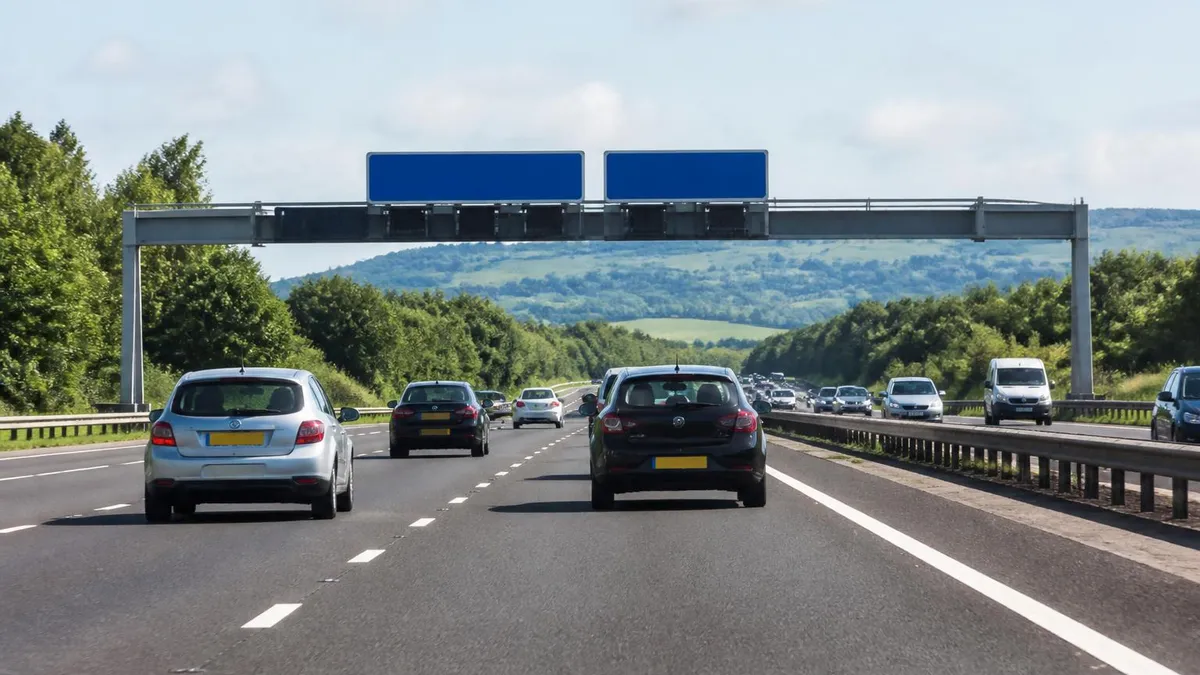
On a smart motorway, what does a speed limit sign inside a red circle on a gantry mean compared to one without a red circle?
- A. Red circle means advisory only, no circle means mandatory
- B. Red circle means mandatory and enforceable, no circle means advisory
- C. Both are mandatory
- D. Neither is enforceable
Answer: B. Red circle means mandatory and enforceable, no circle means advisory
A speed limit displayed in a red circle on a gantry is a mandatory, legally enforceable speed limit. A speed limit displayed without a red circle is advisory — it is recommended but not legally enforceable. However, you should still follow advisory limits as they indicate a hazard.
You are on a one-way street and see a blue sign for a contraflow bus lane. What does this indicate?
- A. You must move into the bus lane immediately.
- B. Buses may be travelling in the opposite direction to you.
- C. You are approaching a bus-only roundabout.
- D. The one-way street is about to become a two-way street for all traffic.
Answer: B. Buses may be travelling in the opposite direction to you.
A contraflow bus lane on a one-way street is a lane reserved for buses (and sometimes other authorised vehicles) travelling in the opposite direction to the main flow of traffic. Drivers should be alert for buses approaching from the 'wrong' way in this lane.
You witness a motorcyclist involved in a collision. They are unconscious. Should you remove their helmet?
- A. Yes, always remove it immediately
- B. No, only remove it if they are not breathing
- C. Yes, to check for head injuries
- D. No, leave it on unless there is a specific breathing problem that cannot otherwise be resolved
Answer: D. No, leave it on unless there is a specific breathing problem that cannot otherwise be resolved
A motorcyclist's helmet should only be removed if it is absolutely necessary to maintain their airway, as removal risks aggravating a spinal injury.
A police officer stops you and asks to see your Certificate of Motor Insurance. You do not have it with you. What is the most likely outcome?
- A. Your vehicle will be impounded immediately.
- B. You will be given a verbal warning and allowed to proceed.
- C. You will be required to produce the document at a police station within 7 days.
- D. You will receive an automatic fine and penalty points.
Answer: C. You will be required to produce the document at a police station within 7 days.
If you are stopped by the police and cannot produce your insurance certificate, you will typically be issued with a form (a 'producer') requiring you to present the document at a police station of your choice within 7 days.
DVSA Questions and Answers
DVLA Theory Test Booking: Complete Step-by-Step Guide for UK Learners
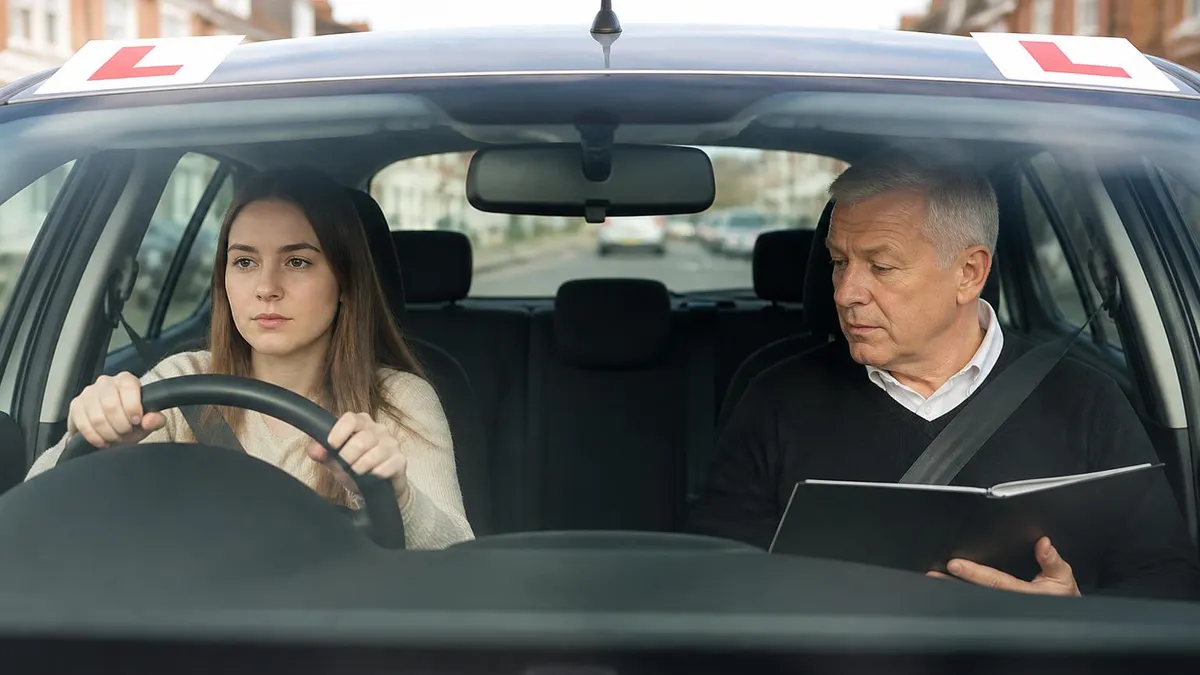
Driving Theory Test App: The Complete Study Guide for UK Learners
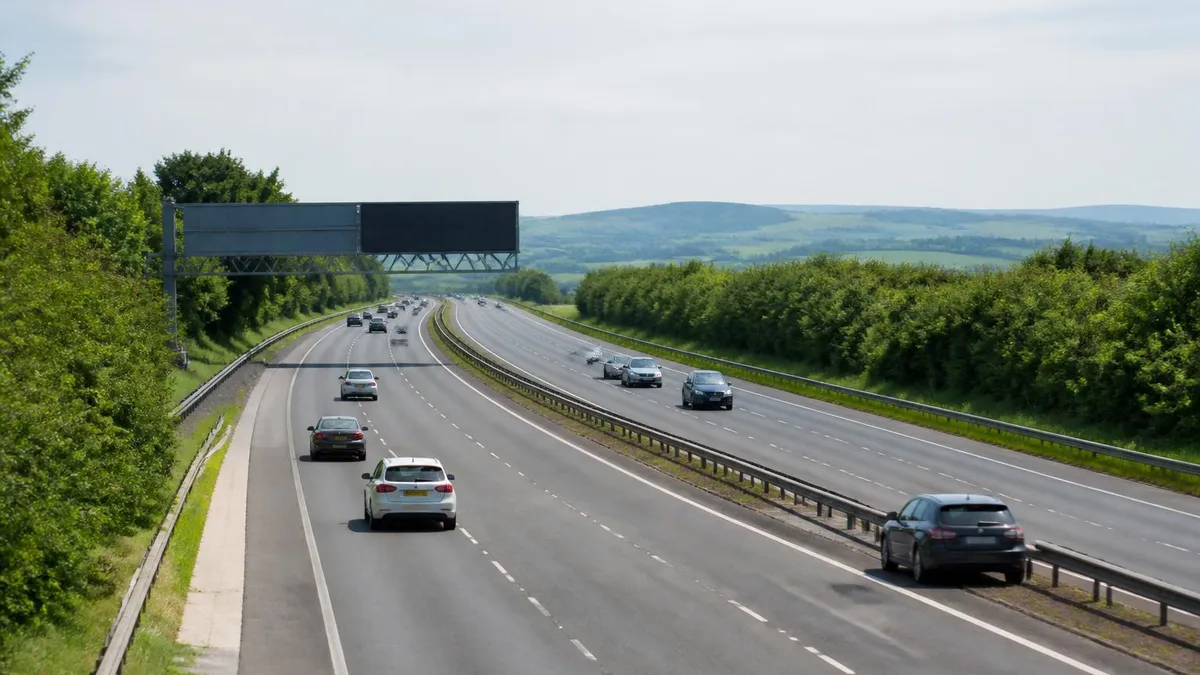
How to Book Your DVSA Practical Driving Test: Complete UK Guide

Learn to Drive in the UK: Complete Beginner's Guide to Getting Your Licence

DVSA Car Practical Test: Complete Guide to Passing First Time
About the Author

Licensed Driving Instructor & DMV Test Specialist
Penn State UniversityRobert J. Williams graduated from Penn State University with a degree in Transportation Management and has spent 20 years as a certified driving instructor and DMV examiner consultant. He has personally coached thousands of applicants through written knowledge tests, skills assessments, and commercial driver licensing programs across more than 30 states.