
Learn to Drive in the UK: Complete Beginner's Guide to Getting Your Licence 2026
Learn to drive in the UK with our complete guide covering theory test, practical test, costs, timelines, and DVSA requirements for new drivers. 🗨️

Learning to drive is one of the most liberating milestones in adult life, opening up independence, career opportunities, and freedom of movement that public transport simply cannot match. In the UK, the process is structured and regulated by the Driver and Vehicle Standards Agency (DVSA), which sets the standards for both theory and practical assessments. Practice with the free DVSA UK Driving Theory practice test on PracticeTestGeeks (7 questions with answer explanations).
Whether you are sixteen and counting the days until you can apply for a provisional licence, or an adult returning to driving after years away, understanding the full journey before you begin will save you time, money, and frustration. This guide walks you through every stage of the process.
The first thing most new learners discover is that getting your driving licence involves two entirely separate tests: a written theory test and a practical on-road assessment. Both must be passed before you receive a full UK driving licence. Many learners underestimate the theory component, assuming that a few evenings of casual revision will be enough. In reality, the DVSA theory test covers a broad syllabus including road signs, stopping distances, motorway rules, hazard perception, and vehicle safety — topics that require genuine study and practice to master confidently.
Costs are a significant factor for most learners, and it is worth budgeting carefully from the outset. A typical learner in the UK spends between £1,200 and £2,000 on the full process when you factor in provisional licence fees, driving lessons, theory test fees, hazard perception preparation, practical test fees, and any re-sits. The number of lessons required varies enormously depending on the individual, but the DVSA notes that the average learner needs around 45 hours of professional tuition plus 22 hours of private practice to reach test standard. Starting with realistic expectations helps avoid disappointment.
Choosing the right driving instructor is arguably the single most important decision you will make during this process. A good Approved Driving Instructor (ADI) will not only teach you the mechanical skills of car control but will also coach you in the observation, anticipation, and risk assessment skills that the examiner will specifically look for on test day. Always check that your instructor holds a green ADI badge, displayed in the windscreen, and consider booking a trial lesson before committing to a block of sessions. Word-of-mouth recommendations from recently qualified drivers are often the most reliable guide.
Before you can take a single lesson on public roads, you must hold a valid provisional driving licence issued by the DVLA. You can apply online through the government website as soon as you turn fifteen years and nine months old, though you cannot legally drive on public roads until your sixteenth birthday for mopeds or your seventeenth birthday for cars. The application requires your National Insurance number, a valid UK passport photograph, and a fee of £34. Processing typically takes around one week for online applications, though paper applications can take considerably longer, so plan ahead.
Once you have your provisional licence and have started lessons, you should begin your theory test preparation early. Many learners make the mistake of treating theory study as something to tackle only once they feel confident behind the wheel. In fact, the two strands of learning complement each other beautifully — understanding the theory behind road positioning, following distances, and hazard recognition makes your practical lessons more productive from day one. If you are ready to learn to drive and want a structured route through the entire process, our companion resources will guide you step by step.
This article covers the complete journey from provisional licence application through to passing your practical test. You will find detailed guidance on each stage, realistic timelines, cost breakdowns, common mistakes to avoid, and tips from experienced instructors and recently qualified drivers. Whether you are just beginning to explore your options or are already mid-way through your lessons and preparing for an upcoming test, there is something here to help you move forward with confidence and clarity.
Free DVSA UK Driving Theory Study Tools
Interactive DVSA UK Driving Theory resources on PracticeTestGeeks, free to start:
- DVSA UK Driving Theory flashcards — review key terms and concepts card by card
- DVSA UK Driving Theory study guide — topic-by-topic overview of what the exam covers
- DVSA UK Driving Theory cheat sheet — one-page printable summary for last-minute review
Learning to Drive in the UK: Key Numbers
Your Step-by-Step Journey to a Full UK Driving Licence
Apply for Your Provisional Licence
Book and Start Driving Lessons
Study for and Pass the Theory Test
Complete Advanced Lesson Practice
Book and Sit Your Practical Driving Test
Receive Your Full Driving Licence
The DVSA theory test is frequently underestimated by learners who focus the bulk of their energy on practical driving skills. This is a costly mistake: approximately one in three candidates fails the theory test on their first attempt, and a failed theory test means wasted time, a further £23 booking fee, and a delay to your overall licence timeline. The theory test is not simply a memory exercise — it requires genuine understanding of the principles behind safe driving, and that understanding will make you a better, safer driver throughout your life.
The multiple-choice section of the theory test comprises 50 questions drawn from a large bank of official DVSA questions covering topics including road signs, speed limits, rules of the road, vehicle safety, environmental responsibility, and emergency procedures. You have 57 minutes to answer all questions, and you need to score at least 43 out of 50 to pass this section.
Questions are displayed on a computer screen and you select your answer by clicking. Some questions include images of road signs or traffic scenarios to interpret. Careful, unhurried reading of each question is essential, as many wrong answers are designed to catch out candidates who skim-read.
The hazard perception section immediately follows the multiple-choice questions after a short video tutorial. You watch 14 video clips of real driving situations filmed from the driver's perspective and must click whenever you spot a developing hazard — that is, something that will require the driver to take action such as braking, steering, or slowing down.
Each clip contains at least one scoreable hazard, and one clip contains two. Clicking early and accurately earns higher marks (up to five per hazard), while clicking too early, too late, or in erratic patterns scores zero. The pass mark is 44 out of 75.
Effective preparation for the theory test involves three distinct activities working in combination. First, systematic study of the DVSA's official Highway Code book, which is updated regularly and covers every topic that can appear on the test. Second, repeated practice using official DVSA mock tests, which are available through the government website and through reputable third-party platforms. Third, hazard perception video practice, which requires a different cognitive skill from factual recall — you are training your eye to spot potential danger early, a habit that also improves your real-world driving awareness considerably.
Many candidates find the hazard perception section more challenging than the multiple choice, particularly if they have limited real driving experience at the time of their test. The DVSA's official advice is to avoid clicking randomly or in rapid repeated bursts, as the system is designed to detect and penalise this behaviour with a score of zero for that clip. Instead, develop a smooth, confident clicking pattern based on genuine hazard identification. Watching the clips multiple times during practice, pausing to analyse why a particular moment constitutes a developing hazard, builds the pattern recognition skills you need.
Your theory test certificate is valid for two years from the date you pass. This is an important deadline to be aware of: if you have not passed your practical driving test within two years of passing your theory test, the theory certificate expires and you must sit the theory test again before you can book another practical test.
For most learners this is not a problem, but if circumstances such as illness, financial pressures, or a change of country intervene, the two-year clock can create unexpected complications. Mark the expiry date in your calendar from the moment you receive your pass certificate.
One frequently overlooked aspect of theory test preparation is the Show Me Tell Me vehicle safety questions, which are asked at the start of the practical test rather than in the theory test itself. However, studying these questions during your theory preparation phase is highly efficient, as they cover related material such as checking oil levels, tyre pressure, brake fluid, and windscreen wash.
Your examiner will ask you one Tell Me question (where you explain a check verbally) and one Show Me question (where you demonstrate a check practically). Answering these confidently sets a positive tone for the rest of your practical test.
Readers who want more detail usually continue with learn to drive.
DVSA Practice Test Questions
Prepare for the DVSA - UK Driving Theory Test exam with our free practice test modules. Each quiz covers key topics to help you pass on your first try.
DVSA Eco-Friendly Driving and Vehicle Loading
DVSA Exam Questions covering Eco-Friendly Driving and Vehicle Loading. Master DVSA Test concepts for certification prep.
DVSA Hazard Awareness
Free DVSA Practice Test featuring Hazard Awareness. Improve your DVSA Exam score with mock test prep.
DVSA Incidents, Accidents and First Aid
DVSA Mock Exam on Incidents, Accidents and First Aid. DVSA Study Guide questions to pass on your first try.
DVSA Motorway Rules and Smart Motorways
DVSA Test Prep for Motorway Rules and Smart Motorways. Practice DVSA Quiz questions and boost your score.
DVSA Rules of the Road (Highway Code)
DVSA Questions and Answers on Rules of the Road (Highway Code). Free DVSA practice for exam readiness.
DVSA - UK Driving Theory Hazard Awareness ...
DVSA Mock Test covering - UK Driving Theory Hazard Awareness and Perception. Online DVSA Test practice with instant feedback.
DVSA - UK Driving Theory Motorway Rules an...
Free DVSA Quiz on - UK Driving Theory Motorway Rules and Regulations. DVSA Exam prep questions with detailed explanations.
DVSA - UK Driving Theory Road and Traffic ...
DVSA Practice Questions for - UK Driving Theory Road and Traffic Signs. Build confidence for your DVSA certification exam.
DVSA - UK Driving Theory Rules of the Road
DVSA Test Online for - UK Driving Theory Rules of the Road. Free practice with instant results and feedback.
Choosing Your Driving Lessons and Instructor
All professional driving instructors in the UK must be registered on the DVSA's official Approved Driving Instructor (ADI) register and display a green ADI badge in their windscreen. You can verify any instructor's registration on the government website using their licence number. Avoid instructors who cannot produce their ADI certificate or who advertise unusually low hourly rates, as these can signal either unregistered status or significantly longer lesson requirements to compensate for lower quality instruction.
When selecting an instructor, prioritise communication style and patience over price alone. Ask potential instructors about their pass rates, teaching approach, and whether they offer structured feedback after each lesson. Many experienced ADIs will offer a discounted or free trial lesson — take advantage of this before committing to a block booking. Paying for ten hours upfront saves money but leaves you with little flexibility if the relationship is not working well. Build trust gradually before making larger financial commitments.
Intensive Course vs. Weekly Lessons: Which Is Right for You?
- +Weekly lessons allow skills to consolidate naturally over time, reducing anxiety
- +Spreading lessons helps your brain process and retain new information between sessions
- +Regular weekly contact with your instructor builds a more thorough understanding of your development
- +Lower upfront cost commitment makes it easier to switch instructors if needed
- +You have more time to study theory alongside practical sessions at a comfortable pace
- +Gradual exposure to different road conditions and weather builds broader experience
- −Weekly lessons can take 12–18 months to complete, which is impractical for some schedules
- −Skills can plateau or regress between lessons if gaps are too long (more than two weeks)
- −Total cost is often higher than intensive courses when all ancillary expenses are included
- −Intensive courses can pass learners to test standard in as little as one to two weeks
- −Some learners thrive under the focused immersion that only an intensive course provides
- −Employment or relocation deadlines may make the slower weekly format genuinely impractical
Pros and Cons at a Glance
| Pros | Cons |
|---|---|
| Weekly lessons allow skills to consolidate naturally over time, reducing anxiety | Skills can plateau or regress between lessons if gaps are too long (more than two weeks) |
| Spreading lessons helps your brain process and retain new information between sessions | Total cost is often higher than intensive courses when all ancillary expenses are included |
| Regular weekly contact with your instructor builds a more thorough understanding of your development | Intensive courses can pass learners to test standard in as little as one to two weeks |
| Lower upfront cost commitment makes it easier to switch instructors if needed | Some learners thrive under the focused immersion that only an intensive course provides |
| You have more time to study theory alongside practical sessions at a comfortable pace | Employment or relocation deadlines may make the slower weekly format genuinely impractical |
Practical Test Preparation Checklist for UK Learners
- ✓Confirm your theory test certificate is still valid and will not expire before your test date.
- ✓Practise the independent driving segment — follow a sat-nav or road signs for at least 20 minutes without prompting.
- ✓Rehearse all required manoeuvres: bay parking, parallel parking, pulling up on the right, and reversing.
- ✓Ask your instructor for at least two full mock test drives on the actual test routes used at your test centre.
- ✓Review all 19 Show Me Tell Me vehicle safety questions and practise locating each component under the bonnet.
- ✓Check your provisional licence is valid, matches your current address, and will be accepted at the test centre.
- ✓Ensure your vehicle meets DVSA requirements: valid MOT, road tax, and L-plates displayed front and rear.
- ✓Plan your journey to the test centre and aim to arrive at least 15 minutes before your appointment time.
- ✓Get a full night's sleep before your test and eat a light meal to avoid energy slumps during the assessment.
- ✓Bring your provisional licence photocard to the test centre — you cannot take the test without it.
Most learners need more lessons than they expect
The DVSA's own research consistently shows that learners who complete around 45 hours of professional tuition combined with 22 hours of private practice are significantly more likely to pass their practical test first time. Rushing to test with fewer hours may save money short-term but often results in costly re-sits. Invest the time upfront and your pass rate — and long-term safety record — will reflect it.
Understanding the full cost of learning to drive helps you plan realistically and avoid financial surprises partway through the process. The provisional licence application is the smallest cost at £34, but from there expenses accumulate rapidly. Professional driving lessons are the largest single expenditure, typically running between £30 and £45 per hour depending on your location, with London and the South East at the higher end of the range. At the DVSA's suggested 45 hours of professional tuition, you could spend between £1,350 and £2,025 on lessons alone before accounting for any re-sits.
The theory test costs £23 and can be booked through the government website or by phone. Most candidates sit it once, but around one in three fails the first attempt, so budget for a potential re-sit. The hazard perception section catches many candidates off guard, so spending a few pounds on a reputable hazard perception app or online practice platform is money well spent. Some platforms offer unlimited practice for a one-off fee of around £10 to £15, making them excellent value compared to the cost of a failed test and rebooking fee.
The practical driving test costs £62 for a weekday appointment or £75 for evenings, weekends, and bank holidays. Re-sits cost the same amount, and waiting times at popular test centres can stretch to eight to twelve weeks, meaning a failed test doesn't just cost money — it costs months. This is why thorough preparation before you book your test, rather than booking speculatively and hoping for the best, is such an important strategic decision. Your instructor's honest assessment of your readiness is the most reliable guide to when to book.
After passing, your full licence is issued free of charge as it is linked to your existing provisional licence. However, many new drivers then face the challenge of insuring their first car, and for drivers under 25, insurance premiums can be substantial. Young drivers can reduce costs by adding an experienced named driver to their policy, choosing a small-engined car in a low insurance group, and considering black box (telematics) insurance, which monitors driving behaviour and rewards careful drivers with lower premiums at renewal.
Timelines vary widely between learners, but a realistic estimate for most people is twelve to eighteen months from provisional licence application to full licence. Those who start with some prior experience — perhaps having driven on private land or abroad — may progress faster. Those learning in busy urban environments with complex traffic often need more hours to develop the situational awareness required for test standard. Setting a flexible target rather than a rigid deadline reduces pressure and allows you to progress at the pace that is right for your individual development.
Some learners explore the option of Pass Plus, a voluntary course of at least six hours of additional driving covering motorways, night driving, rural roads, dual carriageways, town driving, and all-weather conditions. Pass Plus does not involve a test — it is assessed by your instructor throughout the sessions. While it no longer automatically qualifies for insurance discounts from all providers, some insurers still offer reductions, and the additional skills and confidence it provides are genuinely valuable, particularly for new drivers who live in areas where their test training did not cover motorway or night driving scenarios.
The total financial picture, when viewed comprehensively, reinforces the value of treating your learning seriously from the outset. Every hour of quality preparation — whether in a lesson, doing private practice, or studying the Highway Code — increases the probability of a first-time pass and reduces the expected total spend.
Learners who pass first time typically spend £1,200 to £1,600 in total. Those who require multiple re-sits of either test regularly spend £2,000 to £2,500 or more. The investment in thorough preparation is not just about passing a test; it is about becoming a driver capable of operating safely for a lifetime on UK roads.
Your DVSA theory test certificate is valid for exactly two years from the date you pass. If you do not pass your practical driving test within that window, your theory certificate expires and you must resit the full theory test — both the multiple-choice and hazard perception sections — before you can book a new practical test. Note this date in your calendar immediately after passing and plan your practical lessons accordingly to avoid losing your result.
Once you have passed your practical driving test, you receive a pass certificate from the examiner at the test centre. This certificate proves you passed on that date and can be used to drive unaccompanied while waiting for your full licence to be updated. Your examiner will offer to notify the DVLA electronically, which is the fastest route — your licence record is typically updated within three to five working days in most cases, with the physical photocard licence following by post within three weeks. You do not need to pay any additional fee for this update.
New drivers in the UK enter a two-year probationary period immediately upon passing their test. During this period, if you accumulate six or more penalty points on your licence, it will be revoked and you will need to apply for a new provisional licence and pass both the theory and practical tests again. This is a stricter standard than applies to experienced drivers, who must accumulate twelve points before facing disqualification. The probationary period is designed to encourage new drivers to develop safe habits during the highest-risk phase of their driving career.
Many new drivers find the transition from learner to unsupervised driver more challenging than anticipated. The psychological shift of driving without an instructor beside you — with no dual controls and no expert commentary — can feel disorienting at first. This is entirely normal. Experienced drivers routinely report that their confidence grew significantly over the three to six months following their test as they accumulated solo mileage across a wider variety of routes and conditions. Start with journeys you know well before challenging yourself with unfamiliar areas or motorway driving.
Motorway driving is not covered in the standard learner curriculum, as learners were historically prohibited from motorways. Since 2018, learner drivers can access motorways if accompanied by an ADI in a car fitted with dual controls. If your instructor did not include motorway practice, consider booking one or two post-test motorway sessions with an instructor before you attempt your first solo motorway journey. The speed, lane discipline, and joining and leaving requirements of motorway driving are genuinely different from A-road driving and benefit from supervised introduction.
If you are considering learn to drive resources to help you prepare more systematically, our platform offers detailed guidance on every aspect of the theory test alongside practical driving preparation materials. The combination of structured theory practice and well-planned practical lessons is the most reliable route to a first-time pass, and our resources are specifically designed to complement the tuition you receive from your ADI rather than replace it.
Building good habits in the first year of driving pays dividends that last for decades. New drivers who consciously practice the observation and anticipation skills assessed during the driving test — scanning junctions thoroughly, maintaining appropriate following distances, adjusting speed for conditions — develop an instinctive safe driving style that becomes second nature. Those who abandon test-standard habits immediately after passing and adopt the casual shortcuts they see around them are statistically at significantly greater risk in their first two years of driving than those who maintain disciplined habits.
Consider joining a post-test advanced driving programme such as those offered by IAM RoadSmart or RoSPA Advanced Drivers and Riders. These courses, which involve observed drives with a trained assessor followed by structured feedback, take already-qualified drivers to a genuinely advanced standard of skill and awareness. Insurance companies often reward advanced qualifications with premium reductions, making the courses financially self-funding over two to three years while simultaneously making you a measurably safer driver on every journey you take.
Eco-friendly driving is an increasingly important topic in the DVSA theory test syllabus, reflecting the UK government's broader commitments to reducing carbon emissions and improving air quality in urban areas. Learners often treat this topic as peripheral, but examiners report that questions about fuel-efficient driving techniques, engine braking, tyre pressure maintenance, and reducing unnecessary idling appear regularly in the multiple-choice section. Understanding these principles is not only useful for passing the test — it has real financial implications for every driver who fills a fuel tank or charges an electric vehicle.
The core principle of eco-friendly driving is smooth, anticipatory progress: accelerating gently, reading the road ahead to avoid unnecessary braking, and using engine braking where possible. Hard acceleration followed by sharp braking is the single most fuel-wasteful driving pattern, and it also increases wear on tyres, brakes, and the drivetrain. Learners who develop smooth driving technique during their training benefit financially from day one of independent driving through reduced fuel consumption, lower maintenance costs, and in many cases reduced insurance premiums linked to telematics scoring.
Tyre pressure deserves special attention from a fuel economy and safety perspective. Under-inflated tyres increase rolling resistance, which forces the engine to work harder and burn more fuel. They also handle less predictably in emergency manoeuvres and wear unevenly, reducing tyre life significantly. The correct tyre pressure for your specific vehicle is listed in the owner's manual and usually on a sticker inside the driver's door frame. Checking tyre pressure monthly and before long journeys is a simple habit that pays both financial and safety dividends throughout your driving life.
Vehicle loading is another topic covered in the DVSA theory test that many learners overlook. A heavily loaded car handles very differently from an unloaded one: the braking distance increases, the steering feels heavier, and the risk of aquaplaning in wet conditions rises. The DVSA's guidance specifies that loads must be distributed evenly within the vehicle, secured so they cannot shift during cornering or emergency braking, and kept below the maximum payload specified in the vehicle handbook. Overloading a vehicle is both dangerous and illegal, carrying a financial penalty and potential points on your licence.
Night driving presents challenges that daytime driving does not, including reduced visibility, increased fatigue risk, and a higher proportion of impaired drivers on the road in the late evening and early morning hours. The Highway Code requires that your headlights be switched on between sunset and sunrise and in any conditions of poor visibility. Using full beam where appropriate on unlit rural roads dramatically extends your forward visibility, but you must dip to normal beam whenever you detect an oncoming vehicle or when following another vehicle closely to avoid dazzling other drivers.
Driving in adverse weather — rain, fog, ice, and snow — requires specific adaptations that the theory test will question you on. In rain, your stopping distance doubles compared to dry conditions, which means your following distance should at least double too.
In fog, your speed should be reduced to a level where you can stop within the distance you can see ahead, and you must use front and rear fog lights when visibility drops below 100 metres. In icy conditions, stopping distances can increase to ten times the dry-road figure, requiring dramatically reduced speeds and very gentle inputs on the steering, brake, and accelerator.
Developing fuel-efficient, environmentally aware, and safety-conscious driving habits from the very beginning of your driving career is far easier than trying to correct established poor habits later. The DVSA's theory test syllabus on eco-driving is not merely an academic exercise — it reflects a genuine effort to shape the behaviour of new drivers in ways that benefit the environment, other road users, and the drivers themselves. Learners who take this material seriously and apply it in practice from their very first independent journey will find that good driving is, in almost every respect, also economical and safe driving.
Sample DVSA UK Driving Theory Practice Questions
Try these questions from our free DVSA UK Driving Theory practice tests. The correct answer and an explanation follow each question.
You will not be using your car for several months and plan to keep it in your garage. To avoid paying for vehicle tax and insurance, what must you officially do?
- A. Inform your local council.
- B. Cancel your direct debits for tax and insurance.
- C. Make a Statutory Off Road Notification (SORN) to the DVLA.
- D. Return the number plates to the DVLA.
Answer: C. Make a Statutory Off Road Notification (SORN) to the DVLA.
To legally keep an untaxed and uninsured vehicle off a public road, you must make a Statutory Off Road Notification (SORN) to the DVLA. This declares that the vehicle is not in use.
What do brown rectangular signs indicate on UK roads?
- A. Motorway service areas and fuel stations
- B. Industrial estates and business parks
- C. Tourist attractions and leisure facilities
- D. Diversion routes during road works
Answer: C. Tourist attractions and leisure facilities
Brown rectangular signs direct drivers to tourist attractions, historic sites, and leisure facilities.
What is the overall stopping distance at 60 mph on a dry road?
- A. 53 metres (175 feet)
- B. 73 metres (240 feet)
- C. 96 metres (315 feet)
- D. 120 metres (394 feet)
Answer: B. 73 metres (240 feet)
At 60 mph, the typical overall stopping distance on a dry road is 73 metres (240 feet). This includes 18 metres thinking distance and 55 metres braking distance. In wet conditions, these distances at least double.
You see a circular blue sign with the number '30' in white. What does this sign mean?
- A. Maximum speed limit of 30 mph.
- B. Recommended speed of 30 mph.
- C. End of the 30 mph speed restriction.
- D. Minimum speed limit of 30 mph.
Answer: D. Minimum speed limit of 30 mph.
A circular sign with a blue background indicates a mandatory instruction. In this case, it signifies a minimum speed limit. You must not drive slower than the speed indicated, unless it is unsafe to do so. Maximum speed limits are shown in a red circle.
DVSA Questions and Answers
DVLA Theory Test Booking: Complete Step-by-Step Guide for UK Learners
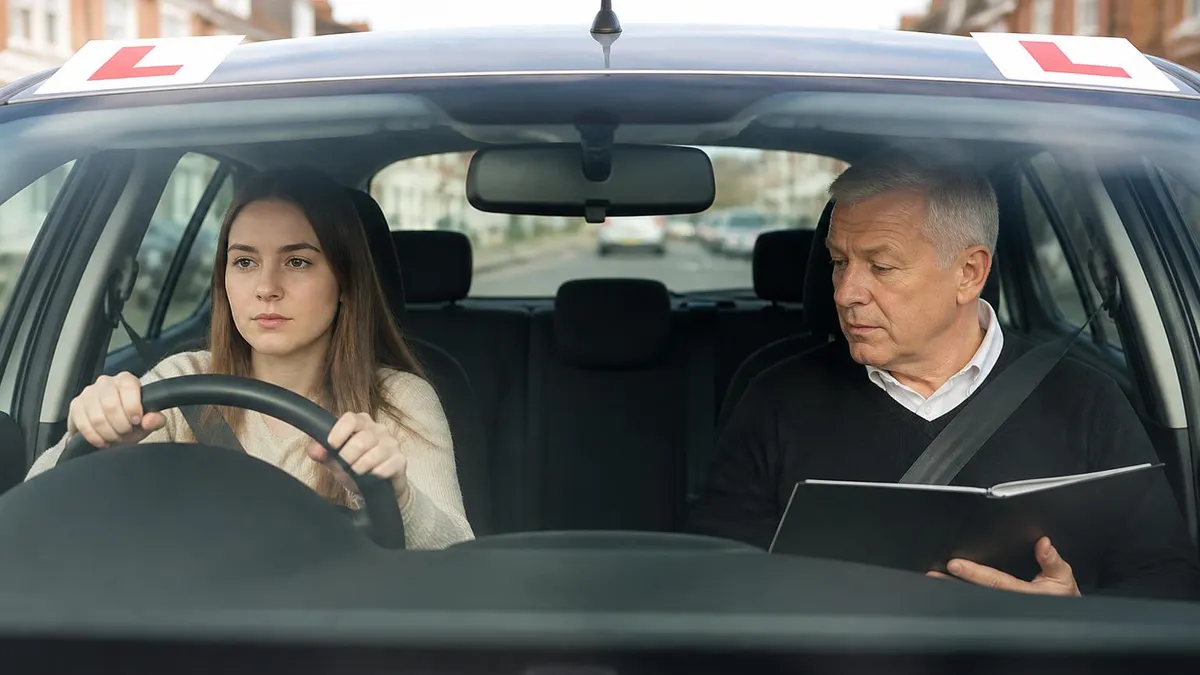
Driving Theory Test App: The Complete Study Guide for UK Learners
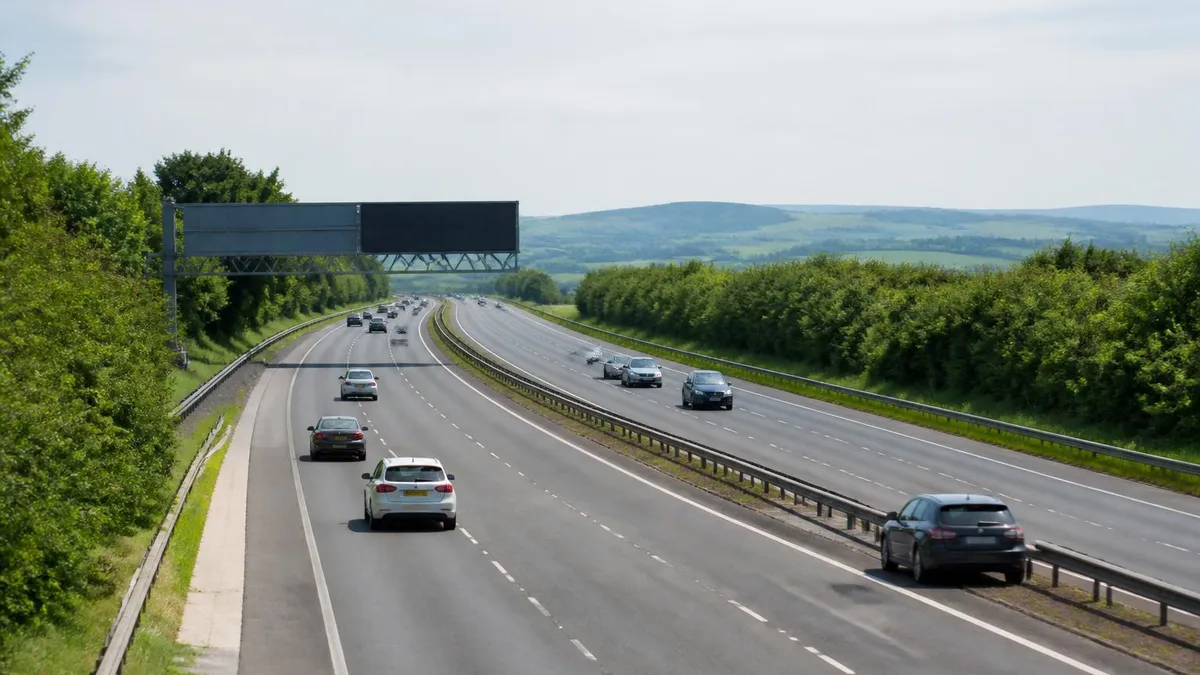
How to Book Your DVSA Practical Driving Test: Complete UK Guide

DVSA Car Practical Test: Complete Guide to Passing First Time
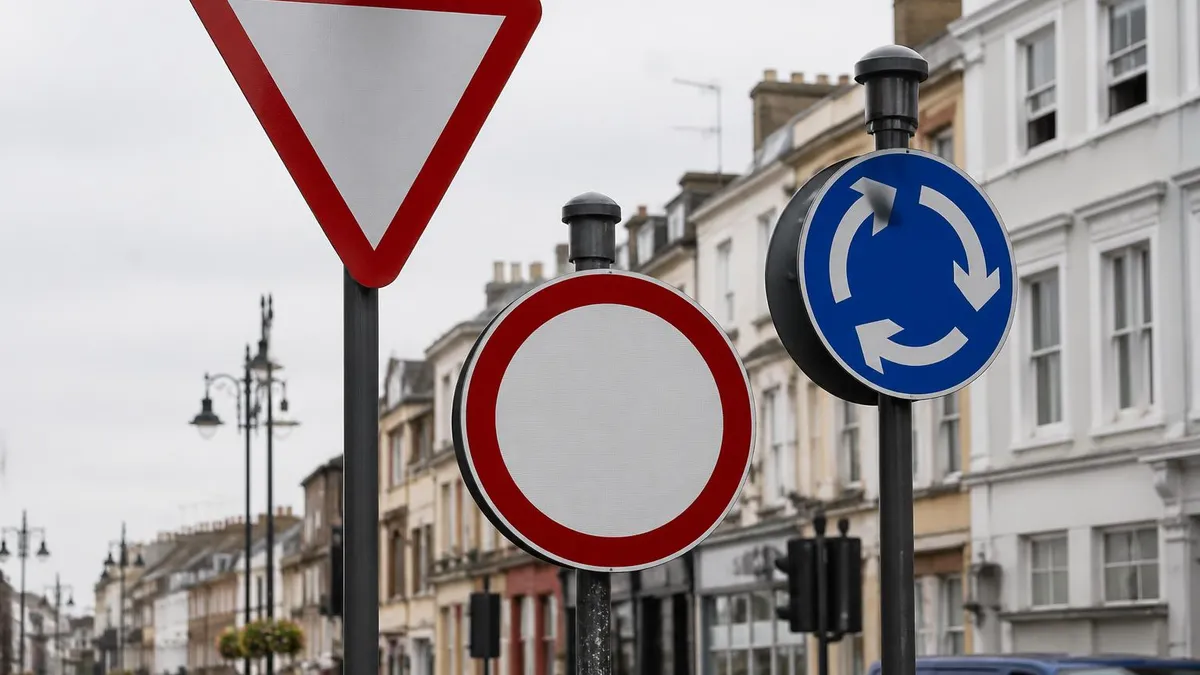
General Driving Test: What to Expect, How It's Marked, and How to Pass
About the Author

Licensed Driving Instructor & DMV Test Specialist
Penn State UniversityRobert J. Williams graduated from Penn State University with a degree in Transportation Management and has spent 20 years as a certified driving instructor and DMV examiner consultant. He has personally coached thousands of applicants through written knowledge tests, skills assessments, and commercial driver licensing programs across more than 30 states.