
Driving Theory Test App: The Complete Study Guide for UK Learners 2026
Master your driving theory test app strategy with this complete UK study guide. Top apps, study schedules, practice tips, and what to expect on test day. 📗
Finding the right driving theory test app is one of the single most important decisions you will make as a learner driver in the UK. The DVSA theory test is a mandatory hurdle that every prospective driver must clear before they can sit their practical driving assessment, and the difference between passing first time and having to rebook often comes down to how consistently and effectively you have prepared using the right digital tools. Practice with the free DVSA UK Driving Theory practice test on PracticeTestGeeks (7 questions with answer explanations).
Modern apps place thousands of official DVSA questions, detailed hazard perception clips, and personalised revision plans directly in your pocket, transforming every spare ten minutes into a productive study session that builds real exam confidence.
The DVSA theory test itself consists of two distinct sections: a multiple-choice question paper drawn from a bank of roughly 900 official questions, and a hazard perception test made up of fourteen video clips in which you must identify developing hazards.
Both sections must be passed in the same sitting, and each has its own pass mark — 43 out of 50 for the multiple choice element and 44 out of 75 for the hazard perception element. A good driving theory test app will train you across both of these areas with content that mirrors exactly what the DVSA uses on the actual day, so there are no surprises when you walk into the test centre.
The theory test costs £23 to sit as of 2026, and if you fail you must wait at least three working days before rebooking and pay the full fee again. Most learners who fail do so not because they lack the ability to drive, but because they underestimated the breadth of knowledge required or did not practise enough hazard perception clips before test day.
Using a high-quality app for structured daily revision over a minimum of four to six weeks consistently produces better results than cramming in the days immediately before your appointment, because spaced repetition helps move facts into long-term memory rather than short-term recall.
Reputable driving theory test apps use the official DVSA question bank, which is the only source of questions that will actually appear on your test. Apps that claim to offer "unofficial" or "predicted" questions introduce a significant risk of learning answers to questions that will never come up while missing the ones that will.
When choosing your app, verify that it explicitly states it uses the full official DVSA 2024 or 2025 question bank, that the hazard perception clips are genuine DVSA-style footage rather than animated substitutes, and that the app receives regular updates when the DVSA releases revised versions of the question bank.
Hazard perception is the section that trips up the most learners because it requires a different kind of skill from the multiple-choice questions. Rather than recalling facts, you need to spot potential hazards developing in real driving scenes and click at precisely the right moment — too early and your click does not register, too late and you score zero for that clip.
A dedicated driving theory test app allows you to watch and rewatch hazard perception clips as many times as you need, building the visual pattern-recognition ability that the test rewards. Many apps include detailed explanations of where the hazard develops in each clip and why early identification is critical to a safe driving mindset.
Beyond the test itself, developing strong theory knowledge through regular app-based revision makes you a considerably safer and more confident driver once you are behind the wheel for real. Understanding stopping distances, motorway rules, road sign meanings, and the principles of eco-friendly driving does not just help you answer questions correctly — it directly informs the judgements you make every day as a driver.
The best driving theory test apps present this knowledge in context, helping you connect what you learn in revision to what you will experience on real UK roads, which is the foundation of safe, informed driving for life.
This comprehensive guide covers everything UK learners need to know about choosing, using, and getting the most from a driving theory test app. From the structure of the official test and the top app features to look for, through to a practical study schedule, common mistakes to avoid, and the questions most frequently asked by learners, this article gives you a complete roadmap to passing your theory test first time and with confidence.
Free DVSA UK Driving Theory Study Tools
Interactive DVSA UK Driving Theory resources on PracticeTestGeeks, free to start:
- DVSA UK Driving Theory flashcards — review key terms and concepts card by card
- DVSA UK Driving Theory study guide — topic-by-topic overview of what the exam covers
- DVSA UK Driving Theory cheat sheet — one-page printable summary for last-minute review
UK Driving Theory Test by the Numbers
Key Facts at a Glance
| Item | Value | Details |
|---|---|---|
| Official DVSA Questions | 900+ | Full bank used in apps |
| Multiple Choice Pass Mark | 43/50 | 86% required to pass |
| Test Fee Per Attempt | £23 | Paid again if you resit |
| Recommended App Study Time | 4–6 Weeks | For first-time pass rate |
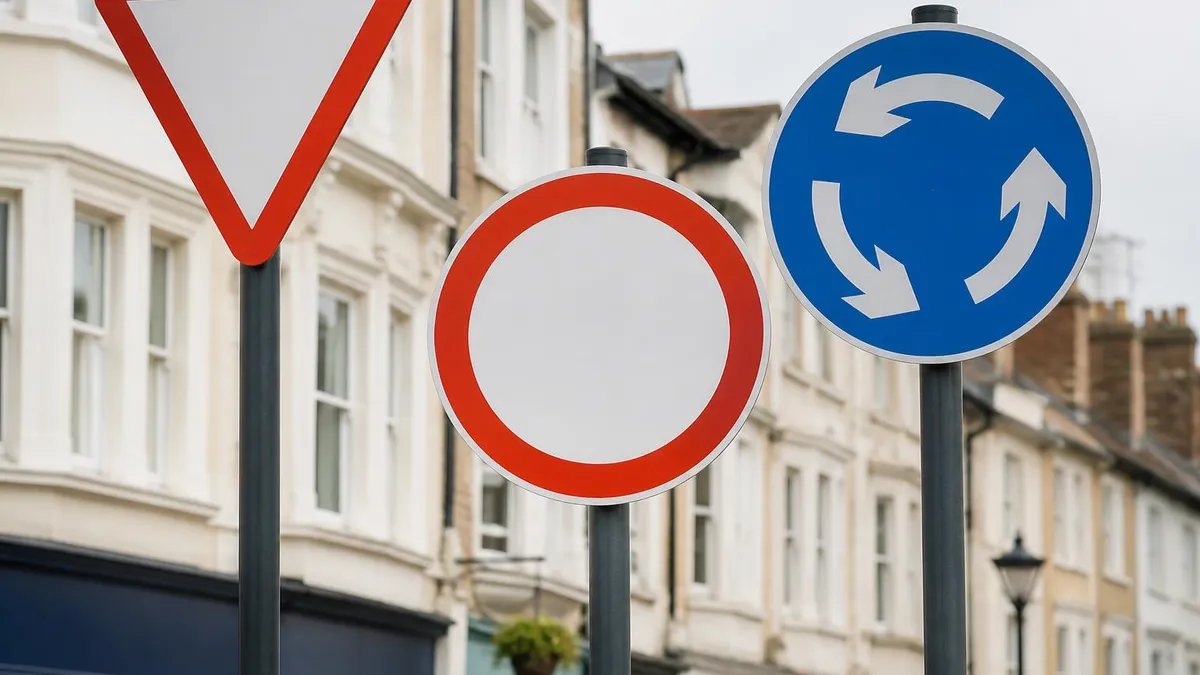
6-Week Driving Theory Test App Study Schedule
- ▸Complete all road signs questions in the app at least once
- ▸Review Highway Code sections on road markings
- ▸Watch 5 hazard perception clips and note the hazard timing
- ▸Take one full mock multiple-choice test to set a baseline score
- ▸Memorise key stopping distances at 20, 30, 50, and 70 mph
- ▸Drill vehicle safety and first aid question categories
- ▸Watch 10 more hazard perception clips with explanations enabled
- ▸Revisit all questions answered incorrectly in Week 1
- ▸Complete all questions on cyclists, motorcyclists, and pedestrians
- ▸Study motorway rules: lane discipline, smart motorways, breakdowns
- ▸Practice 20 hazard perception clips at full speed without pausing
- ▸Take a full timed mock test under exam conditions
- ▸Complete all eco-friendly driving and vehicle loading question sets
- ▸Study the effect of speed on fuel consumption and emissions
- ▸Review answers to any question categories still below 80% accuracy
- ▸Watch hazard perception clips from categories you find most difficult
- ▸Take a complete mock theory test every other day this week
- ▸Use the app's weak area analysis to focus daily revision sessions
- ▸Complete the full 14-clip hazard perception mock at least three times
- ▸Read explanations for every question you get wrong, not just the answer
- ▸Take two full mock tests and aim for 47+ on multiple choice
- ▸Do a final pass through all flagged difficult questions
- ▸Complete three full hazard perception mocks aiming for 60+/75
- ▸Read through key Highway Code summaries the evening before your test
Getting the maximum benefit from a driving theory test app depends on how deliberately and consistently you structure your revision sessions, rather than simply opening the app and answering random questions until your phone battery dies.
The most effective learners treat their app-based study like a training programme — they set a target number of questions per day, focus each session on a specific question category, and review wrong answers in depth rather than skipping straight to the next question. This intentional approach is far more efficient than passive repetition, and most good apps are specifically designed to support it with category filters, bookmarking tools, and performance dashboards.
Spaced repetition is the scientific principle that underlies the best driving theory test apps. Rather than studying the same material at the same time every day, spaced repetition schedules your revision so that you revisit a question just before you are about to forget it — maximising long-term retention while minimising the total study time required.
Apps that use an algorithm to resurface questions you found difficult are considerably more effective than simple question banks presented in the same order every time. If you are choosing between two apps with similar content, always prefer the one with an adaptive learning or spaced repetition engine built in.
One of the most underused features in driving theory test apps is the detailed explanation that accompanies each answer. Many learners check whether they got a question right or wrong and move on without reading the explanation, which means they are memorising correct answers without understanding the reasoning behind them.
This creates a fragile kind of knowledge that crumbles under slight variations in question wording. Reading the explanation for every question — even the ones you got right — builds a much deeper understanding of the rules that the question is testing, and makes you far more resilient to the genuine wording variations that appear on the actual test.
For hazard perception practice within the app, the key skill to develop is identifying the moment a hazard transitions from a potential risk into a developing one. On the real test, each clip contains at least one developing hazard and one clip contains two. The scoring window for each hazard is approximately one second wide, so clicking at the right moment requires genuine visual attentiveness rather than guessing.
Practise clicking the moment you see any change in road or driver behaviour — a pedestrian stepping off the kerb, a car beginning to pull out of a junction, a cyclist starting to wobble — and you will quickly develop the instinctive scanning habit that earns high scores.
Scheduling short, daily revision sessions produces better results than occasional long marathons. Research on memory consolidation consistently shows that studying for 20 to 30 minutes per day across multiple days outperforms a single four-hour session covering the same total time.
This makes driving theory test apps especially powerful tools because they are designed for mobile use — you can complete a focused 25-question session during a lunch break, on public transport, or in the fifteen minutes before bed, and these small sessions accumulate into thousands of questions answered and a genuinely solid knowledge base over the course of four to six weeks of consistent preparation.
Most premium driving theory test apps include progress tracking dashboards that show you your accuracy by question category, your improvement over time, and your predicted readiness for the real test. Use these dashboards proactively rather than ignoring them.
If your eco-friendly driving accuracy sits at 65% while your road signs accuracy is at 92%, you should be spending the majority of your next several sessions on eco-friendly driving questions, not road signs. The dashboard removes the guesswork from deciding what to study next and keeps your preparation targeted on the areas that will make the biggest difference to your final score.
It is also worth combining app-based study with the official DVSA Highway Code, which is available as a free PDF and as a paid digital edition. The app provides the test simulation and practice environment, but the Highway Code provides the authoritative reference material that underpins every question in the bank.
When your app flags a question on, say, motorway speed limits or the rules for overtaking, looking up that topic in the Highway Code gives you the full context and helps you understand not just the correct answer but the road law rationale behind it — the kind of understanding that makes you a genuinely safe driver, not just a test passer.
DVSA Practice Test Questions
Prepare for the DVSA - UK Driving Theory Test exam with our free practice test modules. Each quiz covers key topics to help you pass on your first try.
DVSA Eco-Friendly Driving and Vehicle Loading
DVSA Exam Questions covering Eco-Friendly Driving and Vehicle Loading. Master DVSA Test concepts for certification prep.
DVSA Hazard Awareness
Free DVSA Practice Test featuring Hazard Awareness. Improve your DVSA Exam score with mock test prep.
DVSA Incidents, Accidents and First Aid
DVSA Mock Exam on Incidents, Accidents and First Aid. DVSA Study Guide questions to pass on your first try.
DVSA Motorway Rules and Smart Motorways
DVSA Test Prep for Motorway Rules and Smart Motorways. Practice DVSA Quiz questions and boost your score.
DVSA Rules of the Road (Highway Code)
DVSA Questions and Answers on Rules of the Road (Highway Code). Free DVSA practice for exam readiness.
DVSA - UK Driving Theory Hazard Awareness ...
DVSA Mock Test covering - UK Driving Theory Hazard Awareness and Perception. Online DVSA Test practice with instant feedback.
DVSA - UK Driving Theory Motorway Rules an...
Free DVSA Quiz on - UK Driving Theory Motorway Rules and Regulations. DVSA Exam prep questions with detailed explanations.
DVSA - UK Driving Theory Road and Traffic ...
DVSA Practice Questions for - UK Driving Theory Road and Traffic Signs. Build confidence for your DVSA certification exam.
DVSA - UK Driving Theory Rules of the Road
DVSA Test Online for - UK Driving Theory Rules of the Road. Free practice with instant results and feedback.
Multiple Choice, Hazard Perception, and Mock Tests Explained
The multiple-choice section of the DVSA theory test presents 50 questions drawn randomly from the official question bank of over 900 items. You have 57 minutes to complete all 50 questions and must score at least 43 — equivalent to 86% — to pass this section. Questions cover categories including road signs, rules of the road, safety margins, vehicle handling, motorway driving, vulnerable road users, and eco-friendly driving. A good app drills every category systematically so no area catches you off guard on test day.
When using a driving theory test app for multiple-choice practice, always use the timed mock test feature at least once per week during your final two to three weeks of preparation. The time pressure of the real test is something many learners underestimate — 57 minutes sounds generous until you encounter a tricky question and spend several minutes second-guessing yourself. Regular timed practice trains you to read questions efficiently, identify the key information quickly, and move on from questions you are uncertain about rather than allowing one difficult item to eat into your remaining time.
Driving Theory Test Apps: Benefits and Limitations
- +Carries the full official DVSA question bank so you practise exactly what appears on the real test
- +Available 24/7 on your smartphone, turning commutes and spare moments into productive study time
- +Adaptive algorithms resurface weak areas automatically, making revision highly efficient
- +Timed mock tests replicate real exam pressure and build familiarity with the test format
- +Hazard perception clips can be rewatched unlimited times with scoring window explanations
- +Progress dashboards give you an objective, data-driven view of your readiness before booking
- −Premium apps typically cost £4–£10, which adds to the overall cost of learning to drive
- −Free apps often use outdated question banks or include unofficial questions not in the real test
- −Overreliance on app drilling without reading the Highway Code can leave knowledge gaps
- −Animated hazard perception clips (used in some budget apps) do not accurately replicate real DVSA footage
- −App-based study requires self-discipline — without a structured schedule, many learners use it passively
- −No app can fully replicate the psychological pressure of the real test centre environment
Theory Test Revision Checklist: 10 Steps Before You Book
- ✓Download and subscribe to an app that explicitly uses the full official DVSA question bank
- ✓Complete all 900+ questions at least once before your test date, not just your favourite categories
- ✓Achieve a consistent score of 45 or above on full timed mock multiple-choice tests
- ✓Watch and practise at least 50 individual hazard perception clips with scoring feedback enabled
- ✓Score 60 or above on at least three consecutive full hazard perception mock sessions
- ✓Read the official Highway Code sections for any question category where your accuracy falls below 80%
- ✓Identify and fully review every question you have bookmarked or answered incorrectly more than once
- ✓Complete at least five full combined mock tests (multiple choice + hazard perception) in timed conditions
- ✓Confirm the format of your specific test centre including check-in process and ID requirements
- ✓Avoid cramming the night before — do a light revision pass and get a full night of sleep

The 80% Rule: Your Minimum App Score Before Booking
Never book your theory test until you are consistently scoring at least 86% (43/50) on timed mock multiple-choice tests and 59% (44/75) on full hazard perception mocks across at least three consecutive sessions. Booking when you are borderline increases anxiety, wastes the £23 fee if you fail, and costs you additional waiting time. Let your app scores tell you when you are genuinely ready — not your impatience to get the test done.
One of the most common mistakes learners make when using a driving theory test app is focusing almost exclusively on the multiple-choice questions while treating hazard perception as an afterthought. This is understandable — the multiple-choice section feels more directly controllable, because you can learn facts, whereas hazard perception seems harder to improve through study.
But hazard perception is where a significant proportion of failures occur, and the skill it tests — proactive visual scanning for developing risks — is genuinely trainable through deliberate, consistent clip practice in your app. Neglecting it until the week before your test is one of the biggest strategic errors a learner can make.
Another widespread mistake is only practising question categories that feel familiar and comfortable. The DVSA draws questions randomly from the entire bank, which means even question types you rarely encounter can appear in your sitting.
Learners who spend 80% of their app time on road signs and rules of the road — the most intuitive categories — and neglect questions on vehicle loading, towing, tachographs, or medical fitness to drive often find themselves caught out by perfectly answerable questions in these less-studied areas. Your app's category breakdown tool is there specifically to prevent this: use it to ensure every category reaches at least 80% accuracy before your test date.
Reading questions too quickly is a surprisingly common cause of avoidable errors. The multiple-choice questions on the theory test are carefully worded, and a single word like "not", "most" or "least" can completely change the correct answer.
In the time pressure of the exam, learners who have only practised by reading questions rapidly sometimes select the first answer that seems plausible rather than reading all four options carefully. When using your app, practise the discipline of reading every word of every question and every answer option before selecting — this habit, built during app revision, will protect you from careless errors on test day.
Some learners make the mistake of memorising specific question-answer pairs from app practice rather than developing genuine understanding of the underlying road rules. This approach can work for the most frequently repeated questions, but the DVSA regularly introduces slight variations in wording and context that trip up rote learners.
Understanding why a motorway hard shoulder should not be used as a driving lane — because it is reserved for emergency vehicles and broken-down drivers — is far more strong than simply memorising that the answer to a specific question is option B. Use your app's explanations to build real understanding, not just pattern-matching ability.
Overconfidence after a good mock test score is another pitfall worth guarding against. Scoring 48 out of 50 on a single mock session feels great, but it can lead some learners to reduce their revision effort in the days that follow, trusting that their preparation is complete. The randomness of which questions appear in each mock means individual scores vary considerably. What genuinely signals readiness is a consistent average — scoring 45 or above across five or more mock tests, not a single excellent performance. Your app's historical score graph is the most reliable indicator of your real exam readiness.
Finally, many learners underestimate how different the test centre experience feels compared to practising on a phone or tablet at home. The test is taken on a desktop computer with a standard mouse, in a room with other candidates, under the supervision of an invigilator. While the questions and content are identical to what you have practised in your app, the unfamiliar environment can introduce anxiety that affects performance.
Visualising the test centre experience, practising on a laptop or desktop in the weeks before your test if possible, and arriving at the centre early to settle your nerves are all practical steps that complement your app-based preparation and help you perform at the level your revision scores genuinely reflect.
Understanding the consequences of individual question categories can also sharpen your motivation. Questions about stopping distances and safety margins, for example, test knowledge that directly relates to the most common cause of road fatalities in the UK — rear-end collisions caused by following too closely or travelling too fast for conditions. When you see these questions in your app, connecting them to real-world outcomes rather than treating them as abstract trivia makes the knowledge stickier and reinforces the importance of getting them right both on the test and in real driving situations throughout your life.
The DVSA periodically updates the official question bank to reflect changes in road law, Highway Code revisions, and new vehicle technologies. Always verify that your driving theory test app has been updated to the current 2024–2025 question bank before beginning your revision. Using an app with an outdated question bank means practising questions that may no longer appear in the real test while missing newly added ones — check the app's version history or developer notes to confirm when the question bank was last updated.
Preparing for your theory test with a dedicated app is only part of a successful strategy — you also need a clear understanding of the wider DVSA testing system and how the theory test fits into your overall journey to a full UK driving licence.
The theory test certificate is valid for two years from the date you pass, which means you must pass your practical driving test within that two-year window or you will need to sit the theory test again. This is a frequently overlooked deadline that catches some learners who pass their theory test early and then take an extended break from lessons before attempting the practical element.
The practical driving test cannot be booked until you hold a valid theory test pass certificate, so passing your theory is a prerequisite for even scheduling the next stage. This makes your theory test preparation timeline directly relevant to your overall learning schedule — the sooner you pass the theory, the sooner you can book a practical test slot, and DVSA practical test waiting times in many areas of the UK currently run to several months.
Starting your app-based theory revision early in your learning journey therefore has a compounding benefit: it opens the door to booking a practical test sooner, which means a shorter overall time to achieving your full licence.
When you sit the theory test, you will need to bring your valid UK photocard driving licence as identification — the DVSA does not accept any other form of ID, and you will be refused entry to the test without it. You also need to know your test booking reference number, which was sent to you in your confirmation email when you booked.
Arriving at least 15 minutes before your appointment time gives you a chance to check in calmly, store your belongings in a locker, and settle before the test begins. Test centres allow you to sit a brief practice session on the computer before the real test begins, which is worth using even if only to familiarise yourself with the interface.
The theory test is conducted entirely on a computer at an official DVSA test centre — it cannot be taken online or remotely. There are over 150 DVSA theory test centres across Great Britain, meaning there is almost certainly one within reasonable travelling distance of your home address. Test slots are available Monday to Friday, and some centres also offer Saturday morning appointments, which are often booked up weeks in advance. If Saturday availability is important to you, check the DVSA booking portal frequently as cancellations do occasionally free up slots with short notice.
Understanding the pass certificate you receive after passing your theory test is also important. Your certificate includes a unique pass number that you will need to provide when booking your practical driving test through the DVSA's online booking system.
Store this certificate safely — losing it does not technically prevent you from booking a practical test, as the DVSA can verify your pass status using your driving licence number, but having the certificate number readily available simplifies the booking process. Many learners photograph their certificate immediately after receiving it and store the image in a secure location on their phone as a backup.
One practical consideration that many app-based learners overlook is the difference between the visual format of questions on their phone screen and the format on the test centre computer.
The DVSA test interface is clean and straightforward, but questions about road signs, for example, display the signs in colour on screen — and some sign meanings are partly encoded in their colour scheme (red borders on warning signs, blue circles for mandatory instructions, and so on). Ensuring that your app also displays signs in correct DVSA colour format, rather than black-and-white or stylised icons, means your visual memory of signs is accurate to what you will see in the test room.
After passing your theory test, keep your revision momentum going rather than allowing your knowledge to fade during the gap before your practical test.
The theory knowledge you have built through your app preparation directly informs your performance in driving lessons — instructors frequently comment that learners with strong theory knowledge learn practical manoeuvres faster, make better independent decisions in traffic, and develop the hazard awareness instincts that underpin safe driving more quickly than those who viewed theory revision as a separate box to tick. The investment you make in thorough app-based theory study pays dividends throughout your entire driving career.
With your test date approaching, the final two weeks of preparation should shift from broad category drilling to targeted consolidation and confidence building. Use your app's performance data to identify the three or four question categories where your accuracy is lowest and dedicate at least half of each remaining revision session to those specific areas.
Simultaneously, continue taking full timed mock tests every other day to keep your pacing sharp and your familiarity with the full 57-minute test format fresh. The goal in this final phase is not to learn new information but to reinforce what you already know and eliminate the residual uncertainty that leads to hesitation in the exam room.
For hazard perception, the final two weeks should involve watching a full set of 14 clips at least every three days, always under timed conditions without pausing. By this stage you should be clicking confidently within the scoring window for most hazards, and your primary focus should be on the clip types that have consistently scored you fewer points — typically clips involving junctions, roundabouts, and bends where the hazard develops quickly and the scoring window is narrow. Some apps allow you to filter clips by hazard type, which is particularly useful for targeted late-stage hazard perception practice.
Nutrition, sleep, and physical state on the day of your test matter more than most learners acknowledge. Your brain consolidates memories during sleep, which means the night before your theory test is one of the worst possible times for a late-night cramming session.
A full night of sleep — seven to eight hours — does more for your performance than any additional revision completed between midnight and 2am. Similarly, eating a proper meal before your test, staying hydrated, and arriving at the centre in good time all contribute to the calm, focused mental state in which you will answer questions most accurately and identify hazards most reliably.
On the morning of your test, a brief, gentle revision pass of 15 to 20 questions in your app is perfectly reasonable and can help warm up your recall without raising your anxiety. Avoid attempting a full mock test on the morning of your real test — a poor score at that point would damage your confidence without giving you time to address any gaps, while a high score adds little that you have not already demonstrated repeatedly in the preceding weeks. Keep your pre-test app use light, focused, and reassuring rather than evaluative.
When you are in the test room and working through the multiple-choice questions, use the flagging feature that the DVSA test interface provides. This allows you to mark questions you are uncertain about and return to them after completing your first pass through all 50 questions.
The discipline of progressing through uncertain questions rather than spending excessive time on them on the first pass ensures you do not run out of time at the end of the session. Most learners find that returning to flagged questions with fresh eyes after completing the rest of the paper produces a better result than staring at a single difficult question for several minutes.
After your theory test — whether you pass or need to resit — take time to reflect on your preparation and identify what worked best. If you passed, note which elements of your app-based revision most contributed to your confidence and accuracy, and build those same habits into your ongoing driving education.
If you need to resit, use your results breakdown to understand specifically which categories let you down and focus your revision app usage precisely on those areas in the weeks before your next attempt. Every test outcome, successful or not, provides data that makes your next revision cycle more efficient.
The skills and knowledge you develop through thorough driving theory test app preparation are not temporary assets that expire after you leave the test centre. They represent the foundational understanding of UK road law, vehicle safety, hazard awareness, and responsible driving behaviour that will inform every journey you make for the rest of your driving life. Approach your theory test preparation not as a bureaucratic hurdle to clear as quickly as possible, but as the first and most important investment in becoming a genuinely safe, knowledgeable, and confident driver on UK roads.
Sample DVSA UK Driving Theory Practice Questions
Try these questions from our free DVSA UK Driving Theory practice tests. The correct answer and an explanation follow each question.
You are joining a motorway from a slip road. What should you do?
- A. Stop at the end of the slip road and wait for a gap
- B. Build up speed on the slip road to match motorway traffic, and merge safely
- C. Drive straight onto the motorway without checking
- D. Use the hard shoulder to build up speed
Answer: B. Build up speed on the slip road to match motorway traffic, and merge safely
When joining a motorway, use the slip road to build up your speed to match the traffic on the motorway. Check mirrors, signal right, and merge into a safe gap in the traffic. Do not force your way in or stop at the end of the slip road unless traffic is queuing.
Which of these is a legal requirement for a 'Class 3' powered mobility scooter to be used on the road?
- A. The user must have a full car driving licence.
- B. It must be registered with the DVLA.
- C. It must be fitted with a flashing amber beacon at all times.
- D. The user must be over 18 years of age.
Answer: B. It must be registered with the DVLA.
Class 3 mobility scooters, which can travel up to 8 mph on the road, must be registered with the Driver and Vehicle Licensing Agency (DVLA). While they don't require road tax or a driving licence, the user must be at least 14 years old. They must also be equipped with lights, indicators, a horn, and a rear-view mirror for road use.
What colour are the reflective road studs (cat's eyes) that mark the central reservation of a motorway?
- A. Red
- B. White
- C. Green
- D. Amber
Answer: D. Amber
Amber cat's eyes mark the central reservation on a motorway, warning drivers they are near the central barrier.
You approach an unmarked crossroads where another vehicle is approaching from the right. Who has priority?
- A. The vehicle approaching from the right.
- B. You have priority as you are on their left.
- C. The vehicle that arrived at the junction first.
- D. No one has automatic priority.
Answer: D. No one has automatic priority.
The Highway Code (Rule 146) states that at an unmarked crossroads, no driver has priority. You should slow down, be prepared to stop, and only proceed when it is safe, taking into account the speed and position of other road users.
DVSA Questions and Answers
DVLA Theory Test Booking: Complete Step-by-Step Guide for UK Learners

DVSA Car Practical Test: Complete Guide to Passing First Time
General Driving Test: What to Expect, How It's Marked, and How to Pass
Book Driving Test: How to Schedule Your DVSA Test Online, Costs & What to Expect
DVSA Driving Test: Full Format, Fault Categories, and How to Pass First Time
About the Author

Licensed Driving Instructor & DMV Test Specialist
Penn State UniversityRobert J. Williams graduated from Penn State University with a degree in Transportation Management and has spent 20 years as a certified driving instructor and DMV examiner consultant. He has personally coached thousands of applicants through written knowledge tests, skills assessments, and commercial driver licensing programs across more than 30 states.