
Motorbike Theory Practice: The Complete UK Guide to Passing Your DVSA Motorcycle Theory Test in 2026 September
Master motorbike theory practice with our complete DVSA study guide. Free tests, tips & pass strategies for UK riders. ✅
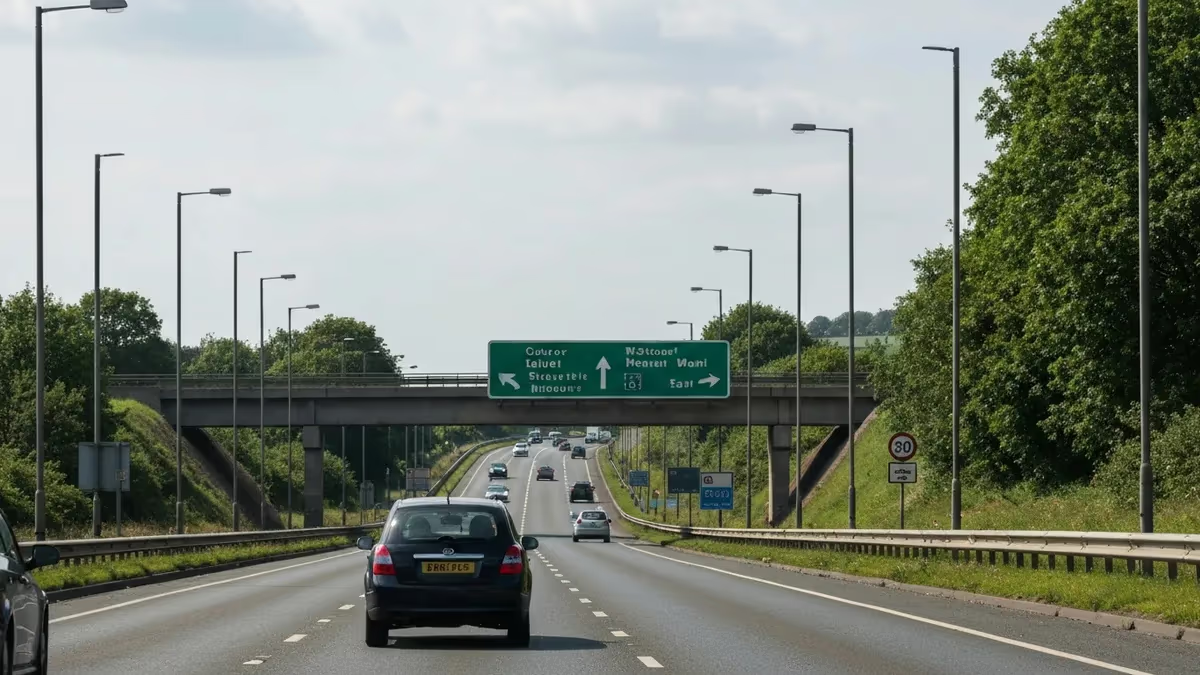
Motorbike theory practice is the single most important preparation step any aspiring UK motorcyclist can take before sitting the official DVSA motorcycle theory test. Unlike the car test, the motorcycle version demands a deep understanding of road positioning, filtering rules, protective clothing standards, and the unique hazards that two-wheeled riders face every time they venture onto British roads. Candidates who commit to structured, repeated practice sessions consistently outscore those who attempt to cram the night before, and the difference in pass rates between well-prepared and under-prepared riders is stark.
The DVSA motorcycle theory test is split into two distinct parts: a multiple-choice question section and a hazard perception section. Both parts must be passed in the same sitting for the overall result to count as a pass. The multiple-choice section draws from the official DVSA question bank, which contains hundreds of questions covering topics such as road signs, motorcycle-specific regulations, defensive riding techniques, vehicle safety checks, and environmental considerations. Familiarising yourself with the full breadth of this bank through regular motorcycle theory practice is the foundation of any effective revision strategy.
Many candidates underestimate how different the motorcycle theory test feels compared to the car theory test. Even experienced car drivers who have passed the four-wheeled version will encounter motorcycle-specific questions they have never seen before. Questions about solo filtering, carrying a pillion passenger, high-visibility clothing requirements, and the unique braking dynamics of two-wheeled vehicles all appear regularly in the question bank. Riders who have held a car licence for years are sometimes surprised to find themselves scoring poorly on their first motorcycle practice run.
The hazard perception element deserves special attention in your preparation routine. This section presents candidates with a series of video clips shot from a rider's point of view, and you must click or tap whenever you spot a developing hazard.
The clips are marked for responsiveness, meaning that clicking at the precise moment a hazard begins to develop scores higher than clicking only when it has fully materialised. Many candidates lose points here not because they miss hazards entirely but because they respond a fraction of a second too late, having watched the clip rather than actively scanning it the way a real-world rider would.
Structuring your revision into short, focused daily sessions tends to produce better outcomes than marathon weekend study blocks. Research into memory retention consistently shows that spaced repetition, returning to the same material after short intervals, embeds information far more reliably than massed practice. Aim for twenty to thirty minutes of dedicated practice each day across a four-to-six-week period, and vary the topics you cover rather than repeating the same question sets in the same order every session. This approach exposes gaps in your knowledge more efficiently than linear reading ever could.
Choosing the right practice resources matters enormously. The official DVSA motorcycle theory test book, published in partnership with the Highway Code, contains all the topics tested in the exam. However, reading alone is rarely sufficient. Interactive practice tests that mirror the format and timing of the real exam help you build exam confidence alongside topic knowledge, allowing you to experience the pressure of answering questions against the clock before you enter the test centre. PracticeTestGeeks offers a comprehensive suite of DVSA-aligned motorcycle practice questions designed to replicate the real examination environment as closely as possible.
Finally, do not neglect the practical side of your motorcycle knowledge during the theory preparation phase. Understanding why certain rules exist, such as the recommended following distance behind a large vehicle or the reason for counter-steering at speed, makes the rules easier to remember than treating them as abstract facts to be memorised. Riders who connect theoretical knowledge to real-world riding experience tend to retain information better and apply it more naturally when they eventually sit behind the handlebars for their practical test.
UK Motorcycle Theory Test by the Numbers
Key Facts at a Glance
| Item | Value | Details |
|---|---|---|
| Pass Mark (Multiple Choice) | 50/75 | Must score 50 out of 75 questions |
| Multiple Choice Time Limit | 57 min | Includes 3-min practice session |
| Hazard Perception Pass Mark | 44/75 | Out of a maximum 75 points |
| Questions in DVSA Bank | 900+ | Full bank used for revision |
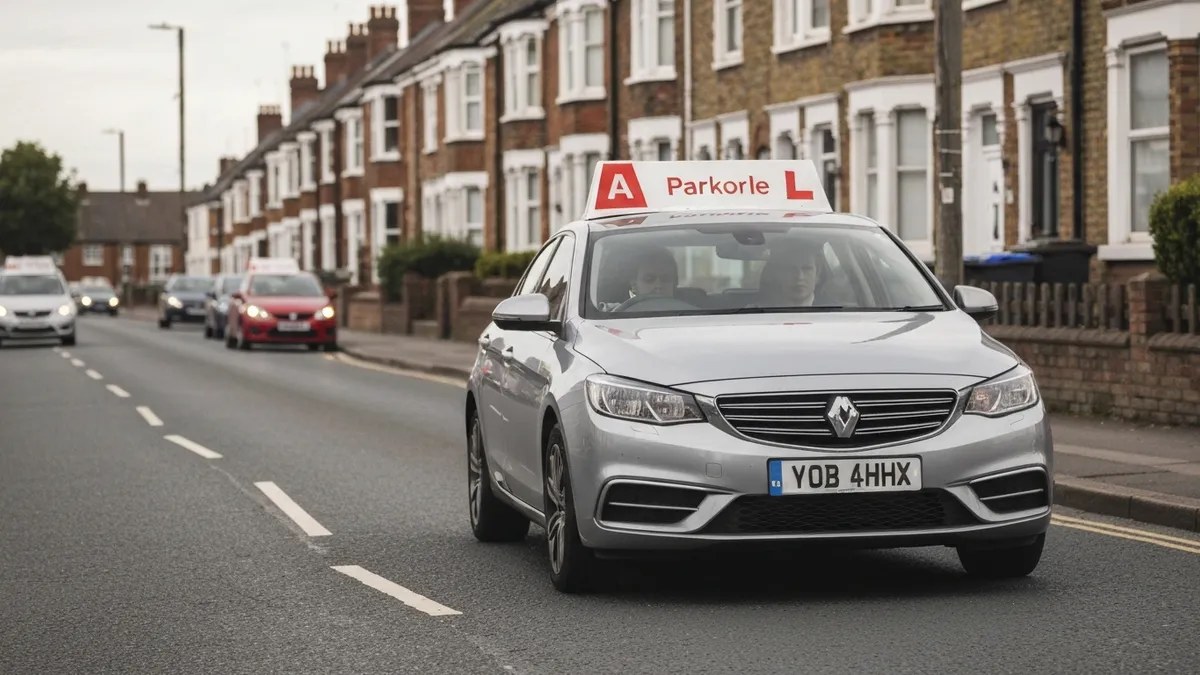
6-Week Motorcycle Theory Revision Plan
- ▸Read the Highway Code sections on signs and road markings
- ▸Complete two full mock multiple-choice tests
- ▸Review every question you got wrong and read the explanation
- ▸Watch 10 DVSA hazard perception example clips
- ▸Study DVSA guidance on solo filtering and overtaking
- ▸Memorise PPE requirements and helmet standards
- ▸Complete three topic-specific practice sets on motorcycle rules
- ▸Begin timed hazard perception practice sessions
- ▸Learn daily motorcycle safety check procedure (POWDERS mnemonic)
- ▸Study tyre pressure, tread depth, and chain tension requirements
- ▸Complete two full mock tests focusing on vehicle safety sections
- ▸Review any weak areas from weeks 1 and 2
- ▸Complete a full hazard perception mock test each day
- ▸Study fuel efficiency and eco-riding techniques
- ▸Practice identifying developing hazards in everyday dashcam footage
- ▸Review scoring rules to avoid the clicking-too-fast penalty
- ▸Study DVSA first aid at the scene of an accident guidance
- ▸Learn the correct sequence for dealing with a road traffic collision
- ▸Complete full-length mixed mock tests under timed conditions
- ▸Focus extra revision time on lowest-scoring topic areas
- ▸Complete two full combined mock tests (multiple choice + hazard perception)
- ▸Review the Highway Code one final time for road signs
- ▸Rest on the day before the test and avoid last-minute cramming
- ▸Confirm test centre location, ID requirements, and arrival time
Understanding exactly what the DVSA motorcycle theory question bank covers is the first step toward building a targeted and efficient revision plan. The bank is organised into broad topic categories, and each category carries different weight within the exam. Road and traffic signs form the single largest category, which surprises many candidates who assume mechanical knowledge or highway rules would dominate.
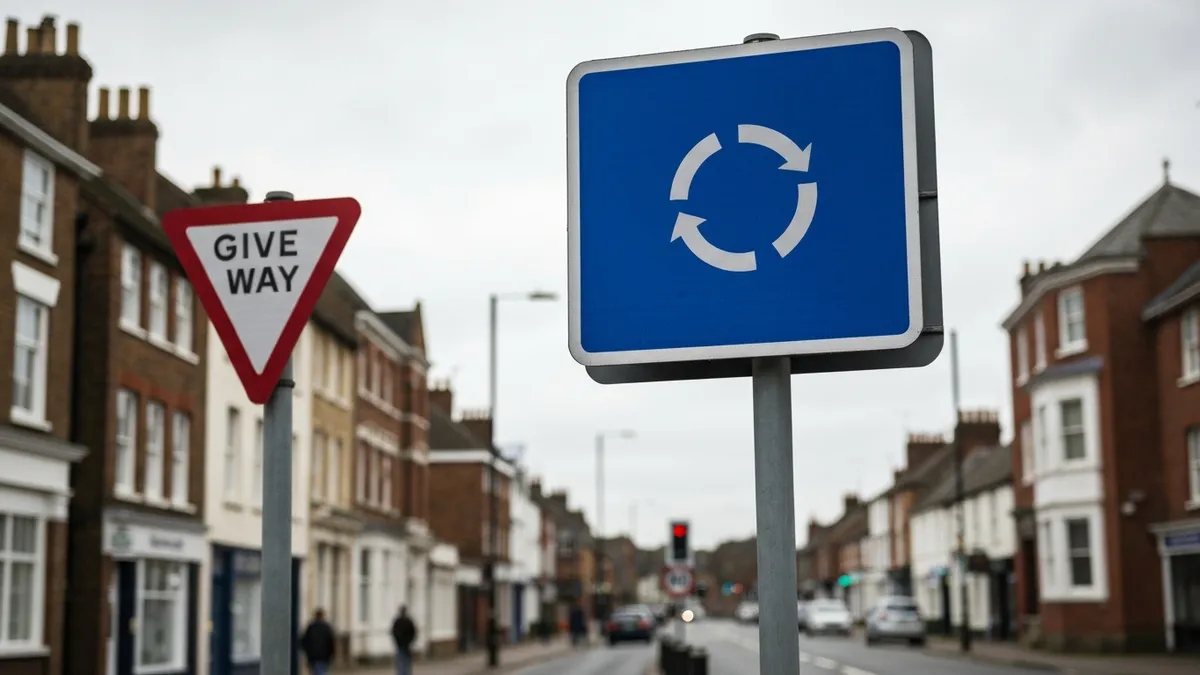
Being able to recognise and correctly interpret every sign in the Highway Code is therefore a non-negotiable foundation of your preparation. Triangular warning signs, circular prohibitory signs, and rectangular informational signs each follow their own colour and shape conventions that must become second nature.
Motorcycle-specific handling and safety questions make up a substantial proportion of the bank and cannot be skipped even by experienced car drivers. These questions cover topics such as the correct technique for taking a bend on a motorbike, the dangers of riding in the blind spots of large vehicles, the increased stopping distances required on two wheels compared with four, and the particular risks associated with adverse weather conditions like black ice, standing water, and strong crosswinds. Riders who have never studied these topics formally will encounter them on the test, so ignoring them is not an option.
Attitude and concentration questions test your understanding of how mindset affects riding safety. The DVSA is concerned not just with whether you know the rules but whether you understand the reasoning behind them. Questions in this category often present hypothetical scenarios involving peer pressure, fatigue, distraction, or overconfidence, and ask you to identify the safest course of action. These scenario-based questions reward riders who have genuinely absorbed the philosophy of defensive riding rather than simply memorised bullet points from a revision guide.
Incidents, accidents, and first aid form another significant category in the bank. Candidates are expected to know the correct procedure at the scene of a road traffic collision, including when to call emergency services, how to approach a potentially injured rider, and the basic first-aid steps that can make a difference in the critical minutes before paramedics arrive. The questions in this area are often the ones candidates find most emotionally engaging, because they deal with real-world consequences of road incidents rather than abstract regulations.
Eco-friendly riding and vehicle loading has grown in prominence within the question bank in recent years, reflecting the DVSA's increasing focus on environmental responsibility. Candidates are expected to understand how riding style affects fuel consumption and emissions, the correct way to secure loads on a motorcycle or in panniers, and the environmental implications of vehicle maintenance choices such as tyre pressure and engine servicing intervals. These topics may feel less exciting than road signs or hazard perception, but they account for a meaningful number of marks and should not be neglected in revision.
The documents and regulations category covers MOT requirements, insurance obligations, licence categories, and the rules governing pillion passengers. Knowing the specific licence class required for different engine sizes, the age restrictions on carrying a pillion passenger, and the penalties for riding without valid insurance are all tested regularly. Many riders discover gaps in their knowledge of these administrative requirements during practice sessions, which is exactly why completing a broad range of practice questions across every topic area before your test date is so valuable.
Finally, the road and traffic regulations category addresses speed limits, lane discipline, roundabout etiquette, and the specific rules that apply to motorway riding. Motorcycles are permitted on motorways in the UK, but learner riders on a provisional licence are not. Understanding which rules apply to which licence category is a subtle distinction the test probes frequently. By working through the full range of topic areas systematically during your revision, you build the comprehensive knowledge base the DVSA expects every new motorcycle rider to demonstrate before they are permitted to ride independently on UK roads.
Hazard Perception: Strategies, Scoring, and Common Pitfalls
The hazard perception section of the motorcycle theory test presents fourteen video clips, each approximately one minute long, shot from a rider's point of view. Thirteen clips contain one scoreable developing hazard, while one clip contains two, bringing the total number of scoreable hazards to fifteen and the maximum possible score to seventy-five points. Each hazard is worth up to five points, awarded on a sliding scale based on how early in the hazard's development you click. Clicking immediately as a hazard begins to develop earns the full five points, while clicking progressively later earns four, three, two, or one point.
One crucial rule many candidates discover too late is the penalty for clicking indiscriminately. If the system detects a pattern of rapid repeated clicking, which it interprets as an attempt to guarantee a response at the right moment, it awards zero points for that clip. This means candidates must resist the urge to click constantly and instead focus on genuine hazard identification. Aim to click once, decisively, at the precise moment a static situation begins actively developing into a genuine danger, such as when a pedestrian near a kerb starts to step into the road or when a car begins to pull out from a junction ahead.
Online Practice Tests vs. Official DVSA Theory Test Book
- +Interactive format replicates real exam conditions and timing pressure
- +Instant feedback on wrong answers accelerates learning and fills knowledge gaps faster
- +Progress tracking helps identify weak topic areas that need extra revision
- +Accessible on mobile devices, allowing revision during commutes and spare moments
- +Hazard perception video clips cannot be replicated in a printed book format
- +Regular question bank updates keep practice content aligned with the latest DVSA changes
- −Screen-only format may not suit candidates who retain information better through physical reading
- −Quality varies significantly between different online practice platforms
- −Some free platforms contain outdated questions that no longer reflect the current DVSA bank
- −Over-reliance on practice tests without reading the Highway Code can leave conceptual gaps
- −Digital distractions on phones and tablets can reduce the quality of practice sessions
- −Candidates may memorise specific questions rather than genuinely understanding the underlying rules
Motorcycle Theory Test Revision Checklist
- ✓Complete at least three full mock multiple-choice tests under timed conditions before your test date.
- ✓Score yourself on every practice session and track which topic categories are your weakest.
- ✓Read the entire Highway Code, paying special attention to motorcycle-specific rules and guidance.
- ✓Memorise all road sign shapes and colours using the systematic triangular, circular, rectangular framework.
- ✓Complete a minimum of five full hazard perception mock tests using video-based practice software.
- ✓Study the POWDERS daily motorcycle safety check routine and understand every item it covers.
- ✓Review the DVSA guidance on carrying pillion passengers, including age and licence category requirements.
- ✓Learn the correct first-aid procedure at a road traffic collision scene, including when to call emergency services.
- ✓Understand the MOT, insurance, and road tax requirements for motorcycles of different engine sizes.
- ✓Confirm your test centre location, acceptable forms of ID, and the exact check-in procedure at least 48 hours before your test.
You Must Pass Both Sections on the Same Day
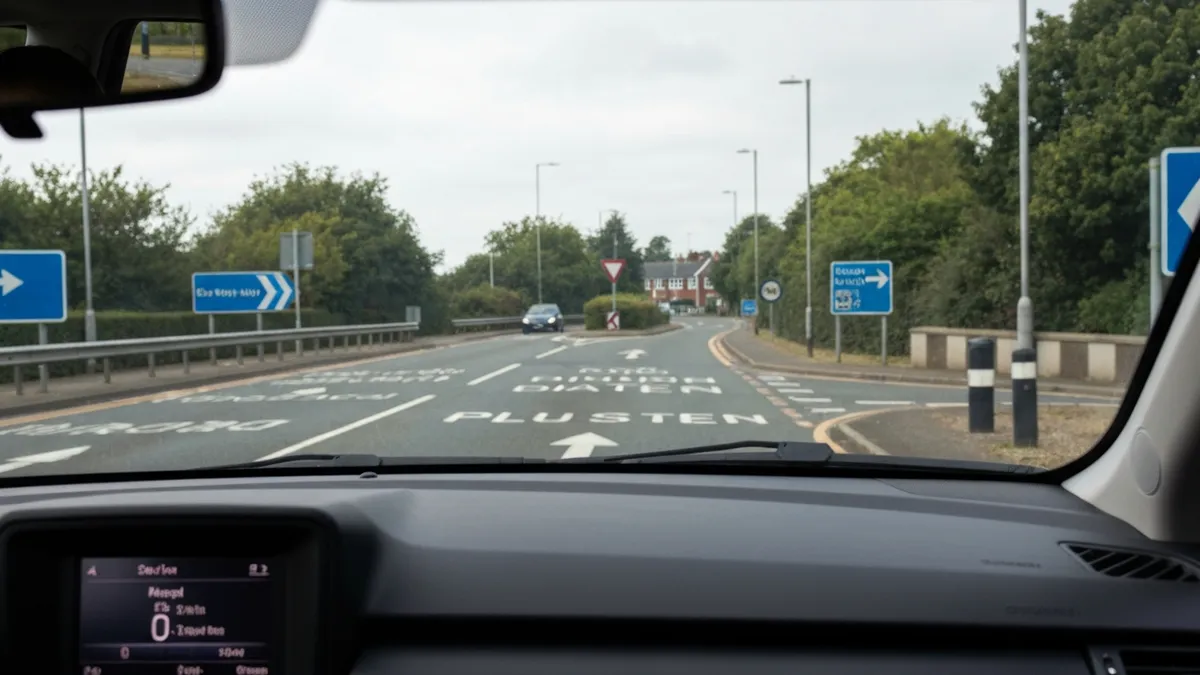
Many candidates do not realise that the multiple-choice and hazard perception sections of the motorcycle theory test must both be passed in a single sitting. If you pass one section but fail the other, the entire test counts as a fail and you must rebook and pay the full fee again. There is no carrying over of a passed section to a future attempt, which makes balanced preparation across both components absolutely essential.
One of the most consistent patterns among candidates who fail the motorcycle theory test on their first attempt is an overconfidence born from riding experience without formal study. Riders who have spent years on two wheels, whether on off-road bikes, scooters, or as pillion passengers, often assume their practical knowledge will translate directly into theory test success. In reality, the DVSA tests a very specific body of knowledge drawn from the official question bank, and practical intuition alone does not reliably cover every topic area included in the exam. Experience helps, but it cannot replace dedicated revision.
A second common mistake is spending revision time disproportionately on topics that feel interesting or familiar while neglecting categories that feel dry or unfamiliar. Many candidates enjoy studying hazard perception because it feels active and engaging, but then perform poorly on questions about vehicle loading limits or eco-friendly riding techniques because they never devoted serious revision time to those areas.
The DVSA question bank is deliberately broad, and every category contributes to your final score. A mark-by-mark analysis of failed attempts consistently reveals that low scorers have genuine blind spots in specific topic areas rather than a uniform weakness across the board.
Timing management during the multiple-choice section is another area where preparation pays dividends. The fifty-seven minute time limit for seventy-five questions gives you an average of forty-six seconds per question, which is more than sufficient for most candidates.
However, some questions require careful reading of a scenario paragraph before the answer options make sense, and those questions can absorb considerably more time than a straightforward factual recall question about a speed limit or road sign. Practising under timed conditions helps you develop the instinct to flag difficult questions, move on, and return to them later rather than stalling in the middle of the paper.
Candidates are permitted to use a flag function during the multiple-choice section to mark questions they want to return to, and this tool is significantly underused by first-time sitters. Rather than staring at a question you are unsure about and losing valuable seconds, flag it, move forward, and return to it once you have answered every question you are confident about. Sometimes answering later questions triggers a memory that helps with an earlier flagged question. At minimum, it ensures you do not run out of time before answering your strongest questions.
The break between the multiple-choice and hazard perception sections is a useful opportunity to reset mentally rather than worrying about how you have just performed. Many candidates make the mistake of mentally reviewing their multiple-choice answers during this transition, second-guessing choices they made with confidence. This habit serves no useful purpose and actively harms performance in the hazard perception section by starting it in an anxious or distracted state. Use the break to breathe, stretch briefly, and shift your mental focus entirely to the video-based task ahead of you.
Understanding how the test centre experience feels before you arrive can reduce test-day anxiety significantly. You will be asked to surrender your mobile phone and any other electronic devices before entering the testing room. You will sit at a computer workstation, usually in a room with other candidates taking different types of test simultaneously.
The room is quiet but not entirely silent, and the ambient noise of keyboards and mouse clicks from other candidates occasionally distracts first-time sitters who were not expecting it. Completing your practice tests in a variety of environments, including occasionally in cafes or libraries rather than always at home in silence, helps build the concentration habits you need to perform in a real test environment.
Rest in the twenty-four hours before your test is perhaps the single most undervalued preparation factor. Cognitive performance on recall and attention tasks drops measurably after poor sleep, and no amount of last-minute cramming compensates for arriving at the test centre fatigued. Candidates who have completed a thorough six-week revision programme and arrive well-rested consistently outperform those who study intensively in the final days and arrive at the centre anxious and sleep-deprived. Trust your preparation, sleep well the night before, and approach the test as the culmination of weeks of diligent work rather than a high-stakes gamble.
If you want more targeted practice, the theory test practice page covers the same material with additional questions and explanations.
Your motorcycle theory test pass certificate is valid for only two years from the date you pass. If you do not complete and pass your motorcycle practical test (Module 1 and Module 2) within that two-year window, your theory test pass will expire and you will need to sit and pay for the theory test again before you can book further practical test attempts. Plan your practical training timeline carefully to avoid this costly scenario.
Booking your motorcycle theory test through the official DVSA website is straightforward, but getting your timing right requires a little planning. The fee as of 2026 is £23 for the motorcycle theory test, payable at the time of booking. You will need to have a valid provisional motorcycle licence, which must have been applied for through the DVLA, before you are eligible to book the theory test.
Tests are available at hundreds of Pearson VUE test centres across the UK, and you can usually find an appointment within one to three weeks of booking in most regions, though rural areas and peak periods around school holidays may have longer waits.
Choosing the right time slot matters more than many candidates realise. If you are someone whose concentration and alertness peaks in the morning, booking a mid-morning slot rather than a late afternoon session when fatigue typically sets in gives you a genuine performance advantage. Test centre staff will not tell you which slot is best for you, so take a moment before booking to consider your own cognitive rhythms and personal schedule. Avoiding slots immediately after a long commute or a shift at work is basic common sense that still trips up a surprising number of candidates.
The ID requirements for the motorcycle theory test are strict and non-negotiable. You must present either your valid UK photocard driving licence or your UK passport alongside your provisional licence documentation. If you arrive without an acceptable form of photo ID, you will not be permitted to sit the test and will forfeit your test fee. Double-check the current DVSA ID requirements on the official booking confirmation email you receive, as the acceptable documents list is occasionally updated, and information from older revision forums may be out of date.
If you need to cancel or rearrange your theory test, the DVSA requires at least three clear working days notice to receive a refund or free rescheduling. Cancelling with less than three days notice, or failing to attend on the day, results in forfeiture of your test fee.
Given that the fee is £23, this is not catastrophic, but it is an avoidable waste of money. If illness prevents you attending, contact the DVSA as soon as possible, as there is a process for exceptional circumstances that may allow a refund or reschedule outside the standard window, though approval is not guaranteed.
Many candidates wonder whether they should book their Compulsory Basic Training, known as CBT, before or after passing the theory test. CBT must be completed before you can ride on public roads as a learner, but it is not a prerequisite for booking or sitting the theory test.
You can pass your theory test, then complete CBT, and then begin working toward Module 1 and Module 2 practical tests. However, completing CBT early gives you the opportunity to ride on public roads during your theory revision period, which many riders find deepens their understanding of the rules they are studying by contextualising them in real riding situations.
Module 1, the off-road manoeuvres test, and Module 2, the on-road riding test, can only be booked after you hold a valid theory test pass certificate. Module 1 must be passed before Module 2 can be attempted. The entire licensing journey from first CBT to full motorcycle licence typically takes between three and nine months depending on the frequency of lessons, the availability of test slots in your area, and individual aptitude for the practical skills involved.
Starting your theory preparation early in this journey, rather than treating it as something to deal with later, helps you integrate the rules you are learning with the riding skills you are developing simultaneously.
For riders seeking their full A licence rather than the restricted A2 category, the theory test is identical regardless of licence category. The same question bank, the same pass marks, and the same hazard perception format apply whether you are aiming for a 125cc learner licence or a full unrestricted licence via the direct access scheme. This means the investment you make in thorough motorbike theory practice pays equal dividends regardless of which licence category you ultimately aim for, making comprehensive, structured preparation the right strategy for every new rider entering the UK licensing system.
In the final week before your motorcycle theory test, the focus of your preparation should shift from learning new material to consolidating what you already know. This is not the time to start exploring unfamiliar topic areas or worrying about question types you have not yet encountered.
Instead, review your practice test history, identify the three or four topic categories where your scores have been consistently lowest, and spend focused revision time on those specific areas. For most candidates, this targeted final-week review yields meaningful score improvements without the cognitive overload of trying to absorb entirely new material under time pressure.
Full-length timed mock exams should form the centrepiece of your final week preparation. Completing the entire multiple-choice section and hazard perception back to back, under realistic conditions with no interruptions, gives you an accurate measure of your current readiness and builds the endurance and concentration stamina required to maintain focus throughout a real sitting. Many candidates who perform well on individual topic quizzes find the combined full-length test more tiring than expected, which is itself a valuable discovery to make during practice rather than on the actual test day.
Pay particular attention to the quality of the explanations provided after each practice question, especially for the questions you answer incorrectly. A good explanation does not simply state what the correct answer is but explains the reasoning behind it with reference to the Highway Code, DVSA guidance, or established road safety principles. When you understand why a particular rule exists, you are far better equipped to answer unfamiliar question phrasings that cover the same underlying principle, which the real DVSA exam frequently uses to test genuine understanding rather than rote memorisation.
Mental preparation is as important as factual preparation in the days immediately before your test. Visualising a successful test session, imagining yourself arriving at the test centre calmly, reading questions carefully, using the flag function efficiently, and completing the hazard perception clips with focused attention, activates the same neural pathways as actual performance. Sports psychology research consistently demonstrates that mental rehearsal improves real-world performance on cognitive tasks, and the motorcycle theory test is as much a performance under pressure as any competitive sporting event.
On the morning of the test, eat a balanced breakfast and stay well hydrated. Low blood sugar and mild dehydration both impair concentration and working memory, precisely the cognitive functions most heavily tested by the multiple-choice and hazard perception sections. Avoid large quantities of caffeine if you are not accustomed to it, as the anxiety-amplifying effects of high caffeine intake can undermine the calm, focused state you want to bring to the test centre. Arrive at least fifteen minutes before your appointment time to allow for check-in procedures without rushing.
During the multiple-choice section, read each question twice before looking at the answer options. This habit prevents a common error in which candidates misread a question, particularly one with a negative phrasing such as which of the following is not permitted, and select an answer that would be correct for the positive version of the question. The DVSA question writers are aware that candidates read quickly under pressure, and question phrasing is deliberately careful and precise. Giving yourself two reads of each question costs very little time and prevents costly misreadings that no amount of additional knowledge can recover.
After you complete your test, whether you pass or need to reattempt, take stock of the topic areas where you were strongest and weakest. The test centre provides a detailed breakdown of your multiple-choice performance by category, which is genuinely useful feedback for anyone who needs to rebook. Candidates who review this breakdown carefully and address their specific weak areas between attempts pass their retake at a higher rate than those who simply repeat the same generalised revision programme. Every attempt, successful or not, is an opportunity to refine your understanding and emerge as a more knowledgeable and safer motorcyclist.
DVSA Questions and Answers
UK Theory Test Pass Mark: Car, Bike, LGV, PCV & ADI Scores

Free Theory Test App: The Complete UK Guide to Choosing, Using and Passing With Mobile Practice in 2026

Cancelling Driving Test: The Complete UK Guide to Refunds, Rebooking and Avoiding Lost Fees in 2026
Theory Test Certificate: Complete UK Guide to Passing and Using Your DVSA Pass Letter in 2026
UK Driving Test Pass Rate: Complete 2026 Guide to Statistics, Centre Comparisons and How to Beat the Odds
About the Author
Licensed Driving Instructor & DMV Test Specialist
Penn State UniversityRobert J. Williams graduated from Penn State University with a degree in Transportation Management and has spent 20 years as a certified driving instructor and DMV examiner consultant. He has personally coached thousands of applicants through written knowledge tests, skills assessments, and commercial driver licensing programs across more than 30 states.