
UK Driving Test Pass Rate: Complete 2026 October Guide to Statistics, Centre Comparisons and How to Beat the Odds
UK driving test pass rate 2026 October: full DVSA statistics, best and worst test centres, age and gender data, plus proven tips to pass first time. 🔎
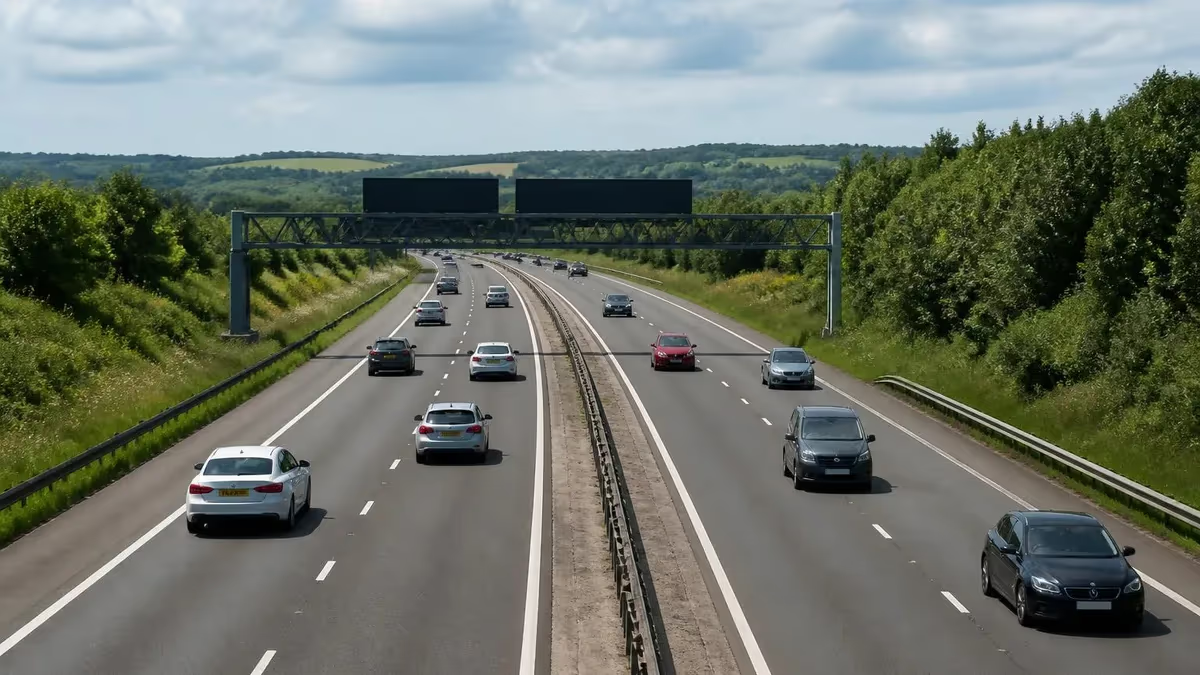
The driving test pa is one of the most searched statistics in British motoring, and for good reason. Whether you are days away from your practical, comparing test centres in your area, or simply curious about how your odds stack up, the headline figures published by the Driver and Vehicle Standards Agency (DVSA) tell a fascinating and sometimes sobering story.
In the most recent reporting year, just under half of all candidates passed their car practical test on the day, a figure that has hovered between 45% and 50% for over a decade despite huge changes in roads, vehicles and lesson formats.
That stubborn average hides enormous variation. Some rural test centres consistently report pass rates above 70%, while several busy urban centres barely scrape past 35%. Age matters too: 17-year-olds outperform candidates in their thirties and forties, and male candidates pass slightly more often than female candidates on the practical, although the gap reverses sharply in the test date. Understanding these patterns is not about gaming the system, it is about knowing what the numbers actually mean for you.
This guide unpacks the official DVSA data in plain English. You will see the national pass rate, the regional breakdown, the best and worst test centres, the typical number of attempts learners need, and the most common reasons examiners record a serious fault. We will also explain why pass rates are not a measure of examiner difficulty, despite what social media often claims, and how to interpret centre league tables sensibly when you are choosing where to book.
More importantly, we look at what the data tells us about successful candidates. The learners who pass first time share predictable habits: they take a realistic number of professional lessons, they treat the theory test as foundation knowledge rather than a hurdle, they practise on unfamiliar routes, and they book their practical only when their instructor genuinely recommends it. None of this is luck, and very little of it is talent.
We will also tackle the myths. No, examiners do not have secret quotas. No, certain test centres are not deliberately harder. No, the pass rate has not collapsed since the 2017 manoeuvre changes were introduced. The reality is more nuanced, more interesting, and far more useful if you want to make informed decisions about lessons, test bookings and revision strategy.
By the end of this article you will know the exact national average, the typical pass rate at your nearest centre type, the age group most likely to succeed, and the practical steps that genuinely shift the odds in your favour. We will draw on DVSA freedom-of-information releases, published annual statistics and decades of examiner commentary to give you a complete picture for 2026.
If you are still in the early stages of learning, this data will help you plan your timeline realistically. If your test is next week, the final sections cover last-minute preparation, mindset and what examiners actually look for. Either way, treat the pass rate as a useful benchmark, not a prophecy. Tens of thousands of candidates beat the averages every single month, and with structured preparation there is no reason you cannot be one of them.
UK Driving Test Pass Rate by the Numbers
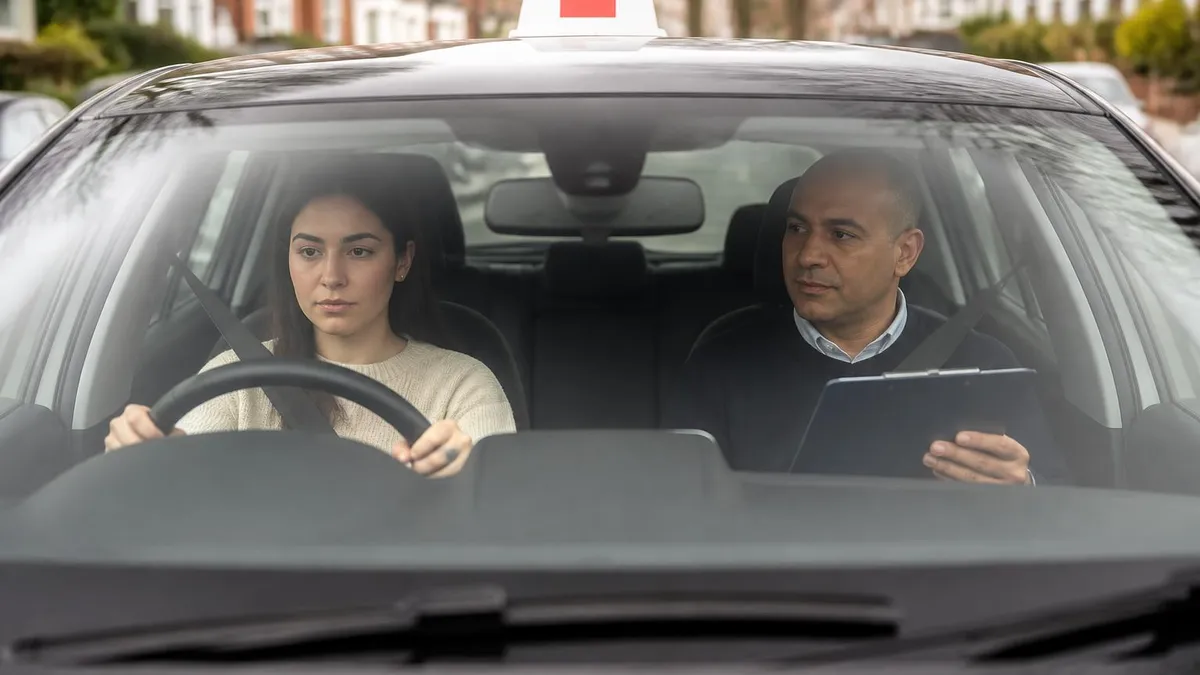
How the National Pass Rate Breaks Down
Pass rates fall steadily with age. 17-year-olds top the table at around 56%, while candidates in their forties typically sit closer to 40%. Reaction times, recent learning habits and lesson intensity all play a role in this clear age gradient.
Men pass the practical at roughly 51%, women at around 45%. The gap narrows each year and reverses entirely on the theory test, where female candidates outperform male candidates by several percentage points on average.
Scotland, Wales and the South West consistently record higher pass rates than Greater London, the West Midlands and parts of the North West. Urban density, traffic complexity and route variety drive most of the regional variation.
First-time candidates pass at around 49%. Second attempts dip slightly to 47%, then climb again as candidates gain confidence. Persistent learners on their fourth or fifth attempt still pass at roughly the national average.
Car practical sits near 48%, motorcycle Module 2 around 72%, LGV around 56%, and ADI Part 2 around 51%. Each test has its own dynamics, route length and examiner expectations.
Test centre choice is the single biggest controllable factor influencing your odds. The DVSA publishes pass rates for every one of its roughly 320 car test centres, and the spread between the best and worst is genuinely startling. The top performing centres, almost always in rural Scotland, Wales or coastal England, regularly post pass rates above 70%. Centres in the islands of Scotland have occasionally exceeded 80% in a single reporting year, although small sample sizes inflate the variance considerably.
At the other end of the table, several London centres including Wanstead, Belvedere and Erith sit consistently below 38%. The Midlands has its own difficult cluster around Birmingham and Wolverhampton, and Manchester Cheetham Hill, Speke in Liverpool and Featherstone in the North East also feature among the toughest. None of this means the examiners are harsher. The routes are simply more complex: multi-lane roundabouts, busy bus lanes, pedestrianised zones, narrow Victorian terraces and unpredictable traffic patterns all create more opportunities for a serious fault.
It is tempting to game the system by booking a test 80 miles away at a high pass rate centre. Some learners do exactly this, and DVSA data shows the practice is rising. The flaw in the strategy is straightforward: if your lessons have been on busy city streets and you turn up at a rural centre with single-track lanes, passing places and unfamiliar national-speed-limit B roads, you will face hazards you have never practised.
Several rural centres now post anecdotally lower pass rates for non-local candidates as a result. If you do consider travelling, take at least three to five lessons with a local instructor near the centre before test day. For an in-depth breakdown of the practical itself, our guide to the car practical test walks through the route, manoeuvres and marking sheet in detail.
Within most cities you can find one or two centres with noticeably better pass rates than their neighbours. In Greater London, Tolworth, Hither Green and Pinner all outperform the central London average. In Greater Manchester, Sale tends to outperform Cheetham Hill. In Birmingham, Sutton Coldfield generally records better numbers than Kingstanding. Your instructor will know the local picture and, crucially, will know the routes used.
One detail that is often missed: pass rates can shift sharply year on year for legitimate reasons. A new junction layout, a long-running roadworks scheme, or a change in the test route catchment can move a centre up or down by five points or more in a single year. Always look at three-year averages rather than a single annual figure, because tiny centres with only a few hundred tests can show enormous statistical noise.
Finally, remember that pass rate is only one factor. driving test wa for tests vary from a few weeks at some quiet centres to over twenty weeks at the busiest sites. Booking a centre purely because of its 70% headline rate is no good if the test slot is nine months away and you have already paid for sixty hours of lessons. Balance the statistical edge against time, distance, familiarity and your instructor's honest recommendation.
The most successful learners pick a centre because they have practised its routes, not because it tops a league table. If you can confidently drive every roundabout, dual carriageway, residential zone and tricky junction within a four-mile radius of your chosen centre, your personal pass probability will exceed the published average by a comfortable margin regardless of where that centre ranks nationally.
DVSA Practice Test Questions
Prepare for the DVSA - UK Driving Theory Test exam with our free practice test modules. Each quiz covers key topics to help you pass on your first try.
DVSA Eco-Friendly Driving and Vehicle Loading
DVSA Exam Questions covering Eco-Friendly Driving and Vehicle Loading. Master DVSA Test concepts for certification prep.
DVSA Hazard Awareness
Free DVSA Practice Test featuring Hazard Awareness. Improve your DVSA Exam score with mock test prep.
DVSA Incidents, Accidents and First Aid
DVSA Mock Exam on Incidents, Accidents and First Aid. DVSA Study Guide questions to pass on your first try.
DVSA Motorway Rules and Smart Motorways
DVSA Test Prep for Motorway Rules and Smart Motorways. Practice DVSA Quiz questions and boost your score.
DVSA Rules of the Road (Highway Code)
DVSA Questions and Answers on Rules of the Road (Highway Code). Free DVSA practice for exam readiness.
DVSA - UK Driving Theory Hazard Awareness ...
DVSA Mock Test covering - UK Driving Theory Hazard Awareness and Perception. Online DVSA Test practice with instant feedback.
DVSA - UK Driving Theory Motorway Rules an...
Free DVSA Quiz on - UK Driving Theory Motorway Rules and Regulations. DVSA Exam prep questions with detailed explanations.
DVSA - UK Driving Theory Road and Traffic ...
DVSA Practice Questions for - UK Driving Theory Road and Traffic Signs. Build confidence for your DVSA certification exam.
DVSA - UK Driving Theory Rules of the Road
DVSA Test Online for - UK Driving Theory Rules of the Road. Free practice with instant results and feedback.
Theory vs Practical Pass Rate Comparison
The theory test pass rate currently sits at around 44.2%, lower than the practical despite being a multiple-choice computer-based exam. Female candidates outperform male candidates here, passing at roughly 47% versus 41%. The hazard perception clip section is where most candidates lose marks, with timing rather than recognition being the usual problem. Many candidates click too early on developing hazards and trigger the anti-cheat measure that awards zero for that clip.
The combined pass mark requires 43 out of 50 multiple choice answers and 44 out of 75 on hazard perception. Failing either section means failing the whole test, and DVSA data shows roughly one in five fails comes from passing one section but failing the other. Treating the two parts as separate skills with separate revision blocks is the single most reliable way to lift your personal probability comfortably above the national average.
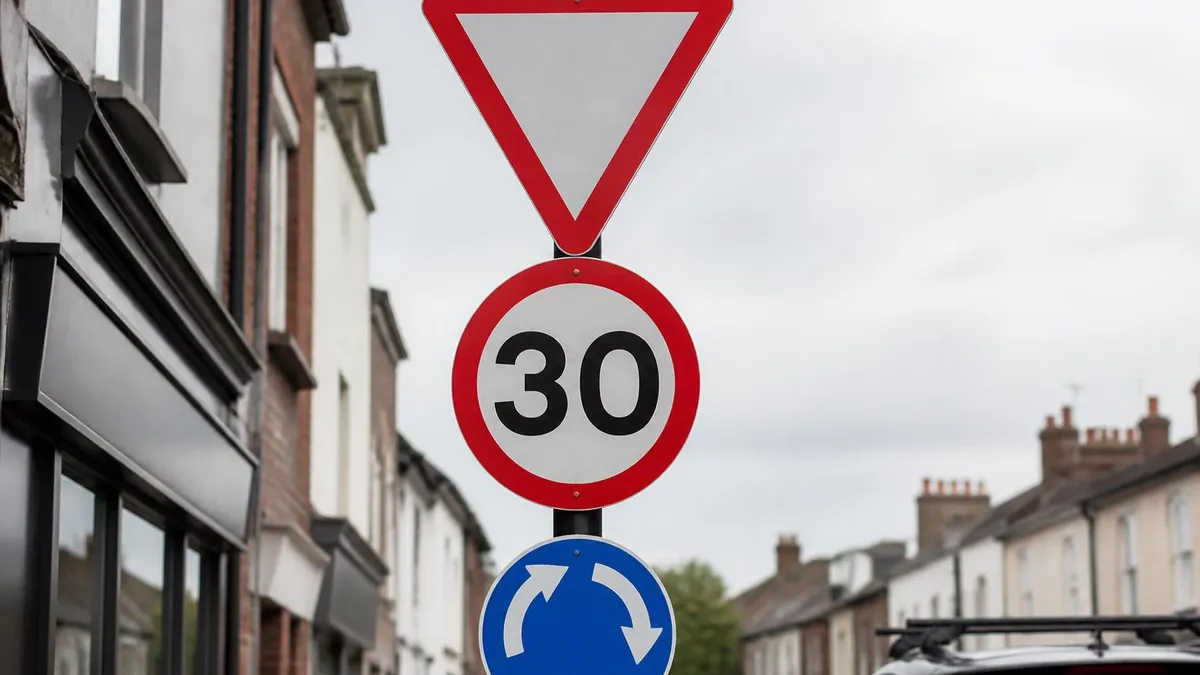
Is Booking at a High Pass Rate Centre Worth It?
- +Higher statistical odds of passing on the day if you genuinely prepare locally
- +Less complex traffic environments reduce the chance of unexpected serious faults
- +Shorter test routes at smaller centres mean fewer hazards to encounter
- +Calmer rural roads are kinder to test-day nerves and easier to focus on
- +Often shorter waiting times at rural centres compared with congested cities
- +Can be a confidence-building first attempt if previous urban tests have failed
- −Unfamiliar routes can erase the statistical advantage immediately
- −Travel time and cost on test day add pressure and fatigue
- −Limited practice opportunities if you live far from the centre
- −Instructor and car hire near the centre add £150 to £300 in extra costs
- −DVSA may flag and review repeat out-of-area bookings under fraud-prevention rules
- −Driving licence afterwards still requires confidence in your real-world local roads
Pros and Cons at a Glance
| Pros | Cons |
|---|---|
| Higher statistical odds of passing on the day if you genuinely prepare locally | Unfamiliar routes can erase the statistical advantage immediately |
| Less complex traffic environments reduce the chance of unexpected serious faults | Travel time and cost on test day add pressure and fatigue |
| Shorter test routes at smaller centres mean fewer hazards to encounter | Limited practice opportunities if you live far from the centre |
| Calmer rural roads are kinder to test-day nerves and easier to focus on | DVSA may flag and review repeat out-of-area bookings under fraud-prevention rules |
| Often shorter waiting times at rural centres compared with congested cities | Driving licence afterwards still requires confidence in your real-world local roads |
How to Beat the UK Driving Test Pass Rate Average
- ✓Take a minimum of 40 to 47 professional hours, the DVSA-recommended average for first-time passers
- ✓Add 20 hours of supervised private practice between lessons to embed skills
- ✓Drive the actual test centre routes at least five times before booking
- ✓Book your test only after your instructor explicitly says you are test-ready
- ✓Take a mock test under full silent examiner conditions in the week before
- ✓Avoid Friday afternoon and Monday morning slots when traffic is most unpredictable
- ✓Eat a steady-energy meal two hours before and stay hydrated without overdoing it
- ✓Revisit your theory test app for hazard awareness even after passing theory
- ✓Arrive 15 minutes early so the eyesight check and paperwork feel routine
- ✓Treat the show-me tell-me questions as easy marks by rehearsing all 21 in advance
Lesson hours, not natural talent, drive pass rates
DVSA-commissioned research consistently shows that learners who take 45 hours of professional lessons plus 22 hours of private practice are nearly twice as likely to pass first time as those with fewer than 20 lesson hours. There is no shortcut. Compressing learning into intensive courses can work, but only when paired with structured mock tests, route familiarisation and honest feedback from your instructor before booking the practical.
Knowing why people fail is more useful than knowing the headline pass rate. DVSA publishes the top ten reasons examiners record a serious or dangerous fault, and the same issues dominate every year. The single most common cause of failure is poor observation at junctions, accounting for roughly one in three failed tests. Candidates either pull out without sufficient checks, miss an approaching cyclist or motorcyclist, or fail to make appropriate eye contact at unmarked T-junctions.
The second most common failure reason is poor use of mirrors, particularly when changing direction. Examiners want to see a clear mirror check before signalling, before changing speed, and before changing position on the road. A glance is not enough; the examiner needs to see your head move. Mirror failures are often catastrophic because they combine with another fault, such as moving into a lane occupied by an overtaking vehicle, instantly elevating it to dangerous.
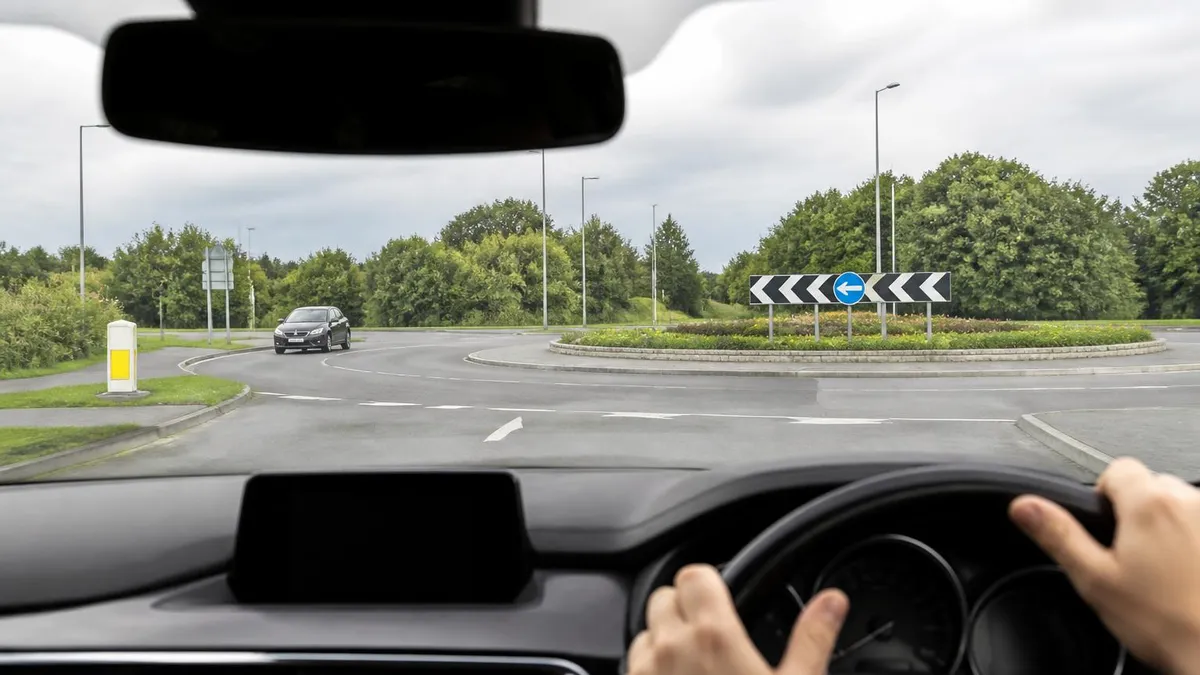
Lack of control during steering is the third major category. This includes hitting the kerb during a manoeuvre, drifting across lane markings, and failing to maintain lane discipline on roundabouts. Roundabouts in general appear repeatedly in the top ten, with poor positioning and inappropriate lane choice being the usual culprits. Reverse parking and parallel parking each contribute their share, although the inclusion of forward bay parking in 2017 actually reduced manoeuvre-based failures overall.
Junction positioning, response to traffic lights, response to road signs, undue hesitation and inappropriate speed round out the list. Crucially, undue hesitation is now one of the fastest-growing failure reasons, partly because over-cautious learners try to drive too defensively and confuse examiners about their intentions. Driving too slowly is treated as a serious fault if it impedes traffic or shows lack of judgement. If you would like a refresher on safer driving habits more broadly, our guide on how to learn to drive UK covers the full progression from first lesson to test day.
What does not fail you, contrary to popular belief, is stalling once, taking a wrong turn during independent driving, or losing your way following sat nav directions. Examiners assess how you recover, not whether you make a small error. A calm restart after a stall, with a proper mirror check and observation, will not even appear on the marking sheet as a minor in many cases.
Nerves themselves rarely fail candidates directly, but they cause the chain reactions that do. A nervous candidate over-checks mirrors, hesitates at clear junctions, brakes too gently when firm braking is needed, and grips the steering wheel so tightly that smooth steering becomes impossible. Working on calm, slow breathing in the weeks before the test is as worthwhile as any practical drill.
One often-overlooked failure pattern: candidates who pass mock tests easily but fail on the day usually do so because they treated the mock as routine and the real test as exceptional. Examiners ask for exactly the same skills your instructor has been assessing for months. The candidates who pass first time are those who manage to forget, for forty minutes, that there is anything unusual about the drive at all.
The DVSA test fee of £62 is non-refundable if you fail, and rescheduling within 10 full working days forfeits the fee entirely. With the national median wait now around 11 weeks (Aug 2026), a failed test can still mean a couple of months of delay in busier areas. Always defer to your instructor's judgement on test readiness rather than booking around your own schedule pressures.
Looking ahead, the uk driving test pa is unlikely to shift dramatically in either direction. DVSA has signalled no major changes to the test format for 2026, although there is ongoing consultation on extending the independent driving section and on integrating live electric vehicle scenarios into the marking criteria. Neither of these would be expected to move the headline pass rate by more than a percentage point or two.
What is changing is the speed at which candidates can book and retake. The post-pandemic backlog that pushed waiting times to historic highs is slowly clearing, with DVSA having recruited and trained over 400 additional examiners since 2023. As waiting times normalise, learners will face less pressure to book before they are ready, which should naturally push the first-time pass rate upward over the next two to three years.
Technology is also reshaping preparation. Modern theory test apps now use spaced repetition and adaptive question selection, mock test platforms simulate the exact DVSA hazard perception scoring algorithm, and dashcam review during lessons has become standard practice for many instructors. Learners who engage with these tools consistently outperform those who rely on a Highway Code book alone, sometimes by margins of fifteen percentage points or more in first-time pass rates.
The driver shortage in commercial sectors has also raised attention on test centre capacity. The DVSA has trialled evening and weekend tests in selected areas, and a small number of pilot centres now offer Saturday slots as standard. If these become widespread, candidates will have more flexibility to book at times of day that match their lesson schedules, removing a small but persistent source of mid-week test failure.
One trend worth watching is the rise in older learners. The proportion of test candidates aged over 25 has climbed from 18% to nearly 30% over the past decade, driven by delayed milestones, rising driving ls and urban lifestyles.
Because older candidates pass at lower rates, this demographic shift is one reason the headline national pass rate has stayed stubbornly below 50%. It is not that tests are getting harder; the pool of candidates is changing. If you ever need to cancel driving test bookings, the process and refund rules apply regardless of age, although busier centres do see more last-minute reshuffles.
Environmental priorities are nudging the syllabus too. Eco-friendly driving questions have grown in prominence in the theory test, and examiners increasingly look for evidence of fuel-efficient gear selection, smooth acceleration and appropriate use of engine braking on the practical. None of this changes the core pass criteria, but it does mean that a candidate who has practised only with one foot down and the other clamped on the brake will find themselves flagged for minor faults more often than they would have been five years ago.
Finally, the conversation about minimum lesson hours continues. Several road safety charities advocate a mandatory minimum of 30 logged hours before any candidate can sit a practical. DVSA has resisted this so far, preferring to rely on instructor judgement and the simple test pass-or-fail outcome. Whether or not minimums arrive, the underlying truth holds: there is no faster way to lift your personal pass probability than to genuinely earn it through structured lessons, deliberate practice and honest self-assessment in the months leading up to your test.
With the data and trends now clear, here is the practical playbook for actually beating the national average. Start by being honest about your current level. If you have had ten lessons and your instructor has not yet introduced dual carriageways, motorway awareness or sat nav independent driving, you are not close to test-ready regardless of how comfortable basic driving feels. The DVSA average of 45 to 47 lesson hours is a median; many candidates need more, and only a small minority need substantially fewer.
Build your revision in layers. The Highway Code remains the foundation, but pair it with a modern theory test app that tracks your weak categories. Spend twenty minutes daily on hazard perception clips for at least three weeks before booking. The clips are not random; they cover a predictable set of developing hazards, and recognising them quickly is a skill that improves with repetition. Most candidates who fail the theory do so because they treated it as a memory test rather than a perception test.
For the practical, structure your final four weeks deliberately. Week one should focus on weaknesses identified by your instructor. Week two should introduce mock test conditions, meaning silent driving with realistic examiner instructions and a full route. Week three is route familiarisation around your chosen test centre, including any tricky junctions, unusual roundabouts or unfamiliar one-way systems. Week four is consolidation: shorter lessons, lower intensity, mental preparation and rest.
On test day itself, the small details matter more than you might expect. Eat a balanced meal containing slow-release carbohydrates two to three hours before. Avoid energy drinks, which spike adrenaline that is already running high. Arrive in time to use the toilet, complete paperwork without rushing and let your heart rate settle. Many test centres allow you to wait in your instructor's car until the examiner calls you, which is far less stressful than the waiting room.
During the drive itself, talk to yourself in your head. Verbalise mirror checks, observations and decisions silently as you make them. This focuses attention, slows breathing and prevents the autopilot drift that causes serious faults. If you make a mistake, acknowledge it internally and reset. Examiners want to see good driving overall, not perfection. A single minor fault for a slightly hesitant junction will not fail you; ruminating on it for the next ten minutes might.
Independent driving is now twenty minutes of the forty-minute test. Sat nav directions are spoken clearly with road signs visible, and getting lost is not a fault as long as your driving remains safe. If you miss a turn, the sat nav recalculates. If you find yourself in the wrong lane at a roundabout, take the safe option, continue around if necessary, and follow the new direction. Stay calm, stay observant, stay safe.
Finally, plan for either outcome before you start the engine. If you pass, you will not be allowed to drive home unaccompanied if you have not pre-arranged insurance, so sort that with your instructor or family beforehand. If you fail, you can rebook the next working day, although giving yourself two to four weeks of further practice is almost always wiser. Beating the uk driving test pass rate average is not about being lucky on the day; it is about turning up so well prepared that luck barely matters.
Sample DVSA UK Driving Theory Practice Questions
Try these questions from our free DVSA UK Driving Theory practice tests. The correct answer and an explanation follow each question.
You are driving on a single carriageway road with double white lines in the centre. The line on your side is broken. When is it permissible to cross these lines?
- A. To overtake a vehicle travelling at 15 mph.
- B. To turn into a side road on the right.
- C. To overtake if you can complete the manoeuvre before the line on your side becomes solid.
- D. To park on the right-hand side of the road.
Answer: C. To overtake if you can complete the manoeuvre before the line on your side becomes solid.
According to the Highway Code (Rule 128), if the white line nearest to you is broken, you may cross the lines to overtake, but only if it is safe and you can complete the manoeuvre before reaching a solid white line on your side. Turning into a side road is also permitted, but overtaking is the more comprehensive correct action described. You must not park on the opposite side of the road, and the speed for overtaking slow-moving vehicles is specified as 10 mph or less.
You are driving past a parked ice cream van on a residential street. What is the main hazard you should be anticipating?
- A. The van's refrigeration unit may be leaking.
- B. Children running out into the road from behind the van.
- C. The driver suddenly pulling out without indicating.
- D. Litter being dropped from the van's serving window.
Answer: B. Children running out into the road from behind the van.
Ice cream vans attract children, who may be excited and less aware of road safety. They can run into the road unexpectedly, often from behind the van where they are hidden from your view. You must reduce your speed significantly and be prepared to stop.
You are driving on a country lane with no pavement. What should you be particularly aware of on a left-hand bend?
- A. Oncoming traffic cutting the corner.
- B. Pedestrians walking on the left, towards you.
- C. The road surface being more worn on the bend.
- D. Pedestrians walking on the right, with their back to you.
Answer: A. Oncoming traffic cutting the corner.
On a blind or sharp left-hand bend, a common and dangerous hazard is an oncoming vehicle cutting the corner and encroaching into your lane. You should reduce your speed and keep well to the left to mitigate this risk. Pedestrians on a road with no pavement should walk on the right, facing oncoming traffic.
You are driving behind a bus that pulls up at a stop. What hazard should you anticipate?
- A. The bus may reverse towards you
- B. Pedestrians may cross the road from in front of the bus
- C. The bus may turn right without indicating
- D. Other buses may overtake you
Answer: B. Pedestrians may cross the road from in front of the bus
When a bus stops, passengers may alight and cross the road, sometimes emerging from in front of the bus where you cannot see them. Be prepared to stop and watch for pedestrians stepping into the road.
DVSA Questions and Answers

Cancelling Driving Test: The Complete UK Guide to Refunds, Rebooking and Avoiding Lost Fees in 2026
Cancel Driving Test UK: Complete DVSA Guide to Refunds, Rebooking & Avoiding Lost Fees in 2026

DVSA Car Practical Test: Complete Guide to Passing First Time
How to Change Theory Test Date: Complete DVSA Rebooking Guide for 2026
Learn to Drive UK: The Complete 2026 Beginner's Guide to Lessons, Tests and Licence Success
About the Author

Licensed Driving Instructor & DMV Test Specialist
Penn State UniversityRobert J. Williams graduated from Penn State University with a degree in Transportation Management and has spent 20 years as a certified driving instructor and DMV examiner consultant. He has personally coached thousands of applicants through written knowledge tests, skills assessments, and commercial driver licensing programs across more than 30 states.