
Can You Legally Drive With One Eye in the UK? Complete DVSA Guide 2026 October
Can you legally drive with one eye in the UK? ✅ DVSA vision standards, licence rules, and what monocular drivers must do to stay road-legal.
Can you legally drive with one eye in the UK? The short answer is yes — thousands of monocular drivers hold a valid UK driving licence and travel safely on British roads every day. However, the law does set specific visual standards that must be met, and the process for obtaining or retaining a licence when you have sight in only one eye involves medical assessments, DVSA notification requirements, and ongoing responsibilities that every affected driver must understand thoroughly before getting behind the wheel.
The DVSA and the Driver and Vehicle Licensing Agency (DVLA) regulate driving fitness in Great Britain, and eyesight sits at the heart of their medical standards. Monocular vision — the condition of having functional sight in only one eye — affects depth perception and peripheral vision on the side of the non-seeing eye. These changes matter for hazard awareness and safe driving, which is why the licensing authorities require drivers to demonstrate they can meet the prescribed legal eyesight standard even without binocular vision.
Whether you were born with sight in one eye, lost vision through injury, illness, or surgery, or are adapting to a gradual condition such as amblyopia or macular degeneration affecting one eye, the rules that apply to you are essentially the same. You must be able to read a standard number plate from 20 metres in good daylight, with glasses or contact lenses if you normally wear them. You must also meet the minimum field-of-vision requirement for your licence category.
It is important to understand that monocular drivers do not automatically fail their driving test or lose their licence. Many people with one functional eye have been driving safely for decades. Research consistently shows that experienced monocular drivers adapt remarkably well, compensating for the loss of stereoscopic depth perception through head movement, motion parallax, and learned visual judgement. The brain is highly adaptable, and most drivers who lose sight in one eye gradually re-calibrate their spatial awareness without conscious effort.
That said, there are specific steps you must take if your eyesight changes. You are legally required to inform the DVLA if you develop a condition that affects your ability to drive safely — including losing vision in one eye. Failure to notify the DVLA can result in a fine of up to £1,000 and could invalidate your insurance in the event of an accident. Understanding driving with one eye and what the standards mean in practice is therefore essential knowledge for any affected driver.
This guide covers everything you need to know: the legal eyesight standards, the DVLA notification process, what happens during a medical assessment, how your licence may be marked, how monocular driving affects your theory test preparation, and the practical adaptations that help one-eyed drivers stay safe. We also address the rules for different licence categories, including Group 1 (cars and motorcycles) and the stricter Group 2 requirements for lorries, buses, and other large vehicles.
By the end of this article you will have a clear, accurate understanding of the UK legal framework governing monocular driving, what to expect from the medical process, and how to approach your driving responsibilities confidently and lawfully. Read on for a complete, authoritative breakdown of every aspect of driving with one eye under UK law.
Monocular Driving in the UK — Key Numbers
UK Driving Vision Standards: What the Law Requires
Every driver must be able to read a standard UK number plate — with characters 79mm tall — from 20 metres in good daylight. This test applies whether you have one functional eye or two, and must be satisfied with corrective lenses if worn.
The DVLA requires a minimum visual acuity of 6/12 on the Snellen scale in at least one eye. For monocular drivers, the functioning eye must meet this threshold. An ophthalmologist or optometrist measures this during a formal assessment.
Car and motorcycle drivers must have a binocular field of at least 120 degrees horizontally, with no significant defect in a central 20-degree zone. Monocular drivers are assessed on whether their single eye's visual field meets an adapted standard.
Lorry, bus, and coach drivers face far stricter requirements. Both eyes must meet minimum acuity thresholds and field-of-vision standards. Monocular vision almost always disqualifies applicants from Group 2 licences in the UK.
UK drivers must inform the DVLA of any medical condition — including sudden or gradual loss of vision in one eye — that could affect safe driving. Notification is required even if you believe you still meet the legal standard.
Understanding the DVLA notification process is one of the most important steps for any driver who loses or has lost vision in one eye. The legal obligation falls under the Road Traffic Act 1988 and associated medical fitness-to-drive regulations. You must notify the DVLA as soon as you become aware of a condition that affects your driving ability — you cannot wait until your licence comes up for renewal or until a doctor tells you to report it. The responsibility rests squarely with you as the licence holder.
To notify the DVLA, you need to complete form V1 (for a medical condition that may affect your driving) or, in cases of visual impairment specifically, you may be directed to complete a more detailed medical questionnaire. These forms are available on GOV.UK and can be submitted by post or, in some cases, online. The form asks you to describe your condition, when it started, what treatment you have received, and to provide contact details for your treating clinician so the DVLA can seek a medical report if necessary.
Once you submit your notification, the DVLA will write to your optician, ophthalmologist, or GP to request a medical report. This process typically takes several weeks. During this time you may be asked to surrender your licence temporarily, or you may be permitted to continue driving while the assessment is pending — the DVLA will advise you in writing. It is critical to follow whatever instruction they give, as driving against DVLA advice while a medical enquiry is open could be treated as a criminal offence.
After receiving the medical evidence, the DVLA will make one of several decisions. They may return your licence unchanged if you clearly meet the standards. They may issue a time-limited licence (typically one to three years) which requires periodic renewal and reassessment. They may add a licence restriction code — specifically codes relating to visual impairment — to your photocard. Or, in cases where you clearly cannot meet the minimum standard, they may revoke your licence. You have the right to appeal any revocation decision through a magistrates' court in England and Wales, or a sheriff court in Scotland.
If your vision loss was sudden — for example, caused by a retinal detachment, stroke affecting the visual cortex, or traumatic injury — you should stop driving immediately and notify the DVLA without delay. Sudden onset visual conditions create the highest risk in the immediate period after loss, both because of the abrupt change in spatial awareness and because the brain has had no time to adapt. Many clinicians advise patients not to drive for a minimum period after sudden monocular vision loss to allow adaptation before reassessment.
For those with a longstanding monocular condition — particularly those who have never had binocular vision — the process may be simpler. Congenital monocular vision often means the brain has always relied on monocular depth cues, and driving standards authorities in the UK recognise this. Drivers in this category have often held licences for years without incident. However, you must still ensure the DVLA holds accurate records of your condition, and you should review your medical declaration each time you renew your photocard licence.
Insurance is another consideration that intersects with DVLA notification. Your car insurance policy requires you to disclose medical conditions that could affect your driving. If you fail to tell the DVLA and you also fail to tell your insurer, and you are involved in an accident, your policy could be voided. This would leave you personally liable for damages, third-party claims, and potentially criminal prosecution for driving without valid insurance. Always notify both the DVLA and your insurer when your visual status changes.
Medical Assessment for Monocular Drivers
The foundation of any medical assessment for a monocular driver is a formal visual acuity test carried out by a qualified optometrist or ophthalmologist. The examiner will measure vision in the functioning eye using a Snellen chart, aiming to confirm that you achieve at least 6/12 corrected vision. They will also assess contrast sensitivity and glare tolerance, both of which are relevant to safe driving in variable UK weather and lighting conditions.
Your clinician will provide a structured report to the DVLA detailing their findings. This report should include the cause of monocular vision loss, the duration, the stability of the condition, and whether any treatment (such as cataract surgery or retinal treatment) is ongoing or planned. A stable, longstanding monocular condition with a well-functioning remaining eye is generally viewed more favourably than a recent or progressive loss of vision.
Driving With One Eye: Benefits of Monocular Adaptation vs. Challenges to Manage
- +The brain adapts remarkably well to monocular vision over time, using motion parallax and other cues to judge distance
- +Many monocular drivers report their driving behaviour becomes more careful and deliberate, potentially improving overall safety
- +Compensation techniques such as increased head scanning and extended mirror use can fully offset most blind-side risks
- +A DVLA medical licence is a formal confirmation of fitness to drive, giving both the driver and insurer confidence in road legality
- +Modern driver assistance systems (blind-spot monitors, parking sensors) provide technological compensation for reduced peripheral awareness
- +Congenital monocular drivers who have never had binocular vision often adapt so completely that day-to-day driving presents minimal additional challenge
- −Loss of stereoscopic depth perception makes precise distance judgement harder, especially at speed or in low-contrast environments
- −The blind side (non-seeing eye side) creates a genuine hazard zone that requires active compensatory scanning behaviour
- −The DVLA notification and medical assessment process can take weeks or months, creating uncertainty about licence status
- −Group 2 licences (lorry, bus, coach) are almost always denied or revoked for monocular drivers, limiting career options
- −Insurance disclosure requirements add administrative complexity and may increase premium costs depending on insurer
- −Night driving and adverse weather conditions amplify the challenges of monocular vision, particularly at junctions and roundabouts
Monocular Driver Action Checklist: Everything You Must Do
- ✓Notify the DVLA promptly using form V1 as soon as you experience significant vision loss in one eye
- ✓Book a formal eye test with a registered optometrist or ophthalmologist and request a structured DVLA medical report
- ✓Inform your car insurance provider of your monocular condition in writing and keep a record of that disclosure
- ✓Check whether your current licence category (Group 1 or Group 2) is compatible with your visual status
- ✓Attend any medical appointment or practical driving assessment arranged by the DVLA within the specified timeframe
- ✓Allow a suitable adaptation period after sudden vision loss before returning to driving, following your clinician's advice
- ✓Review your mirrors and head-scanning technique to ensure you are actively compensating for your blind-side field loss
- ✓Consider additional training with a DVSA-approved driving instructor experienced in disability and adaptive driving
- ✓Renew your time-limited DVLA licence on schedule and submit updated medical evidence before the expiry date
- ✓Check whether your vehicle would benefit from blind-spot monitoring systems, parking sensors, or wider mirror configurations
Experienced Monocular Drivers Are Often As Safe As Binocular Drivers
Multiple peer-reviewed studies, including research cited by the European Council guidelines on driving with visual impairment, have found that drivers with longstanding monocular vision do not have significantly higher accident rates than those with normal binocular vision. The brain's ability to use monocular depth cues — including object size, motion parallax, and atmospheric perspective — combined with learned compensatory scanning behaviour, means that with appropriate adaptation most monocular drivers can drive at the same safety standard as the general driving population.
Driving safely with one eye is entirely achievable for the vast majority of people, but it does require deliberate adaptation and an honest assessment of your own abilities. The most significant change monocular drivers must make is to their scanning behaviour. With only one eye providing input, the blind side — the side corresponding to the non-functional eye — has reduced peripheral coverage. Compensating for this requires a conscious habit of turning the head further when checking for hazards at junctions, when changing lanes, and when emerging from side roads.
Mirror use becomes even more critical than it is for binocular drivers. The DVSA driving standard already emphasises systematic mirror checks before every signal, manoeuvre, and speed change. For monocular drivers, this discipline takes on additional importance. Many adaptive driving instructors recommend a slightly wider nearside mirror angle to extend the visible field on the affected side. Some drivers also find that a small convex blind-spot mirror, fitted legally within DVSA guidelines, provides a useful additional safety margin on the blind side.
Speed management is another area where monocular drivers benefit from a more conservative approach, particularly in the early weeks and months following vision loss. Judging the closing speed and distance of approaching vehicles is harder without stereoscopic depth perception, and slightly lower approach speeds at junctions and roundabouts give extra reaction time. Research into monocular driving adaptation consistently shows that the biggest risk period is the immediate aftermath of sudden vision loss, before the brain has recalibrated its spatial awareness using monocular cues.
Parking presents one of the more practically challenging tasks for newly monocular drivers. Without binocular depth perception, the precise judgement of distances to kerbs, other vehicles, and obstacles requires more reliance on reference points, parking sensors, and reversing cameras. Taking time to identify reliable visual reference points inside the car — such as where a door pillar aligns with a white line — can rebuild the confidence and accuracy that monocular parking demands. Many driving instructors recommend spending dedicated practice time on parking and low-speed manoeuvring after adapting to monocular vision.
Motorway driving generally presents fewer specific challenges for monocular drivers than urban driving does, because lane-keeping at speed is primarily a lateral task that does not demand precise depth perception. Overtaking, however, requires careful judgement of the gap ahead and the speed of following traffic, and monocular drivers should allow longer gaps before pulling out than a binocular driver might need. The two-second rule for safe following distance is already the DVSA standard; monocular drivers may benefit from extending this to three seconds in conditions of poor visibility or at higher speeds.
Night driving deserves special attention. Reduced ambient light degrades all vision, but for monocular drivers it also narrows the effective field of useful visual input on the blind side. Headlight glare from oncoming vehicles can temporarily overwhelm the functioning eye and eliminate what residual light sensitivity the non-functional eye might contribute. Many monocular drivers find it sensible to reduce night driving, particularly on unlit rural roads, and to avoid peak glare situations such as low-sun driving into the setting or rising sun without polarised glasses.
Finally, regular eye examinations are vital. The functioning eye is the monocular driver's only visual link to the driving environment, and any deterioration in its health — whether from glaucoma, cataracts, macular degeneration, or diabetic retinopathy — has an immediate and disproportionate impact on driving safety. Annual sight tests, prompt attention to any change in vision quality, and proactive management of eye health conditions are not optional extras for monocular drivers; they are an essential part of responsible road use.
If the DVLA writes to you to say that a medical enquiry is underway regarding your fitness to drive, you must follow their specific instructions about whether you may continue driving. Driving while a medical enquiry is open — without written DVLA permission to do so — could constitute a criminal offence under the Road Traffic Act and may invalidate your insurance policy. When in doubt, stop driving and seek written clarification from the DVLA before getting behind the wheel.
The theory test and practical driving test implications for monocular drivers are worth addressing clearly, because confusion in this area is common. If you are a new driver who has never held a UK licence and you have monocular vision, you must declare your condition on the DVLA medical questionnaire that accompanies your licence application. The DVLA will assess your medical fitness before your licence is issued. Once cleared, you are eligible to sit the theory test and, if you pass, to book your practical driving test with the DVSA in the usual way.
The theory test itself is not adapted for monocular drivers in any special way — you answer the same multiple-choice questions and complete the same hazard perception test as all other candidates. However, the hazard perception component is arguably more relevant to monocular drivers than to most, because it directly tests the ability to identify developing road hazards before they become critical. Practising hazard perception is excellent mental preparation for the attentive scanning that monocular driving demands in real life.
When booking your practical driving test, you should declare your visual impairment on the DVSA booking form. This is not to trigger additional scrutiny but to ensure that the test centre is aware and that appropriate arrangements can be made if needed.
In practice, the DVSA examiner will carry out the same eyesight check at the start of the practical test that they perform for every candidate — you will be asked to read a number plate from 20 metres. Passing this check with your functioning eye is sufficient; the examiner does not make a separate assessment of whether you are monocular.
During the practical test, monocular candidates are assessed on the same competencies as all other learners: effective observation, appropriate speed, proper use of mirrors and signals, and safe handling at junctions, roundabouts, and dual carriageways. The examiner is not looking for evidence of monocular compensation techniques specifically, but they will note any failure to check the blind side adequately. This makes systematic head-scanning and mirror use particularly important during the test drive — habits that, if well practised, will come naturally on the day.
Once you have passed your practical test, your licence may carry restriction code 01, which indicates that corrective lenses must be worn while driving, or other vision-related codes depending on the DVLA's medical decision. Restriction codes appear on the back of your photocard licence. They are not a mark of lower competence — they simply record the medical conditions attached to the licence, and failing to comply with a restriction (for example, driving without prescribed glasses) is itself an offence that can attract a fine and penalty points.
For those already holding a licence who develop monocular vision later in life, the process is slightly different. You have an existing entitlement that the DVLA must formally reassess. After notification and medical assessment, the outcome may be unchanged entitlement, a time-limited licence requiring periodic review, or in rare cases revocation of some or all licence categories. The Group 2 entitlement — if held — is the most vulnerable, as the medical standards for commercial vehicle driving are substantially stricter and monocular vision usually falls outside the permissible range.
Understanding the full picture of UK theory test requirements and pass standards is valuable context for any driver navigating the licensing system. Whether you are a monocular driver preparing for your first test or an experienced driver dealing with a change in vision, knowing how the system works helps you engage with it confidently and on your own terms, without surprises at any stage of the process.
For monocular drivers approaching their practical driving test or returning to driving after a period of medical assessment, structured preparation makes a significant difference to both confidence and test outcome. The first step is to find a DVSA-approved driving instructor who has experience working with visually impaired or adaptive drivers. Not all instructors have this background, but those who do can provide targeted advice on compensatory techniques, vehicle adaptations, and the specific examiners' competency criteria most relevant to your situation.
Refresher driving lessons are advisable even for experienced monocular drivers who have been off the road during a DVLA enquiry. Driving is a perishable skill, and the adaptation techniques required for monocular driving — particularly expanded head-scanning routines and increased mirror discipline — benefit from professional reinforcement before a formal assessment. A good instructor will identify any ingrained habits from binocular driving days that no longer serve you well and help replace them with monocular-appropriate behaviours.
Theory test preparation is equally important. The DVSA multiple-choice questions cover a broad range of topics, and while vision-specific questions form only a small subset, topics such as hazard perception, safe following distances, and rules around reporting medical conditions are all directly relevant to monocular drivers. Using a structured practice resource helps ensure no topic area is neglected. Aim to complete at least five full mock theory tests under timed conditions before sitting the real examination, aiming consistently for scores above 45 out of 50 to give yourself a comfortable margin above the 43-question pass mark.
The hazard perception element deserves dedicated practice. This section of the theory test uses video clips to assess how quickly and accurately you spot developing hazards. For monocular drivers, the habit of actively scanning the full width of the road — which is essential in real driving — translates well into better hazard perception scores, because you are practised at looking for hazards at the edges of the frame that other candidates might miss. Use official DVSA hazard perception practice materials alongside third-party resources to build a broad bank of scenario experience.
On the day of any formal DVSA assessment, whether theory or practical, arrive early, bring the correct ID documents, and ensure your corrective lenses are with you if you normally wear them while driving. Inform the test centre staff of any access requirements in advance — if you need rest breaks, different lighting, or other adjustments, these can often be accommodated with sufficient notice. The DVSA has reasonable adjustment provisions for candidates with medical conditions or disabilities, and monocular vision qualifies for consideration under these provisions.
Post-test, whether you pass or need to rebook, take the feedback seriously. The DVSA driving examiner's feedback sheet (DL25) records every competency area and marks both driver faults and serious or dangerous faults. If hazard observation or mirror use appears on your feedback sheet, these are the areas to address immediately with your instructor before rebooking. The pass rate for UK practical tests is approximately 45 to 50 percent at first attempt across all candidates, and targeted preparation based on examiner feedback is the most efficient route to success at a second sitting.
Ultimately, driving with one eye is not a barrier to holding a UK licence, passing the DVSA tests, or enjoying a full driving life. With the right preparation, honest self-assessment, medical compliance, and good driving habits, monocular drivers can and do drive safely throughout their lives.
The legal framework exists not to exclude people with visual differences but to ensure that every driver on UK roads — regardless of the specific configuration of their vision — meets a consistent standard of safe driving ability. Meeting that standard, and maintaining it over time, is both the legal requirement and the personal responsibility of every monocular driver.
Driving With One Eye: Key Facts to Remember
👁️ Can you drive with one eye in the UK?
Yes. Being blind in one eye does not bar you from a Group 1 (car/motorcycle) licence. You must read a number plate from 20 metres, meet the visual acuity and field standards in your functioning eye, and notify the DVLA. Thousands of monocular drivers hold valid UK licences.
START DVSA PRACTICE TEST📏 What is the number plate reading distance?
You must read a standard number plate (79mm tall characters) from 20 metres in good daylight, wearing glasses or contact lenses if you normally need them. This single eyesight check is applied to every driver, including monocular drivers, at the start of the practical test.
START EYESIGHT PRACTICE TEST🔭 What visual field does a Group 1 licence need?
Group 1 drivers need a horizontal field of vision of at least 120 degrees with no significant defect in the central 20-degree zone. Monocular drivers are assessed on whether the single working eye meets an adapted field standard using automated perimetry.
START DVSA PRACTICE TEST👓 What visual acuity must the working eye meet?
The DVLA requires a minimum visual acuity of 6/12 on the Snellen scale in at least one eye. For a monocular driver the functioning eye must reach this level, measured with corrective lenses if worn, during a formal assessment by an optometrist or ophthalmologist.
START DVSA PRACTICE TEST📮 Do you have to tell the DVLA about losing an eye?
Yes. You must notify the DVLA as soon as you lose significant sight in one eye or develop any vision-affecting condition. Report it using the correct medical form on GOV.UK. Failing to report can lead to a fine of up to £1,000 and may invalidate your insurance.
START HAZARD PRACTICE TEST💷 What is the fine for not reporting monocular vision?
You can be fined up to £1,000 for failing to tell the DVLA about a medical condition that affects your driving, including blindness in one eye. If an accident happens and you had not reported it, your insurance can also be voided, leaving you personally liable for claims.
START HAZARD PRACTICE TEST🚌 Can you drive a lorry or bus with one eye?
Almost never. Group 2 licences for lorries (Category C) and buses (Category D) require both eyes to meet acuity and field standards. Monocular vision usually disqualifies applicants, and an existing Group 2 entitlement is normally revoked even if the Group 1 car licence is kept.
START DVSA PRACTICE TEST🧠 How does one eye affect depth perception?
Having one eye removes stereoscopic depth perception, but the brain compensates using monocular cues: object size, motion parallax, perspective and shading. Most monocular drivers adapt well, though slow-speed tasks such as parking need extra care and reliable reference points.
START DVSA PRACTICE TEST🔁 Will you need to retake the driving test?
Not automatically. If you already hold a full licence, becoming monocular does not force a retest. The DVLA may request a functional assessment at an approved mobility centre if there are concerns, but that is a specialist medical assessment rather than a standard DVSA driving test.
START HAZARD PRACTICE TEST⏱️ How long does the DVLA medical assessment take?
A DVLA vision assessment typically takes four to eight weeks from notification, longer for complex cases needing specialist ophthalmology reports. The DVLA writes to your clinician for a report, reviews the evidence, then returns, time-limits or restricts your licence as appropriate.
START DVSA PRACTICE TESTDVSA Questions and Answers
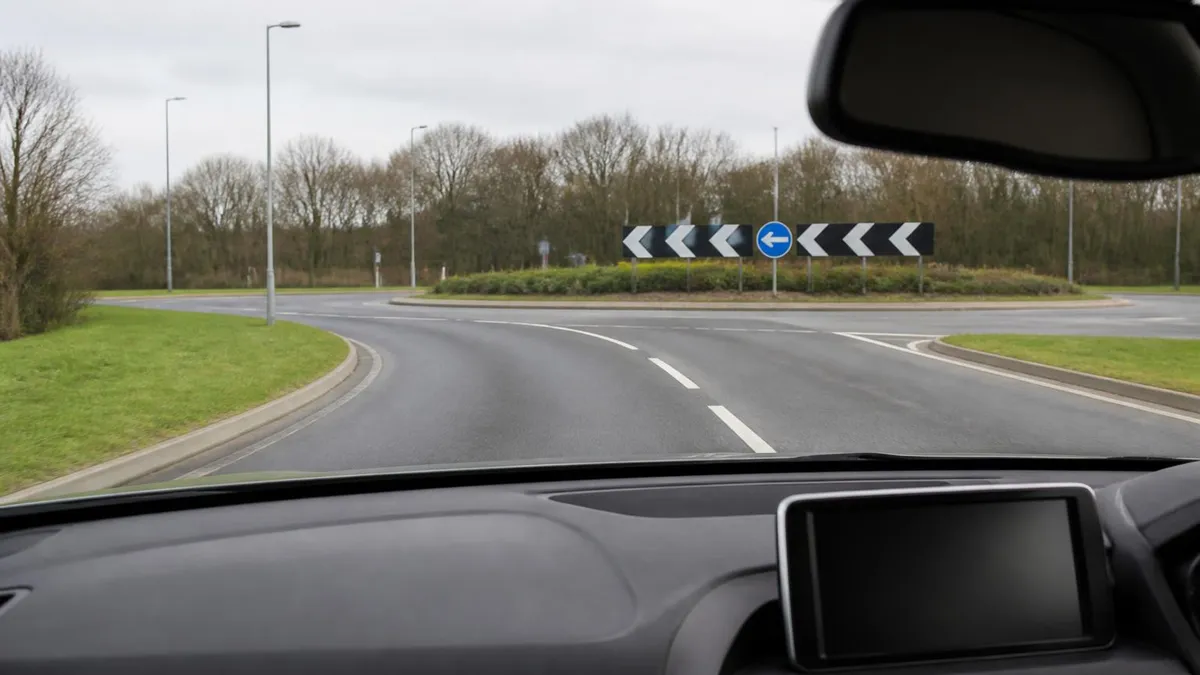
UK Theory Test Pass Mark: Car, Bike, LGV, PCV & ADI Scores

Free Theory Test App: The Complete UK Guide to Choosing, Using and Passing With Mobile Practice in 2026

Cancelling Driving Test: The Complete UK Guide to Refunds, Rebooking and Avoiding Lost Fees in 2026
Theory Test Certificate: Complete UK Guide to Passing and Using Your DVSA Pass Letter in 2026
UK Driving Test Pass Rate: Complete 2026 Guide to Statistics, Centre Comparisons and How to Beat the Odds
Official Resources
- GOV.UK — Driving eyesight rules: the official DVLA guidance on the 20-metre number plate test, visual acuity and field-of-vision standards for Group 1 and Group 2 drivers.
- GOV.UK — Health conditions, disabilities and driving: how and when to tell the DVLA about a condition such as sight loss in one eye, and what happens to your licence afterwards.
- GOV.UK — Contact the DVLA: official contact routes for the DVLA medical enquiries team if you need to check a pending assessment or report a vision change.
About the Author

Licensed Driving Instructor & DMV Test Specialist
Penn State UniversityRobert J. Williams graduated from Penn State University with a degree in Transportation Management and has spent 20 years as a certified driving instructor and DMV examiner consultant. He has personally coached thousands of applicants through written knowledge tests, skills assessments, and commercial driver licensing programs across more than 30 states.