
How to Change Your Driving Test Date: Complete UK Guide 2026
Learn how to change your driving test date online via DVSA. Step-by-step guide covering fees, deadlines, and what to do if you miss your test. 🎓
Knowing how to change driving test date is one of the most practical skills a UK learner driver can have. Life rarely cooperates perfectly with a booked test slot — your instructor might tell you that you're not quite ready, a work commitment might suddenly appear, or you might simply be feeling unwell on the day. Whatever the reason, the DVSA makes it reasonably straightforward to reschedule, provided you act within the right timeframe and follow the correct process through the official government booking portal.
The most important thing to understand upfront is the 10-full-working-day rule. If you need to change or cancel your practical driving test, you must do so at least 10 full working days before your appointment. Fail to meet this deadline and you will forfeit your entire test fee — there are no exceptions for personal circumstances, and the DVSA will not offer refunds outside this window. That means if your test is on a Thursday, you must make any changes by the end of Monday at the latest, not counting bank holidays or weekends.
There are several legitimate reasons why rescheduling your test is not only acceptable but genuinely the right call. Attempting your practical driving test before you are ready is a costly mistake — the test fee is £62 for a weekday test and £75 for an evening or weekend slot. Booking another test after failing adds up quickly, both financially and emotionally. If your instructor advises you to postpone, take that advice seriously. Professional driving instructors have a clear picture of the pass standard and can judge whether you are consistently meeting it in lessons.
You can manage your test booking entirely online through the official DVSA service at gov.uk, which is available 24 hours a day. You will need your booking reference number and the driving licence number you used when originally booking the test. Alternatively, you can call the DVSA contact centre on 0300 200 1122, which is open Monday to Friday, 8am to 4pm. There is no additional fee charged by the DVSA specifically for rescheduling — you are simply choosing a new date within the system, and your original payment carries over to the new appointment.
For learners who are also navigating the theory test side of things, the process of managing a uk driving test date change sits within a broader landscape of DVSA bookings that includes both theory and practical components. Your theory test certificate is valid for two years from the date you passed, and you must have a valid theory pass before you can book a practical test. If a series of practical test reschedules pushes your practical test past the two-year mark, you will need to retake the theory test as well — something that catches many learners off guard.
Weather-related cancellations are a separate issue that many learners overlook. If the DVSA cancels your test due to severe weather or another reason on their side, you are entitled to a full refund or a free rescheduled appointment. This is different from a candidate-initiated change, where the 10-full-working-day rule firmly applies. Always check whether a cancellation originated from the DVSA or from you, as the financial implications are entirely different in each case.
This guide walks you through every scenario you might encounter when changing your DVSA practical driving test date — from the standard online rescheduling process, to what happens if you miss the cut-off, to how to handle special circumstances like illness or a DVSA-initiated cancellation. By the end, you will know exactly what steps to take, what fees to expect, and how to plan your rescheduling to avoid unnecessary costs or delays in getting your full UK driving licence.
UK Driving Test Rescheduling: Key Numbers
Key Facts at a Glance
| Item | Value | Details |
|---|---|---|
| Weekday Test Fee | £62 | Lost if cancelled late |
| Evening/Weekend Test Fee | £75 | Higher rate applies |
| Theory Certificate Validity | 2 years | Must stay valid for practical |
How to Change Your DVSA Practical Test Date Online
Gather Your Booking Details
Log In to the DVSA Booking Service
Select a New Date and Time
Confirm the Change
Check Your Confirmation Email
Understanding the financial side of changing your driving test date is essential before you take any action. The DVSA's refund and rescheduling policy is unambiguous: if you give at least 10 full working days' notice before your test, you can change your date without losing any money. The original fee you paid simply transfers to your new appointment. However, if you attempt to change or cancel within those 10 full working days — or if you simply do not show up — your fee is forfeited entirely.
The phrase 'clear working days' is where many learners trip up. Working days now include Saturdays — only Sundays and bank holidays (and the test day itself) don't count, and the day of the test itself does not count. So if your test is on a Thursday, 10 full working days before it would be the Monday of that week (Sunday, Saturday, and the test day Thursday are not counted). If you try to reschedule on Tuesday or Wednesday of test week, you have already missed the deadline and will lose your fee. This is a strict cut-off, not a guideline, and the DVSA applies it consistently.
If you need to cancel rather than reschedule — perhaps because you have decided to postpone learning for several months — the same 10-full-working-day rule applies for receiving a refund. You can request a refund of your test fee online through the same gov.uk booking portal, or by calling the DVSA. The refund typically takes 7 to 10 working days to appear in your bank account, depending on your payment method and bank processing times. Debit card refunds tend to process faster than credit card refunds in practice.
There is one important exception to the no-refund rule: if the DVSA cancels your test, rather than you cancelling it yourself, you are entitled to a full refund or a free rescheduled slot at no extra charge. DVSA-initiated cancellations happen for several reasons — examiner unavailability due to sickness or strike action, severe weather at the test centre, or administrative errors. If your test is cancelled by the DVSA, they will contact you directly with options. You do not need to take any proactive steps to secure your refund or new slot in this scenario.
Illness on test day is a scenario that generates a lot of confusion among learners. If you are genuinely too unwell to drive safely on the day of your test, you should not attend — driving while unwell poses a risk to yourself and other road users. However, if you try to cancel on the morning of your test, you will have missed the 10-full-working-day window and will lose your fee.
The DVSA does not have a formal illness exception or a medical postponement process for standard test fees. If you want to avoid losing money, the safest approach is to reschedule as soon as you suspect you might not be ready, rather than waiting until the last moment.
Some learners ask whether travel disruption — such as a train cancellation or extreme traffic on the way to the test centre — entitles them to a fee waiver. The answer is generally no. The DVSA's position is that getting to the test centre on time is the candidate's responsibility, and they do not offer refunds for missed tests due to transport issues. If you are concerned about getting to a particular test centre reliably, it is worth considering whether a different centre with better transport links might reduce this risk when you book.
For learners who have booked a test a long way in advance and subsequently realise they want an earlier slot, it is worth knowing that you can change to an earlier date without any penalty, provided you still give 10 full working days' notice of the change. Many learners book a distant slot to secure a reservation and then keep checking the cancellation system for earlier appointments that open up. This is a completely legitimate strategy and one that the DVSA's booking system is built to accommodate.
DVSA Practice Test Questions
Prepare for the DVSA - UK Driving Theory Test exam with our free practice test modules. Each quiz covers key topics to help you pass on your first try.
DVSA Eco-Friendly Driving and Vehicle Loading
DVSA Exam Questions covering Eco-Friendly Driving and Vehicle Loading. Master DVSA Test concepts for certification prep.
DVSA Hazard Awareness
Free DVSA Practice Test featuring Hazard Awareness. Improve your DVSA Exam score with mock test prep.
DVSA Incidents, Accidents and First Aid
DVSA Mock Exam on Incidents, Accidents and First Aid. DVSA Study Guide questions to pass on your first try.
DVSA Motorway Rules and Smart Motorways
DVSA Test Prep for Motorway Rules and Smart Motorways. Practice DVSA Quiz questions and boost your score.
DVSA Rules of the Road (Highway Code)
DVSA Questions and Answers on Rules of the Road (Highway Code). Free DVSA practice for exam readiness.
DVSA - UK Driving Theory Hazard Awareness ...
DVSA Mock Test covering - UK Driving Theory Hazard Awareness and Perception. Online DVSA Test practice with instant feedback.
DVSA - UK Driving Theory Motorway Rules an...
Free DVSA Quiz on - UK Driving Theory Motorway Rules and Regulations. DVSA Exam prep questions with detailed explanations.
DVSA - UK Driving Theory Road and Traffic ...
DVSA Practice Questions for - UK Driving Theory Road and Traffic Signs. Build confidence for your DVSA certification exam.
DVSA - UK Driving Theory Rules of the Road
DVSA Test Online for - UK Driving Theory Rules of the Road. Free practice with instant results and feedback.
Rescheduling Scenarios: What Happens in Each Situation
If your instructor advises that you need more practice before sitting your practical test, act immediately. Log into the DVSA booking portal, find an alternative date that gives you enough additional lesson time, and confirm the change. The sooner you do this after deciding to reschedule, the better — test slots at popular centres fill quickly, and leaving it late could mean a significant wait for the next available appointment in your area.
Remember that rescheduling because you are not ready is a wise financial decision, not a defeat. Failing the test costs you the full fee again, plus any additional lessons needed before a retest. If your instructor is telling you honestly that you need another four to six weeks of lessons, trust that judgement. A short delay now is far less costly than two or three failed attempts at the test.

Should You Reschedule or Just Take the Test?
- +Avoids the cost of a failed test (£62–£75 to rebook)
- +Allows more time for lessons on weak areas identified by your instructor
- +Reduces test anxiety by ensuring you feel genuinely prepared
- +Gives you flexibility to find a slot at a less pressured time of year
- +Preserves your confidence and mental approach going into the test
- +No financial penalty if you give at least 10 full working days' notice
- −Longer wait for a test slot, especially in busy urban areas
- −Theory test certificate validity continues to count down during the delay
- −Risk of losing your test fee entirely if you miss the 10-full-working-day deadline
- −Additional lesson costs accumulate during the extended preparation period
- −Popular test centres may not have convenient slots for several weeks
- −Repeated rescheduling can knock your confidence and disrupt learning momentum
Driving Test Date Change: Complete Checklist
- ✓Confirm you are outside the 10-full-working-days deadline before attempting to change.
- ✓Find your original booking confirmation email to retrieve your booking reference number.
- ✓Have your driving licence number ready before logging into the DVSA portal.
- ✓Visit the official gov.uk booking service — do not use third-party rescheduling sites.
- ✓Check available slots at your current test centre and compare with nearby alternatives.
- ✓Verify the new date gives you adequate time for remaining lessons your instructor recommends.
- ✓Check that your theory test certificate will still be valid on the new test date.
- ✓Confirm the new slot, then check your inbox for a confirmation email within minutes.
- ✓Save or print the new confirmation email with your updated booking reference.
- ✓Notify your driving instructor immediately of the new test date to arrange relevant lessons.
You Must Give 10 full working days' Notice
The DVSA's 10-full-working-day rule is absolute. If your test is on Thursday, your deadline is Monday — weekends and the test day itself do not count as working days. Miss this window and you lose 100% of your test fee with no exceptions. Act early to avoid unnecessary costs.
One of the most common mistakes learners make when rescheduling is assuming that any website offering to change their driving test date on their behalf is legitimate. The only official service for managing DVSA test bookings is the gov.uk portal. There are numerous unofficial third-party websites that charge extra fees to help learners find and book cancellation slots.
While some of these services operate legitimately as cancellation alert tools, no third party can officially reschedule a test on your behalf — you must log in yourself with your own credentials. Be especially cautious of any site asking for your full driving licence details or payment card information beyond the standard gov.uk portal.
Timing your reschedule strategically can make a real difference to how quickly you get a new slot. Test cancellations tend to appear at specific times — often early in the morning around 6am, or around lunchtime, when candidates who have recently rescheduled free up their old slots. If you are looking for an earlier appointment than the one currently available, consider checking the DVSA portal at these times. Some learners set reminders to check daily, particularly if they are keen to test as soon as possible rather than waiting for the next distant available date.
Test centres vary dramatically in terms of how quickly you can get an appointment. In London, Birmingham, and other major cities, waiting times for a practical driving test can stretch to three or four months during busy periods. In rural areas or smaller towns, you might find a slot within two to three weeks.
If your current test centre has a long waiting list and you need to test sooner, it is worth checking whether a test centre 30 or 40 minutes' drive away has better availability. Passing at a different test centre is entirely valid — your licence is the same regardless of where you sat the test.
A reschedule also gives you the opportunity to reconsider which test centre is right for you. Test centres differ in terms of the types of roads the examiner is likely to use during the test. Some centres involve more dual-carriageway driving, others have challenging junctions or roundabout sequences. Your instructor will know the local test routes well and can advise you on whether a particular centre plays to your strengths or weaknesses. If you are struggling with dual carriageway confidence, for instance, booking at a centre with minimal dual carriageway routes might be sensible strategy.
When rescheduling, also take stock of what areas of your driving need further work before the new date. The DVSA publishes data on the most common reasons for test failures, and these patterns are consistent across most UK test centres. The top failure reasons include not checking mirrors sufficiently before manoeuvres, poor junctions and observations at crossroads, incorrect positioning, and lack of control when reversing. If any of these are known weak areas for you, use the additional time productively by specifically targeting them in lessons rather than just accumulating general practice hours.
Many learners underestimate how much rest and mental preparation matters on test day. Physical tiredness, poor sleep, or high stress can affect your driving performance more than you might expect. If you know that a particular period of your life is especially stressful — exam season, a house move, a demanding work project — it may genuinely be worth rescheduling to a quieter time. The practical driving test demands sustained attention and calm decision-making over approximately 40 minutes, and fatigue or anxiety reduces both. There is no shame in acknowledging that your circumstances affect your readiness.
Finally, once you have confirmed your new test date, resist the temptation to keep rescheduling. Each postponement delays the point at which you can drive independently, and the emotional toll of repeatedly pushing back your test can undermine your confidence over time.
Set your new date, commit to it, work intensively with your instructor during the intervening period, and go into the test with the determination that this is the appointment you will pass. A clear, committed mindset — backed by genuine preparation — is one of the most important factors separating candidates who pass first time from those who do not.
Your theory test certificate is valid for exactly two years from the date you passed. If repeated rescheduling of your practical test pushes your appointment past that two-year anniversary, your theory pass becomes invalid and you must resit the full theory test before you can book a practical test. Always check the expiry date of your theory certificate when selecting a new practical test date.
Staying test-ready between your original test date and your rescheduled appointment is just as important as the rescheduling process itself. Many learners make the mistake of treating the period after a reschedule as an open-ended extension, relaxing their lesson schedule and allowing recently-learned skills to fade. In reality, the skills needed to pass a UK practical driving test require consistent reinforcement. If you reduce your lesson frequency significantly after rescheduling, you may find yourself less sharp on the new test date than you were on the original one.
Work closely with your instructor to design a structured plan for the weeks between your old and new test dates. Identify the specific areas where you need improvement and prioritise those in lessons. Ask your instructor for mock test conditions at least once a week — a full 40-minute drive following the actual test format, with the instructor providing only pass or fail feedback rather than corrections during the drive. Mock tests are invaluable for building the self-reliance and calm that the real test demands. You must be able to manage your own driving without ongoing instructor intervention.
Independent practice drives with a supervising driver are an excellent supplement to professional lessons in this period. If you have a parent or another qualified driver who can accompany you, use this time to drive in a wide variety of conditions — different times of day, different weather, unfamiliar roads, and busier traffic situations. The DVSA's standards require that you handle real driving conditions competently, not just perform well on the specific roads your instructor uses in lessons. The broader your experience base, the more adaptable you will be on test day.
Practice the specific manoeuvres that will appear on the practical test. As of the current DVSA format, the test includes one of several possible manoeuvres: parallel parking, parking in a bay (either driving in or reversing in), or pulling up on the right-hand side of the road and reversing two car lengths before rejoining traffic. Your examiner will ask you to perform one of these, chosen randomly. Make sure you are competent at all three, not just the one you feel most comfortable with. There is no way to predict which manoeuvre you will be asked to do.
The independent driving section of the test is another area where targeted practice pays dividends. For approximately 20 minutes of the test, you will be asked to drive independently — either by following a series of directions from a sat nav (provided by the examiner) or by following road signs.
Many learners find this section nerve-wracking because there is no instructor to prompt them. Practise driving to a destination using a sat nav in lessons, and specifically practise recovering calmly from a wrong turn or a missed direction. The examiner is not marking your navigation ability — only your driving — so a wrong turn handled calmly does not fail you.
As your new test date approaches, make sure you have all the required documents prepared in advance. On test day you will need to bring your provisional driving licence photocard. If your licence was issued before 1998, you will also need your paper counterpart. You do not need to bring your theory test pass certificate — the examiner can verify this electronically.
Arrive at the test centre at least 10 minutes before your appointment time. Test examiners are typically strict about start times, and arriving flustered after a rushed journey is not an ideal way to begin what is likely to be the most consequential 40 minutes of your driving career so far.
If you are looking for comprehensive preparation materials to complement your lessons, the PTG practice tests available on this site cover the full range of DVSA theory topics, from hazard awareness and eco-driving to incidents and first aid. Using these resources consistently during your rescheduled preparation period will ensure that your theoretical knowledge is sharp alongside your practical skills. Arriving at your test date with both the practical competence and the underpinning knowledge fully developed gives you the best possible chance of passing first time and claiming your full UK driving licence.
After successfully rescheduling your test, it is worth taking time to review the DVSA's official guidance documents and the Highway Code, particularly if there has been any gap in your formal study. The Highway Code is updated periodically, and some learners who began the learning process a year or more ago may have studied an older version. Recent updates have included important changes to priority rules for pedestrians and cyclists at junctions, which the DVSA now tests both in the theory test questions and by observing candidate behaviour at relevant junctions during the practical test.
Understanding the DVSA's marking system for the practical test will also help you approach your rescheduled appointment with the right mindset. The examiner will be recording either driving faults (minor faults, previously called minors) or serious and dangerous faults (both of which result in immediate failure). You are allowed up to 15 driving faults and still pass, provided none of them are serious or dangerous.
This means the test is not about perfection — it is about demonstrating that you drive safely and responsibly, with acceptable minor imperfections. Knowing this can relieve some of the anxiety that leads learners to believe any small error has ended their test.
Pay particular attention to the show me, tell me questions that begin the test. Before you start driving, the examiner will ask you one 'tell me' question — where you answer verbally — and one 'show me' question — where you demonstrate something while driving.
These questions cover basic vehicle safety checks and controls: topics like checking tyre tread depth, demonstrating how to wash the windscreen using the car's controls, or explaining how to check engine oil level. A wrong answer here counts as a single driving fault, not an automatic failure, but it is worth practising these questions so they feel second nature.
Your instructor's feedback after a mock test is among the most valuable data you have for rescheduled preparation. Ask them to be specific and honest about what you need to improve. Vague encouragement like 'you just need a bit more confidence' is less useful than specific, actionable feedback like 'you are not checking your mirrors before slowing down, and you are taking junctions too slowly which disrupts traffic flow'. With a clear target list, you can direct your practice hours precisely rather than simply accumulating more hours without focused improvement.
Consider the time of day your new test is scheduled and whether it aligns with your driving at its best. Some learners are naturally sharper in the morning; others feel more alert after noon. If you have flexibility in your choice of test slot, think about when you tend to perform best in lessons. Test day nerves are universal, but starting the test at a time when you are naturally more alert and relaxed can give you a meaningful edge over the 40-minute duration of the examination.
The days immediately before your test should involve lighter driving rather than intensive practice. Overloading lessons in the final 48 hours can introduce new anxiety, raise second-guessing, and cause physical tiredness. A good instructor will typically recommend one solid lesson two or three days before the test, followed by rest. Trust the preparation you have done, get adequate sleep the night before, eat properly on the day, and arrive calm. The work is done in the weeks of preparation — the test day itself is simply about showing the examiner what you already know how to do.
Regardless of the outcome on your rescheduled date, remember that the UK practical driving test has a first-time pass rate of around 49 percent. That means roughly half of all candidates need at least a second attempt. If you do not pass at your rescheduled appointment, you can book another test — typically no sooner than 10 working days after the failed test. Request a copy of your test result from the examiner, which itemises every fault recorded. Use this detailed feedback as your preparation blueprint for the next attempt, targeting exactly the areas the examiner identified as weaknesses.
📅 How many days' notice do I need to change my UK driving test date?
For car driving tests you must give at least 10 full working days' notice before the appointment. Give less notice and you forfeit your entire test fee — there are no exceptions.
START DVSA PRACTICE TEST💷 What happens if I miss the DVSA change deadline?
If you change or cancel with less than 10 full working days' notice, or you simply do not show up, the DVSA keeps your full test fee — £62 for a weekday test or £75 for evening/weekend.
START DVSA PRACTICE TEST🔁 How many times can I change my driving test date online?
You can change your test appointment online up to 6 times. After that, you must cancel the booking completely and rebook a new test from scratch.
START DVSA PRACTICE TEST📆 Do Saturdays count as a working day for the DVSA notice period?
Yes. Monday to Saturday all count as working days for the 10-day notice rule. Only Sundays and public/bank holidays are excluded, along with the day of the test itself.
START DVSA PRACTICE TEST💻 What do I need to change my test date online?
You need your booking reference number (from your original confirmation email) and your driving licence number. Both are entered on the official gov.uk DVSA booking service to pull up your appointment.
START DVSA PRACTICE TEST🆓 Is there an extra fee just to change my test date?
No. The DVSA does not charge an extra fee to reschedule. Your original test fee simply carries over to the new appointment, as long as you give the required 10 full working days' notice.
START DVSA PRACTICE TEST🌧️ What happens if DVSA cancels my test, not me?
If the DVSA cancels your test — for examiner illness, severe weather, or an admin error — you are entitled to a full refund or a free rescheduled slot, and the 10-day rule does not apply against you.
START DVSA PRACTICE TEST⏳ How long does a DVSA test fee refund take?
Refunds typically take 7 to 10 working days to reach your account after you cancel within the allowed notice period, depending on your bank and payment method.
START DVSA PRACTICE TEST⏰ Can I move my driving test to an earlier date?
Yes. You can switch to an earlier available slot at any time via the DVSA online service, with no penalty, as long as the change itself is made at least 10 full working days ahead.
START DVSA PRACTICE TEST🎓 Will rescheduling affect my theory test certificate?
Your theory certificate stays valid for 2 years from the date you passed. If repeated rescheduling pushes your practical test past that date, the theory certificate expires and you must resit it first.
START DVSA PRACTICE TESTSample DVSA UK Driving Theory Practice Questions
Try these questions from our free DVSA UK Driving Theory practice tests. The correct answer and an explanation follow each question.
What effect does carrying unnecessary weight in your vehicle have?
- A. It improves stability and fuel economy
- B. It increases fuel consumption and tyre wear
- C. It has no measurable effect on a modern car
- D. It only affects handling, not fuel use
Answer: B. It increases fuel consumption and tyre wear
Every extra kilogram the engine must move requires more fuel, so removing unnecessary items from the boot reduces running costs.
When must you use your dipped headlights during the day?
- A. Whenever it is raining, regardless of intensity.
- B. When driving through a tunnel with good lighting.
- C. In dull weather or when visibility is seriously reduced.
- D. Only between sunset and sunrise.
Answer: C. In dull weather or when visibility is seriously reduced.
The Highway Code mandates using headlights when visibility is 'seriously reduced,' which is generally defined as being unable to see for more than 100 metres (328 feet). This includes conditions like heavy rain, fog, or dull weather during the daytime.
A roof rack with no load fitted to your vehicle will:
- A. Improve fuel economy by reducing drag underneath
- B. Increase fuel consumption due to extra aerodynamic drag
- C. Have no effect on performance or fuel use
- D. Reduce tyre wear
Answer: B. Increase fuel consumption due to extra aerodynamic drag
Even an empty roof rack creates additional aerodynamic drag, which forces the engine to work harder and increases fuel consumption.
When may you use your vehicle's horn in a built-up area at night?
- A. Between 11:30 pm and 7:00 am only in an emergency
- B. Never between 11:30 pm and 7:00 am unless a moving vehicle poses a danger
- C. At any time if you feel it is necessary
- D. Only between 6:00 pm and 8:00 am
Answer: B. Never between 11:30 pm and 7:00 am unless a moving vehicle poses a danger
In a built-up area, you must not sound your horn between 11:30 pm and 7:00 am unless another road user poses a danger. The horn should never be used aggressively or as a rebuke.
DVSA Questions and Answers
DVLA Theory Test Booking: Complete Step-by-Step Guide for UK Learners
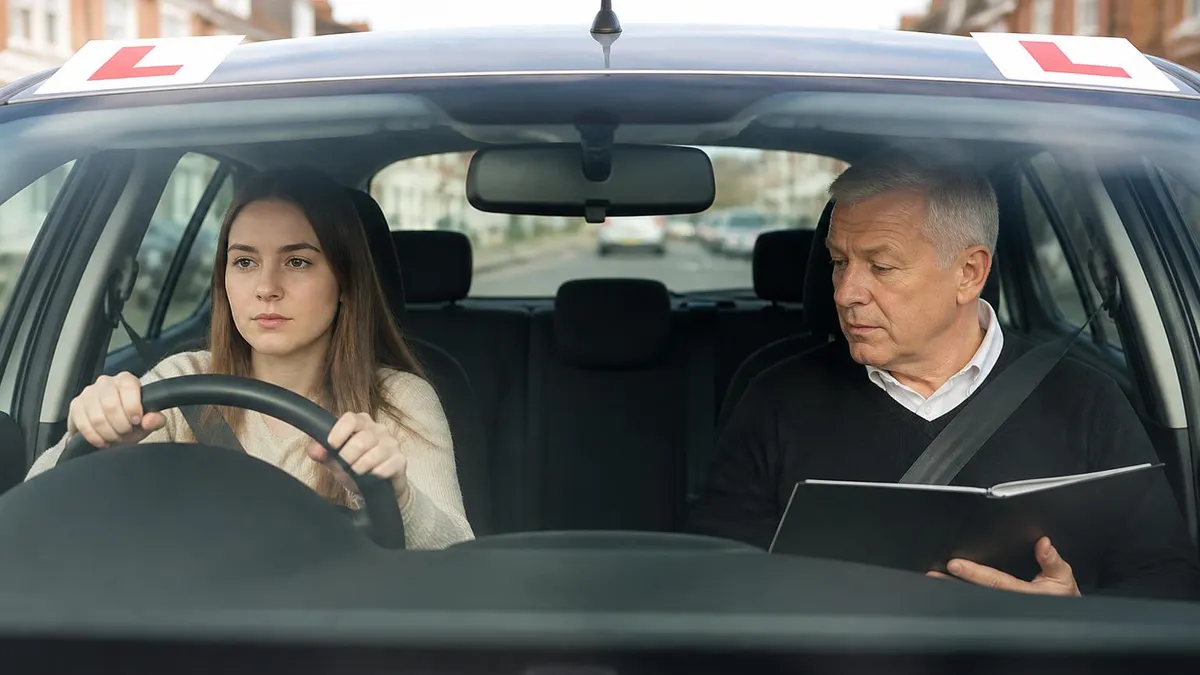
Driving Theory Test App: The Complete Study Guide for UK Learners
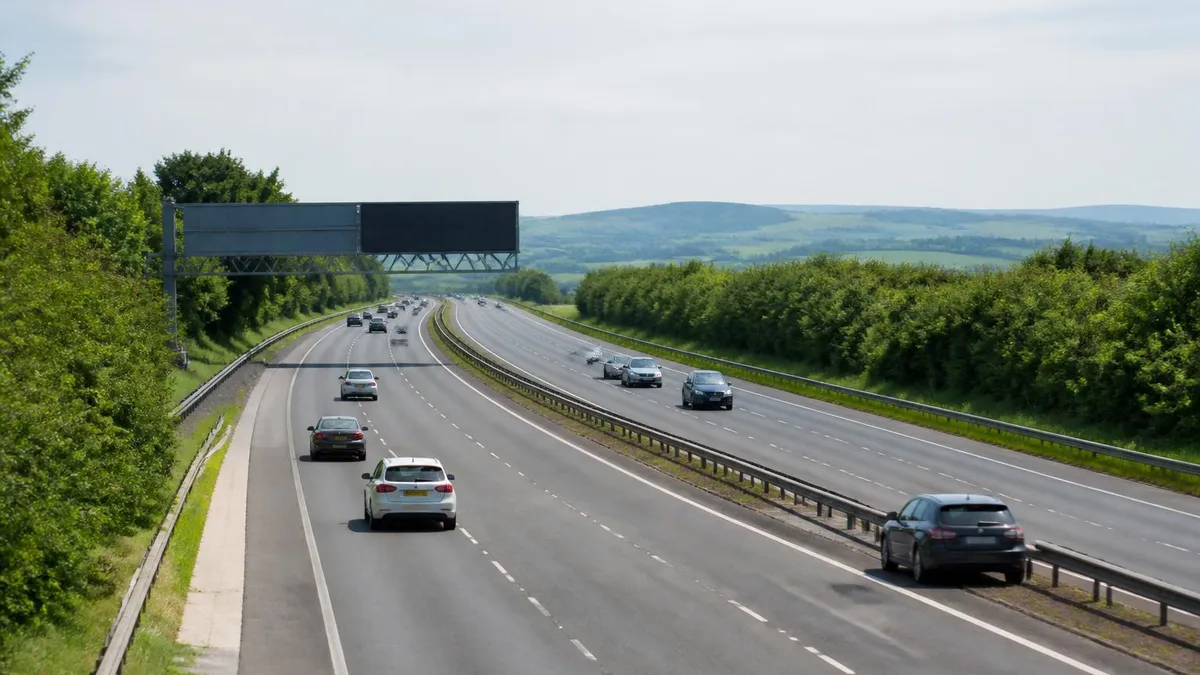
How to Book Your DVSA Practical Driving Test: Complete UK Guide

Learn to Drive in the UK: Complete Beginner's Guide to Getting Your Licence

DVSA Car Practical Test: Complete Guide to Passing First Time
Sources & references
Prepared by the Practice Test Geeks editorial team using AI-assisted drafting; exam facts are checked against the official sources below. Editorial policy
- gov.uk — Time limit · verified Oct 2026
- gov.uk — Eligibility, registration, test dates · verified Oct 2026
- gov.uk — Passing score, retake policy, score release · verified Oct 2026
- gov.uk — Exam format · verified Oct 2026
- gov.uk — Exam format, time limit · verified Oct 2026
- gov.uk — Fees · verified Oct 2026
- gov.uk — Eligibility · verified Oct 2026