
Driving Faults Explained: Your Complete Guide to Minor, Serious and Dangerous Marks
Understand driving faults on your UK test — minor, serious & dangerous marks explained with tips to pass first time. 🎯
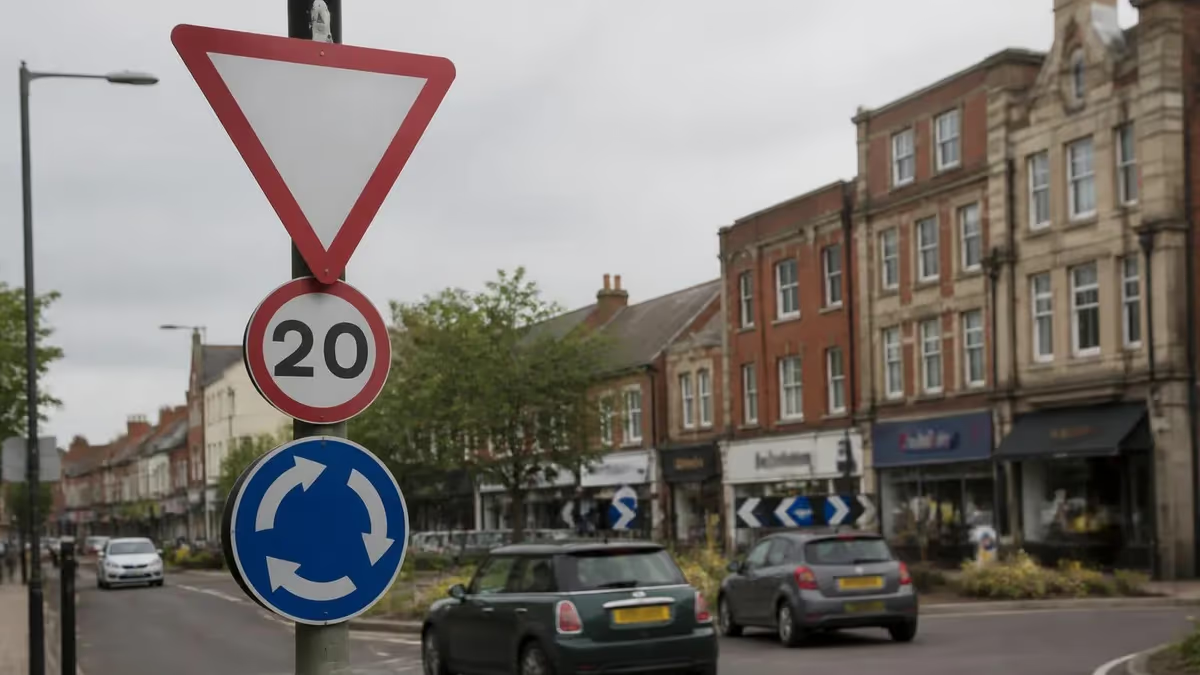
Understanding driving faults is one of the most important steps you can take before sitting your practical driving test in the UK. The DVSA examiner uses a detailed marking system to assess every aspect of your driving throughout the test, and knowing exactly how faults are categorised — minor, serious, and dangerous — gives you a massive advantage when preparing. Many candidates fail not because they cannot drive, but because they do not fully understand what the examiner is looking for and where the boundaries lie between an acceptable error and a test-ending mistake.
The practical driving test typically lasts around 40 minutes and covers a range of road types, manoeuvres, and traffic situations. During this time, the examiner silently records every fault they observe on a DL25 marking sheet. Each fault falls into one of three categories, and it is the accumulation and severity of these marks that determines whether you pass or fail. You are allowed up to 15 minor faults before failing, but a single serious or dangerous fault will end your test immediately, regardless of how well you drove in every other section.
Minor faults, sometimes called driving faults on the official paperwork, are small lapses in control or observation that do not create an immediate danger. Examples include slightly crossing the centre line on a quiet road, hesitating briefly at a roundabout when it is safe to go, or forgetting to check the interior mirror before signalling in a low-risk situation. On their own, these are not catastrophic, but if the examiner notices you repeatedly making the same minor error — say, consistently failing to check your mirrors before changing speed — they may upgrade it to a serious fault.
Serious faults are those which are potentially dangerous. They represent a significant error in judgement or control that could have led to an accident under slightly different circumstances. Common examples include pulling out at a junction when another vehicle had to brake or swerve, consistently poor lane discipline on a dual carriageway, or failing to respond correctly to traffic lights. A single serious fault will cause you to fail your test, which is why understanding what triggers them is so valuable during your preparation and lessons.
Dangerous faults are the most severe category and represent an actual immediate danger to the examiner, the candidate, other road users, or pedestrians. In these cases, the examiner may physically intervene — touching the steering wheel or brakes — to prevent an accident. Examples include driving through a red light at speed, cutting off a cyclist in a cycle lane, or losing control of the vehicle entirely. A dangerous fault almost always means an automatic fail, and in extreme circumstances the test may be terminated early for safety reasons.
The distribution of faults across different sections of the practical test gives useful insight into where most candidates struggle. Junctions — particularly emerging from side roads onto busy roads — consistently produce the most serious faults. Mirrors, signal, and manoeuvre (MSM) routines are where many minor faults accumulate. Reverse parking manoeuvres and independent driving sections also generate a high proportion of errors. Knowing this means you can ask your driving instructor to focus on these higher-risk areas as your test date approaches.
Preparing thoroughly using theory knowledge, hazard awareness training, and realistic practice is the most effective strategy. The DVSA publishes detailed guidance on common faults, and working through practice questions that mirror the hazard perception and theory test materials helps you build the observational awareness needed to drive cleanly and confidently on test day. The more you understand the examiner's perspective, the easier it becomes to anticipate and avoid the errors that catch most candidates out.
UK Driving Test Faults by the Numbers
The Three Categories of Driving Faults
A small lapse in control or observation that is not immediately dangerous. Up to 15 are permitted before failing. However, repeating the same minor fault throughout the test signals a pattern and may be upgraded to serious by the examiner.
A potentially dangerous error in judgement, observation, or vehicle control. A single serious fault results in an automatic fail. Common examples include poor junction decisions, inadequate mirror use before a lane change, or misjudging the speed of oncoming traffic.
An actual danger to any road user or the examiner. The examiner may physically intervene to prevent an accident. This is the most severe category, always results in a fail, and in extreme cases causes the test to be ended early for safety.
When you sit in the examiner's car at the start of your practical test, they are already holding a printed DL25 marking form — the official DVSA document used to record every fault during the assessment. Understanding how this sheet works is genuinely useful because it reveals the structure of how you are being judged. The form is divided into approximately 50 different competency areas, ranging from use of mirrors and signalling to road positioning, speed, and response to traffic signs. The examiner ticks or marks the relevant box each time they observe a fault, noting its category alongside it.
Minor faults are marked with a single tick in the relevant box. If you accumulate 15 of these ticks across the entire test, you fail — but if you have 14 and every single one is in a different category, you still pass.
Conversely, if you receive three minor faults in the same category — for example, consistently failing to check door mirrors before braking — the examiner may decide that this represents a recurring pattern and upgrade it to a serious fault. This is why unpredictability in your errors is slightly less damaging than consistent repetition of the same mistake.
Serious and dangerous faults are recorded differently on the DL25. A serious fault is marked with an S, while a dangerous fault is marked with a D. Either of these marks in any box means an automatic fail for that attempt. At the end of the test, the examiner will go through the marking sheet with you, pointing out exactly what was recorded and where. This debrief is incredibly valuable — even if you have failed, the specific feedback tells you precisely what to work on before booking your next attempt.
The DL25 also tracks whether the examiner needed to give verbal guidance or physically intervene at any point. If they touched the dual controls, this is automatically recorded as a dangerous fault regardless of what would have happened had they not intervened. Verbal reminders like "check your mirrors" do not automatically result in a fault, but they signal that the examiner has noticed a pattern and is drawing your attention to it as a courtesy before they are forced to record something more serious.
One common source of confusion is the difference between the test result and the overall debrief conversation. The examiner's role is not to teach you during the test — any guidance they give is strictly for safety, not instruction. However, in the post-test debrief they should explain each fault clearly. If you disagree with a marking, you can contact the DVSA to request a review, though this is rarely successful without strong grounds. The most productive approach is to treat every piece of feedback as actionable data for your next lesson.
Examiners are trained to be consistent and objective. They follow the same criteria for every candidate regardless of age, background, or driving style. The DL25 system is designed to remove subjectivity from the assessment process. This means that quirky but safe driving — such as being very cautious in speed limits or signalling earlier than strictly necessary — will not be penalised as long as it does not create confusion or danger for other road users. What matters is that your driving is safe, legal, and controlled throughout the entire test.
One practical tip that many driving instructors recommend is asking your instructor to conduct a full mock test before your actual assessment. During this mock, ask them to fill in a copy of the DL25 marking form in real time as they would if they were an examiner. This gives you the most realistic possible preview of how your driving will be assessed and highlights any recurring faults you might not be aware of. Reviewing the completed form together afterwards is one of the most targeted forms of pre-test preparation available to UK learners.
Most Common Driving Faults by Test Section
Junctions are consistently the number one source of serious faults on the UK practical test. The most frequent errors include emerging too slowly when it is safe to go, causing vehicles behind to brake unexpectedly, or emerging too hastily when a vehicle on the main road has right of way. Effective observation — looking right, left, right again and assessing the speed and distance of approaching vehicles — is the key skill examiners assess at every junction throughout your test route.
T-junctions and crossroads on busier roads are particularly high-risk moments. A common serious fault is pulling out when an approaching vehicle is travelling at 40 mph or faster and requires more than two seconds to clear. Candidates also frequently fail to give way to pedestrians who are already crossing the road they are turning into — a legal requirement under Highway Code Rule 195. Practising junction decisions on a variety of road types with your instructor, and asking them to provide live commentary on your choices, is the most effective way to reduce junction-related faults.

Understanding Your Faults: Benefits vs Risks of Different Approaches
- +Knowing fault categories helps you prioritise which errors to fix first in lessons
- +Understanding the DL25 form reduces anxiety because the assessment process becomes transparent
- +Identifying recurring minor faults lets you address patterns before they become serious marks
- +Post-test debrief feedback gives you specific, actionable data for the next attempt
- +Awareness of high-risk sections like junctions lets you focus practice time efficiently
- +Candidates who understand the marking system typically demonstrate better self-assessment skills while driving
- −Over-focusing on avoiding faults can make some candidates overly hesitant and indecisive
- −Trying to correct a mistake mid-manoeuvre without checking mirrors first can add additional faults
- −Anxiety about accumulating minors can distract attention from the road ahead
- −Misunderstanding the upgrade rule may cause false confidence after several minor marks
- −Relying on the examiner's debrief for all feedback means missing real-time learning opportunities during lessons
- −Candidates sometimes confuse examiner verbal guidance during the test with an absence of fault recording
Pros and Cons at a Glance
| Pros | Cons |
|---|---|
| Knowing fault categories helps you prioritise which errors to fix first in lessons | Over-focusing on avoiding faults can make some candidates overly hesitant and indecisive |
| Identifying recurring minor faults lets you address patterns before they become serious marks | Trying to correct a mistake mid-manoeuvre without checking mirrors first can add additional faults |
| Post-test debrief feedback gives you specific, actionable data for the next attempt | Anxiety about accumulating minors can distract attention from the road ahead |
| Awareness of high-risk sections like junctions lets you focus practice time efficiently | Misunderstanding the upgrade rule may cause false confidence after several minor marks |
| Candidates who understand the marking system typically demonstrate better self-assessment skills while driving | Relying on the examiner's debrief for all feedback means missing real-time learning opportunities during lessons |
Checklist to Avoid Driving Faults on Test Day
- ✓Check all three mirrors before every change of speed, direction, or signal.
- ✓Perform over-shoulder blind spot checks before any lateral movement or pulling away.
- ✓Approach every junction at a speed that allows you to stop safely if required.
- ✓Give way to pedestrians already crossing the road you are turning into.
- ✓Maintain a consistent following distance of at least two seconds in dry conditions.
- ✓Use the MSM (Mirror-Signal-Manoeuvre) routine before every turn or lane change.
- ✓Keep your speed appropriate for road conditions, not just the posted limit.
- ✓Demonstrate effective all-round observation throughout every parking manoeuvre.
- ✓Respond promptly and correctly to all traffic signs, road markings, and signals.
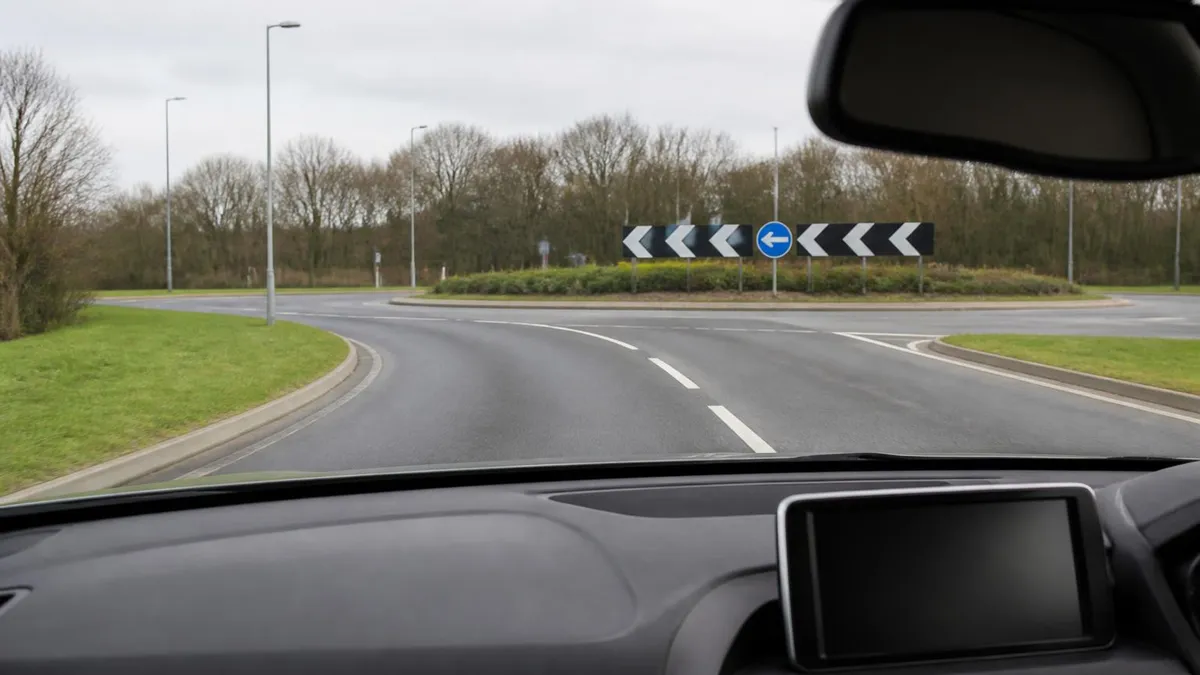
- ✓Stay in the correct lane during roundabouts and signal appropriately when leaving.
Repeating the Same Minor Fault Costs More Than Making Different Ones
Many candidates are surprised to learn that three minor faults in the same category can be upgraded to a single serious fault, which causes an automatic fail. Consistent patterns — such as repeatedly failing to check the interior mirror before braking — signal to the examiner that the behaviour is habitual rather than situational. Ask your instructor to monitor your mirror-checking patterns closely in the weeks before your test to eliminate any repeating tendencies before they follow you into the assessment.
The boundary between a serious fault and a dangerous fault is one that many learner drivers find difficult to conceptualise until they understand the DVSA's core distinction. A serious fault is one where the examiner believes that, under slightly different circumstances, the action could have led to an accident.
A dangerous fault is one where an actual immediate risk to safety was created — where something bad very nearly happened, or where the examiner had to physically intervene to prevent harm. The distinction matters because both result in an automatic fail, but understanding them helps you recognise which driving behaviours carry the highest risk.
Consider two contrasting scenarios at a busy junction. In the first, a candidate pulls out when an oncoming car is approaching at 40 mph but with enough time that the other driver merely had to ease off the accelerator slightly. The examiner records a serious fault — it was poor judgement, but no immediate danger materialised.
In the second scenario, the candidate pulls out and the oncoming driver has to brake sharply and swerve to avoid a collision. This is a dangerous fault because an actual hazard was created and another road user was placed in genuine immediate risk. The difference lies in the real-world consequence of the action.
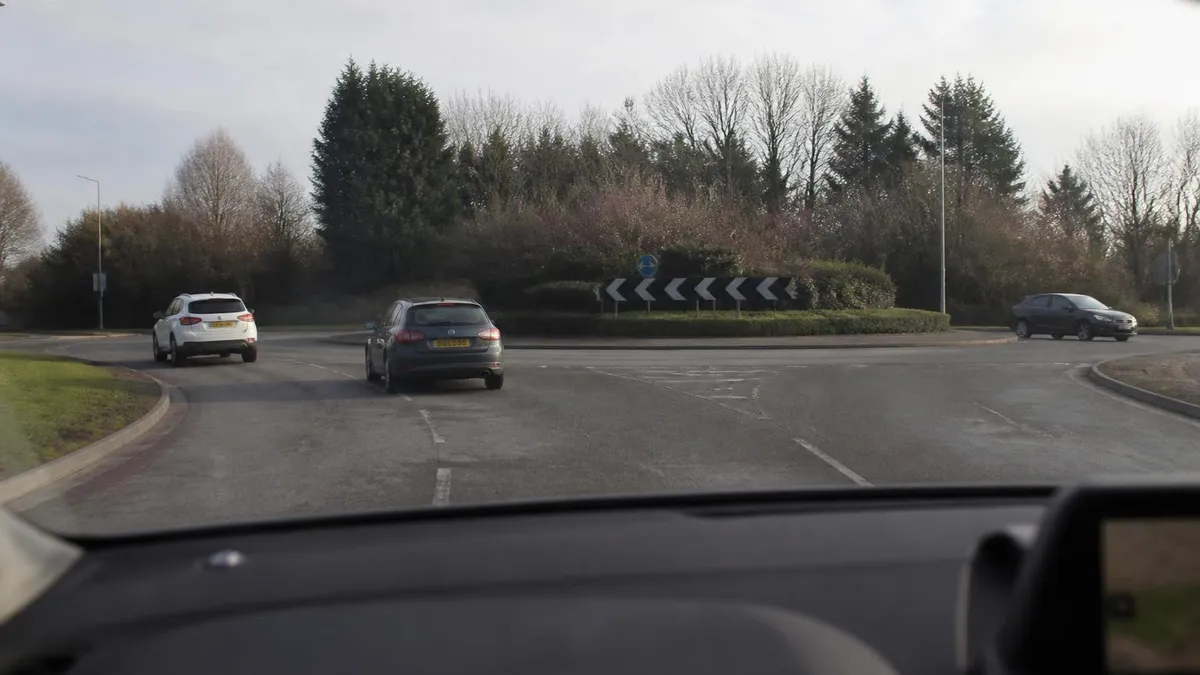
Roundabouts and busy junctions in town centres are where dangerous faults most commonly occur. Candidates who approach these sections too fast, who fail to read the speed and distance of approaching vehicles accurately, or who become so focused on finding a gap that they forget to check for cyclists or pedestrians alongside them, are at the highest risk of triggering a dangerous fault. Cycling infrastructure in particular has expanded significantly across UK towns, and examiners are increasingly attentive to how candidates interact with cycle lanes, advance stop lines, and cyclists filtering through traffic.
Speed-related dangerous faults are another significant category. Exceeding the speed limit at any point during the test is almost always recorded as a serious or dangerous fault depending on the extent of the excess.
Going 35 mph in a 30 zone briefly while going downhill might be a minor fault if rapidly corrected, but consistently driving at 38-40 mph in a 30 zone is serious, and reaching 45 mph in a 30 zone is likely to be recorded as dangerous. Examiners pay close attention to speed when the route passes schools, residential roads, and areas with parked vehicles where pedestrians may step out unexpectedly.
Steering control is an area that generates more dangerous faults than most candidates expect. Allowing the vehicle to drift across the centre line into oncoming traffic — even briefly, even on a quiet road — is treated very seriously. On narrow country roads or when navigating parked vehicles, the examiner is watching carefully to see whether you maintain an appropriate position, adjust speed to compensate for reduced visibility, and anticipate oncoming vehicles in time to give way without drama. Harsh or late corrections that cause the car to swerve are noted as significant lapses in control.
Responding to traffic lights is another common trigger for serious and dangerous faults. Proceeding on amber when it was clearly safe to stop is a serious fault. Proceeding on red — even if slowly, even if the junction appeared clear — is a dangerous fault with no exceptions. Yellow box junctions adjacent to traffic lights also cause problems. Entering a yellow box when your exit road is not clear is a minor fault in isolation but becomes serious if it blocks emergency vehicles or causes other drivers to brake unexpectedly to accommodate you.
Understanding these distinctions between serious and dangerous also helps you respond appropriately when you make an error during the test. If you realise you have just committed what feels like a serious fault — perhaps you hesitated too long at a junction and caused a mild delay — the instinctive reaction for many candidates is panic, which then causes further errors.
A better approach is to acknowledge the mistake internally, recalibrate your focus, and drive with renewed care and precision. A single serious fault is a fail, but driving perfectly for the remainder of the test means you receive the most informative debrief possible for your next attempt.
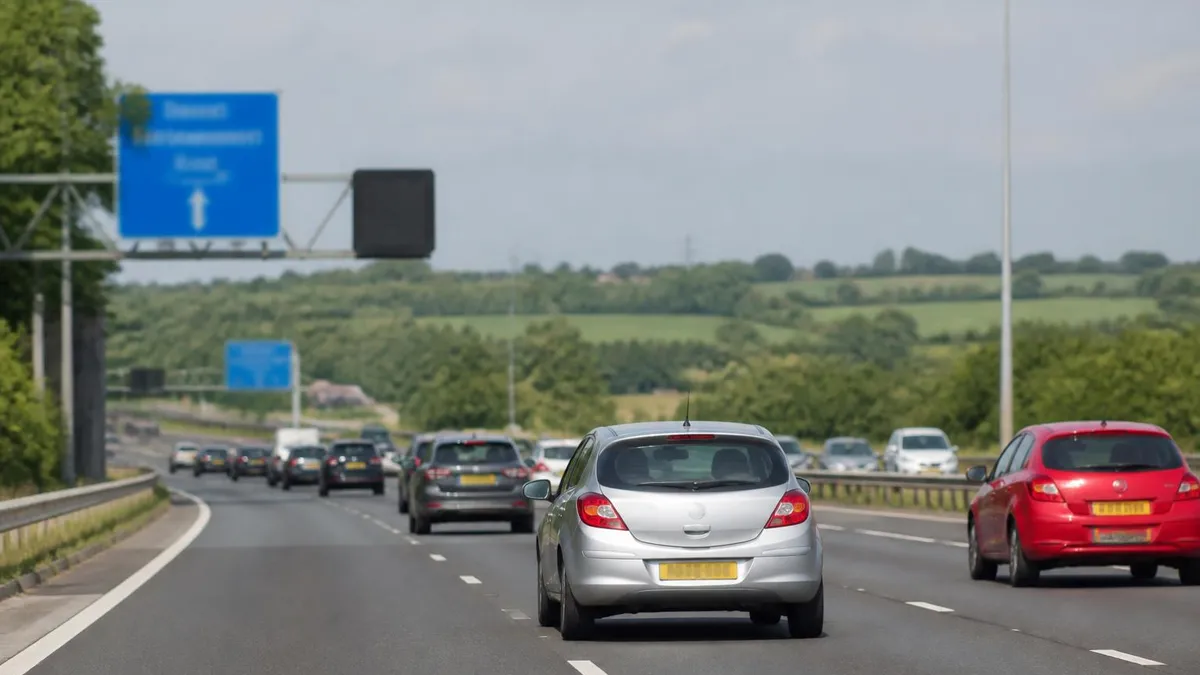
Unlike minor faults, where you can accumulate up to 15 before failing, a single serious or dangerous fault is an immediate fail regardless of how well you perform in every other section of the test. There is no partial credit system or averaging mechanism. If you receive a serious fault in the first five minutes, the examiner will still complete the full test — but the outcome is already decided. Use this knowledge not to create anxiety, but to prioritise the highest-risk areas of your driving during preparation.
Reducing your driving faults in the weeks and days before your test requires a structured approach that goes beyond simply clocking up more hours behind the wheel. One of the most effective strategies is to ask your instructor for targeted scenario-based practice rather than general driving sessions. Tell them specifically which fault categories you are most concerned about — whether that is junction decisions, mirror use, or manoeuvre accuracy — and ask them to design lessons that create repeated opportunities to practise those specific situations under realistic conditions.
Video analysis is an increasingly popular tool among driving instructors. Some teachers now use dashcam footage from lessons to review your driving with you afterwards, pausing at key moments to discuss what you did, what you could have done differently, and what an examiner would have recorded on the DL25 form at that point.
This method is particularly powerful for mirror-checking habits, because many candidates believe they are checking mirrors when they are actually only glancing rather than truly processing what they see. Watching footage of your own driving removes the self-assessment bias that makes it hard to spot your own patterns.
Theory knowledge plays a much larger role in reducing practical faults than most candidates appreciate. Understanding stopping distances, for example, directly influences how early you begin to brake when approaching junctions and roundabouts. Knowing the specific Highway Code rules about pedestrian priority helps you make faster, more confident decisions at crossings. Studying hazard perception — both through the official DVSA hazard perception test and through conscious hazard spotting during your lessons — trains your eyes to scan further ahead and identify developing situations earlier, giving you more time to respond smoothly rather than abruptly.
Mock tests with your instructor are the single most effective preparation tool for minimising faults on test day. A proper mock test means driving a realistic 40-minute route without your instructor giving guidance, while they silently complete a DL25-style evaluation in real time. At the end, they debrief you exactly as an examiner would.
The value of this exercise is not just the feedback — it is also the experience of driving without the safety net of instructor commentary, which closely replicates the psychological pressure of the real test. Most instructors recommend completing at least two full mock tests in the fortnight before your assessment date.
Familiarity with the test centre and its surrounding roads is another underappreciated advantage. While test routes are not published by the DVSA, they follow predictable patterns based on the road types near each test centre. Your instructor, who has accompanied many candidates from the same centre, will know which junctions, roundabouts, and manoeuvre spots appear most frequently on test routes.
Asking to drive through these areas several times in your final lessons means that when you encounter them on test day, you are not seeing them for the first time under pressure — you are revisiting familiar territory with practised responses.
Sleep, nutrition, and timing on the morning of your test have a measurable impact on your fault count. Fatigue impairs reaction time and decision-making speed, which are the exact faculties that determine whether you emerge safely from a junction or hesitate at a roundabout. Aim for at least seven hours of sleep the night before.
Eat a light but sustaining meal so you are not distracted by hunger or discomfort during the test. Arrive at the test centre with at least 15 minutes to spare — rushing or arriving late creates cortisol spikes that take 20 minutes or more to subside, precisely the window when you are most likely to make observation errors.
Finally, remember that the DVSA's goal is not to fail you — it is to ensure that everyone sharing UK roads has demonstrated a minimum standard of safe driving. Approaching the test with this framing, rather than viewing it as an adversarial assessment, changes your relationship with the fault-marking system. Each error the examiner records is feedback about a real safety behaviour, not a personal judgement. Candidates who adopt this mindset tend to receive more balanced fault distributions — fewer concentrated serious marks in one area — and benefit more from their debrief regardless of the outcome.
In the final stretch of your preparation, it pays to think carefully about the independent driving section of the test, which lasts around 20 minutes and accounts for a significant proportion of the total assessment time. During independent driving, you are asked to follow either a sat-nav route or a series of road signs to a destination, without instruction from the examiner.
Faults recorded during this section are judged by exactly the same criteria as the rest of the test — the only difference is that you are self-directing rather than following verbal guidance. This section catches many candidates off guard because the additional cognitive load of navigation can distract attention from core driving standards.
If you are following a sat-nav during independent driving and it gives you incorrect or confusing directions, or if you take a wrong turn, this does not count as a fault. The examiner is assessing how you drive, not whether you navigate perfectly.
What they will mark is if you brake sharply upon realising you are going the wrong way, if you check your mirrors less frequently because you are distracted by the screen, or if you change lanes abruptly to take a turning you almost missed. Keeping your driving smooth, observant, and legally compliant while managing navigation is the core challenge of this section.
The show-me tell-me questions at the very start of the test are another area where candidates can pick up minor faults without realising it. You are asked one tell-me question before setting off (answered verbally) and shown one show-me question during the drive. Answering a show-me question incorrectly — for example, operating the rear heated windscreen when asked about the windscreen washer — counts as a minor fault.
While this is unlikely to fail you on its own, it adds to your fault tally before you have driven a single metre, which is not the ideal start. Reviewing all show-me and tell-me answers in the week before your test is a simple, high-value preparation step.
Emergency stop exercises, when included in your test, are another potential source of serious faults if not executed correctly. The DVSA includes an emergency stop in roughly one in three tests. When the examiner gives the signal, you should brake firmly and progressively, keep both hands on the wheel, avoid locking the wheels on vehicles without ABS, and only use the clutch at the very last moment before the vehicle stalls.
Coming to rest beyond a safe distance, allowing the vehicle to skew significantly to one side, or failing to check mirrors and blind spots carefully before moving off again can all generate faults in this section.
After completing your test and receiving the result, the way you use the outcome makes a significant difference to your progress. If you pass, request a copy of your DL25 debrief notes and discuss them with your instructor — even minor faults on a passed test indicate areas to refine for safer real-world driving.
If you fail, book your next test before leaving the car park if possible, and schedule a lesson to specifically address the serious or dangerous fault recorded. Statistics show that candidates who book their next test promptly and complete targeted practice between attempts pass at a significantly higher rate than those who wait several months before trying again.
It is also worth knowing that the DVSA publishes annual statistics showing the most common reasons for test failures at each test centre across the UK. These reports, available on the official GOV.UK website, break down fault categories by frequency and severity and can be cross-referenced with your own performance to build a personalised study plan. If your local test centre shows a particularly high rate of junction-related failures, for instance, this suggests the route includes challenging junction types that warrant extra practice. Using official published data alongside your instructor's local knowledge is a powerful combination for targeted preparation.
Ultimately, the practical driving test is designed to be passed by candidates who have developed genuine safe driving habits — not by those who have memorised responses to specific scenarios. The best preparation is the kind that makes safe driving instinctive: practising in a wide variety of weather conditions, road types, and traffic densities so that on test day you are drawing on genuine competence rather than performed behaviour. The marking system, with its three fault categories, is simply the tool the DVSA uses to measure that competence systematically and fairly across every candidate in the UK.
Many readers pair this guide with the free hazard perception test to check their readiness before exam day.
Sample DVSA UK Driving Theory Practice Questions
Try these questions from our free DVSA UK Driving Theory practice tests. The correct answer and an explanation follow each question.
You are driving in heavy rain and your vehicle begins to aquaplane. What should you do?
- A. Brake hard to regain grip
- B. Steer sharply to the left
- C. Ease off the accelerator and avoid braking until you regain grip
- D. Accelerate to drive through the water
Answer: C. Ease off the accelerator and avoid braking until you regain grip
Aquaplaning occurs when water builds up under the tyres faster than the tread can disperse it, causing a loss of contact with the road. You should ease off the accelerator smoothly and avoid braking or steering until the tyres regain grip.
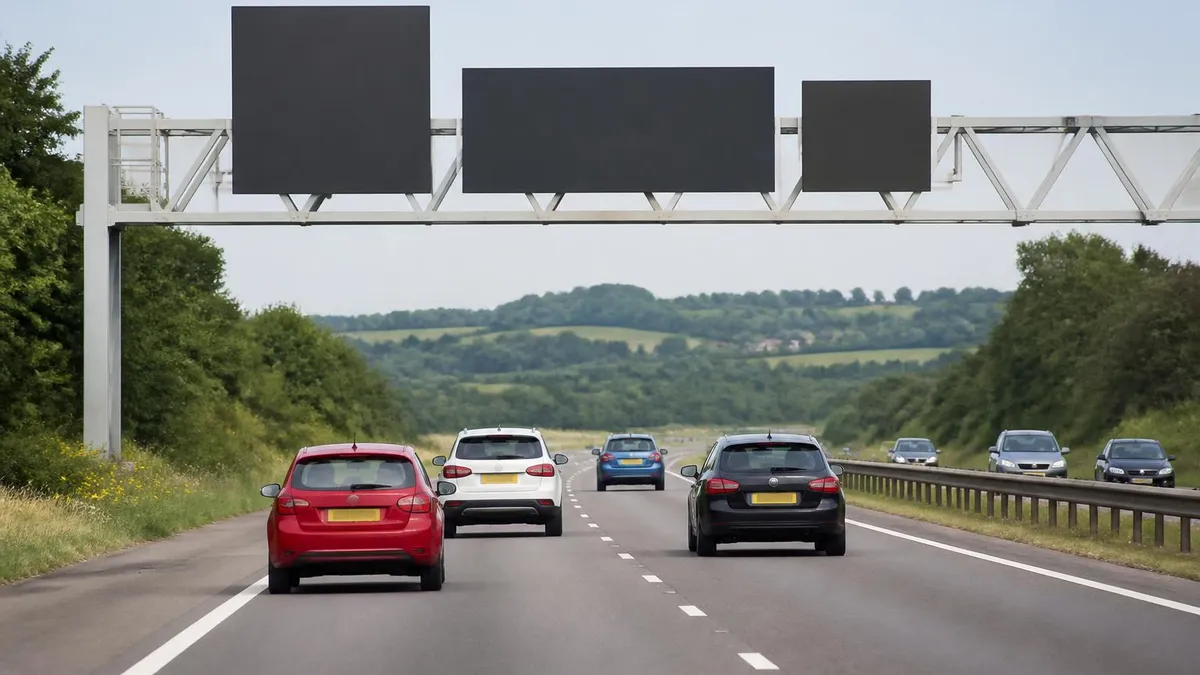
You are driving on a 'smart motorway' and see a red 'X' displayed on the overhead gantry above your lane. What does this mean?
- A. The national speed limit applies to this lane.
- B. You should move into another open lane as soon as it is safe to do so.
- C. A temporary speed limit is in force for this lane.
- D. You should stop and wait for further instructions.
Answer: B. You should move into another open lane as soon as it is safe to do so.
A red 'X' shown on an overhead gantry on a motorway indicates that the lane is closed. You MUST NOT drive in a lane that is closed by a red 'X'. You should move into an open lane safely and promptly. Ignoring this sign is dangerous and illegal.
You are driving on a single carriageway road with double white lines in the centre. The line on your side is broken. When is it permissible to cross these lines?
- A. To overtake a vehicle travelling at 15 mph.
- B. To turn into a side road on the right.
- C. To overtake if you can complete the manoeuvre before the line on your side becomes solid.
- D. To park on the right-hand side of the road.
Answer: C. To overtake if you can complete the manoeuvre before the line on your side becomes solid.
According to the Highway Code (Rule 128), if the white line nearest to you is broken, you may cross the lines to overtake, but only if it is safe and you can complete the manoeuvre before reaching a solid white line on your side. Turning into a side road is also permitted, but overtaking is the more comprehensive correct action described. You must not park on the opposite side of the road, and the speed for overtaking slow-moving vehicles is specified as 10 mph or less.
What effect does tiredness have on your driving ability?
- A. It improves concentration as you try harder to focus
- B. It has no effect if you keep the window open
- C. It significantly increases your reaction time and impairs judgement
- D. It only affects you on long motorway journeys
Answer: C. It significantly increases your reaction time and impairs judgement
Tiredness significantly increases reaction times, impairs judgement, and can cause microsleeps where you briefly lose consciousness. It is a major factor in road collisions. The only effective countermeasure is to stop and rest.
DVSA Questions and Answers
UK Theory Test Pass Mark: Car, Bike, LGV, PCV & ADI Scores

Free Theory Test App: The Complete UK Guide to Choosing, Using and Passing With Mobile Practice in 2026

Cancelling Driving Test: The Complete UK Guide to Refunds, Rebooking and Avoiding Lost Fees in 2026
Theory Test Certificate: Complete UK Guide to Passing and Using Your DVSA Pass Letter in 2026
Driving Test Nerves: The Complete UK Guide to Calming Anxiety and Passing First Time in 2026
Sources & references
Prepared by the Practice Test Geeks editorial team using AI-assisted drafting; exam facts are checked against the official sources below. Editorial policy
- gov.uk — Time limit · verified Oct 2026
- gov.uk — Eligibility, registration, test dates · verified Oct 2026
- gov.uk — Passing score, retake policy, score release · verified Oct 2026
- gov.uk — Exam format · verified Oct 2026
- gov.uk — Exam format, time limit · verified Oct 2026
- gov.uk — Fees · verified Oct 2026
- gov.uk — Eligibility · verified Oct 2026